«Youth policy papers» produced by Pal-Think's Civic Education Corps
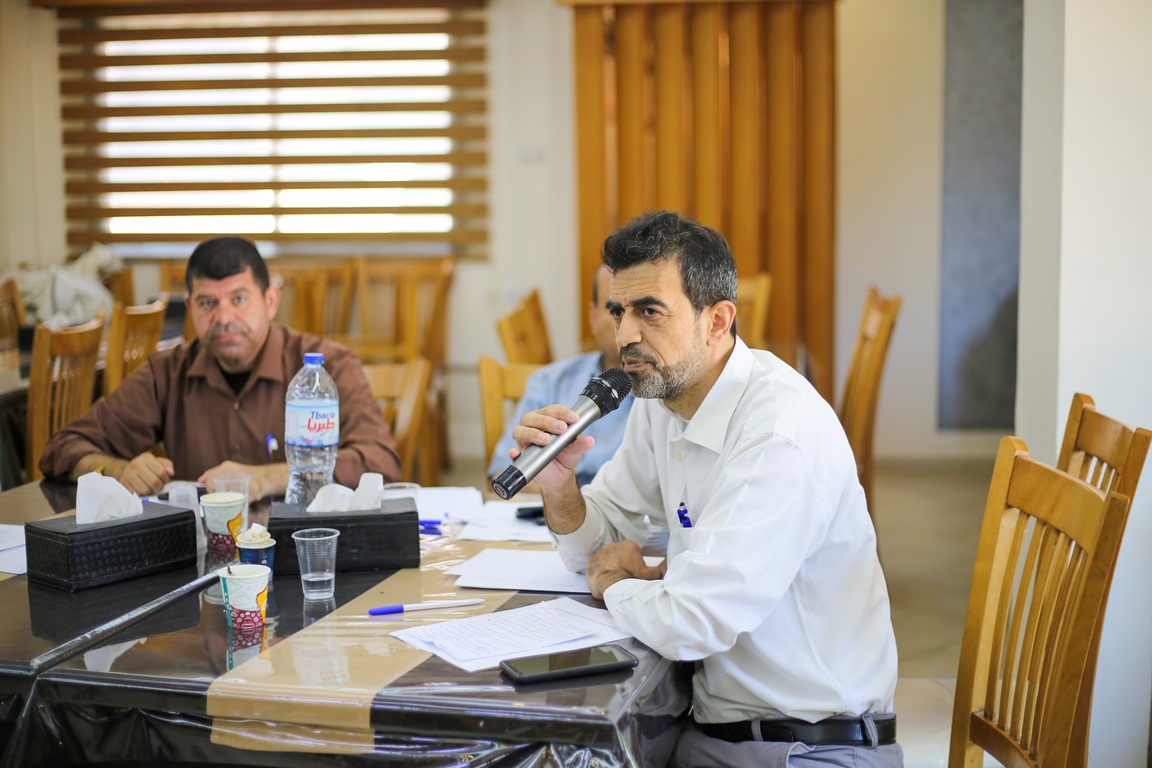
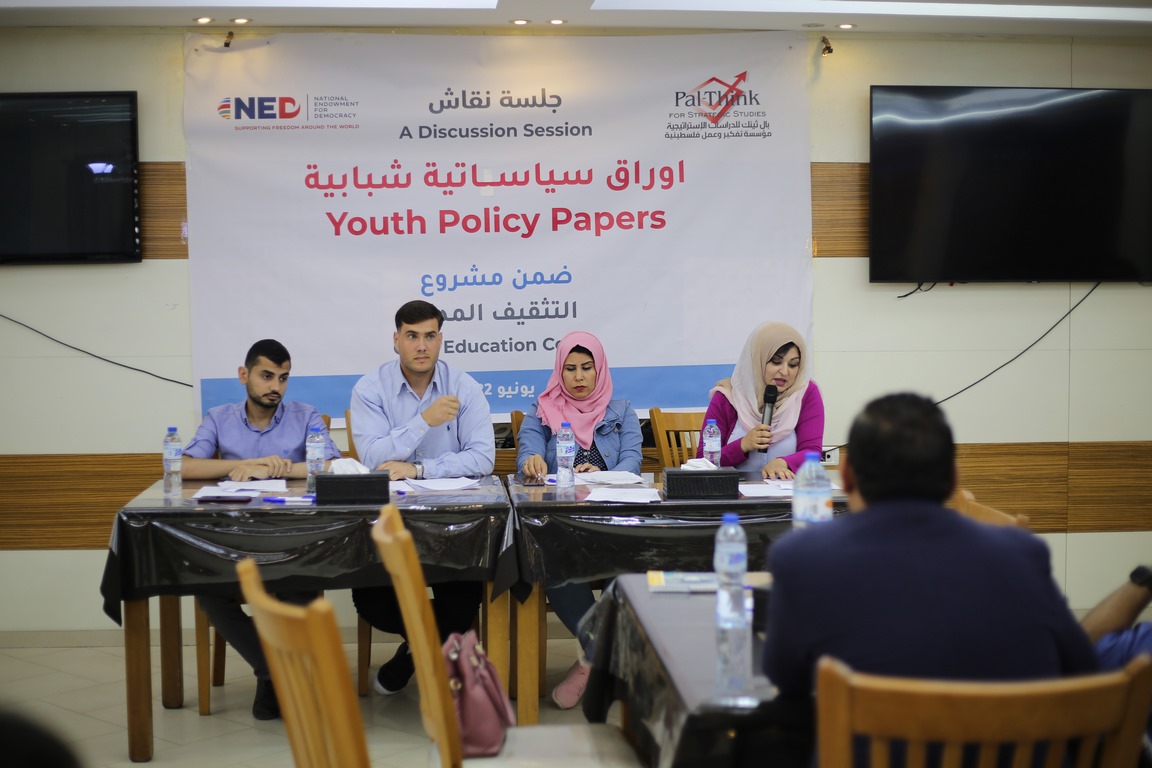
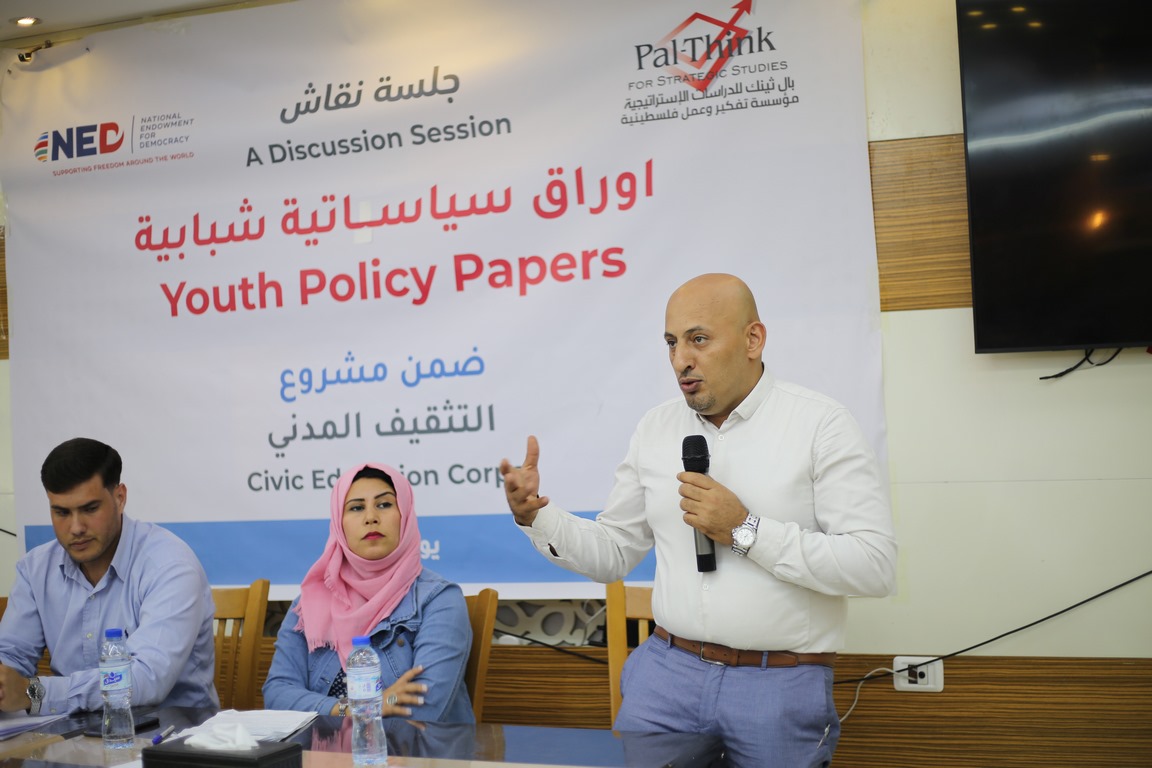
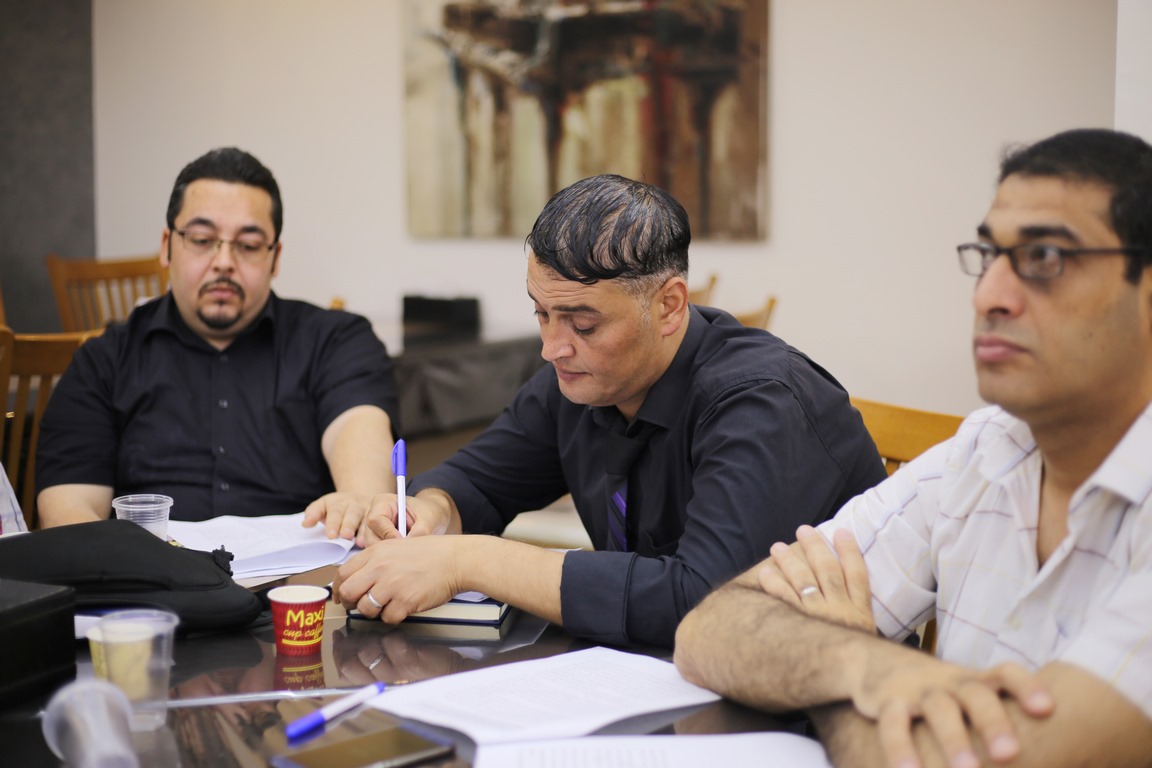
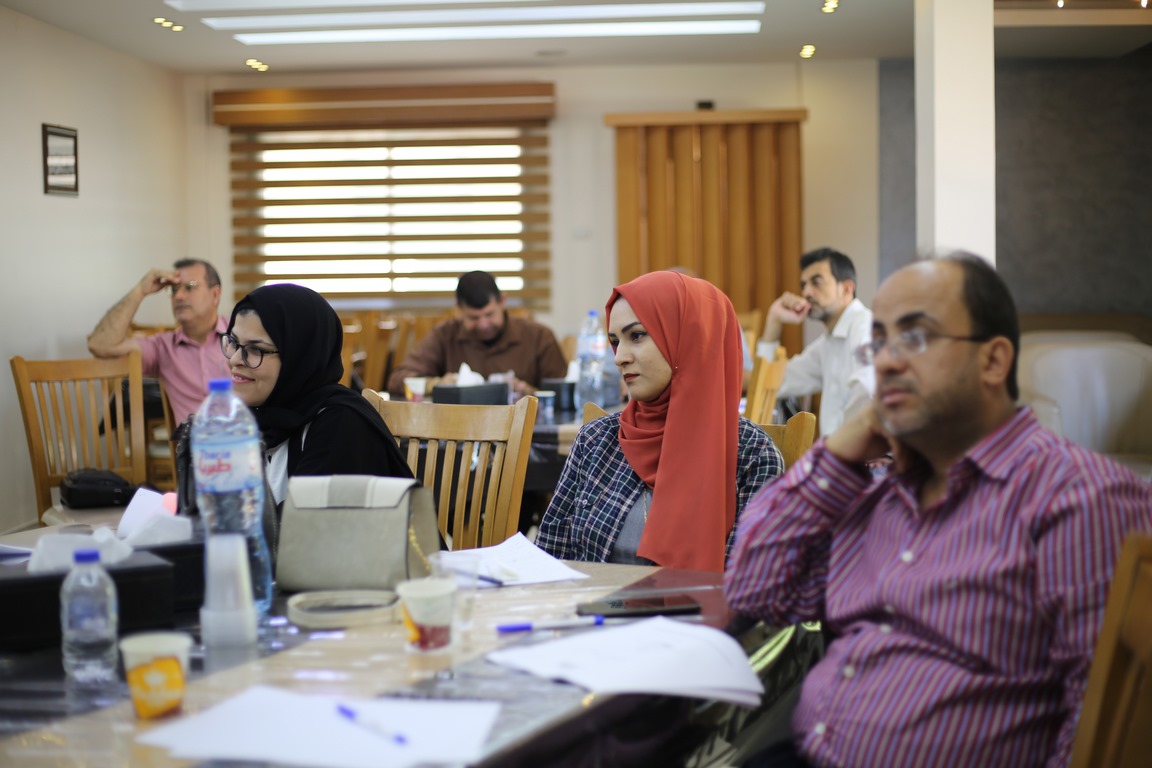
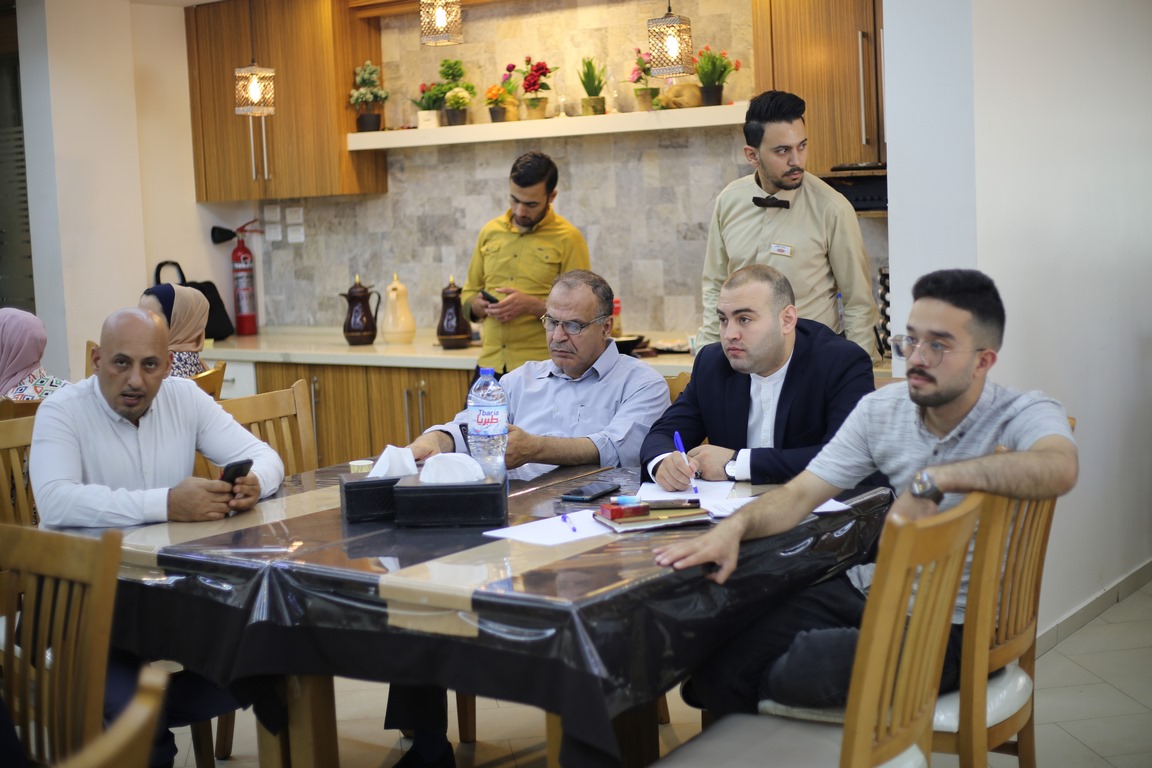
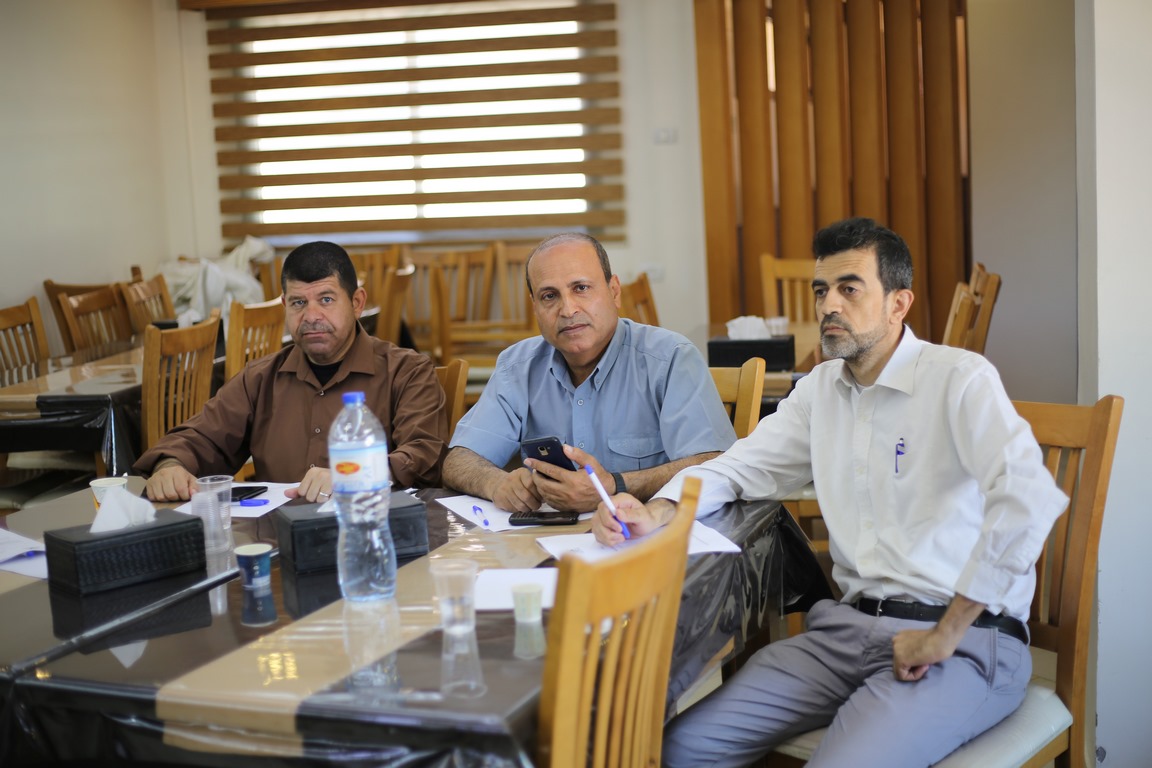
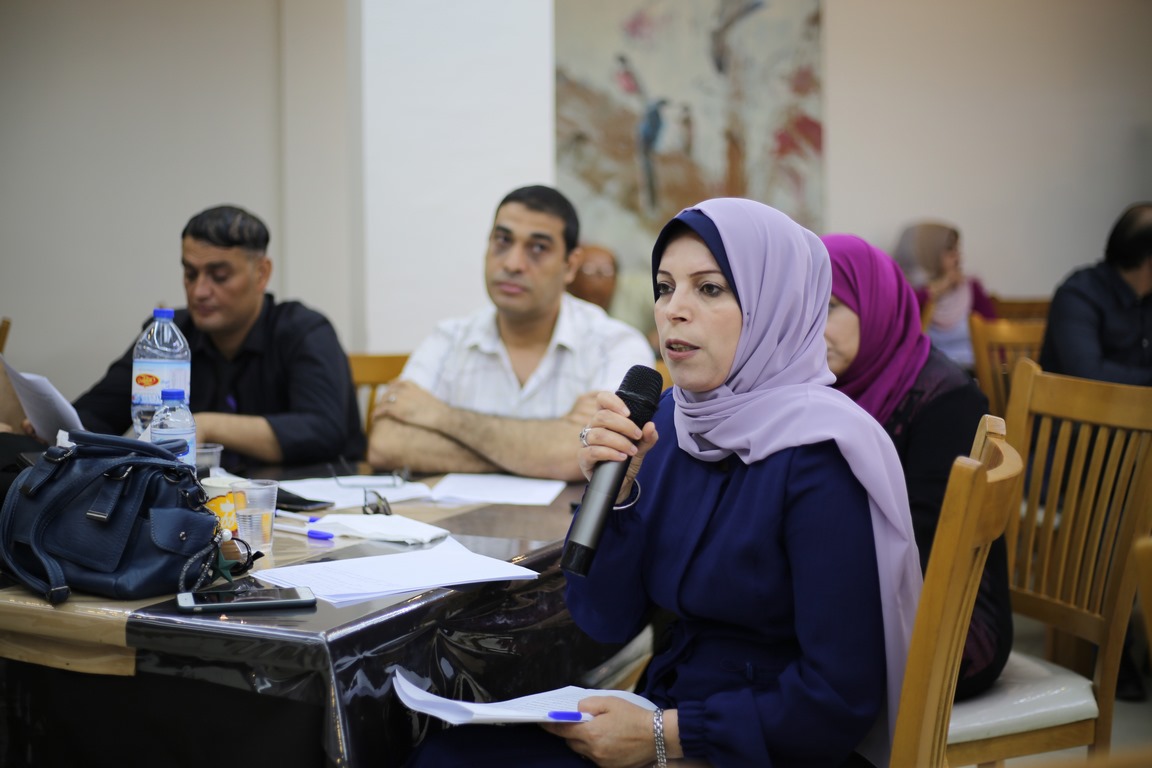
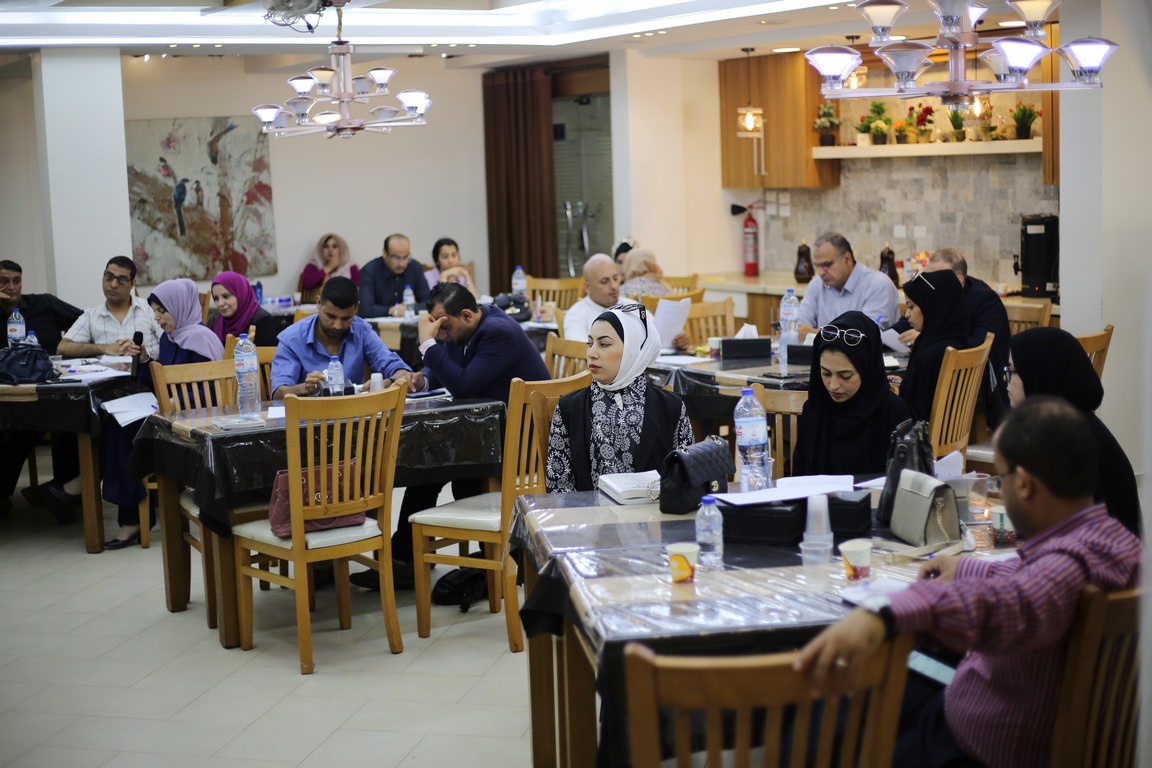
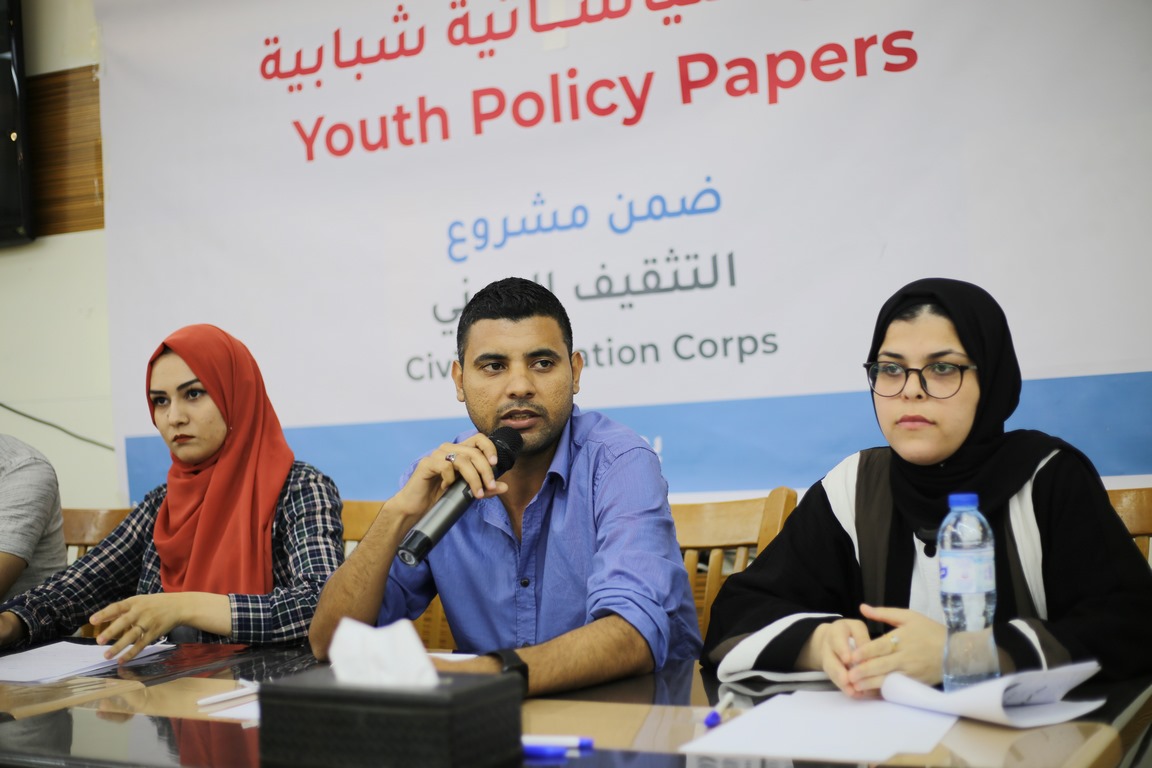
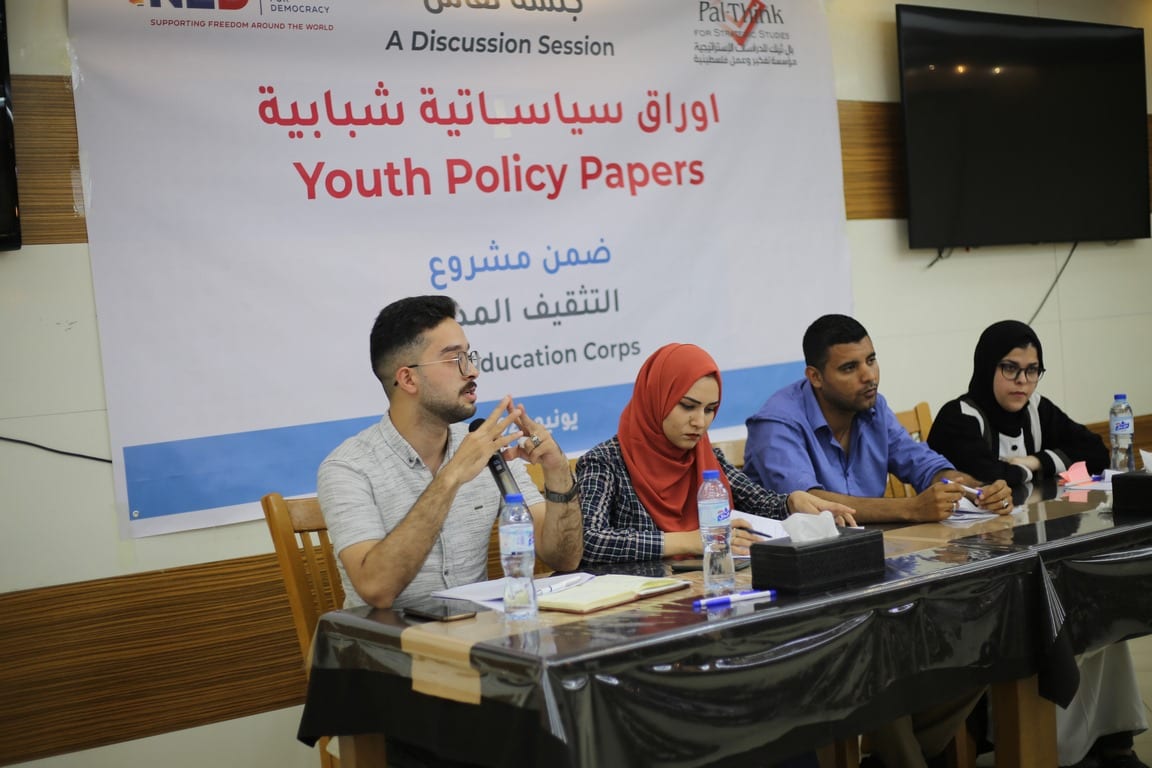
Pal-Think held a session discussing five policy papers prepared by young trainees under phase two of the NED-funded Civic Education project, before an audience of intellectuals, civil-society representatives and researchers.
- Date
- 2022-06-16
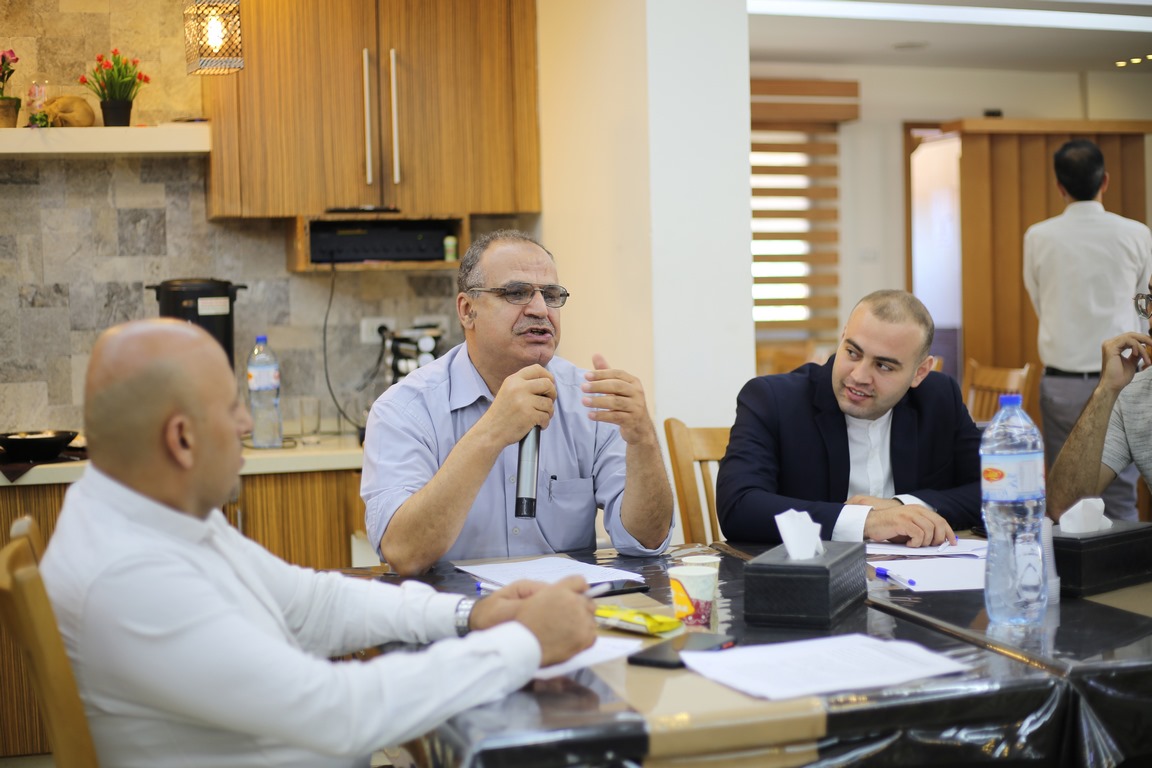
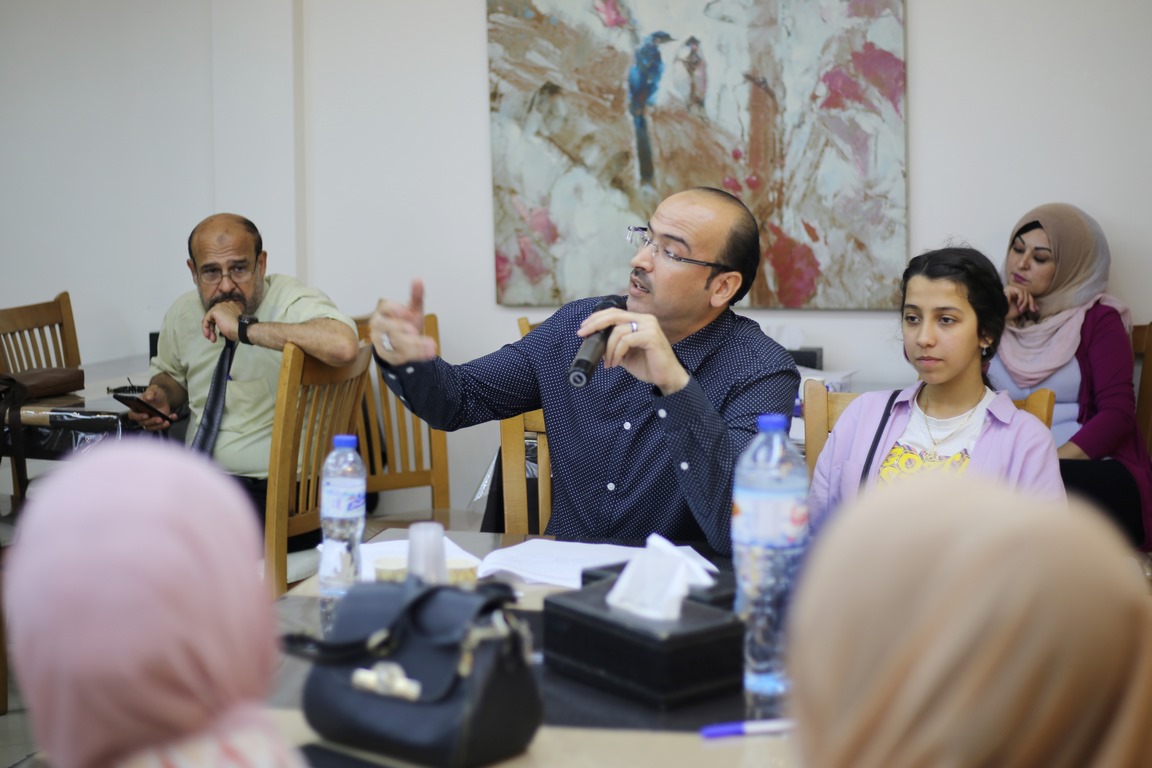
Pal-Think for Strategic Studies held a session to discuss five policy papers prepared by young trainees within the second phase of the “civic education” project funded by the National Endowment for Democracy NED, attended by an elite of intellectuals, civil-society representatives, and researchers.
The projects coordinator at Pal-Think, Ms Sally al-Sammak, opened the session by welcoming the attendees, and said the institution sets the youth category before its eyes and devotes all its efforts to training them in the skills of research and policy writing, to contribute to driving the wheel of the Palestinian society's development and growth.
She added: “The trainees devoted great time and effort to producing these papers, written from their own perspective on issues they suffer from in the Gaza Strip, after holding several workshops on the research papers' topics in society's different institutions to learn their effect on society's different groups”.
The first session was moderated by Ahmed Abu Salah, member of the education body at Pal-Think, who introduced the trainee Zainab al-Astal, who in turn presented a policy paper titled “The ways of advancing youth political participation amid the faltering of holding the elections”.
Her paper concluded that youth suffer a clear, deliberate marginalisation preventing them from the political participation through which they express their aspirations and their desire to work in service of their society — although they form 22% of the total population of Palestine according to the Palestinian bureau of statistics for 2020.
Al-Astal said: “The postponement of the elections and the Palestinian division are among the most important obstacles facing youth before political participation”.
She added: “If we want real participation for youth, and a change in their share in decision-making — which does not exceed 1% — the elections must be held, with constant demand through advocacy campaigns and pressure on decision-makers”.
She pointed out that establishing the youth parliament, resting on the youth law issued in 2011 — which has not been activated — would work to unify the ranks of Palestinian youth.
Al-Astal affirmed that youth's participation in the labour syndicates plays an important role in achieving their political participation.
She concluded her paper with several recommendations, foremost: making use of the media and social-media platforms to convey the voice of youth and carrying out lobbying and advocacy campaigns.
The second paper, titled “Freedom of movement and travel between international law and the Israeli occupation”, was presented by the trainee Osama Naim, who said general international law and international humanitarian law guaranteed freedom of movement and travel for all — including the Palestinians, who face complications imposed by Israel as an occupying state, through placing restrictions on the population's movement and passage, which has limited Palestinians' movement within the occupied territories themselves.
He pointed out that the Palestinian division has contributed to the citizens' suffering in the homeland's two halves, in addition to barring a number of citizens from travel without legal or judicial justification.
The second session was moderated by Hadeel Ahel, member of the civic-education body at Pal-Think, who introduced the trainee Saeed Dahik to present the summary of his paper titled “Toward effective policies for strengthening women's rights in the Gaza Strip”. He said the political conflict has increased the exposure of women — who form 49% of Palestinian society — to social and economic insecurity, and to violence. With the limited opportunities of employment and entrepreneurship, they have been forced to join the informal workforce, which has made them exposed to several forms of exploitation, foremost the economic.
He added: “There are many Palestinian laws and decisions that called for supporting and empowering women, but most of them are unapplied; and if women are represented and participate, that participation is formal, not actual as it should be”.
Dahik put forward several policies for advancing women at several levels: at the political level, through applying the women's quota at a rate of 30% in all of Palestine's institutions and unions; at the economic level, through laying down development plans that contribute to integrating women who provide for their families, providing small and micro enterprises for women, monitoring women's condition in the labour market, and changing the mistaken societal ideas about women's work; and at the social level, through strengthening women's standing societally and fighting the male-dominated culture.
As for the trainee Jumana Abu Sinjar, she said during her presentation of a paper titled “Mechanisms of strengthening students' participation in community work” that her paper concluded with a set of results: the existence of a plain and clear weakness in the culture of community work, the scarcity of networking processes between the universities and civil-society institutions, and the absence of a suitable budget from the responsible bodies for advancing community work.
She offered some proposed mechanisms for strengthening community work in the universities: using extracurricular activities as a means of discovering students' talents and capacities; real and effective networking between the universities and civil-society institutions to stimulate university youth toward community participation; and amending the strategic plans of civil-society institutions to support voluntary work.
The session concluded with the trainee Sami Shaqura presenting his paper titled “Raising the minimum wage for workers in the Gaza Strip: between enactment and application”. He explained that the problem of the Palestinian economy since its origin has been the existence of the Israeli occupation, then the Palestinian division — which together caused the deterioration of economic and living conditions, the rise of unemployment and poverty rates, the fall of average income, and the lowness of wage rates; which drove the Palestinian Authority to raise the minimum-wage rate more than once, to help workers meet their necessary needs amid the general rise in prices.
He said the council of ministers' first decision to raise the minimum wage was number (11) of 2012; then the council enacted decision number (121) of 2021, but there was difficulty in applying it, especially in the Gaza Strip, which suffers a high unemployment rate — because of the Palestinian economy's dependency, the stifling financial crises, and the political complications.
Shaqura proposed several mechanisms for activating the minimum wage in Gaza, among them: national consensus and the integrative participation of all sectors through drafting a comprehensive national plan for advancing the conditions of workers and of the economic sectors harmed by the blockade and the corona virus, and strengthening facilitations and the economic and investment structures.
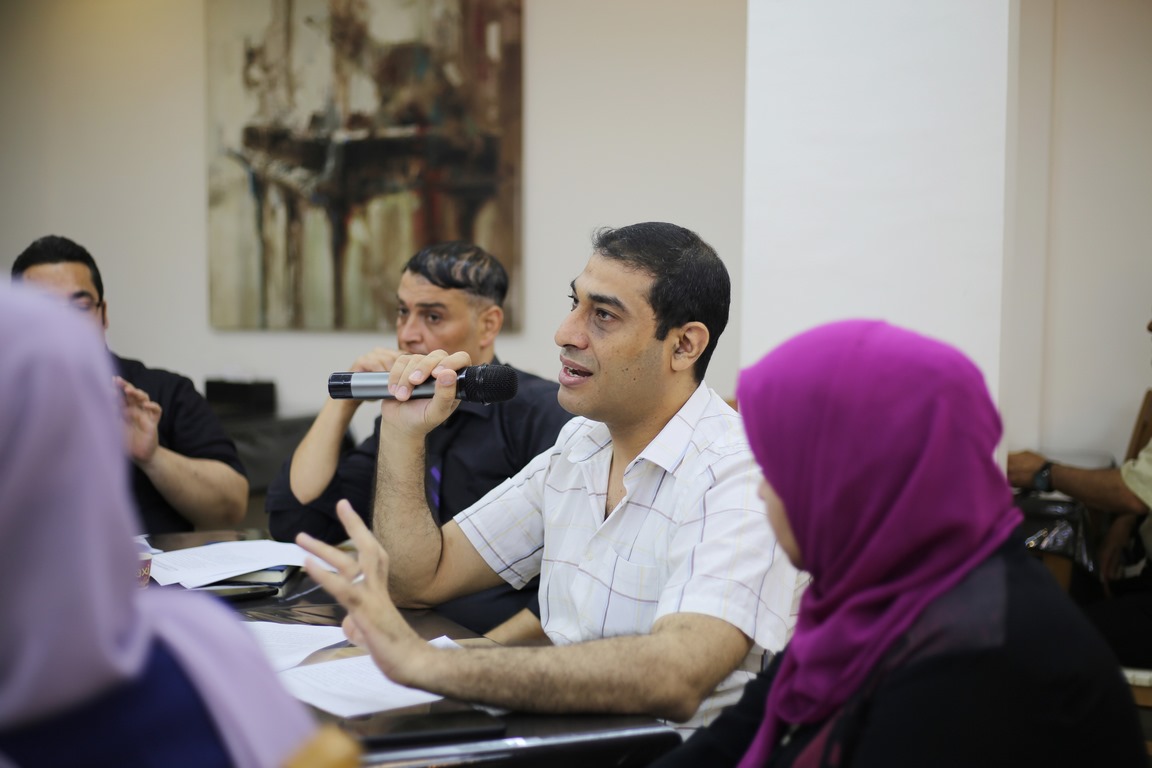
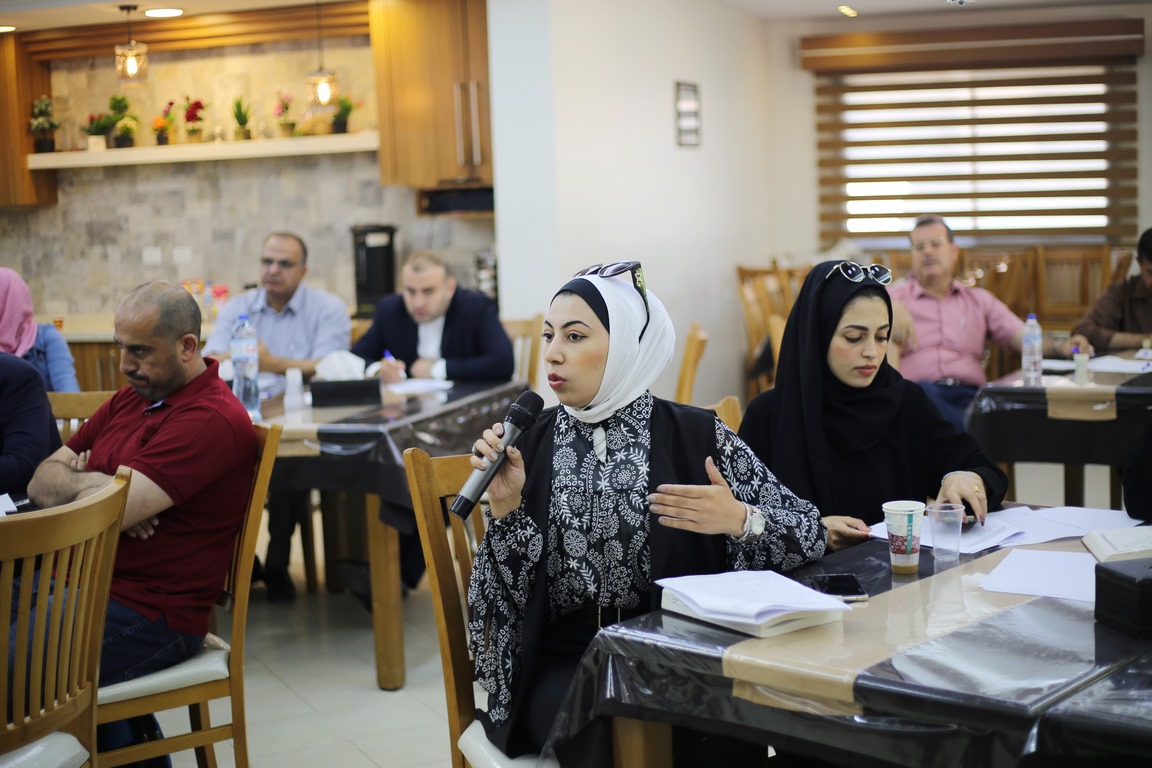
The attendees offered interventions and questions to the presenters of the five papers to enrich them before publication.