A training programme on youth political participation and spreading democracy opens
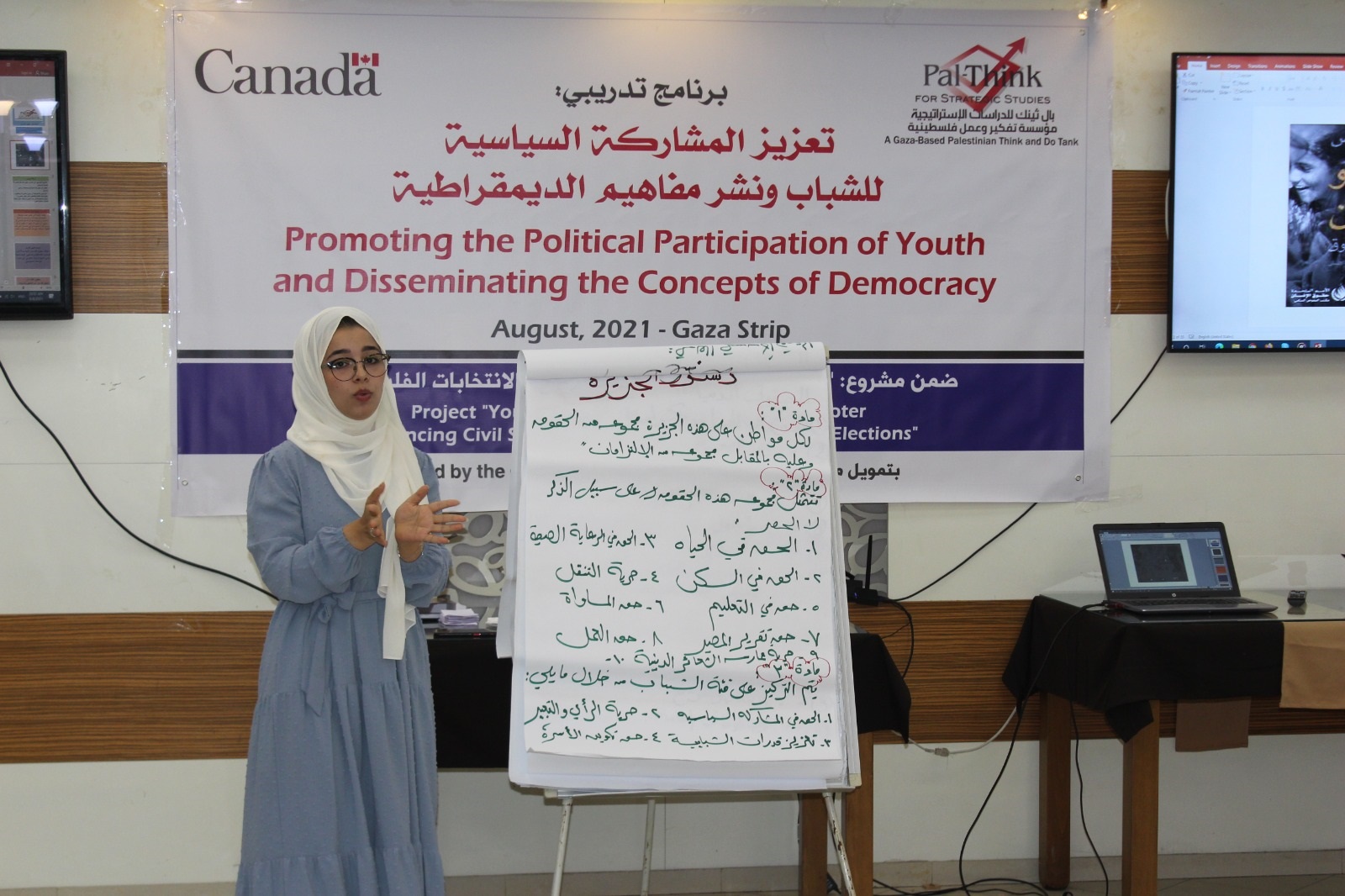
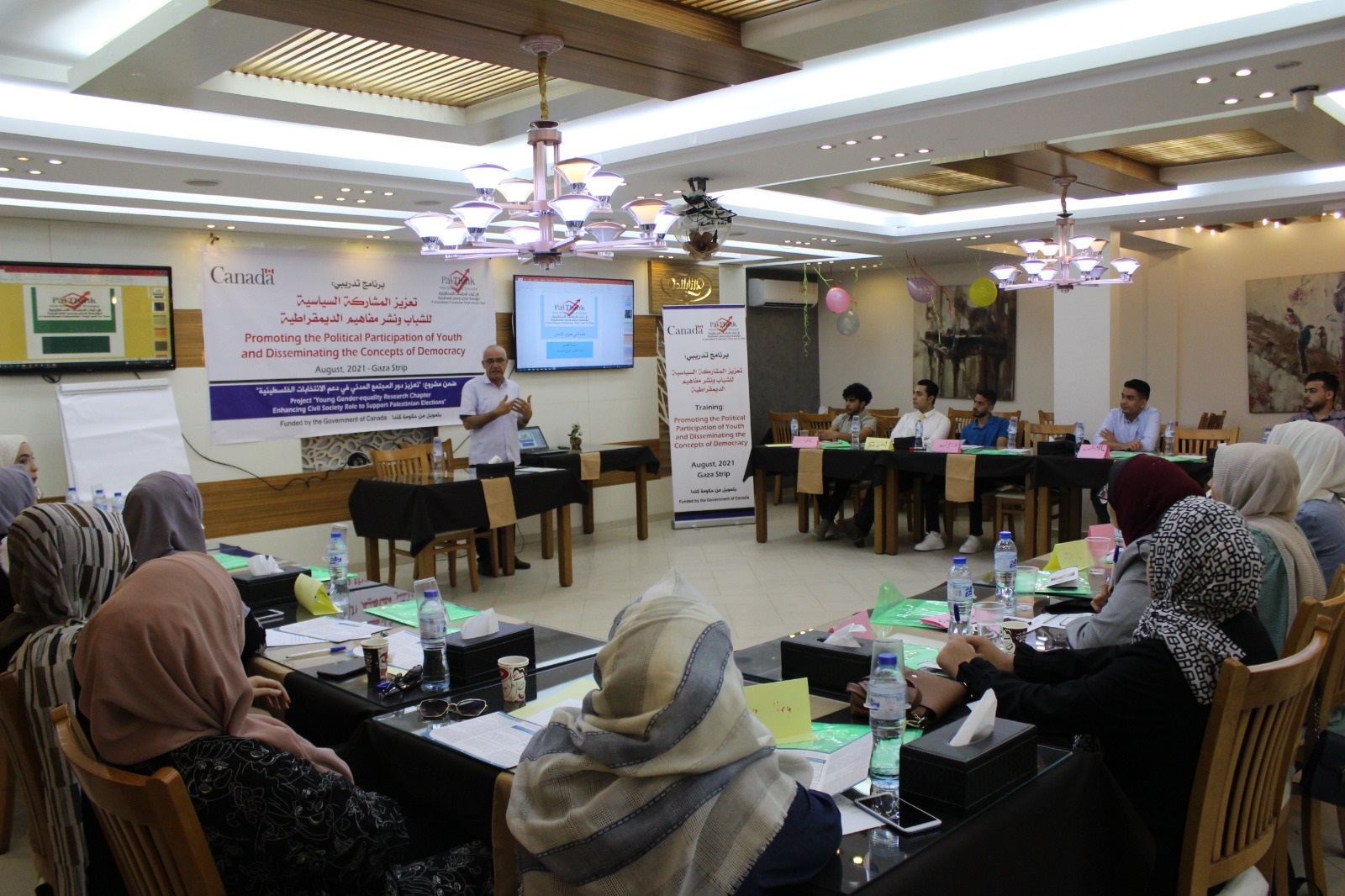
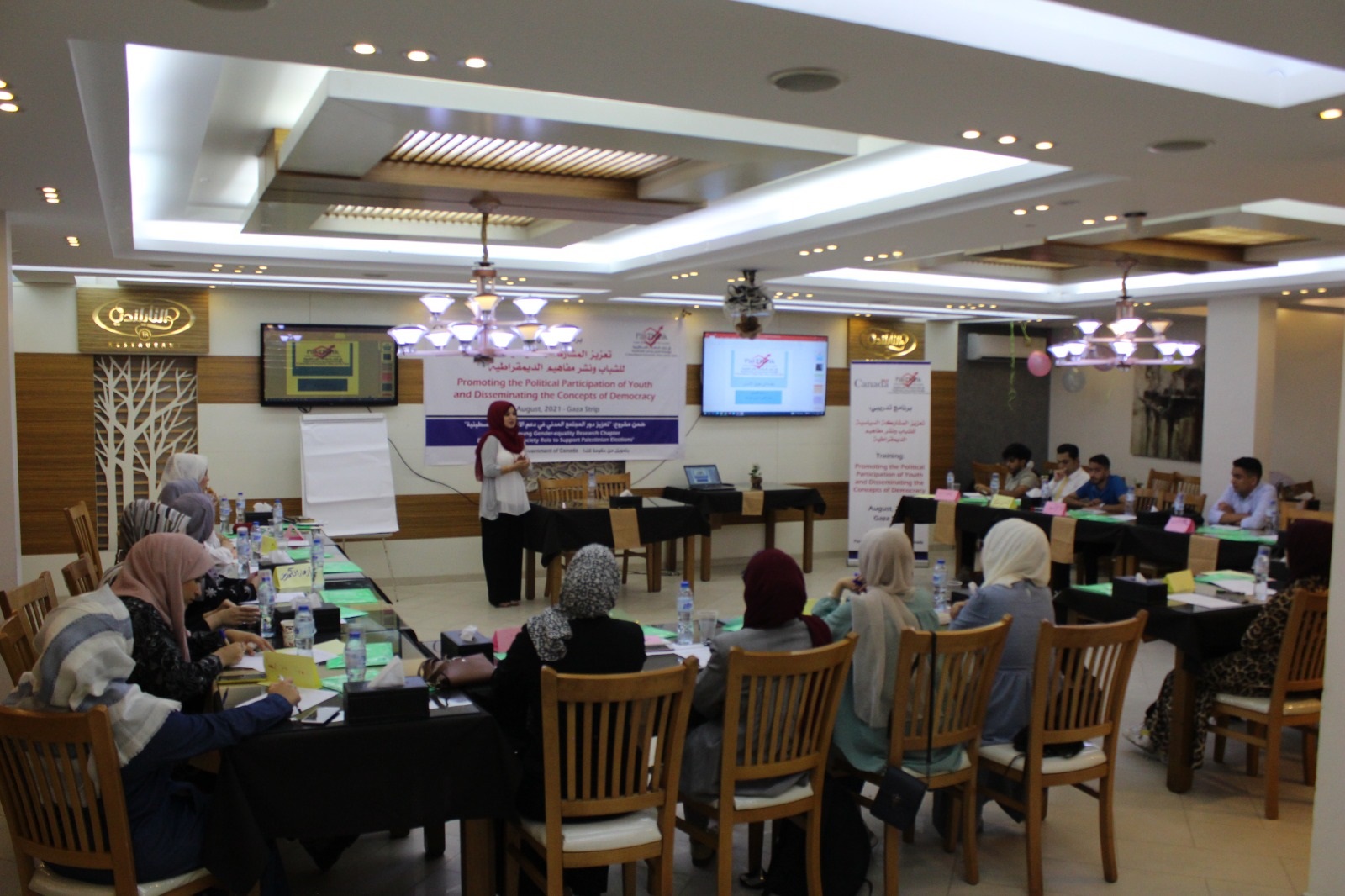
Pal-Think opened the training programme «Boosting youth political participation and spreading democratic concepts», under the elections-support project, with 21 trainees of varied academic backgrounds and community activity.
- Date
- 2021-08-11
Pal-Think for Strategic Studies opened a training programme titled “Strengthening youth's political participation and spreading the concepts of democracy”, within the project “Strengthening civil society's role in supporting the Palestinian elections”, with the participation of 21 male and female trainees of diverse academic backgrounds who have various communal activities.
The project, funded by the Government of Canada — it being the second stage of the project of research writings in gender and feminism — aims to strengthen civil society's role in supporting the Palestinian elections, activate the role of youth, and strengthen the political and communal participation of youth of both sexes to contribute to finding solutions for the crises that face the Palestinian people.
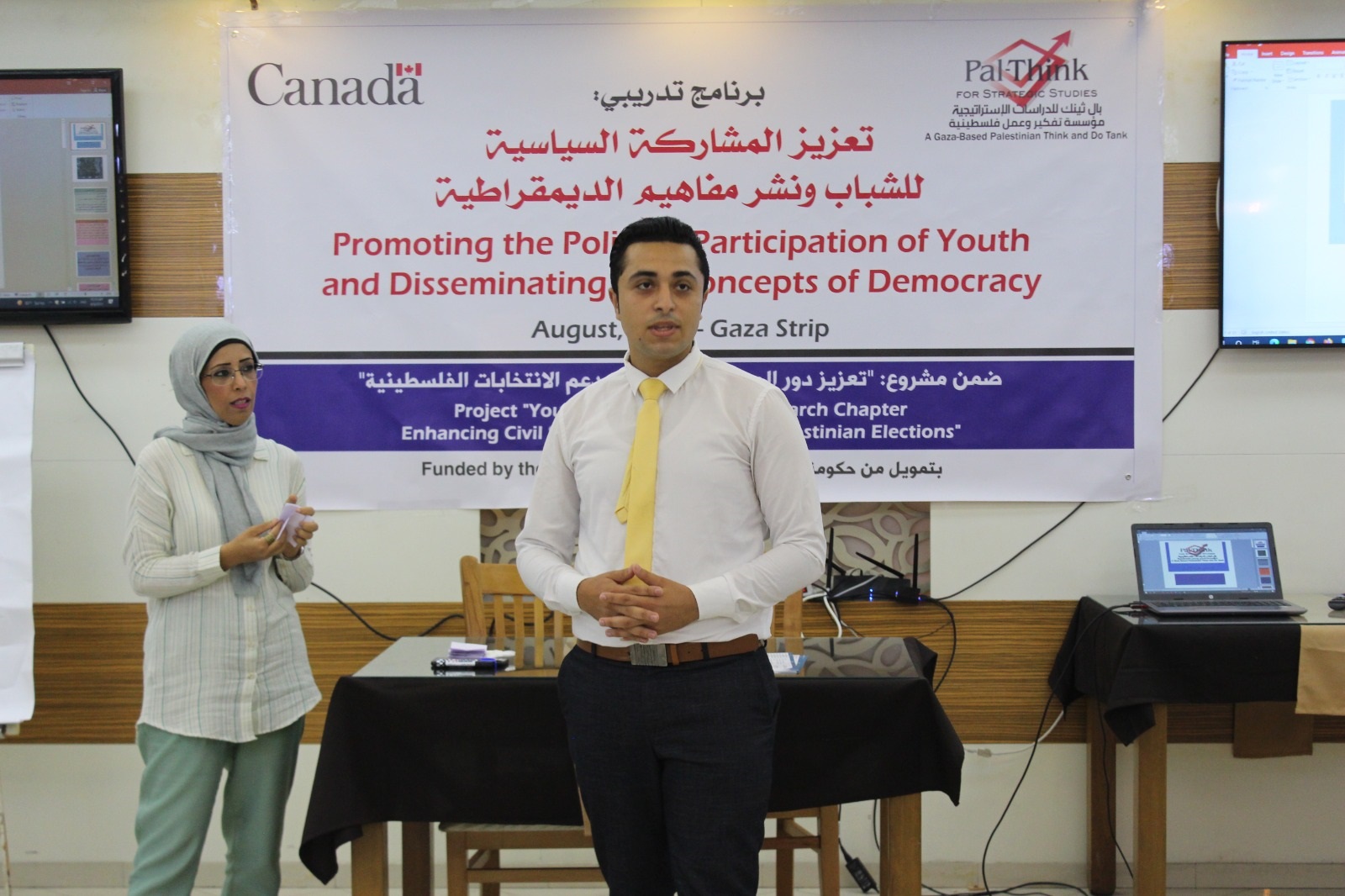
The first training encounter was opened by the project coordinator Sally al-Sammak, welcoming the attendees, and she said: “We work at Pal-Think on preparing and qualifying youth to be able to contest the elections to represent the youth — and this is what happened with one of the former trainees at Pal-Think, who stood for the Legislative Council when the elections were announced.”
She stressed that among the project's principal goals is empowering youth to be contributors to finding solutions for the problems of Palestinian society and not only a part of those problems, enabling them for political participation, and equipping them with the necessary knowledge on rights and democracy topics to practise and apply them in Palestinian society.
She made clear that the training programme, extending over seven days, comprises trainings on human rights in international law, the use of lobbying and advocacy campaigns to take part in decision-making, national dialogue and the concepts of democracy, the political participation of youth and women, the holding of debates and hearing sessions, and the skills of presentation, connection, and communication.
She reported that the trainees, after the end of the training, will hold awareness sessions and campaigns on rights topics and the elections and activating support for youth — in completion of previous activities within the project that began with lectures, radio episodes, the printing of publications, and the production of diverse video clips on supporting the Palestinian elections, the role of youth, political and communal participation, and equality between the sexes.
For his part, the director of “Pal-Think”, Omar Shaban, said that Pal-Think is Palestinian and independent, working to lift the intellectual blockade from the Gaza Strip, and devotes all its efforts to educating youth and training them to address the world, and giving them the opportunities to meet decision-makers and Western diplomats upon their visits to Gaza.
Concerning the training programme, Shaban pointed out that they received some 250 applications, yet they chose with great care 21 applications from youth with previous intellectual writings, so as to grow their skills and experience.
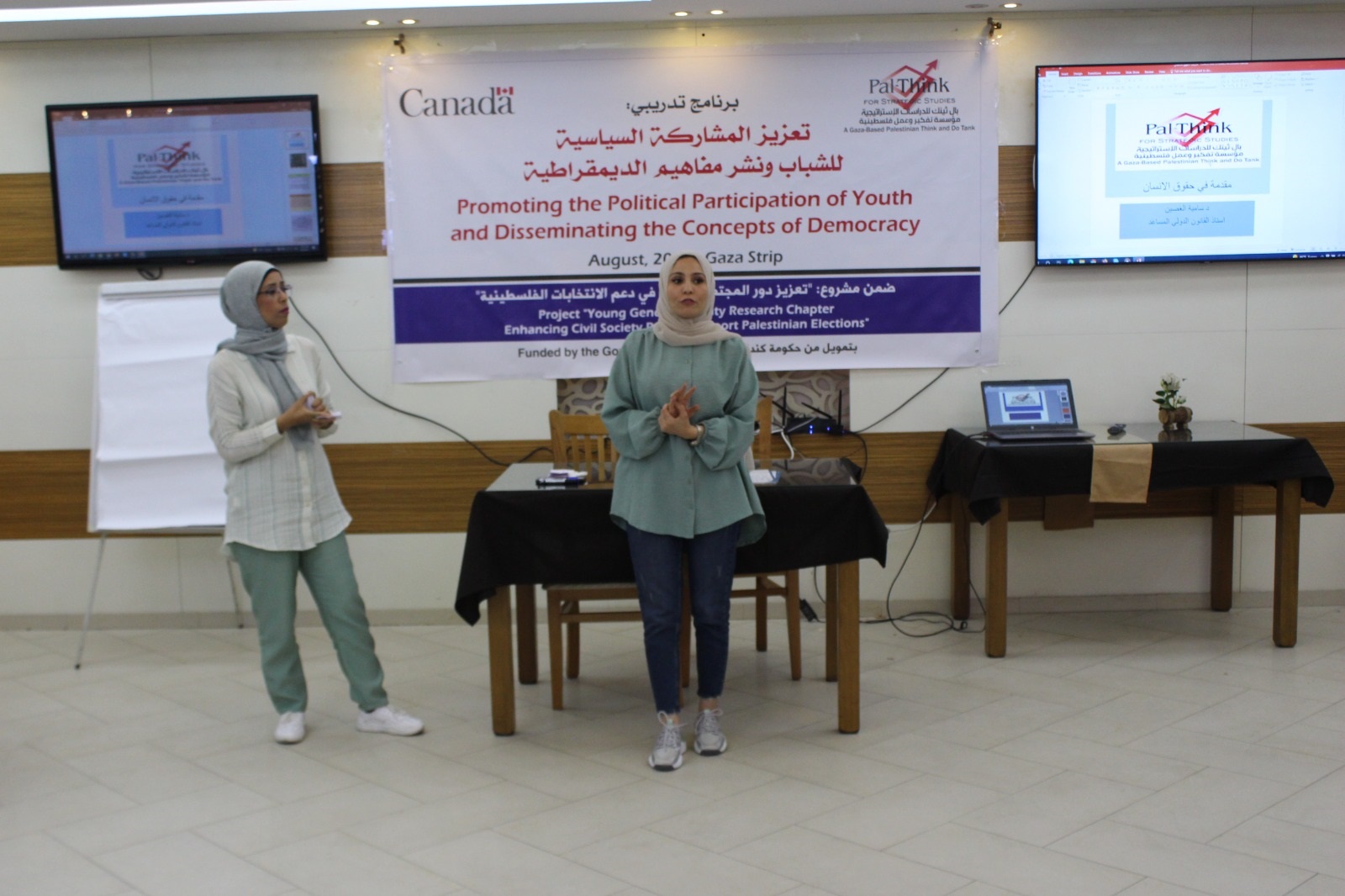
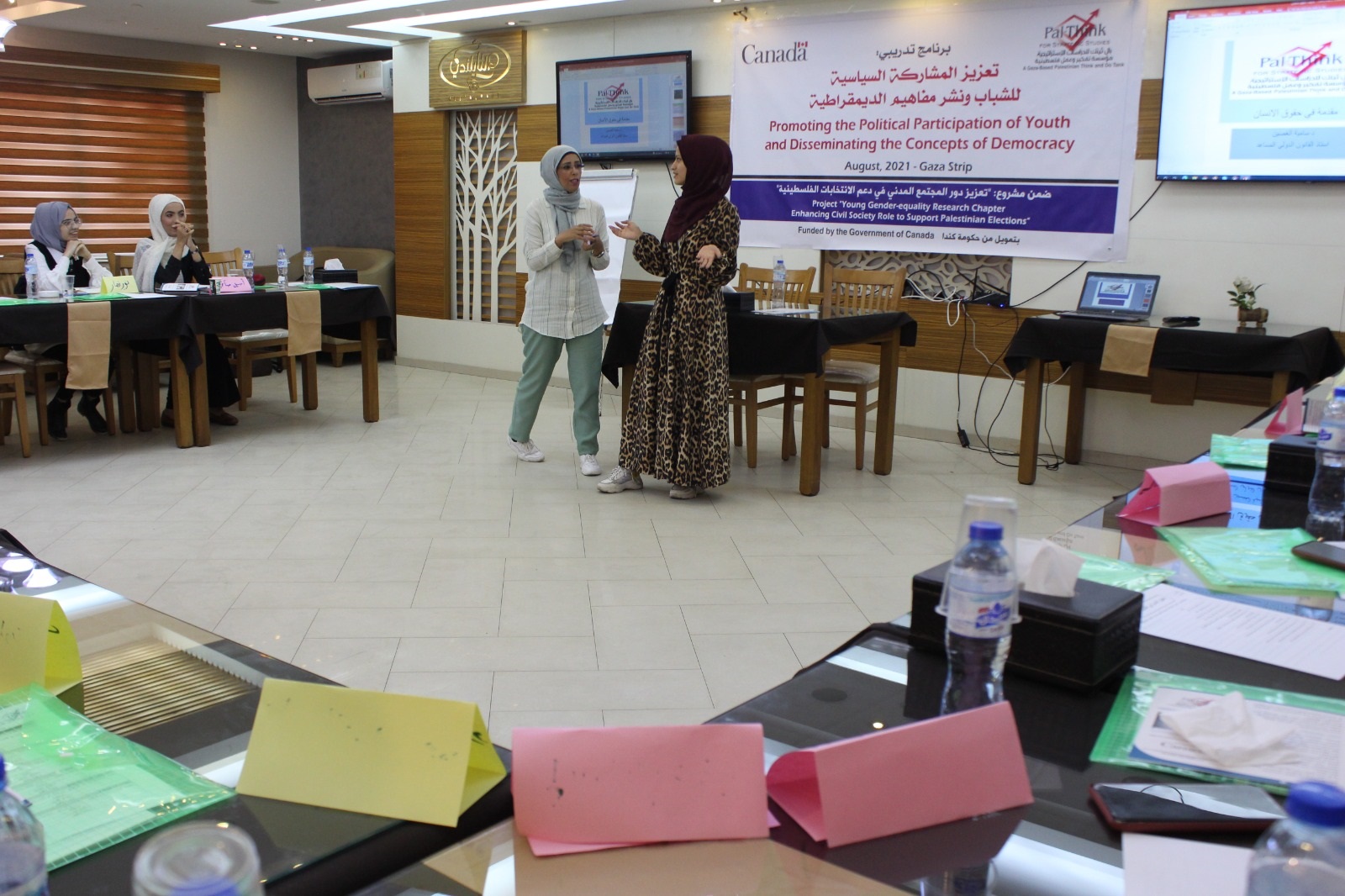
For her part, the trainer Dr Samia al-Ghussein, professor of law at Al-Azhar University, who carried out the first training day, said the goal of the training is to strengthen youth's political participation and their engagement in the complicated Palestinian affair — particularly as youth have been sidelined because of the division and the smallness of their opportunities to take part in public issues.
She added: “I hope the training restores to the youth their confidence, they being the true instrument of change. So they must arm themselves with respect for human rights and a deep understanding of the principles of democracy and commitment to them.”
The first day of the training programme comprised an introduction to human rights, the international declaration of human rights, the two international covenants on human rights, the law-making conventions, how to monitor human rights violations, and the United Nations Human Rights Council.
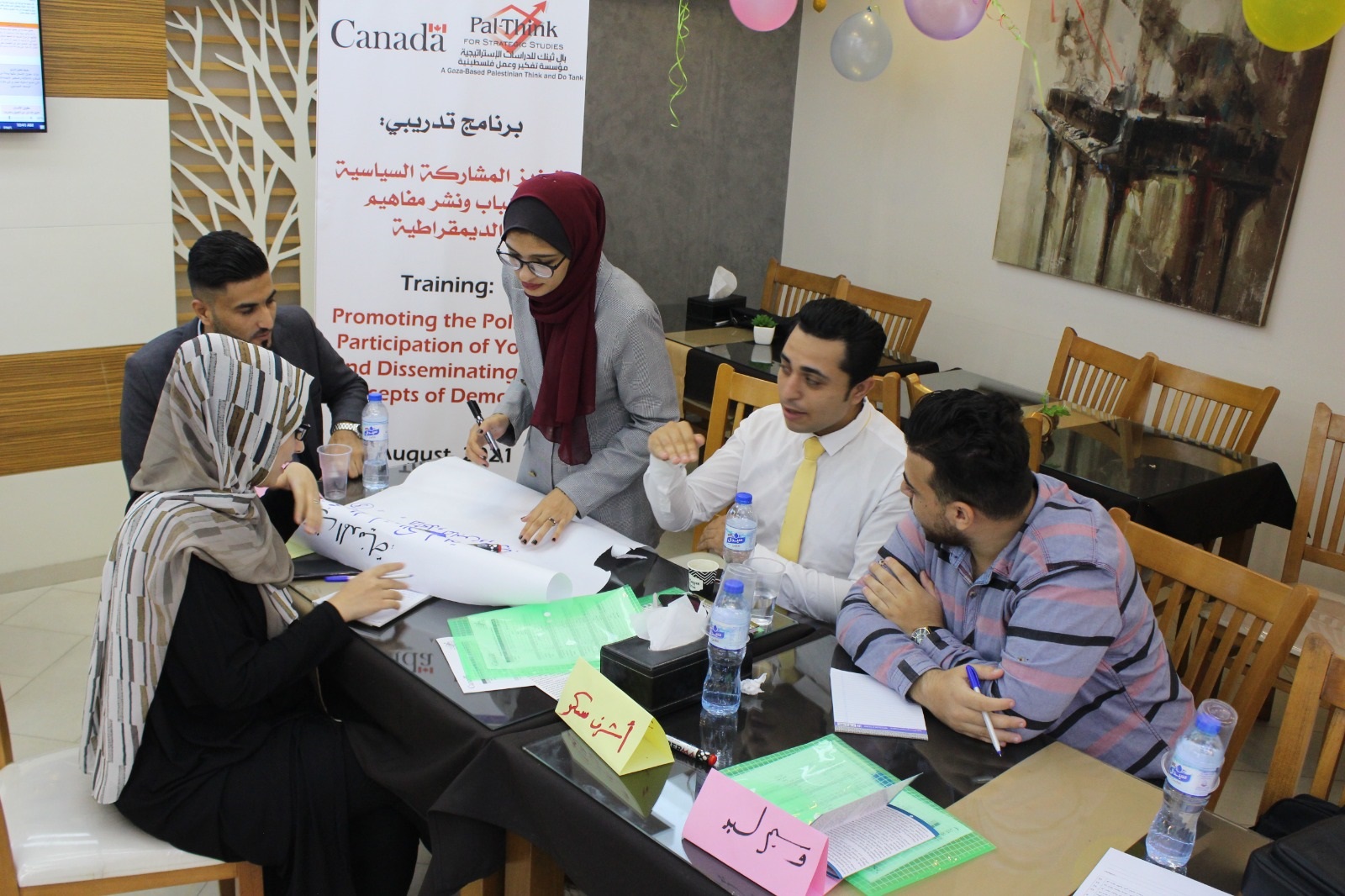
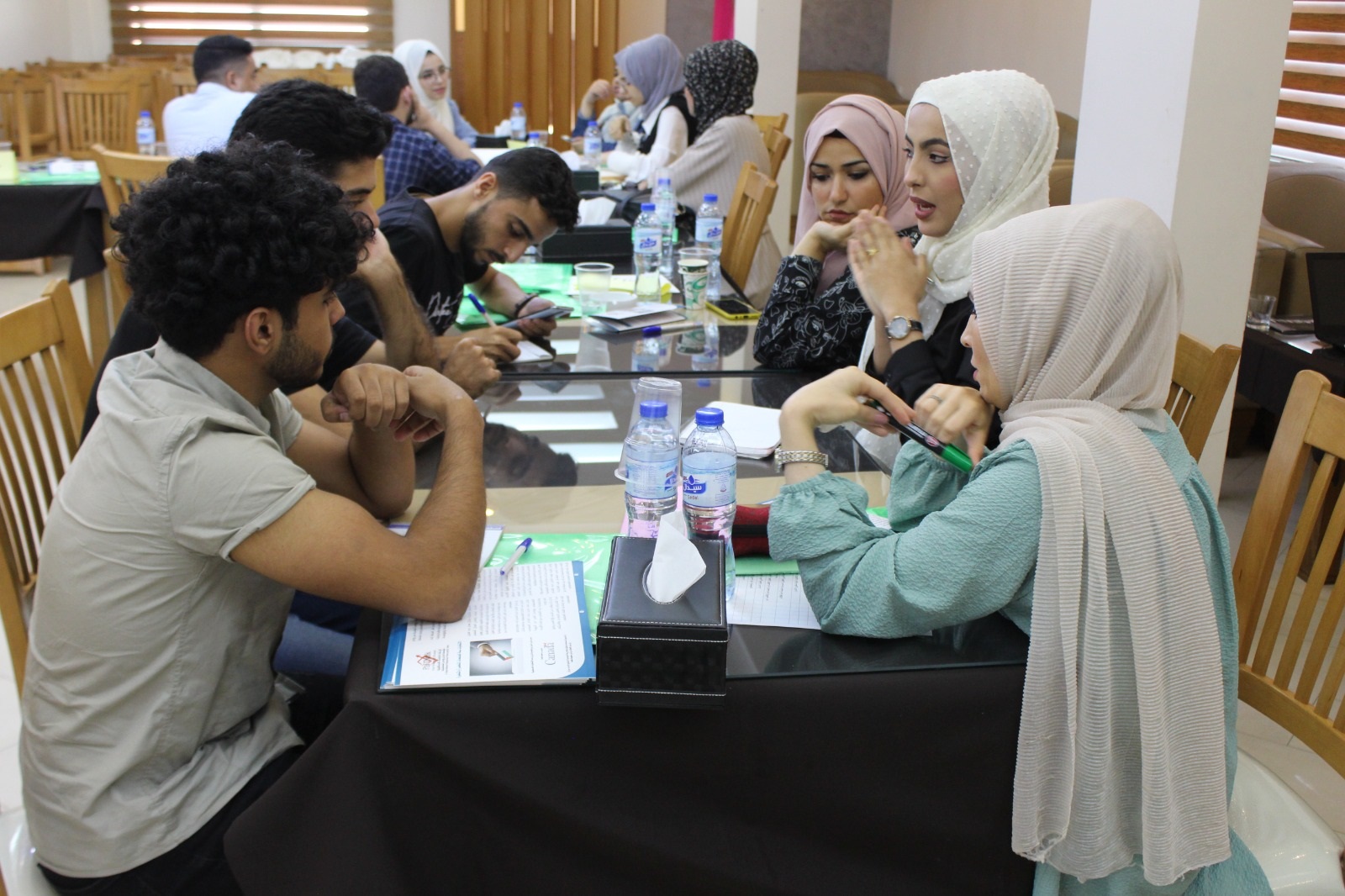
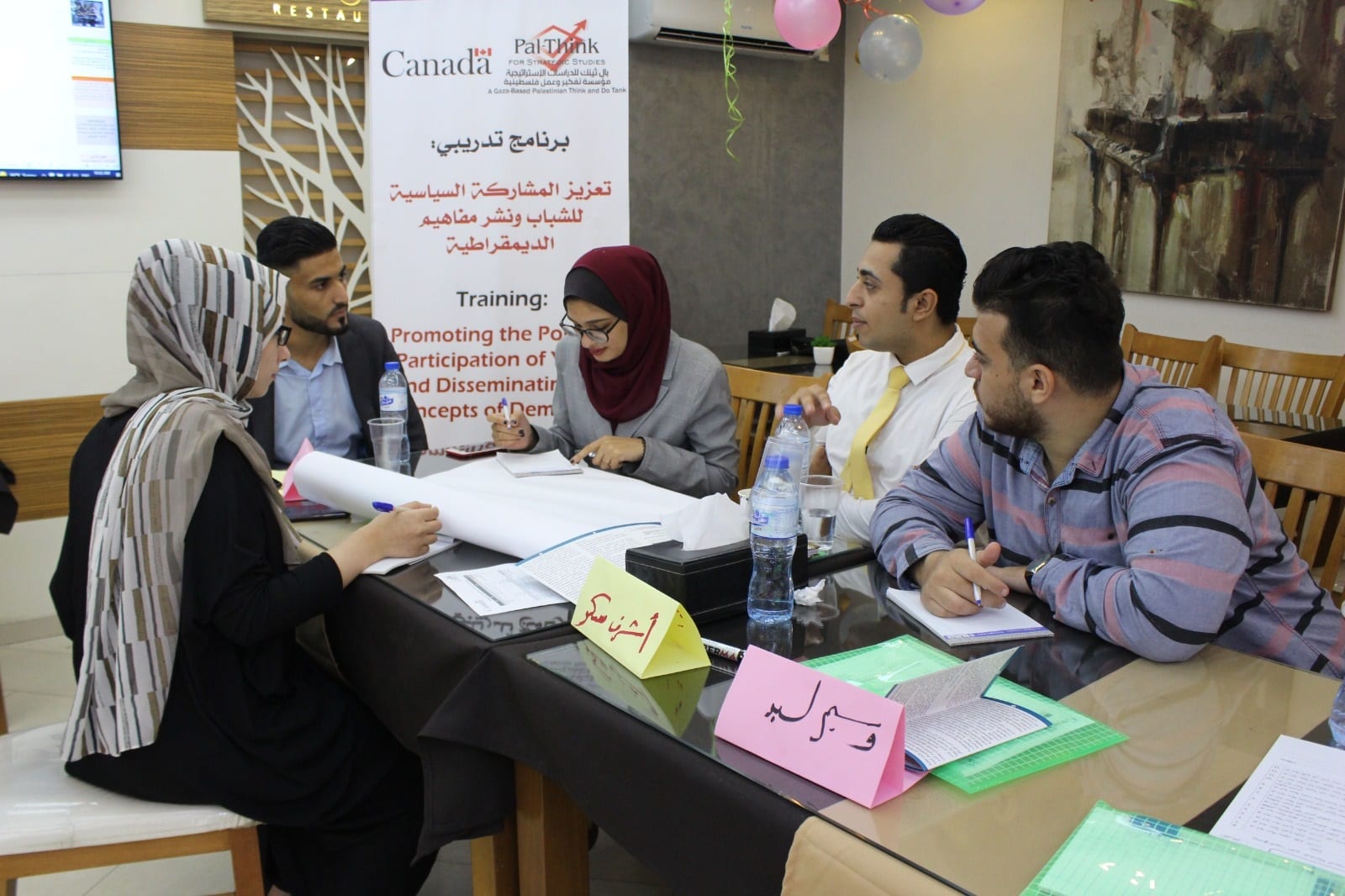
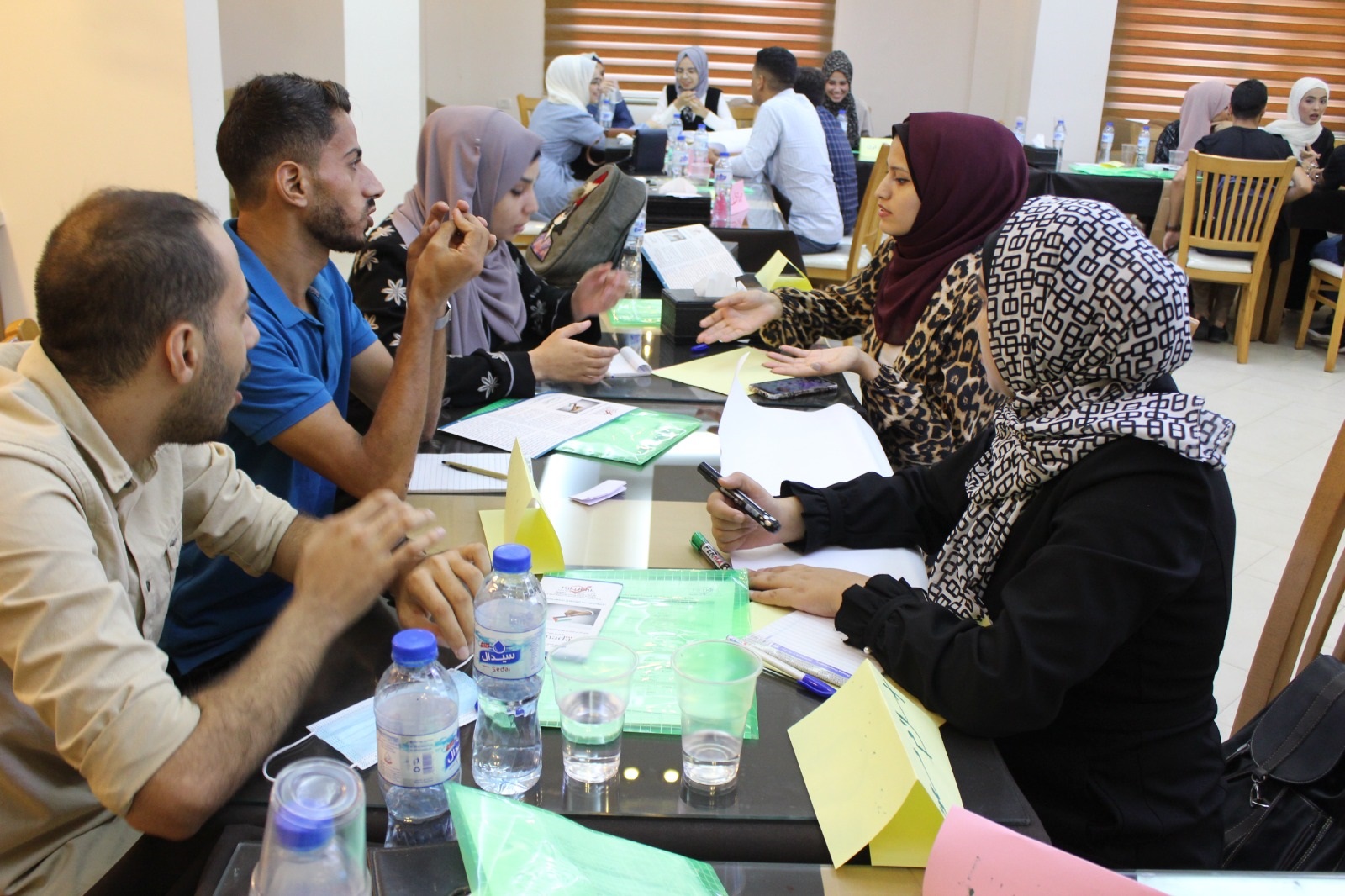
The trainees likewise carried out diverse methodical interactive activities among themselves, and their engagement was noticeable.
In the same context, the trainee Aseel Safi (23 years old), a graduate in English-language arts, said there is a general problem among youth in the subject of culture and awareness, alongside their role being almost non-existent.
She added: “Personally, I knew nothing about political participation or the threshold percentage or the electoral lists or the other political matters — it is such programmes that taught me all these things. And these programmes are the first step toward change. Now, I want to complete my graduate studies in the fields of human rights and political science.”
As for the trainee Amir Hussein (20 years old), a law student, he said his specialisation needs relationships and engagement in society and acquaintance with the different ways of thinking.
He added: “The concept of democracy and human rights is obscure among the youth. Personally, I joined this programme for two reasons: first, that it is very important in my field; and second, that Pal-Think, which focuses on youth, is the one presenting this programme.”
He concluded by saying: “It is supposed that 90 per cent of our people know these topics, because we are under blockade and occupation — everyone must be acquainted with their rights so as to take part in the general situation in their own way.”
The designations used and the presentation of materials in this programme entail no expression of any opinion whatsoever on the part of the Government of Canada