Pal-Think holds the seminar «US election scenarios and their reflections on the Middle East»
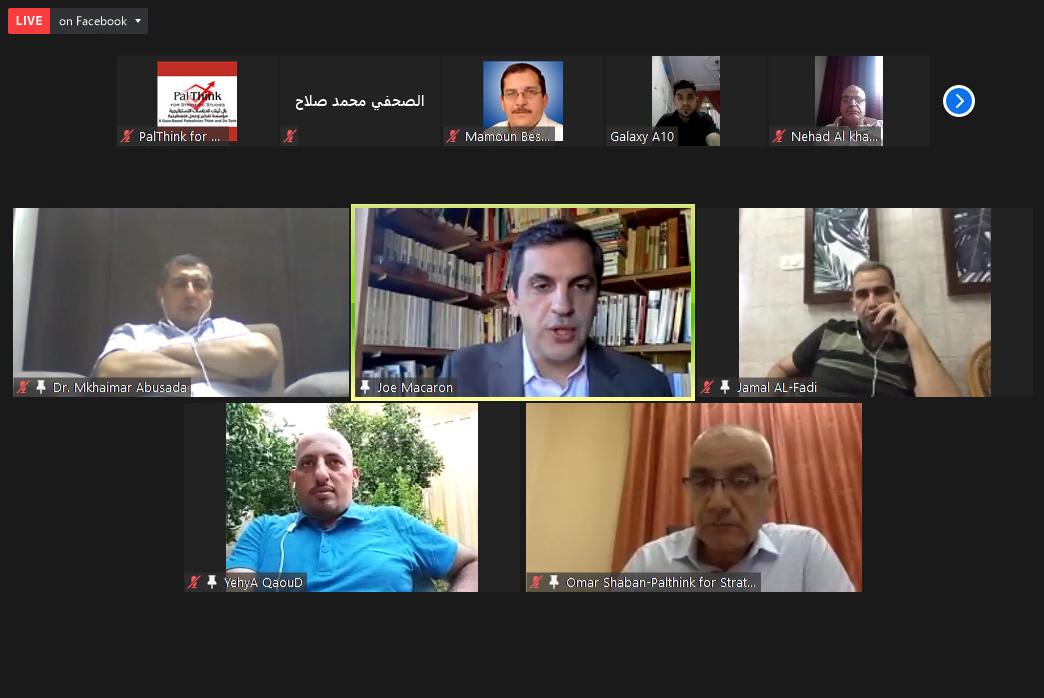
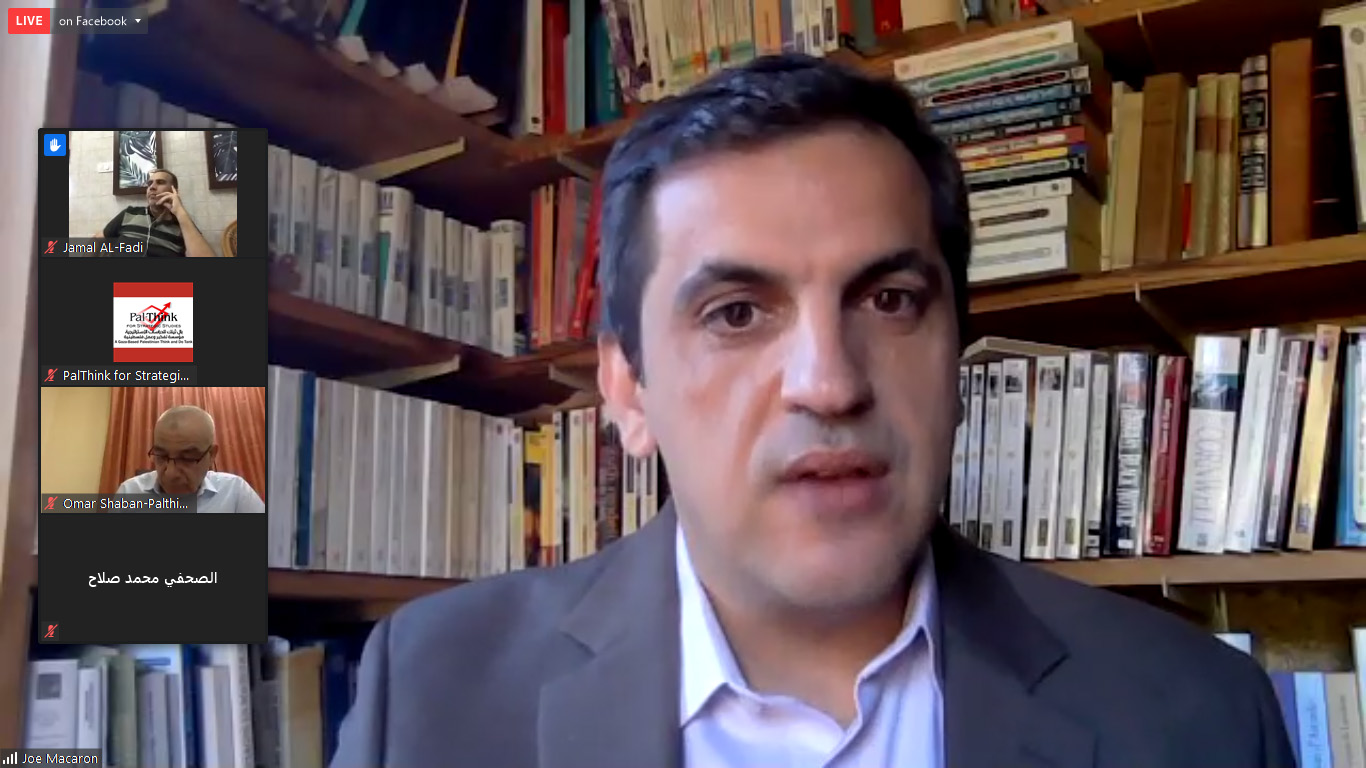
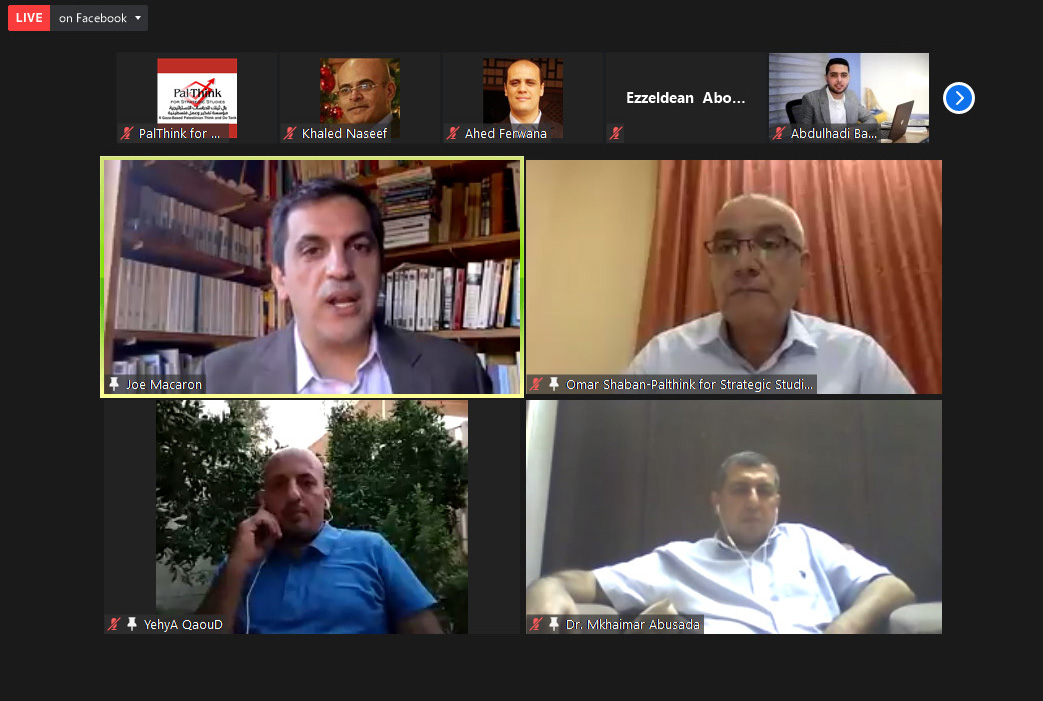
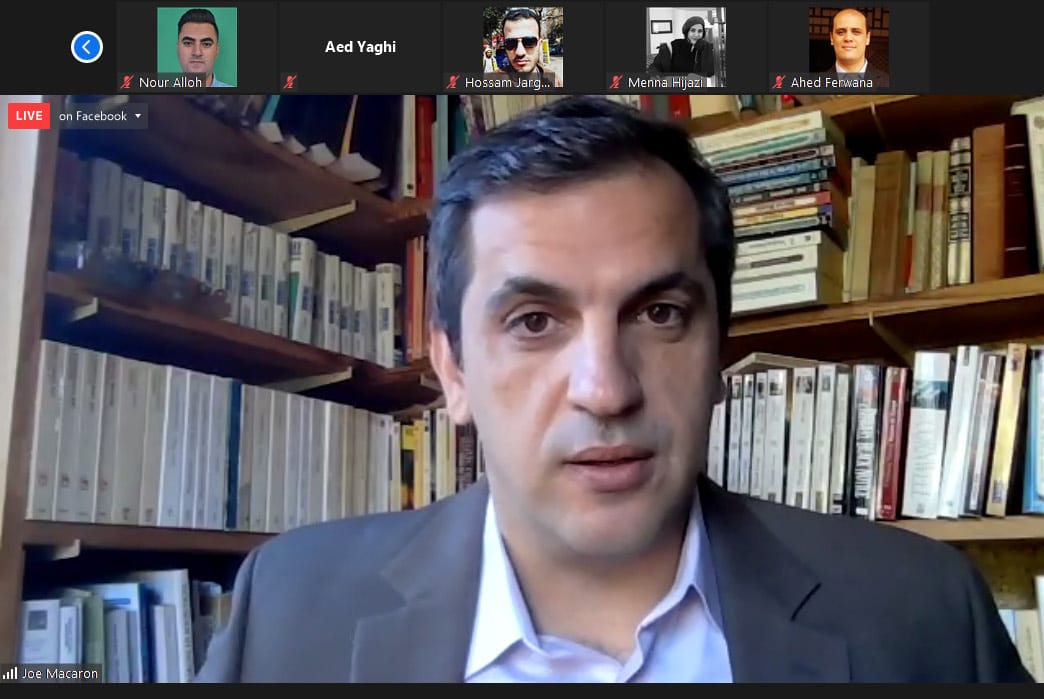
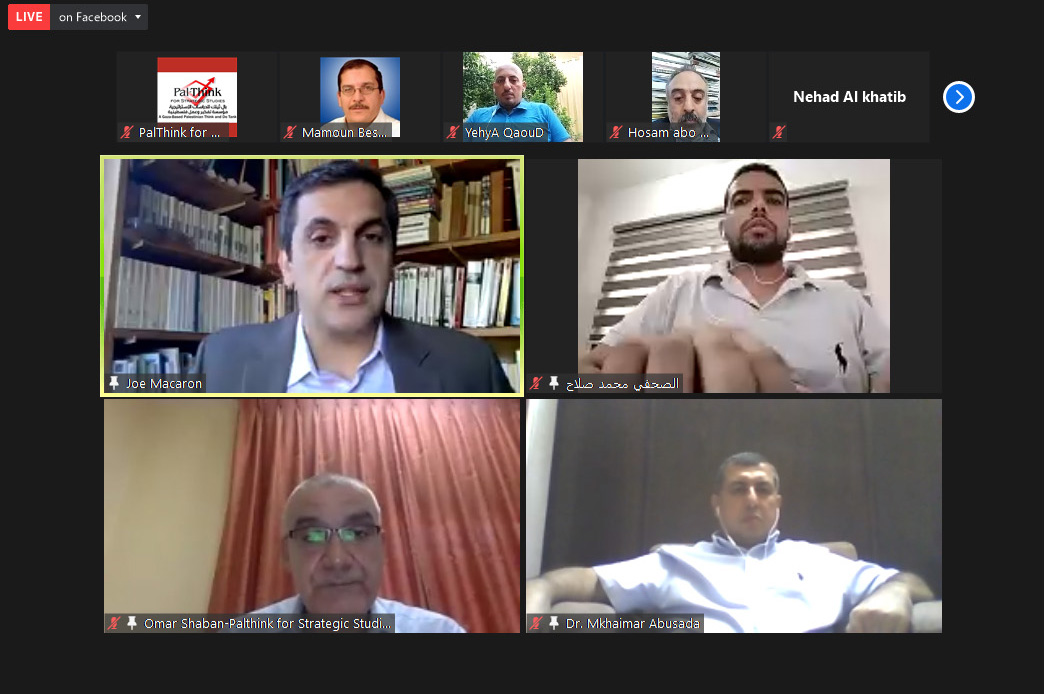
Pal-Think held the political seminar «US election scenarios and their reflections on the Middle East», hosting researcher Joe Macaron of the Arab Center Washington, moderated by director Omar Shaban.
- Date
- 2020-10-06
The “Pal-Think” for Strategic Studies institution organised a political seminar titled “The scenarios of the American elections and their reflections on the Middle East”, in which it hosted Mr Joe Macaron, researcher at the Arab Center for Research in Washington.
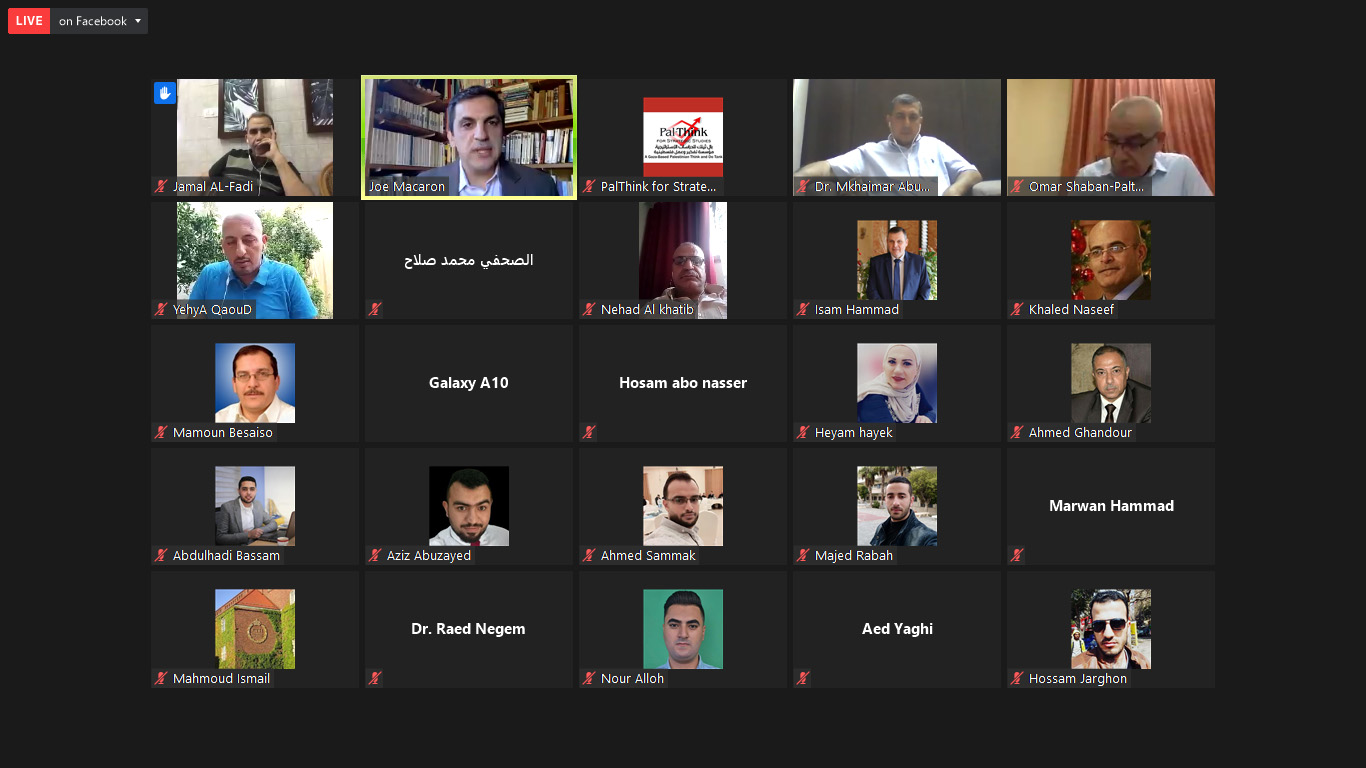
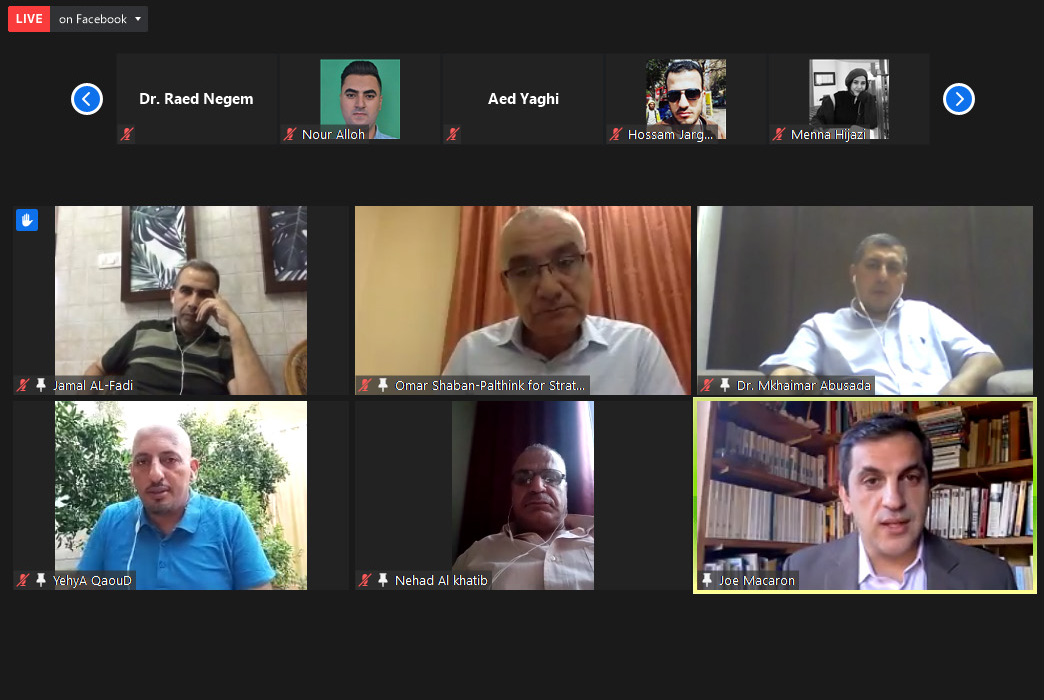
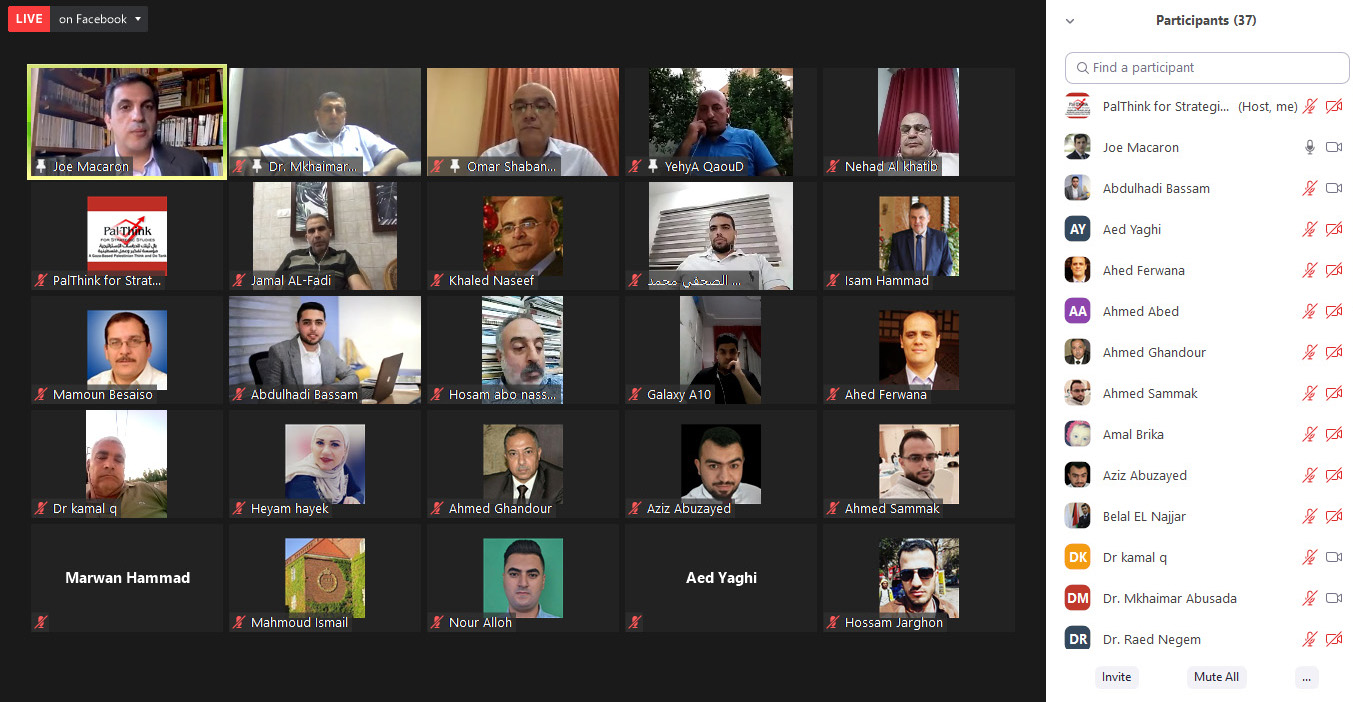
The digital political seminar, moderated by Mr Omar Shaban, director of the “Pal-Think” for Strategic Studies institution, was attended by an elite of academics, researchers, media people, and representatives of civil-society organisations. The meeting comes with the approach of the American presidential elections set for the coming third of November.
Mr Omar Shaban, director of the “Pal-Think” for Strategic Studies institution, made clear “that the meeting with the researcher at the Arab Center for Research in Washington, Joe Macaron, aims at learning the reflections of the American elections and their results on the Middle East, especially in light of the difference of visions between the Republican and the Democratic Party on several issues”.
Mr Shaban set out the importance of learning the probable scenarios of the American elections' results and their reflections on the issues of the Middle East, especially the Palestinian cause — particularly in light of the official Palestinian position's wagering on the results of the American elections — stressing the importance of strengthening the Palestinian house, surpassing the stage of division, and renewing the legitimacies through the ballot box, to confront the challenges storming the cause.
Mr Omar Shaban said: “The specialised political seminar is a serious attempt to foresee the results of the American elections and their reflection on the issues of the Middle East” — pointing out that the political seminars and the hosting of specialists strengthen the principles of the Pal-Think institution, which aims at joint thinking and independent research”.
All probabilities are possible!
In his turn, Mr Joe Macaron, researcher at the Arab Center for Research in Washington, saw that the American presidential elections come in light of great historic transformations the United States has been witnessing for years, which strengthened during the current year, in light of the corona crisis, the racial tension, and the economic deterioration taking place.
Macaron made clear the existence of a difference in the strategic, social, political, and economic visions between the Republican and the Democratic Party, concerning the issues and crises storming the United States, such as the corona crisis, the economic situation, the racial tension, and the country's foreign policy.
Macaron made clear that the electoral scene is in a state of great stalemate that weakens the state of prediction and opens the probabilities wide — because “the first candidate”, Donald Trump, possesses a strong and cohesive popular base, but in return it is difficult for him to push the moderates and independents to vote in his favour; while “the second candidate”, Joe Biden, lacks a strong popular base, but at the same time is able to address the moderates and independents.
The expert in American policies asked: in light of the current stalemate in the electoral scene two questions remain.. does Trump succeed in convincing the independents and moderates to vote in his favour? And can Joe Biden convince the left-wing base to come out to vote in his favour?
He made clear that the opinion polls in the swing states point to Biden leading Trump by a slim margin — pointing out that Biden is changing the electoral map as Obama did in 2008, for he leads in the opinion polls in states that historically voted in the Republicans' favour, such as Arizona and Texas; noting that in the states' calculation the road is harder, but not impossible, before Trump to guarantee a second term.
Trump, the man of surprises!
Macaron sees that, despite the sympathy with him, the infection of the American president Donald Trump with the coronavirus may affect negatively his chances of winning the presidential elections, and strengthen the chances of his Democratic rival Joe Biden of entering the White House — especially as Trump needed the final weeks to attack his rival Biden to prevent him advancing in the opinion polls.
He pointed out that Trump did not rise, before the American voter, to the level of his health crisis, and of preserving their interests, and of trying to unify the Americans in the period of his illness; rather he left many questions that weakened the voters' trust in him, such as: where was he infected? Who was with him? What would happen if he died or withdrew from political life? — which caused the American voters to lose the capacity to predict concerning Trump's ability to manage the country's affairs in the coming stage.
He made clear that Trump failed, in the Americans' eyes, in dealing with the crisis of corona's spread, and during the past months he focused on reopening the American economy to strengthen his chances of winning — but the factor of his infection with the epidemic placed corona, and the president's dealing with it, once again at the forefront of the campaigns and the electoral headlines.
He pointed out that the scenarios of the American elections remain open to all probabilities, although the opinion polls issued by independent research centres point to Joe Biden leading his rival Donald Trump, saying: “Opinion polls are a wish and not a deed — meaning that people wish at the present time to remove Trump from the political scene, but surprises may occur that overturn the electoral scene (..) The wish exists to vote in Biden's favour, but Trump will not be finished and will not concede before the final whistle is blown — with the affirmation that Trump is a man of surprise.”
The scenarios of foreign policy
Macaron excluded that Joe Biden, should he win, could erase the traces of the Republican Donald Trump on Washington's foreign policies toward the Middle East, since Trump created new facts in the region that are difficult for Biden to surpass.
Macaron made clear that the disagreement between Trump and Biden lies in the domestic issues such as the corona crisis, the deteriorating economic situation, and the racial protests; while at the level of foreign policy there are no disagreements in the strategies but in the tactics and the bilateral relations — excluding that he would lift the sanctions on Tehran swiftly, or return the American embassy from Jerusalem to Tel Aviv.
He said: Trump set a ceiling for negotiating with Tehran, and it will be difficult for Biden to descend much below the ceiling he set; and he set new rules relating to the alliance with the Arab states, and it will be difficult for Biden to change the political reality Trump imposed with those states.
On the effect of Biden's win in the American elections on the Palestinian cause, he expected Biden to have a new approach in negotiating, resting on flexibility and smoothness in dealing with the Palestinian side, and the possibility of pushing the two sides to negotiate — adding, “but the difficulty before Biden lies in the right-wing government inside Israel: if Netanyahu does not change, Biden's plans will go nowhere”.
He deemed it likely that the relationship between Biden and Netanyahu would be tense and crisis-ridden as a result of the rise of the left in the Democratic Party and its pushing toward a more balanced American policy in the Palestinian–Israeli file — pointing out that there is a great challenge before the Palestinians, because whoever the winner in the American elections, there is a change in the official Arab position toward the Palestinian cause.
He made clear that Netanyahu is less fearful of the Democrats' win after the defeat of Bernie Sanders, known for his criticism of the Israeli policies — pointing out that Biden and Netanyahu were joined by a friendship at the time Biden occupied the post of American vice-president in the Obama administration; noting that Biden was the mediator who tried to defuse the tension between Netanyahu and Obama after the tension that took place at that time.
He said: “Biden will try to restore balance to the American policies toward the Palestinian cause, and take a relative distance between the two sides (the Israeli and the Palestinian), in an attempt to find a frame for negotiating anew” — excluding the reaching of a peace agreement in light of a right-wing Israeli government.
He pointed out that history records the tension of relations between the United States of America and Israel when the Democratic Party is in the former and a right-wing government in the latter — while pointing out that the tension, should it take place, will not affect the strategic relationship between the American administration and the Israeli government.
He expected the alliance between some Arab regimes and “Israel” to strengthen should Biden take steps contrary to what Trump follows toward Tehran; saying: “Then the Gulf governments will see that “Israel” is closer to them than the American administration, and they will increase that relationship in view of what they consider an Iranian threat.”
He likewise expected the personalisation in the relationship between the American administration and the Arab governments to retreat and return to its institutional nature should Biden win — especially with the existence of a left-wing base that does not favour establishing a relationship with those they describe as “tyrants”, saying: contacts will take the official lines through the embassies and the like, and will not be in the manner of the text message to the president's son-in-law Jared Kushner”.
On the probabilities should Trump win, he expected Trump's second term, should he win, to be distinguished by more rationality — that being traceable to his not thinking again of the American elections; but his narcissistic personality will most likely not change.
Macaron expected Trump to ask Netanyahu for some concessions, and to press him concerning that, without the relationship being struck by spasm or rigidity in the manner of Netanyahu–Obama.
He deemed it likely that channels would open between the Trump administration and the Palestinian side should the American president win — excluding the occurrence of peace between the Palestinians and the Israelis in the foreseeable term, so long as the general mood in Israel keeps leaning to the right.
Activating back channels of contact with Washington
Macaron affirmed that the Palestinian reality is flabby, weak, and fragmented at all levels, especially the political and the economic, making clear that the Palestinian leadership still counts on the external transformations. He pointed out that there are complications before any attempt by the American administration to impose a change in the Palestinian leadership, and that the Palestinian cause and the application of the deal of the century are no longer a priority for the American president Donald Trump.
Macaron called on the Palestinian leadership to open back channels of contact with the new American administration, so as not to leave the American arena for Israel to roam and range in it, saying: “There must be communication, even if with the Trump administration, through back channels of contact — and there are known channels such as the intelligence services on both sides, so they must be activated anew to find a new approach, especially in light of the ending of the stage of the Palestinian wager on the official Arab system.
Macaron called on the Palestinians to create a new generation of leadership, put the Palestinian house in order, open back lines of contact, and strengthen the self, instead of wagering on the win of this candidate or his rival.