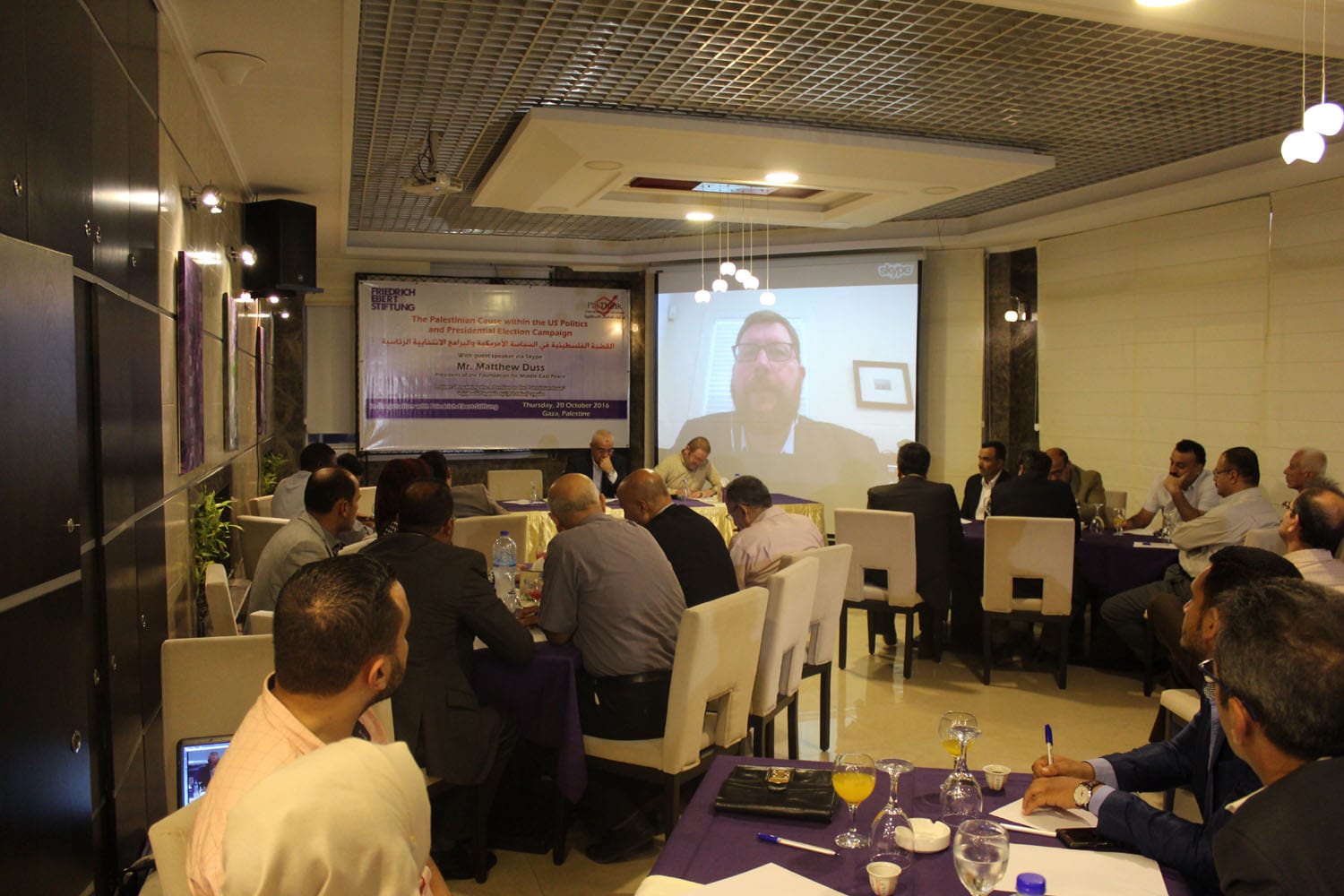
A dialogue on the Palestinian question in American politics
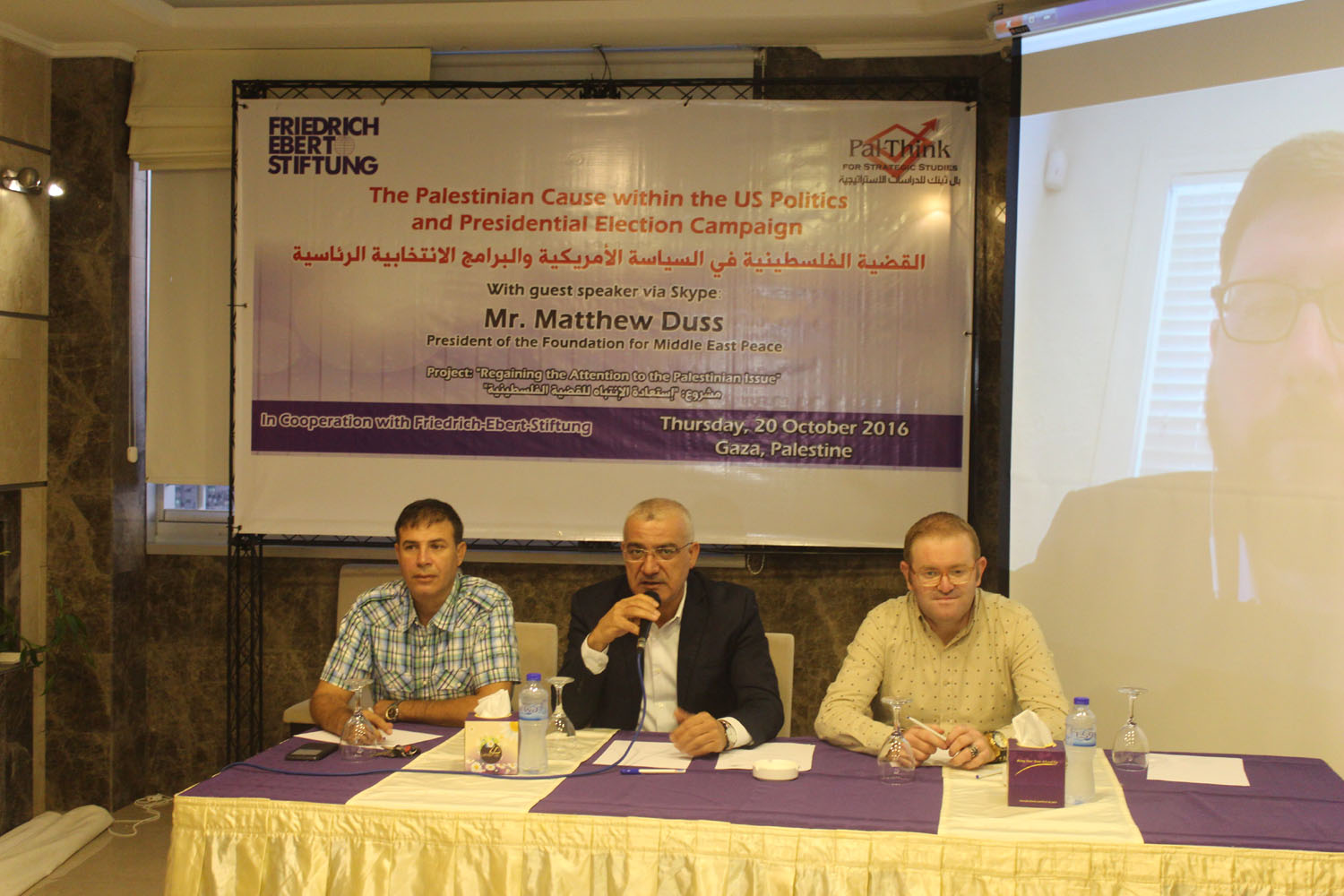
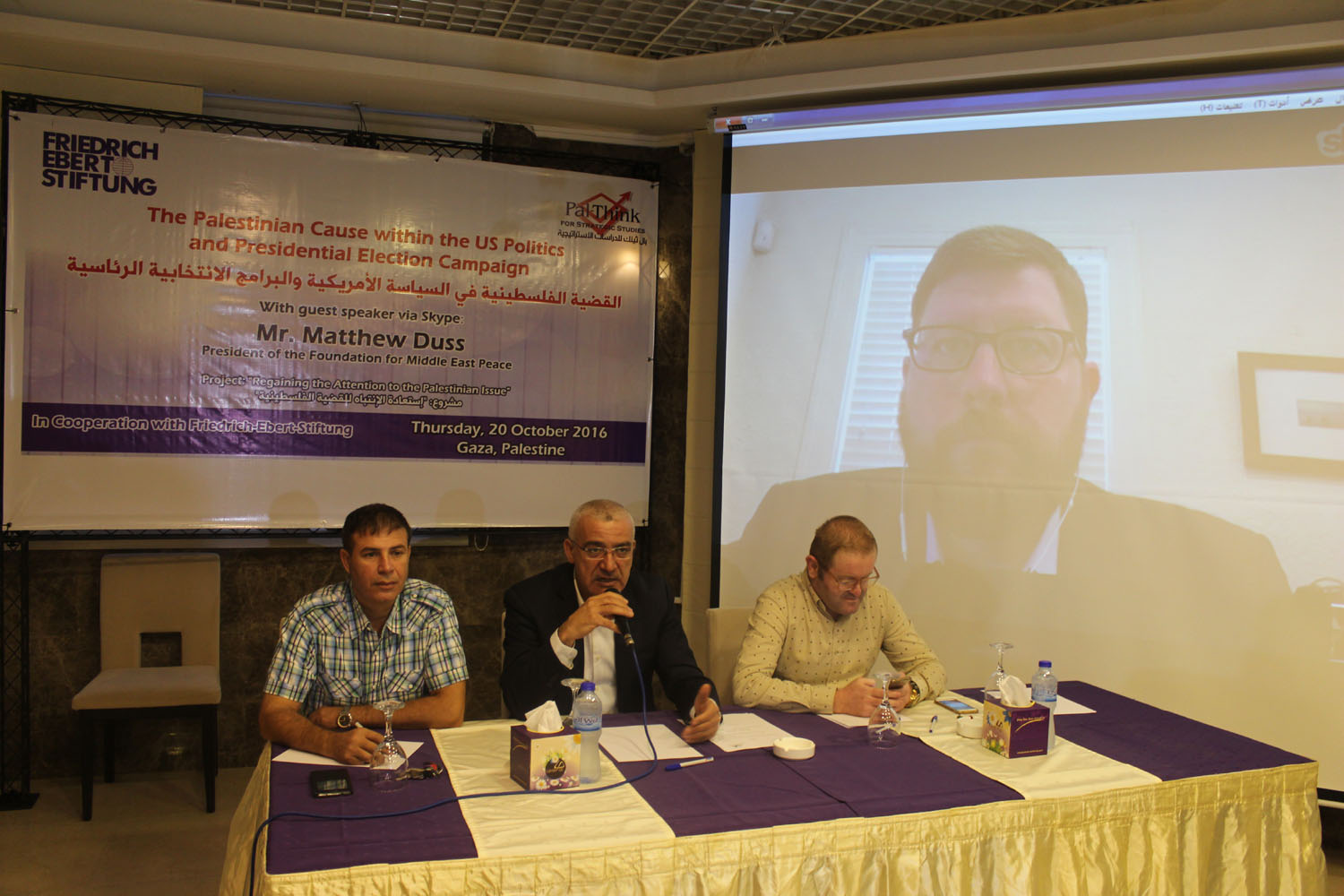
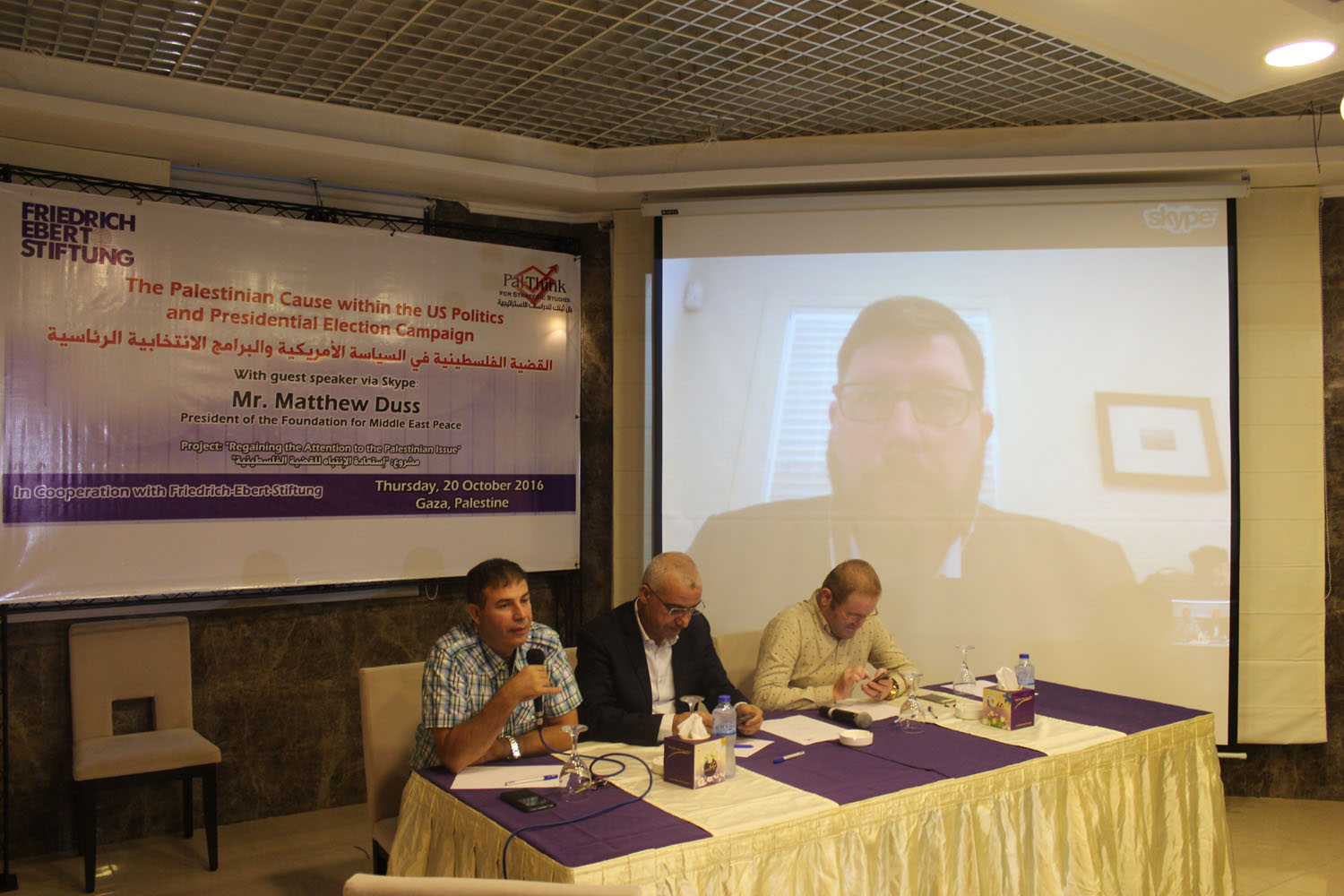
Pal-Think and the Friedrich Ebert Foundation held the dialogue «The Palestinian question in American politics and the presidential platforms», hosting Matthew Duss, president of the Foundation for Middle East Peace.
- Date
- 2016-10-24
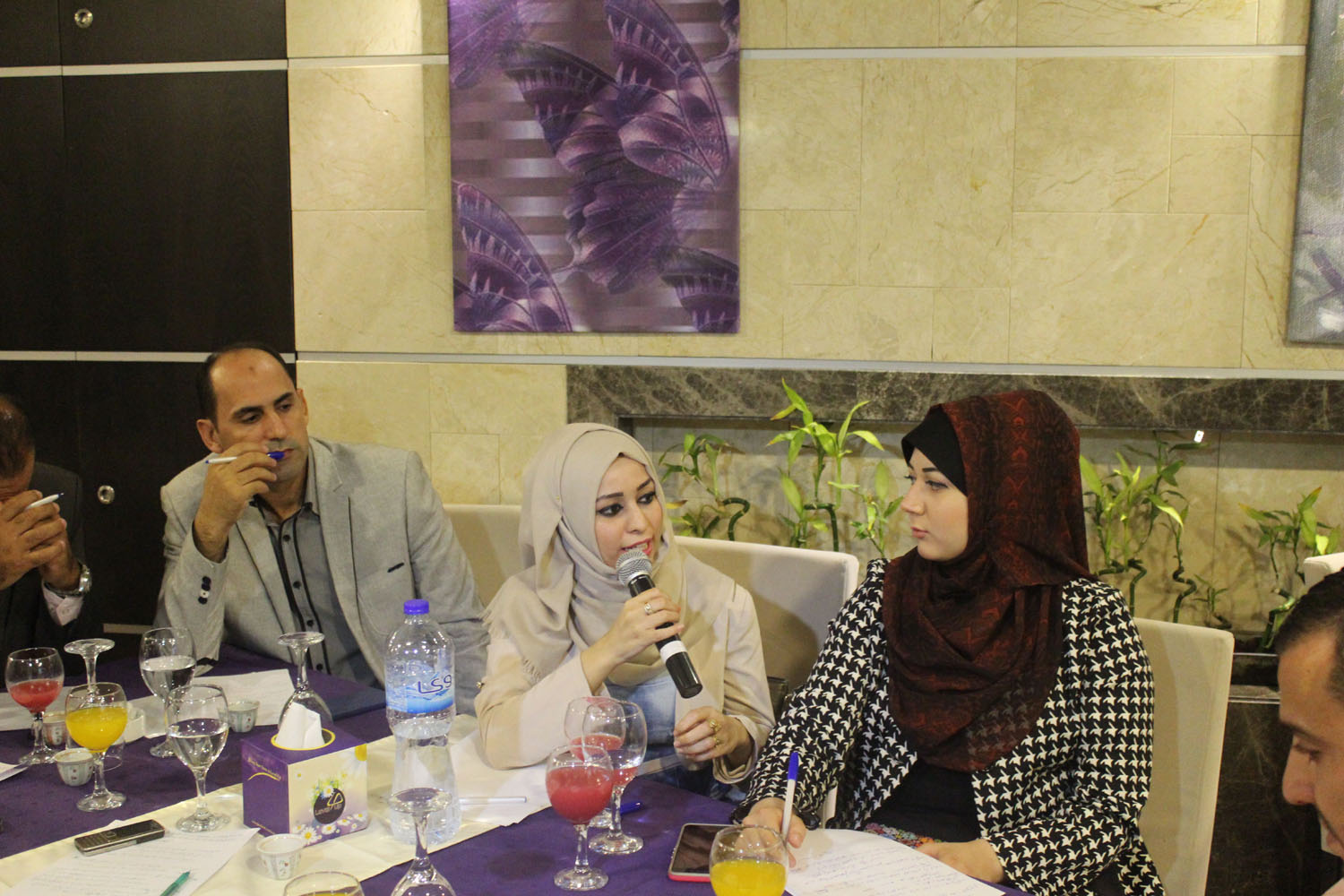
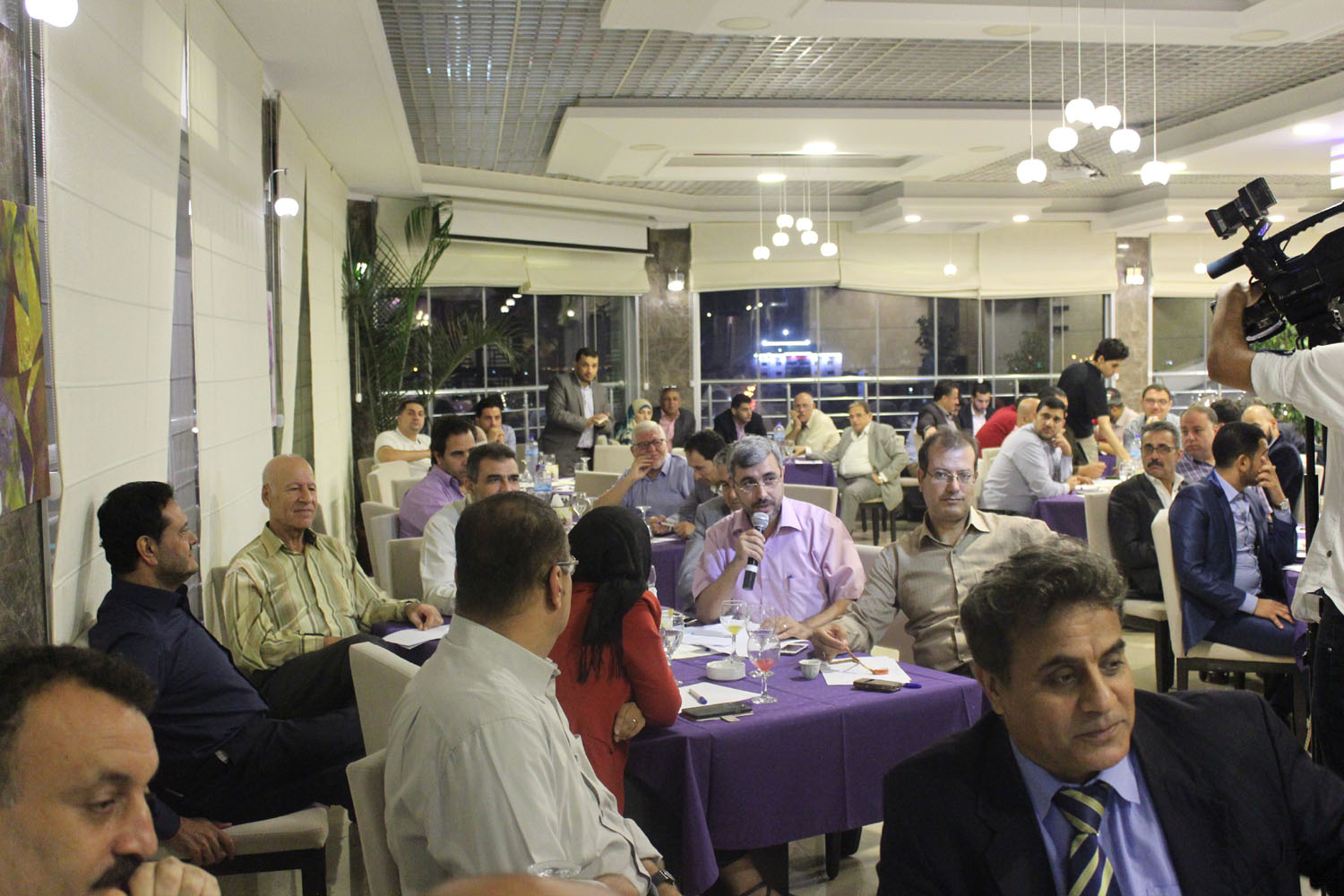
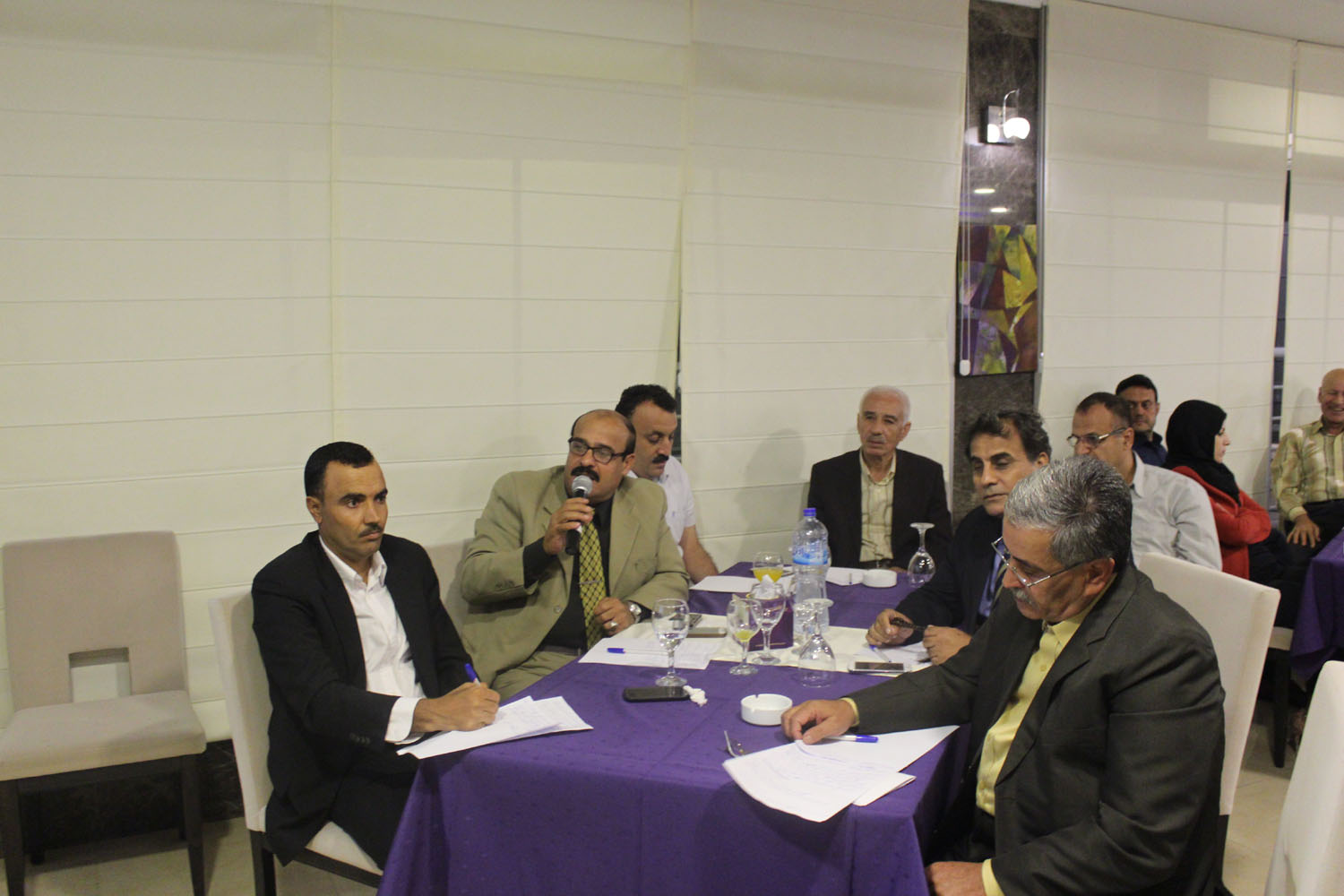
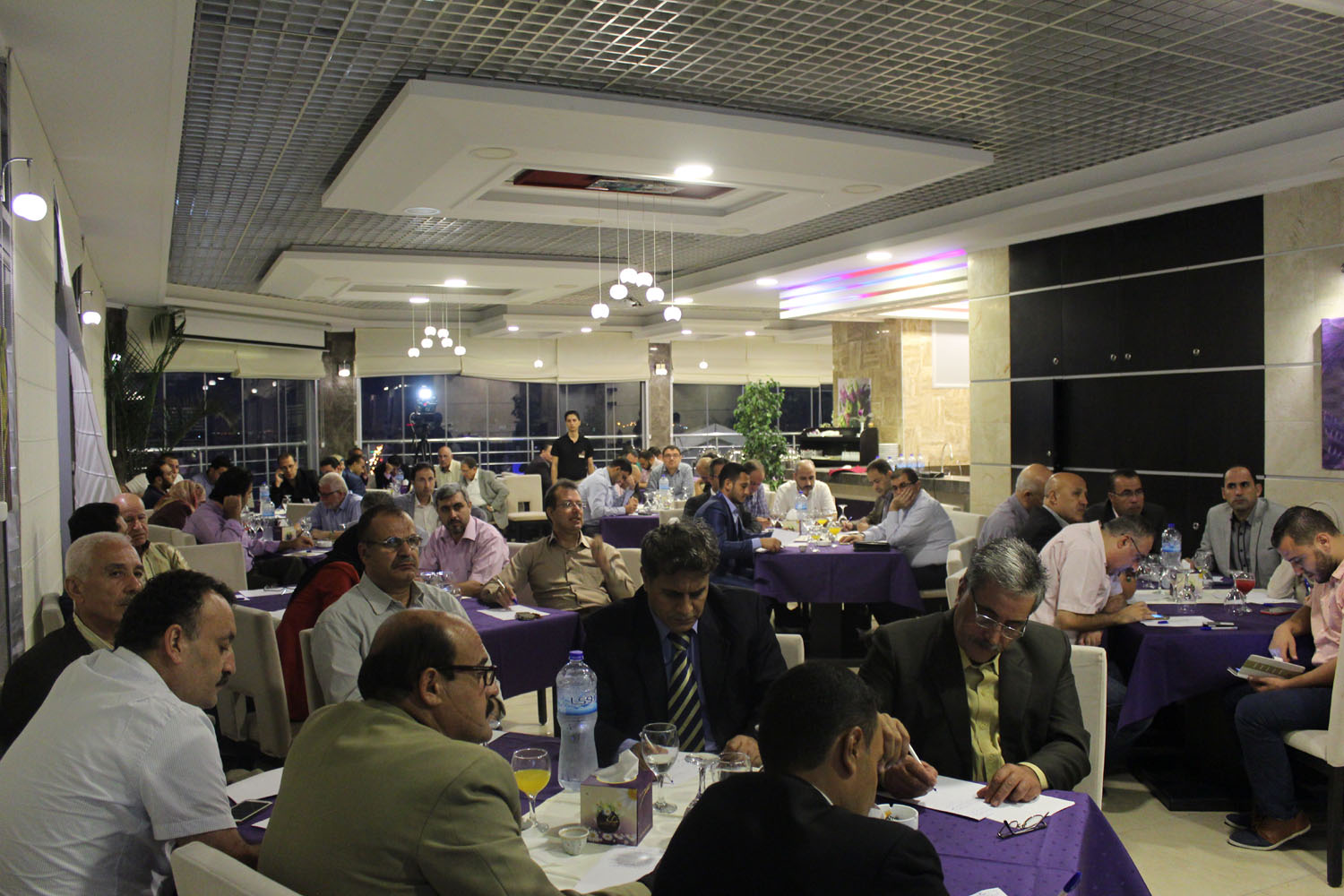
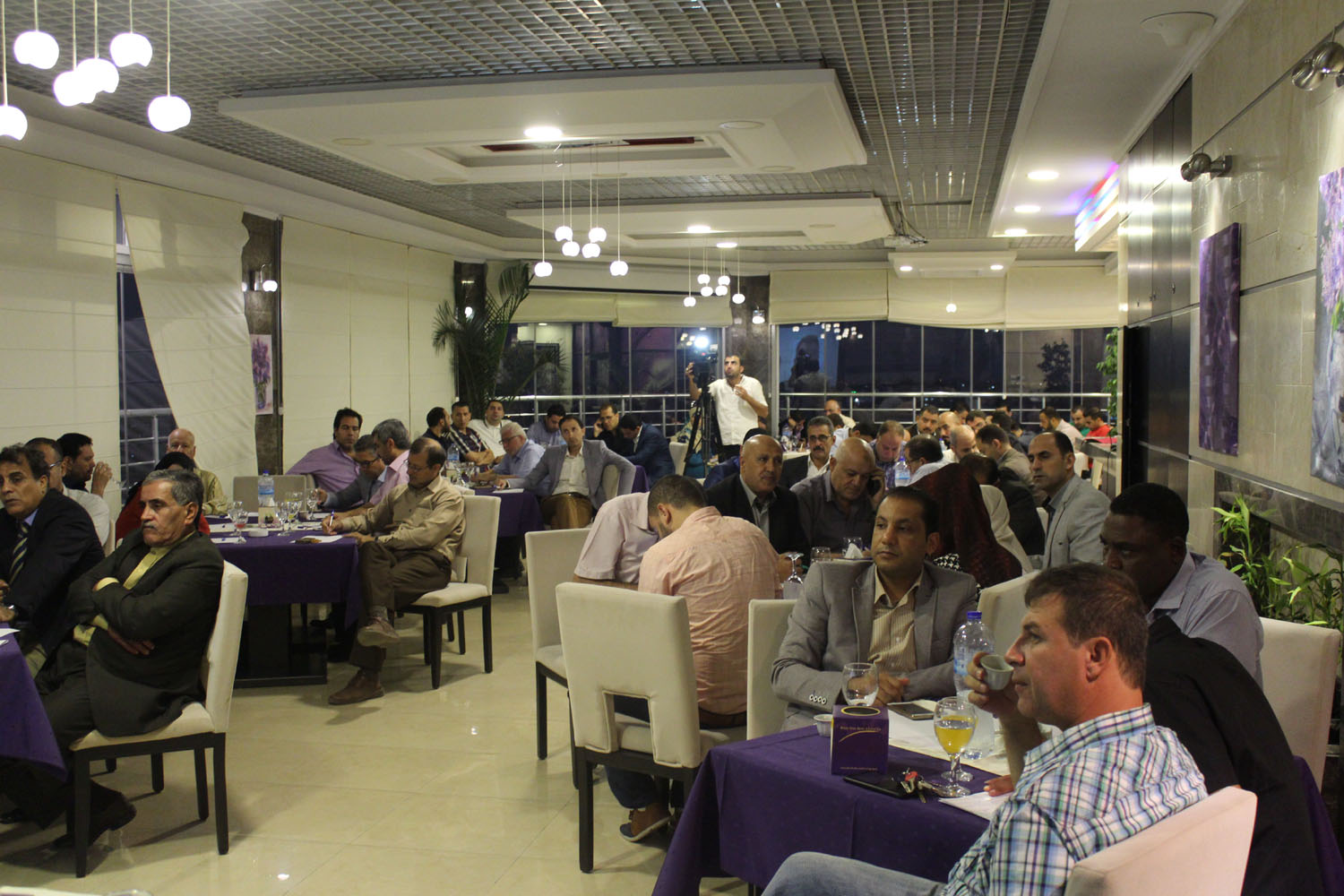
Gaza/ Pal-Think for Strategic Studies, in cooperation with the German Friedrich Ebert foundation, organised a dialogue session on “The Palestinian cause in American politics and the presidential electoral programmes”, where it hosted Mr Matthew Duss, president of the American Foundation for Middle East Peace, from Washington via Skype, with the attendance of a number of Palestinian writers, political analysts, intellectuals, and media workers.
The session was opened by Mr Omar Shaban, director of the Pal-Think for Strategic Studies institution, welcoming the attendees and Mr Matthew Duss, and he affirmed that Pal-Think is an independent Palestinian research institution that opens the field for discussion in any issue without having a prior position. Mr Matthew expressed his happiness at the meeting and at being given the opportunity to speak about the Palestinian cause, pointing out “that the Palestinian cause did not stand out much during the period of the American presidential elections, between the two parties — the Democratic led by Hillary Clinton, and the Republican headed by Donald Trump”.
Duss said: “During the meetings and gatherings and the first stages of the elections between the two competing parties, the Palestinian cause was present, and strongly, to find a suitable solution satisfying the two sides, the Israeli and the Palestinian; then before long the Palestinian cause faded in the debates between Hillary and Trump because of the Republican Party, which supports Israel — as Trump gives great loyalty and solidarity to the state of Israel, having considered that it does not occupy Palestine, and the support for the two-state solution receded, and they never supported the Palestinian position — whereas the Democratic Party was the contrary of that, supporting the Palestinian cause, in addition to the Palestinians' right to enjoy their rights”.
Duss continued his talk: “There are slight changes in American foreign policy toward the Palestinian cause, but this change must be invested by the Palestinians positively, and they must communicate with America and practise the policy of pressure upon it”.
He also touched on speaking of the Jewish lobby, stating that it has a great engagement in American society, forming a strong influence on the American government's decisions — contrary to the Palestinian lobby, which lacks that and cannot influence any of the American decisions; yet the general peace movement is gaining more importance at the same time.
Mr Duss pointed out that in the event of the victory of the Democratic Party led by Hillary Clinton, not much will change in America's policy toward the Palestinian cause, as the foreign policy will be similar to the policy of the American president Barack Obama, and there will be a positive difference in that, but not an essential one.
As for foreign policy, Duss said it is difficult to predict anything Trump might do, noting that he does not respect America's foreign policy, such as NATO (the international community), focusing on America's interests above everything; as for Hillary, she is within the system of the international community, respecting her allies and skilled in handling America's foreign policy, walking on Obama's path.
Mr Duss made clear that in the event of Hillary Clinton's winning the presidency she will intervene, and greatly, in solving the issue of the Syrian refugees — and this is a dangerous crisis that was not raised in Obama's era — contrary to Trump, who will focus on America's internal politics.
During the workshop a deep discussion and dialogue took place among the Palestinian writers and intellectuals, and they raised many questions that centred on exploiting the American presidential elections for the benefit of the Palestinian cause. The attendees thanked the Pal-Think for Strategic Studies institution, which strives to strengthen dialogue and discussion around the issues that restore attention to the Palestinian cause, and raises the most important problems facing the Palestinian people in a deep, independent manner — hoping that the Palestinian cause be brought forth among the priorities in the American policies.