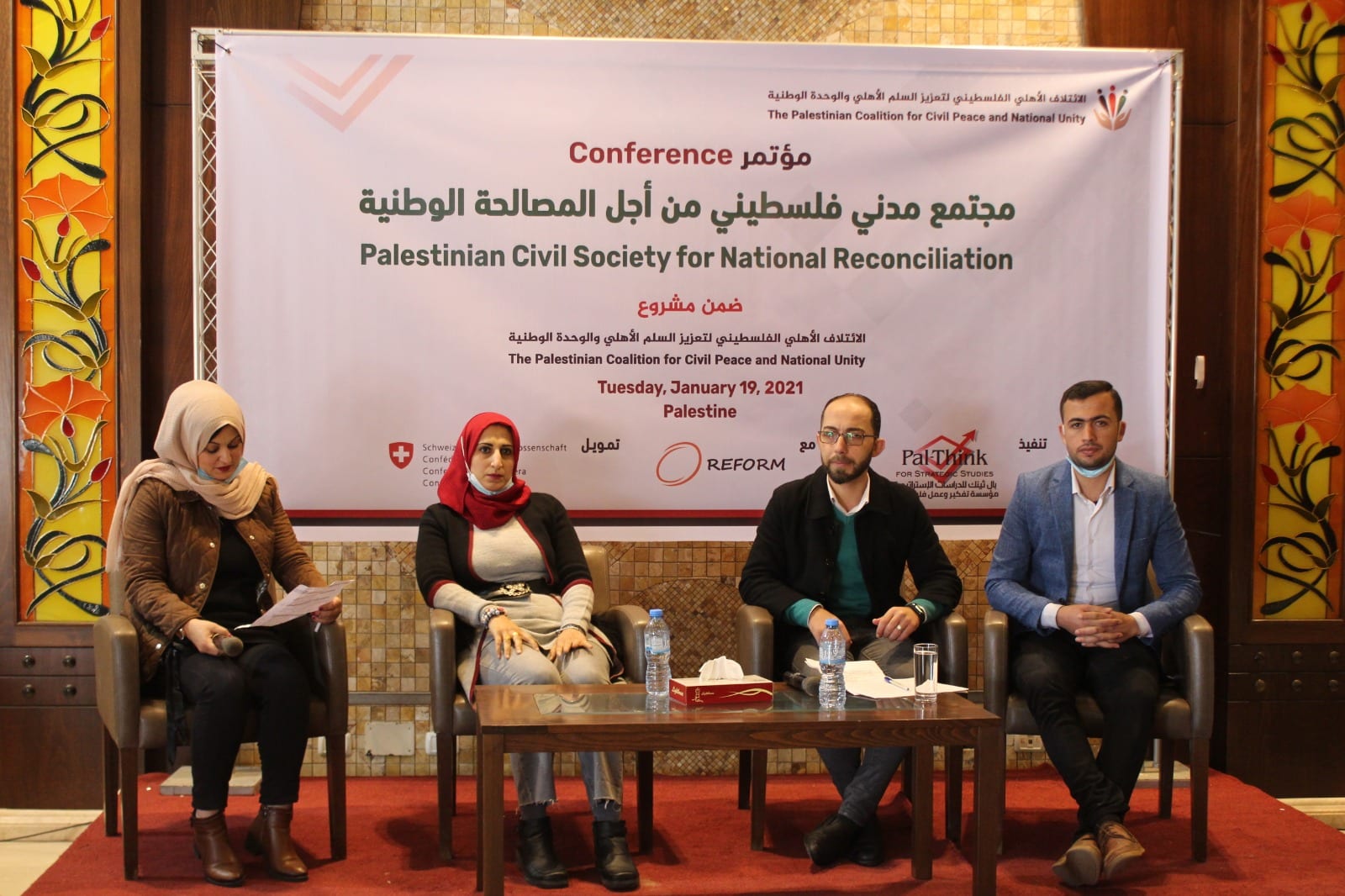
The «Civil society for national reconciliation» conference
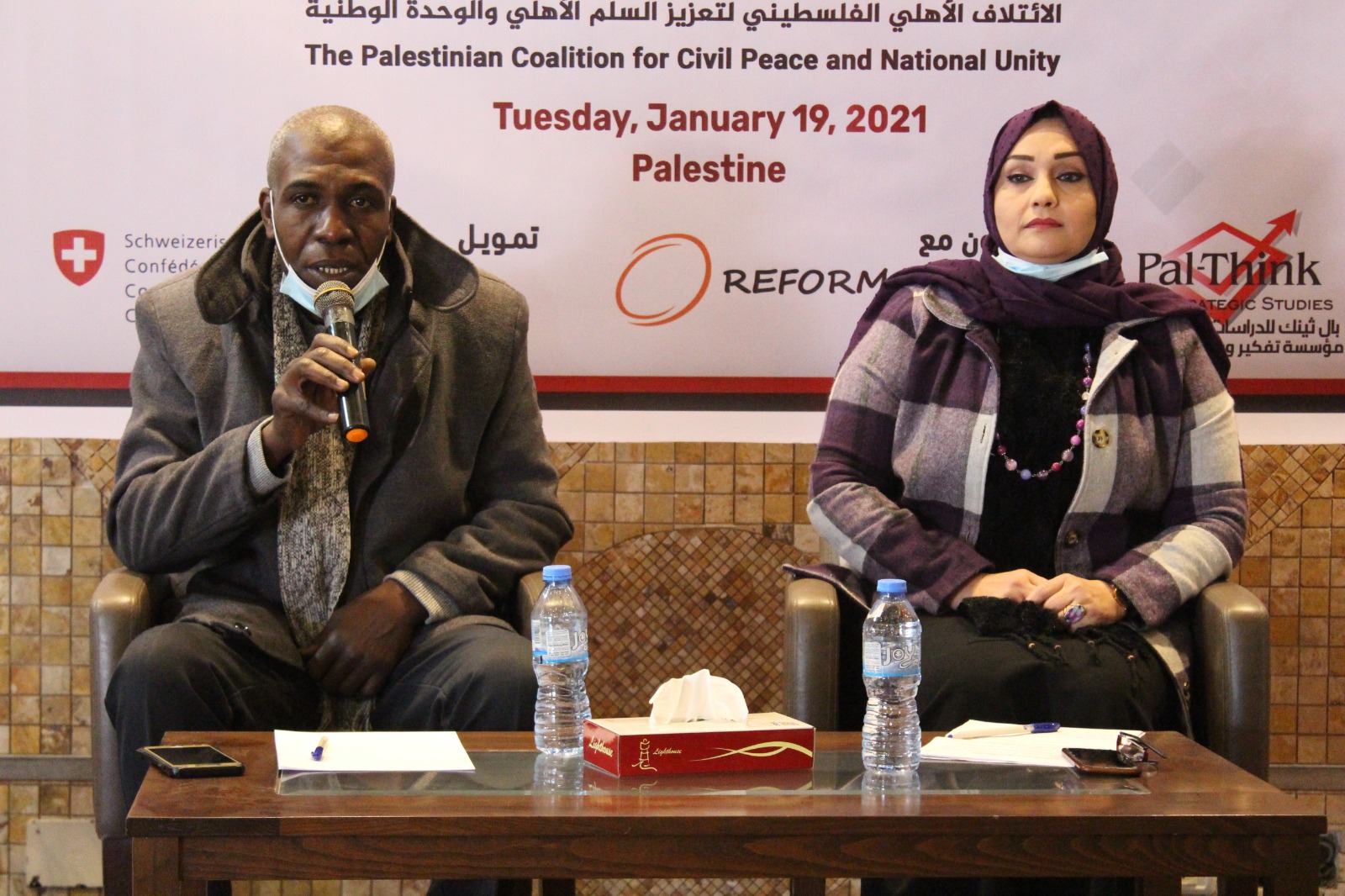
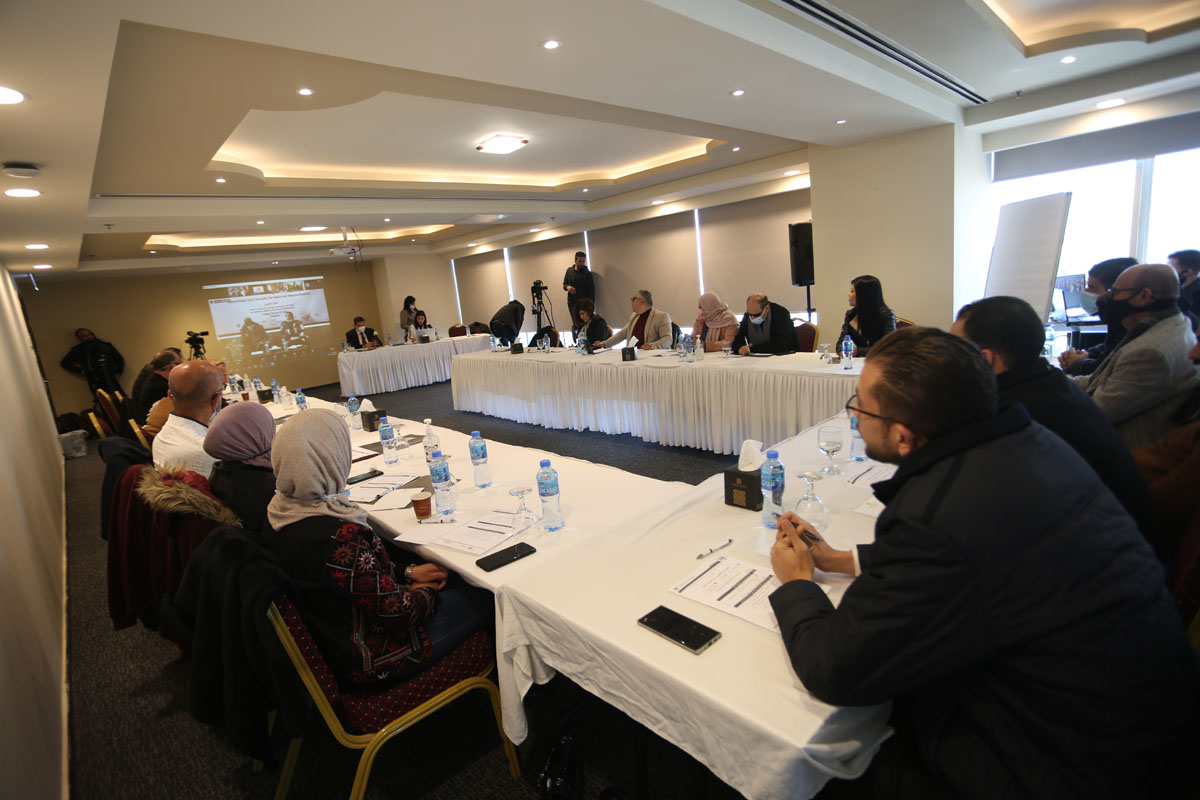
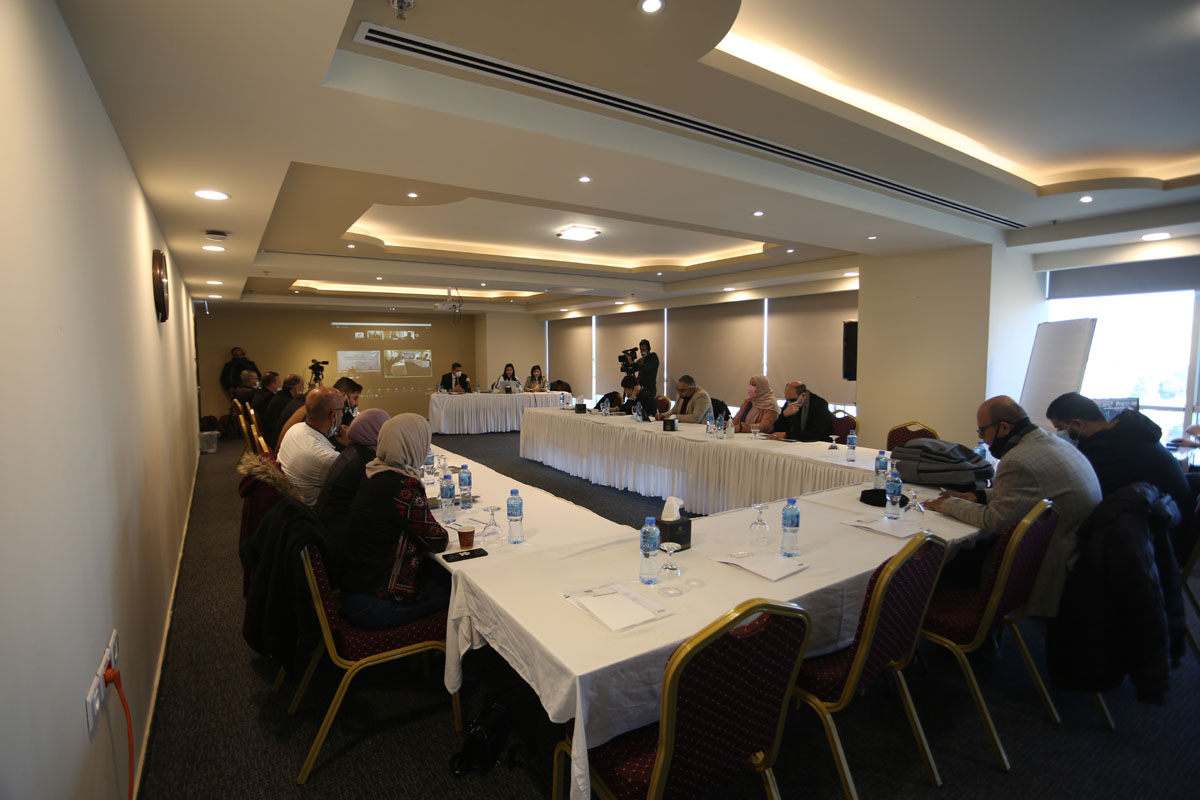
Pal-Think, with REFORM and the Palestinian Civil Coalition for Civil Peace and National Unity, funded by the Swiss government, held the conference «Civil society for national reconciliation».
- Date
- 2021-01-23
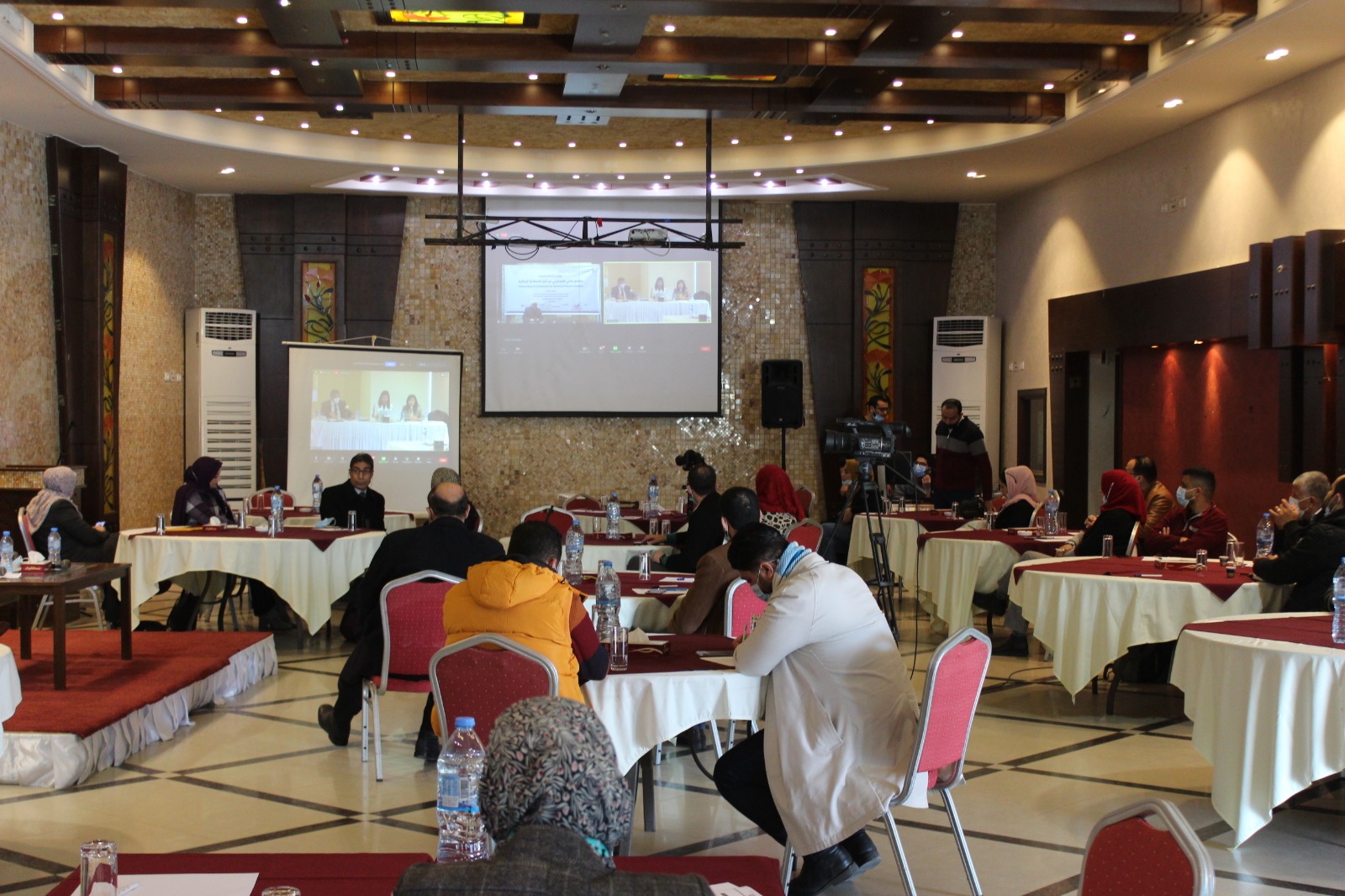
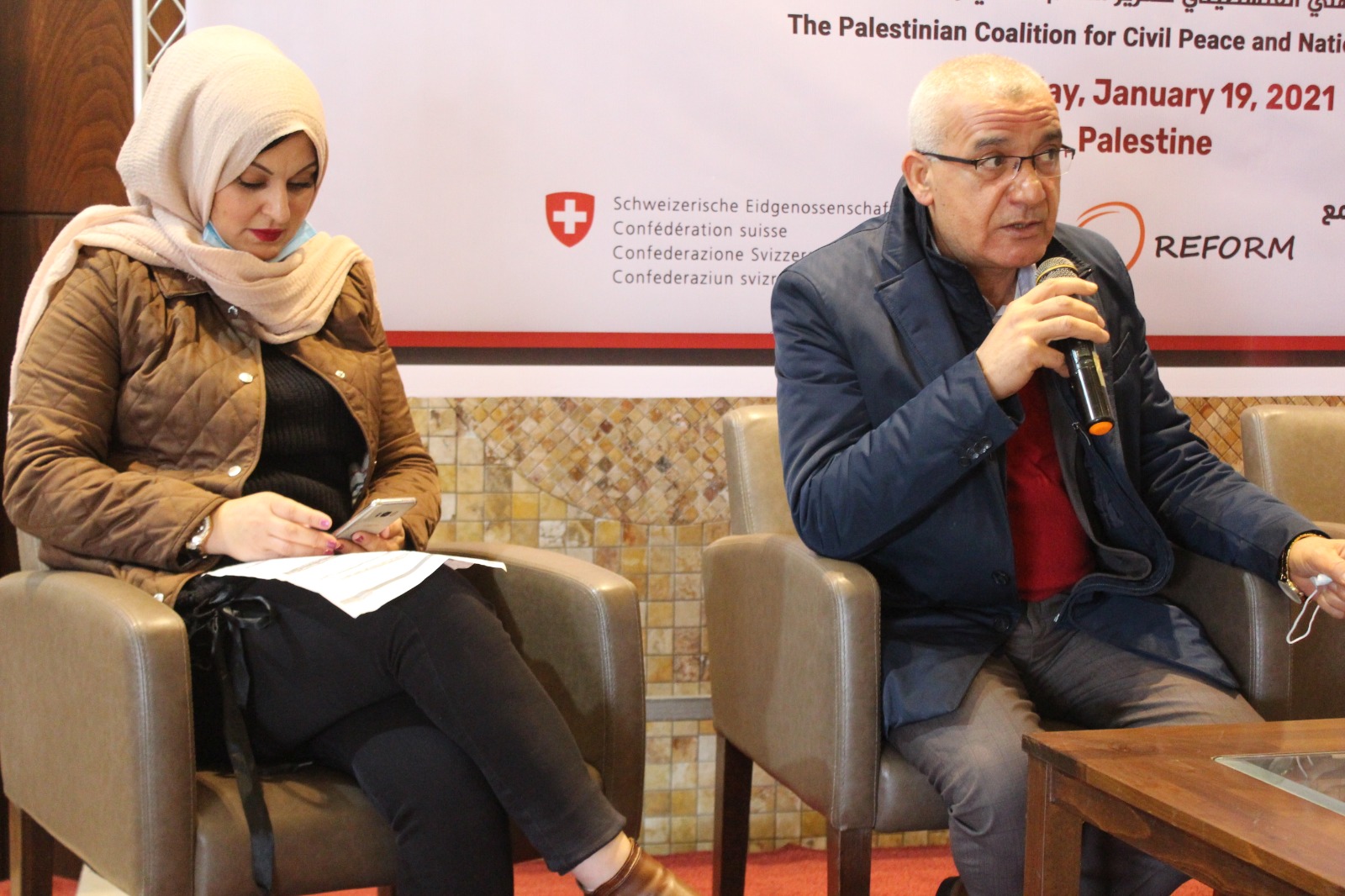
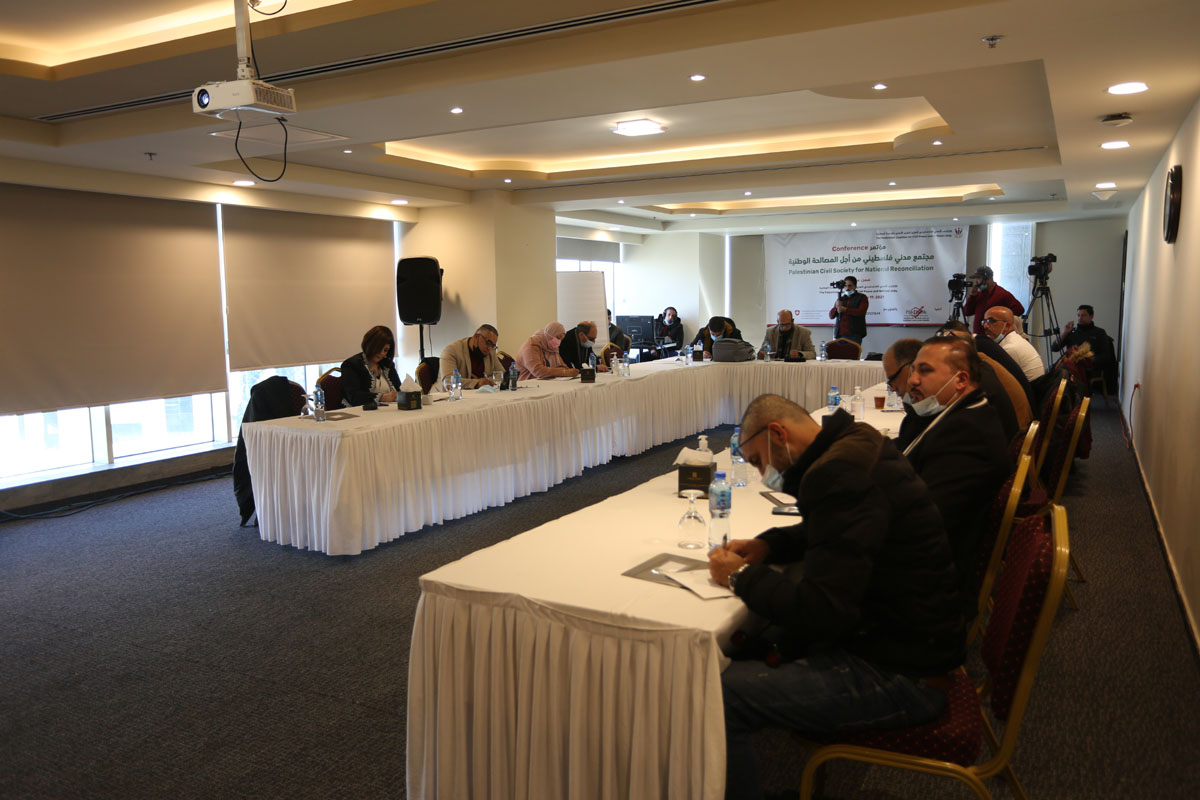
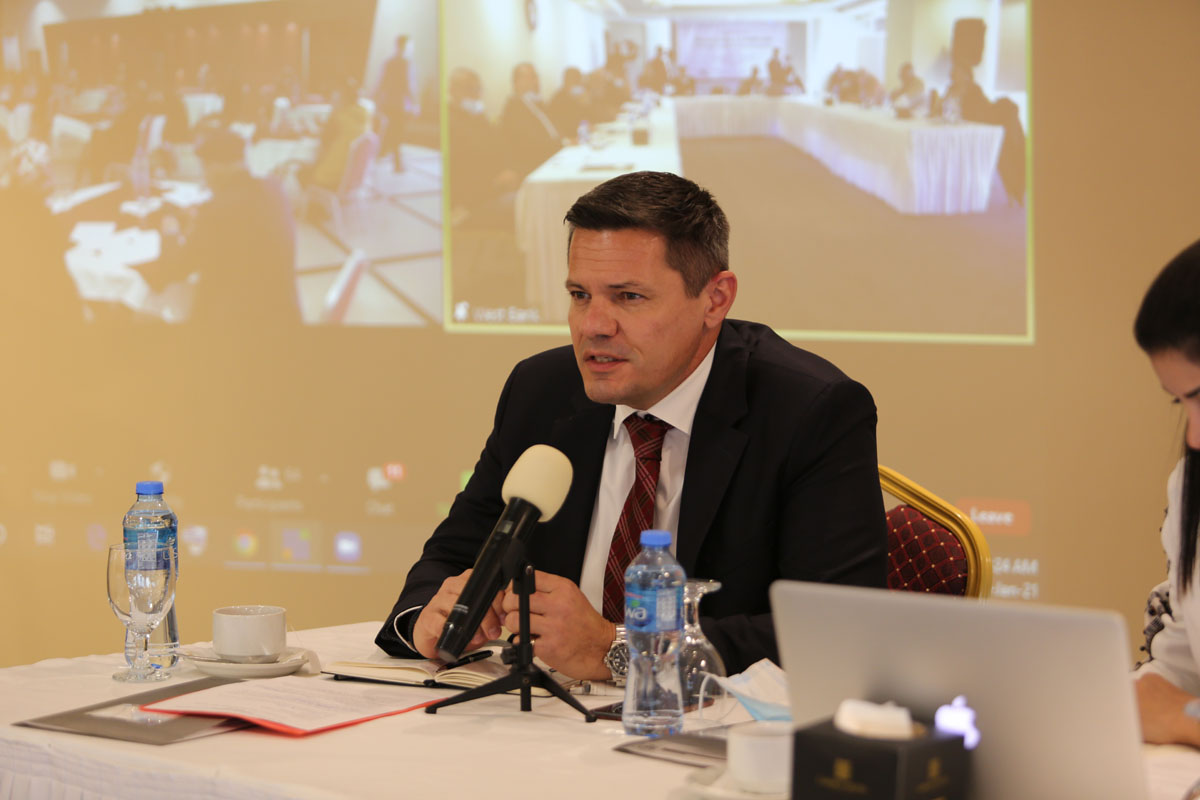
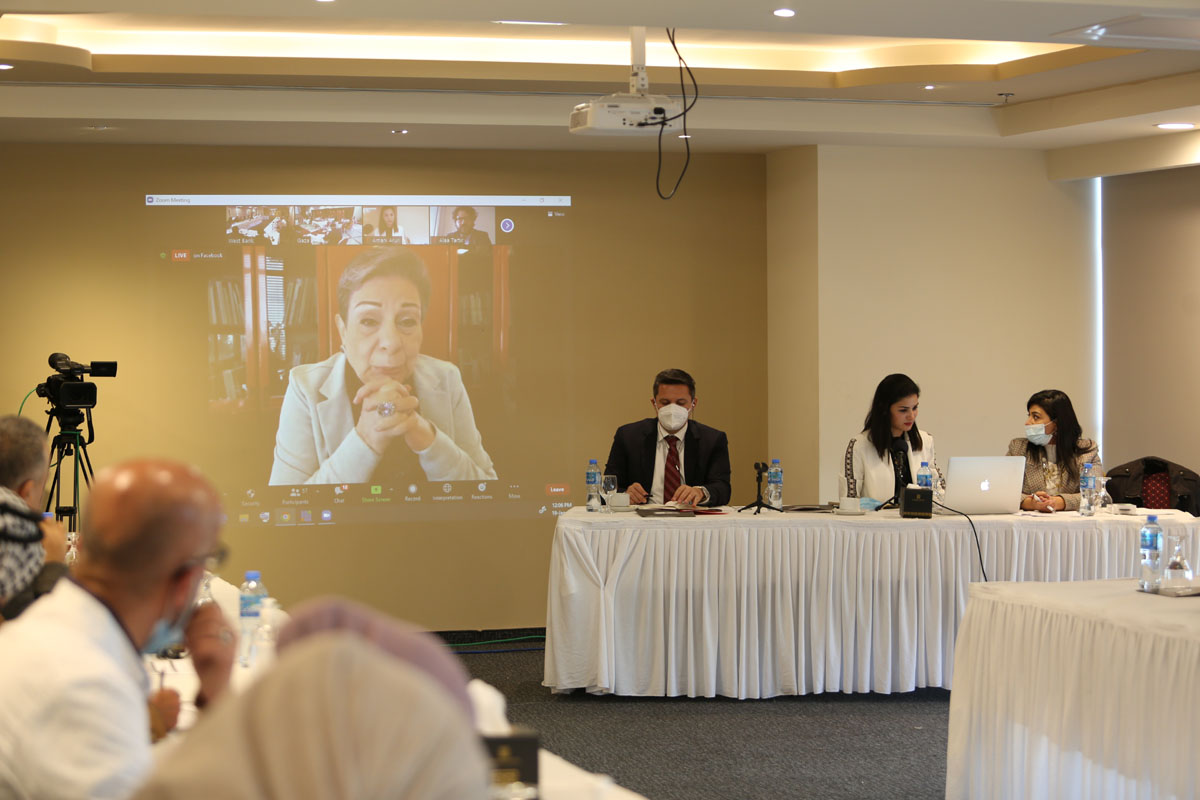
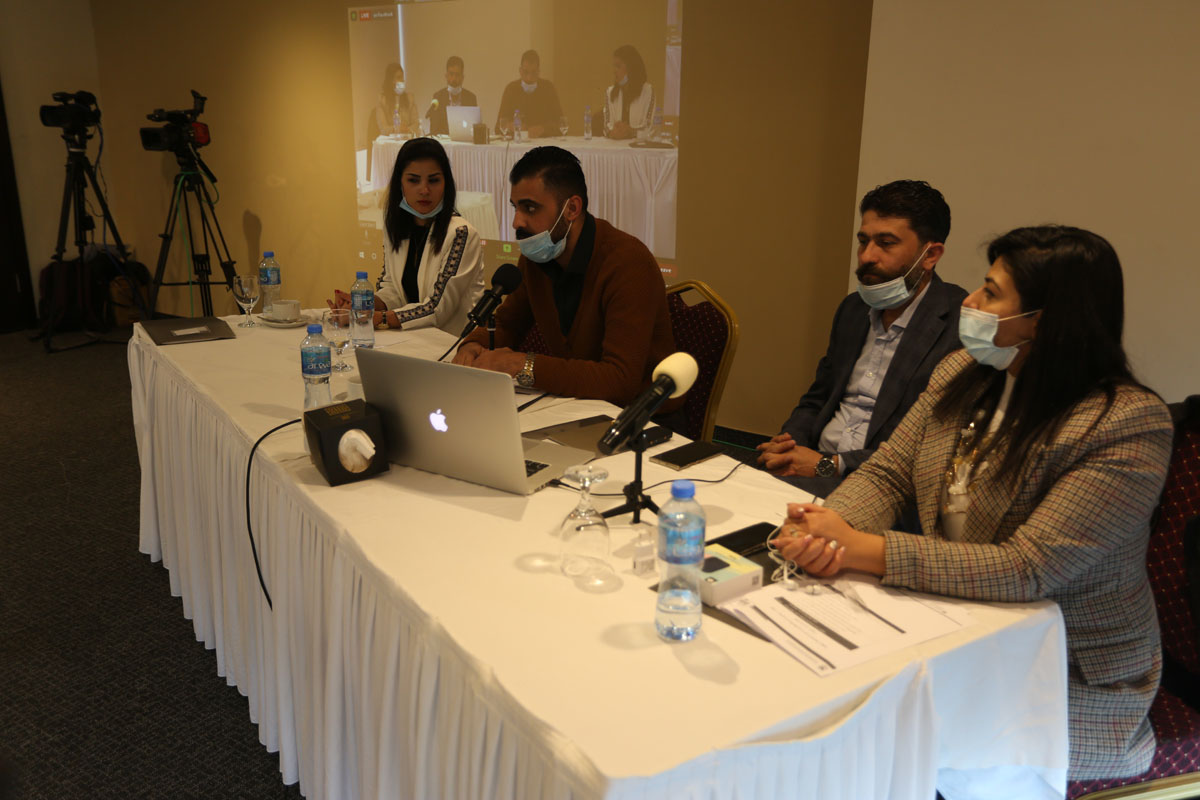
Pal-Think for Strategic Studies, in cooperation with the Palestinian Institution for Empowerment and Local Development “REFORM”, in partnership with the Palestinian Civil Coalition for Strengthening Civil Peace and National Unity and with funding from the Swiss government, organised a conference titled “A civil society for the national reconciliation”, on Tuesday, with the attendance of the representative of Switzerland in the Palestinian territories, Viktor Vavricka, and the chairwoman of the board of the Palestinian Initiative for the Promotion of Global Dialogue and Democracy “MIFTAH”, Dr Hanan Ashrawi, and with the participation of a number of civil-work organisations from the West Bank and the Gaza Strip via video-conference technique; a number of representatives of the consulates, embassies, and international institutions likewise took part via Zoom. This conference comes within the project “The Palestinian Civil Coalition for Strengthening Civil Peace and National Unity”, and the conference came to announce the launch of the coalition, which comprises 49 civil society institutions in all the Palestinian governorates and aims to unify efforts toward contributing to achieving national unity
The first session was moderated by the programmes director at the Swiss Representative Office in the Palestinian territories, Amani Aruri, who said: “This conference comes within the frame of the communal-reconciliation efforts, and aims to crown a set of interventions carried out within the project of a national coalition for communal unity and harmony — to recover the relationship between all society's parties between the West Bank and the Gaza Strip.”
She pointed out that communal reconciliation is very important for the Swiss government, adding that this project was able to found the relationship between the grassroots and civil institutions, especially the youth ones, to be the beginning of a long-term partnership.
For his part, the director of the “Pal-Think” institution, Omar Shaban, said: “This conference is the close of a project continuous for a year and a half, and the inauguration of the Palestinian civil-peace and national-unity coalition, which comprises about 50 civil institutions from the West Bank, Jerusalem, and the Gaza Strip.”
He added: “Pal-Think is the first Palestinian institution that produced a paper for reconciliation immediately after the division, in August 2007, and that paper formed a reference for tens of the papers and proposals that came later. We have partnered with the Swiss Representative Office in Ramallah since 2007, and together we produced a road map and what is known as the Swiss paper, which treated the process of integrating the employees of the Ministries of Health and Education in the Gaza Strip. We worked also on strengthening dialogue between the universities and the student councils between the West Bank and the Gaza Strip. We were the initiating institution that carried out the networking programmes between the West Bank and the Gaza Strip — we currently work with 57 Palestinian civil institutions.”
Shaban continued: “We carried out many initiatives of strengthening the culture of non-violence in the face of the discourse of hatred and violence and the phenomenon of denial growing in Palestine and the Gaza Strip especially. Pal-Think likewise provided an oasis of dialogue for the youth deprived of travel and contact with the outside. We carried out many projects that strengthen the culture of dialogue, democracy, women's freedom, and youth culture. And we carried out many workshops that brought the world to the Gaza Strip, whose inhabitants cannot leave the Strip.”
He went on: “In this optimistic atmosphere the Palestinians await the Palestinian elections in the month of May. There are more than a million Palestinians in the West Bank and the Gaza Strip who have not practised the democratic process in their lives. The youth of the Gaza Strip suffer from the division and from the stoppage of the democratic process, and live a condition of political and intellectual polarisation, with circumstances pulling toward extremism locally and regionally owing to the scarcity of political, economic, and social opportunities and the scarcity of contact. They look forward with all hope to the elections, to contribute to building a state and to stand for building a civilised society tolerant with itself and with others.”
He concluded by saying: “We at Pal-Think are proud to serve the sons of our people, and we thank the Swiss government, which has not stopped supporting the Palestinian people.”
For her part, Rawan al-Sharqawi, projects coordinator at the “REFORM” institution, said: “This conference was held to focus on the necessity of the Palestinian reconciliation and what it has left at all levels.” She added: “The coalition's idea came to work on repairing the social components in the West Bank, Jerusalem, and the Gaza Strip, restoring trust in the civil institutions, creating a better reality for the youth, and entrenching the values of coexistence, solidarity, and civil peace.”
As for the Swiss representative in the Palestinian territories, Viktor Vavricka, he said: “On behalf of the Swiss Representative Office in Ramallah, we express our happiness at the launch of the Palestinian national coalition, and I am enthusiastic to hear what has been achieved and accomplished despite the challenges civil society organisations suffer, especially in light of the coronavirus pandemic. And I commend the efforts of the Pal-Think and REFORM institutions.”
He affirmed that Switzerland is among the first states supporting the achievement of the Palestinian reconciliation and the strengthening of peace in the region — adding that Palestinian civil society has played an important role in bridging the gulf between the West Bank and the Gaza Strip.
He concluded, saying: “Communal reconciliation is fundamental and necessary for achieving political and national unity, and we will continue supporting the efforts of the Palestinian reconciliation between the West Bank and the Gaza Strip.”
During the second session, Amani Aruri continued with the speakers. Sami al-Bahdari of the Solidarity Charitable Association — Rafah spoke of the youth movements Palestinian youth have waged to achieve Palestinian unity. He expressed his regret that the candidacy age for the Legislative Council is 28 years and not 21 — a matter that deprives many of the right to stand.
For her part, Faten Harb of the Youth and Environment Association — Deir al-Balah said that women have paid a very great price as a result of the division at the political, economic, and social level. She hoped women would have an effective role in making decisions and not just executing them, especially as there are capable women of high competence.
Odai Ammar of the Human Rights Defenders Association — Tulkarm said: “The Palestinian division was a great cause of the violation of human rights in Palestine. And the most important matter is the absence of the Legislative Council. And some of the decree-laws that were issued violate human rights.”
In the same context, Iman Abdel Rahman of the Hiwar Communal Association — Ramallah said: “The division's effect is greater than the occupation's effect on the Palestinians, and it was the second Nakba upon the Palestinians.” She reviewed her experience, being from the Gaza Strip and living in the West Bank and unable to visit the Strip. She pointed to the absence of any role for women in the Palestinian division. She likewise criticised the decision of women's representation at 26 per cent and demanded it be 30 per cent.
As for Wisam Qatanani of the Arab Women Association — Jerusalem, he said: “Youth and women are the two principal forces of change in any society, and we must support them so that they can perform their positive role in change.”
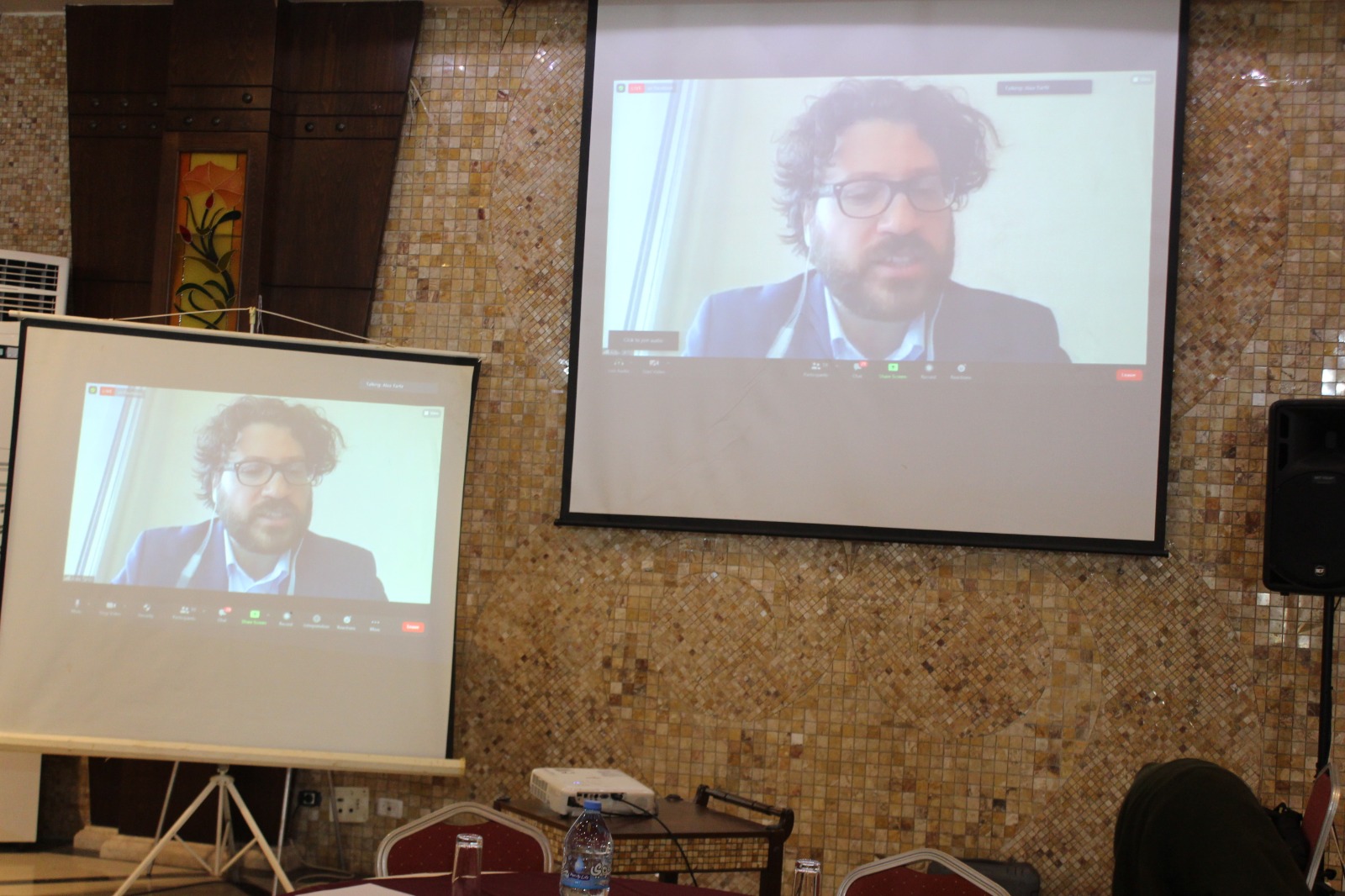
For his part, Dr Alaa Tartir, programmes adviser at the Palestinian policy network, commented, saying: “The elections are one face of the democratic process and are not democracy in itself; the important thing is the permanence of this process, and this is the goal of civil society institutions.”
He added: “The role of youth and women is strengthening the accountability that has weakened greatly in the recent period. And the question now is: how will the damage of the Palestinian division affect the Palestinian elections and their results?” Tartir continued: “It is important also to speak of the National Council, for fear of any contingency preventing the Palestinians from renewing the members of the Legislative Council.” He added: “World experiences and policy papers have proven that when women are present in the electoral process they produce more positive results.”
He concluded by saying: “As civil society, our role is facing the securitisation and authoritarianism that have exhausted civil society organisations.”
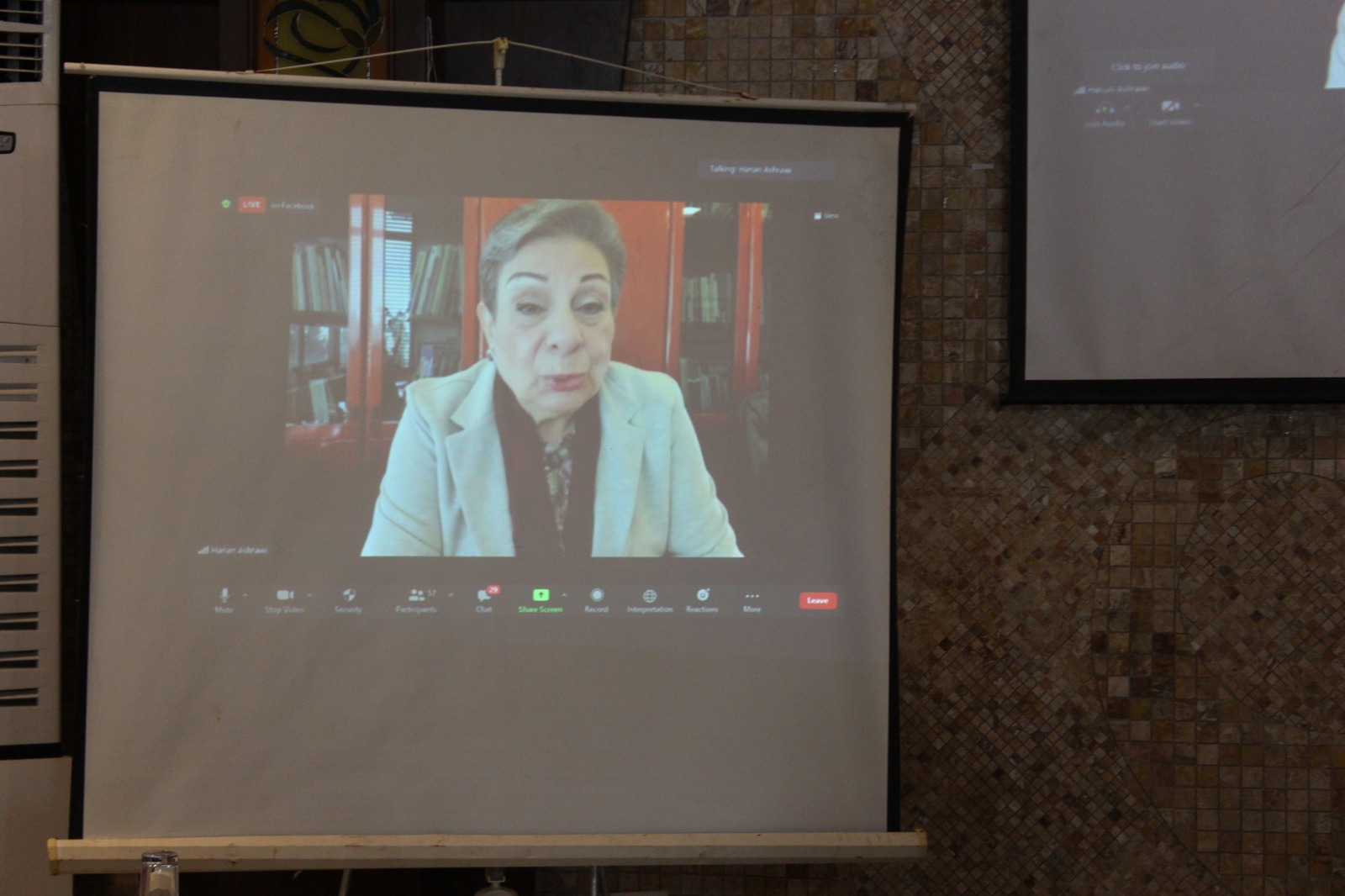
In the same context, the chairwoman of the board of the Palestinian Initiative for the Promotion of Global Dialogue and Democracy “MIFTAH”, Dr Hanan Ashrawi, said: “We must not focus on the issue that we have a state, because we possess no sovereignty and do not control our land or our airspace or our sea or our freedom of movement — or even the Palestinian individual.”
During the third session, moderated by Sally al-Sammak, the project coordinator at Pal-Think, and Kayed Maari of the Shahed centre, the talk took up the coalition's achievements and the partnership between the institutions as the most important instruments of success for achieving the goal of unity and reducing the gap the division left behind, and the efforts toward the continuity of work to achieve and spread the coalition's goal. The session began with the showing of a film containing different opinions of multiple categories of society in all the Palestinian governorates about the division and the crises that resulted from it, and about the citizens' aspirations and their recommendations for ending the division. Then Bilal al-Najjar, the coalition's coordinator in the Gaza Strip, spoke: “The coalition's idea began two years ago from the Pal-Think institution, then the Swiss government adopted it” — and he pointed out that the coalition's goal is reaching communal reconciliation and Palestinian unity in cooperation with institutions from inside and outside Palestine. He reported that the coalition's institutions carried out 23 initiatives in the homeland's two halves, and more than 200 activities were carried out during them.
He added: “The coalition works on three strategies, namely: contributing to building and developing the professional capacities of the gathering's members; pressing in order to accomplish the achievement of national unity and communal reconciliation; and empowering civil society institutions to take part effectively in the rounds of the Palestinian reconciliation.”
For her part, Rawan Sharqawi, the coalition's coordinator in the West Bank, said: “The coalition's initiatives shed light on the division and its effects, and on pressing through the youth to develop true and actual interventions, and strengthening the national bonds.
They likewise focused on facing the discourse of hatred to strengthen Palestinian citizenship, and we targeted diverse categories. The initiatives found currency, since they touch the Palestinian concern.”
She added: “Those initiatives restored some hope to the institutions and individuals in the possibility of achieving communal reconciliation. Radio episodes, films, and various video clips were recorded. And no fewer than 58 press reports were published about the coalition's activities.”
For his part, Jamil al-Darbashi of the Palestinian Centre for Communication and Development Policies — Hebron said: “We targeted 20 marginalised grassroots women's institutions. We wanted to integrate these institutions into the plan of civil peace and communal reconciliation, and create a women's base from these institutions.”
In this context, Yaseen Odeh of the Palestinian Working Woman Society — Gaza pointed out that they created a youth media forum titled 2250, in cooperation with the Amjad Association for Creativity and Communal Development, aiming to strengthen youth's role in making civil peace, and training them in making content to deploy it in the development process, and also in how to make development content.
For her part, Ihsan Awad of the Bunyan Association for Communal Development — Khan Younis made clear that they carried out the initiative “A society with room for everyone”, in partnership with the Future Association in Gaza and Arab Women in Jerusalem, and it had a great effect in shedding light on the importance of unifying efforts to strengthen the national reconciliation and the necessity of directing the media toward the call for achieving reconciliation
Murad al-Sabaa of the Foster institution for sustainable-development goals — Ramallah said: “Our goal was creating an influential and effective public opinion to form pressure in the direction of ending the division, through producing four radio episodes on the Foster institution's podcast site.”
Raed al-Debie of the Bozour Association for Development and Culture — Nablus likewise spoke of the initiative “Together we soar high”, carried out by his institution: 50 kites carrying the flags of Palestine were launched by 50 young men and women in the village of Sebastia, threatened by the occupation. He pointed out that they held an electronic exhibition with the Girl Graduates Association, in addition to two workshops that discussed the issue of youth's participation in decision-making.
Returning to the director of “Pal-Think”, Mr Omar Shaban, who said at the conference's end: “This project truly challenged the blockade. We will continue our work in partnership with the Swiss government. We will develop the budgets of the partnerships with the institutions, and we want to deliver the youth and their voice to the decision-maker. And we are for lowering the candidacy age for the youth, because this is their right.”
The conference was concluded by the director of the “REFORM” institution, Udai Abu Karsh, saying: “We will work to widen this coalition and increase communication with the partner institutions.”