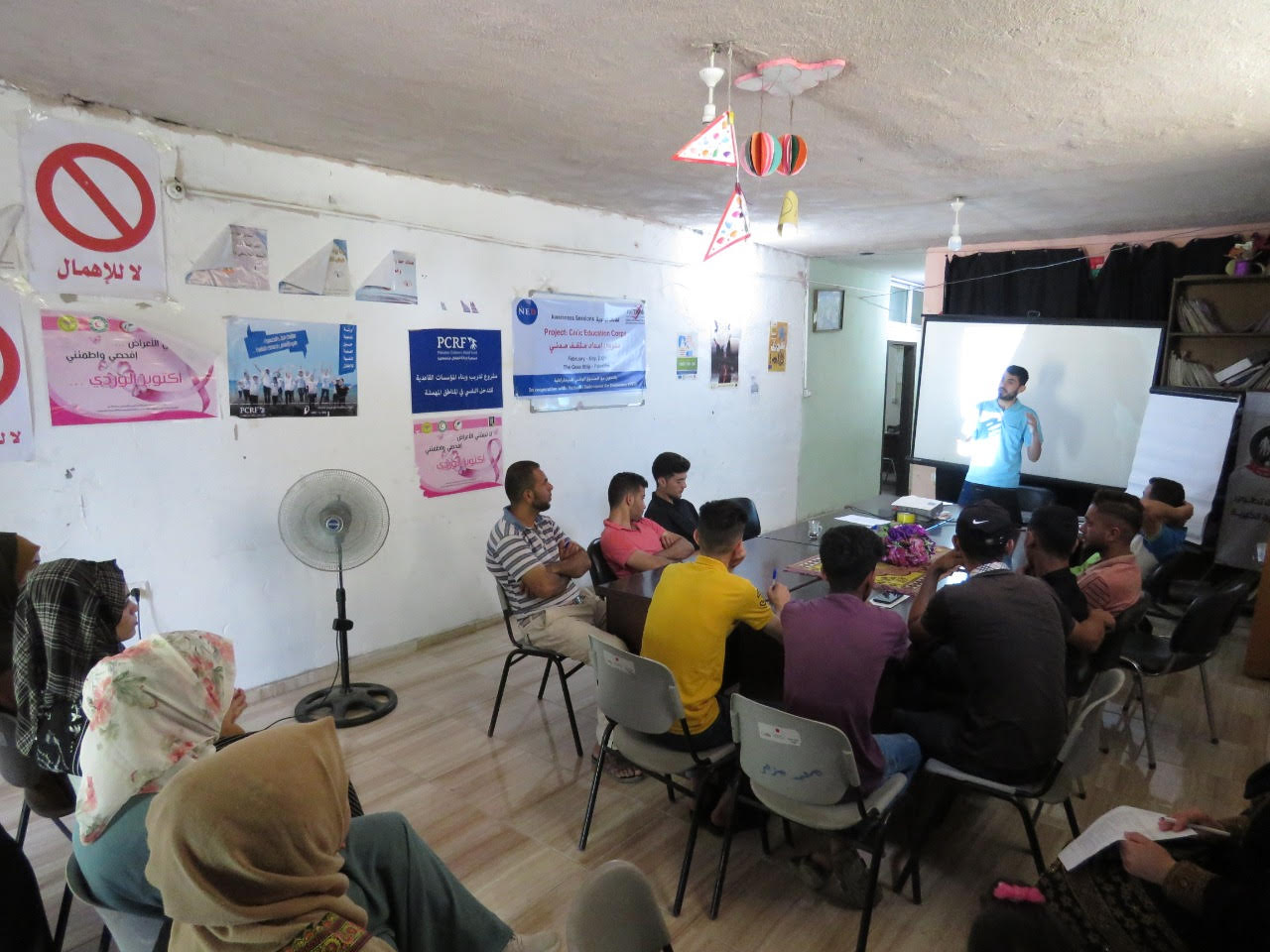
Pal-Think's Civic Education Forum continues its meetings on political participation, democracy and human rights
Pal-Think's Civic Education Forum delivered five awareness meetings for Palestinian university students in Gaza, strengthening young people's capacities in democracy and human rights.
- Date
- 2021-06-06
Within the role Pal-Think for Strategic Studies practises in strengthening Palestinian youth's capacities in the issues of democracy and human rights, the civic-education forum supervised by Pal-Think for Strategic Studies carried out five awareness meetings targeting Palestinian university students in the Gaza Strip, in cooperation with the Palestinian universities and civil society institutions.
During these meetings the focus was on the issues of democracy, political participation, human rights, and gender-based violence in Palestine. This comes within the project “Civic Education”, funded by the National Endowment for Democracy (NED), implemented by Pal-Think for Strategic Studies.
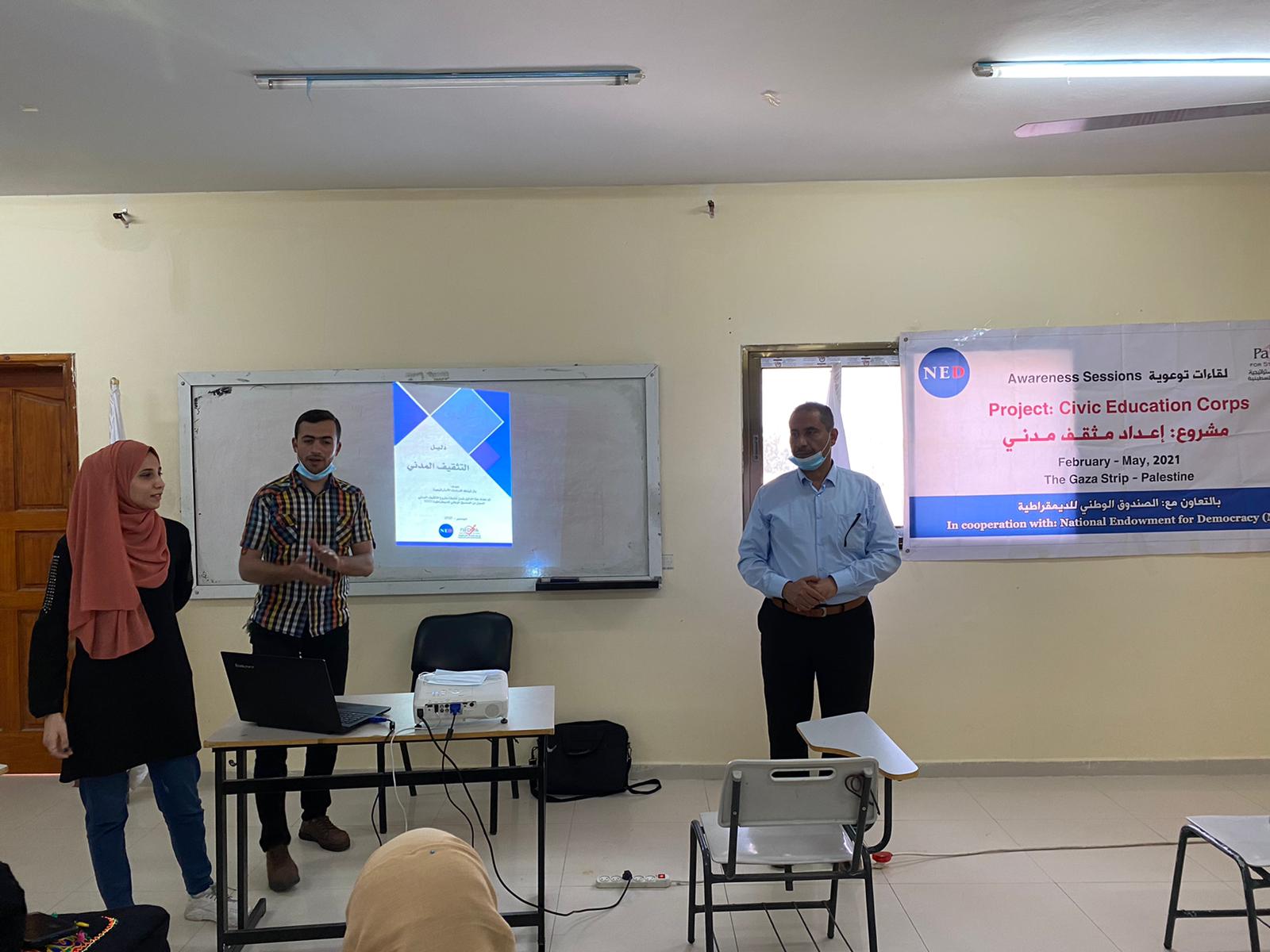
The meetings were opened by the lawyer Bilal al-Najjar of Pal-Think, welcoming the attendees and acquainting them with the Pal-Think institution, the civic-education project, and the most important activities carried out during this project. Al-Najjar likewise spoke about the civic-education manual prepared within the civic-education project and its goal, and reviewed the most important topics and issues the manual takes up — calling on all the attendees to enter Pal-Think's page in order to view it more fully and benefit from the information contained in it.
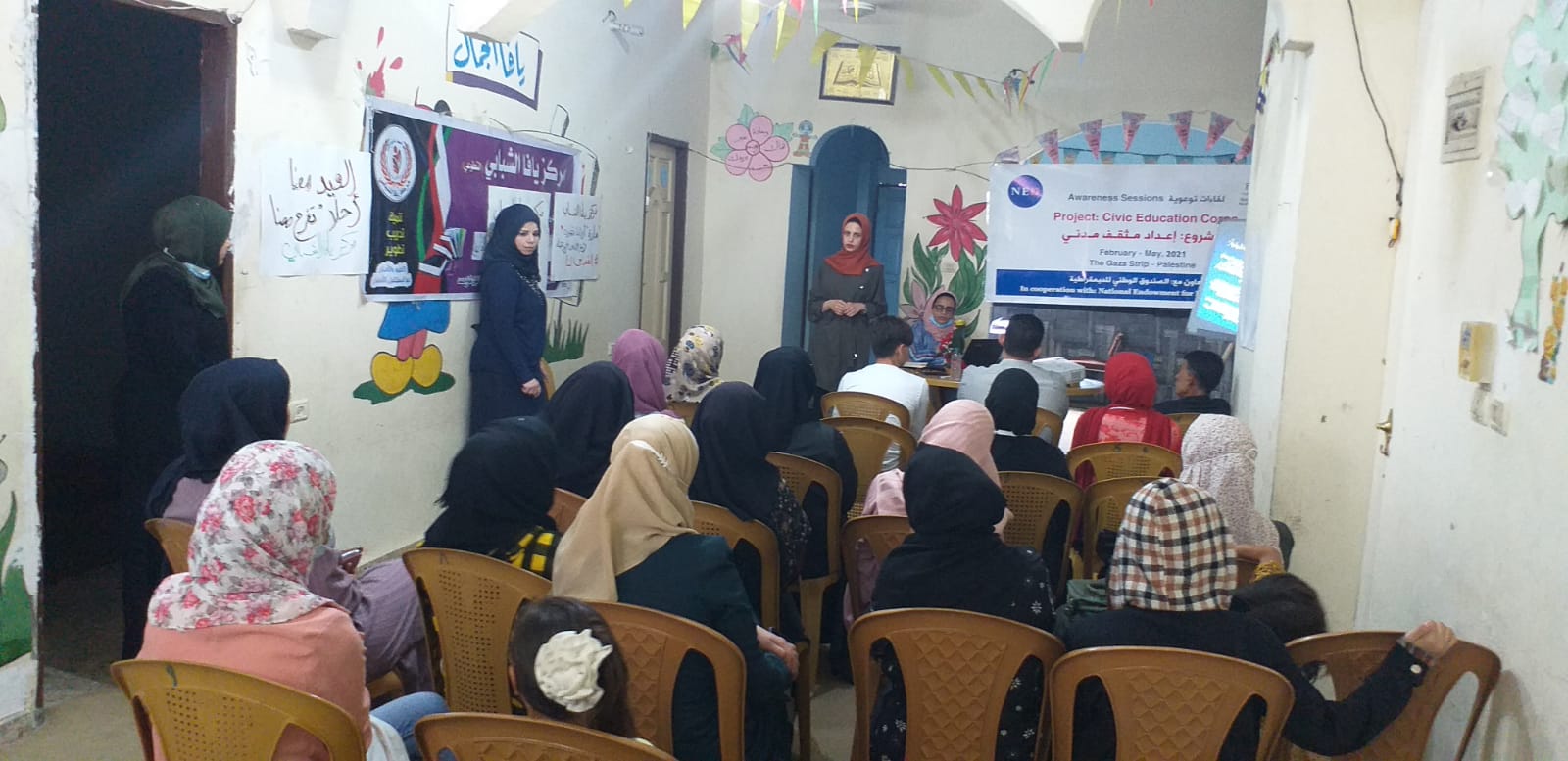
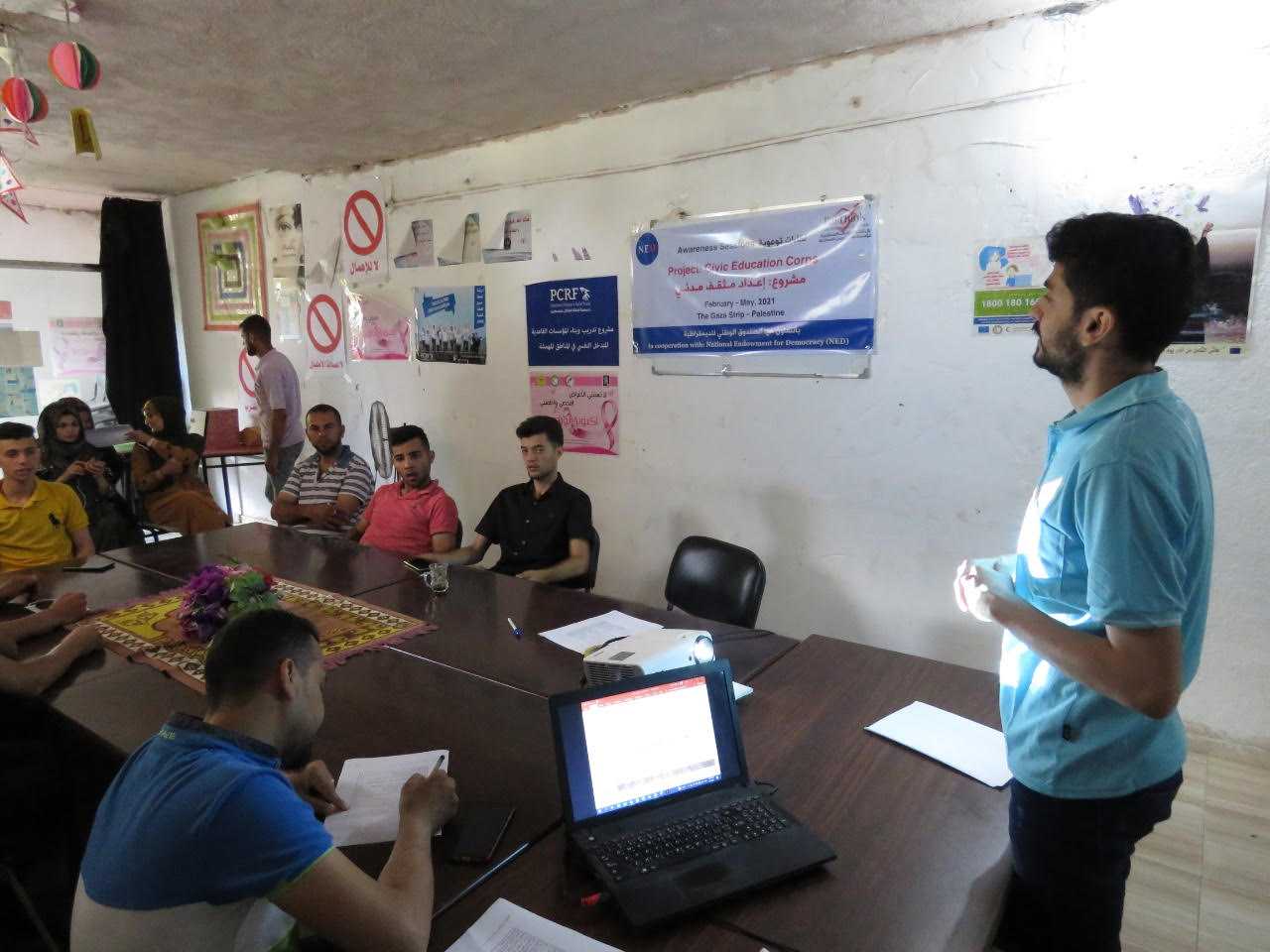
The first meeting, led by the civic-education committee member the student Aya Ashour, was titled “Gender-based violence and its effect on Palestinian society”, on Monday, 26 April 2021, at the Youth and Environment Association in the city of Deir al-Balah. She spoke during the meeting on the definition of gender-based violence, the analysis of its causes in Palestinian society and its forms; she likewise spoke on the kinds of gender-based violence and the mechanisms of dealing with it.
She likewise affirmed during the meeting that the responsibility of facing violence falls on everyone's shoulders: whether the state, which must set texts and laws that guarantee protection for abused women and impose punishment on the perpetrators of acts of violence; and the responsibility likewise falls on the shoulders of the institutions, through carrying out activities and events of a kind to spread communal awareness of the dangers of gender-based violence; in addition to the responsibility that falls on the shoulders of citizens, to face violence and notify the specialised bodies the moment it occurs.
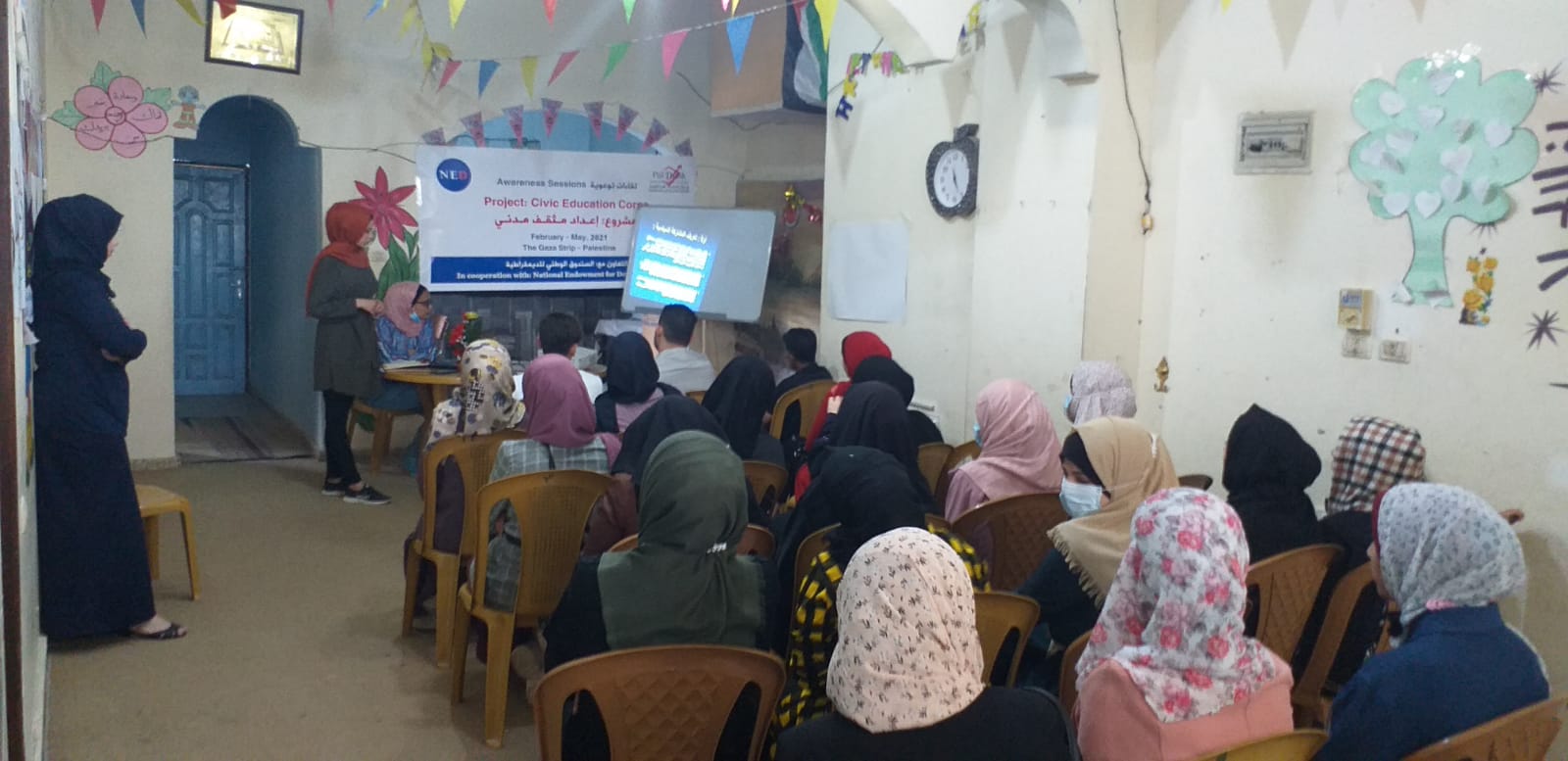
As for the second meeting, it was titled “Youth's political participation and its importance”, on Sunday, 30 May 2021, at the Yafa Youth Centre in the Khan Younis governorate, led by the civic-education body member Aya Abu Hatab, who spoke during the meeting on the concept of political participation, then set out the forms and levels of political participation and the characteristics of political participation and its motives.
She likewise spoke on the determinants of political participation among Palestinian youth, the requirements of effective political participation, youth's role in political participation, and the elements of effective political participation for youth; new horizons for youth's participation in the homeland's issues were likewise put forward.
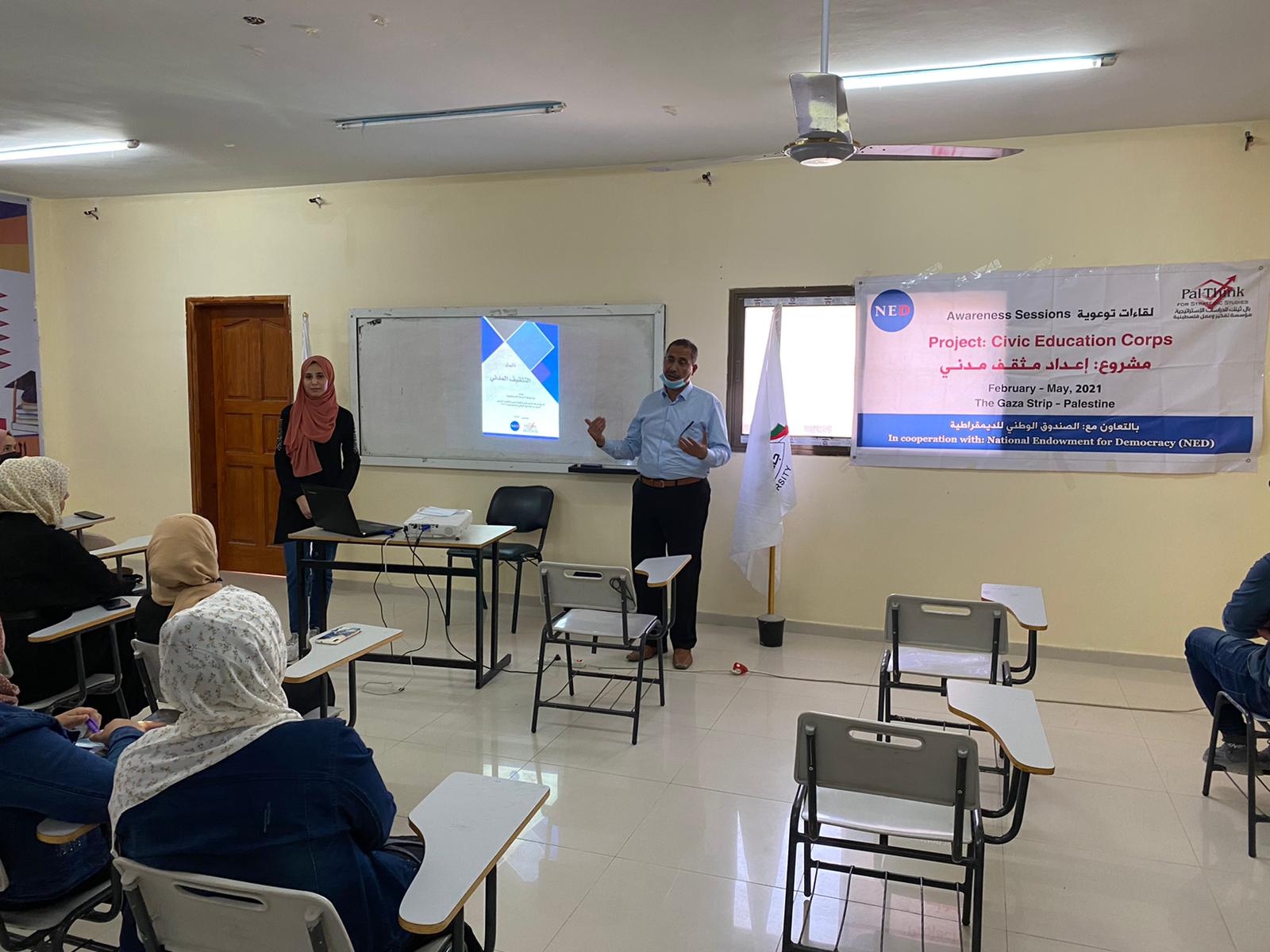
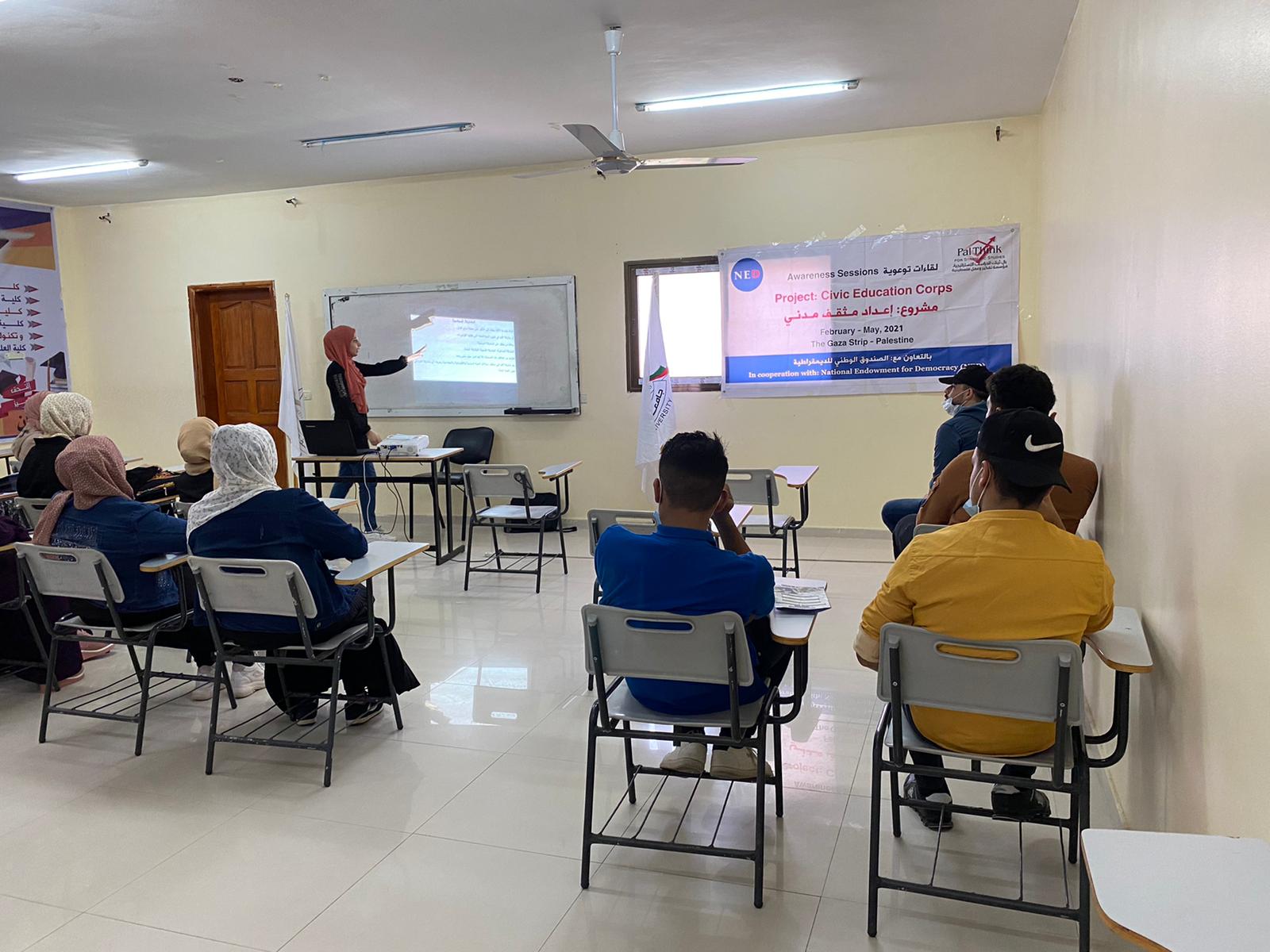
As for the third meeting, it was titled “The role of university students in strengthening political participation in Palestinian society”, led by the civic-education body member the student Aya Khafaja at the University of Gaza, southern branch, with the attendance of a number of university students, on Monday, 31 May 2021.
During the meeting there was talk on the concept of political participation, its goals, its elements, and its impediments in Palestinian society; the concept and proportions of youth in Palestinian society were likewise reviewed, with a focus on the impediments facing youth at the level of political participation and how to benefit from the available instruments in order to enable youth's participation in Palestinian society. Some of the legal texts contained in the international human rights conventions and the system of Palestinian laws that affirm the principle of political participation were likewise reviewed.
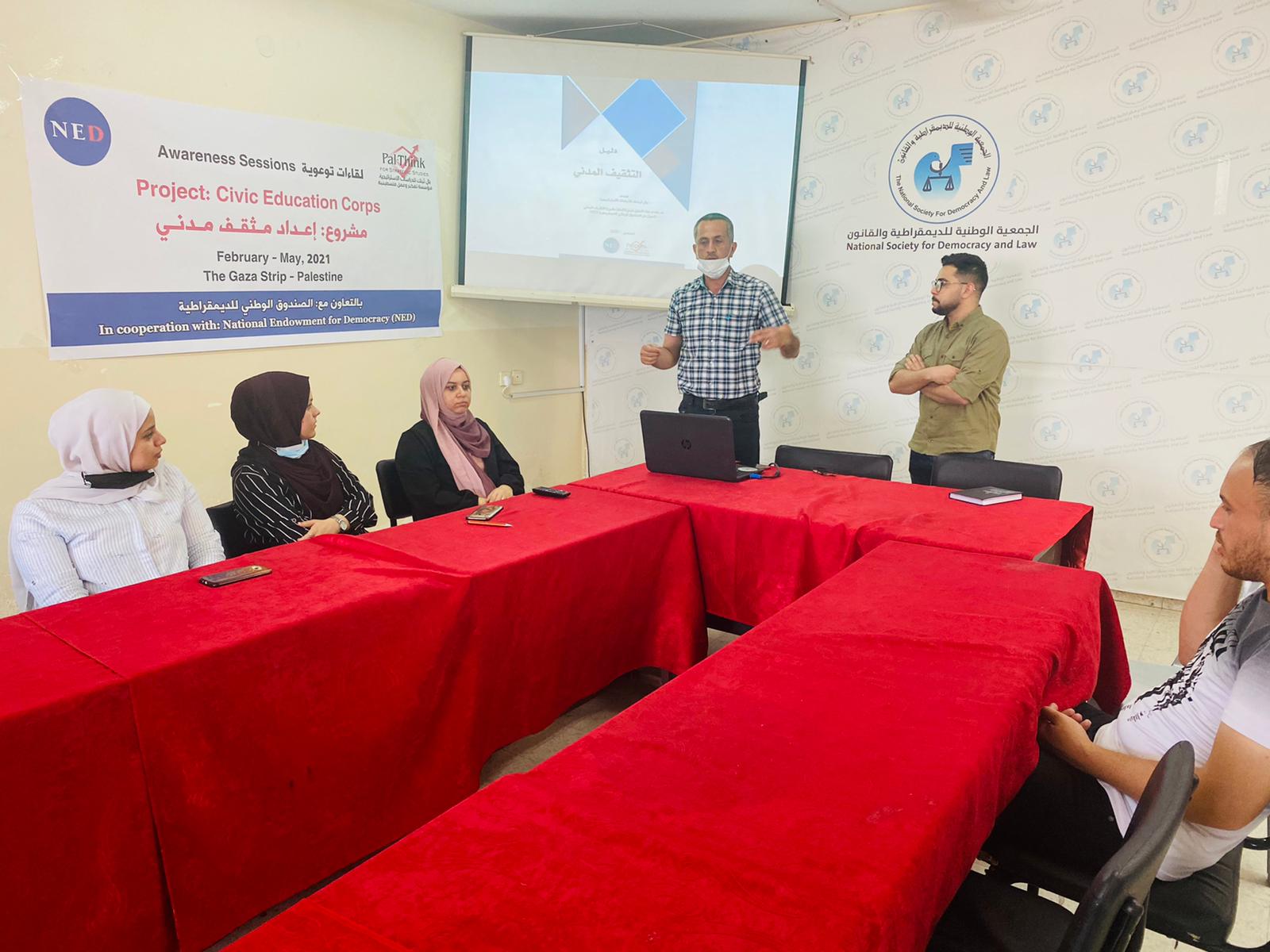
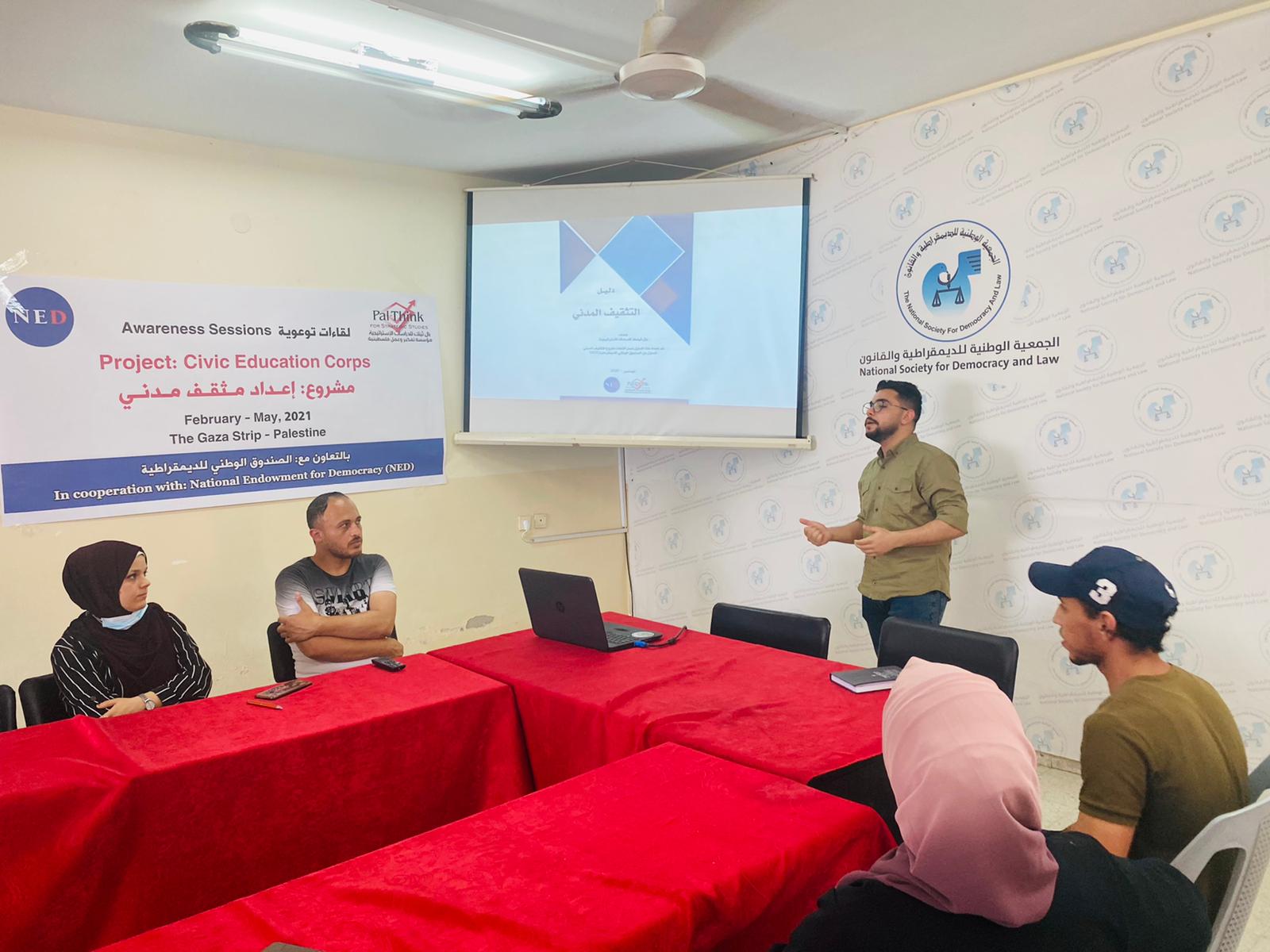
As for the fourth meeting, it was titled “Democracy and the Palestinian elections system”, led by the civic-education body member Abdallah Hasanein, on Tuesday, 1 June 2021, at the National Association for Democracy and Law in the Rafah governorate. During it there was talk on the concept of democracy, the stages of the idea of democracy's development across a number of ages, and its philosophical foundation; the principles of democracy, its goals, and the means of achieving it were likewise reviewed, and the international and local legal texts supporting and affirming it.
Concerning the fifth meeting, it was titled “Democracy and human rights”, led by the civic-education body member Osama Naim, on Wednesday, 2 June 2021, at the Family Development Association in Beit Hanoun. Naim spoke during the meeting on the definition of democracy, the legal frame organising it, its elements, its goals, and its impediments — in addition to his focus on the concept of political participation and its importance in Palestinian society; he likewise spoke on human rights: their definition, development, principles, and the components of the international bill of human rights.
It is recalled that the facilitators of the awareness meetings are a group of male and female university students who were trained by Pal-Think within an intensive training programme that continued for two consecutive weeks, during which the focus was on the issues of democracy, human rights, the system of government in Palestine, the principles of integrity and transparency, and gender-based violence.