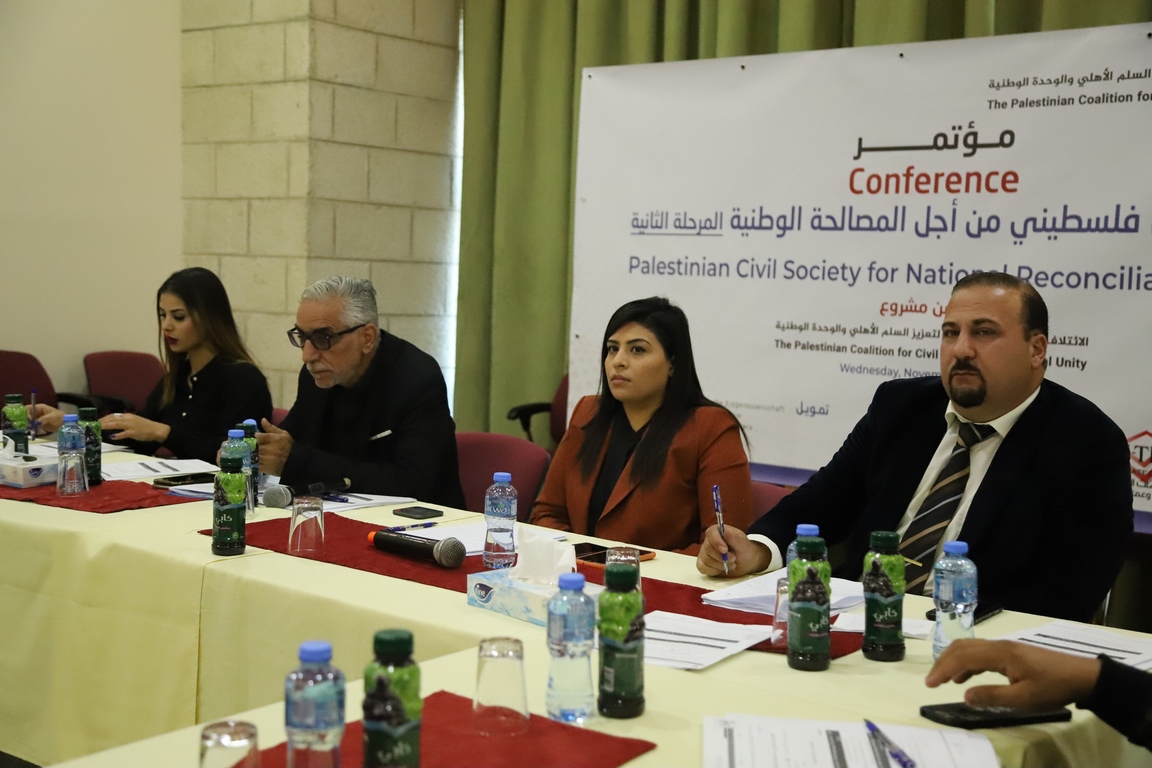
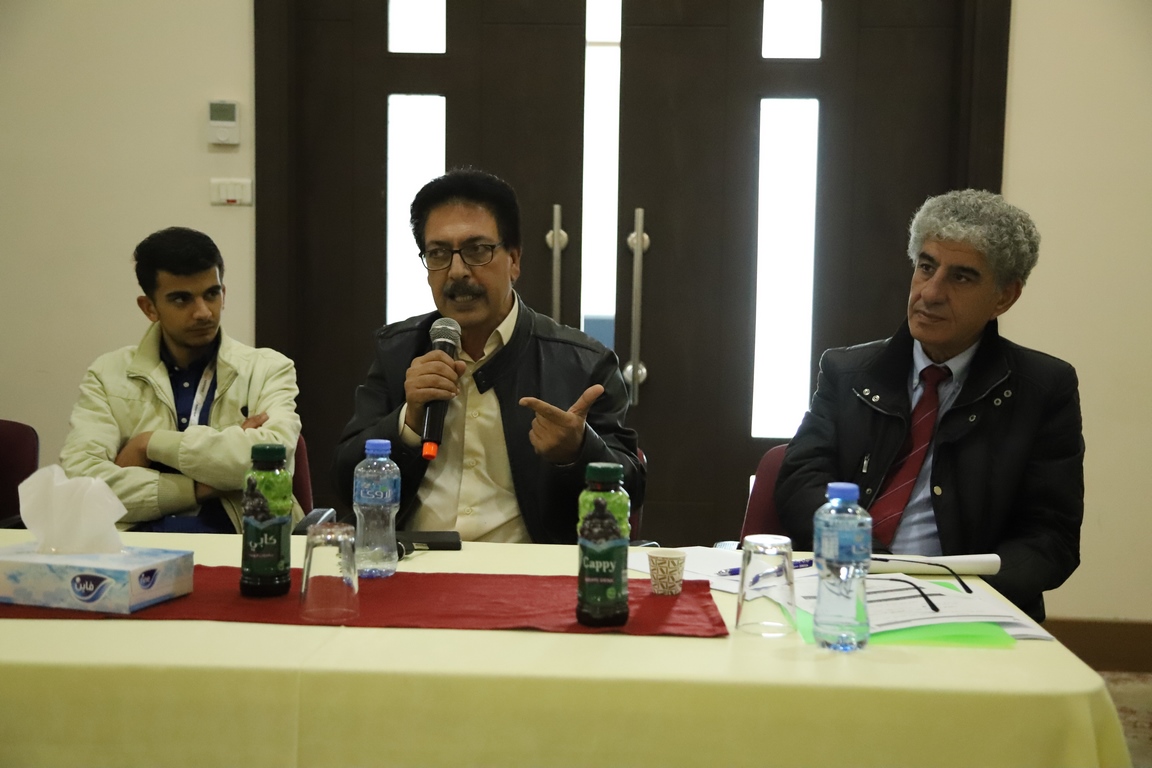
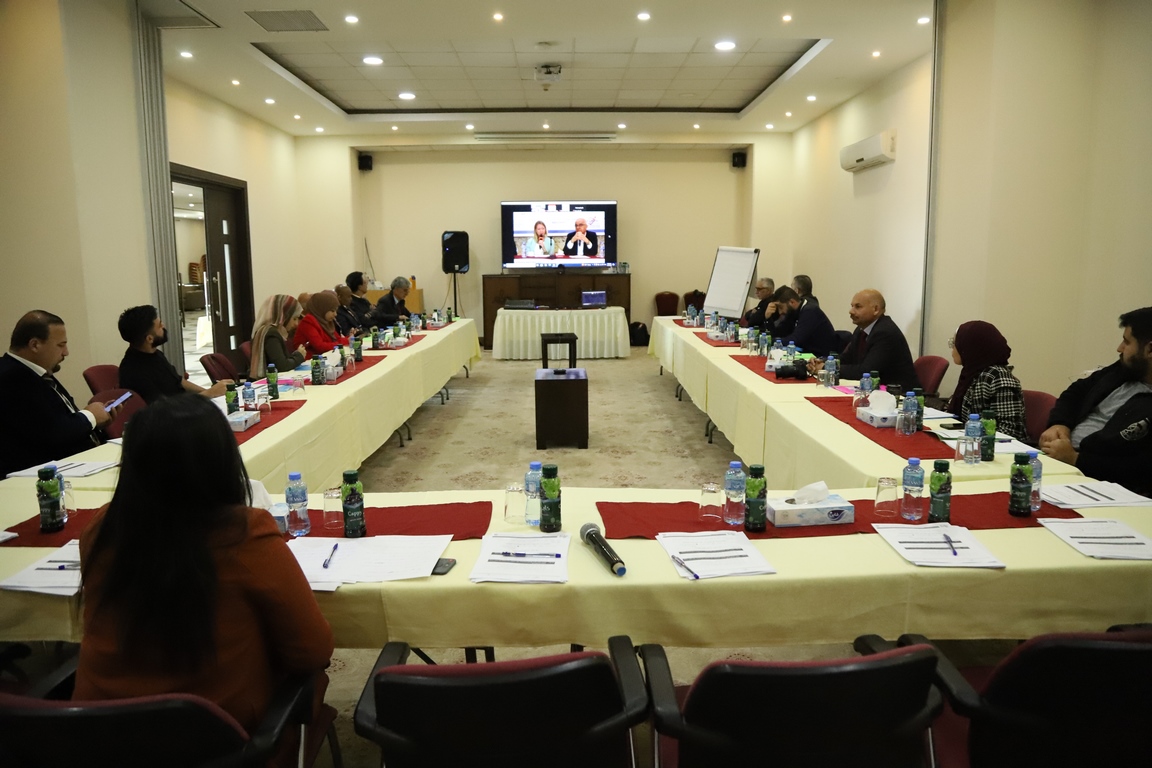
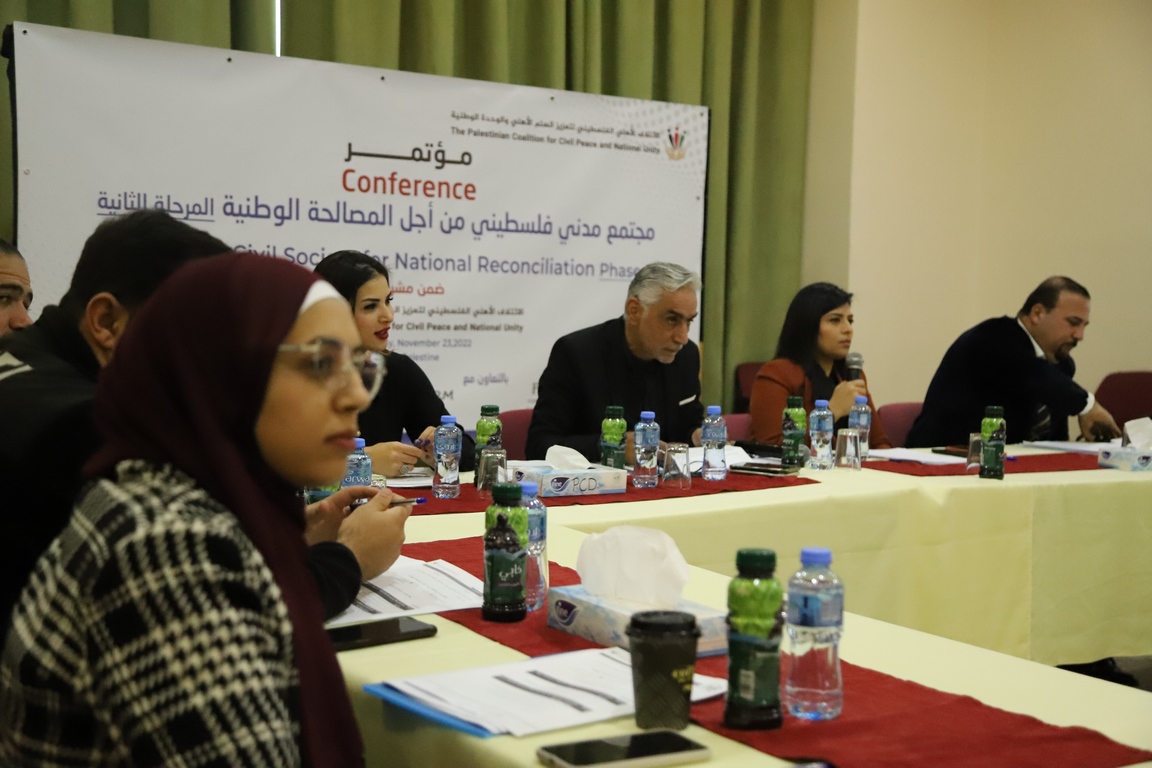
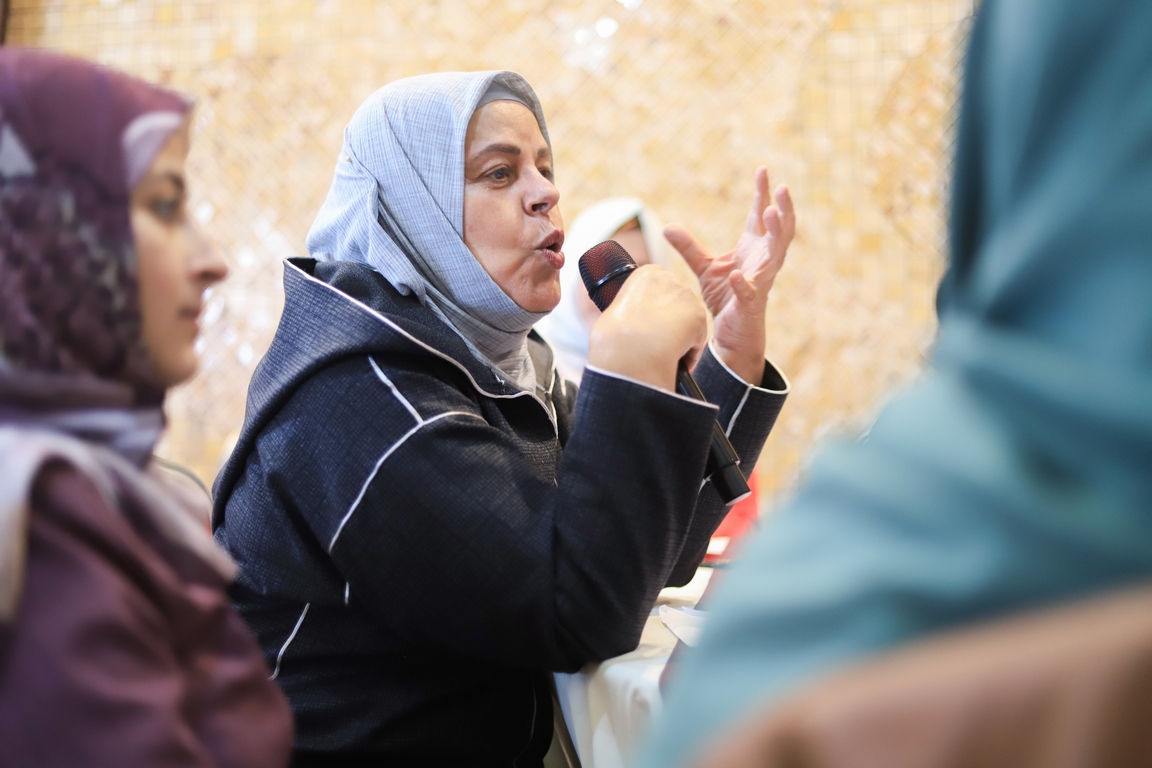
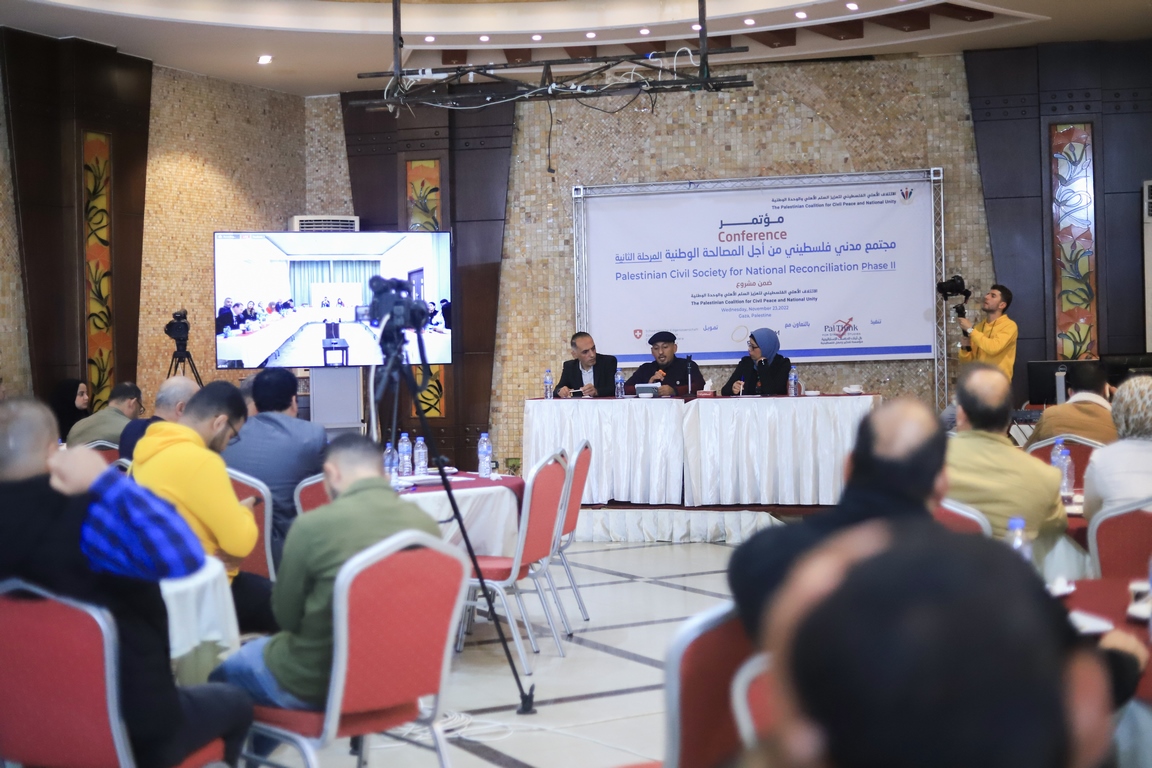
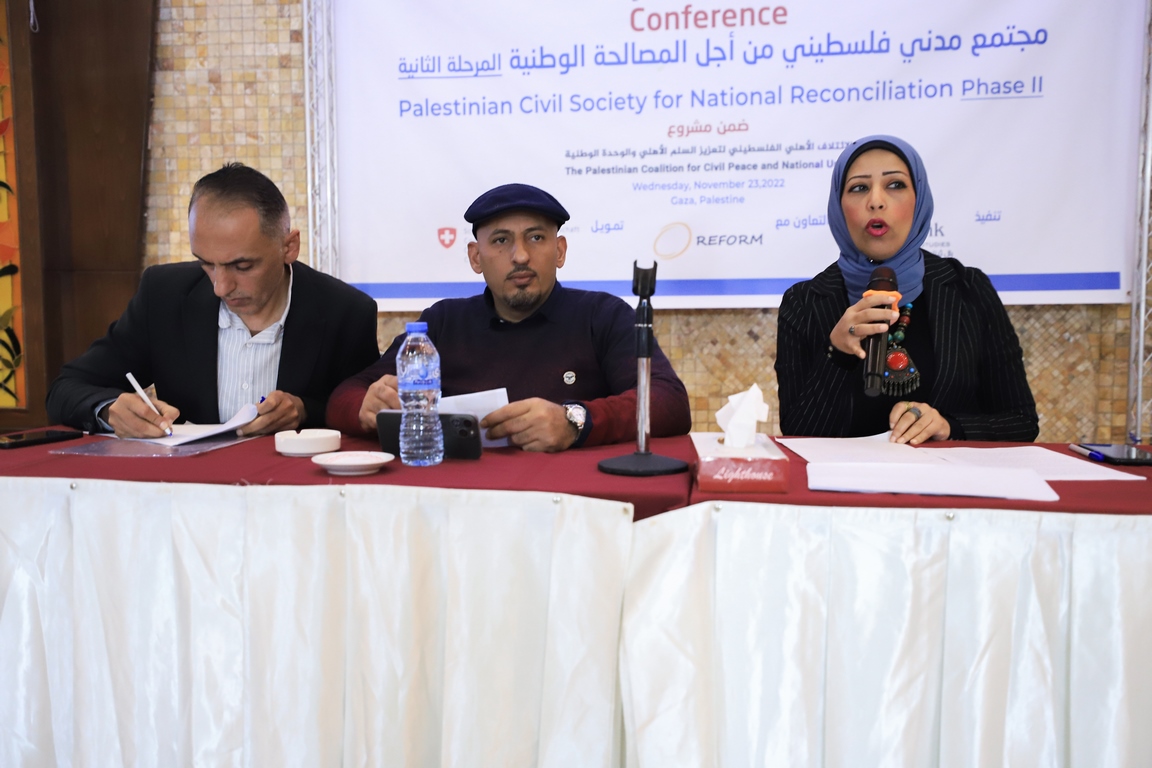
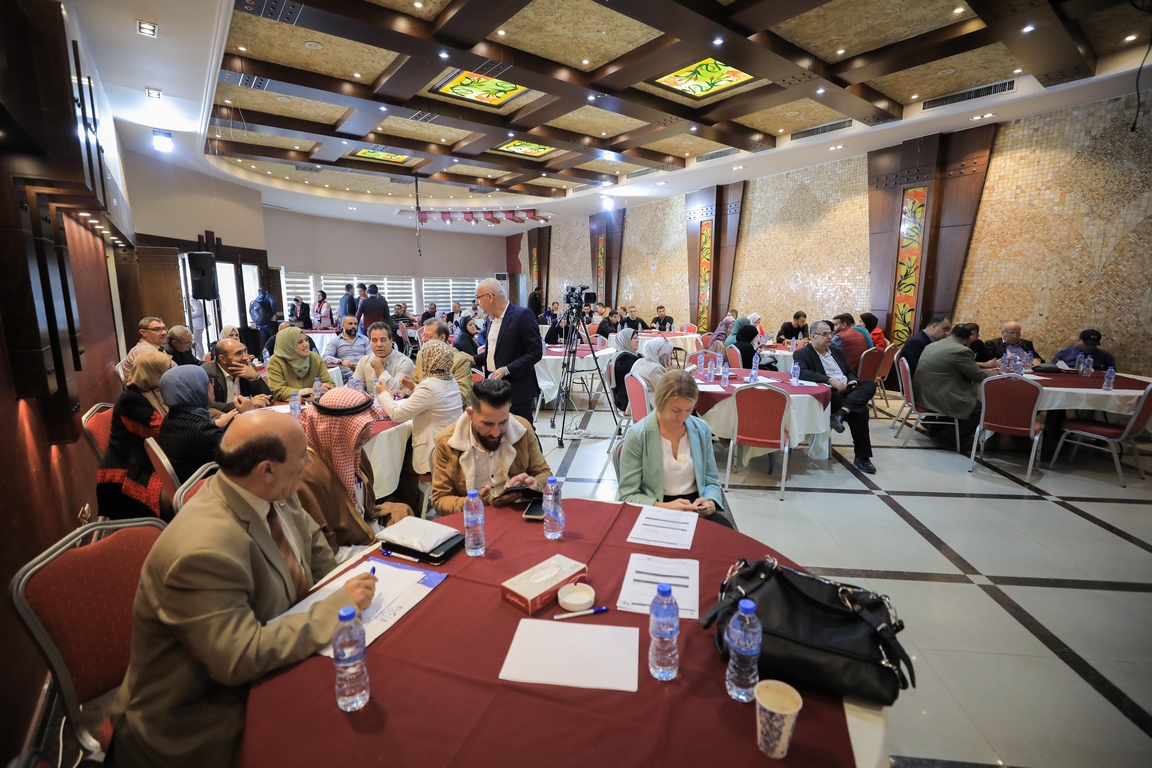
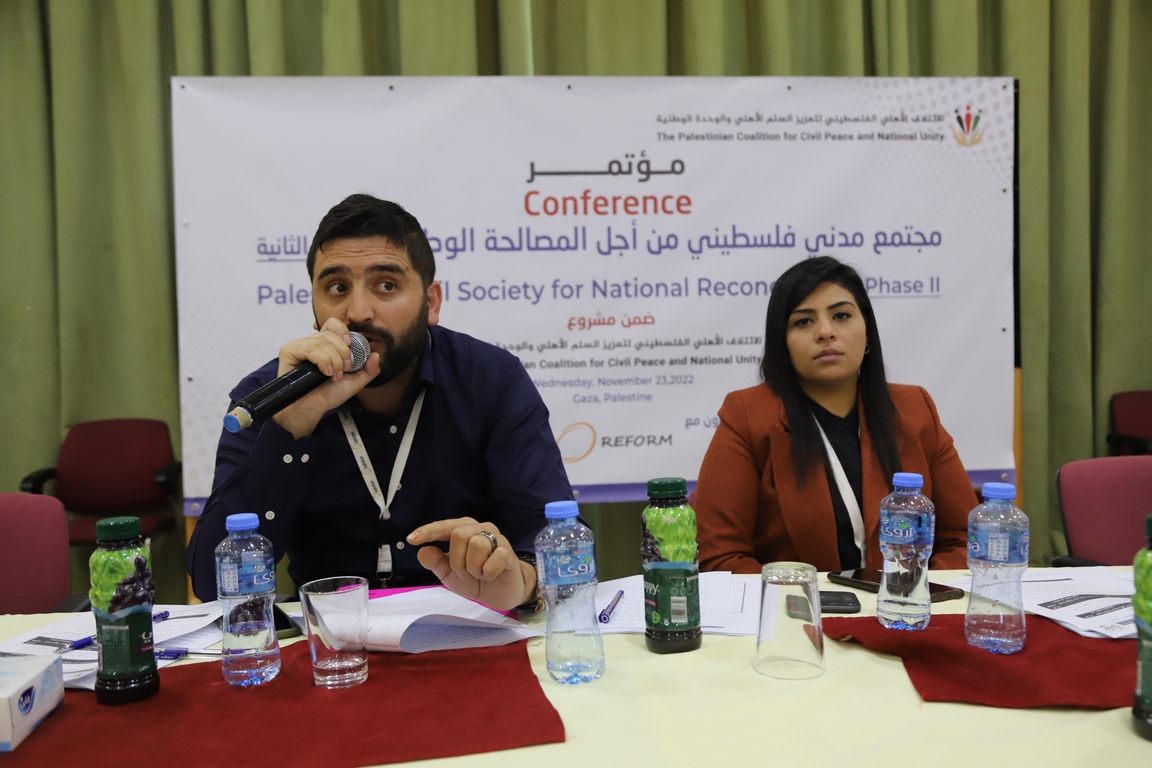
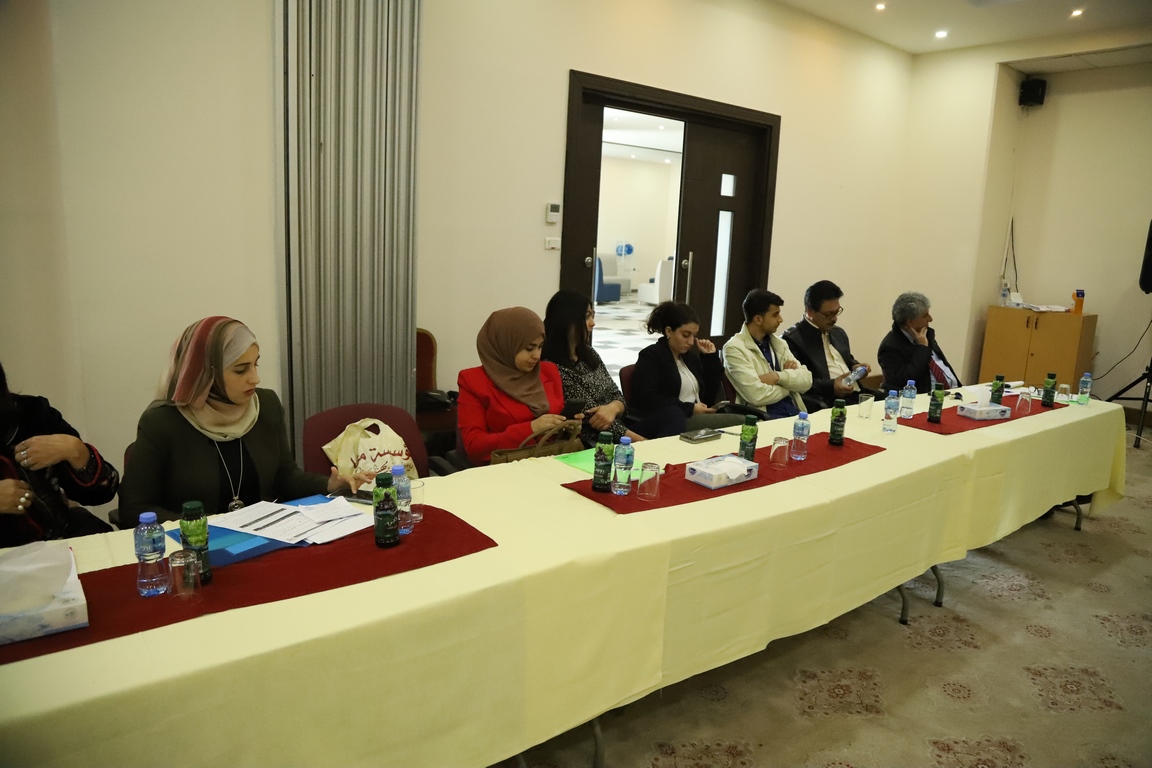
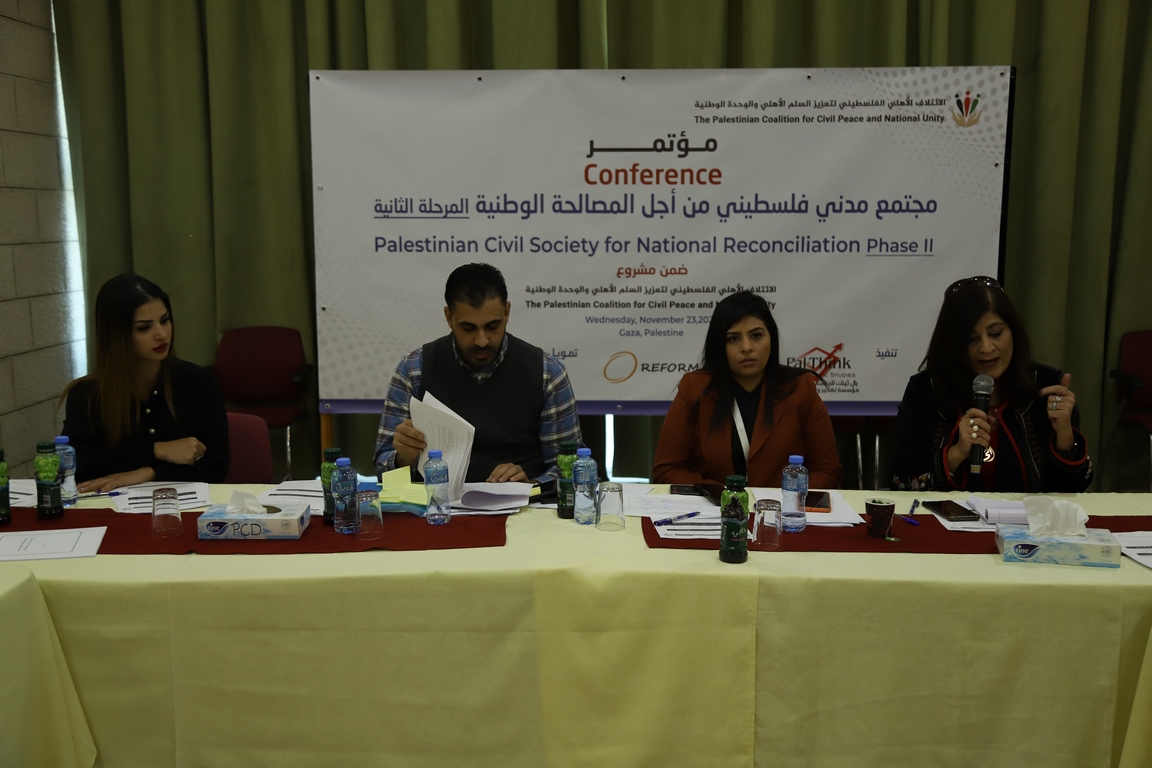
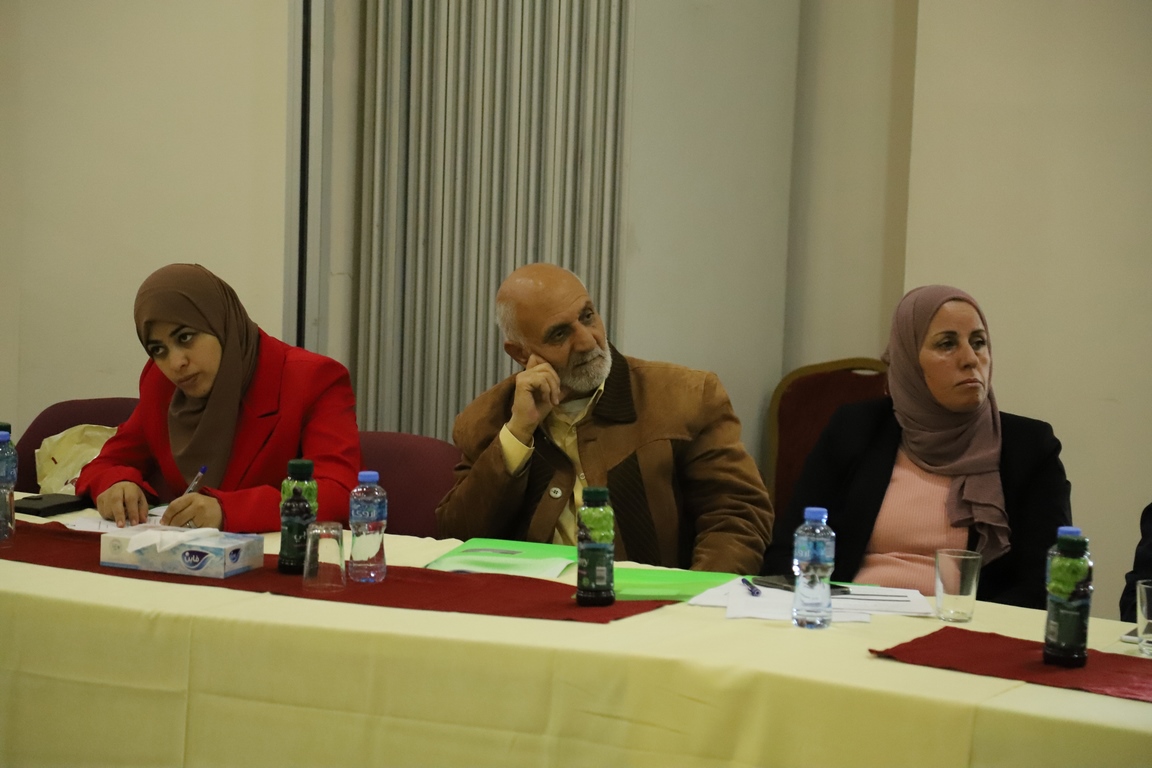
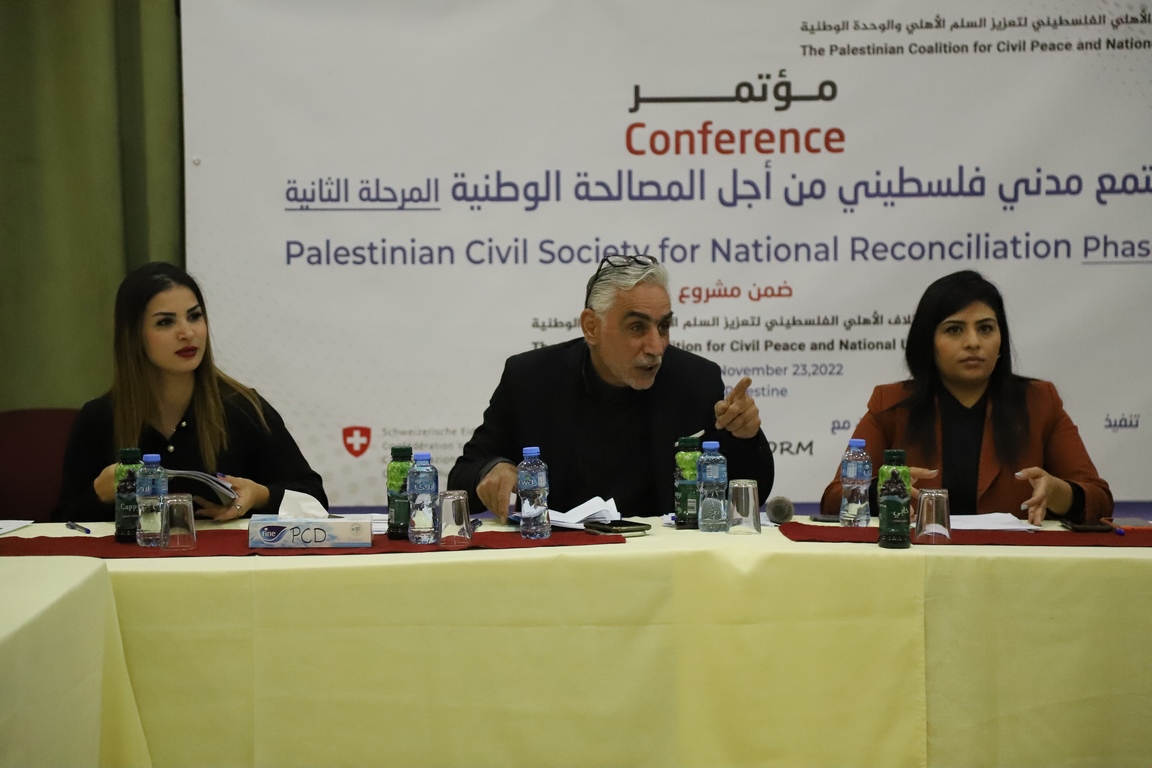
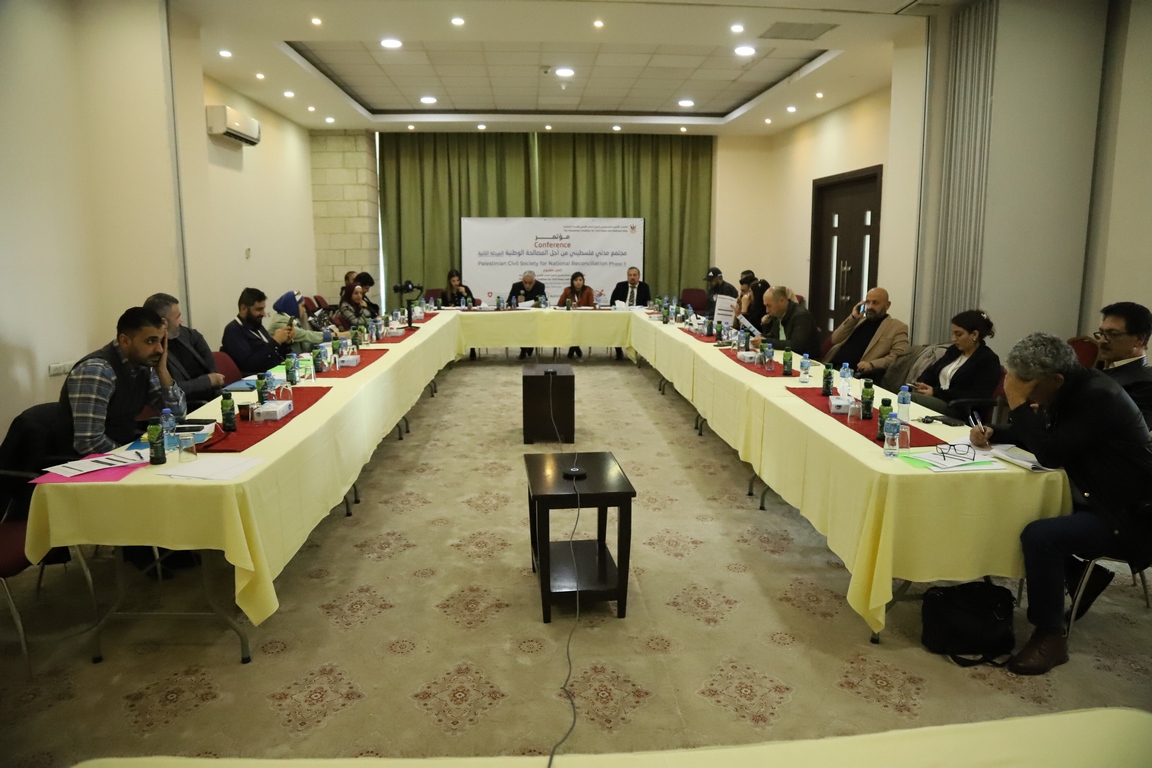
Pal-Think holds the conference «Palestinian civil society for national reconciliation»
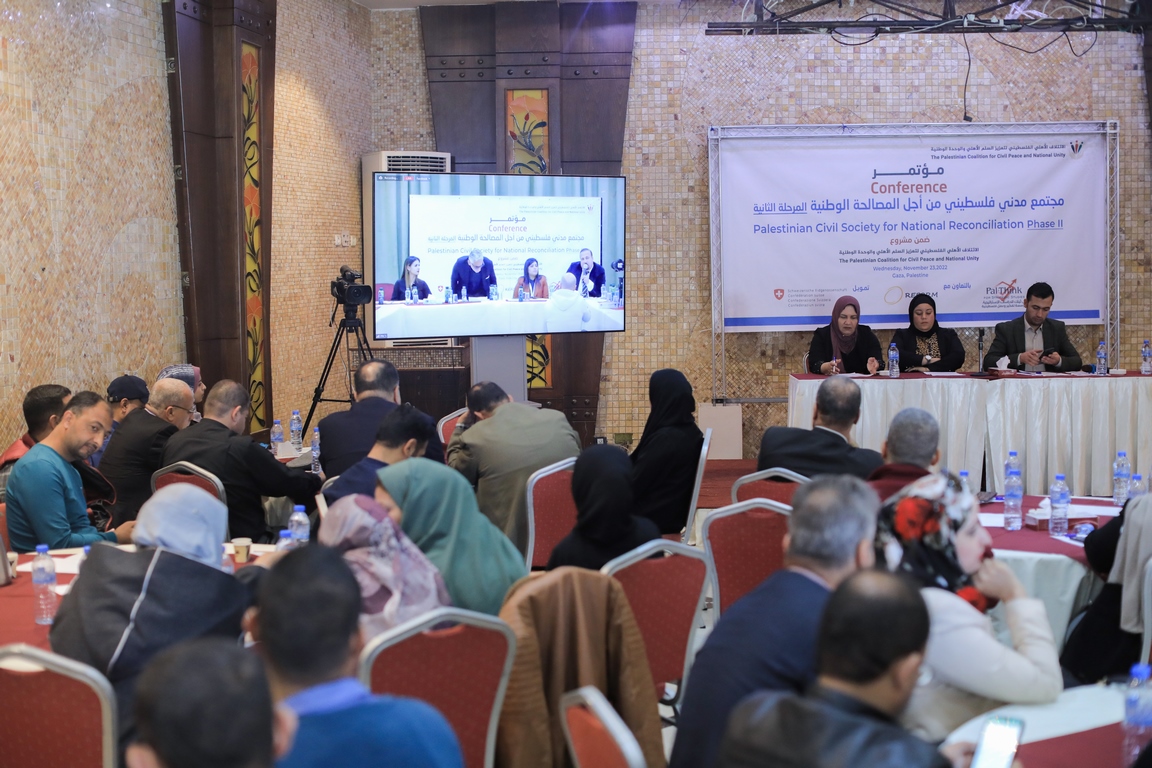
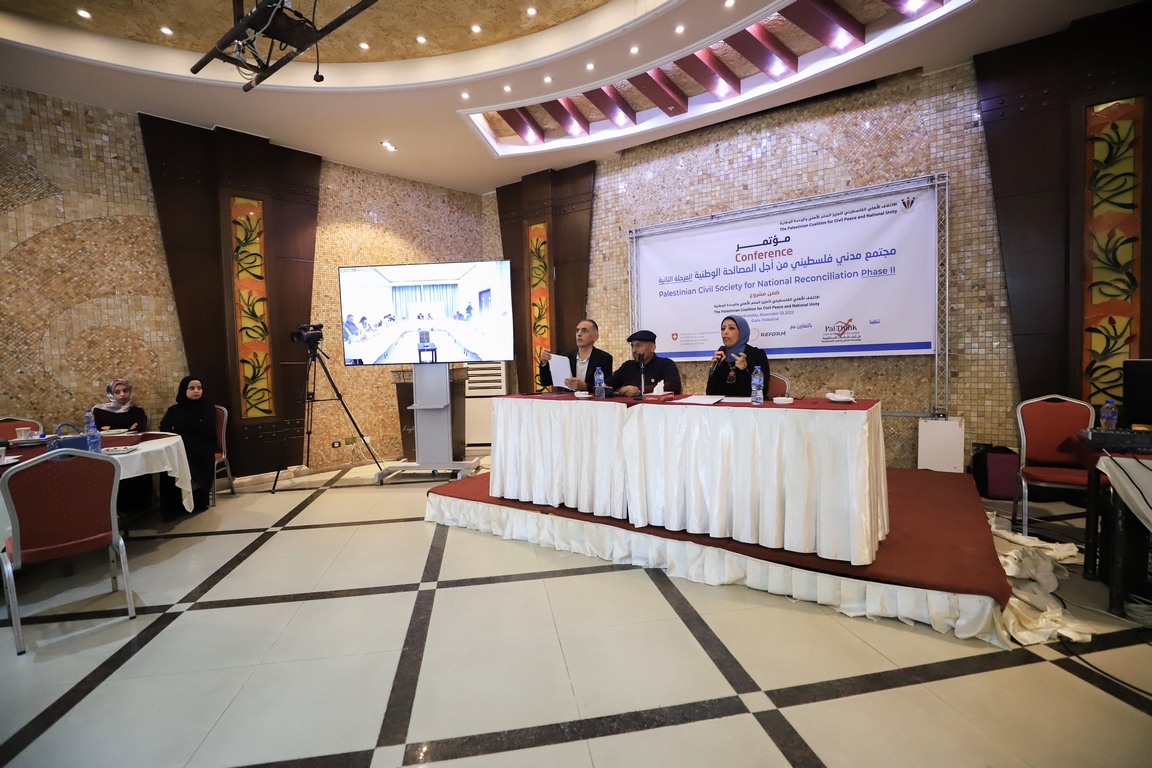
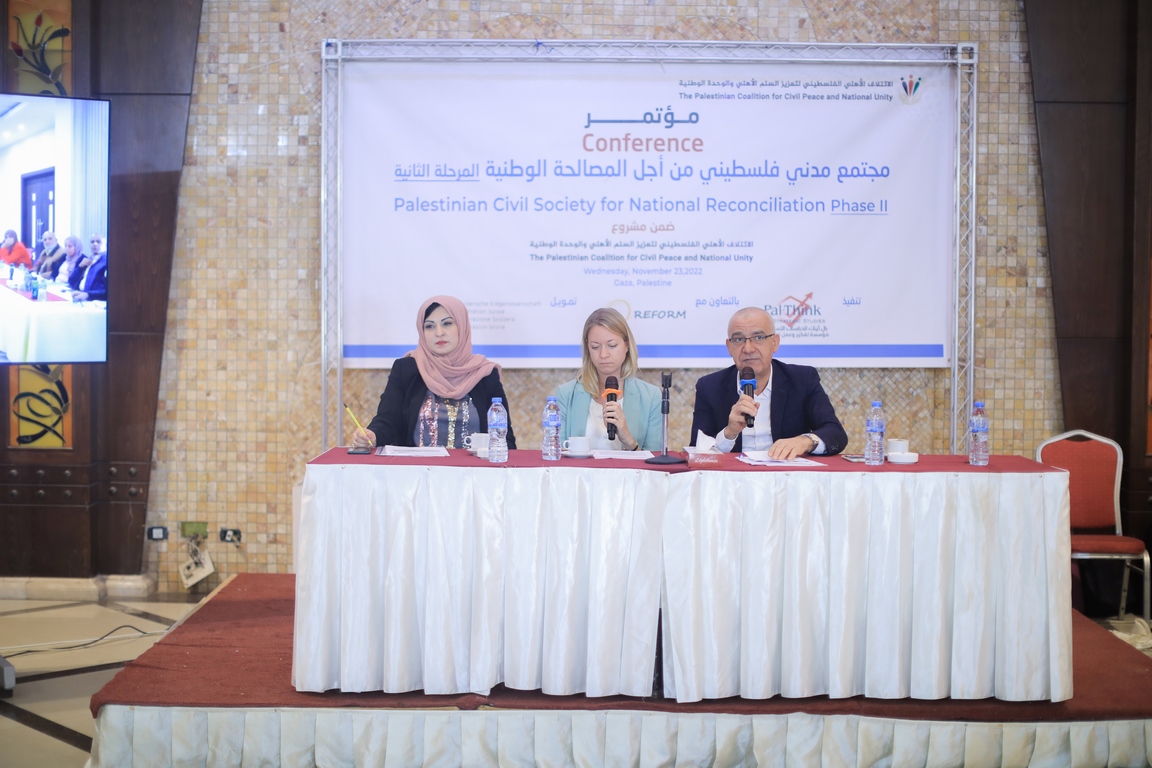
Pal-Think held the closing conference of phase two of the Palestinian Civil Coalition for Civil Peace and National Unity — «Palestinian civil society for national reconciliation» — crowning the second year of the Swiss-funded project.
- Date
- 2022-11-24
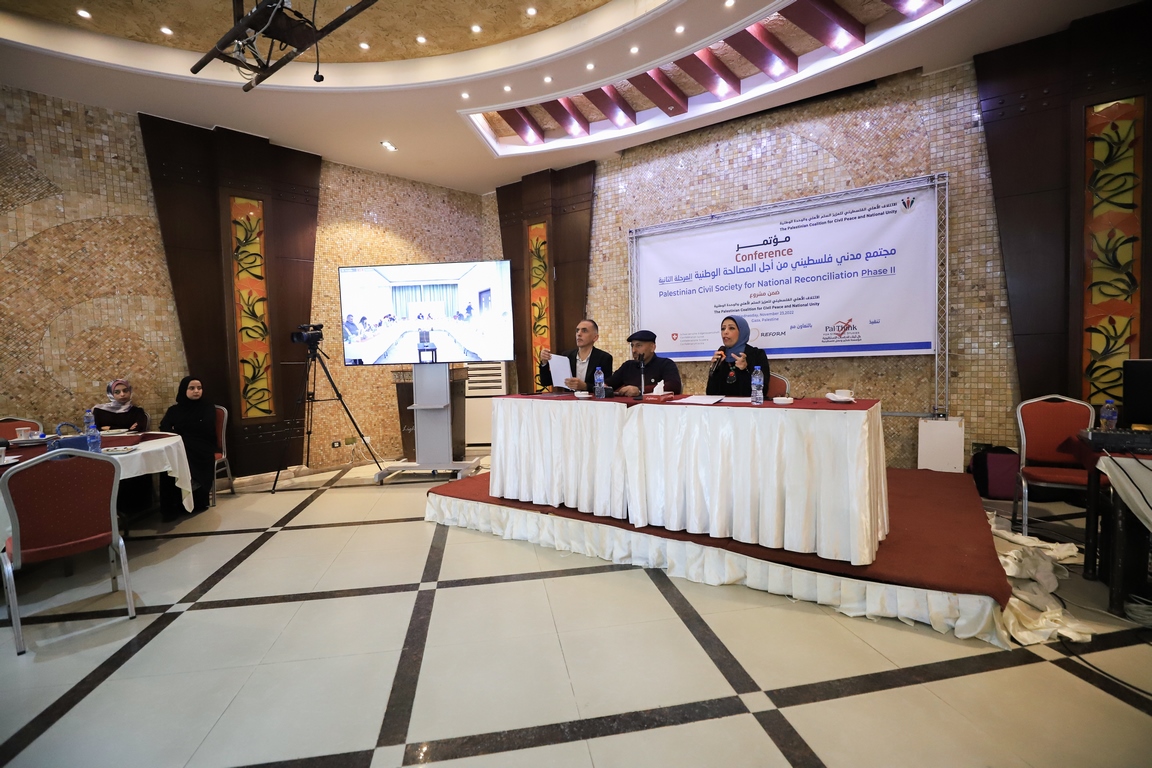
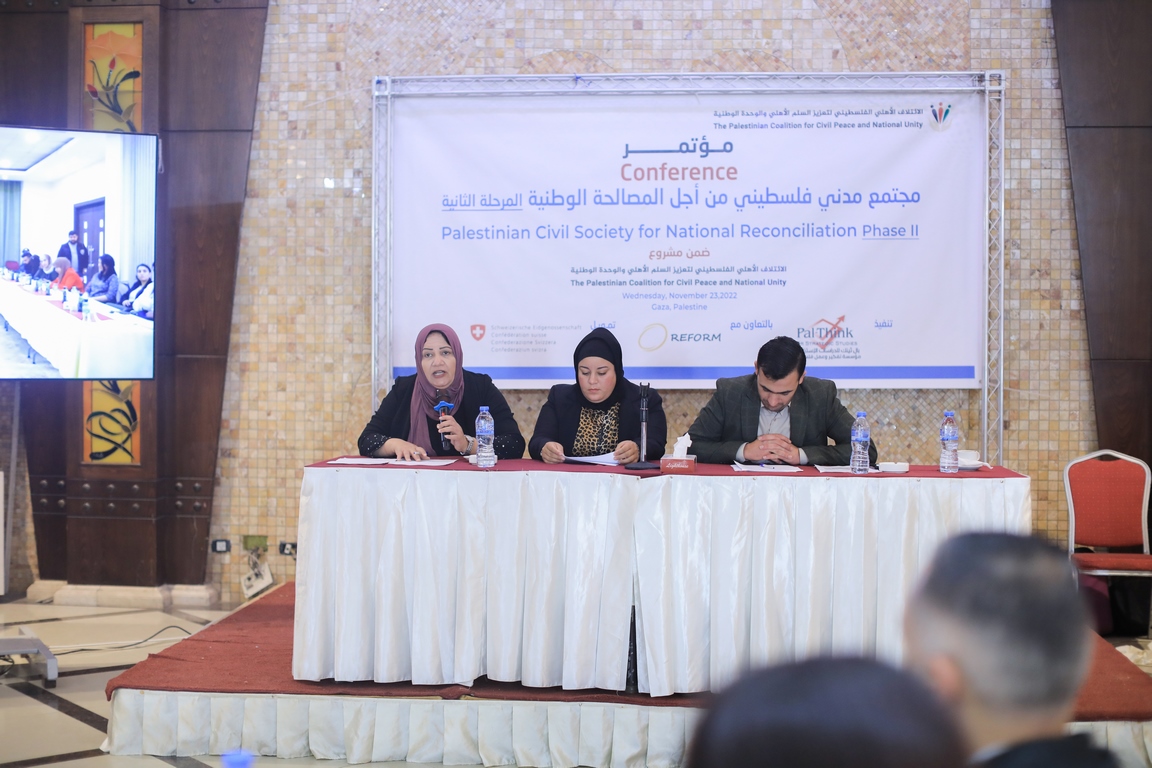
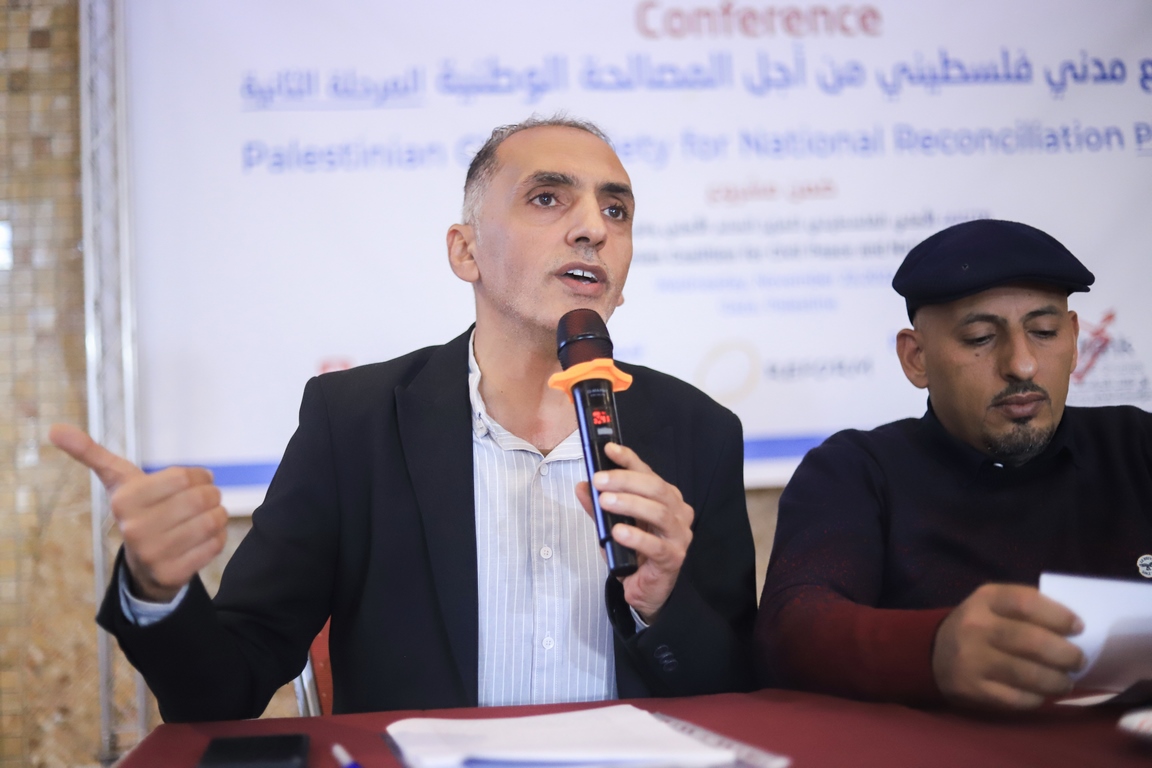
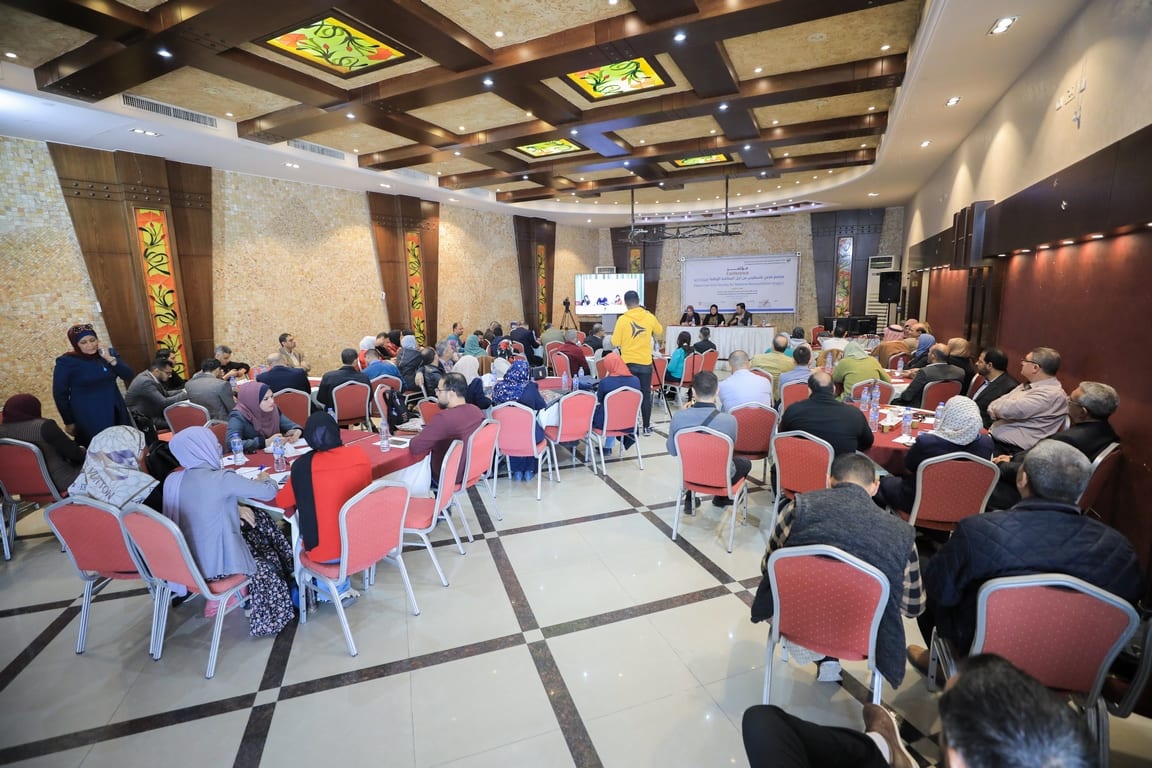
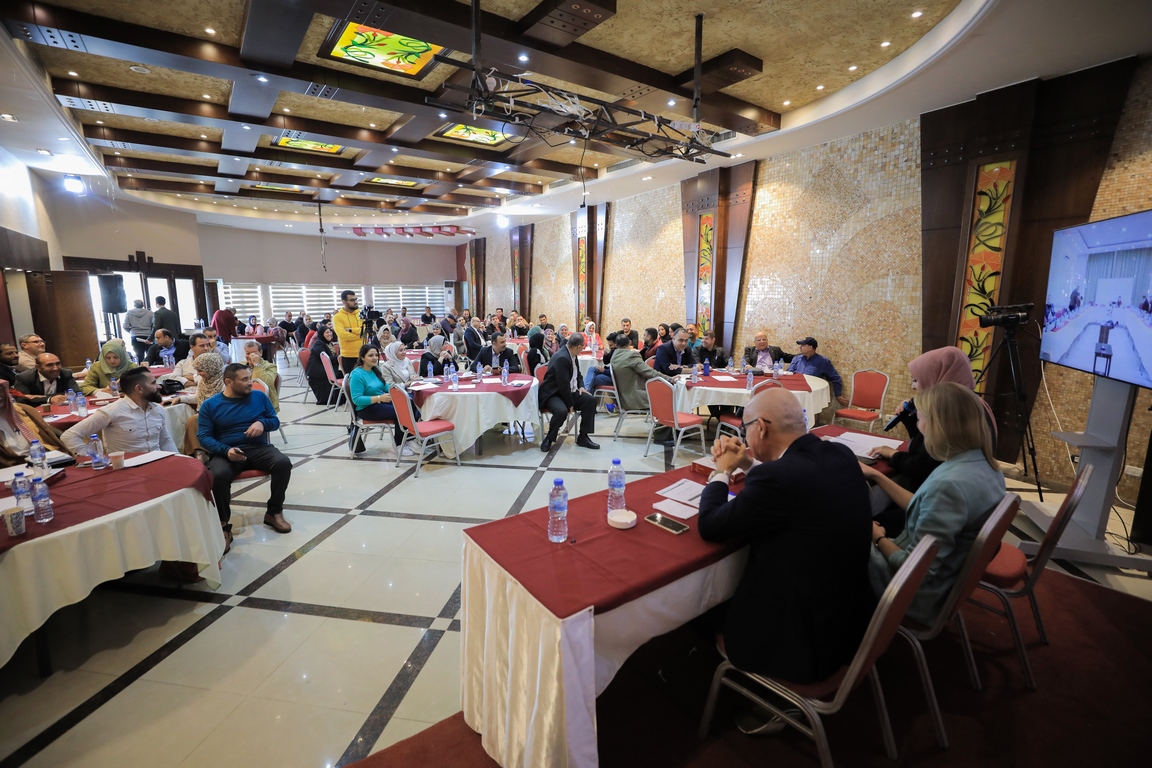
Pal-Think for Strategic Studies held the closing conference of the second phase of the “Palestinian civil coalition for strengthening civil peace and national unity” project, titled “A Palestinian civil society for national reconciliation” — crowning the second consecutive year of the project funded by the Swiss government in partnership with the Palestinian Association for Empowerment and Local Development “REFORM” — within Pal-Think's tireless efforts, as an independent research and reflection institution, to achieve Palestinian reconciliation.
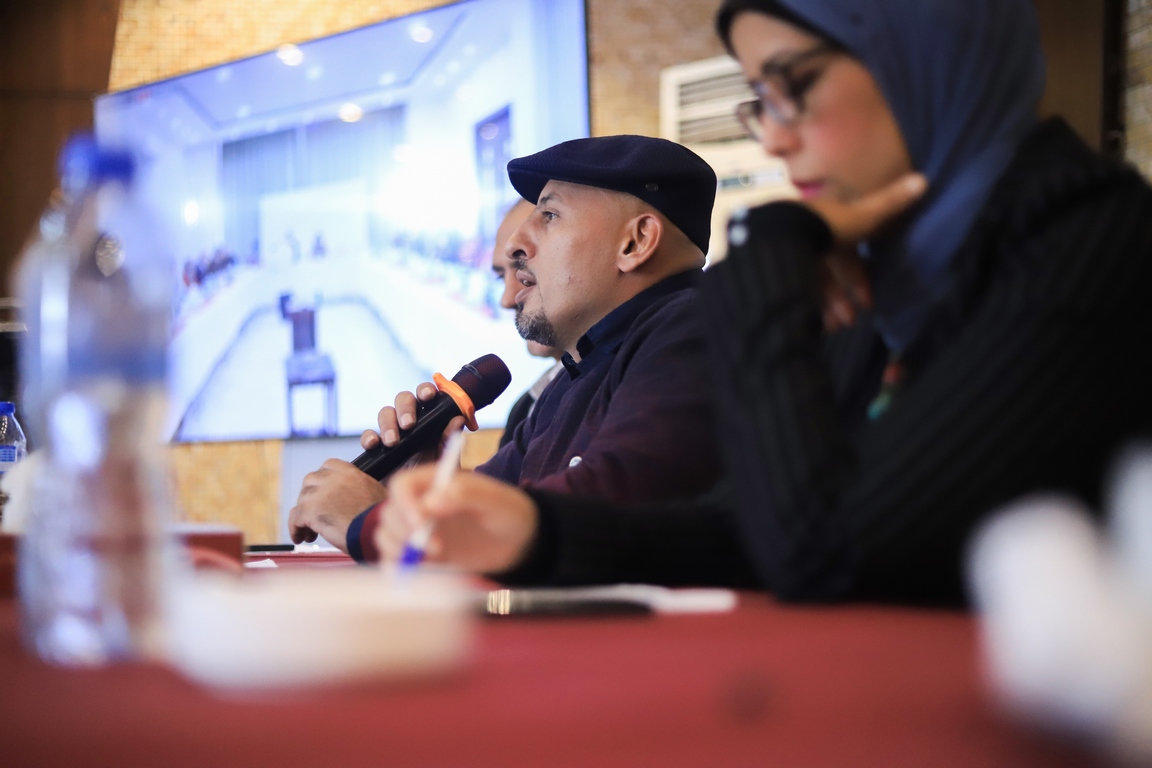
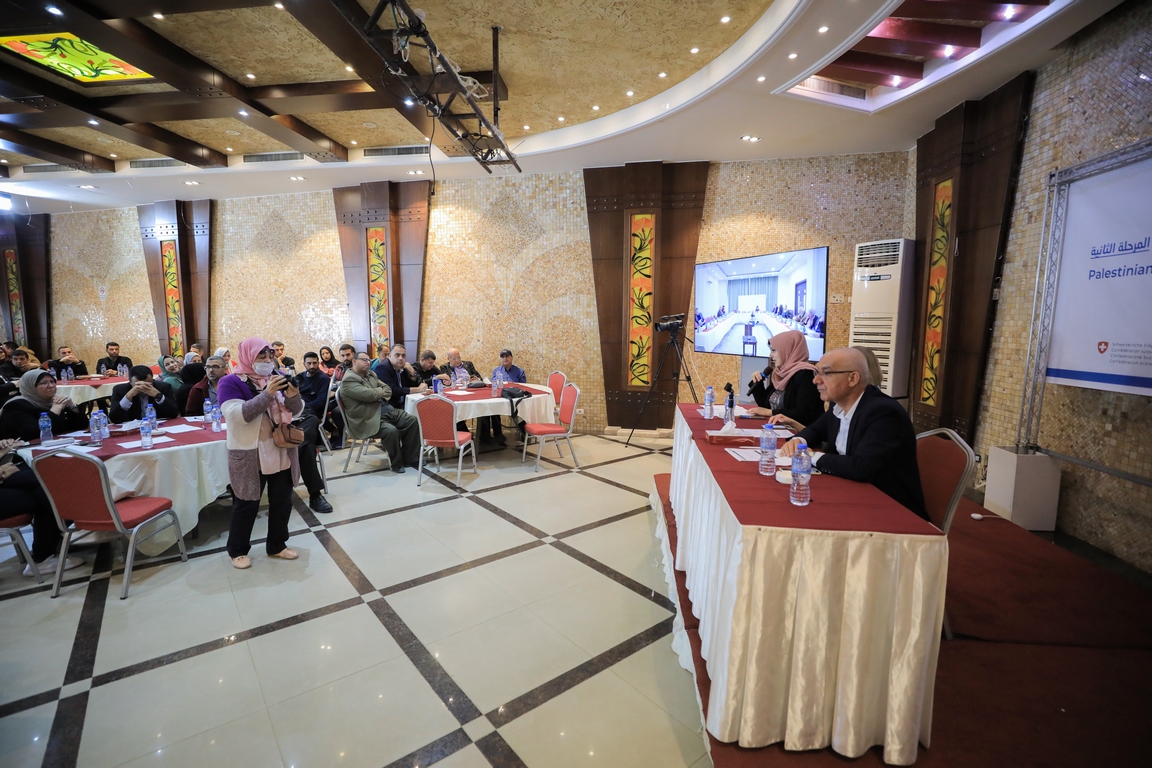
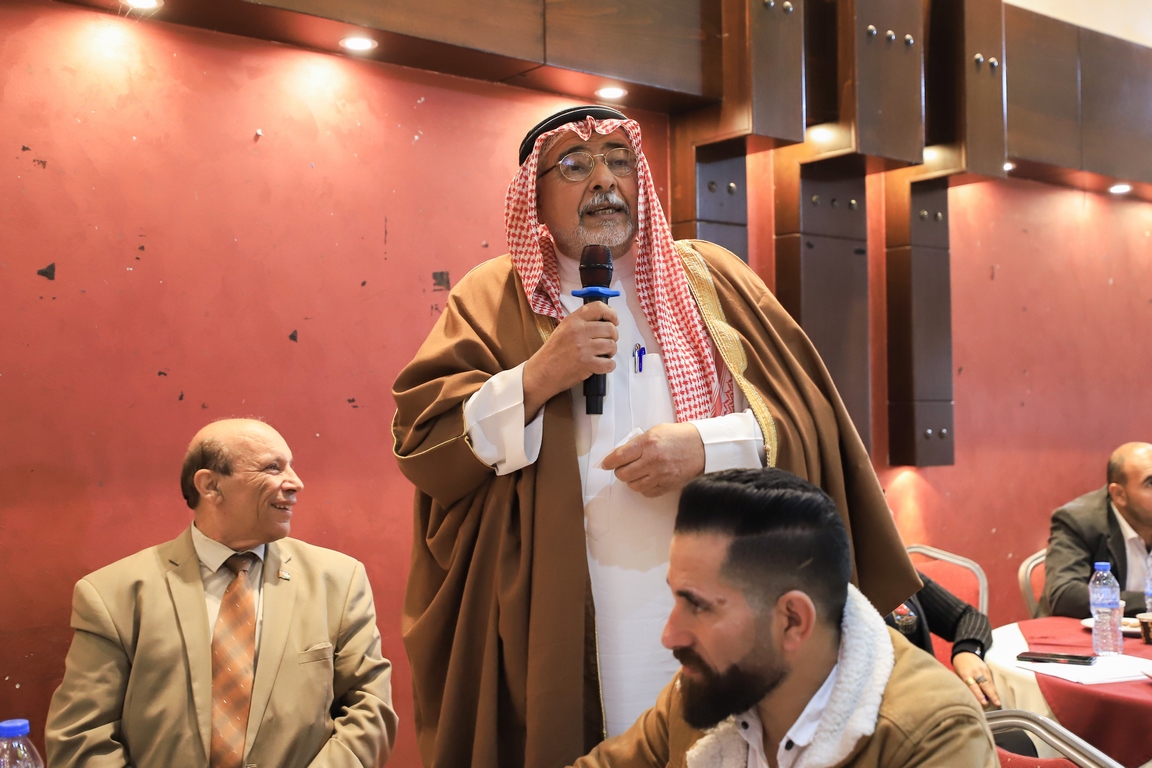
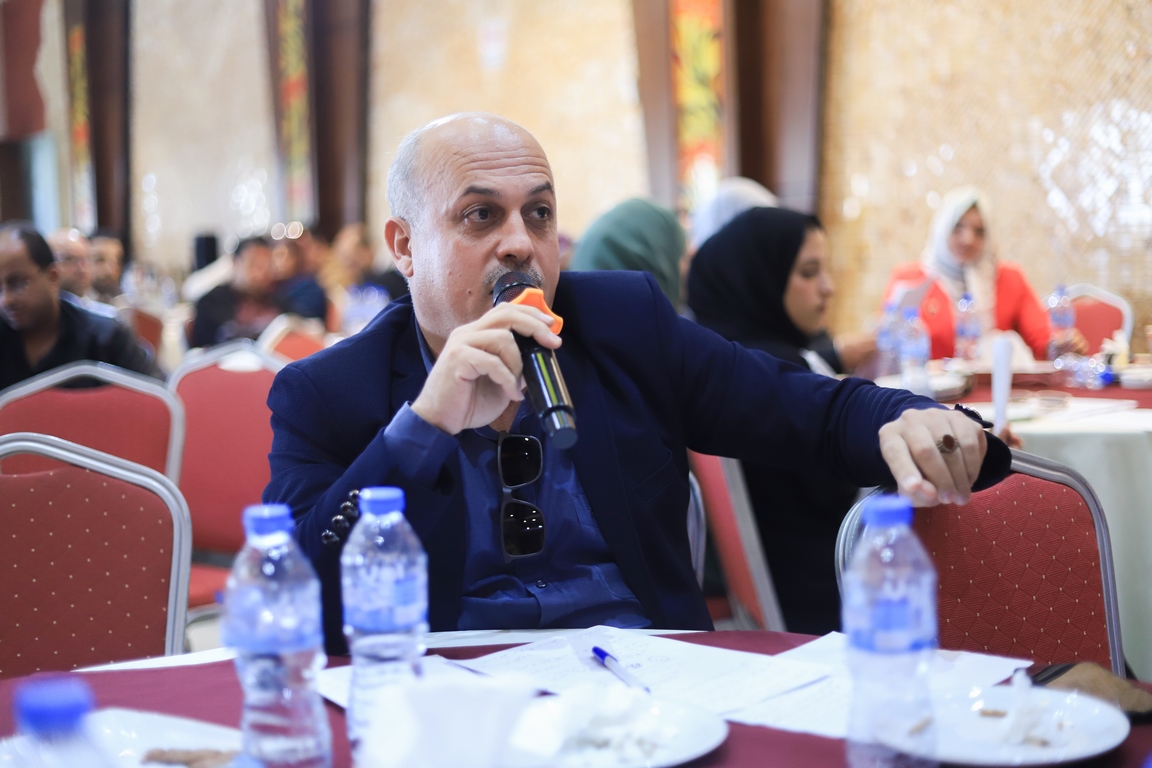
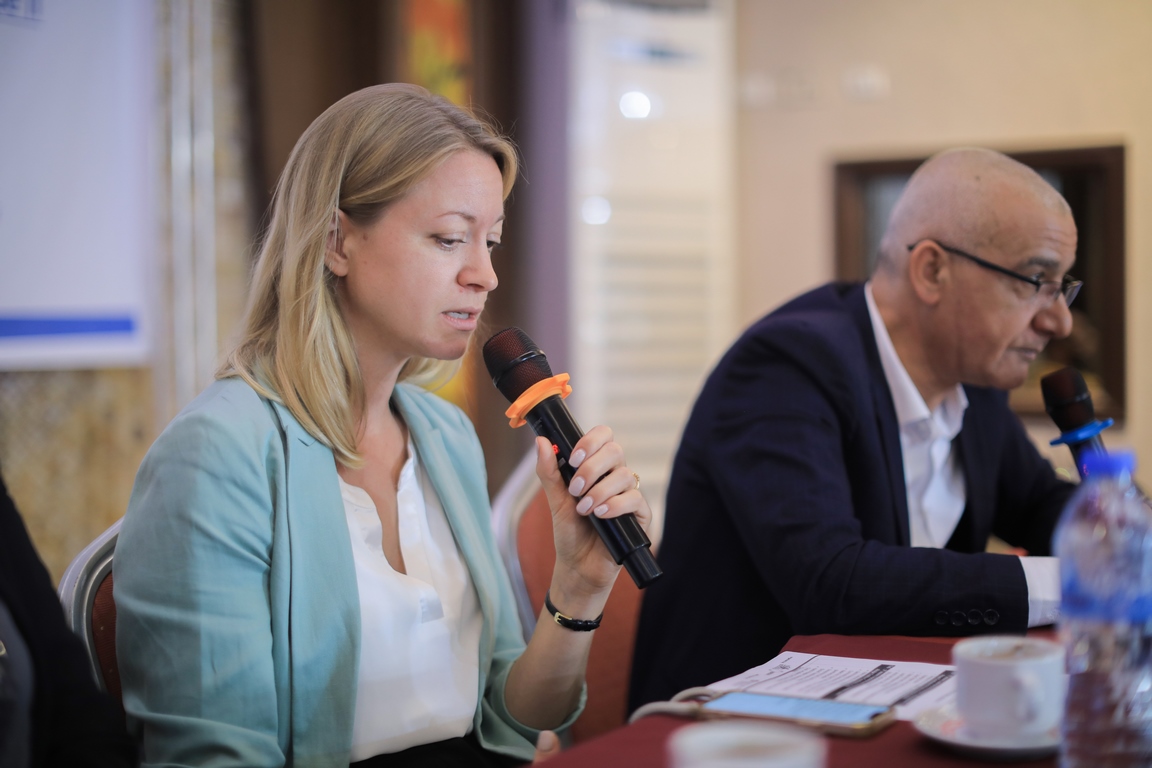
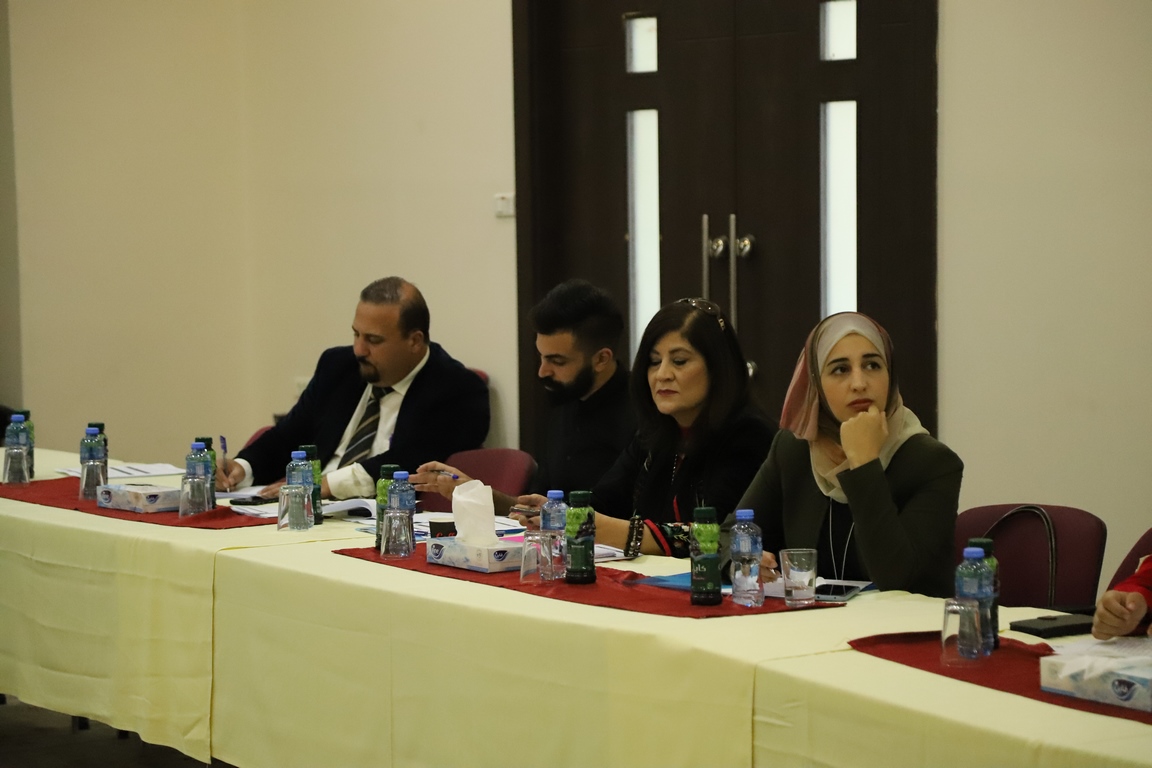
The conference was attended by the human-security adviser at the Swiss representation to the Palestinian territories, Emilie Zgheib, and more than 140 figures — representatives of the partner civil-society institutions from the West Bank, Jerusalem, and the Gaza Strip, researchers, jurists, university professors, and activists.
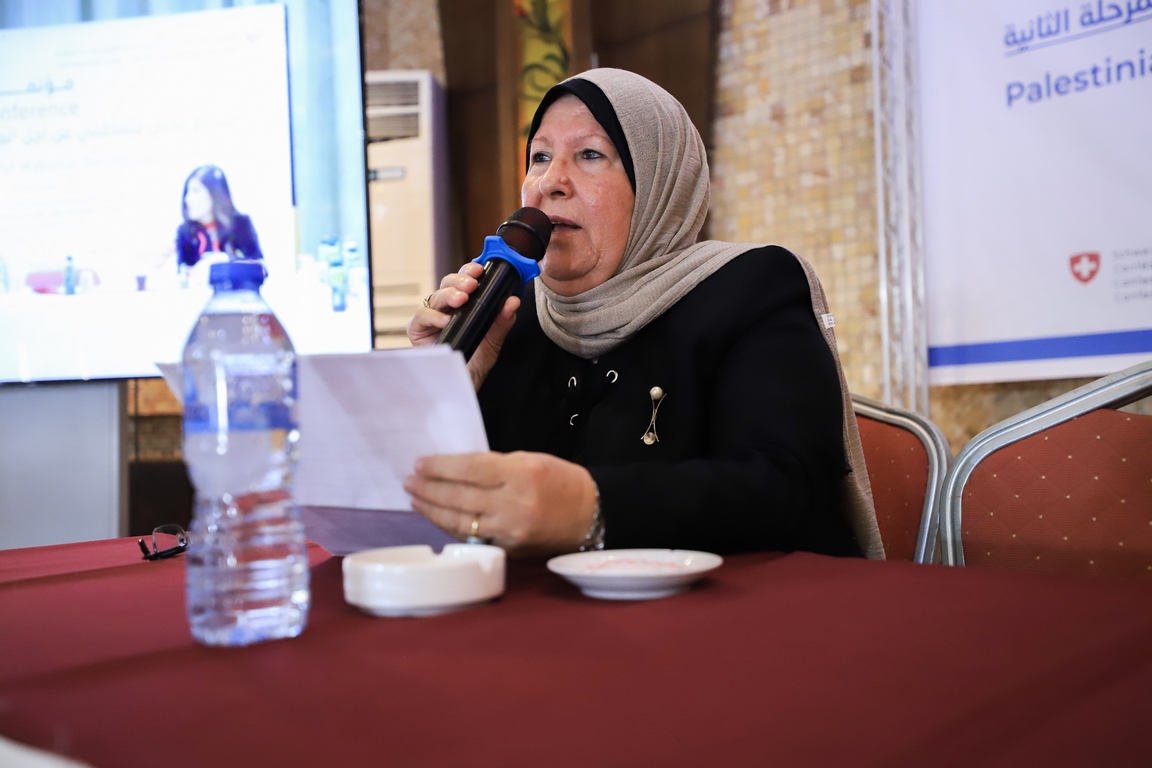
The meeting was opened by Pal-Think's projects coordinator, Ms Sally al-Sammak, welcoming the attendees. She said the Palestinian civil coalition for strengthening civil peace and national unity is composed of a group of civil-society institutions aiming at Palestinian reconciliation, formed on Pal-Think's initiative in partnership with REFORM and funded by the Swiss government.
She noted that the wide coordination among the partner institutions in both halves of the homeland aims to reach Palestinian unity toward sustainable development for Palestinian society — which requires cooperation from all parties to achieve comprehensive social reconciliation through community pressure.
Al-Sammak explained that the coalition ran in two phases: the first from August 2019 to January 2021, in which institutions from the Gaza Strip cooperated for the first time since the division with partner organisations in the West Bank and Jerusalem, delivering 23 initiatives to strengthen national unity, reconciliation, and the participation of women and youth in political life, in addition to launching a digital platform to spread youth messages on the reconciliation cause.
The second phase began in November 2021 and continues to now, centred on setting plans and activities for realising reconciliation. Four nationwide initiatives were launched in four sectors — good governance, human rights, social transformation, and civil peace — all aiming to end the division.
She pointed to the aims of those initiatives and the principal activities they comprised, meant to move public opinion toward reconciliation and spread civil peace.
For his part, Pal-Think's director Mr Omar Shaban welcomed the human-security adviser at the Swiss representation, Emilie Zgheib, and the attendees in both halves of the homeland, affirming that his institution has placed the Palestinian reconciliation cause among its priorities since the division occurred, producing the first research paper to address it.
He added: “We are among the institutions that faced the consequences of the division and a fragmented civil society. Since 2014 Pal-Think has built strong partnerships between the homeland's institutions in the West Bank and Gaza — it was the first time they spoke with one another. We strengthened Palestinian identity, continued working at the political level, and produced the Swiss reconciliation paper that was adopted by the Palestinian president and all the factions. We take pride in that, because it shows Palestinians did not stop — they worked to end the division.”
Shaban noted that Pal-Think has worked with the Swiss government at the university level since 2008 with 13 student blocs representing 13 Palestinian parties and factions, and was the first institution to deliver a joint project between students of the Islamic University, Al-Azhar, and Birzeit for a full year on the reconciliation cause.
He continued: “Pal-Think will not tire or retreat, for there is no escape from being one people. Reconciliation means sustainable development and the homeland's advancement, easing the lives of patients, democracy and the reform of the political system, reactivating parliament, and letting the young choose who governs them — especially with the absence of elections since 2006.”
He closed by affirming that “we must believe reconciliation is our destiny, however long the division lasts — many countries endured long divisions and were united in the end.”
For her part, the human-security adviser at the Swiss representation to the Palestinian territories, Emilie Zgheib, thanked Pal-Think for its invitation.
She said: “I would have been happier had you all been here, but I am glad technology enabled us to meet, and I hope next time we meet face to face. Palestinian reconciliation has been a fundamental part of the Swiss representation's work since the division occurred. One of Switzerland's goals in the Middle East is the establishment of an independent, viable Palestinian state. This conference crowns the efforts of civil-society institutions to strengthen community security and achieve national reconciliation.”
She continued: “The continuation of the division, the occupation, and the closure imposed on Gaza and some areas of the West Bank has deeply affected the structural fabric of Palestinian society and the state of its democracy. But this coalition has proven that civil society can revive the strong bonds between the West Bank and the Gaza Strip through cooperation and joint work.”
She closed by thanking Pal-Think, REFORM, and all the partner institutions for their hard work and devotion to the coalition's success, hoping this work continues after the project's end.
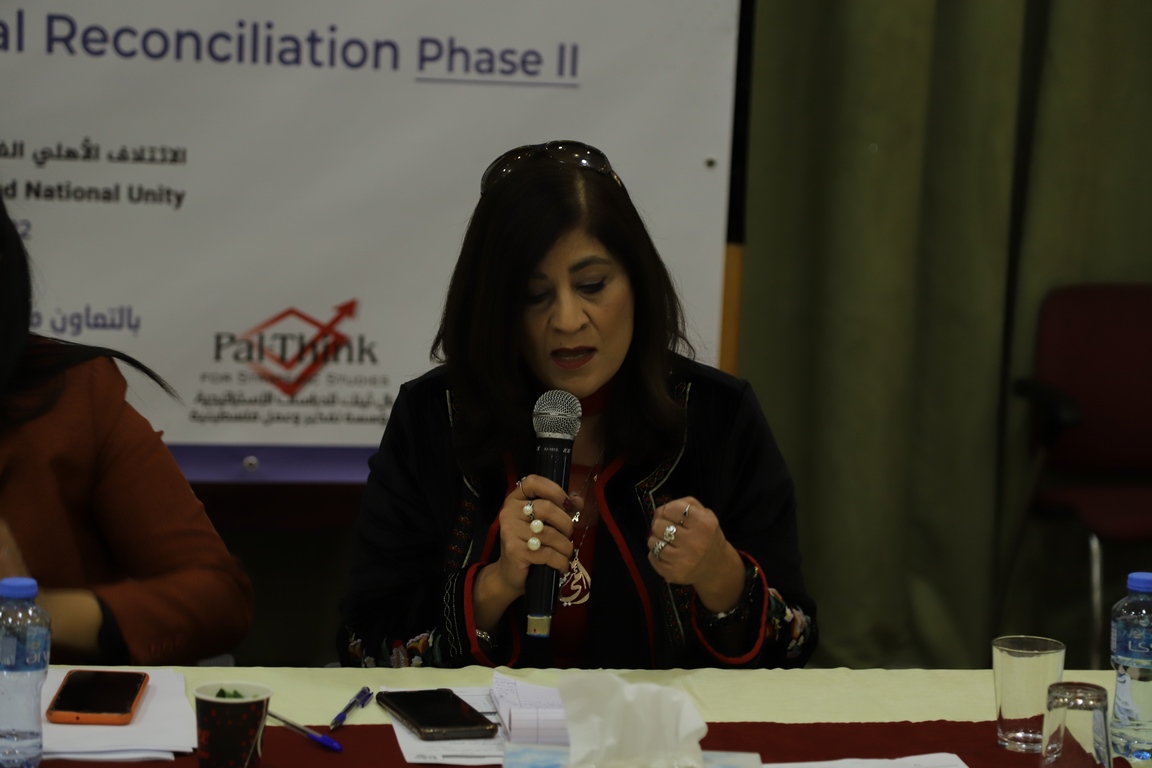
For her part, the coalition's representative in the West Bank, Ms Rawan al-Sharqawi, said that working to end the division is neither easy nor free of risk, since the division, running for 15 years, has been full of political, social, and economic challenges.
She pointed to the need for national leadership will and the unification of all efforts to end the division and achieve national unity.
She called on companies and official and civil institutions to join the civil coalition and form a body and community incubator for ending the division.
A short film was screened surveying the coalition's principal results over the past year in the West Bank, Gaza, and Jerusalem.
The second session was moderated by the coalition's coordinator in the Gaza Strip, Mr Bilal al-Najjar, who said: “We are proud of these results achieved by the organisations working in the human-rights sector despite the fragmentation wrought by the political division.”
For her part, Ms Samira al-Saqqa of the Amjad Association for Creativity and Community Development spoke of the Defenders of Justice initiative. She noted that the initiative aimed to press decision-makers to address all human-rights violations and to strengthen and spread the concepts of human rights among youth, especially persons with disabilities. It included meetings, trainings, workshops, radio episodes, pressure and advocacy campaigns, and the production of several films on human rights.
Mr Nader Amro of the Sawaed Shabab al-Ghad forum in Hebron said their initiative, delivered by six institutions, centred on strengthening good governance within civil-society institutions, comprising varied activities targeting youth, dialogue meetings with decision-makers, and interviews and radio episodes on good governance.
Ms Thuraya Abu Zuhri of the Southern Women Journalists Forum in Rafah said they delivered the initiative “We can turn it right” in partnership with five institutions from both halves of the homeland, to address the effect of the fragmentation produced by the division and to use social-media platforms in a way that curbs the spread of hate speech and employs them to strengthen civil peace.
She said: “Before the coalition we had no contact with the West Bank institutions; now there is networking and joint work between us.”
For his part, Mr Hamdi al-Zgheir of the Employees Club in Jerusalem said they delivered an initiative to strengthen civil peace with five other institutions, raising young men's and women's capacities in political participation, and held meetings with the parties and decision-makers.
In the third session, moderated by Ms Iman Abdel Rahman, Mr Kayed al-Maari of the Shahed centre in Ramallah said there is
great erosion of civil-society organisations from internal and external factors, foremost the Palestinian political system — especially with more than 3,000 civil-society organisations, some pursuing a set of developmental aims that reinforce the self-rule authority.
He pointed to four planes on which some institutions addressing the division work: treating the division itself, treating its repercussions, creating an effective environment for dialogue, and marketing particular agendas and aims.
He explained that the chief challenges facing civil-society institutions are competition among themselves, their inability to mobilise Palestinian public opinion behind some important causes, and the benefit some of them draw from the division.
Ms Widad al-Sourani of the University Graduates Association in Gaza said that party crossfire and hatred stand in the way of ending the division, which has caused a deterioration in economic conditions.
She said: “Women must be included in decision-making to reflect society's different aspirations.”
In the same vein, Mr Raed al-Debee of the Bozoor Association for Development and Culture in Nablus said the division still sidelines youth: youth representation in the Legislative Council is zero, and some members of the National Council and the Executive Committee have passed retirement age — even though the most prominent symbols of the Palestinian national movement in the past were young.
In the fourth session, moderated by the coalition's West Bank coordinator Ms Rawan al-Sharqawi, Dr Samia al-Ghussein presented a research paper on the reality of Palestinian youth participation in the Palestinian parties, shedding light on the internal regulations of some Palestinian factions and the causes of youth's absence from party participation. She offered proposals, chief among them amending the internal regulations of the Palestinian parties, their adoption of programmes to develop party youth's capacities, and ending the Palestinian division.
For his part, Dr Talal Abu Rokba presented a research paper titled “A reading of the value transformations among youth in Palestinian society over the last two decades”, discussing the great changes in society's social structures that have produced social, political, and economic transformations battering Palestinian society from the Oslo accord through the Palestinian division to the present — and he set out the effect of the negative economic transformations on youth.
Researcher Rizq al-Atawneh presented a research paper titled “Social pluralism in the face of the Palestinian political division”, speaking of social pluralism and Palestinian society's attempts to end the division, surveying the principal community and popular initiatives and movements in which the different groups and social classes took part to end it.
Dr Yahya Qaoud spoke in a research paper on hate speech and its cumulative effects on civil peace and national reconciliation, surveying several international and local concepts of incitement and hate speech, the principal features of hate speech, its forms, the ways it is practised, and its measurement tools — and he showed the effects of the erosion of civil peace in Palestinian society from hate speech.
A research paper was also presented titled “The prospects of governance for the Palestinian case in the context of the annual Fragile States Index for 2022”, according to the following indicators: cohesion, economic, political, and social.
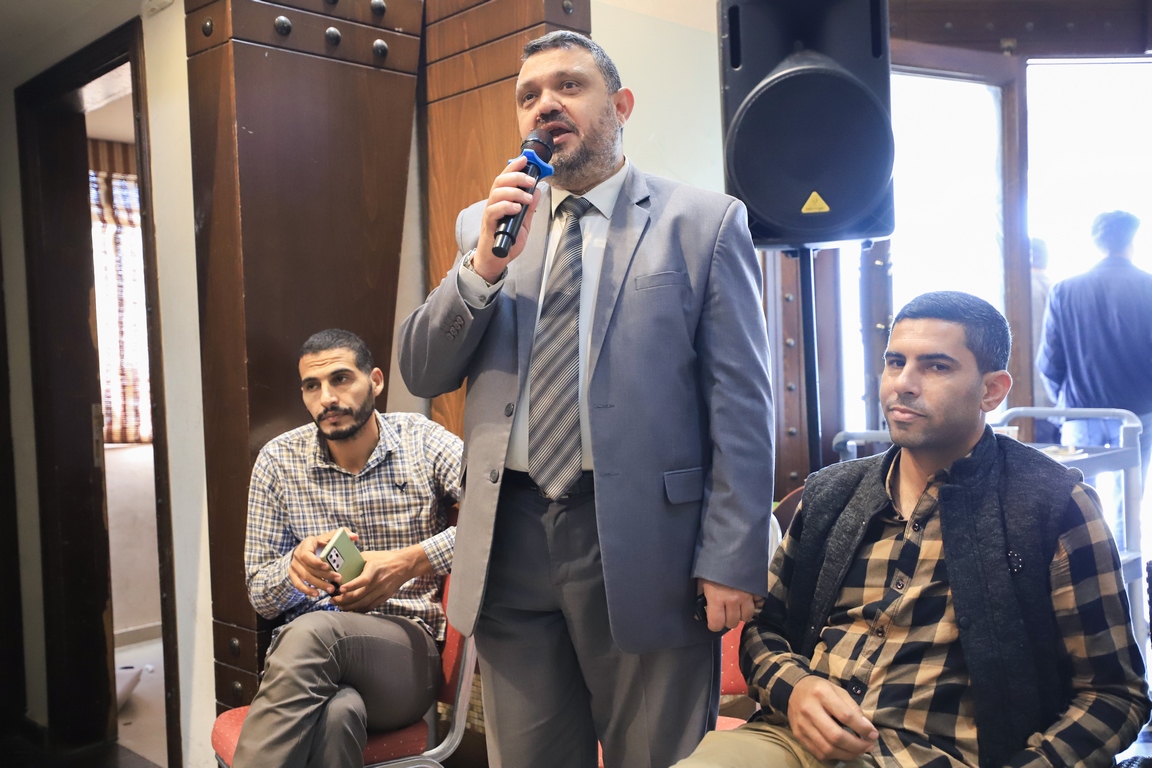
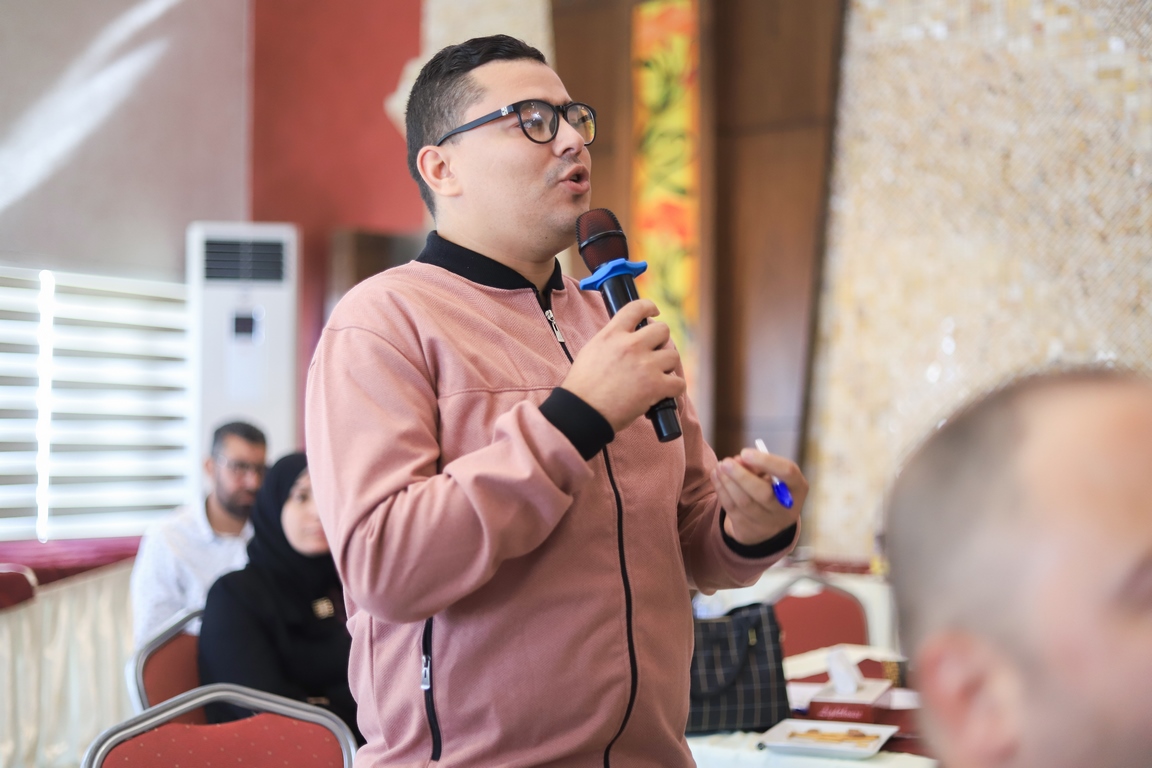
The attendees' interventions turned on the role of youth under the current circumstances, the ways of restoring young people's trust in political and national work, the necessity and importance of networking between the institutions of both halves of the homeland to end the division, the challenges facing civil society in achieving reconciliation, and society's capacity to impose national reconciliation on the two sides of the division.