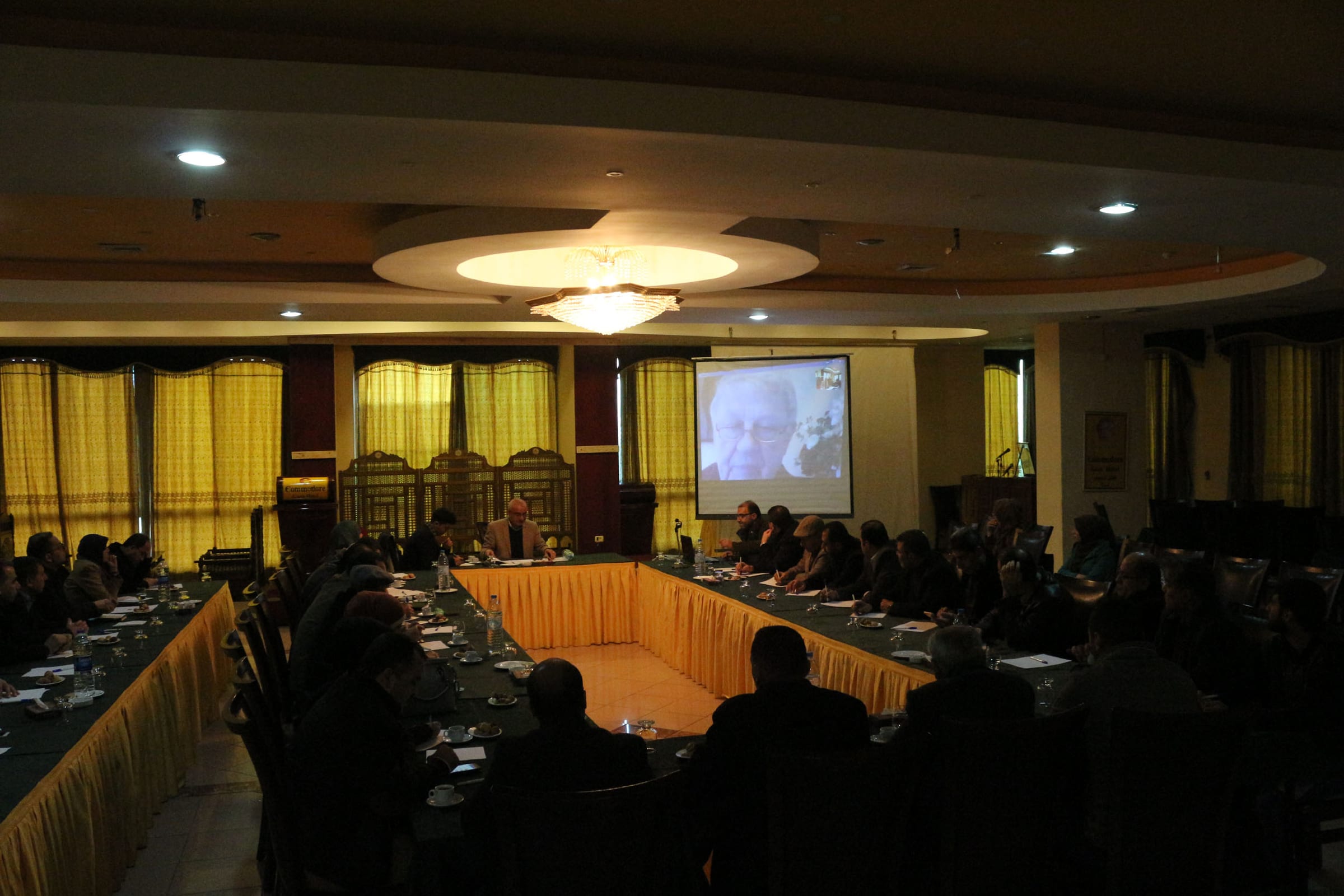
A meeting with Dr. Marc Otte, former European envoy to the Middle East peace process
Marc Otte, former European envoy to the Middle East peace process, affirmed that funding Palestinian refugees is under international law a human right, not a favour from donor states — as Belgium and the EU moved to cover UNRWA's deficit.
- Date
- 2018-02-01
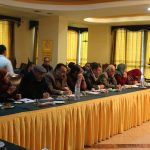
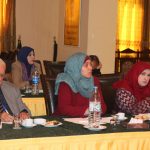
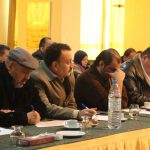
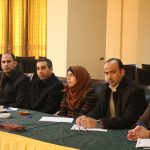
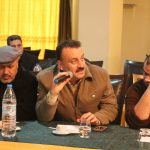
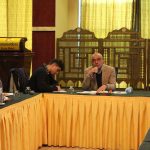
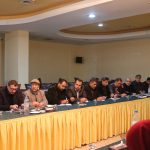
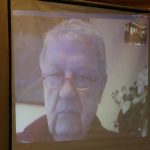
Marc Otte, the former European envoy for the peace process in the Middle East, affirmed that the funding of the Palestinian refugees, according to international law, is considered one of the human rights, and not a favour the funding states pay; Belgium and the rest of the European Union states hastened to intervene and contribute to filling the deficit in the budget of the international relief agency “UNRWA”, until a permanent solution is reached for this dilemma. He expressed his feeling of sorrow and sadness at what is happening in the Gaza Strip, hoping for a new year carrying within it improvements in the Palestinians' situations, especially in Gaza. That was in a discussion circle prepared by the Pal-Think for Strategic Studies institution on Monday 29 January 2018, which always strives toward discussing every new development of the issues raised on the Palestinian arena. The meeting was attended by nearly 55 persons, male and female, of journalists, specialists, and university students. Otte stated that the meeting of the donations committee concerned with funding the Palestinian Authority and UNRWA, which will be held on Wednesday 31 January in Brussels, will examine the new structure and instruments for examining the solutions related to filling the financial gap in UNRWA's budget, examine the possibility of funding the National Authority, and reconsider the possibility of beginning new economic projects in the West Bank and the Gaza Strip.
As for what relates to the possibility of the European Union taking the place of the United States as sponsor of the peace process, Otte affirmed that the Palestinians' decision to reject the United States as mediator in the peace process, especially after President Trump's decision to recognise Jerusalem as Israel's capital, is considered a natural and understandable reaction. Nevertheless the United States remains an indispensable mediator in the peace process, for its standing and its world weight in the region. This does not necessarily mean the European Union's turning away from supporting the Palestinian cause; rather perhaps a waiting on its part for an official decision from the United States to withdraw and not continue as mediator in the peace process between the two sides, the Israeli and the Palestinian.
In his talk Otte pointed out that it is better for the Palestinian leadership not to reject the United States as mediator, but also to welcome all the parties supporting peace in the region, pointing to the importance of working together on developing an agreed general strategy to support and develop the Palestinian infrastructure and economy. President Abbas was counselled, in his last visit to Brussels, to accept and strengthen the role of the states interested in participating in the peace process, such as Russia and other Arab states, in addition to China, which strives toward achieving political and economic aspirations in the region that it could reap from supporting the National Authority and the reconstruction of Gaza — as China has formed its own vision in parallel with the two-state solution and international law.
As for what relates to the European vision for solving the conflict: first, a new approach must be followed, which begins with learning from the lessons of the past, with the goal remaining the ending of the occupation that began in 1967. Second: the parties must strive toward applying what is already agreed upon in order to achieve tangible progress. Third: mixing the style of leadership from top to bottom, where the decision is in the leadership's hand, and from bottom to top, where the people influence the leadership's decisions — recalling the experience of Salam Fayyad, the former prime minister, and how he was able to elevate the state's institutions from the bottom to the top within the philosophy of what is known as “ending the occupation despite the occupation”, that is, without conflict and war but with the support of Israel and the funders; and the Palestinians were able at that time to convince the international community that they deserve a state, and statements were issued that the Palestinians had done all that was upon them to deserve an independent state. Fourth: opening more fields for dialogue and effective discussion between the components of Palestinian civil society in all its parties: women, youth, religious men, and leaders — pointing to a practical example Belgium carried out by bringing Israeli and Palestinian scientists to work together, and it was a wonderful experience by his description. Taking into consideration that the current government in Israel is not concerned with the two-state solution and there are no peaceful orientations — it wants self-rule — and the Palestinian leadership is also divided. And the Palestinians cannot achieve their goals and their right to self-determination without working hard, and striving toward activating the role of civil society with all its parties, to influence the Palestinian leadership and end the division and achieve the national reconciliation.