Pal-Think concludes a series of awareness meetings on democracy and human rights
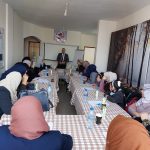
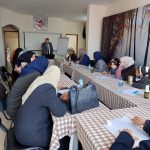
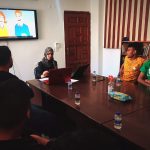
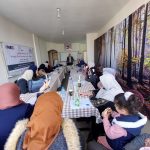
Continuing its central role in spreading the culture of democracy and human rights until it becomes a way of life, Pal-Think delivered five awareness meetings on civic-culture issues across the community.
- Date
- 2022-06-26
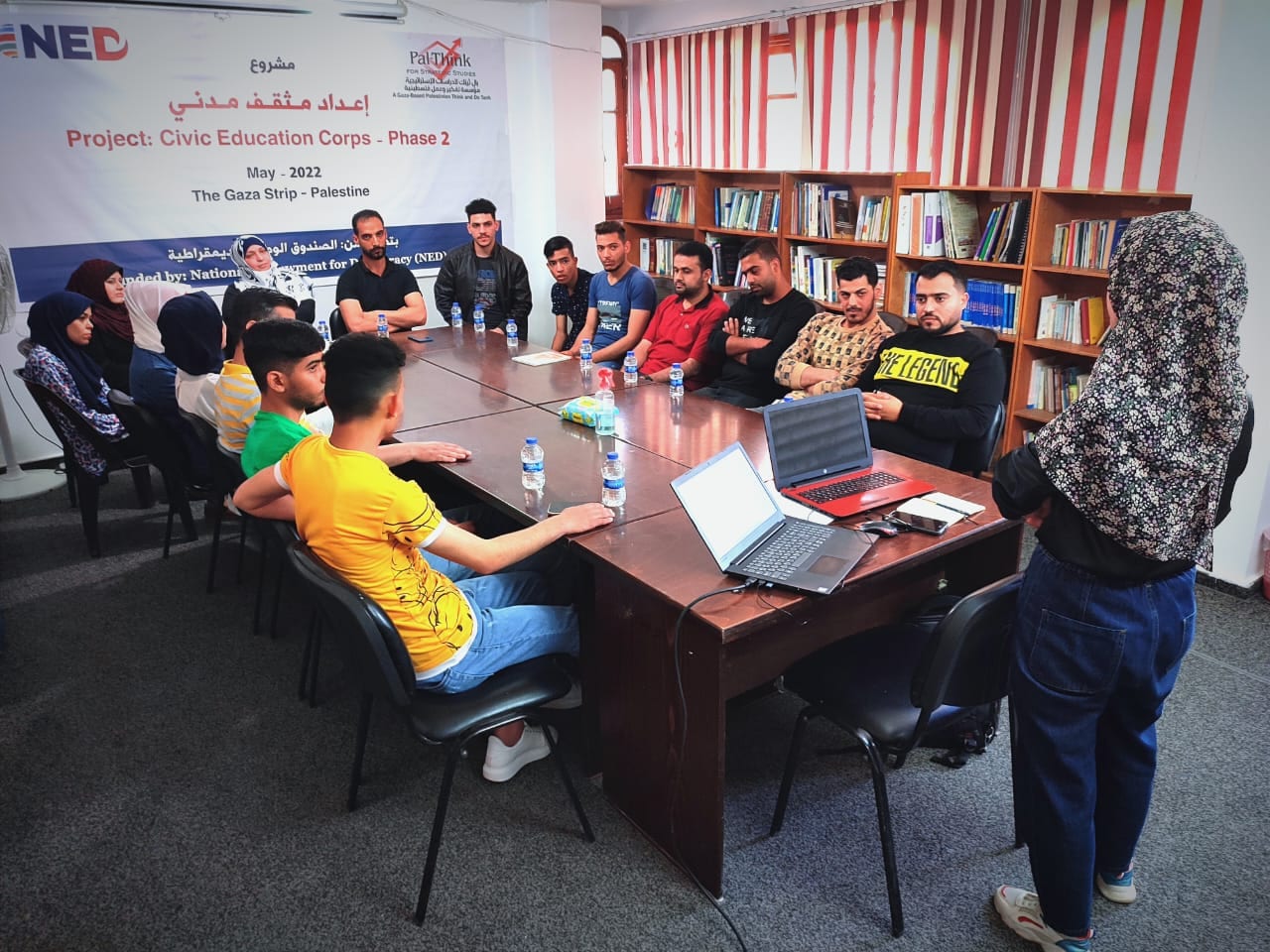
Continuing the principal role Pal-Think plays in spreading and strengthening the culture of democracy and human rights within society and entrenching it to become a way of life and a path all walk, Pal-Think for Strategic Studies carried out (5) awareness meetings on a number of topics and issues related to civic culture — within the activities and events of the project “Preparing a civic intellectual / phase two”, implemented by Pal-Think for Strategic Studies with funding from the National Endowment for Democracy (NED).
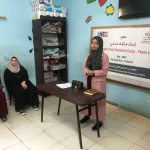
The first meeting was carried out in cooperation with the Gaza Center for Culture and Arts in Gaza City, titled “Resolution 1325”, and the meeting was led by Haneen Lulu, member of the civic-education body.
The meeting's trainer mentioned that this resolution, which focuses on the issues of women, peace, and security, was adopted unanimously by the Security Council on 31 October 2000, and counts as the first time the Security Council confronted the disproportionate and unique effect of armed conflicts on women. She showed that this resolution focuses on several aspects related to women, foremost among them women's participation at all levels of decision-making — including their participation in national, regional, and international institutions, conflict-prevention mechanisms, and peace negotiations; the protection of women and girls from sexual violence and gender-based violence; and working to prevent violence against women through strengthening women's rights, enforcing accountability, and applying the laws. Among the most important points this clause includes is the prosecution of those responsible for war crimes — such as sexual violence — and the permanent exclusion of sexual-violence crimes from general-amnesty agreements. The resolution likewise focuses on mainstreaming the gender perspective in peacekeeping operations.
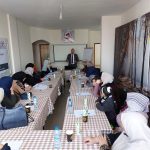
The second meeting was carried out in cooperation with the Amwaj Association for Development in Gaza City, titled “The right to elections and their procedures”.
The meeting was led by the civic-education body members Sami Shaqura and Anas al-Azazi, who in turn spoke of the concept of democracy, its characteristics, its most important merits, and the foundations of the democratic process. They set out the most important characteristics of the democratic system — foremost among them that it works to safeguard public rights and freedoms through its own written documents, the separation of powers, the independence of the judiciary, and other characteristics, and the protection of minorities' rights. They likewise spoke of the concept of political participation and its importance, the set of values political participation comprises, and set out the determinants of political participation and its levels.
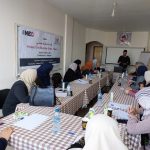
The third meeting was carried out in cooperation with the Future Generations Association in the Shuja'iyya neighbourhood, titled “Gender justice”, attended by a number of university students and youth of both sexes.
The meeting was led by the civic-education body member Hadeel Ahel, who in turn set out the concept of gender justice and its importance, and reviewed some of the challenges impeding the achievement of gender justice for women, such as societal challenges, legal challenges, and political challenges. She affirmed that to reach full gender justice there must be legal texts providing full protection for women and working to fight the customs and traditions that limit women's role in society.
Ahel showed that the Palestinian territories, and specifically the Gaza Strip, suffer bitter economic, social, and political conditions in light of external factors — the occupation's practices of aggression, blockade, and closure — and internal factors, in the political, parliamentary, judicial, and geographic division; which in turn reflected negatively on the state of human rights, democracy, good governance, and the rule of law in general, and on women in particular.
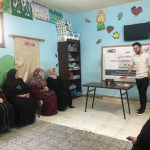
The fourth meeting was carried out in cooperation with the Qutuf al-Khair Association in the town of al-Zawayda, titled “Community work and its role in developing and advancing society”, attended by a number of youth and graduates of both sexes.
The meeting was led by the civic-education body members Maha Musa and Jumana Abu Sinjar, who in turn spoke of the definition of community work, setting out its concept and the other concepts attached to it, and the universities' role in strengthening community and voluntary work among youth.
They likewise made clear the importance of community and voluntary work, affirming that community work counts among the most important of society's values that must be encouraged and strengthened among society's members, being one of the most important tools of societies' progress and advancement.
The fifth meeting was carried out under the title “The reality of women in the Gaza Strip”, in cooperation with the Milad Association for Capacity Development in northern Gaza, and the meeting was led by the civic-education body members Sami Shaqura and Almaza Odeh.
They reviewed the legal framework for women in the system of Palestinian laws and international human-rights law, setting out the gap between them — affirming the necessity of activating the Legislative Council's role to enact laws that take account of women's current reality and protect them from the different forms of violence.
They likewise made clear the kinds and forms of violence to which women in the Gaza Strip are subjected, showing that violence against women counts as a crime in itself that must be rejected societally.
It is worth noting that during this project's activities an intensive training programme was implemented targeting 25 students, who were then given the opportunity to pass on the skills and experience they gained in the training programme through carrying out (15) awareness meetings targeting different and diverse groups from all the governorates of the Gaza Strip, in cooperation with civil-society institutions — especially those institutions spread across the marginalised areas. These meetings focused on discussing societal issues and rights and legal issues.