Pal-Think hosts the president of the International Committee of the Red Cross
Continuing its work since March 2007 as an independent Palestinian institution fostering rational, scientific debate, Pal-Think hosted the president of the International Committee of the Red Cross among other distinguished figures of influence on the Palestinian situation.
- Date
- 2016-09-01
Pal-Think for Strategic Studies continues its work as an independent Palestinian institution founded in March 2007 in the field of strengthening joint thinking and rational, scientific discussion around issues that concern the Palestinian and regional affair.
Pal-Think has hosted esteemed figures of influence on the Palestinian situation, among them Mr Pierre Krähenbühl, the Commissioner-General of UNRWA, and after him Mr Ridha Idris, vice-president of the tenth congress of the Ennahda movement from Tunisia, and before him figures from Iran, Turkey, and the United States — with the goal of deepening knowledge around the international issues of influence on the Palestinian situation.
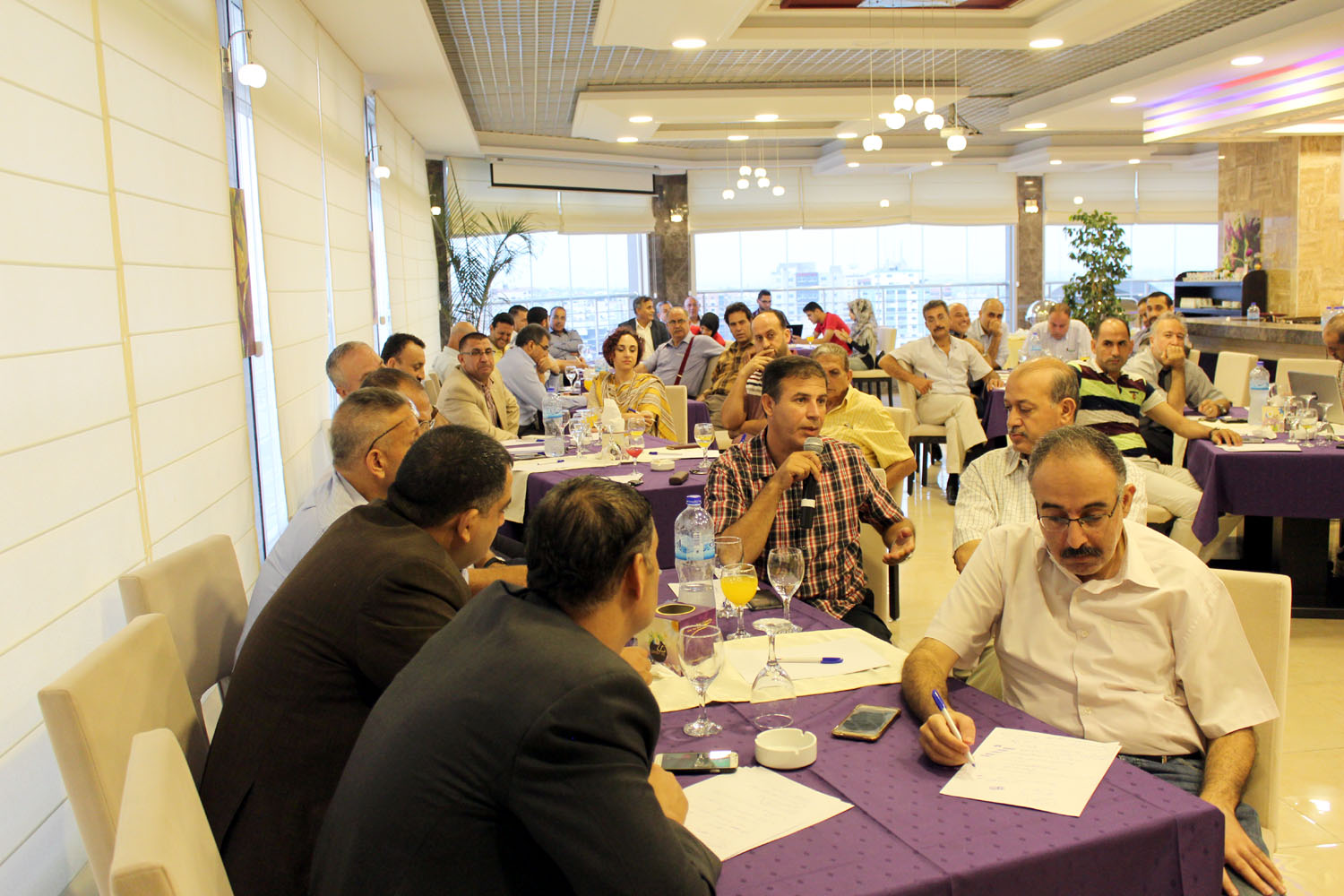
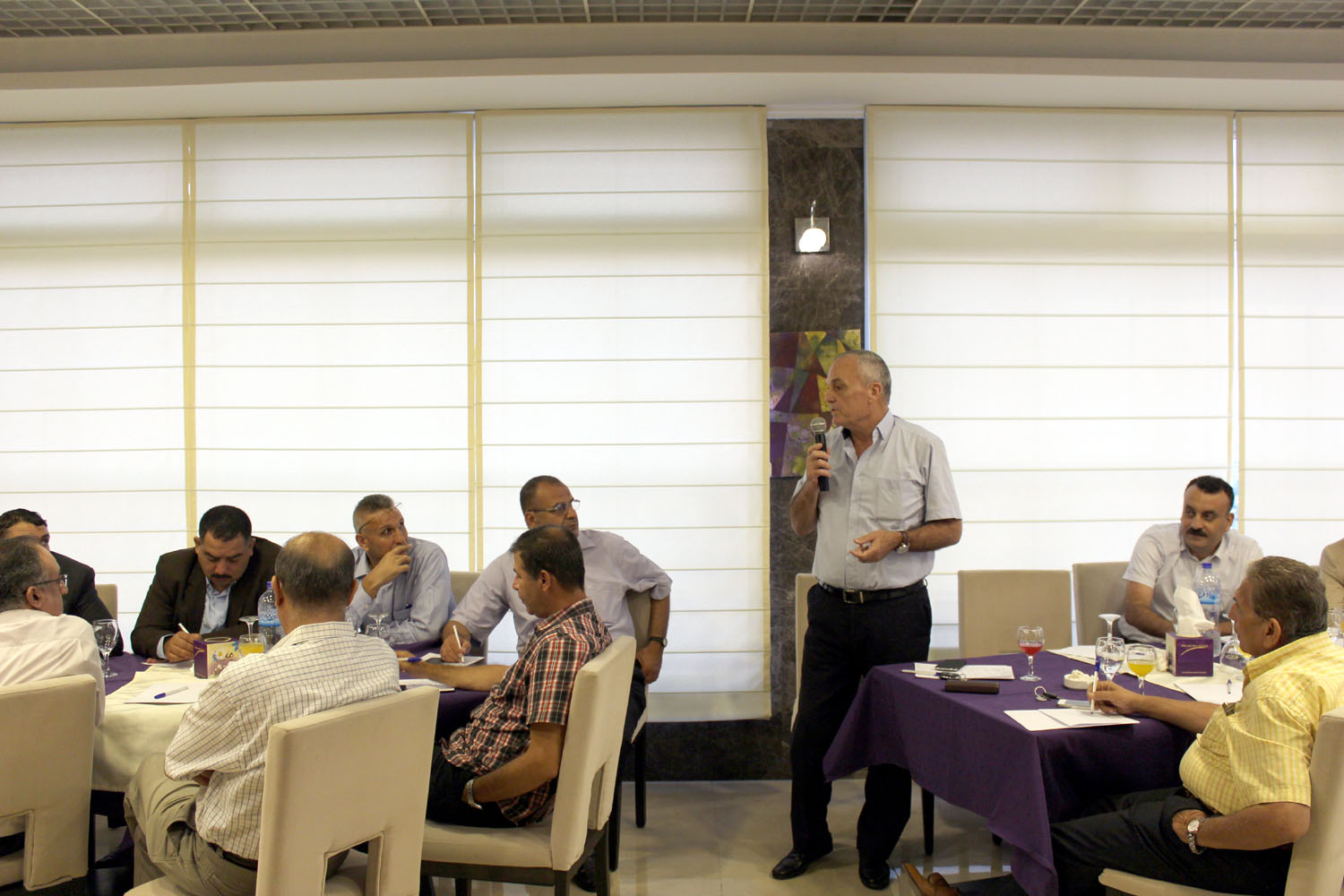
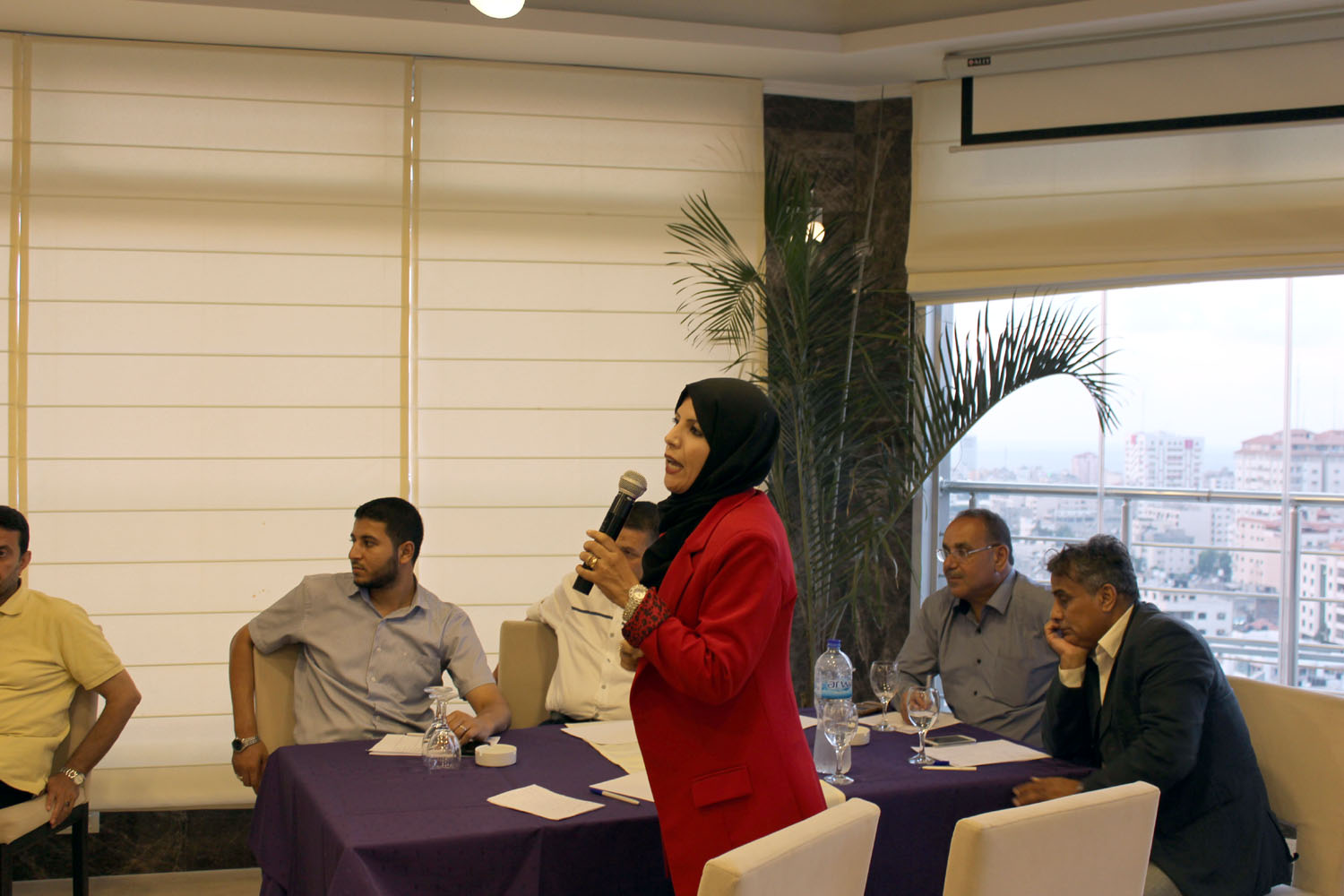
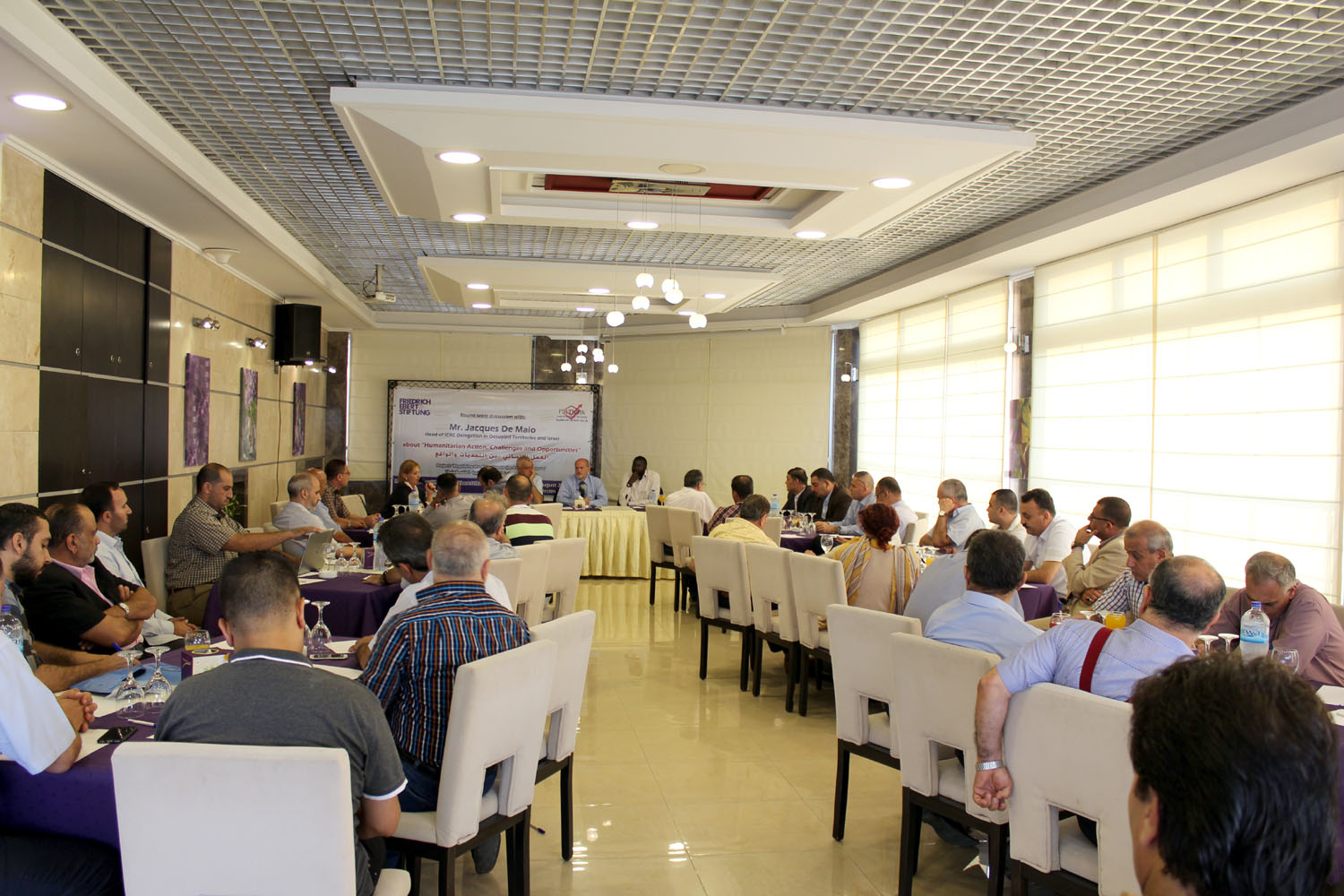
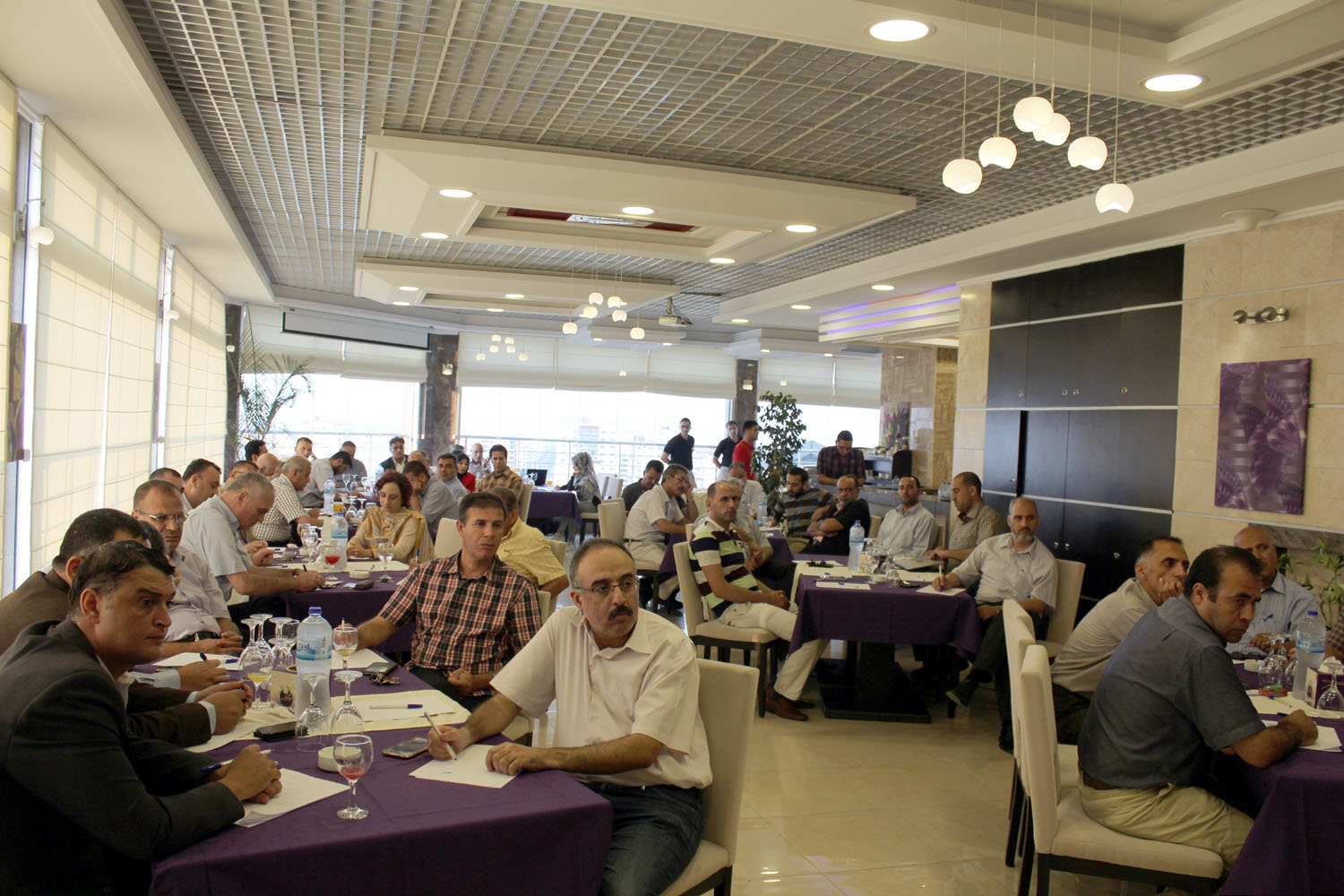
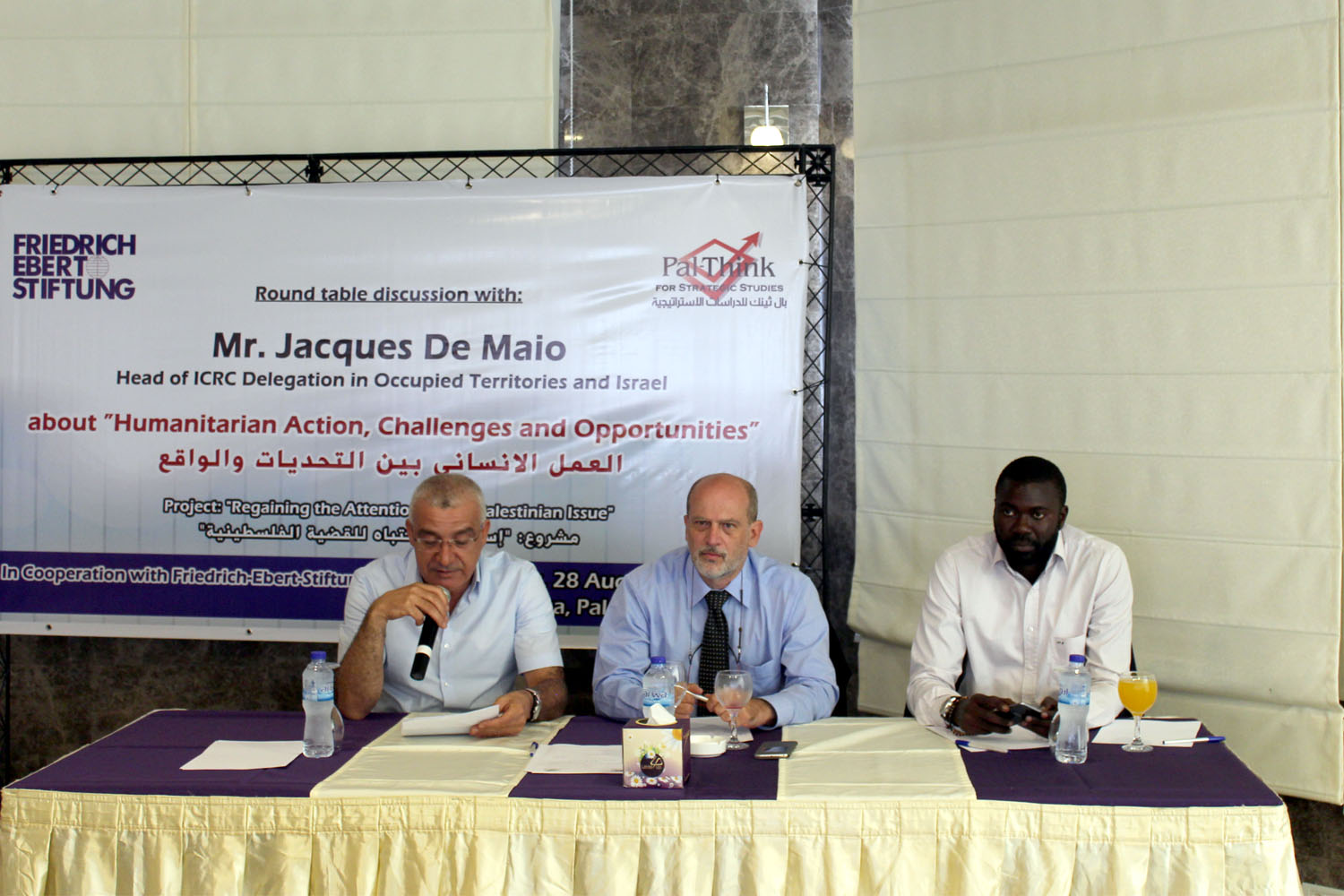
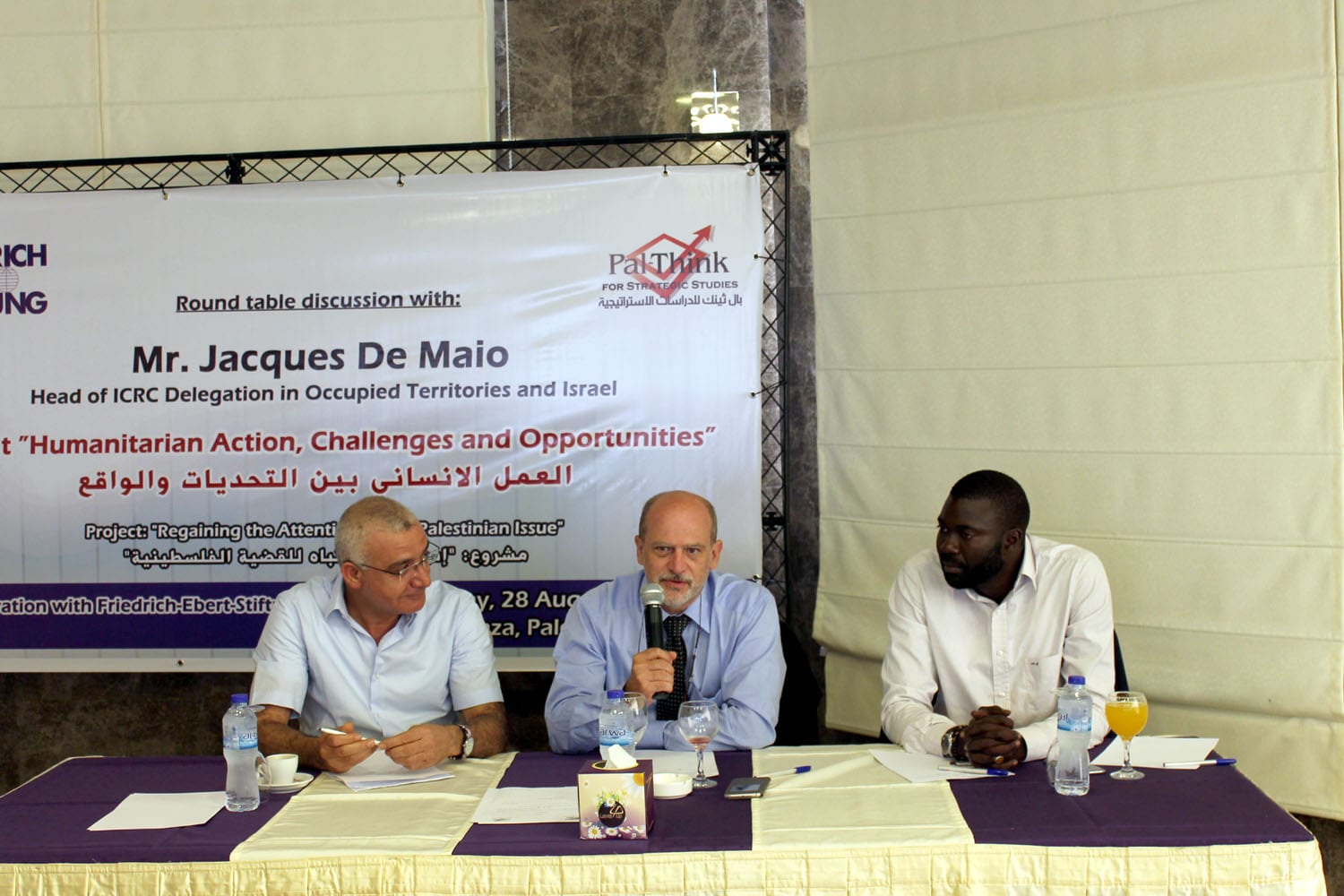
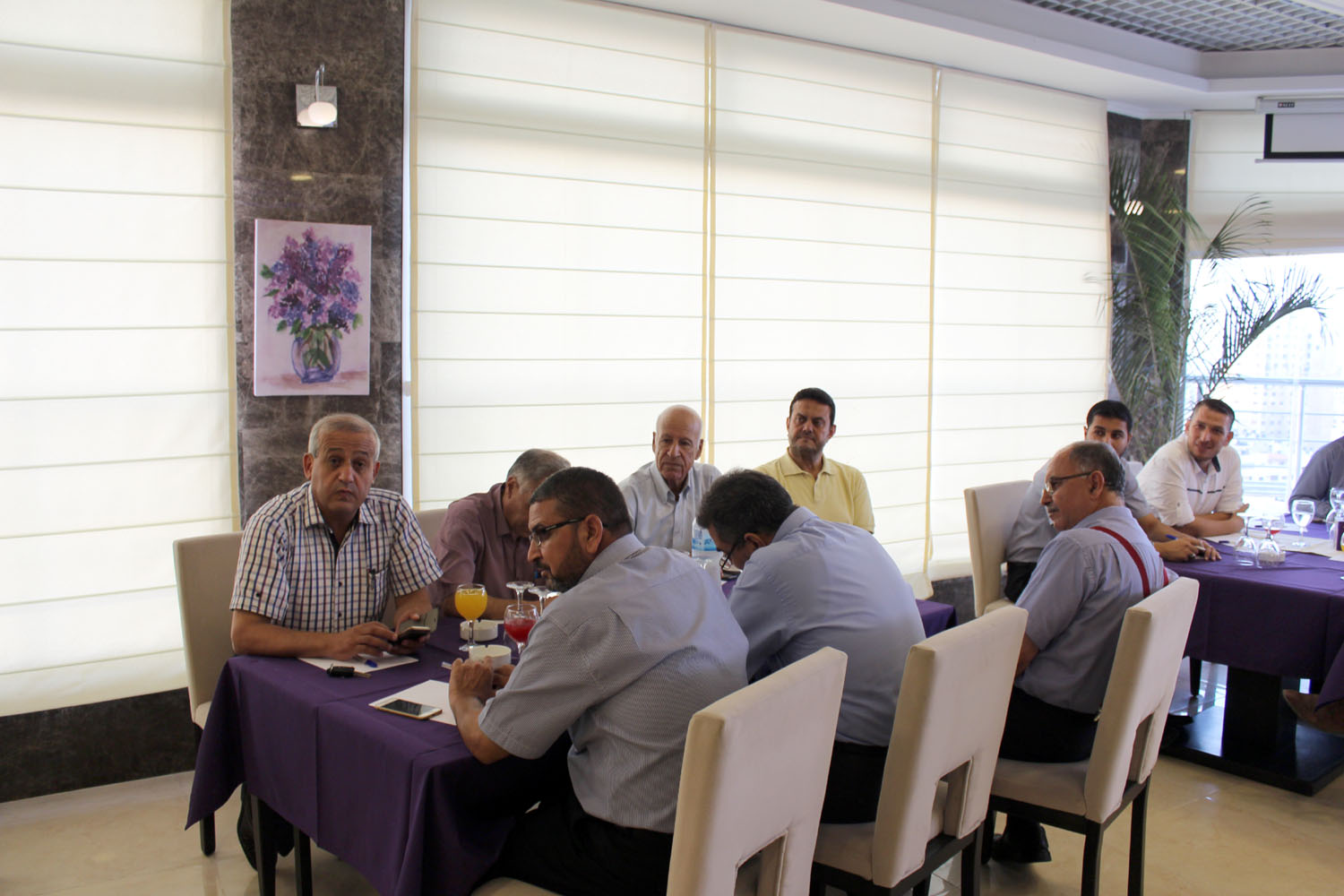
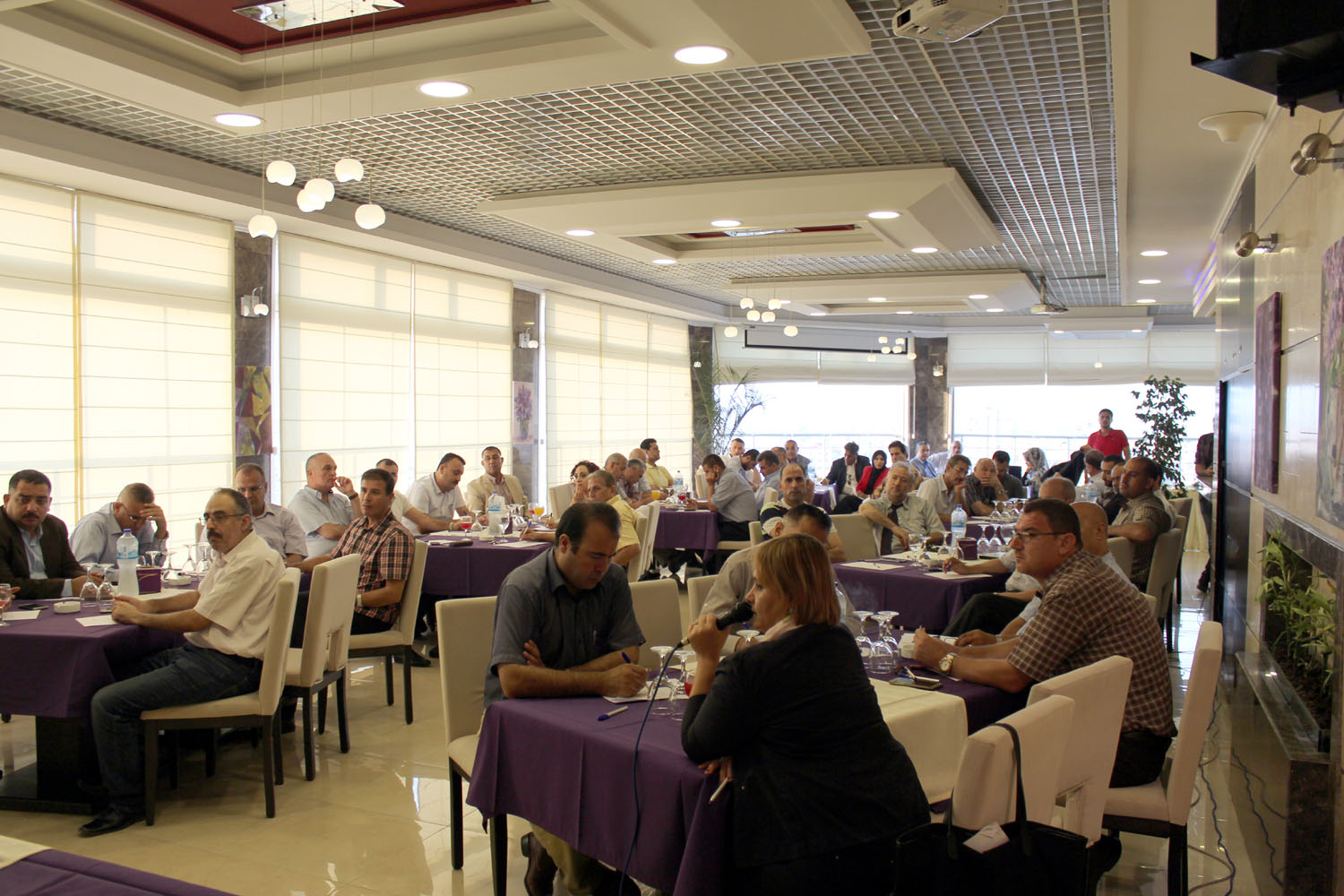
In cooperation with the German Friedrich Ebert foundation, an open and frank discussion session was held with Mr Jacques de Maio, head of the Red Cross delegation in Israel and the occupied territories, on Sunday 28 August 2016. The discussion took up the determinants and horizons of humanitarian work between the challenges, the reality, and the expectations of it. The seminar, which took place without media coverage, was attended by 60 figures representing varied sectors of political forces, media, university professors, and many representatives of civil society..
Mr Omar Shaban, director of Pal-Think, began by opening the session, noting that the International Committee of the Red Cross is one of the most respected institutions at the level of the world and in Palestine. The institution began its work in Palestine in the year 1948, since the beginning of the Arab-Israeli conflict; the Red Cross has accompanied the Palestinians' struggle over the past decades, and the Red Cross has reached nearly every Palestinian house, whether by way of the prisoners' visits, or the evacuation during the wars, or the reunification of some families, or the aid presented to those whose homes were destroyed.
Mr Shaban likewise added that humanitarian work in the areas of conflict is not easy at all. Helping the victims and the stricken contradicts at times the position of the fighting parties, which resort at times to taking people as hostages and cards for negotiation. In light of the absence of the national systems and their occupation with the fighting, the importance of the humanitarian institutions stands out as a last refuge for the people and the victims — which raises the ceiling of expectations and hopes of them. He then turned to Mr de Maio: “How can one harmonise between the contradictory and conflicting positions, and how can innocent people be spared from being fuel for the battle.
Mr de Maio began his talk by thanking Pal-Think for giving him the opportunity to speak to an elite of civil society in Gaza. He spoke of the most important principles of his organisation's work; the principle of neutrality and independence was among the issues raised, being the compass that directs the institution's work. He indicated that the Red Cross is independent, in that it is not subject to the dictates of the funders or the mobilisation and advocacy groups, but rather implements its activities by harmonising between the needs of the victims of the armed conflicts and the available resources.
On neutrality he made clear that to be neutral means that you keep the same distance between the disputing parties, that you do not adopt the viewpoint of one of the two sides, and that you do not look at anyone with a negative look. Pointing to his experience across long decades in South Sudan, Afghanistan, and Pakistan, he made clear how the strict commitment to these two principles strengthens acceptance and access, in the final analysis, to saving lives..
He also reviewed the Red Cross's work in the Gaza Strip, especially during and after the 2014 war. Among the challenges he shared with the attendees was the non-public policy of the Red Cross in dealing with the sensitive issues regarding the violations of international humanitarian law, and he attributed the secret of his organisation's strength to this path they chose, considering it a point of strength and not a point of weakness. He ended his talk on the challenges facing his organisation in its work in Palestine and Israel in confronting the politicisation in dealing with the humanitarian issues. Mr de Maio answered the attendees' questions related to administrative detention, the detainees, the hunger strike, and the dissemination of international law in the Israeli circles.