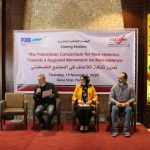
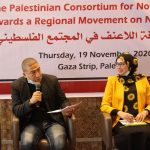
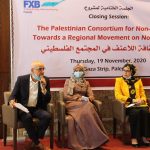
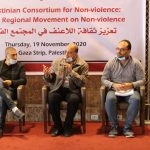
Pal-Think holds its annual conference on civil society's role in spreading the culture and values of nonviolence and tolerance
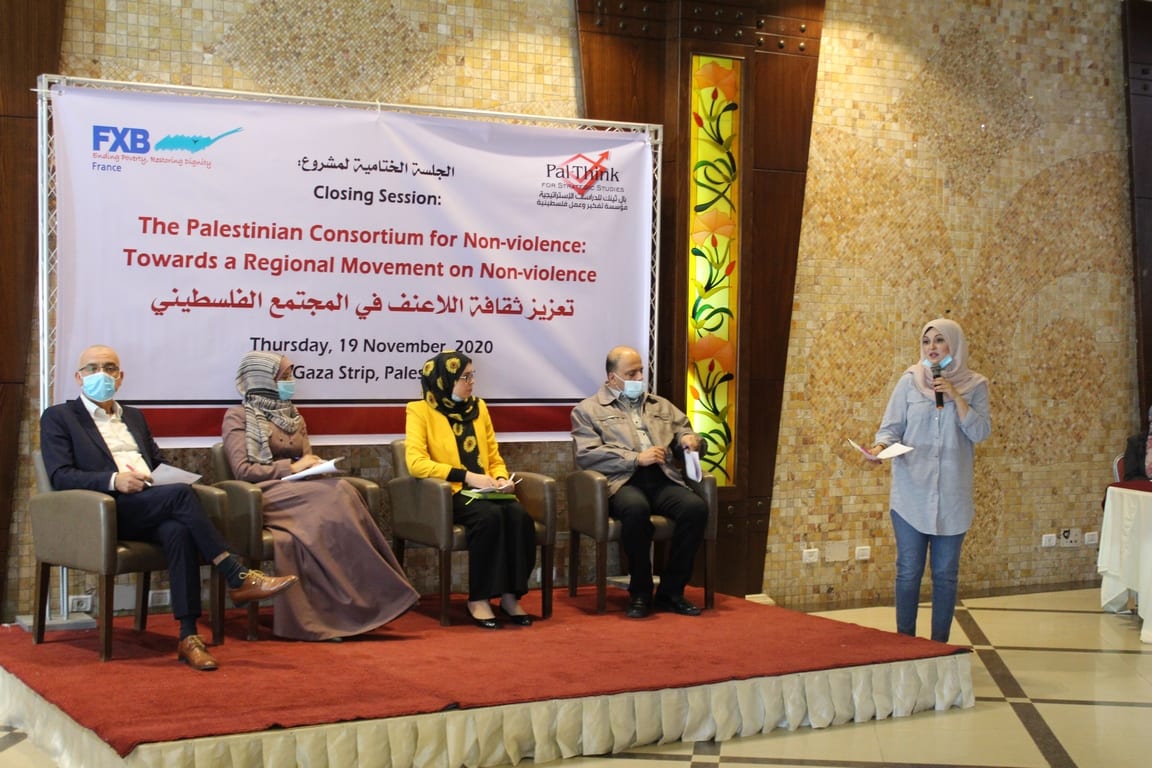
Pal-Think held its annual conference closing the «Promoting a culture of nonviolence» project, implemented with FXB France — presenting the project's achievements and its call for civil peace and dialogue as the way of resolving differences.
- Date
- 2020-11-22
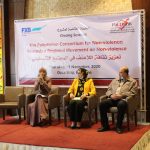
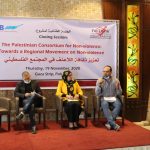
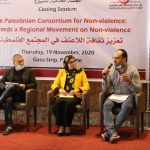
Pal-Think for Strategic Studies organised its annual conference to close the project “Strengthening the culture of non-violence”, which it carried out in partnership with the FXB France foundation. The conference came to present the project's achievements and spread its idea and its goal, which calls for strengthening the culture of civil peace and the instruments of dialogue as an approach to be followed in solving and adopting communal issues in all their forms. The project, which continued for 10 months, comprised the implementation of 25 communal initiatives calling for the strengthening of non-violence and tolerance; two research papers were likewise issued taking up the two states of Palestine and Rwanda in their adoption of the method of non-violence, and 15 radio episodes were broadcast within the programme “Non-violence, a way of life”, taking up the principles and concepts related to civil peace, to promote the culture of non-violence — in cooperation with 25 of the civil-society organisations from the West Bank, Jerusalem, and the Gaza Strip.
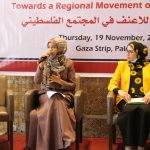
The institution's projects coordinator, Ms Sally al-Sammak, opened the conference, which was attended by a number of civil-society organisations in the two halves of the homeland, and intellectuals, researchers, and activists who believe in the culture of non-violence.
Al-Sammak said: “The project's fundamental goal is calling for and promoting the culture of non-violence, in addition to networking the Gaza Strip's organisations with the West Bank's organisations and the reverse, to close the gulf the Palestinian division has left behind.” She touched on narrating the project's activities and achievements, affirming the diversity of the activities that targeted all the categories of society directly — including sports activities, debates, media campaigns, murals, theatrical arts and carnivals, and presentations of experiences and expertise in non-violence shedding light on the importance of adopting the option of non-violence.
In turn, the institution's director Mr Omar Shaban said in a word of his: “We are happy at the project's closing. And I thank our partners in all the homeland's governorates. This project presented grants to organisations working on implementing civil peace and spreading the culture of dialogue inside the homeland, and all our activities were in the field because we work with all people — and development in its concept is working with the people, for the people, and by the people. The human being is the axis of our attention; because building the human being builds a homeland, and we do not want a homeland without a human being.”
He added: “We take pride in this project because it is among the projects we carry out at the level of the homeland as a whole, and Pal-Think is among the few organisations working at the level of the West Bank, Jerusalem, and the Gaza Strip — and this is because we work on entrenching our national identity through work, not through speech. In addition to that, this project is repeated for the third year in succession, and it takes up an issue worrying to us all, which is the increase of violence and extremism in Palestinian society — such as killing, assaults against women and in the schools, and the loss of the language of dialogue. These matters did not exist in the past, for the language of dialogue was what prevailed however much ideas and visions differed.”
For his part, Mr Sami Barhoum, the initiative's coordinator from the Friends of People with Special Needs Association, spoke of the role of civil-society organisations in strengthening the culture of non-violence — pointing out that civil-society organisations have three roles: a service role, a developmental role, and a role of accountability and of pressing decision-makers to enact or implement laws.
He said that his association carried out the initiative “Palestine is more beautiful by us”, which targeted ladies with special needs given their loss of their right to practise sport for the scarcity of dedicated clubs that observe their needs — and this is one of the forms of violence to which they are exposed. The initiative consisted of an open sports day in which wheelchair-using women with special needs were trained in basketball, then a sports festival was organised for them in the city of Rafah, attended by hundreds — and the event was the first of its kind in the Gaza Strip.
Barhoum added: “And we launched a hashtag for tweeting on the social-media sites, namely #Our_right_to_play, with which thousands interacted, and we spoke in a radio episode about the initiative and about this category's concerns. With Pal-Think's help, after this initiative we succeeded in realising demands for people with special needs we had been demanding for ten years: we signed a contract with the Higher Council for Youth and Sport for full sponsorship of persons with special needs in Palestine, especially women. A memorandum was signed to support their activities in four clubs in the Gaza Strip. In addition to exempting people with special needs from any fees for their use of any governmental sports facility.”
He continued: “A contract was signed with seven clubs in the Gaza Strip to allow people with special needs to practise their own sports activities. The mayor of Rafah undertook to establish a sports centre for persons with special needs. Indeed, the preparation of the centre has been begun, and it will be opened within the coming few months.”
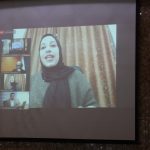
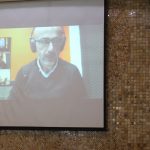
To that, the chair of the board of the Irada Foundation — the first incubator for businesswomen — Fidaa Abu Turki from the Hebron governorate spoke via Zoom about the importance of cooperation between civil-society organisations. She said that the initiative her foundation carried out targeted one hundred abused ladies; a participatory workshop was held for all the related women's organisations, and 60 radio announcements dedicated to the initiative were carried out, and some of the ladies spoke of the violence falling upon them and how they benefited from the initiative in ridding themselves of the violence.
As for the media man Murad al-Sabaa from the Palcom media foundation, he said that his initiative consisted in producing four radio episodes taking up the subject of non-violence, which were broadcast on “Radio Sawt”. He likewise spoke of the importance of traditional and new media in limiting and confronting the culture of violence, and the necessity of shedding light on the causes of violence against women, children, and the marginalised categories.
From her side, Rania al-Shurayhi from the Basma Association for Culture and Arts spoke of the role of electronic platforms in strengthening the culture of non-violence. She pointed out that her organisation and “Pal-Think” carried out the digital campaign “Idaat” (Illuminations), which published positive content about the relationship between the members of the family, including the father and the mother, in light of the coronavirus pandemic, and its duration was 14 days. Legal specialists, journalists, and activists took part in the campaign. The campaign met with interaction from some 347 thousand electronic activists.
In the context, the founder of the Shaghaf initiative, Yusri al-Ghoul, said that the project strengthened the values of tolerance and openness to ideas contrary to our opinions — stressing the importance of culture as a means for spreading the culture of non-violence.
Ahmed Jawada from the Gaza Group Association likewise spoke of the pressing need to spread the culture of non-violence, especially among children and women. He pointed out that these categories are in great need of such projects, because of the repeated Israeli wars on Gaza and the existing state of division.
In the conclusion, Mr Omar Shaban affirmed that Palestinian society is a society tolerant by nature, and the crimes of violence are foreign to society — “and we cannot grow as a society and compete on the Arab and international levels while cases of violence exist”.
Shaban called for ending the division, for the absence of any beneficiary from it, and for the impossibility of achievement in light of the existing state.