Pal-Think holds a workshop on what the absence of elections costs the society and the cause
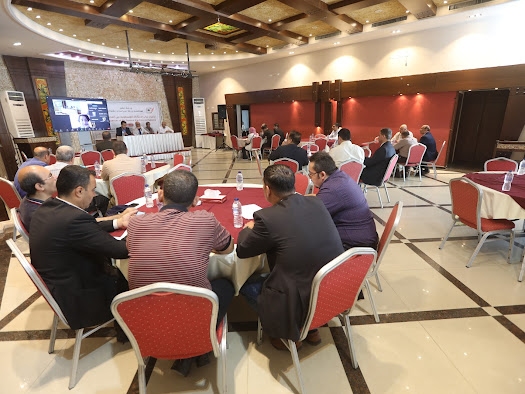
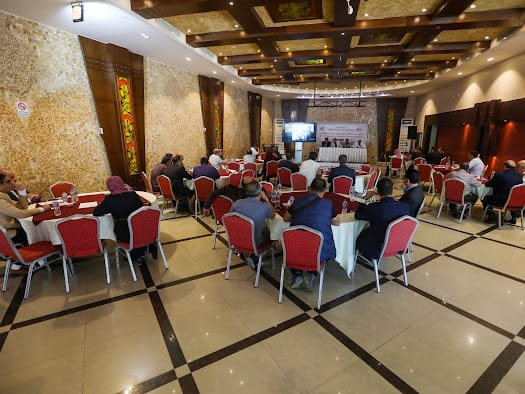
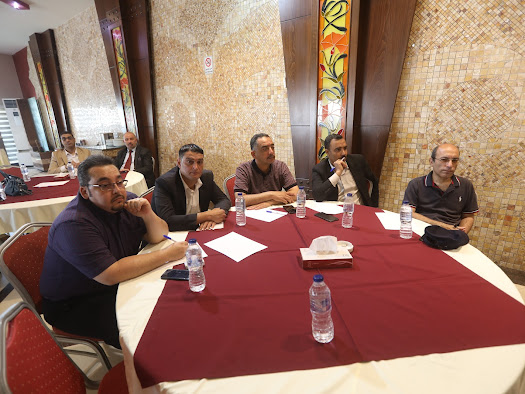
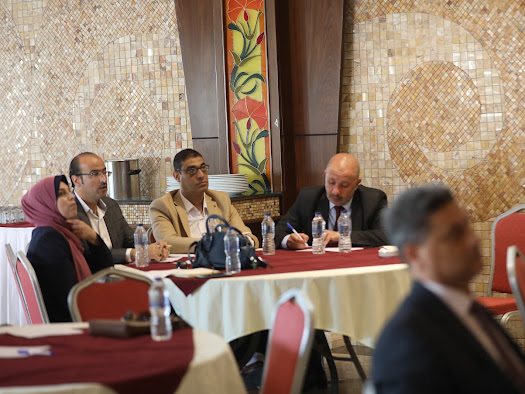
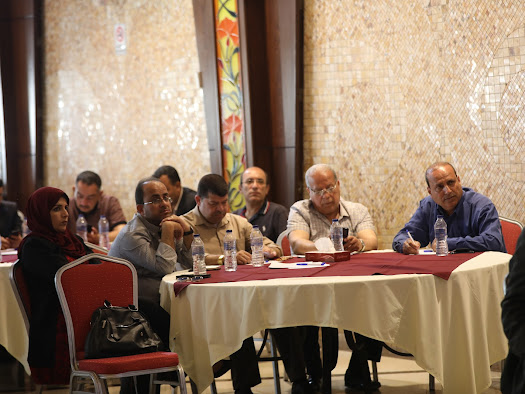
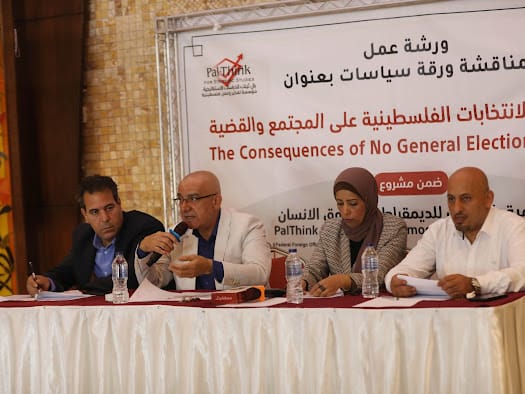
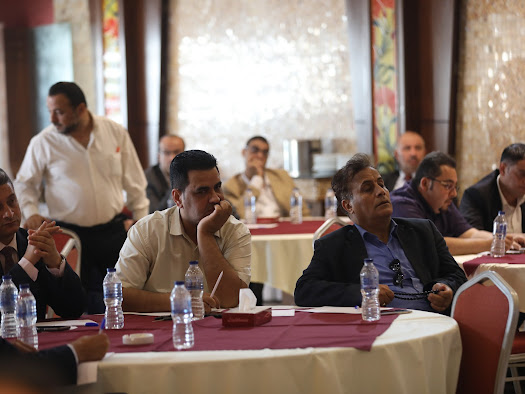
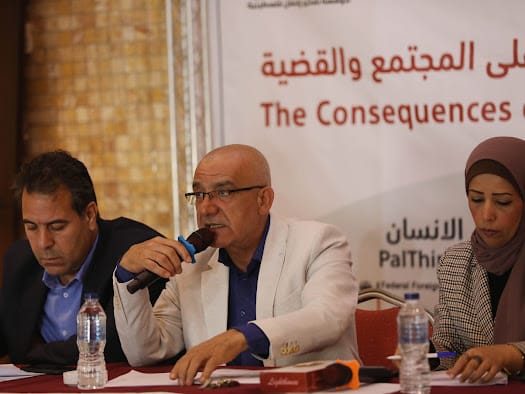
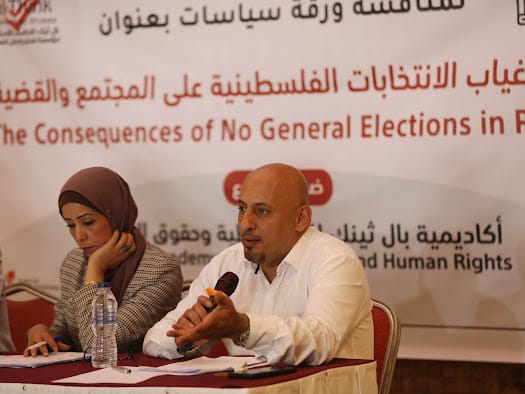
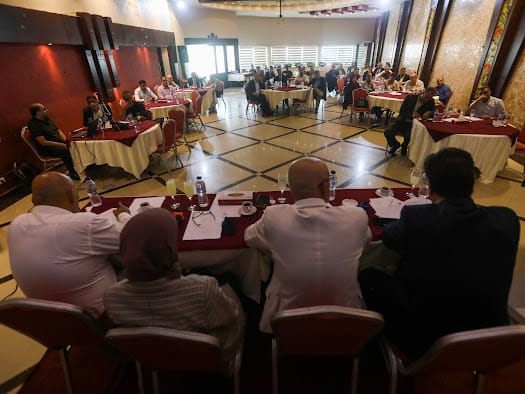
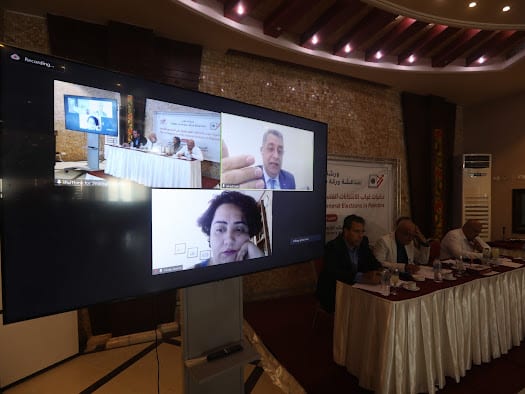
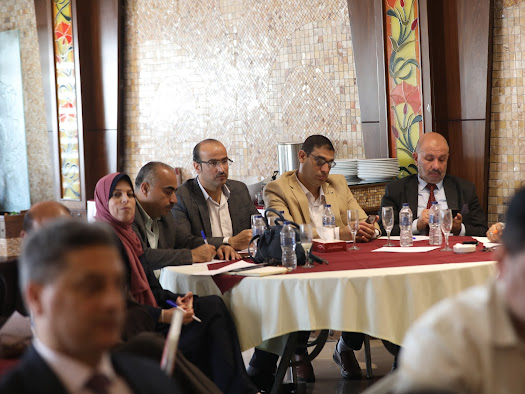
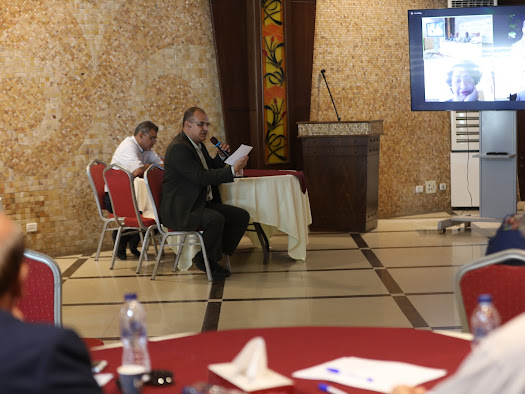
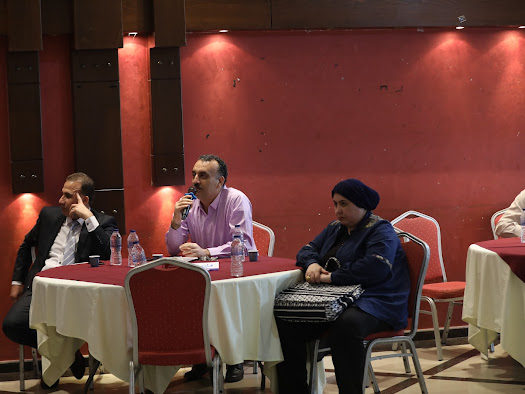
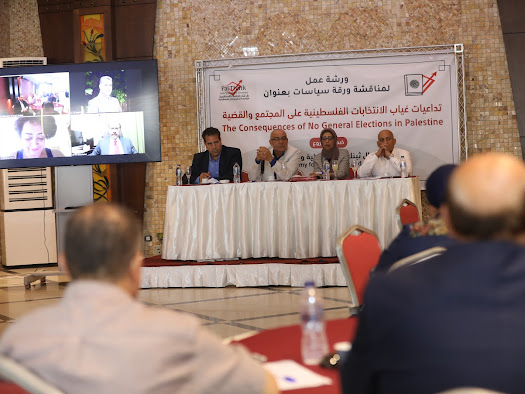
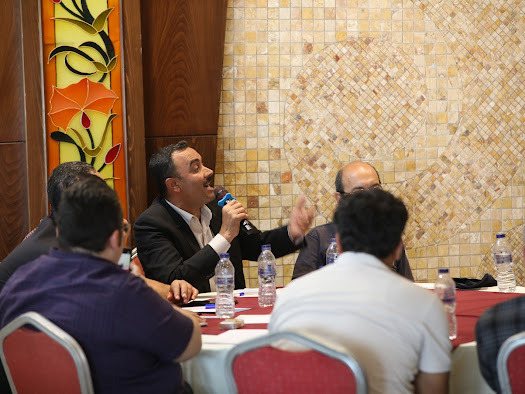
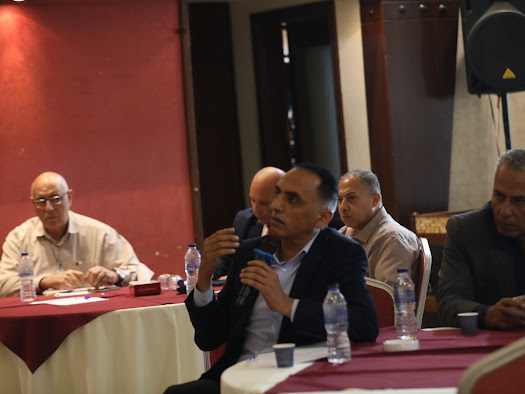
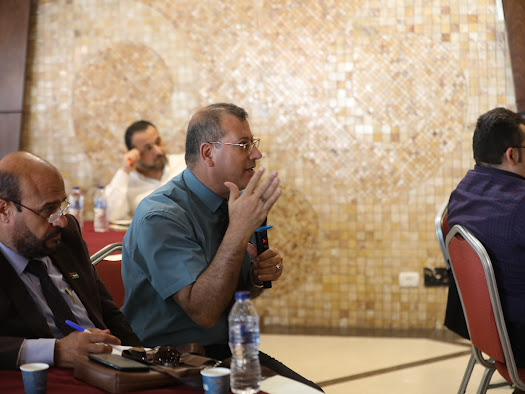
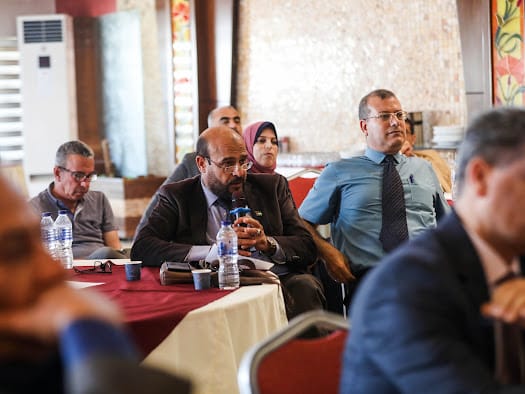
Pal-Think held a dialogue workshop on 25 May 2022 at the Lighthouse in Gaza and over Zoom, discussing a policy paper on the catastrophic political and legal consequences of the absence of Palestinian elections and the distortion of the three branches of government.
- Date
- 2022-05-29
Pal-Think for Strategic Studies organised a dialogue workshop on 25 May 2022 at the Lighthouse in Gaza and over the Zoom programme, to discuss a policy paper on the catastrophic repercussions of the absence of the Palestinian elections at the political and legal levels and the distortion of the three powers' work — in addition to the repercussions of the elections' absence on the Palestinian economy through the duplication of public policies and their direct effects on the budget in light of the absence of planning and oversight, which has affected the level of transparency and accountability. It likewise discussed the negative reflections of the elections' absence on Palestinian society and its groups.
In the opening session, facilitated by Omar Shaban, director of Pal-Think, for the presentation and discussion of the first of the policy papers within the project “Pal-Think Academy for Democracy and Human Rights” in partnership with (IFA) — a project comprising a set of different programmes and activities, foremost: the digital library, the first reference repository in Gaza offering hundreds of references relating to democracy and human rights, in addition to the space it offers researchers and youth to publish their scholarly production; likewise the workshops and dialogue meetings relating to the issues of democracy and human rights, in addition to the Democracy and Youth Dialogue Forum, which forms a youth incubator for discussing all legal and rights topics.
For his part, he affirmed Pal-Think's continuation on the course it has drawn since the Palestinian division in 2007, working with all the Palestinian and international parties to treat its cumulative effects on Palestinian society: “This workshop, discussing the repercussions of the elections' absence at the economic, political, and social levels and the completion of the Palestinian struggle's project, was prepared with the contribution of three eminent researchers: Omar Rahhal from Ramallah, Yahya Qaoud from the Gaza Strip, and Nida Owaineh from Bethlehem — in keeping with the course Pal-Think has drawn”.
The policy paper's authors offered a detailed explanation of the catastrophic repercussions caused by the absence of the Palestinian elections. Nida Owaineh opened with talk of the effect of the elections' absence on the family, youth, and society. She said: “The absence of elections means the absence of the laws that set down the family's protection. If we looked at the official statistics, we would find that 58% of women suffer from domestic violence, or at least suffered once in their lives; the problem of violence and its catastrophic complications will not be solved without a Legislative Council”.
She pointed out that the rate of women's participation in the electoral lists last year was 29% — an indicator of the crisis of women's weak effective political participation, which needs the Legislative Council to solve it. “This strikes us mortally, because it will prevent the positive changes and developments that could come over Palestinian society, which is classified among the world's peoples most productive of cultural material and most attaining of academic degrees”.
She continued: “These factors make people lose their identity, their feelings, and their attachment to this place, especially the youth; they will thus be forced to emigrate in search of work outside the country, and this will increase our social, economic, and political poverty”. Owaineh added: “The syndicates, the unions, and many civil-society institutions likewise hold no elections and were affected by the Legislative Council; thus we lose the electoral heritage, and this causes obstinacy in the rising generation, which causes social problems”. She noted that elections mean providing protection for children, women, and youth, and jobs, and lowering the unemployment rate for youth.
For his part, the researcher Yahya Qaoud said the elections' absence has affected several walks, foremost the internal political level — embodied in the distortion of the powers' work and the erosion of the legal legitimacies of representing the Palestinians, which led to the retreat of the Palestinian cause's standing; a pretext for the states of the region and the world to marginalise the Palestinian cause, especially in light of the accelerating changes. At the external level, he pointed out that there are two discourses addressed to the world: the first the discourse of the national Authority, the second the discourse of the Hamas movement.
Qaoud added: “The elections' absence has caused a shrinking of the opportunities of financial support, especially in development and advancement projects, and the obstruction of the UN organisations' work: the absence of an elected Palestinian leadership formed an obstacle before many UN organisations in their attempt to stand with the Palestinian people”. He showed that the repercussions of the elections' absence economically were catastrophic for society, there being a duplication in economic policies and their legislation”.
As for the researcher Omar Rahhal, he said the Palestinian people was happy with the decision to hold the elections, they being the most important of democracy's tools, and disappointment settled over society after the postponement decision. He added: “One cannot speak of elections in their general atmosphere unless they are marked by being free, fair, neutral, and with everyone's participation — because elections are not a goal in themselves but a means. Yet they are still used as a political card although they are a constitutional and political entitlement, not a favour from an organisation or party. Cancelling the elections violates the Basic Law and the agreements Palestine signed, especially the International Covenant on Civil and Political Rights”.
He showed that the international community's trust in the Palestinians has retreated — who have become, from certain states' point of view, unworthy of managing their affairs by themselves.
In comment on what the paper comprised, the researcher in governance and politics issues Jihad Harb remarked: “The end of the presidential term, or of the Legislative Council's term in 2010, means the absence of constitutional and legal legitimacy, and it is a violation of the constitutional principle relating to the Palestinians' right to elect” — as well as of the peremptory constitutional rules that set down that the powers be elected by the people, present in articles 5, 34, and 47 of the Basic Law. He explained that the elections' absence means the political system's gradual transformation into a despotic system — meaning no separation of powers; and in the Palestinian case the dissolution of the Legislative Council led to the cancellation of the official body of oversight.
He added: “The elections' absence offers opportunities for the influential to exploit their positions and standing to obtain private benefits, whether material or political, and the real elected leadership is absented”.
As for Samia al-Ghussein, the specialist in international law, she said in comment on the paper: “The division has struck us mortally in all walks of life. We have no unified political system to face the internal and external challenges”. She explained that what she suffers from most is the division among the legislative powers and the executive power's encroachment upon them. She added: “The legislative division is very dangerous: there are laws from the time of the Egyptian and Jordanian administrations, laws from before the division, and laws after the division. The absence of the elections and the Legislative Council have impeded the right to enact important laws such as the family-protection law, the law of the right to access information, and others”. She concluded by saying: “We also see the repercussions in the retreat of public services in health and its collapse, the shortage of medicines and scheduled operations, the level of education, the rise of the unemployment rate, a retreat in the values of citizenship, the absence of a national programme, and the erosion of employees' rights”.
For his part, the politician and academic Wajih Abu Zarifa said: “The legal environment contributes greatly to elections. Whoever controls the holding of elections is whoever controls the management of public life, whether political forces or the forces of division; the parties standing over the political system have not reached the stage of realising that the democratic process will solve all the standing problems”.
Abu Zarifa pointed out that in one of the meetings that discussed the elections topic with the European Union's commissioners, the elections could be an entry point to the process of political settlement with Israel.
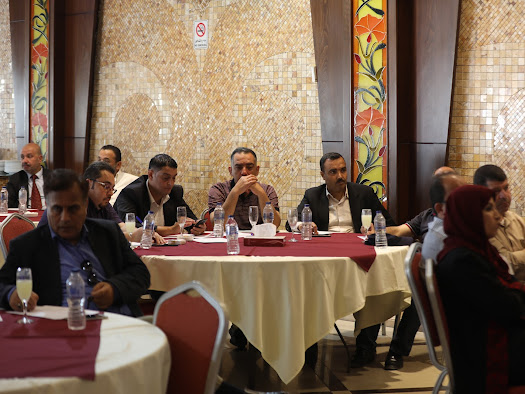
The participants' questions and interventions turned on whether the crisis's cause is the elections' absence or the political system in itself; the role of the national elites and civil-society institutions in treating the standing crises; the effect of the ideologies of the parties forming the political system on shaping the crises of political reality; the role of external intervention in the Palestinian crisis; the utility of separating the Liberation Organization from the Palestinian Authority; and the necessity of placing the concepts of democracy in the Palestinian curricula.