Pal-Think opens «Towards a society more aware of its electoral rights», with the Central Elections Commission and EU funding
Pal-Think began the first activities of «Towards a society more aware of its electoral rights», implemented with the Central Elections Commission and funded by the European Union — spreading awareness of the principles of democracy in Palestinian society.
- Date
- 2021-11-23
Within the role Pal-Think for Strategic Studies practises in spreading and strengthening society members' awareness and raising the issues that support the principles of democracy in Palestinian society, Pal-Think began carrying out the first activities of the project “Toward a society more aware of its electoral rights”, implemented in cooperation with the Central Elections Commission within the project “Partnership with civil-society institutions 2021 / phase two” funded by the European Union.
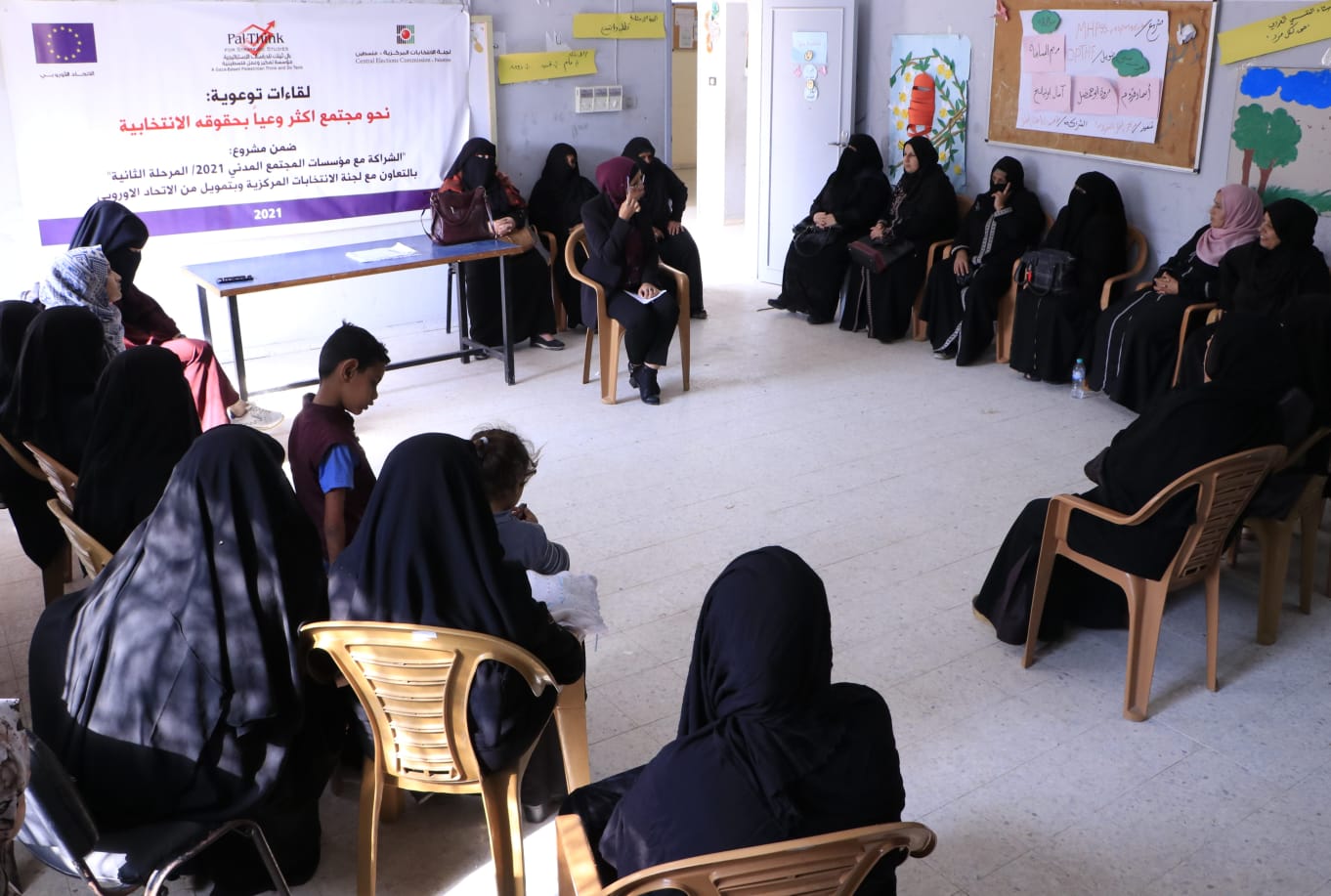
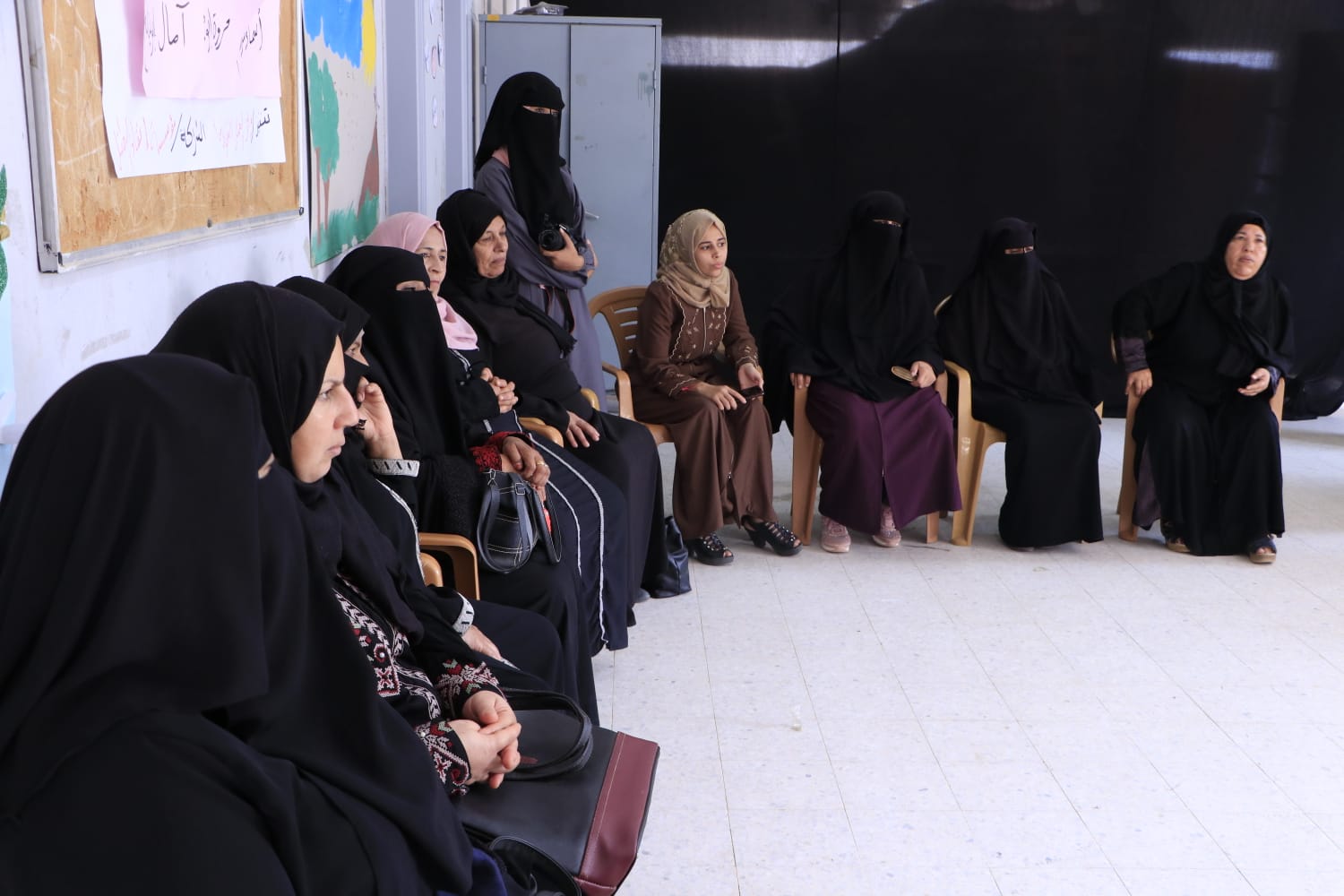
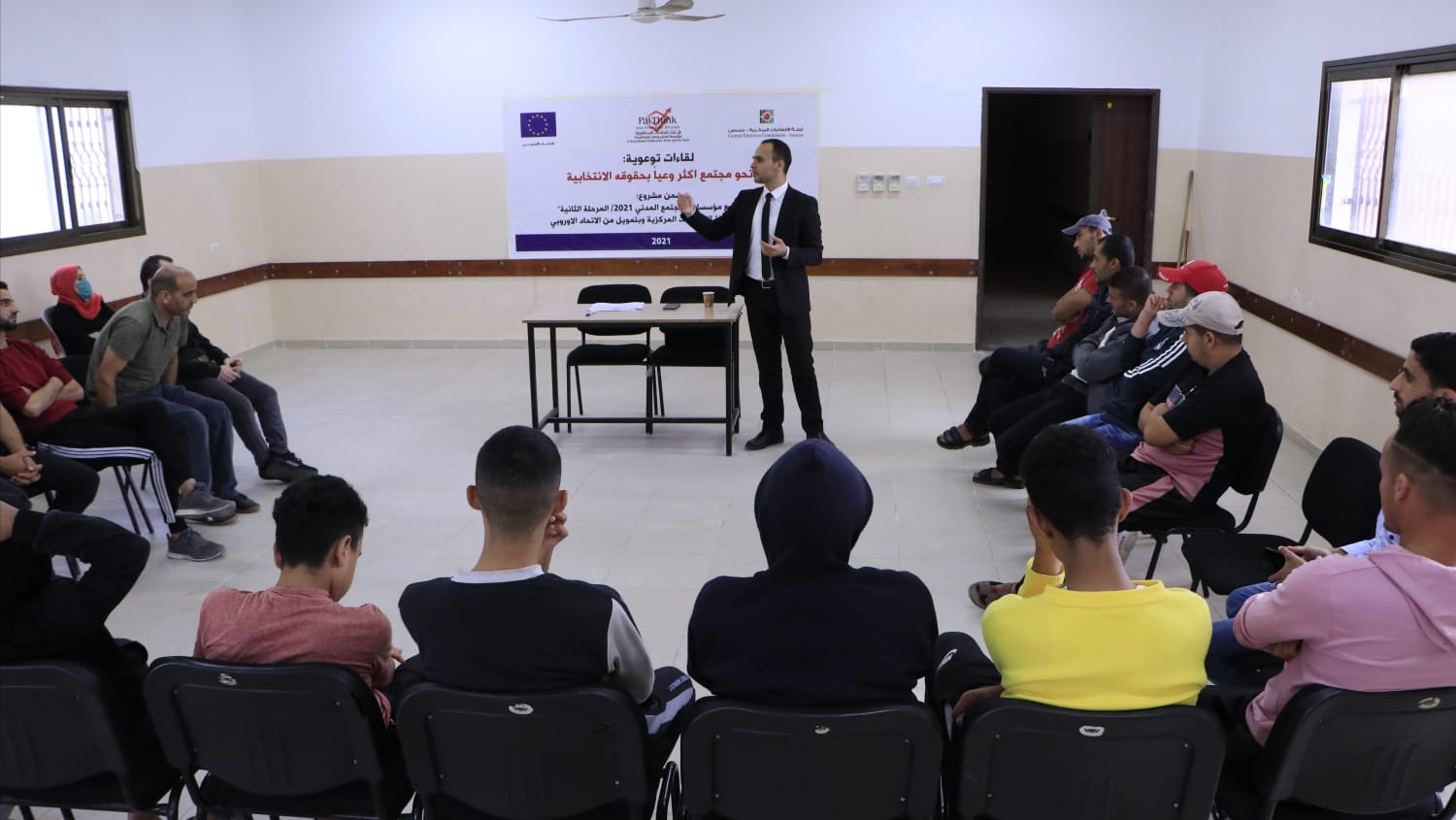
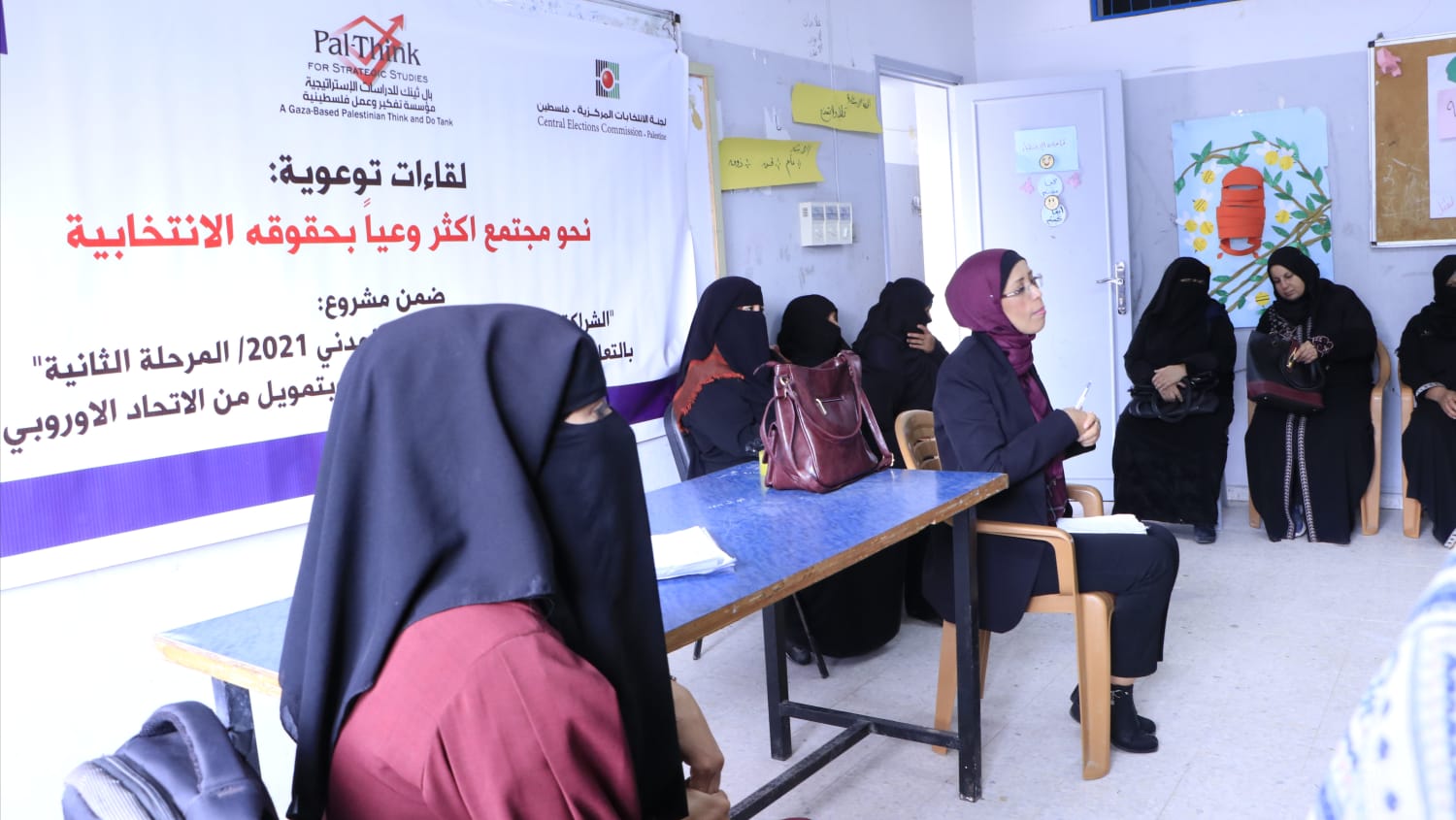
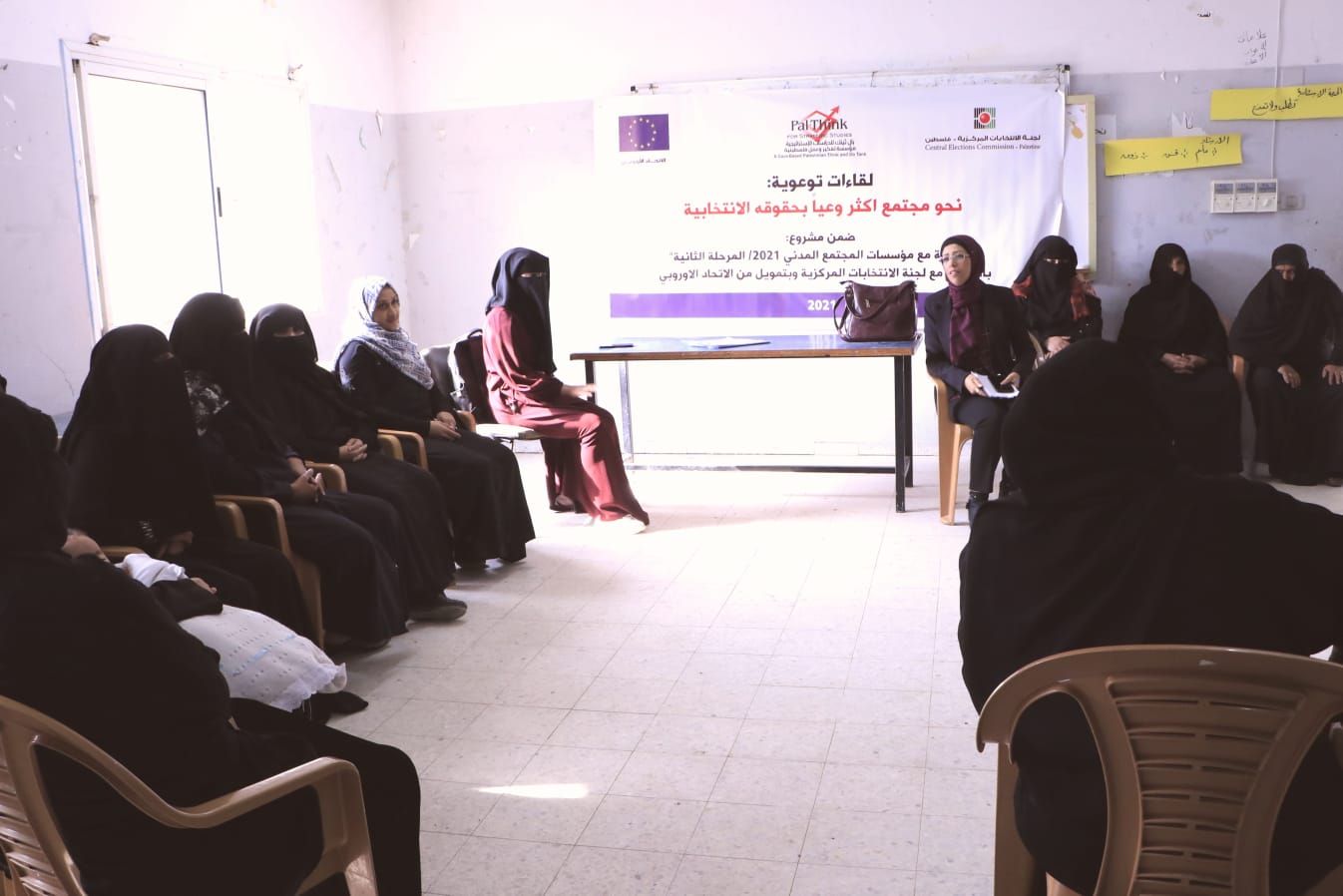
In that frame, four awareness meetings out of 35 were carried out, targeting a group of women, men, and youth of both sexes in the village of Umm al-Nasr and the Nuseirat camp, in cooperation with civil-society institutions.
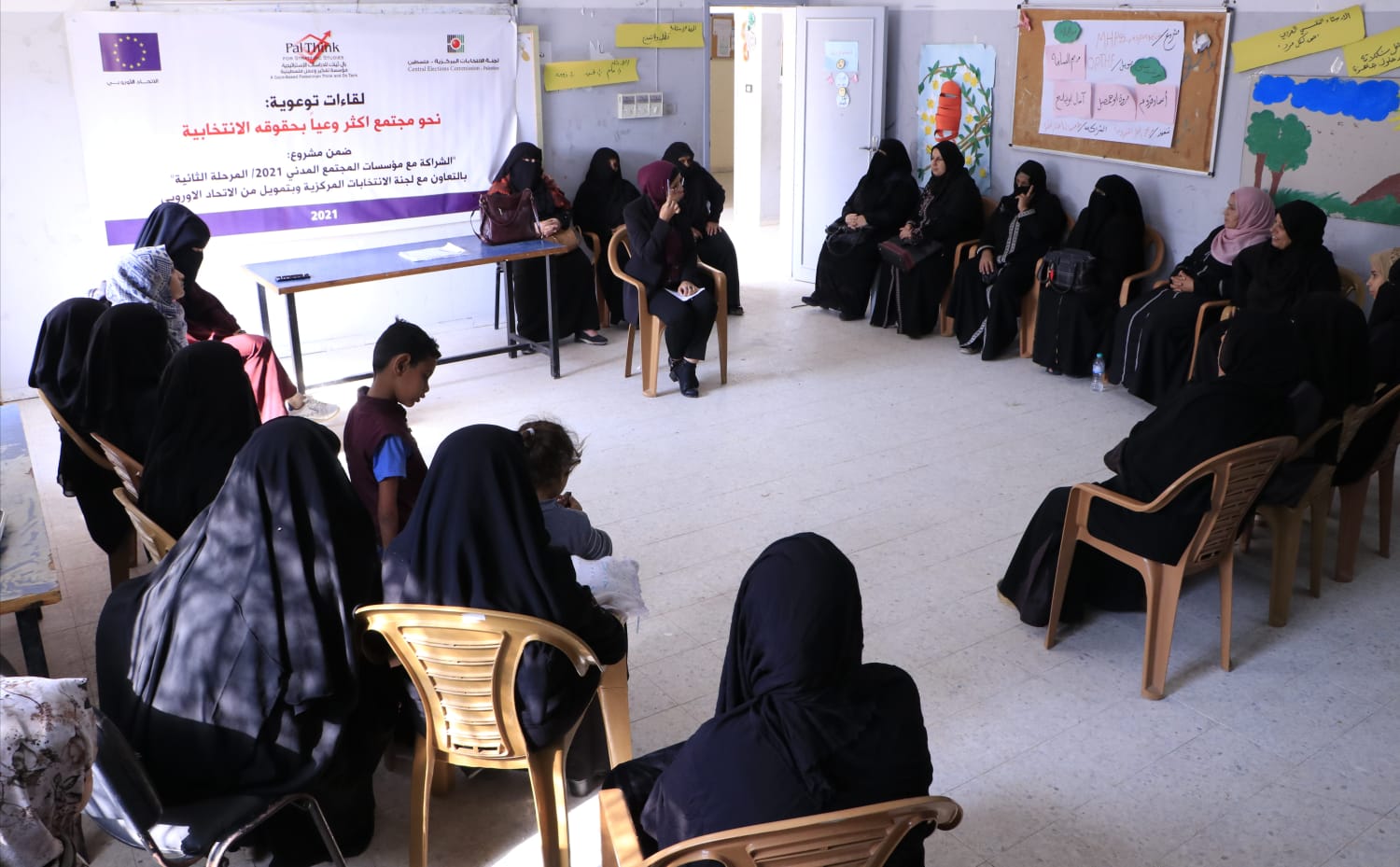
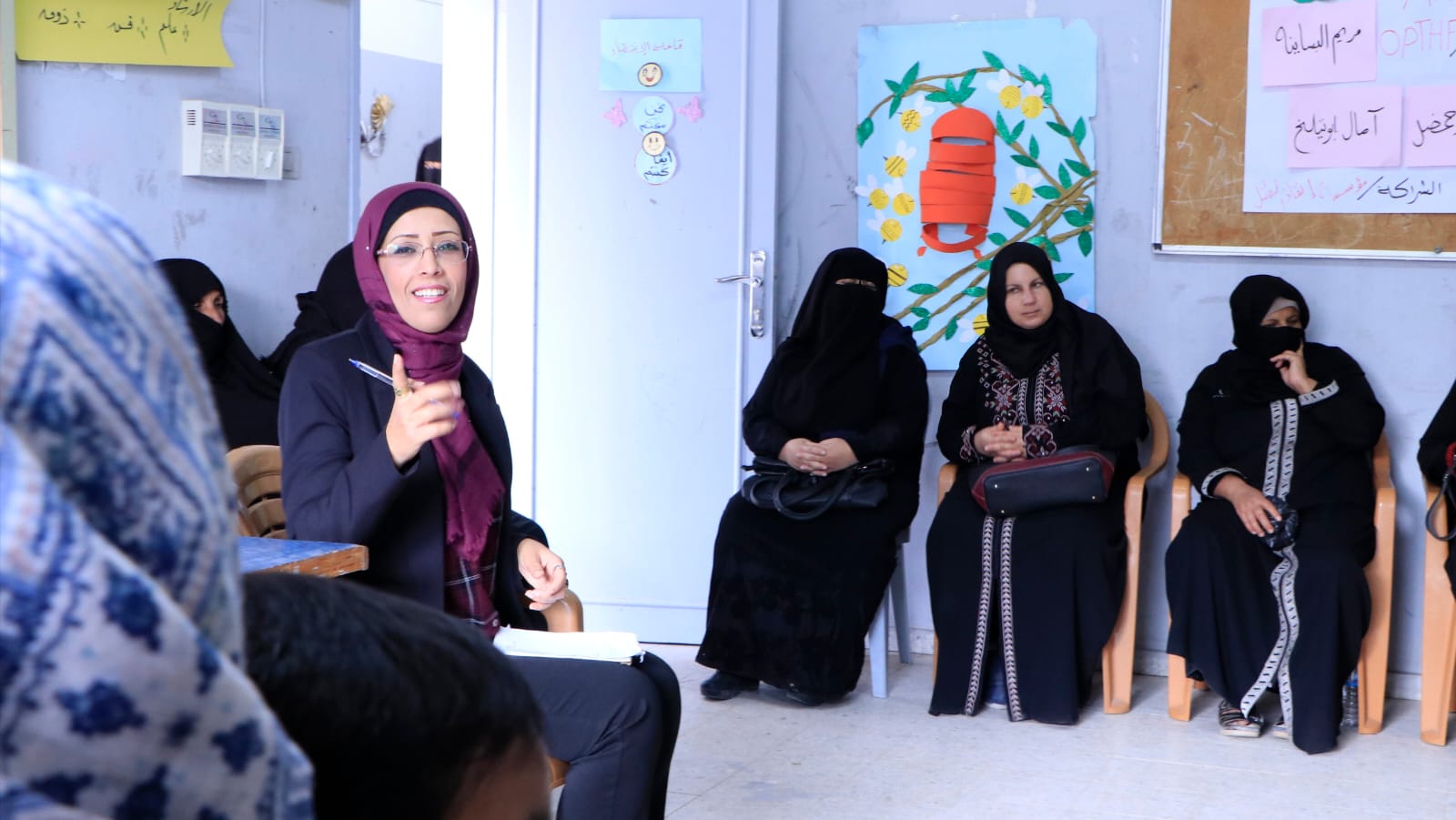
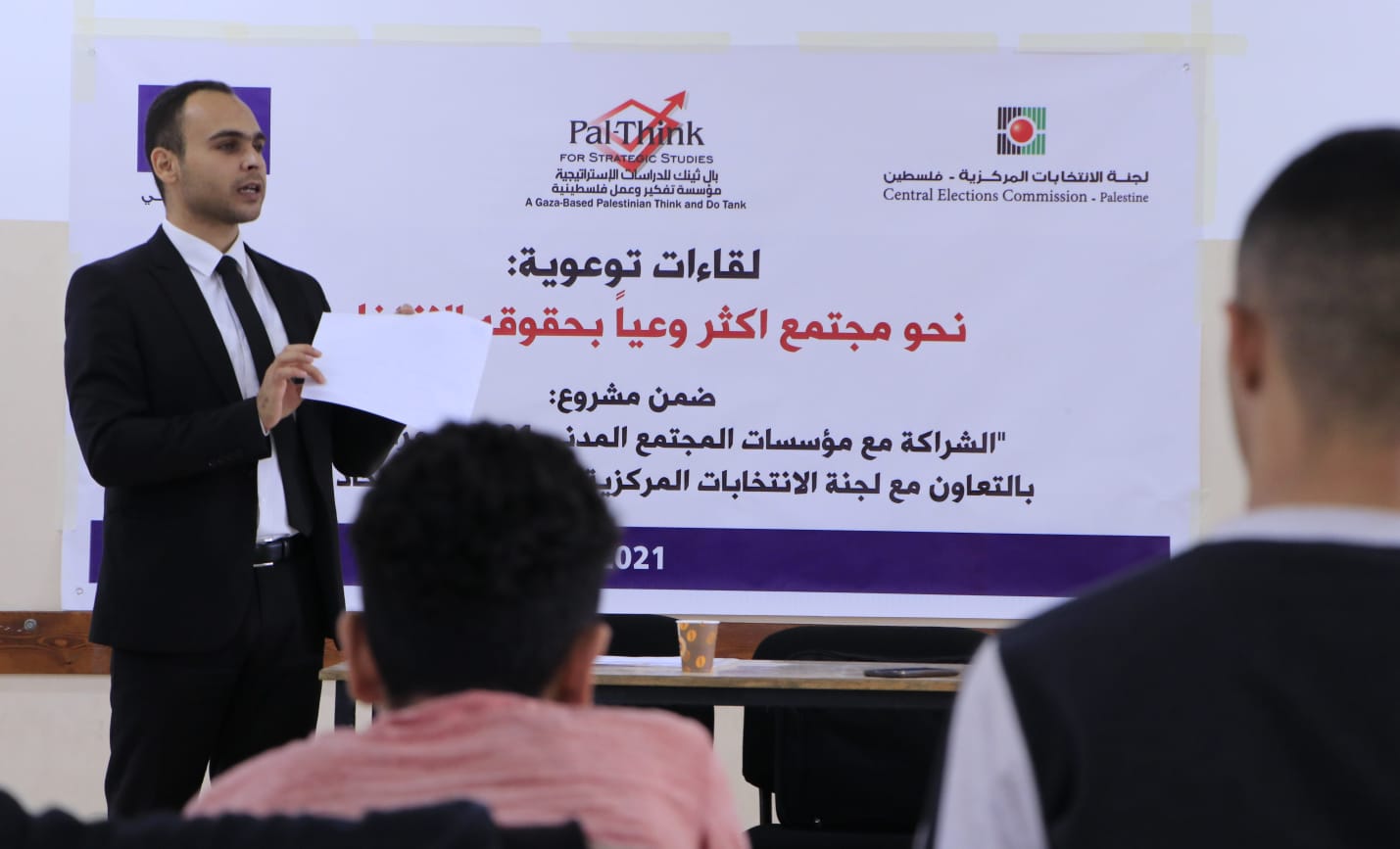
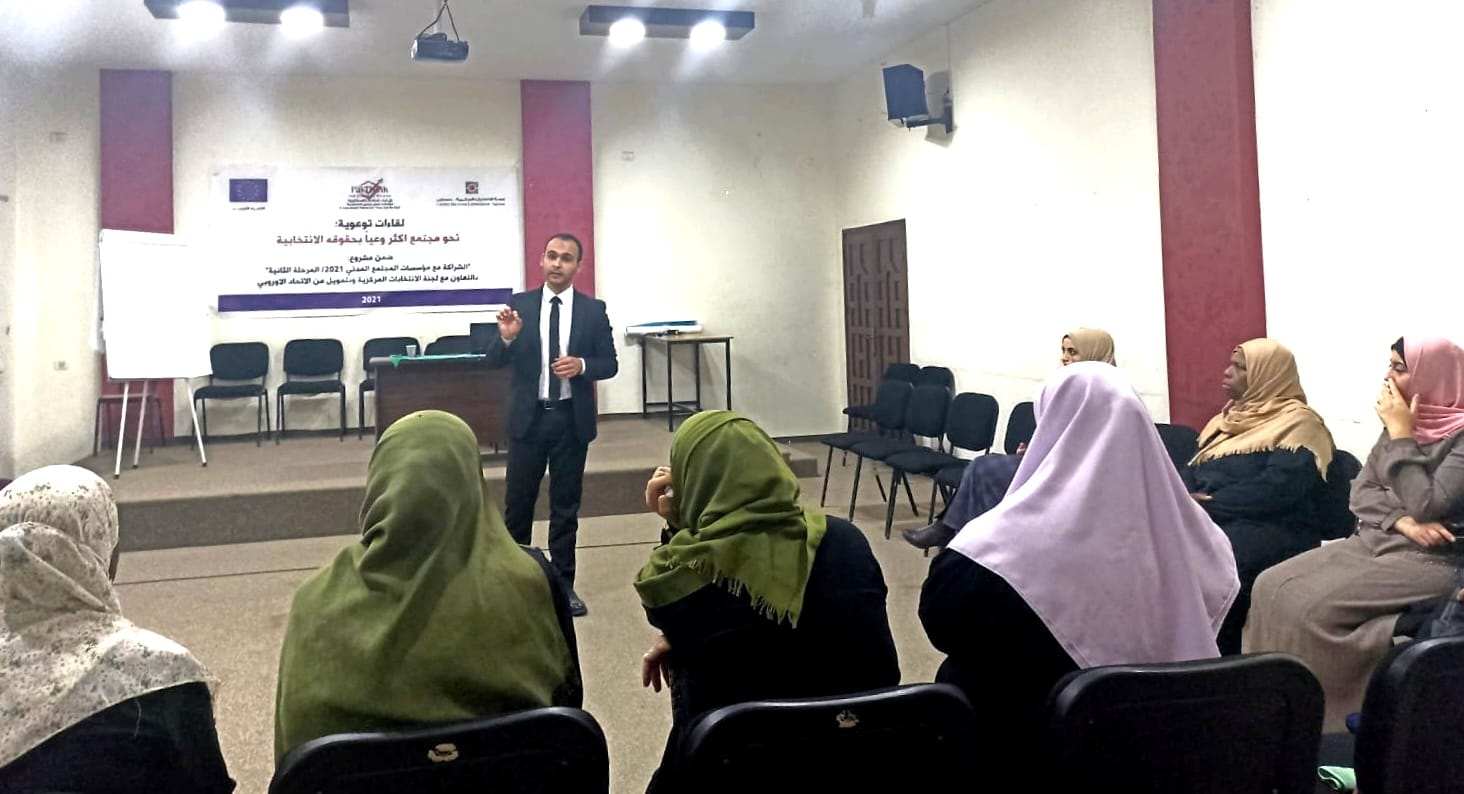
The first meeting — carried out in cooperation with the Zeina Cooperative Association in the village of Umm al-Nasr, titled “Mechanisms of raising women's rate of political participation”, with the attendance of a group of women — was opened by the project coordinator “Bilal al-Najjar”, who in turn welcomed the attendees and affirmed that carrying out these activities comes within the frame of cooperation with the Central Elections Commission within the project “Partnership with civil-society institutions” funded by the European Union. He showed that the project “Toward a society more aware of its electoral rights” aims to strengthen society members' awareness of electoral issues and topics and encourage them to take part in any coming electoral process — through a set of activities to be carried out within the project: carrying out a number of awareness meetings during which the target group is made aware of “the Palestinian electoral system; the stages of the electoral process and the procedures of each stage; the mechanism of oversight of the electoral process; the conditions of candidacy and election; how the electoral process is free and fair; the mechanism of encouraging the local community to take part in the electoral process; the importance of political participation and the principles of democracy; and acquaintance with the Central Elections Commission”; designing and printing a brochure on the Palestinian electoral system; carrying out a number of radio episodes; producing and designing awareness videos; painting a mural; in addition to launching a lobbying and advocacy campaign aiming to draw the attention of society with all its components to the importance of hastening the holding of free and fair elections and the importance of that for all walks of life.
For her part, the meeting's facilitator “Dr Samia al-Ghussein” spoke, affirming the importance of women's participation in political life, the necessity of raising their awareness of political rights and their participation in all the stages of the electoral process — particularly registration in the voters' register — and the necessity of women's participation in all fields of public life. The women's-quota system contained in law number 1 concerning the Palestinian general elections of 2007 and its amendments of 2021 was likewise explained, with the definition of the quota system, its kinds, and the stages of its development in the Palestinian elections. She made clear that the share of registered women out of the total number of voters has reached 49% — which represents a great voting power, were the Palestinian woman able to realise this power and make the best use of it.
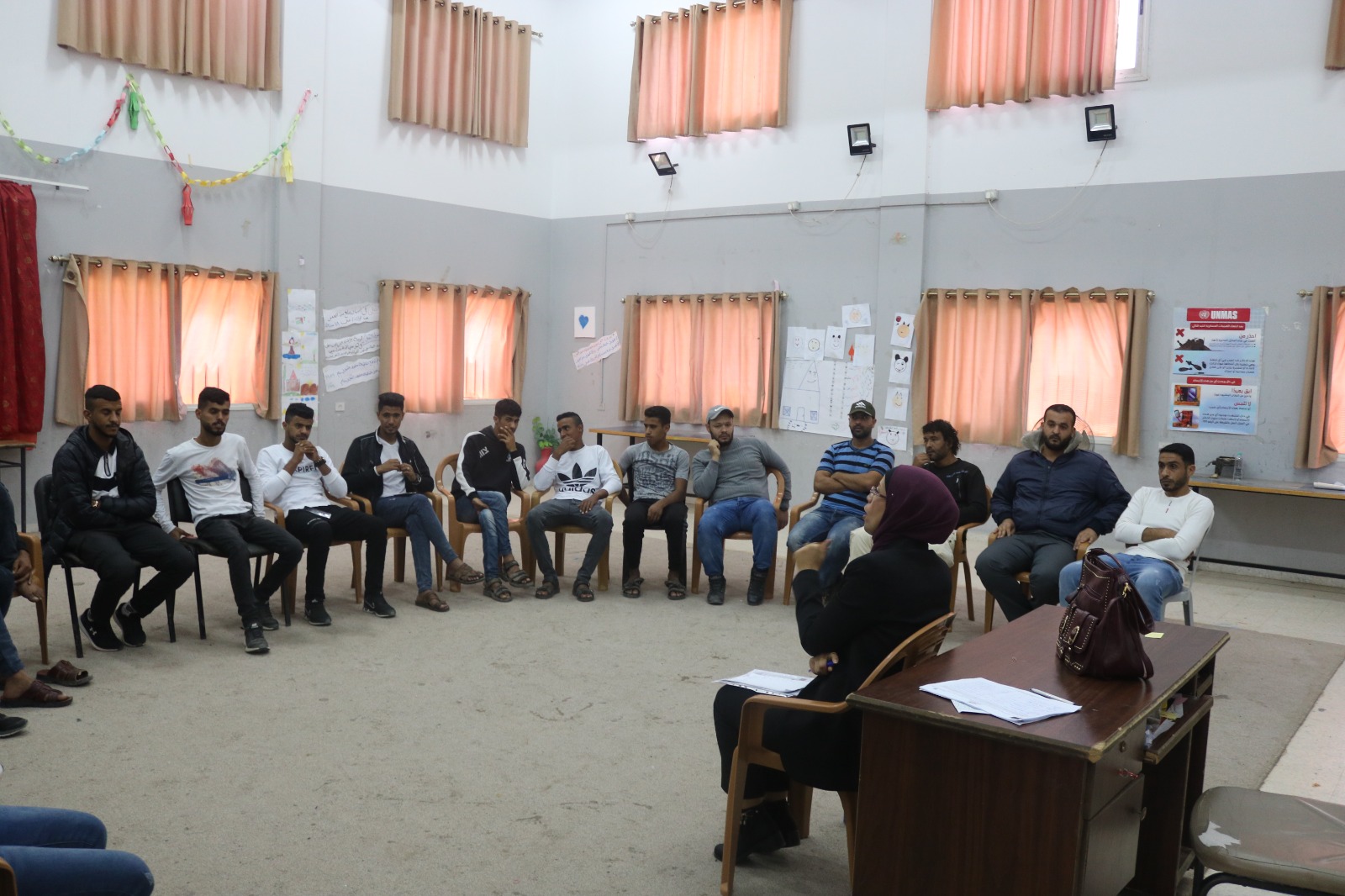
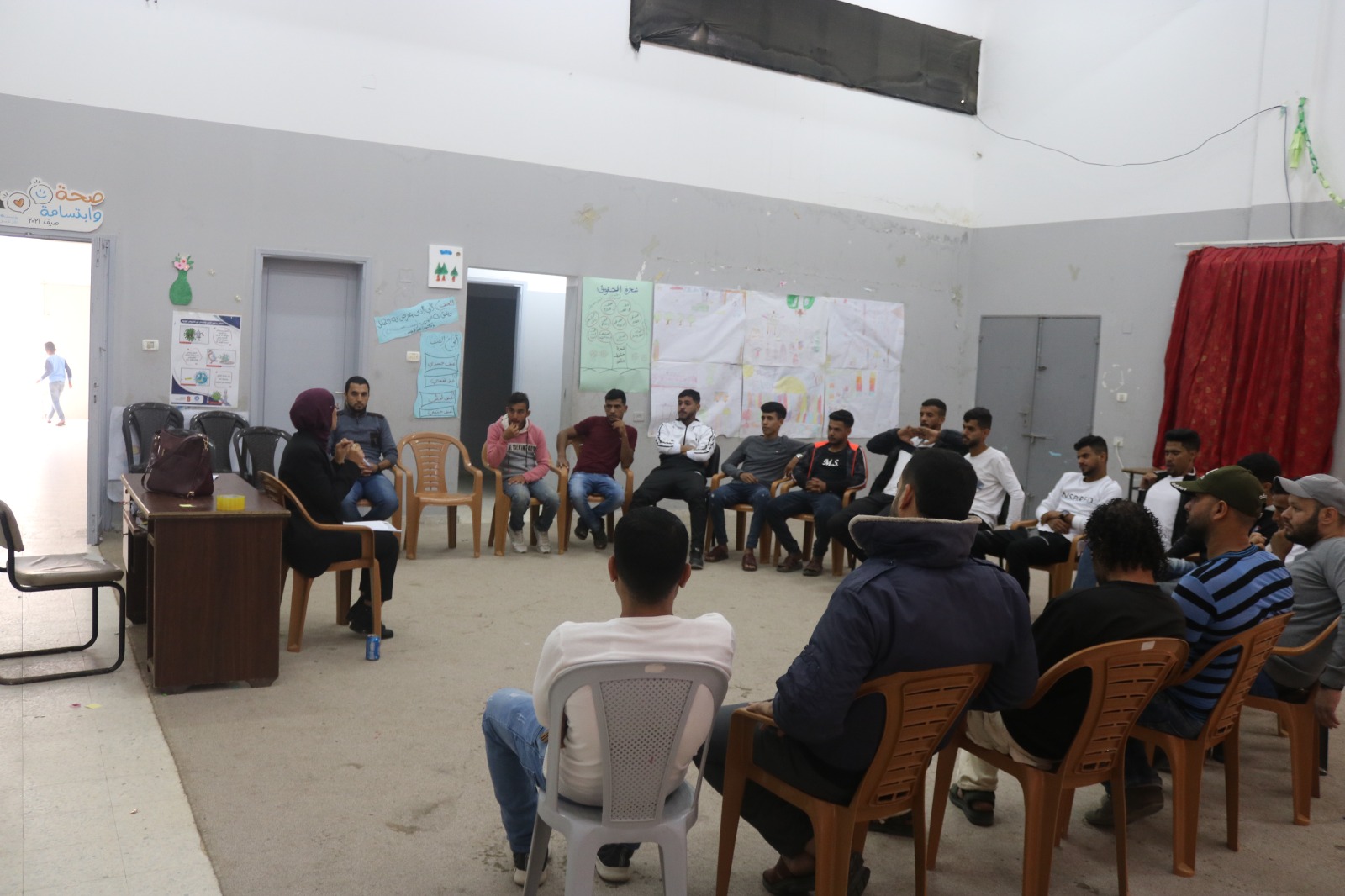
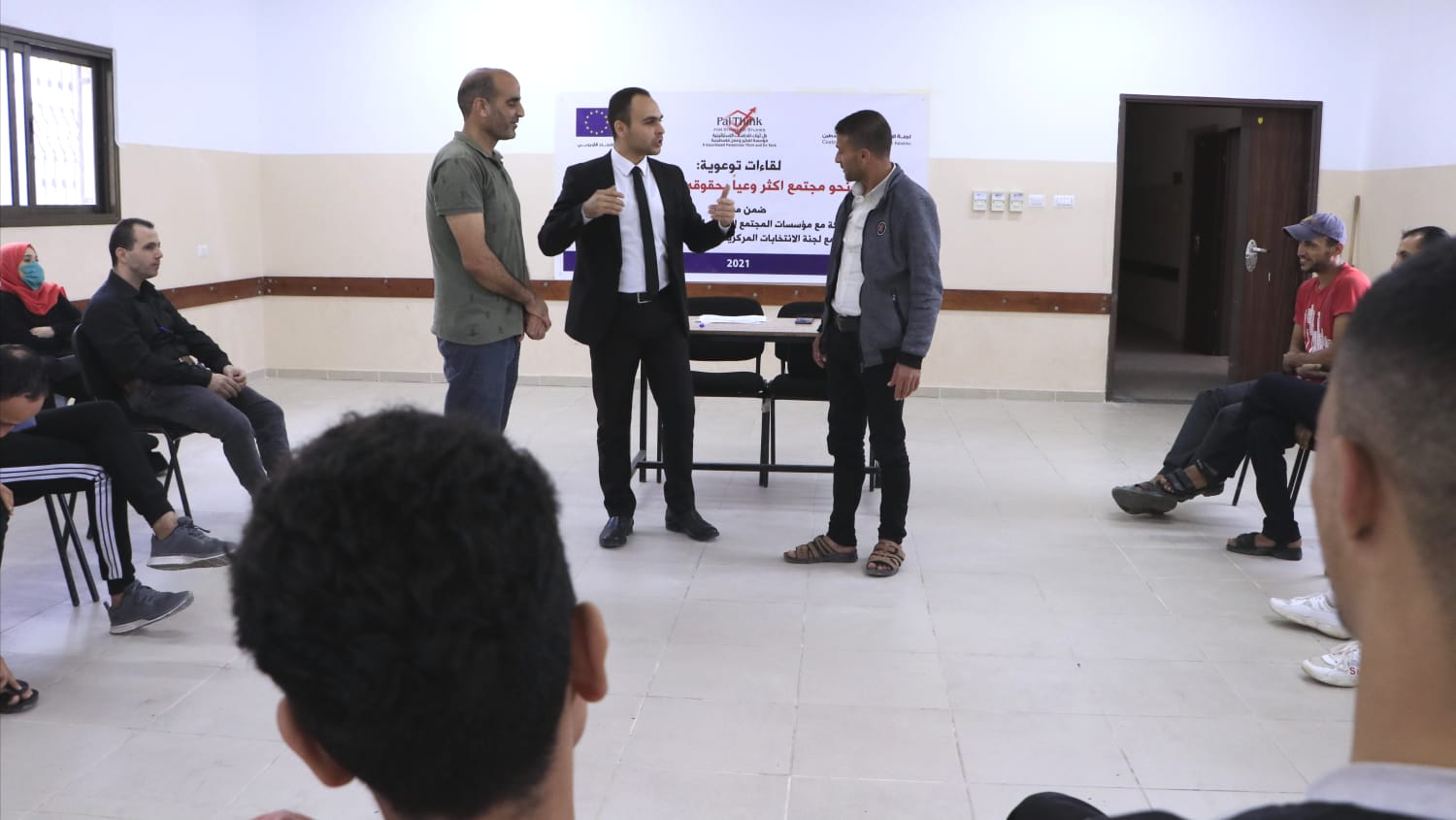
The second meeting was carried out in the village of Umm al-Nasr in cooperation with the Zeina Association, with the attendance of a number of men, titled “The stages of the electoral process and the procedures of each stage”.
The meeting's facilitator “Dr Samia al-Ghussein” spoke of the importance of holding the general elections as one of the most important features of any democratic system of any state, affirming the necessity of holding them periodically and permanently, leading to the peaceful transfer of power. She likewise reviewed some general provisions, such as the nature of the electoral system and the stages of the electoral system's development in Palestine, in addition to reviewing the stages of the electoral process, comprising “the stage of the call for the elections, the stage of preparing the preliminary and final voters' register, the candidacy stage, the electoral-campaigning stage, the balloting stage, the vote-counting stage, and the stage of announcing the final results”.
In the third meeting, carried out in the city of Nuseirat in cooperation with the Al-Aqsa Sports Club with the attendance of a group of women, titled “The Palestinian electoral system”, the meeting's facilitator “the lawyer Walid Abu Jahl” spoke of women's political and democratic rights — especially their right to stand and to elect — the concept of the Palestinian electoral system, the stages the electoral process passes through, and the citizens' fundamental role in each stage of the electoral process.
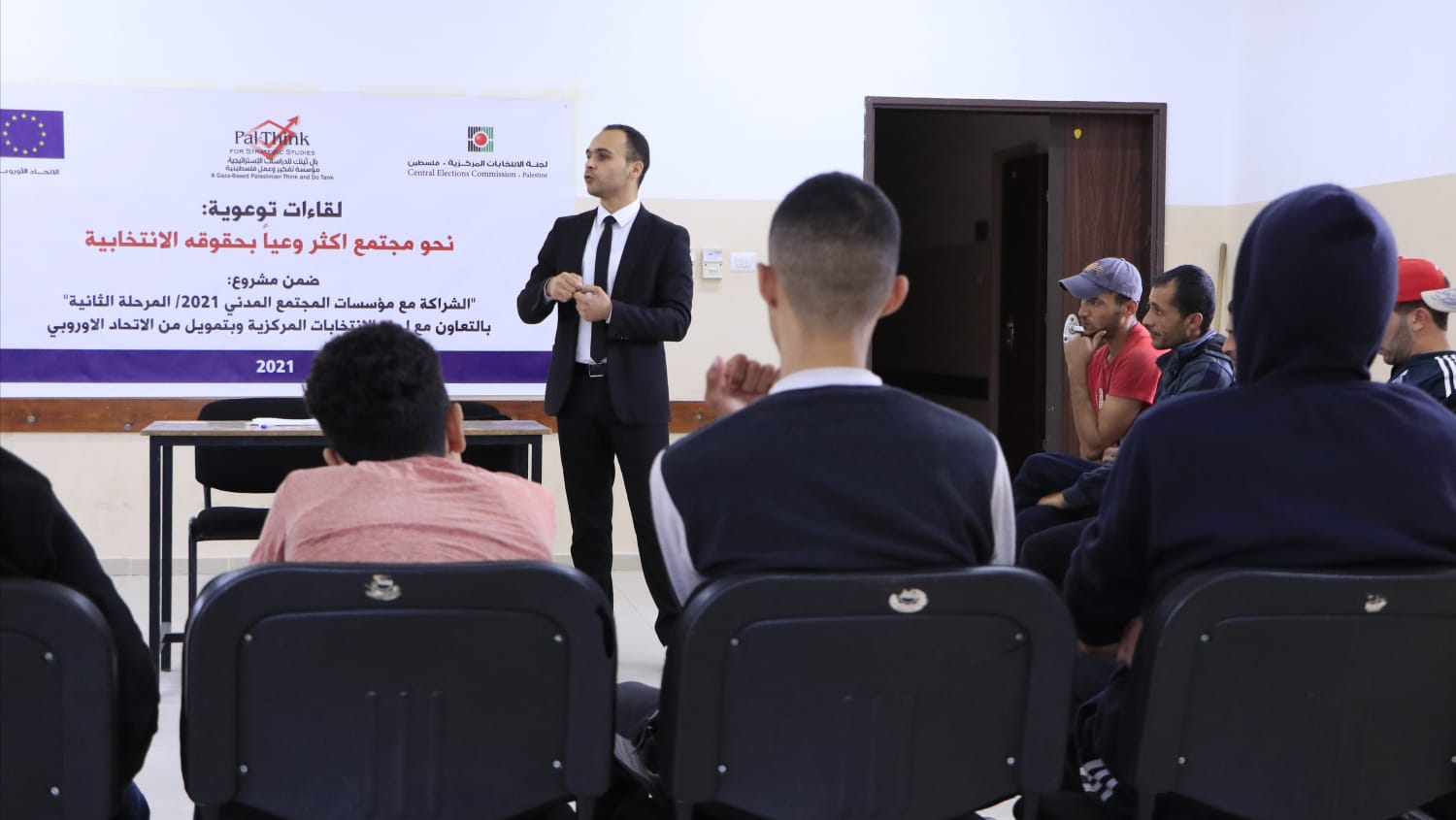
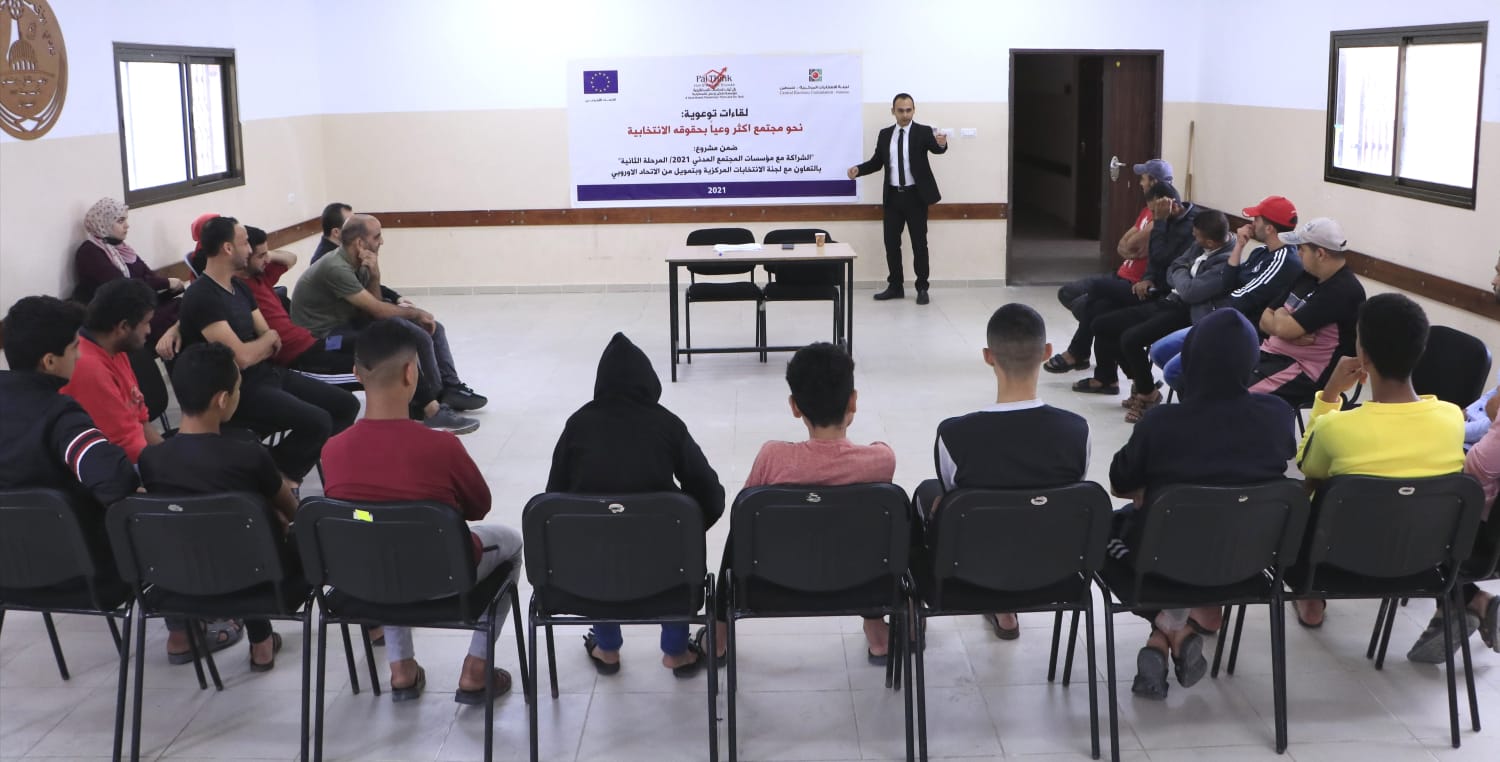
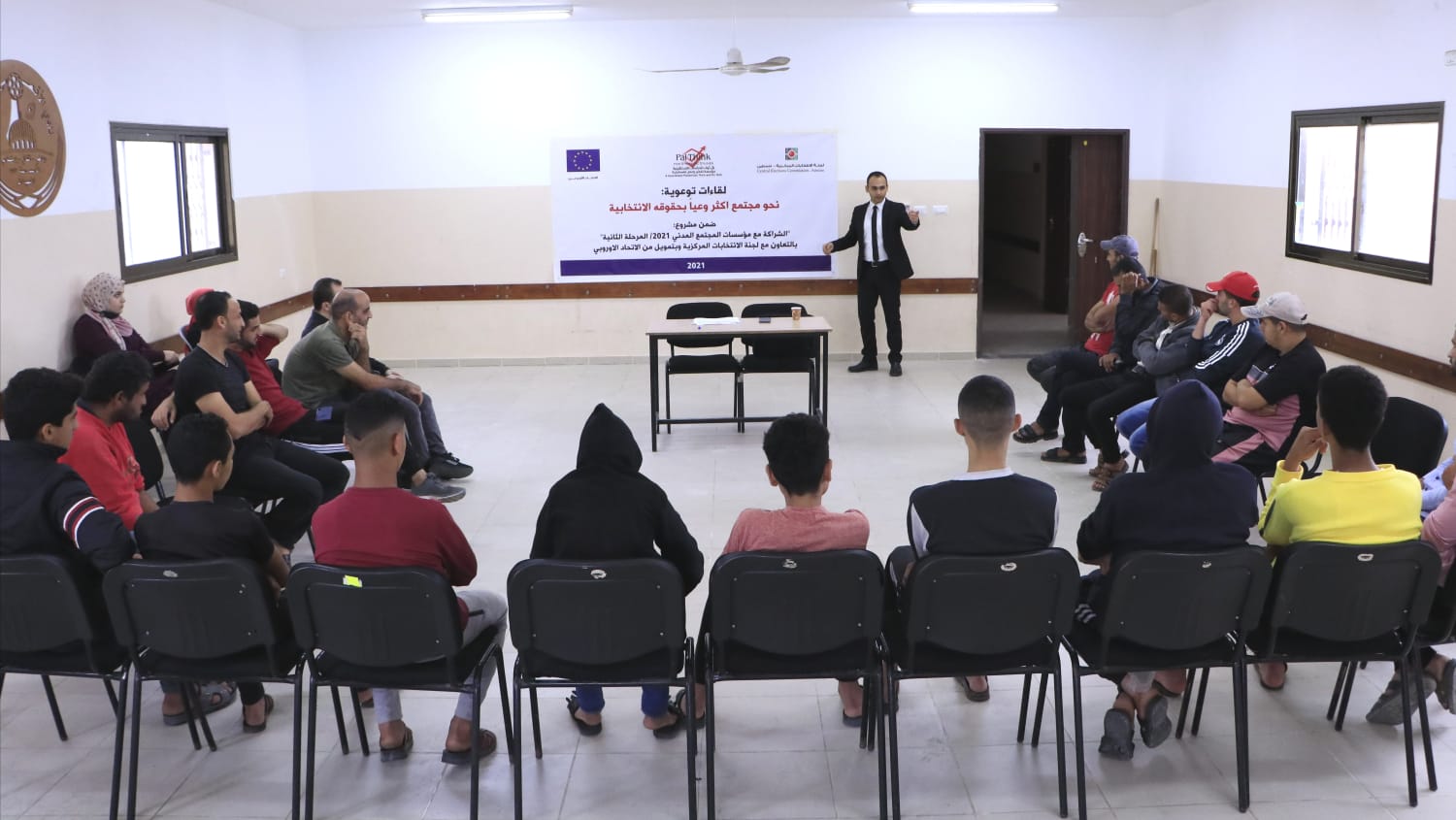
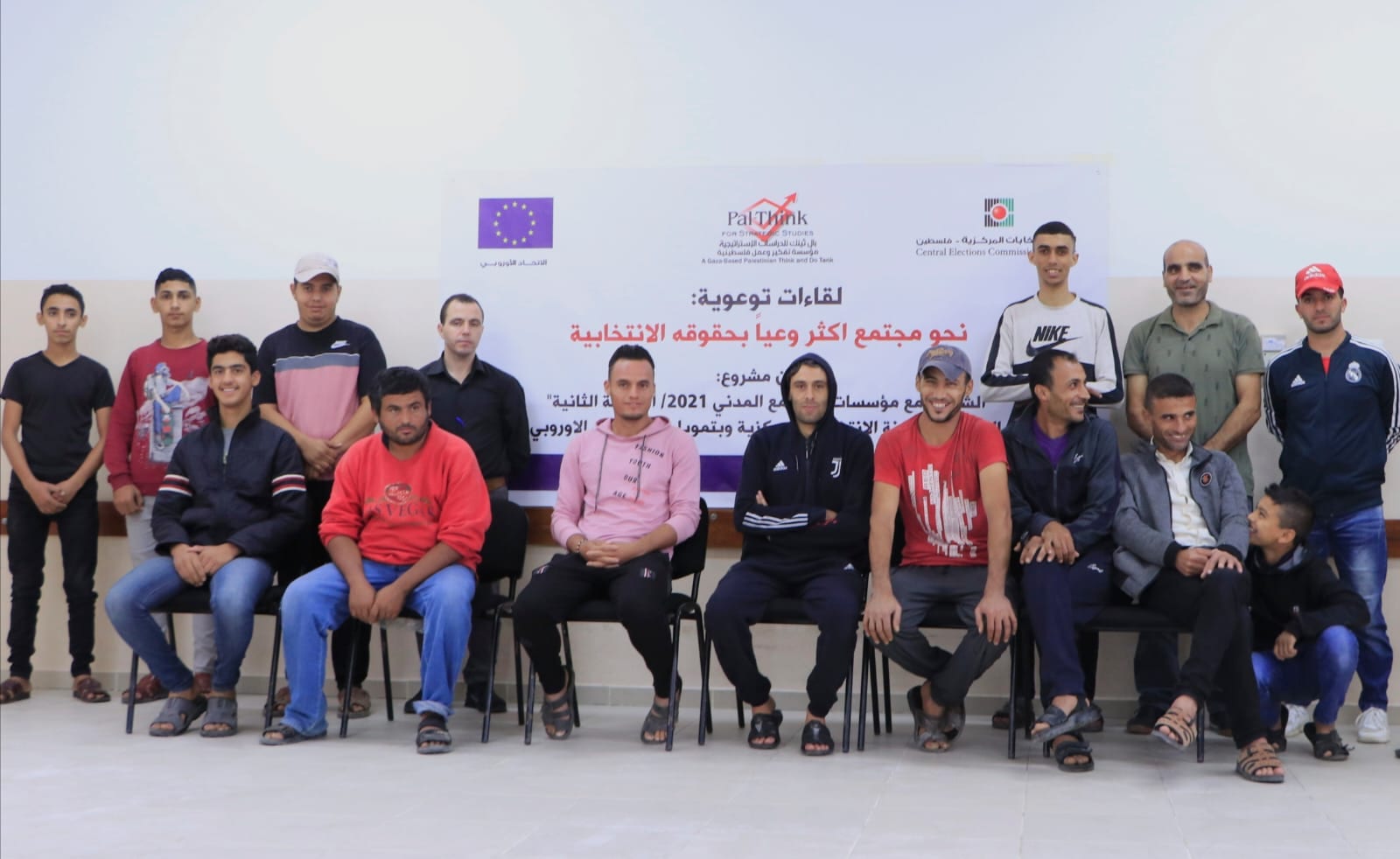
As for the fourth meeting, likewise led by “the lawyer Walid Abu Jahl”, it was carried out in the city of Nuseirat in cooperation with the Al-Aqsa Sports Club with the attendance of a group of youth of both sexes, titled “The conditions of candidacy and election and the role of the Central Elections Commission”. During it the conditions of candidacy and election for the legislative and presidential elections were set out according to the general-elections law and its amendments, and likewise the role of the Central Elections Commission through the electoral process's different stages, embodied in “preparing a general conception of the stages of the electoral processes; preparing the plans needed for their implementation; preparing the preliminary and final voters' register; making voters aware and educating them on the elections' importance and how to take part in them; accrediting the electoral lists and their candidates and the independent candidates; accrediting the local and international monitors and the agents of the party bodies and the independent candidates; coordinating with all the bodies concerned with the electoral process; appointing and training the elections' crews and employees; and archiving all the documents and files relating to the elections”.
The meetings included a set of questions, enquiries, and discussions answered by the meetings' facilitators, and the attendees affirmed the importance of carrying out such meetings that contribute to raising the level of citizens' awareness, of both sexes, of their electoral rights and encouraging their participation in any coming electoral process.