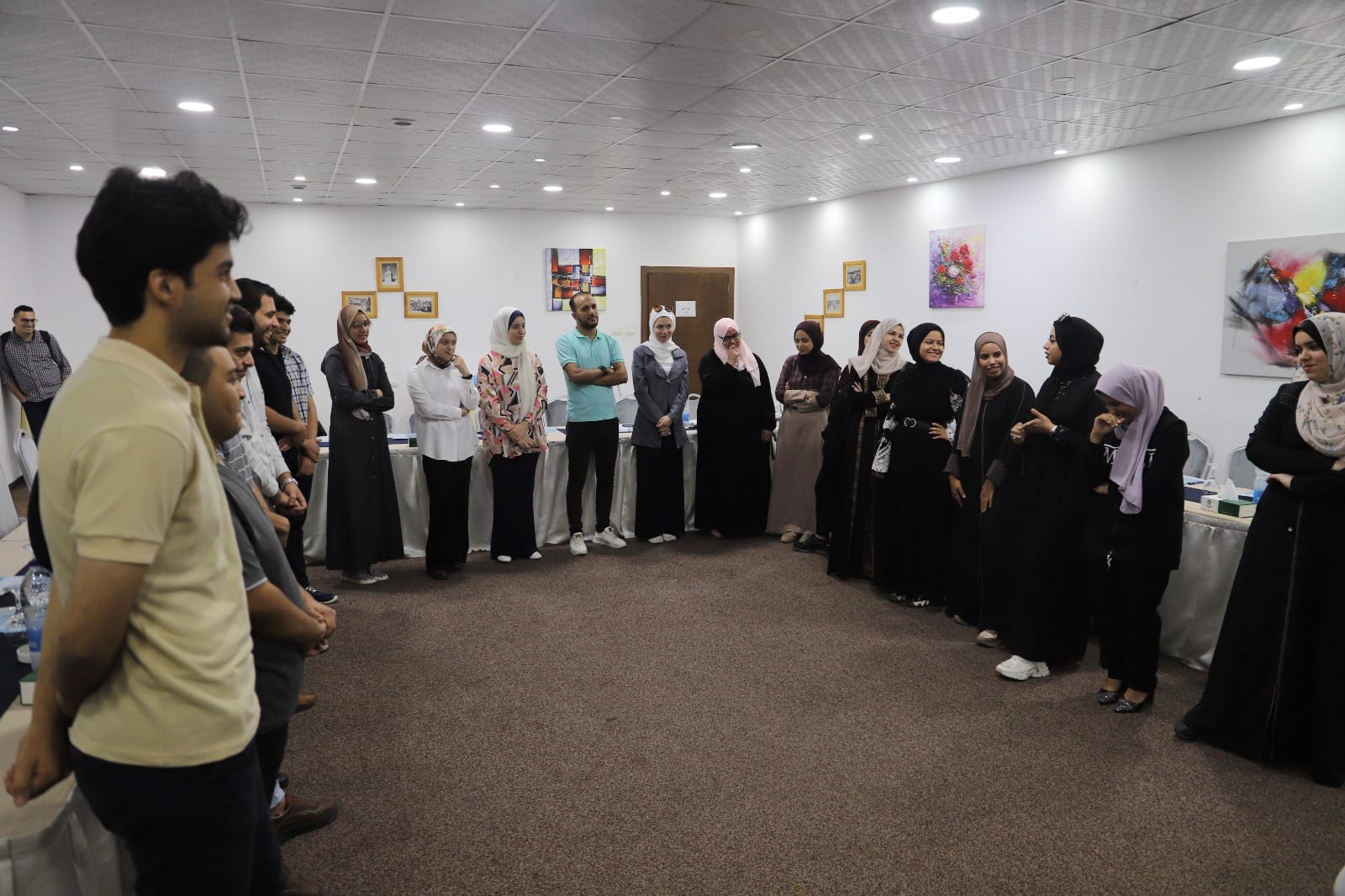
Pal-Think opens the second training course of «Building Young Leaders»
Pal-Think opened the second training course of the «Preparing Young Leaders» debate programme, engaging 55 young trainees, in partnership with the FXB foundation.
- Date
- 2022-10-10
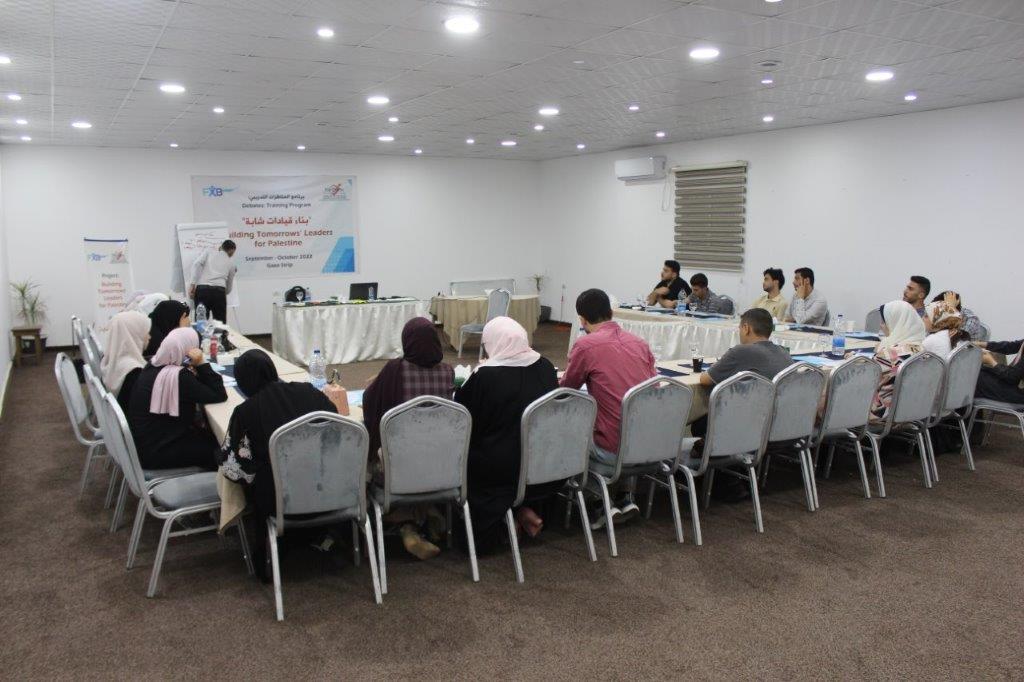
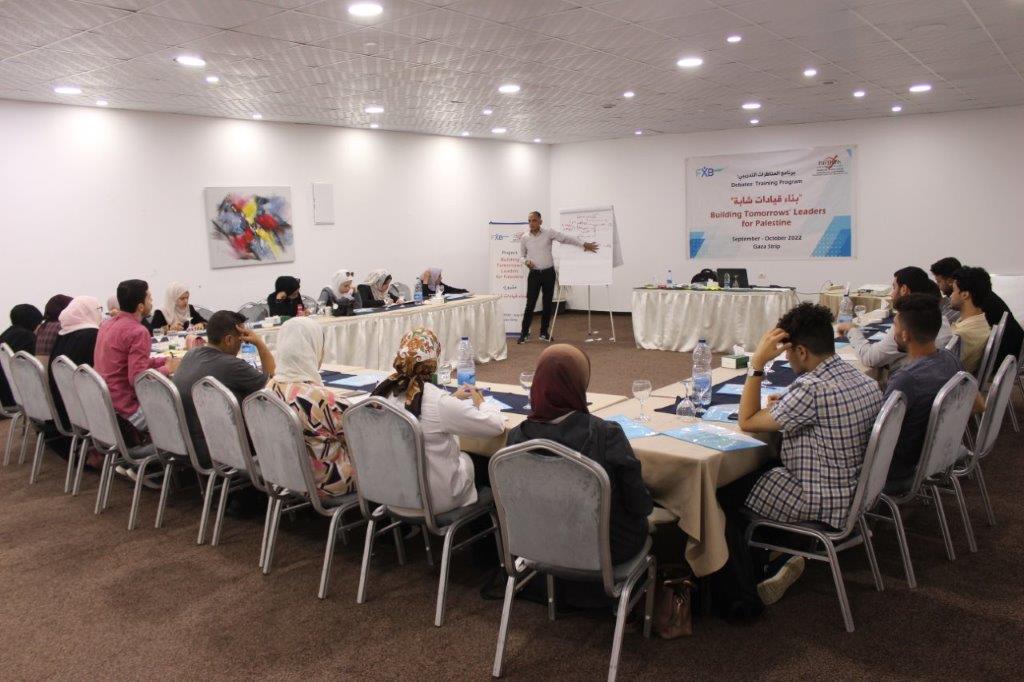
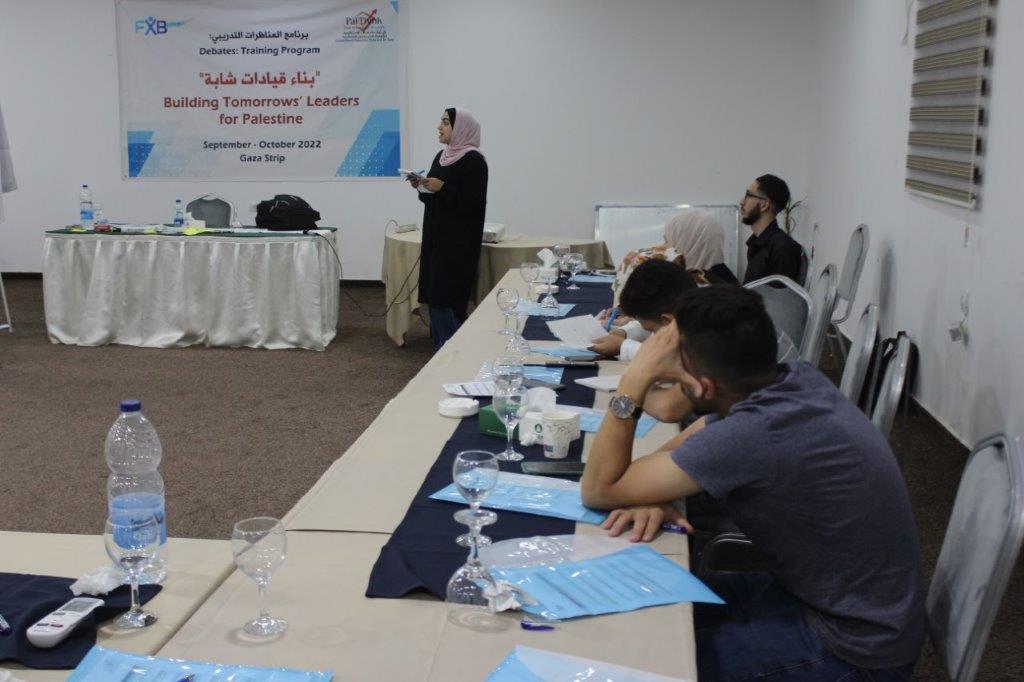
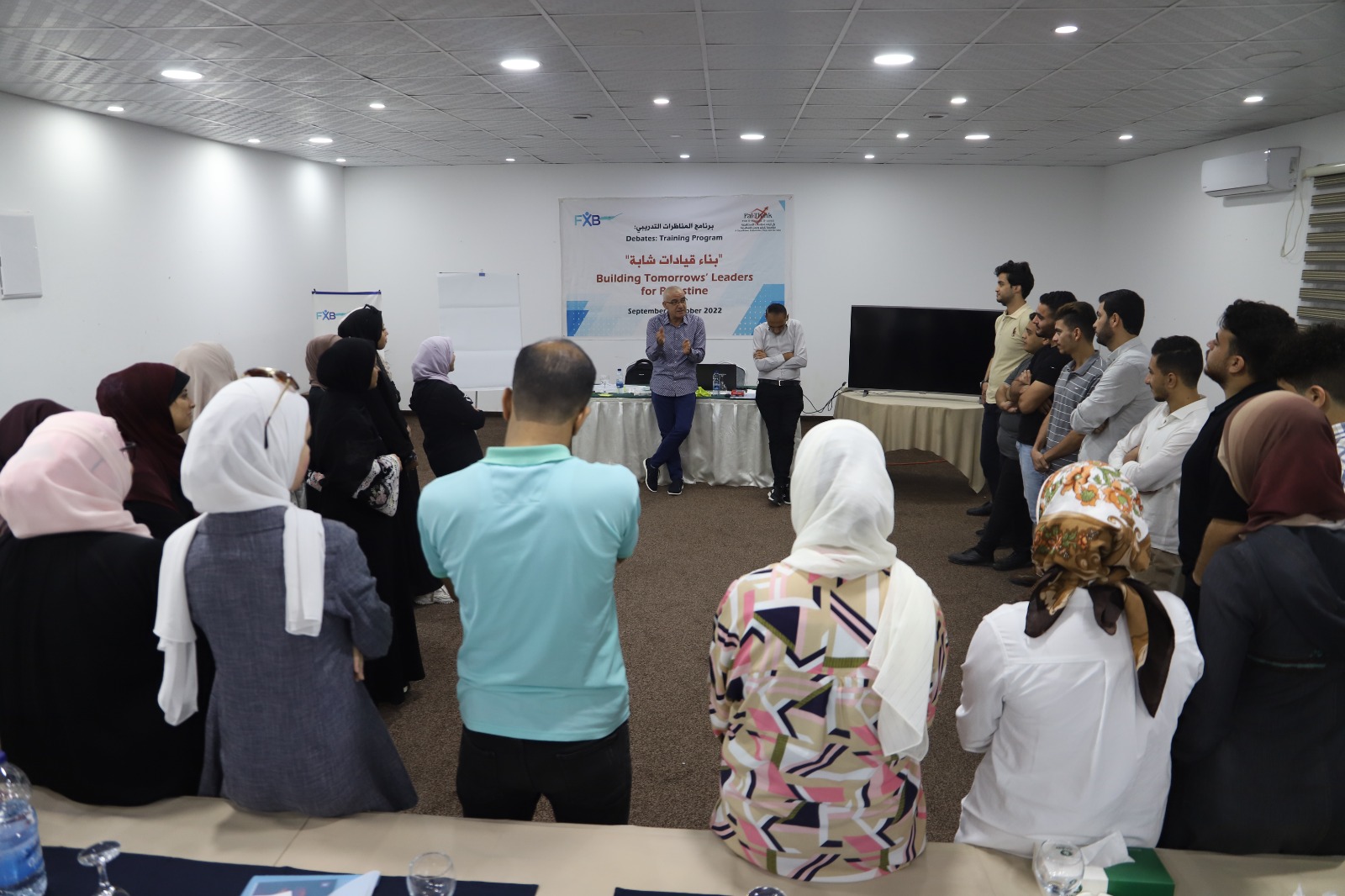
Continuing its efforts to strengthen the culture of dialogue and rational discourse among youth, Pal-Think for Strategic Studies opened today, Sunday, the second training course of the debate-training programme “Preparing Young Leaders”, targeting 55 young trainees of both sexes, in partnership with the FBX organisation.
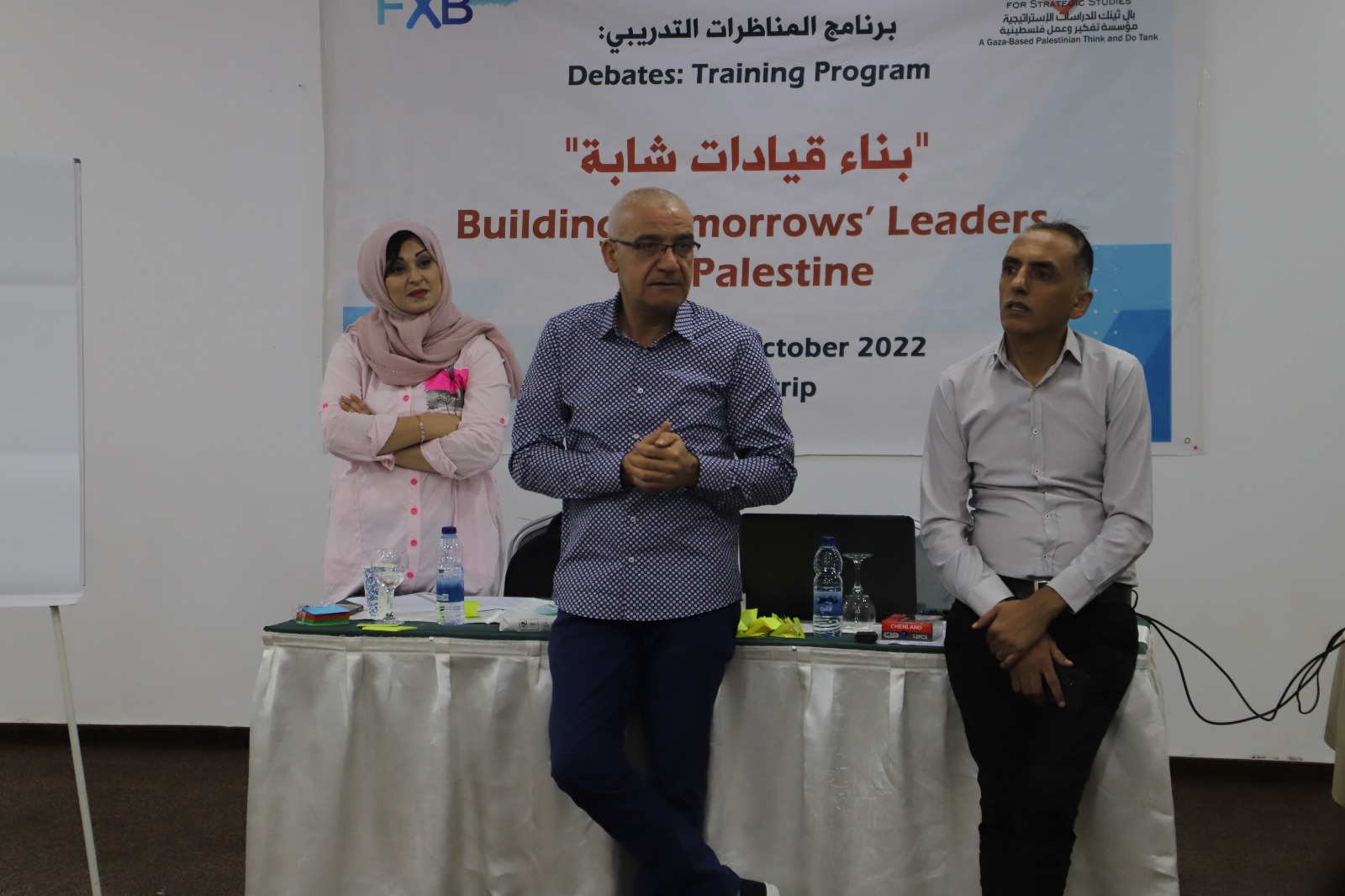
The course was opened by Pal-Think's director, Omar Shaban, saying this programme is one of a continuing series aimed at bringing forth a young generation of leaders for society, armed with the skill of critical thinking and the acceptance of others with their different views. He added that “the aim of this programme is to build strong personalities with the capacity to express themselves, and with the skills and knowledge to tell the wheat from the chaff.”
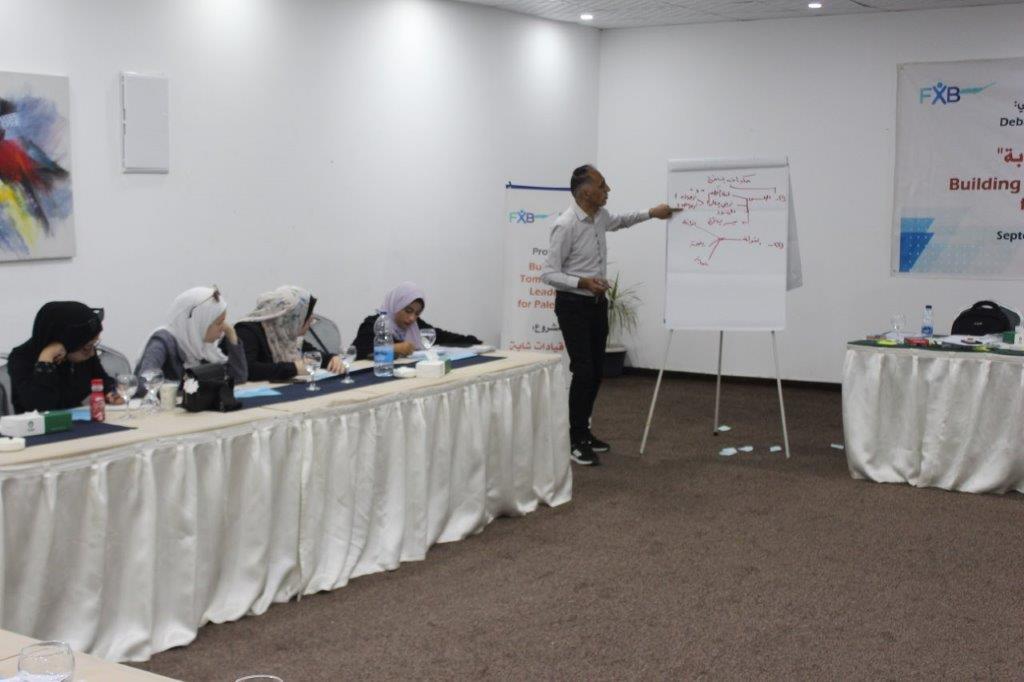
For his part, trainer Dr Talal Abu Rokba said: “Everyone has their differences because of their varied backgrounds; what we seek through this programme is to strengthen acceptance of difference and the language of dialogue and discussion.”
He added: “In the Gaza Strip we lack genuine dialogue built on argument and persuasion in many political, social, and cultural issues; we therefore need to re-ground this relationship as a gateway to the culture of tolerance and the protection of civil peace.”
He said that “projects such as these — specifically those concerning debates and preparing young leaders in debating — are a very important gateway to enabling young people to learn the sensitive issues and to acquire the skills of teamwork, working under pressure, research, and dialogue.”
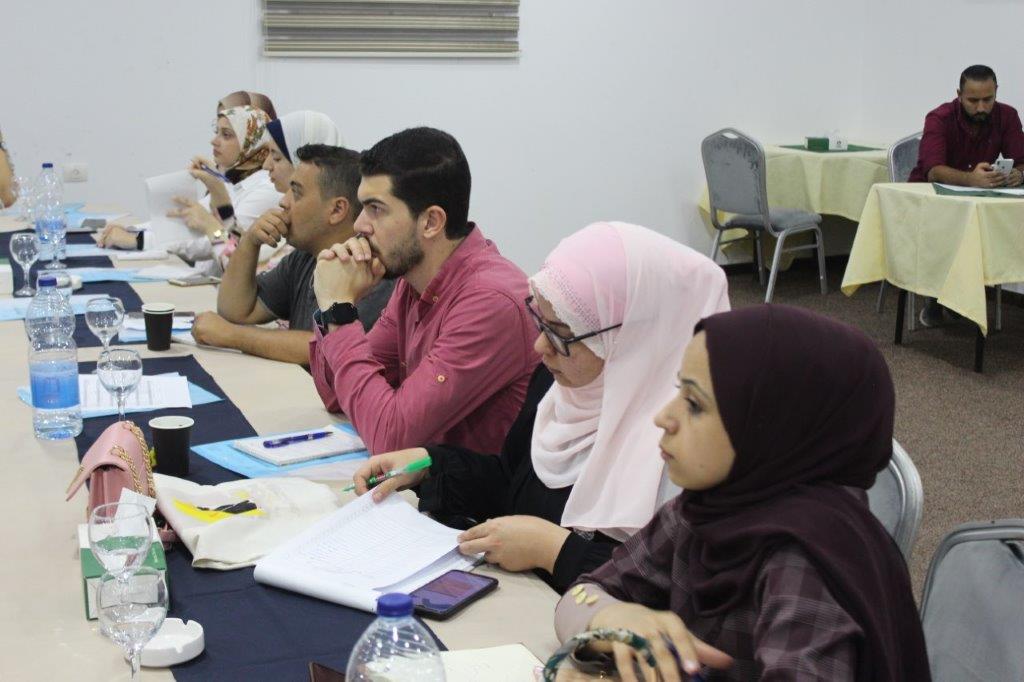
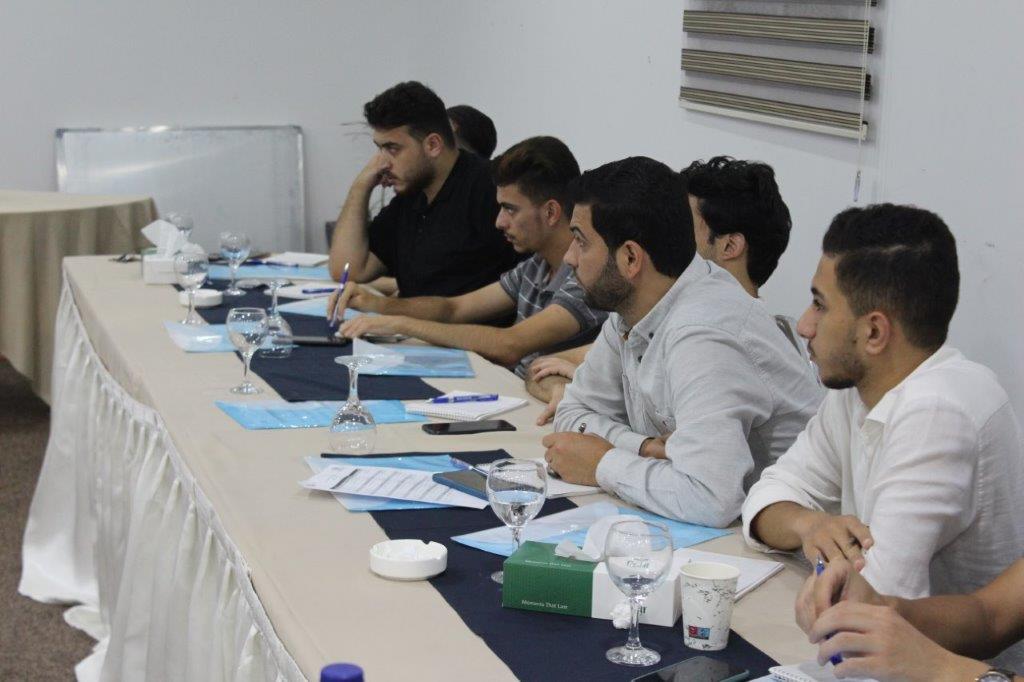
The first meeting comprised an introduction to debates, their axes, and their scientific foundations; the participants also watched several video clips of scientific debates and carried out group exercises amid an atmosphere of positivity and teamwork.
Trainee Shahd Safi (21), a graduate of the English department, said: “The programme did not disappoint my hopes. We learned very important things about debates, their foundations and their ethics — above all respect for others' views — in addition to how to manage debates and work within a team. I am extremely excited, when the meeting ends, to go home and research further everything the meeting addressed.”
For his part, Abdulrahman Rabai (24), a law graduate, said he learned of the programme through Pal-Think's social-media pages, which he follows constantly, and wished to take part in the programme to learn “the art of debate, marshalling argument and evidence, and the art of persuasion.”
He added: “I expect it to be a wonderful experience, especially as I love new experiences that add new skills, expertise, and knowledge.”
The programme aims to strengthen the participants' skills in debating, life skills, and creative thinking to enable them to take part in decision-making. Pal-Think chose the 55 from among as many as 640 applicants to the programme, following the announced criteria of competence. Before the programme's end the trainees will carry out 20 debates in the universities and various local institutions, taking on the full coordination of the debates to strengthen their skills in communication and coordination.