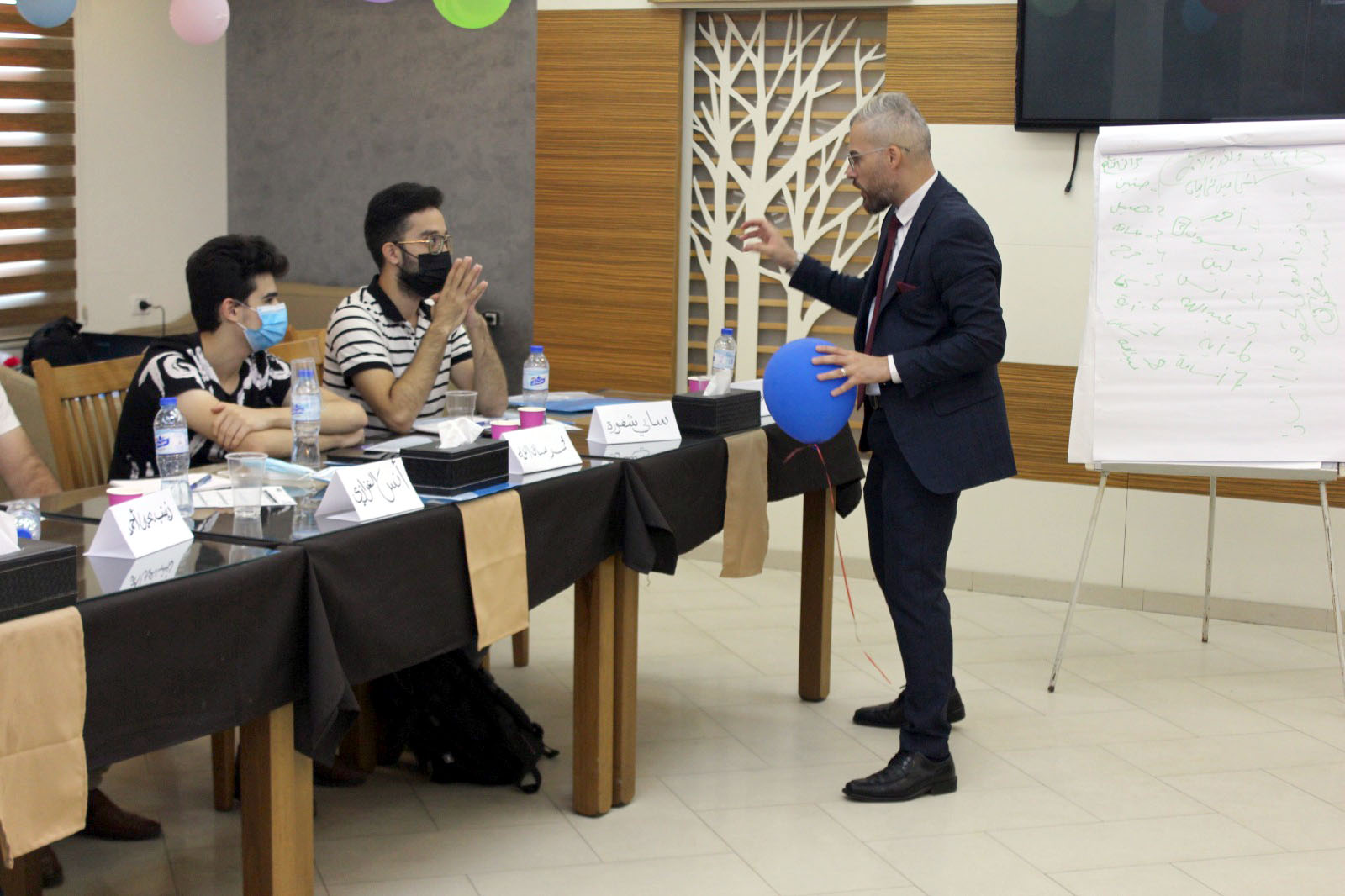
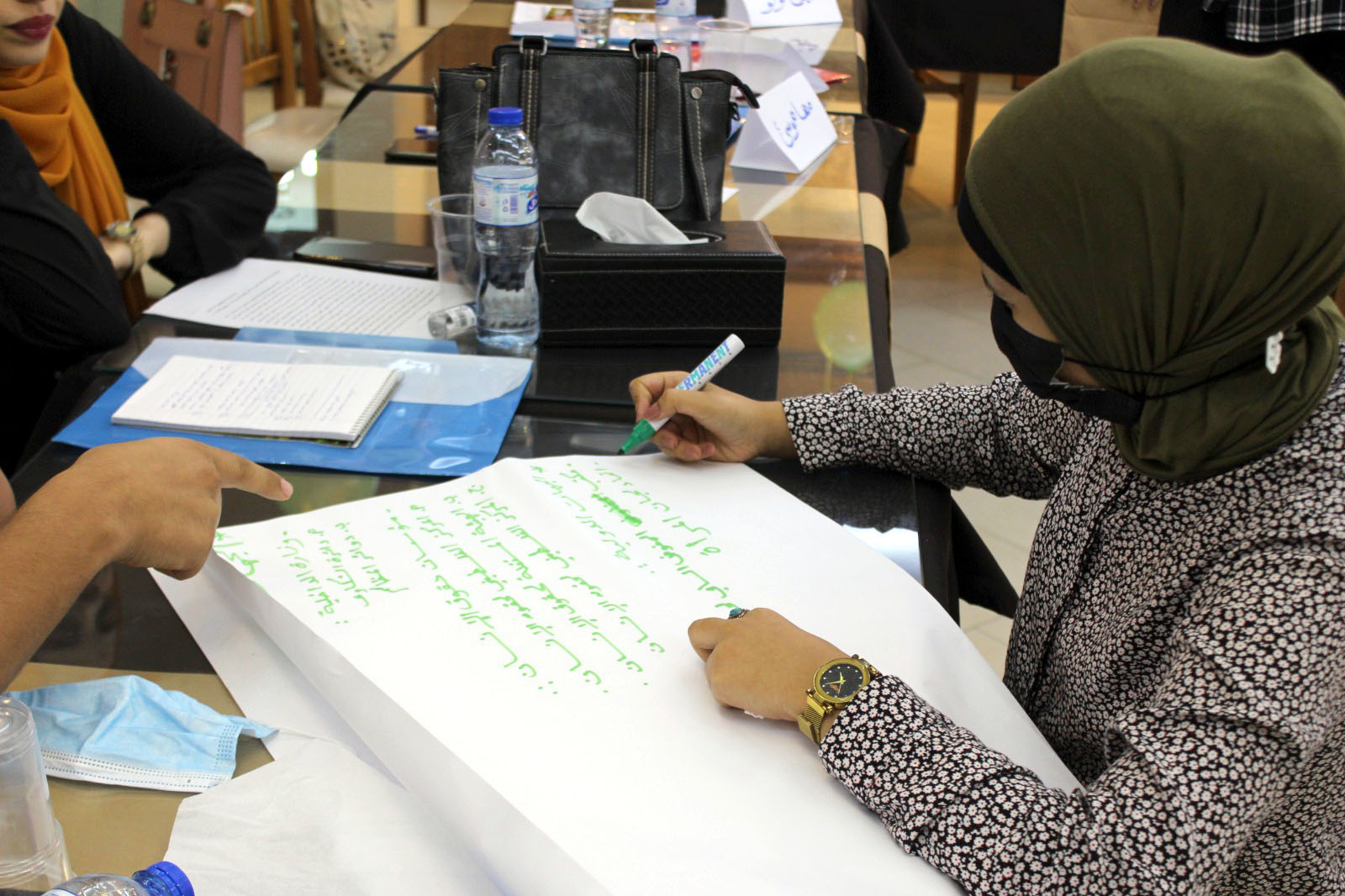
Phase two of the Civic Education project opens
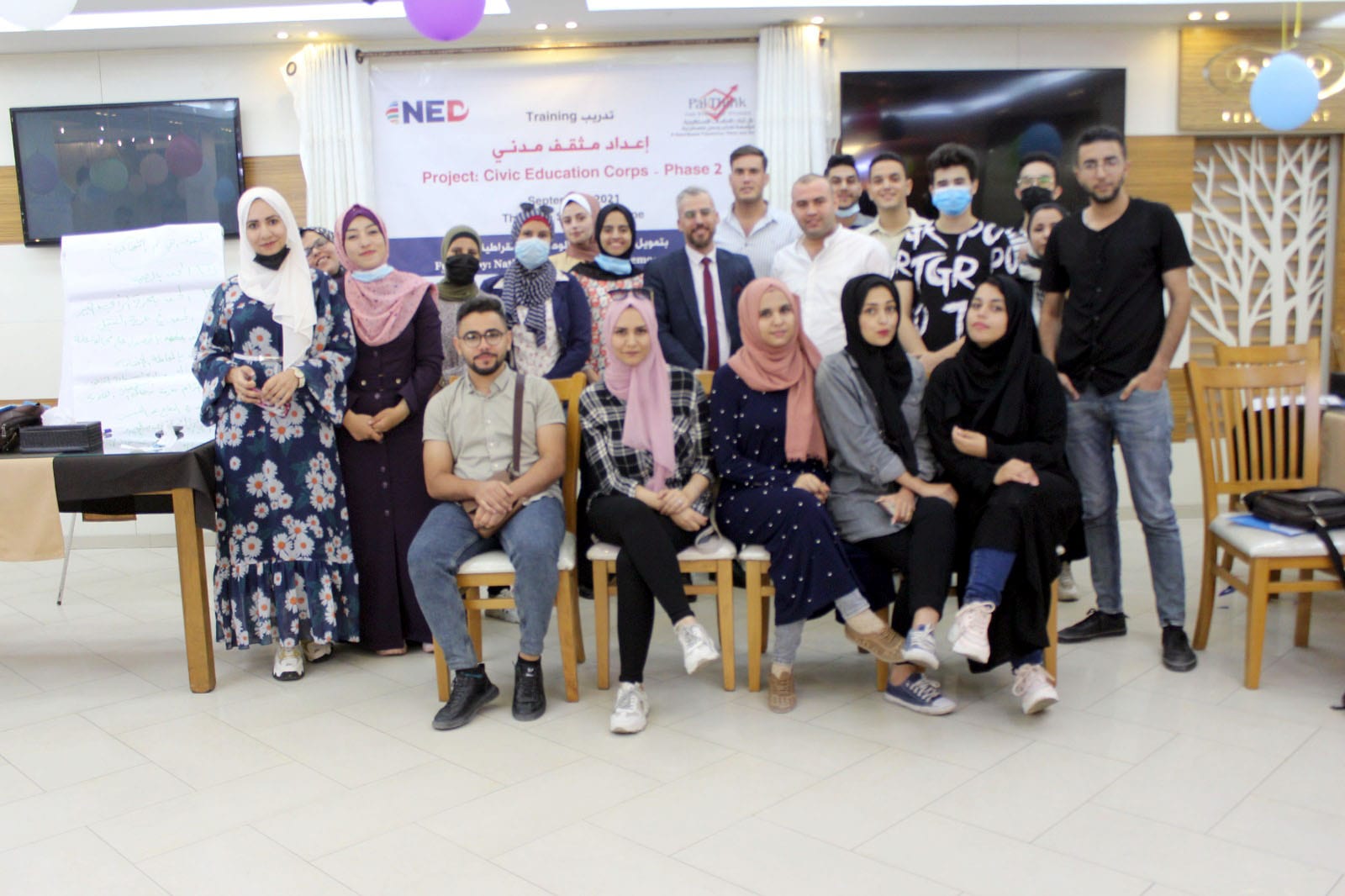
Pursuing its strategic goal of spreading the culture of democracy, human rights and civic culture among university students and fresh graduates, Pal-Think opened phase two of the NED-funded Civic Education project.
- Date
- 2021-09-06
Within the strategic goals Pal-Think for Strategic Studies adopts in spreading the culture of democracy, human rights, and civic culture among university students and fresh graduates, Pal-Think for Strategic Studies opened the second stage of the civic-education project, funded by the National Endowment for Democracy (NED), which aims to create a young generation that believes in the principles of democracy and the concepts of human rights in the Gaza Strip, to find youth able to spread these values in their society, and to enable Palestinian youth to perform their role in taking part in decision-making and contributing to positive change.
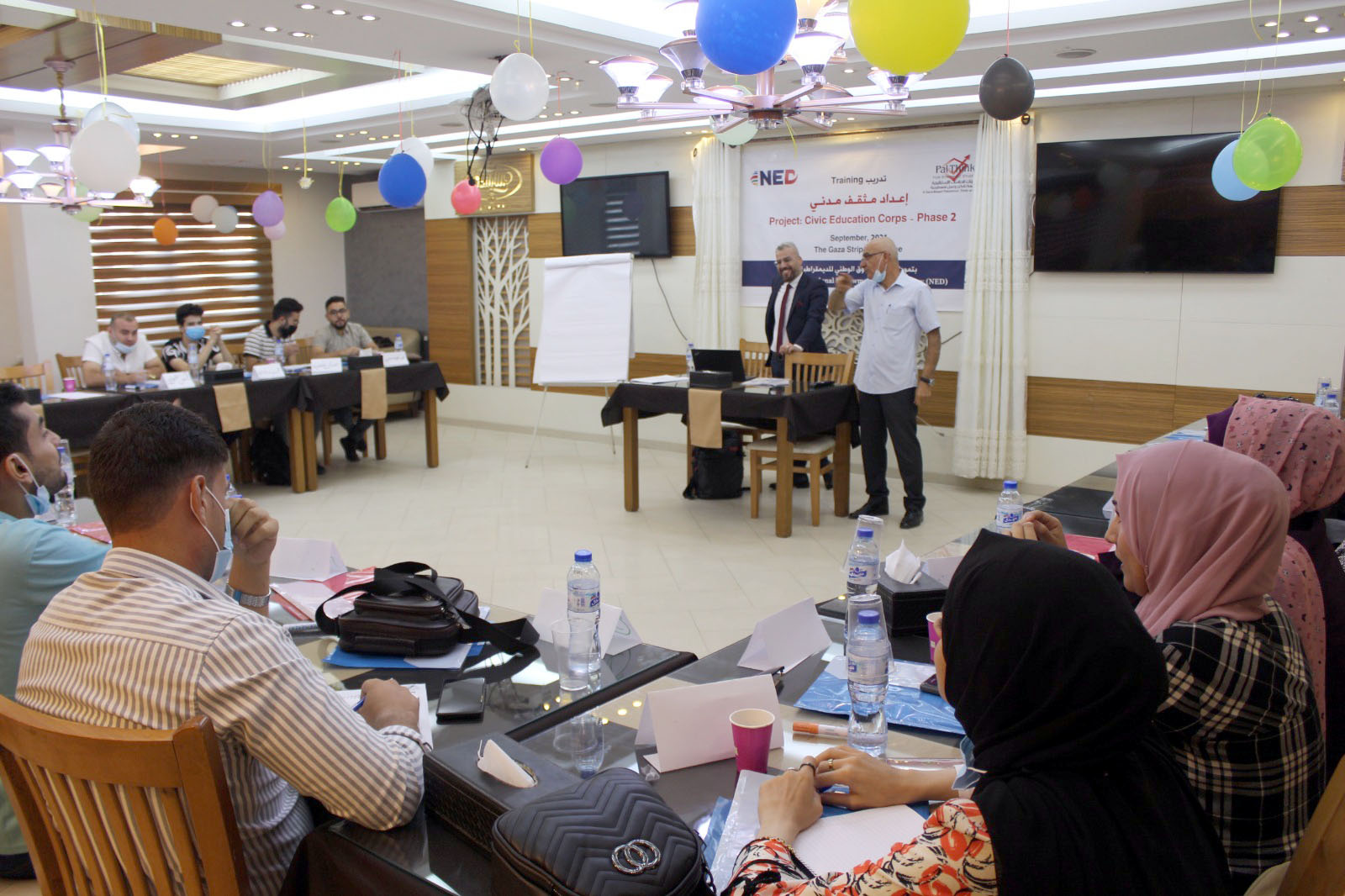
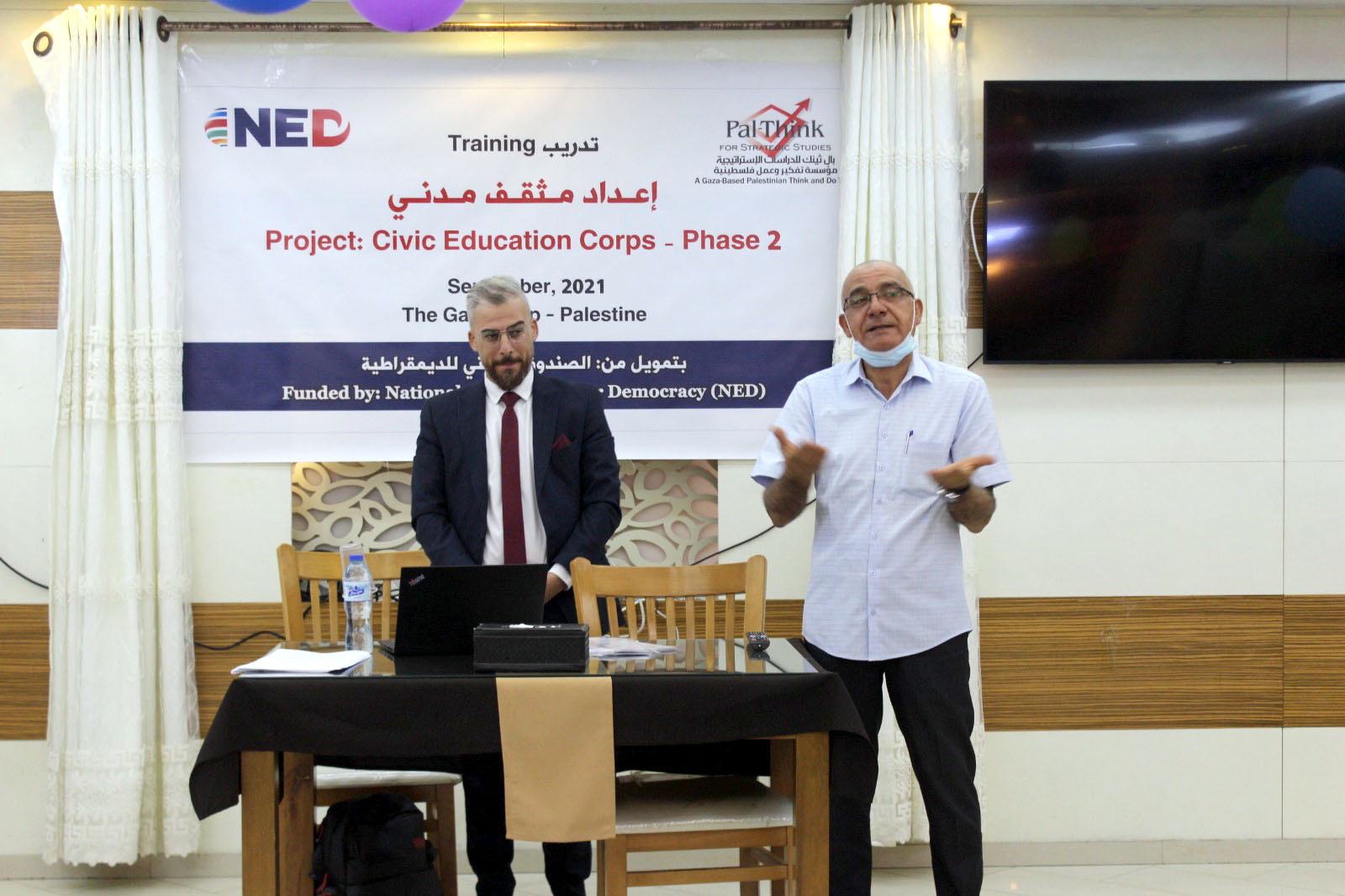
The encounter was opened by the director of Pal-Think for Strategic Studies, Mr Omar Shaban, who welcomed the attendees, thanking their commitment and interest in the training, and affirmed that Pal-Think gives utmost attention to the youth category in Palestinian society, they being the most capable of communal change — especially as Palestinian society is considered a young society. He added that this training comes within a series of activities and projects Pal-Think implements with the goal of spreading and strengthening the culture of democracy, dialogue, and conflict resolution by peaceful means, and empowering youth in the field of writing research papers.
For her part, Ms Sally al-Sammak, “the project coordinator”, spoke, setting out that this project comes in completion of the first stage of the civic-education project Pal-Think implemented in the previous period. She added that this project continues for two years, during which two training courses will be carried out targeting a group of male and female university students and fresh graduates, then granting them the opportunity to pass what they learned to their young peers through carrying out a number of awareness meetings in cooperation with civil society institutions and the universities — in addition to preparing a set of research papers discussing the issues of democracy and human rights, as well as carrying out sessions with the attendance of decision-makers, and radio episodes.
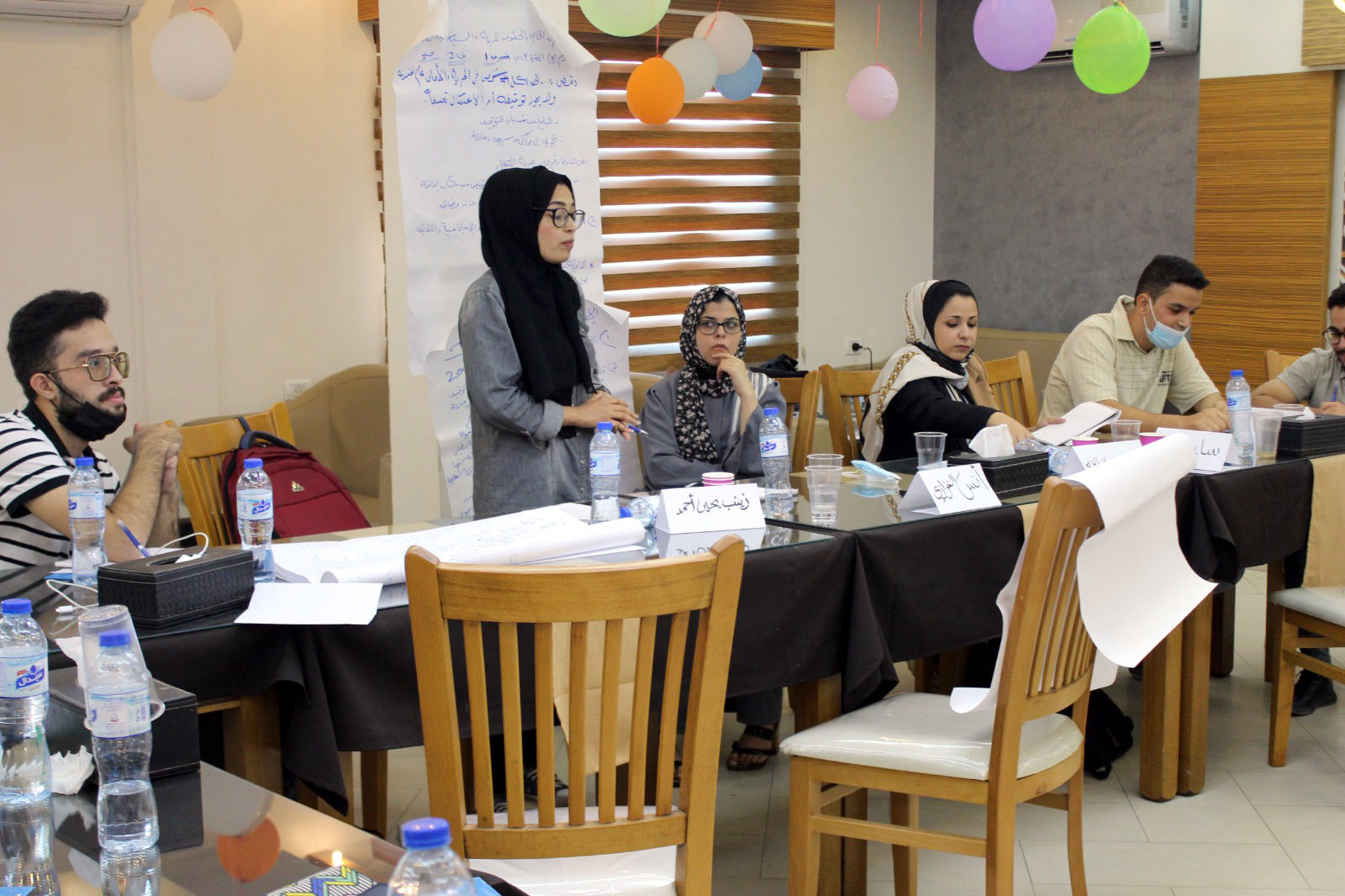
In the same context, the trainee Zainab al-Astal said: “After I read the announcement of the training programme I hastened to register for it in order to gain knowledge and information related to the issues of democracy, human rights, and the writing of research papers — especially as we miss this information in the universities, because the universities' educational curricula take up these issues and topics only marginally. Therefore I hope to obtain this information in order to pass it to the society around us.” The trainee Abdallah Hussein likewise added: “I was a participant in the previous stage of the civic-education project and took part in carrying out the awareness meetings and radio episodes, and I benefited and learned much. I was keen to join the project and take part in its activities in the current stage in order to accumulate the knowledge and information we learned during the previous project — especially as the trainings in the current project are more advanced and specialised, and the activities also are diverse and contain many of the skills needed in the various fields of life”
It is recalled that the training programme continues for seven training days, during which the target category will be trained on international human rights law and the Palestinian condition, the criteria of democracy in light of the Palestinian system, the skills of lobbying and advocacy in the issues of democracy and human rights, creative thinking, the skills of research writing in the issues of democracy and human rights, and the skills of presentation, connection, and communication.