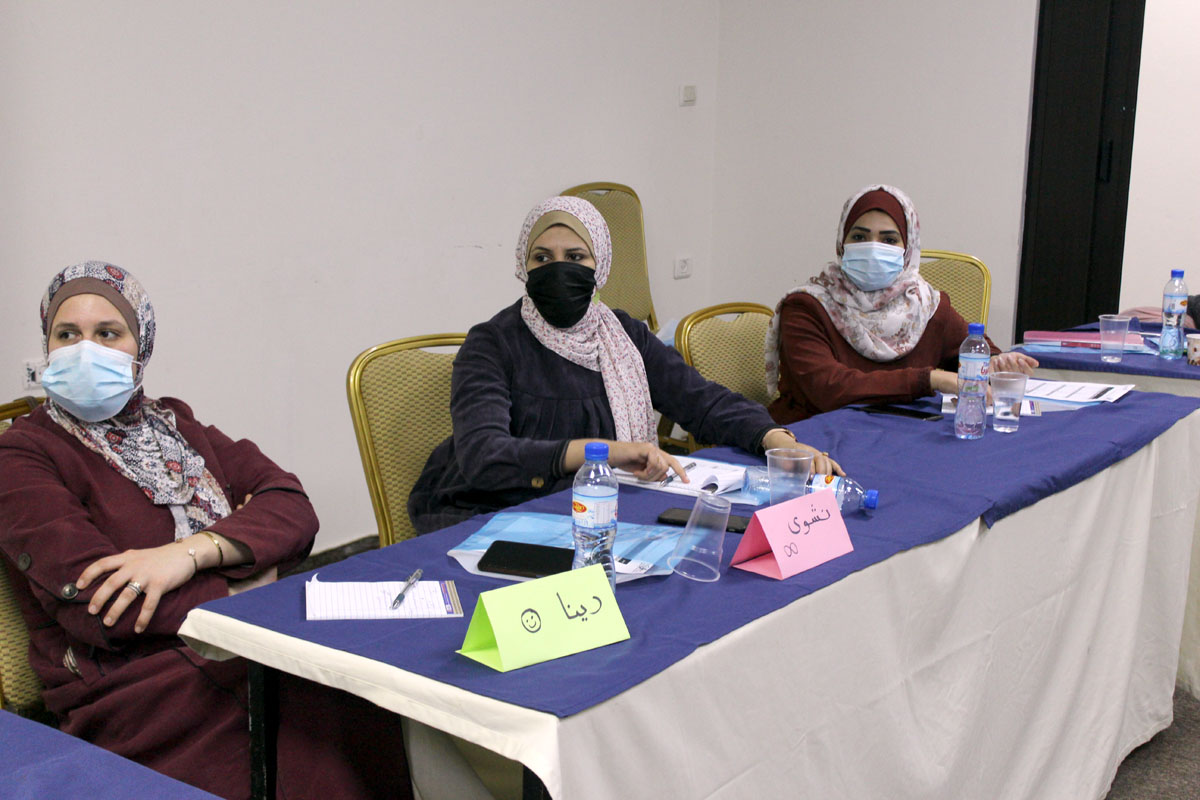
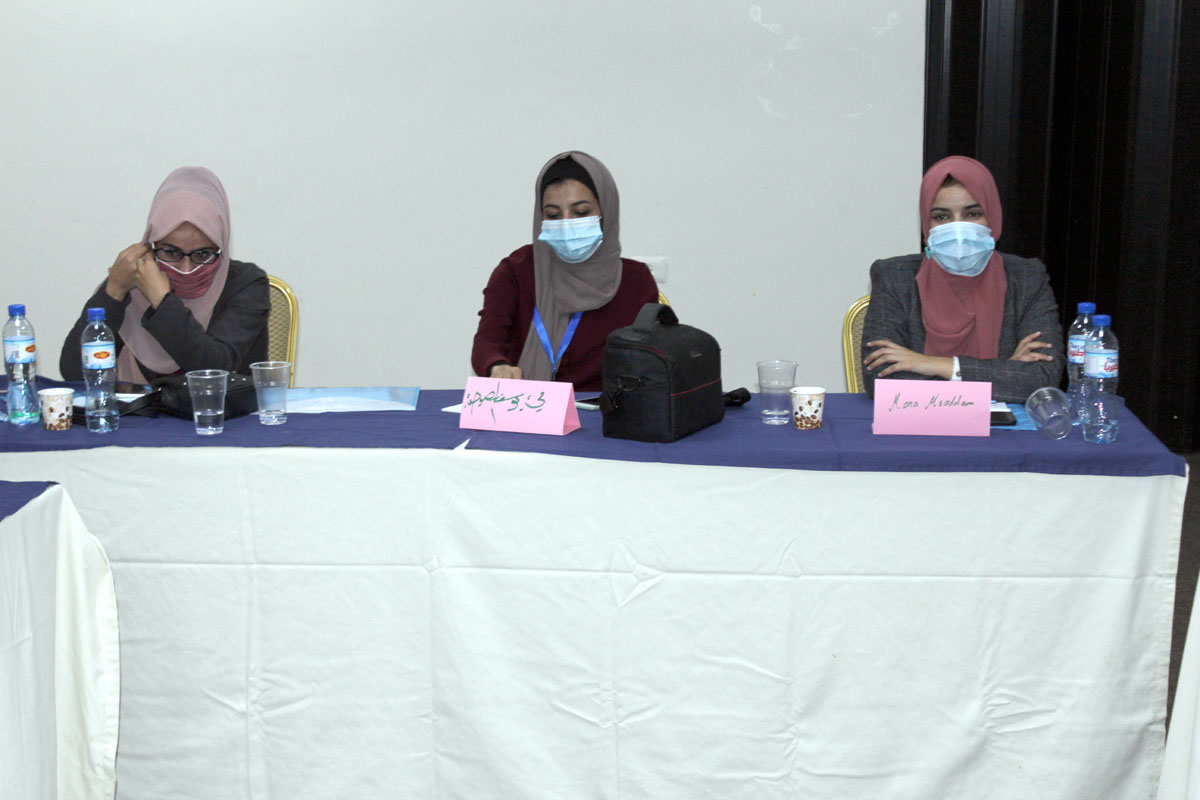
Pal-Think opens the training «Research writing on gender and feminism»
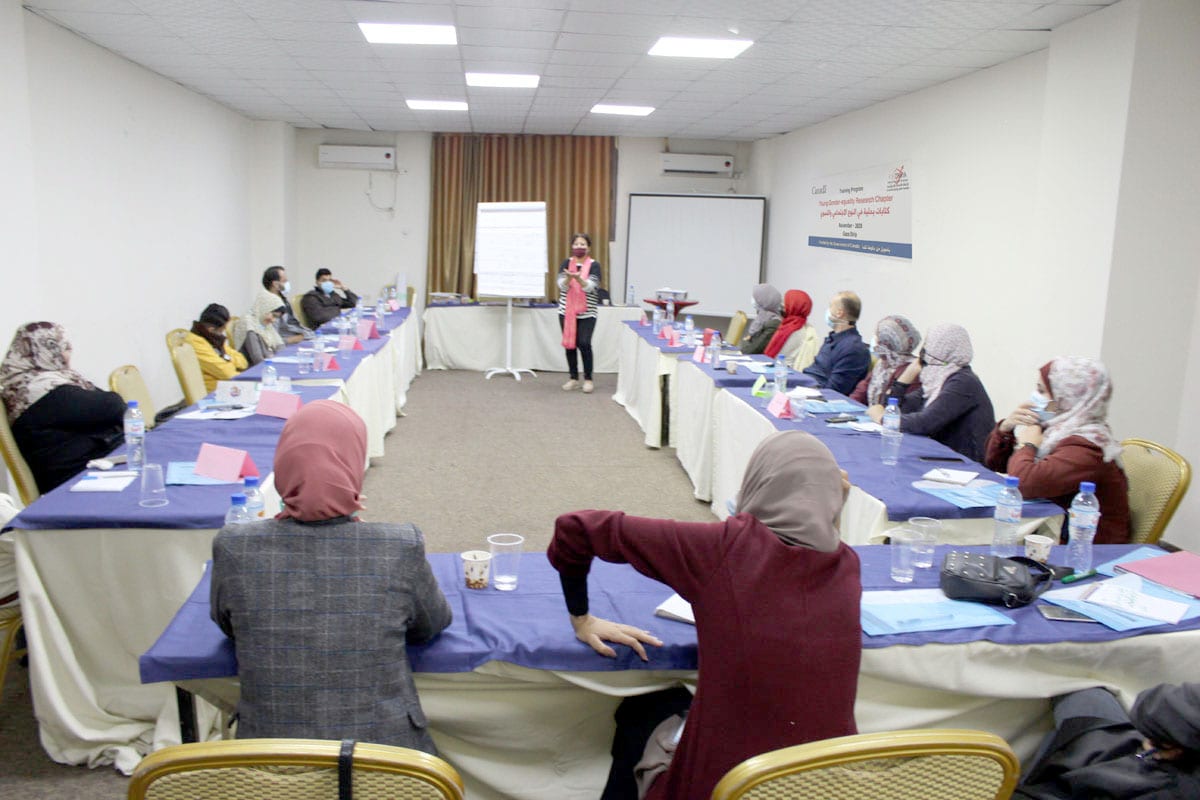
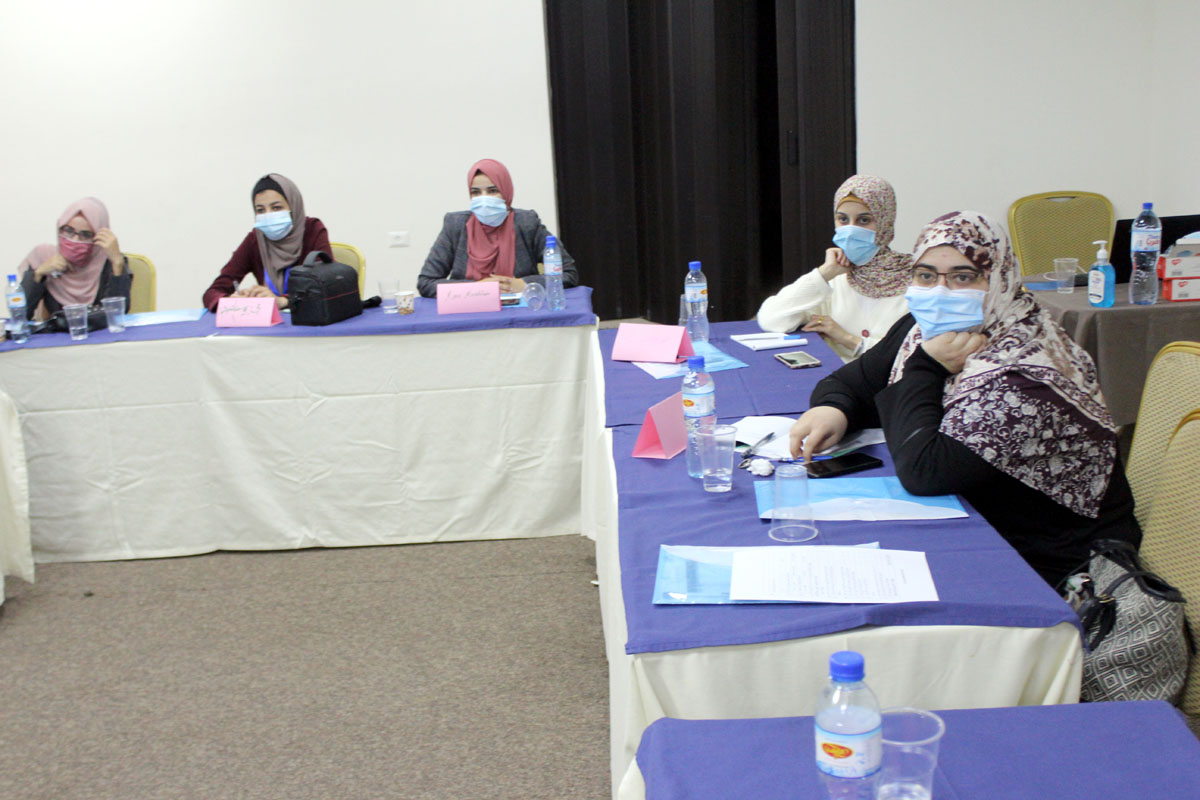
Pal-Think opened the training programme «Research writings on gender and feminism», deepening young people's knowledge of gender issues, with 20 trainees selected for their competence and research experience.
- Date
- 2020-11-24
Pal-Think for Strategic Studies opened a training programme titled “Research writings in gender and feminism”, which aims to strengthen knowledge in gender and feminism among young men and women, with the participation of 20 male and female trainees chosen on the basis of their competence and experience in research writing — with funding from the Government of Canada.
The encounter was opened by the director of the “Pal-Think” institution, Mr Omar Shaban, welcoming the attendees and praising their adherence to the safety measures, and he said: “Pal-Think is an independent research institution working in the field of communal reconciliation since 2007. Pal-Think believes in the youth's capacities and works with all its capabilities to build a generation of educated youth — because our constant slogan is continuity in working with Pal-Think's trainees, to strengthen their communal capacities and to strengthen their research capacities so that they write methodically and scientifically about their issues by themselves.”
For her part, the institution's projects coordinator, Ms Sally al-Sammak, acquainted the trainees with the project, its goals, and its most important outputs — which must leave a trace in society and contribute to change for the better, to limiting violence, and to acquainting people with women's issues and rights. She mentioned the most important topics to be taken up within the training programme, such as: studies in gender, research writing specialised in gender and feminism, and electronic advocacy for communal issues.
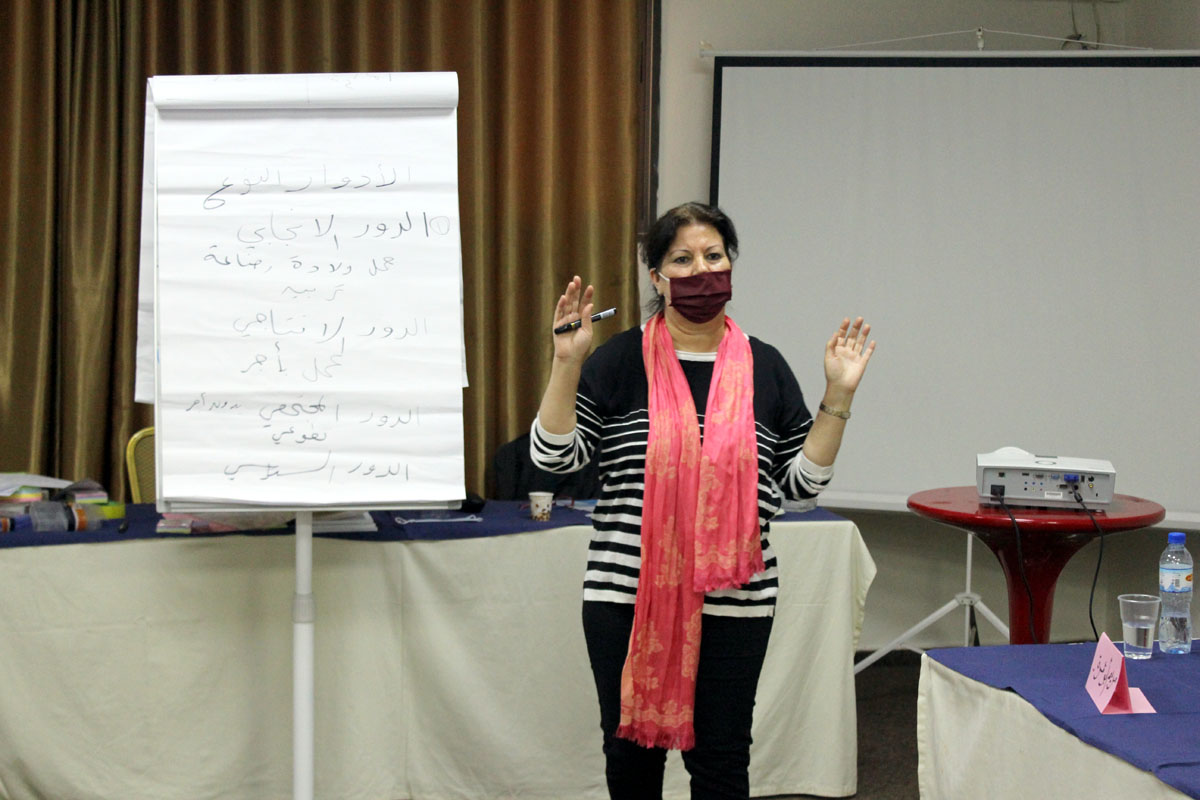
For her part, the trainer Azza Qasem took up on the first training day the concept of gender and feminism, its roles, and the most important factors that influence it, such as the economic and social factor. She likewise spoke of the system of laws and legislation that forms Palestinian law, and communal culture, and the effect of each of them on the distribution of roles between men and women in Palestinian society.
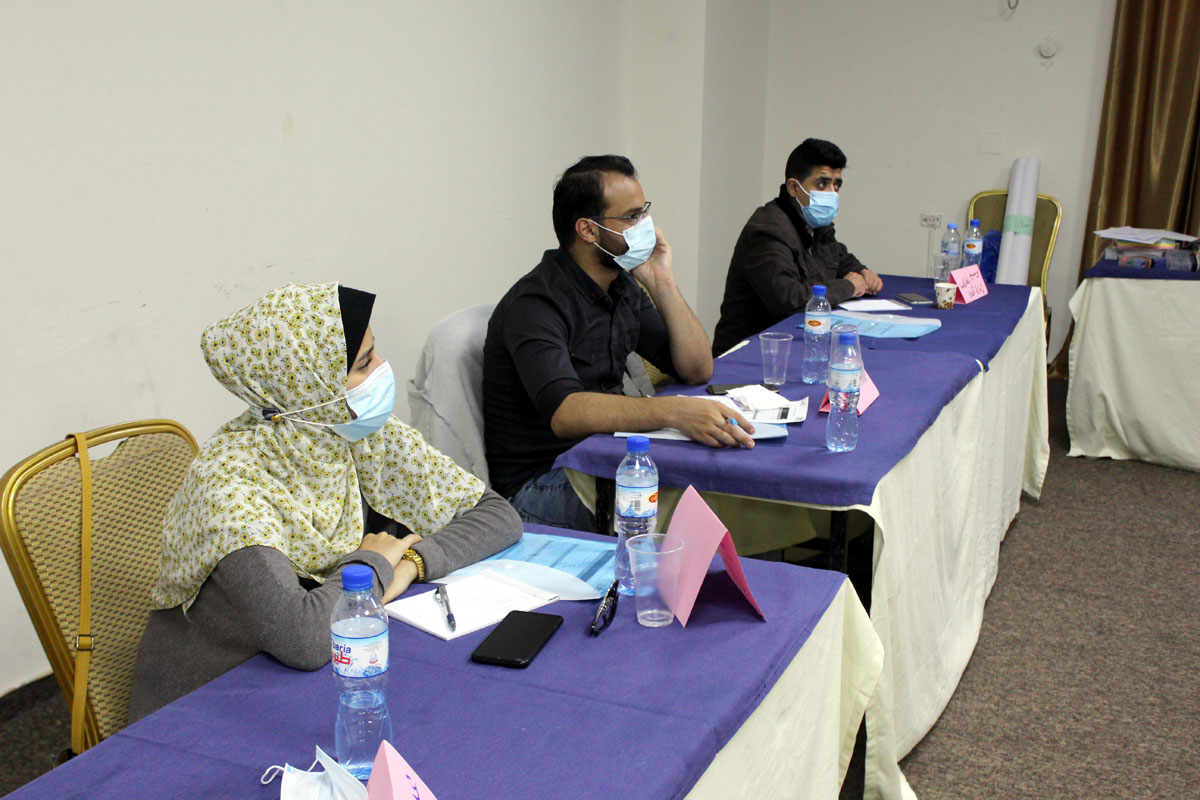
An atmosphere of engagement and participation prevailed among the trainees. The trainee, the writer Mona al-Masdar (25 years old), said: “This training programme is very important for me, especially as the cases of gender-based violence in the Gaza Strip are in continuous increase. This programme came to create in us as youth a critical awareness, so that we work afterwards as educators to limit gender-based violence as much as possible.”
As for the trainee Abdallah Abu Shamala (24 years old), a psychological specialist, he said: “This programme benefits me in my specialisation because I meet men and women victims of gender-based violence. It also helps me in dealing with the abused victims. I can now guide the abused to the specialised bodies to limit the violence falling upon them, and I will also contribute to spreading awareness and acquainting the categories I mix with in my work with gender-based violence and the ways of avoiding it.”
It is recalled that the project extends to the end of February and also takes up the production of 10 research papers from the perspective of the youth enrolled in the training programme — these papers being concerned with the issues of women and gender; the project likewise comprises a radio programme in which women's rights are promoted and opposition to gender-based violence is called for.