Pal-Think runs five awareness meetings under Civic Intellectual phase two
Under the NED-funded «Preparing a Civic Intellectual — phase two» project, Pal-Think ran five awareness meetings strengthening democratic values and human-rights concepts among Gaza's youth and building young leaders able to spread them.
- Date
- 2022-01-10
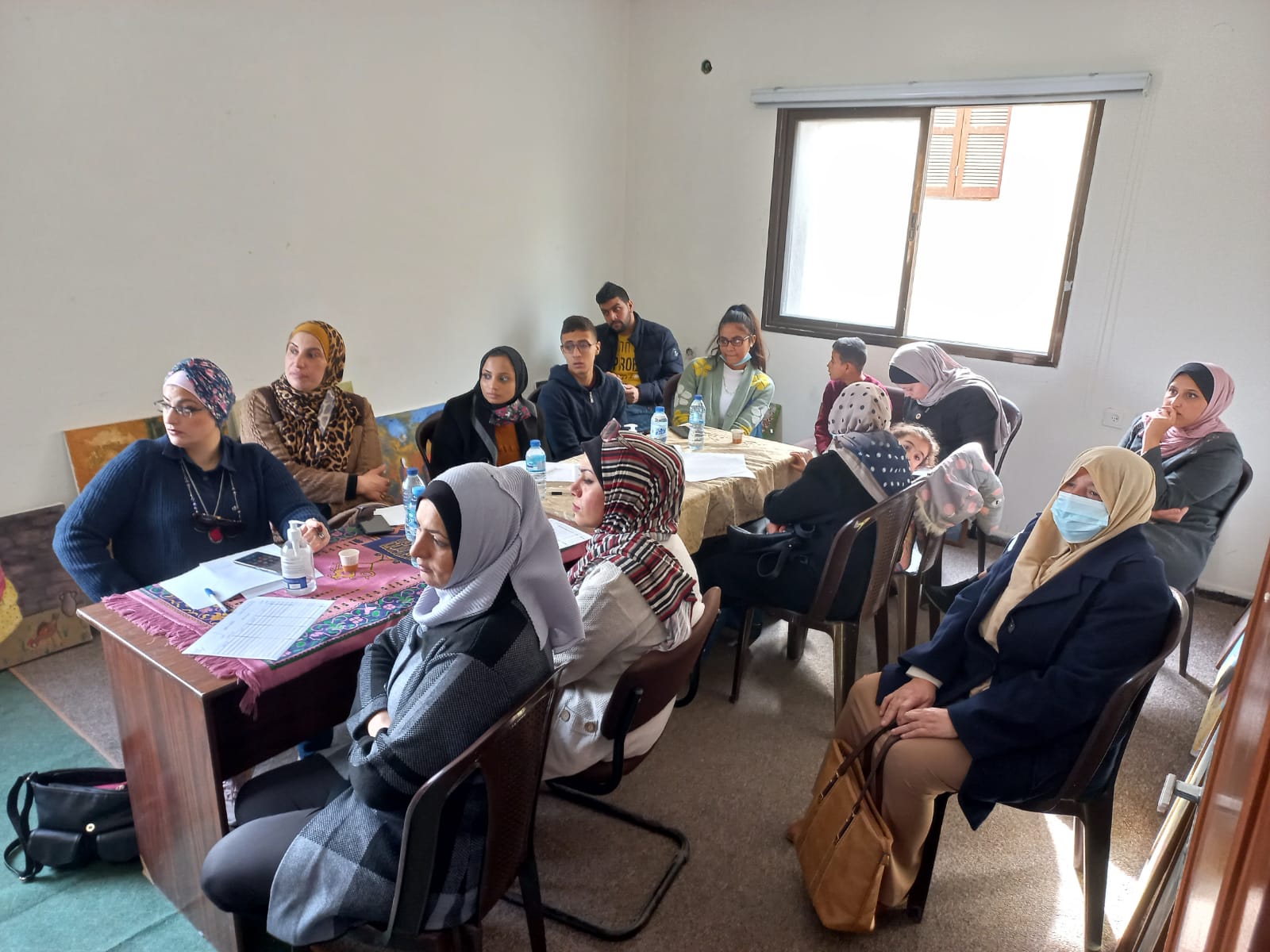
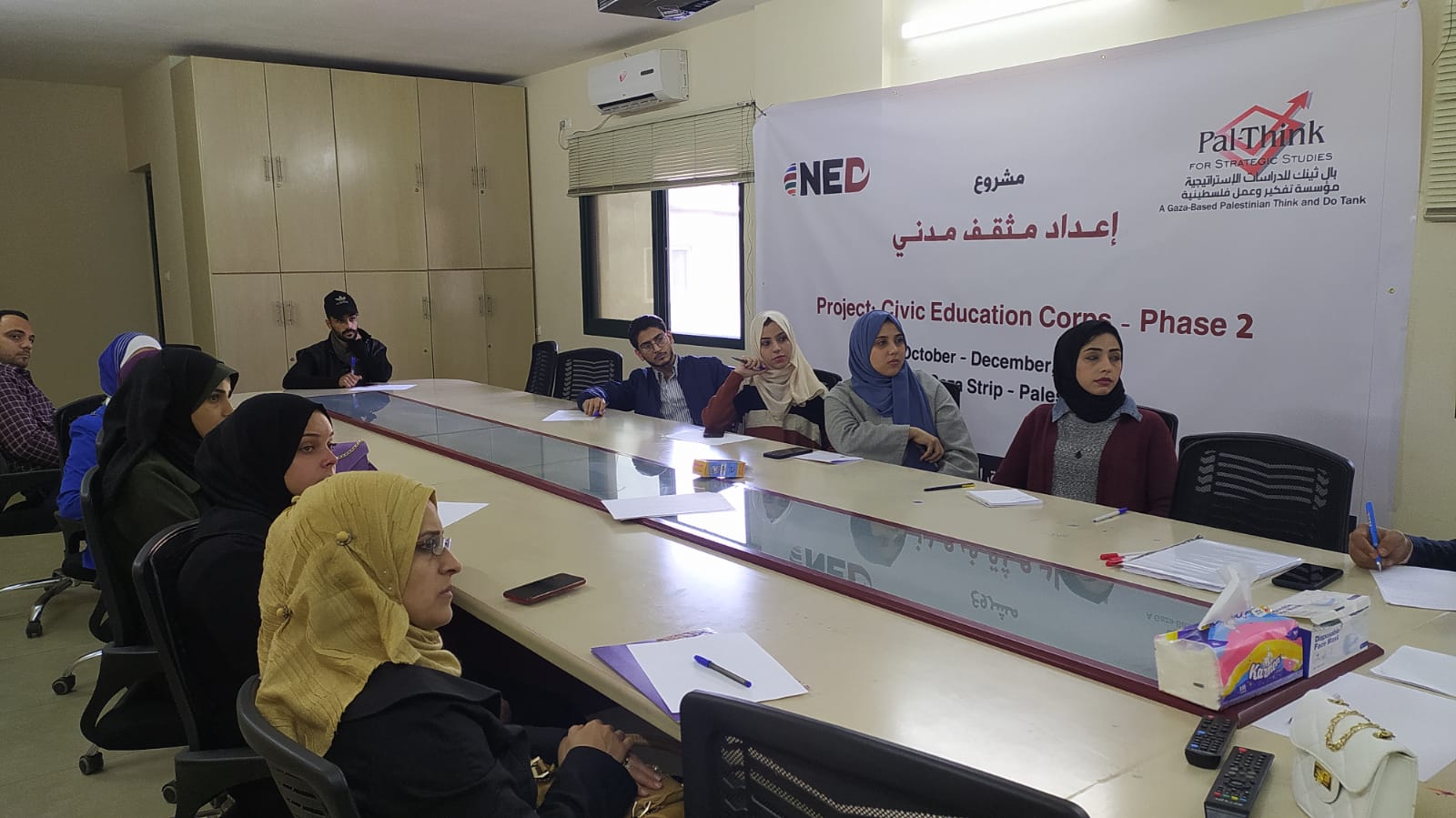
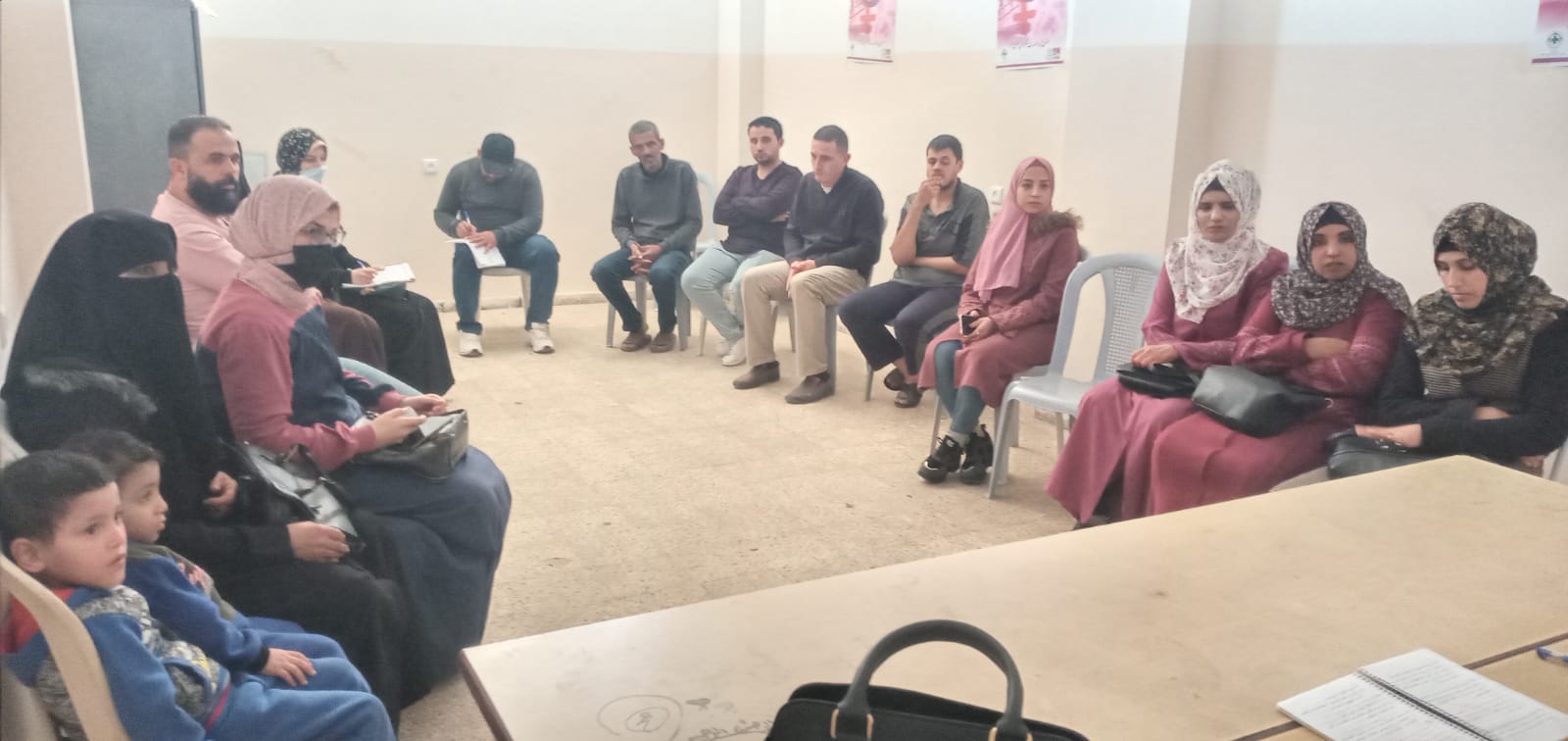
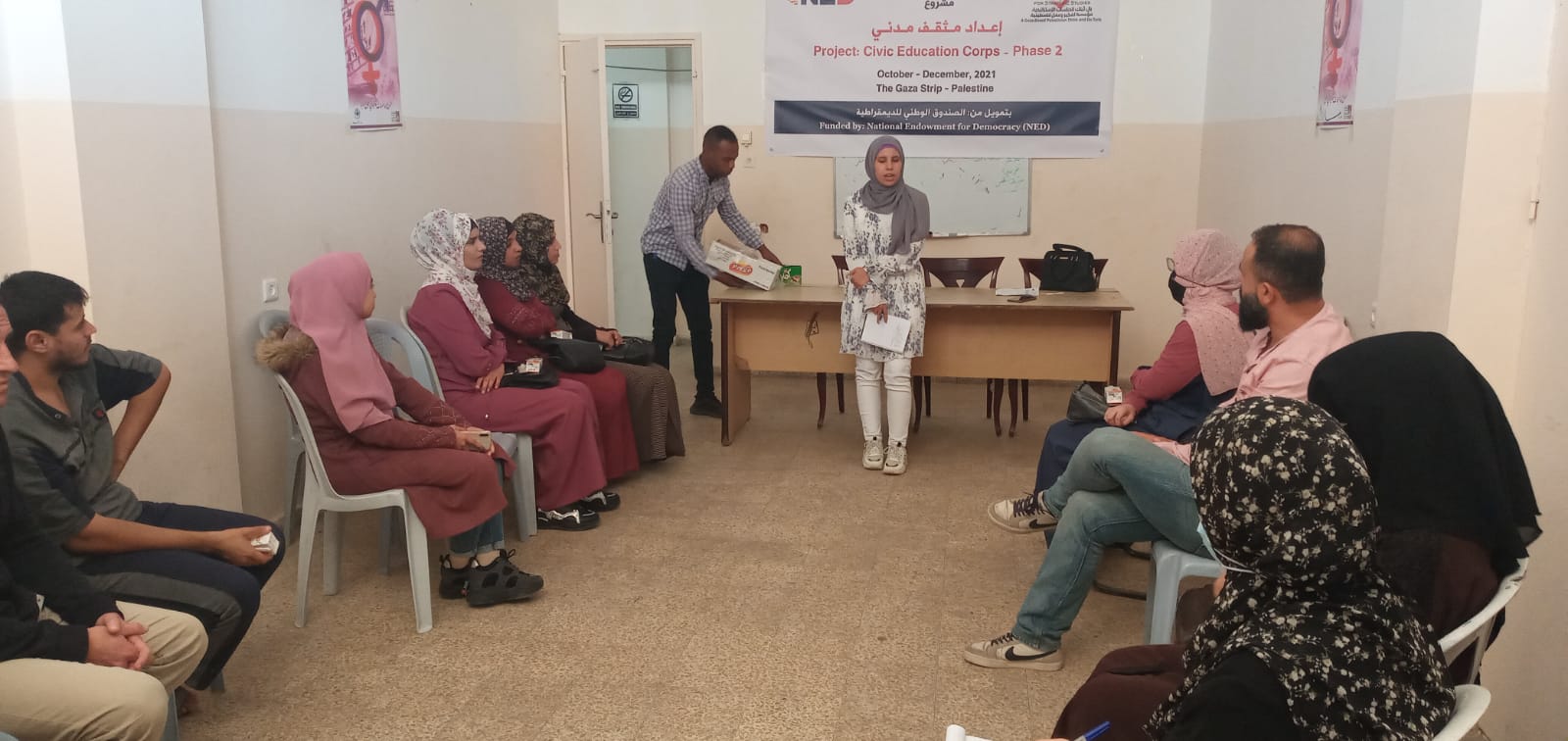
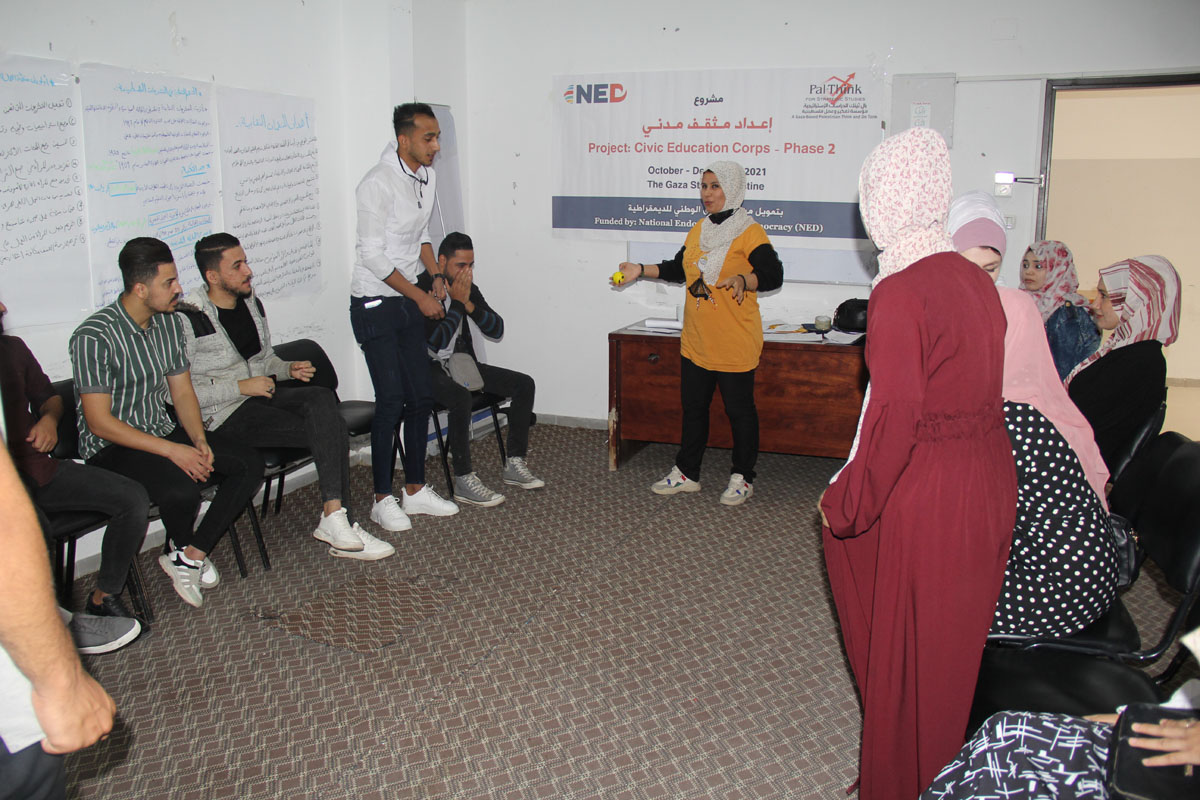
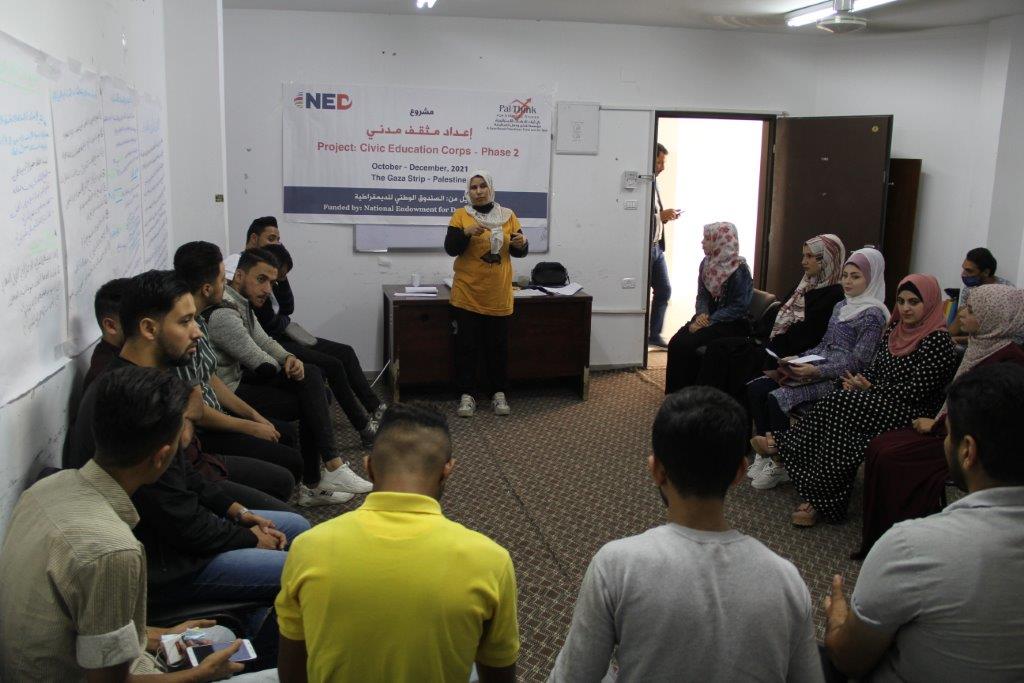
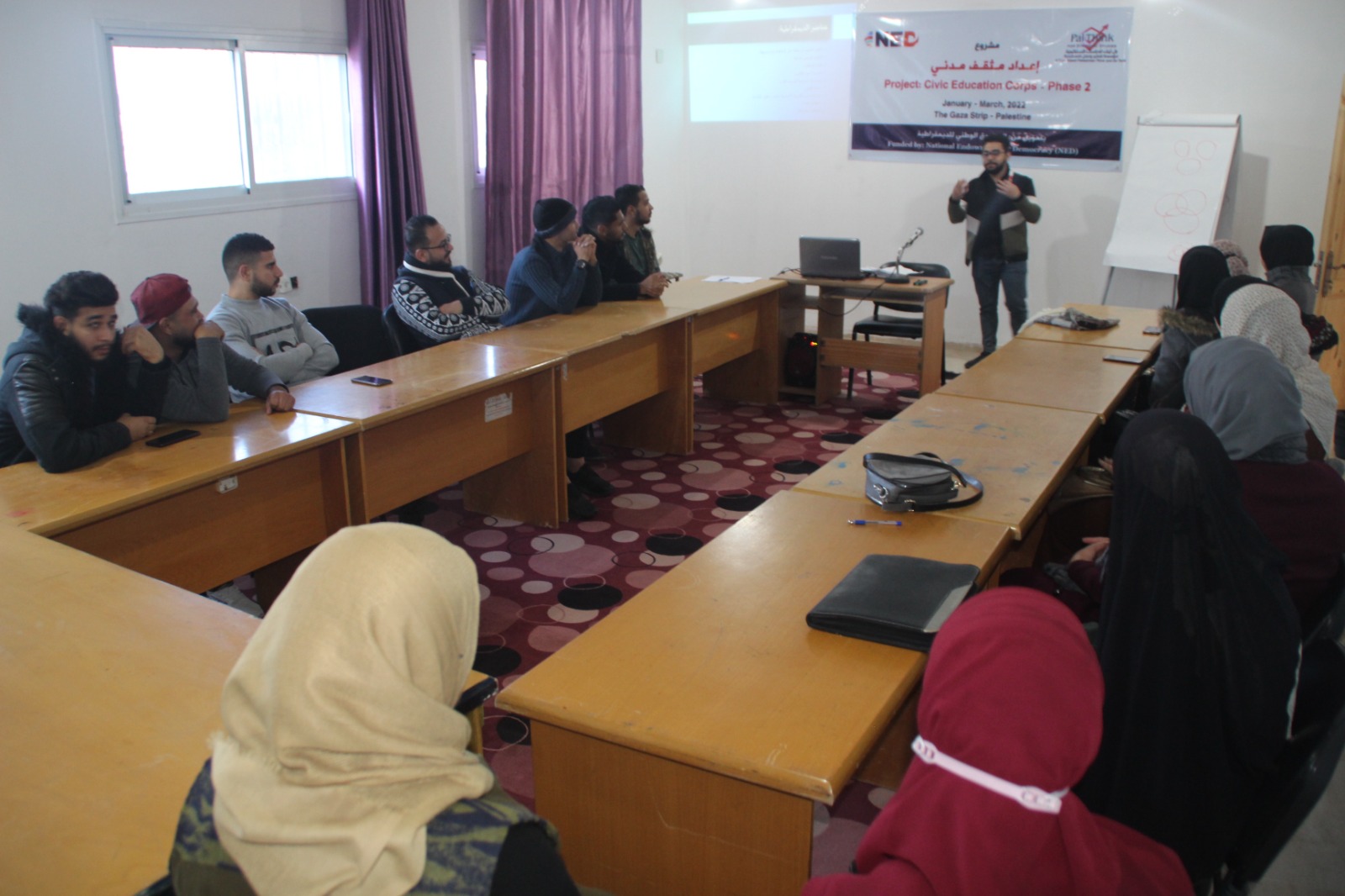
Within the activities and events of the project “Preparing a civic intellectual / phase two”, implemented by Pal-Think for Strategic Studies with funding from the National Endowment for Democracy (NED) with the aim of strengthening democratic values and the concepts of human rights in youth circles in the Gaza Strip and creating young leaders able to spread these values in their society, Pal-Think carried out five awareness meetings in the different governorates of the Gaza Strip in cooperation with a number of civil-society institutions.
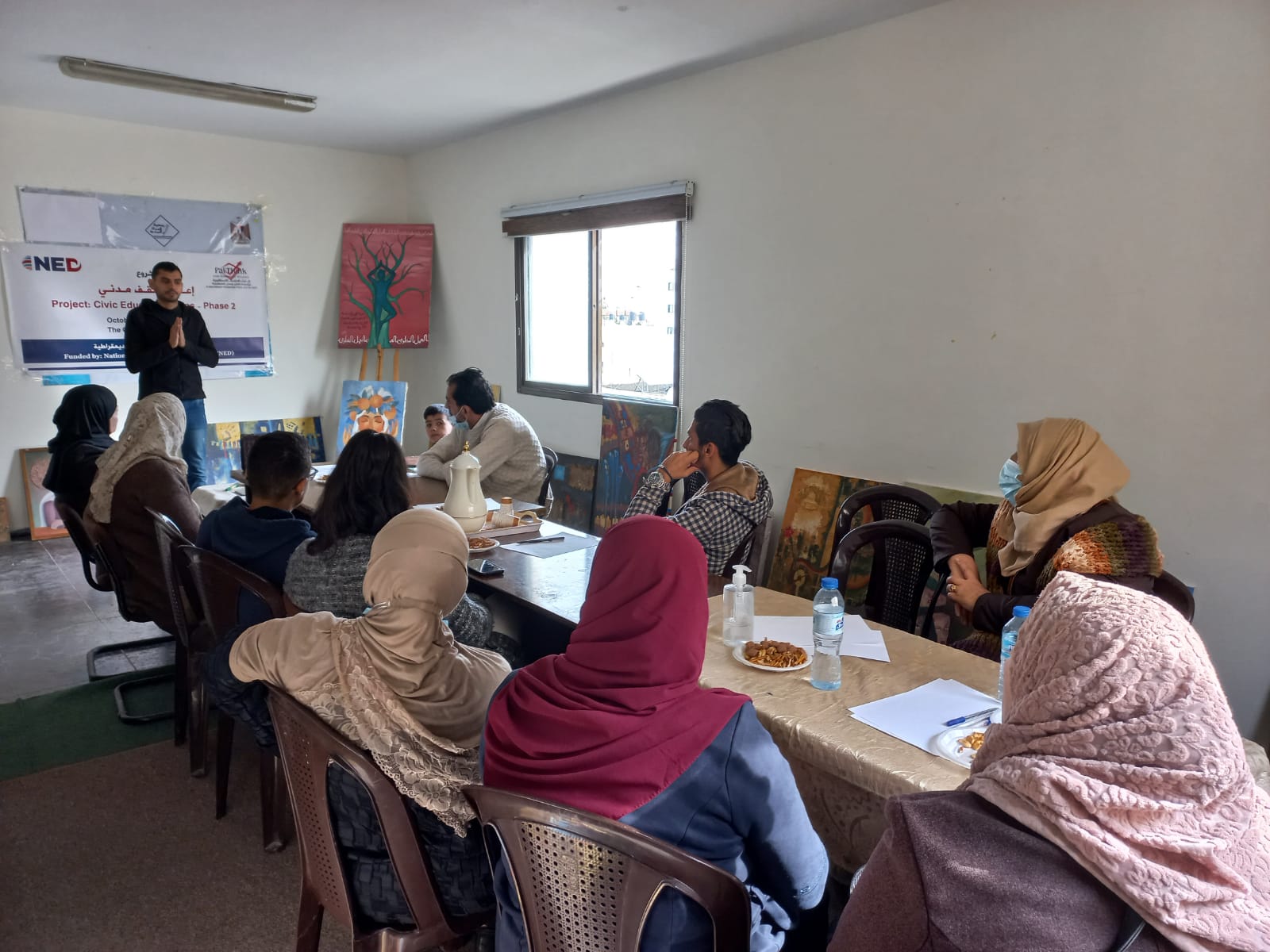
The first meeting was carried out in cooperation with the Muttahidun Cultural Social Association in the Rafah governorate, titled “The reality of political participation inside the syndicates”, with the attendance of a number of youth of both sexes and a number of syndicate members.
The meeting was opened by the lawyer Bilal al-Najjar of Pal-Think, welcoming the attendees and affirming that Pal-Think seeks continuously to strengthen youth's skills and invest in their capacities through opening the opportunity for them to engage in the local community and carry out activities contributing to spreading the concepts of democracy and human rights in Palestinian society.
The meeting was lectured by the civic-education body members Ms Zainab al-Astal and Mr Saeed Issa, on the reality of political participation inside the syndicates, making clear the mechanisms of political participation, its stages, and the legal frame governing political participation. They likewise took up during the meeting the issues of Palestinian youth, political participation, and the obstacles facing youth through the stages of the political-participation process, affirming that youth in Palestine need intensified efforts to make them more aware of the legal age of candidacy, the mechanism of candidacy, and the related regulations. The talk then moved to joining the syndicates as a form of political participation, reviewing the concept of the syndicates, the concept of the worker, and the definition of syndical work — with affirmation that the syndicate is a mass, democratic, independent, permanent workers' organisation and a voluntary body gathering those of a single profession, aiming to defend workers' rights, represent their profession, and improve working conditions. A small glimpse was likewise given of syndical organisation in the Palestinian legislation, and at the meeting's end women's role in syndical work was reviewed, with the causes of their low participation inside the syndicates and the mechanisms of raising women's participation rate inside the syndicates.
The second meeting was carried out in cooperation with the Nibras Association for Community Development in the city of Deir al-Balah, titled “The importance of extracurricular activities for university students”, lectured by the civic-education member Ms Tasneem Abu Maghasib, who spoke during the meeting of the definition of the concept of extracurricular activities and how to strengthen students' participation in them during the university stage, full of challenges — so that through these activities they can strengthen their capacities to face those challenges and what they require of culture, effort, and continuous work to face them. There was likewise talk of these activities' importance in the university student's life, which in turn strengthens their presence in society and places them in competition with their peers in the labour market after graduation. She likewise took up during the meeting the extent of university students' participation in such activities and their motives for taking part, and discussed the causes of abstention from participation — foremost among them fear of forming new relations and undergoing new experiences. Despite that, the attendees affirmed their love of taking part in extracurricular activities and the necessity of achieving balance between them and academic life.
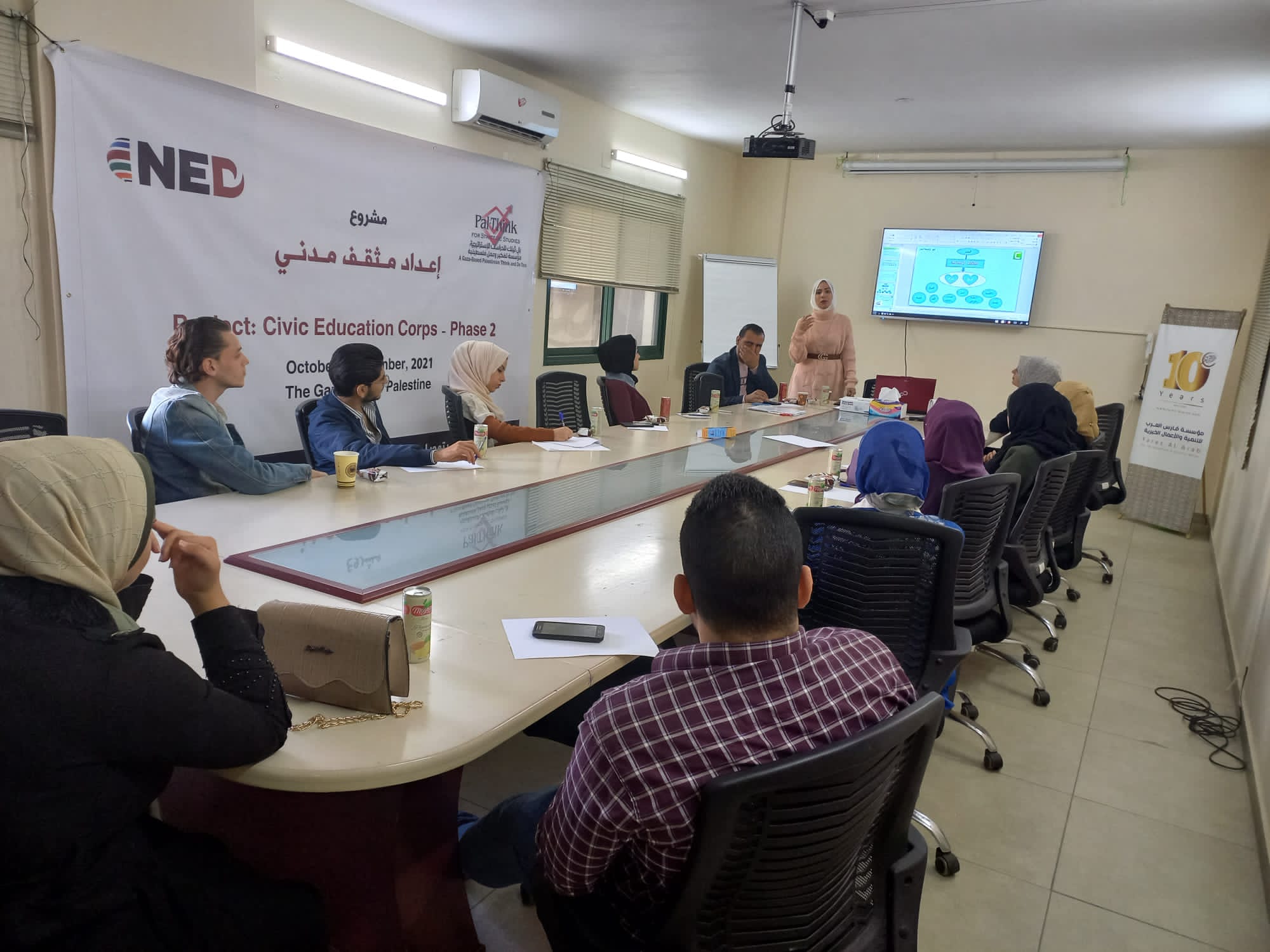
The third meeting was carried out in cooperation with the Fares al-Arab Association, with the attendance of a number of university students of both sexes; the meeting was led by Mr Nidal Abu Sharbi and Ms Suha Sukkar, members of the civic-education body, and was titled “Mechanisms of strengthening women's rights in society and the concept of gender and gender roles“
During the meeting there was talk of the mechanisms of strengthening women's rights in Palestinian society, the concept of gender, and gender roles”, and a set of procedures was put forward that must be taken in order to ease the process of enabling women to practise their right to political, social, and legal participation. An activity was likewise presented showing the difficulties facing women within Palestinian society that impede them from the process of political participation.
The fourth meeting was carried out in cooperation with the Creative Woman Association, titled “The right to movement and travel”, led by the civic-education body member Mr Osama Naim, who set out during the meeting the concept of the right to movement and travel in light of the system of Palestinian laws and international human-rights law, showing the gap between them — affirming that “freedom of movement and travel is one of the human rights the constitution respects in many states, which set down that the state's citizens have the freedom of travel, residence, and work in any place they wish of that state without encroaching on the freedoms and rights of others, and to leave that state and return to it at any time”. He likewise set out the most important challenges and obstacles that face the Palestinian citizen and prevent them from practising this right freely. At the meeting's end the mechanisms of strengthening the right to movement and travel were reviewed, pointing to the necessity of making legislative reforms in the system of Palestinian laws in order to guarantee the strengthening of this right, in addition to forming a state of local and international pressure to safeguard this right and put an end to the violations to which the right to movement and travel is subjected.
As for the fifth meeting, carried out in cooperation with the Association for the Care of Families of the Disabled in the Rafah governorate with the attendance of a group of youth of both sexes, it was titled “The reality of democracy and political participation in the Palestinian condition”, lectured by the civic-education body member Mr Abdallah Hasanein, who set out during the meeting the concept of democracy and political participation, the levels of political participation and its stages, and likewise reviewed the mechanisms of strengthening political participation in Palestinian society and its forms — affirming that elections at all their levels count among the most prominent and important forms of political participation, showing that Palestinian society in the Gaza Strip has been deprived of taking part in any electoral process for nearly fifteen years, and this has affected the rates of political participation in Palestinian society, especially in the circles of youth and women.
He likewise set out the most important obstacles facing the process of political participation, foremost among them the Palestinian political division, which impedes the process of the peaceful transfer of power — affirming the necessity of holding comprehensive Palestinian elections in order to achieve effective political participation on the ground.
The meetings included a set of discussions and enquiries among the participants, which were set out and answered by the meetings' facilitators; the attendees likewise affirmed during the meetings the importance of carrying out such meetings that contribute to raising awareness among all of society's groups.
Worth mentioning is that these meetings come within a series of meetings and activities to be carried out within the project “Preparing a civic intellectual 2), among them also the preparation of research papers discussing issues and topics related to democracy and human rights, as well as carrying out radio episodes and public sessions with the participation of the civic-education body's members.