Pal-Think continues its awareness meetings under Civic Intellectual phase two
Continuing its work developing young people's skills in democracy and human rights and engaging them directly in community awareness, Pal-Think delivered four awareness meetings across Gaza's governorates.
- Date
- 2022-03-13
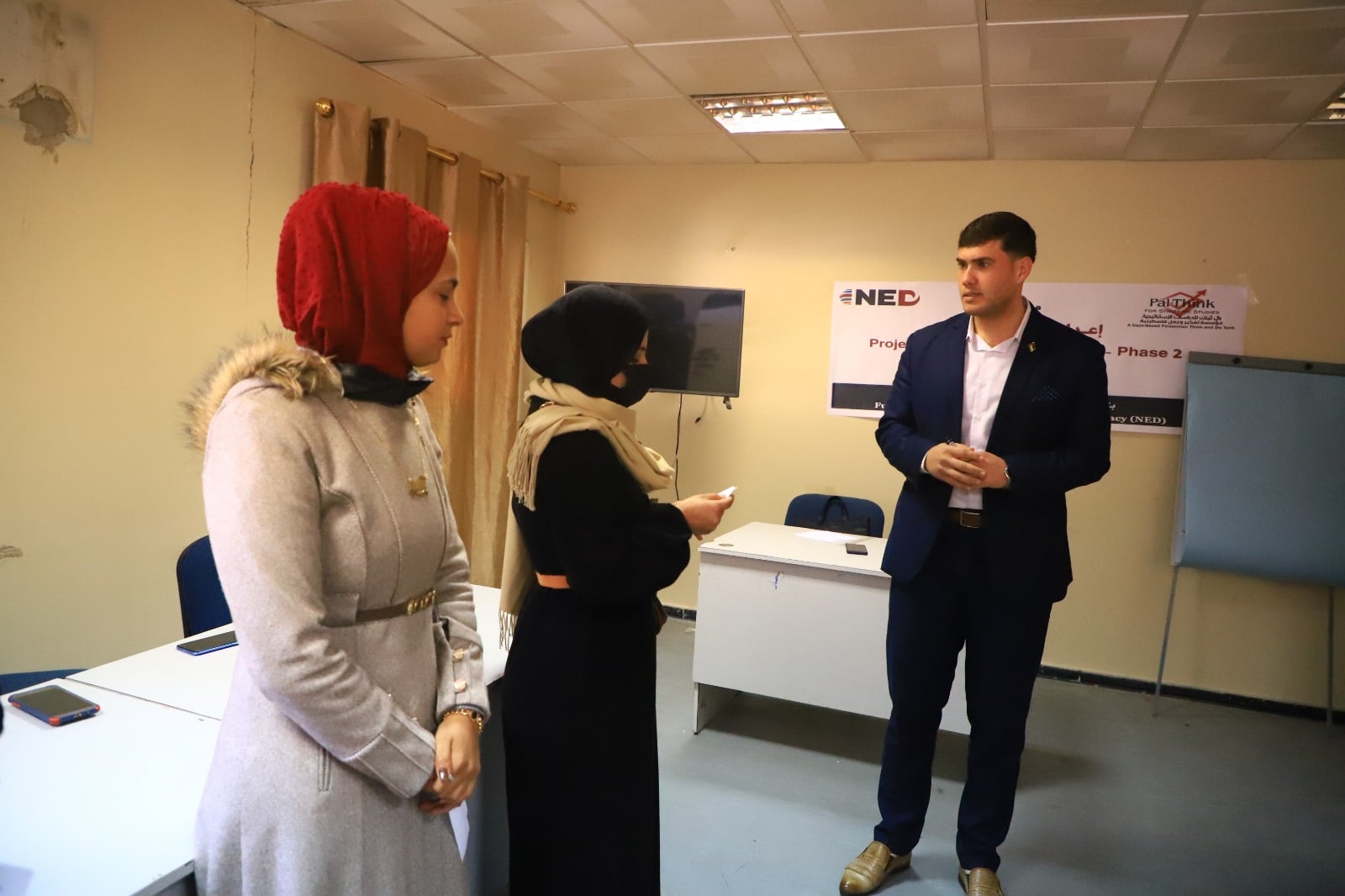
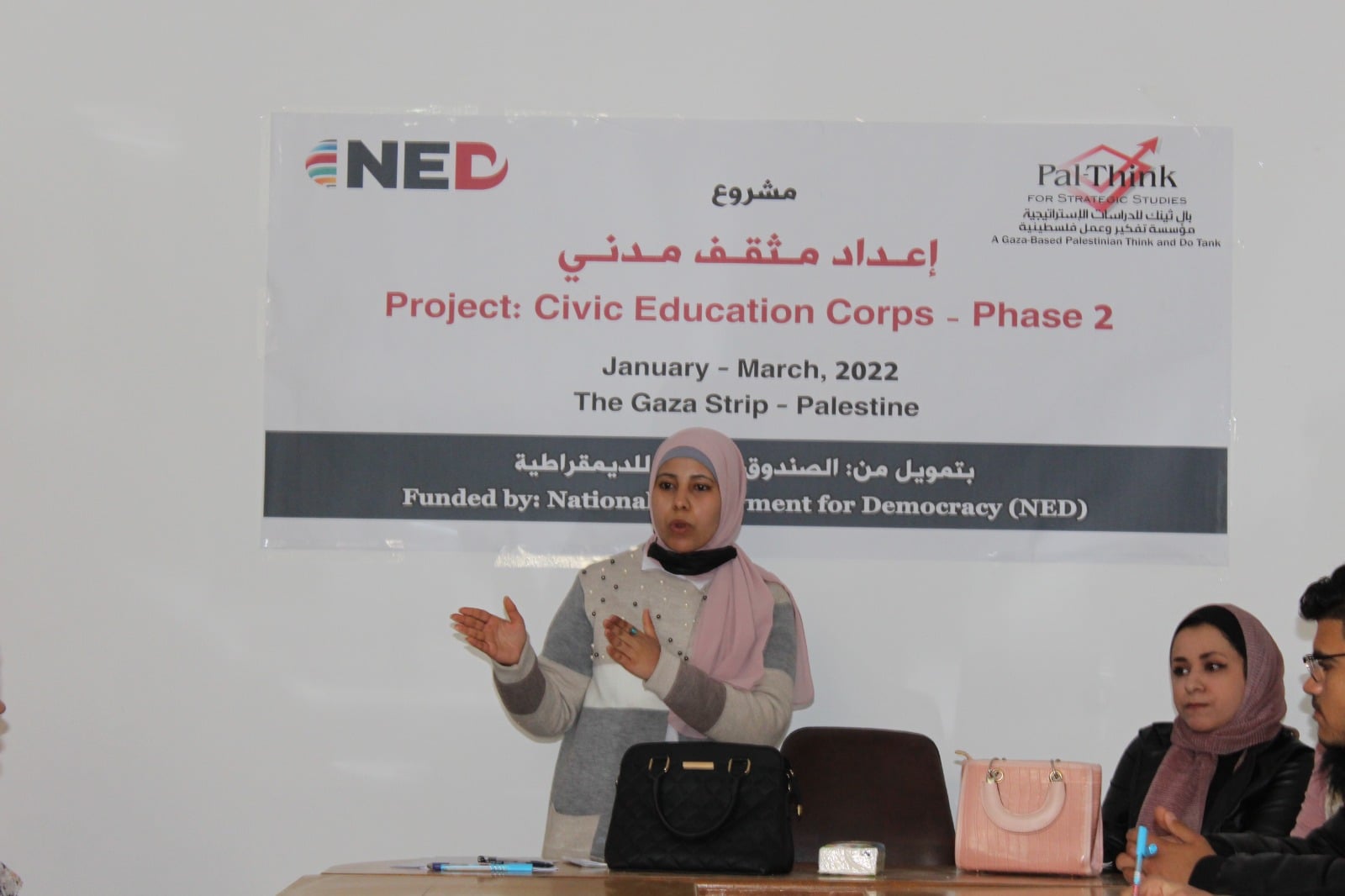
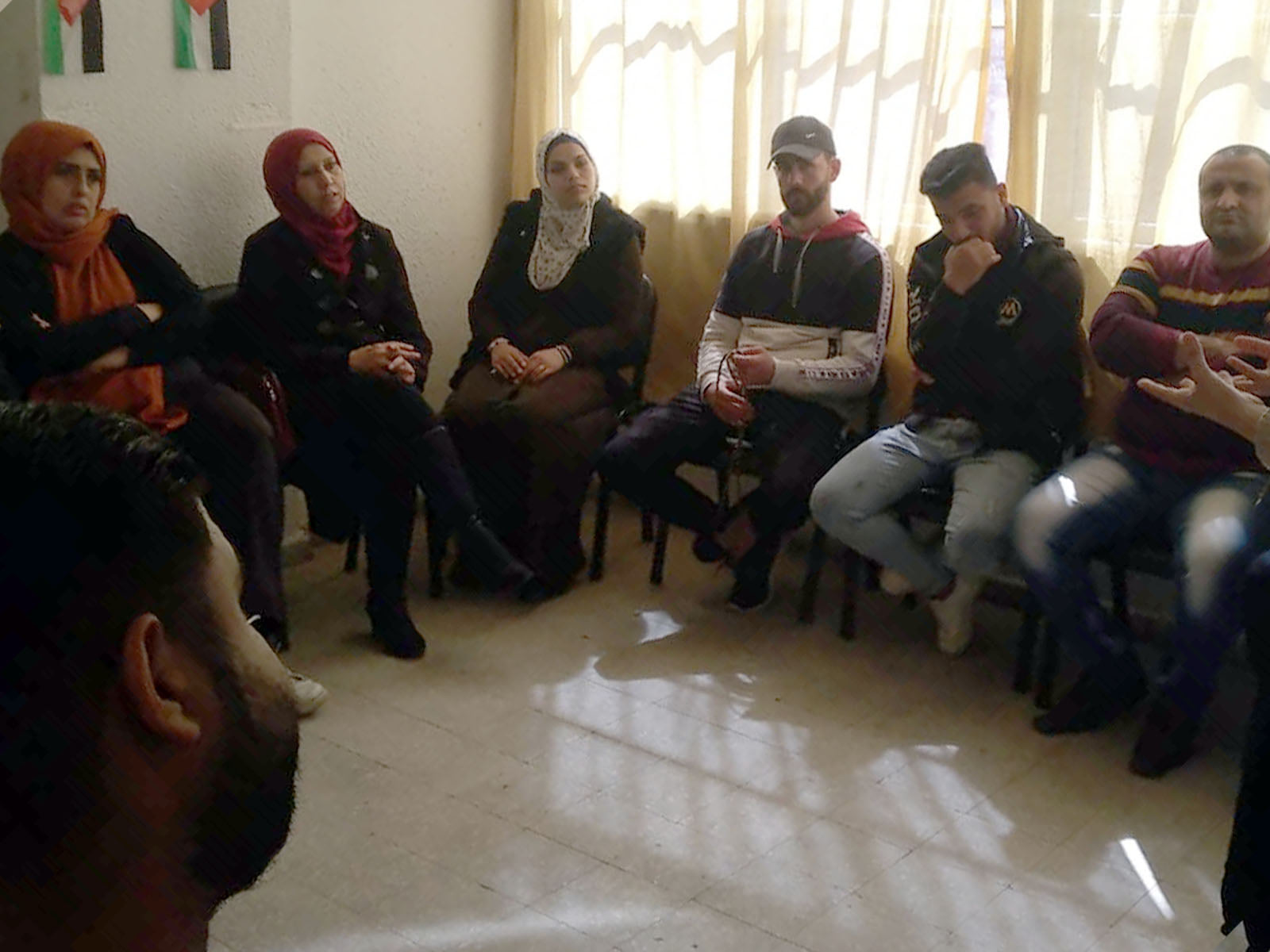
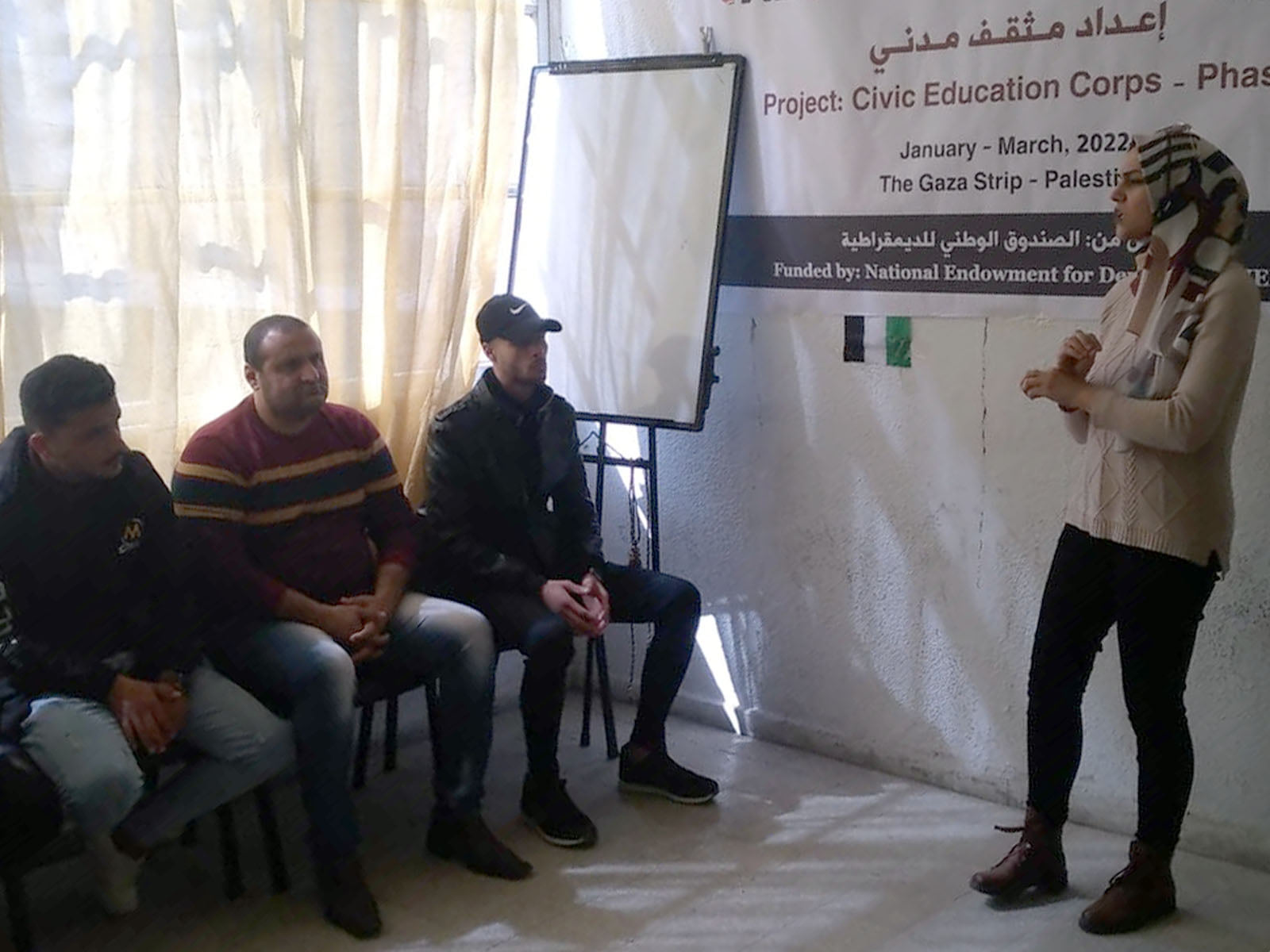
Within Pal-Think's continuing efforts to develop the skills and capacities of the young groups in the issues of democracy and human rights, and to engage them directly in the process of spreading communal awareness on the priority societal issues, Pal-Think carried out four awareness meetings in the different governorates of the Gaza Strip, in cooperation with a number of civil-society institutions — within the activities and events of the project “Preparing a civic intellectual / phase two”, implemented by Pal-Think for Strategic Studies with funding from the National Endowment for Democracy (NED).
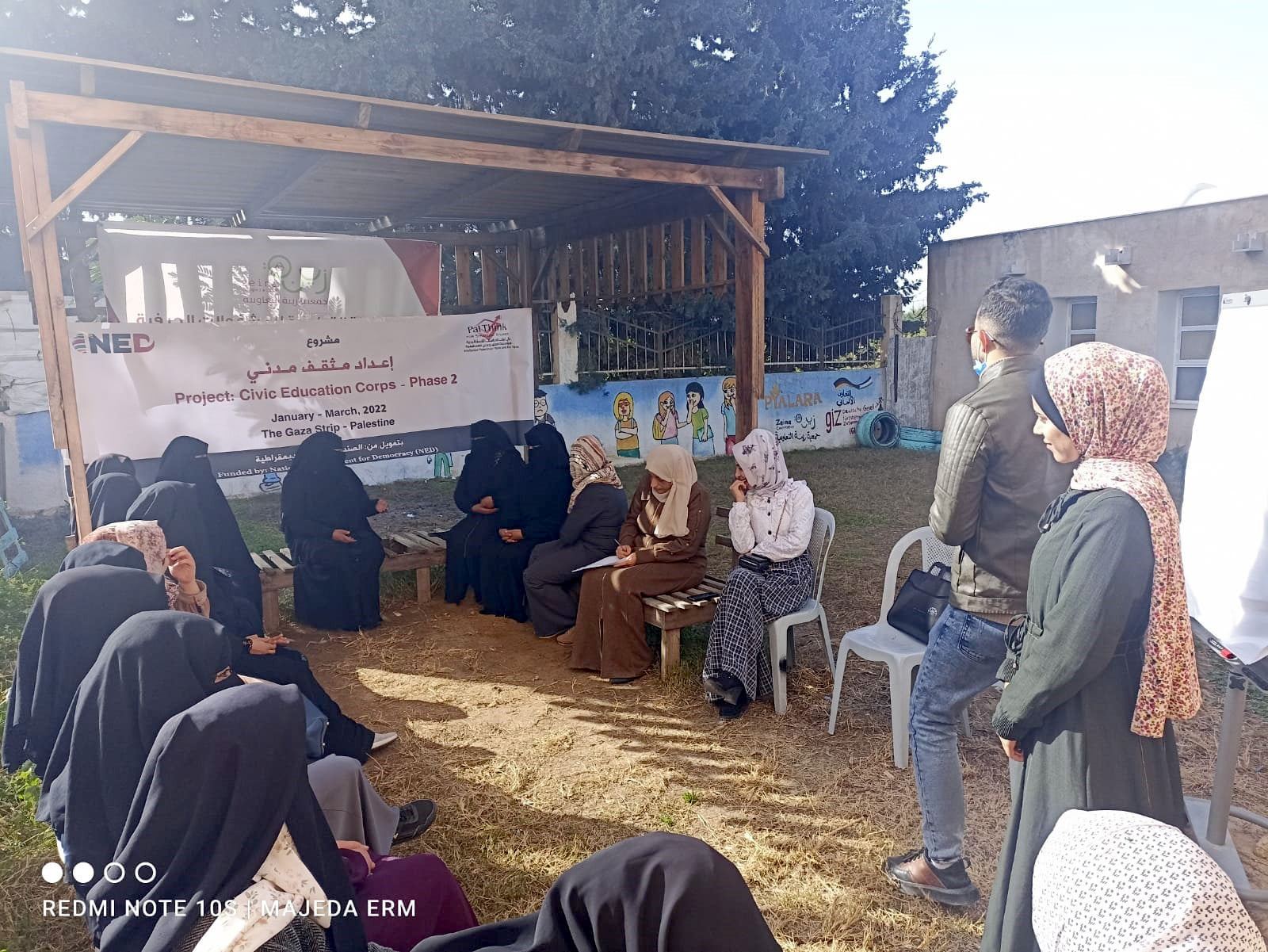
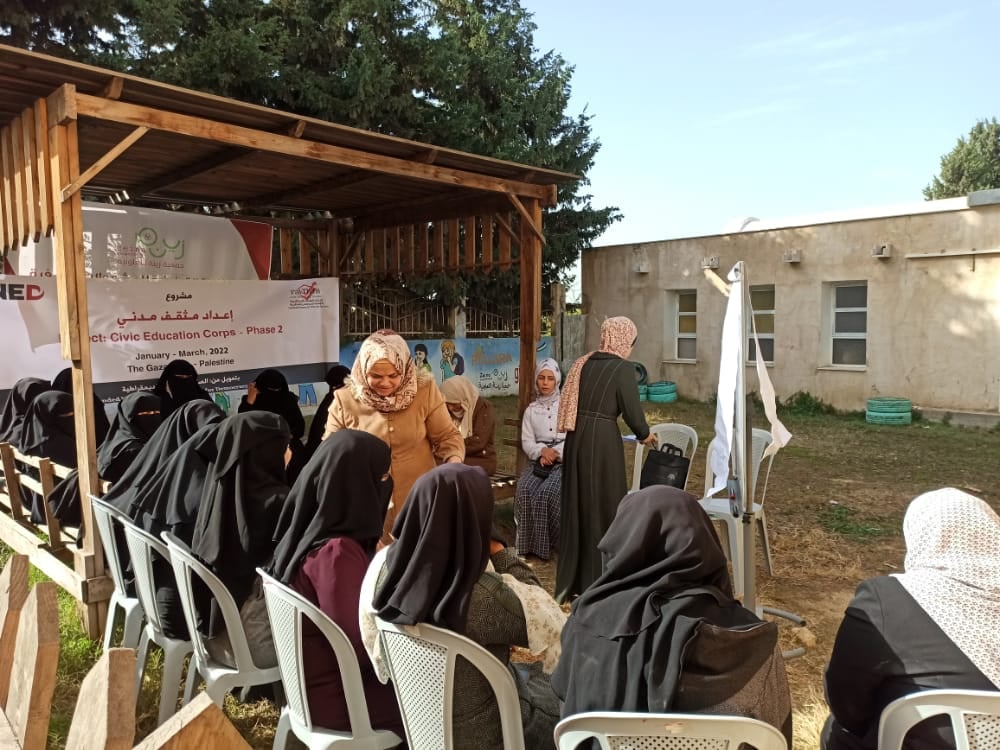
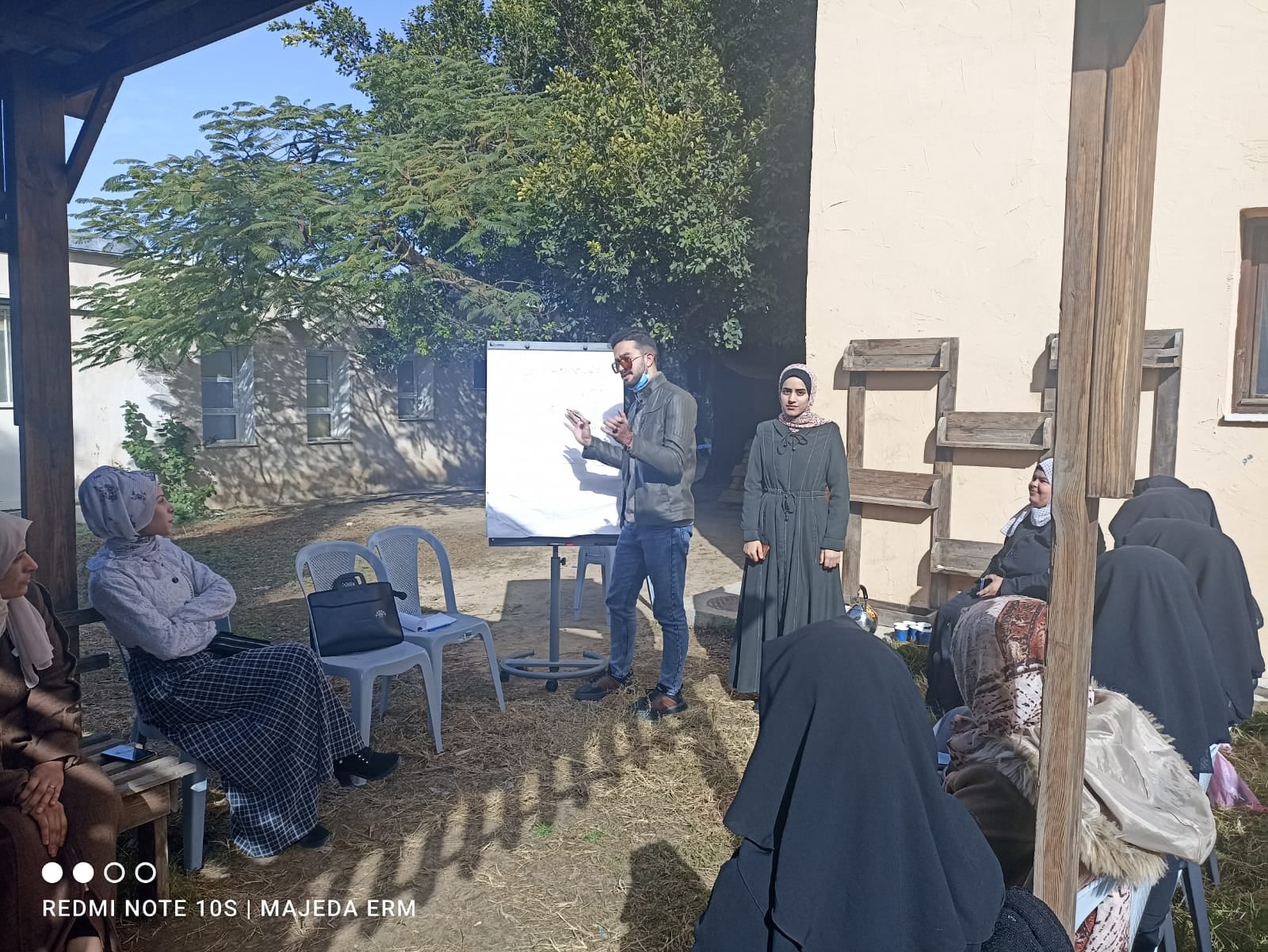
The first meeting was carried out under the title: women's rights — “the right to work as a model” — in cooperation with the Zeina Cooperative Association in the village of Umm al-Nasr, with the attendance of a number of women.
The meeting was lectured by the civic-education body member Mr Sami Shaqura, who in turn spoke of the reality of Palestinian women, reviewing the principal statistics related to women's rights and issues, and pointing out that the Palestinian woman suffers multiple kinds and forms of violence, whether physical, sexual, or moral. He likewise showed that the Palestinian woman faces discrimination in different walks of life, especially on the plane of work, under the system of customs and traditions that marginalises women and strengthens the stereotyped image toward them. Shaqura likewise reviewed the legal texts in Palestinian law and international human-rights law that took up women's right to work, affirming the necessity of finding real guarantees enabling women to obtain their opportunity in work without discrimination.
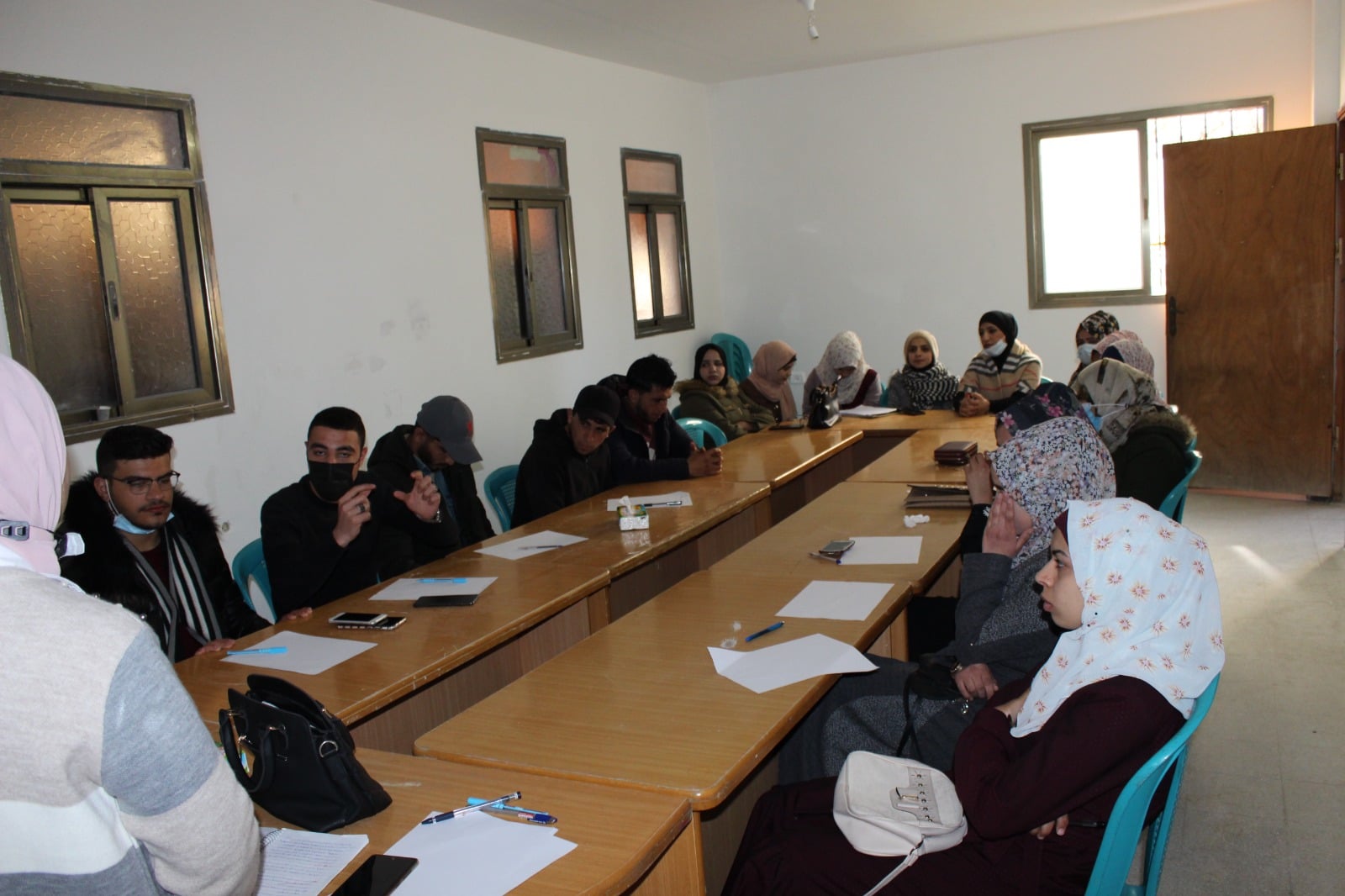
The second meeting was carried out in cooperation with the Binaa Youth Center — east of the Khan Younis governorate — under the title “The reality of Palestinian youth's political participation in the Gaza Strip”, with the attendance of a number of university students and new graduates of both sexes. The meeting was lectured by the civic-education body member Mr Ahmed Abu Salah, who spoke of the legal frame governing the electoral process — whether the legislative, presidential, or local elections — focusing on those texts related to youth, showing that the Palestinian electoral system did not give the youth category their right to take part in the candidacy process, especially in the presidential and legislative elections. The meeting's participants recommended the necessity of working to make fundamental amendments to the Palestinian electoral system to guarantee youth's actual participation, whether in the candidacy process or in election.
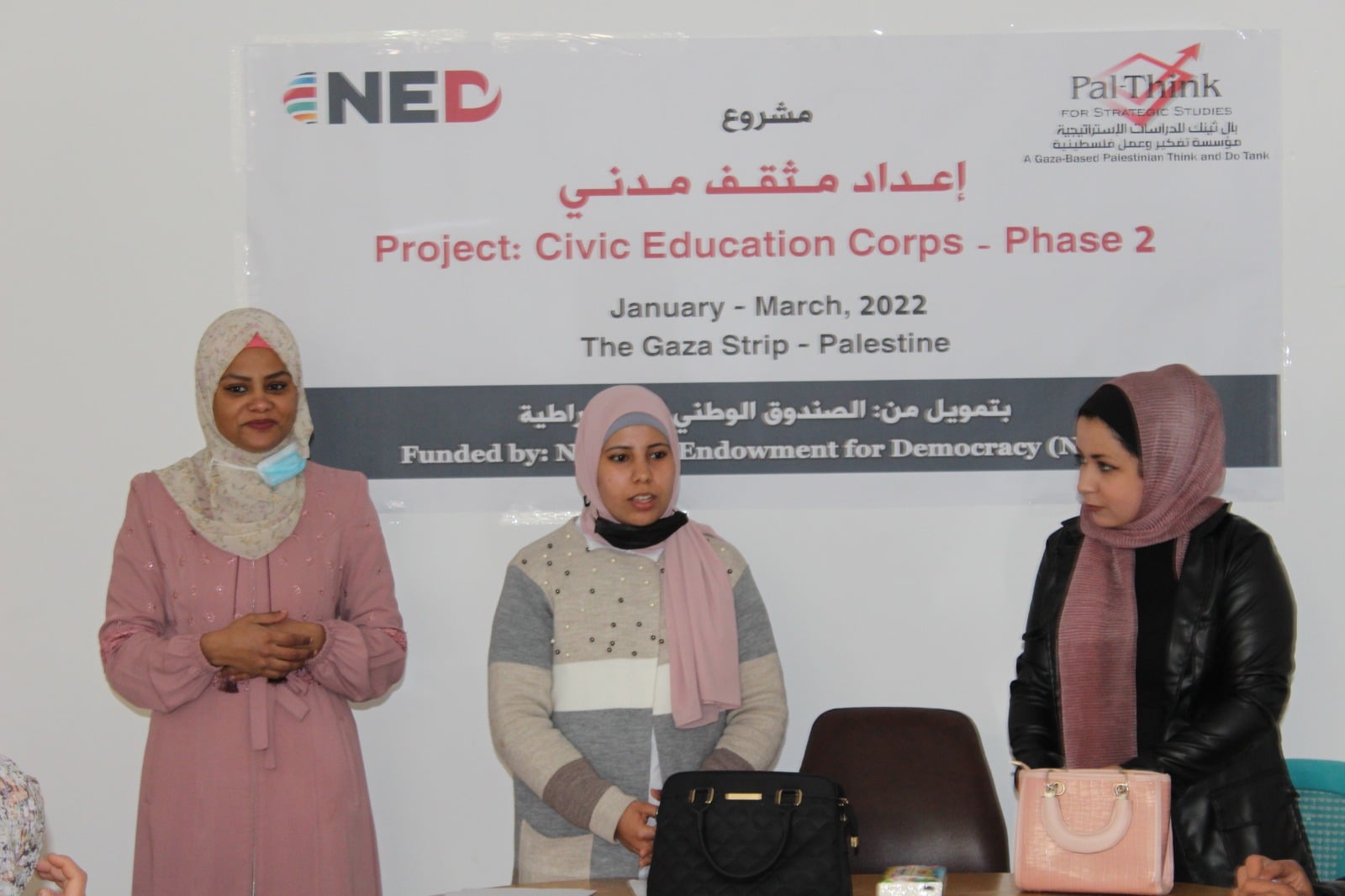
The third meeting was likewise carried out in cooperation with the Shams al-Hurriya Association — Deir al-Balah — under the title “The university student between rights and duties”, with the attendance of a number of male and female university students. The meeting was lectured by Ms Tasneem Abu Maghasib and Ms Maha Abu Musa, members of the civic-education body. The meeting focused on the importance of the university student's role in bringing about societal change and facing the mistaken customs and traditions in Palestinian society, affirming the necessity of university students bearing their communal responsibility and engaging in society positively.
The fourth and final meeting was carried out in cooperation with the National Center for Rural Development — Gaza — under the title “The family-protection law”, with the attendance of a number of youth of both sexes. The meeting was lectured by the civic-education body members Ms Nevin Labad and Ms Hadeel Ahel.
During the meeting there was talk of the family-protection law and the CEDAW convention and their importance in facing all forms of violence against women.
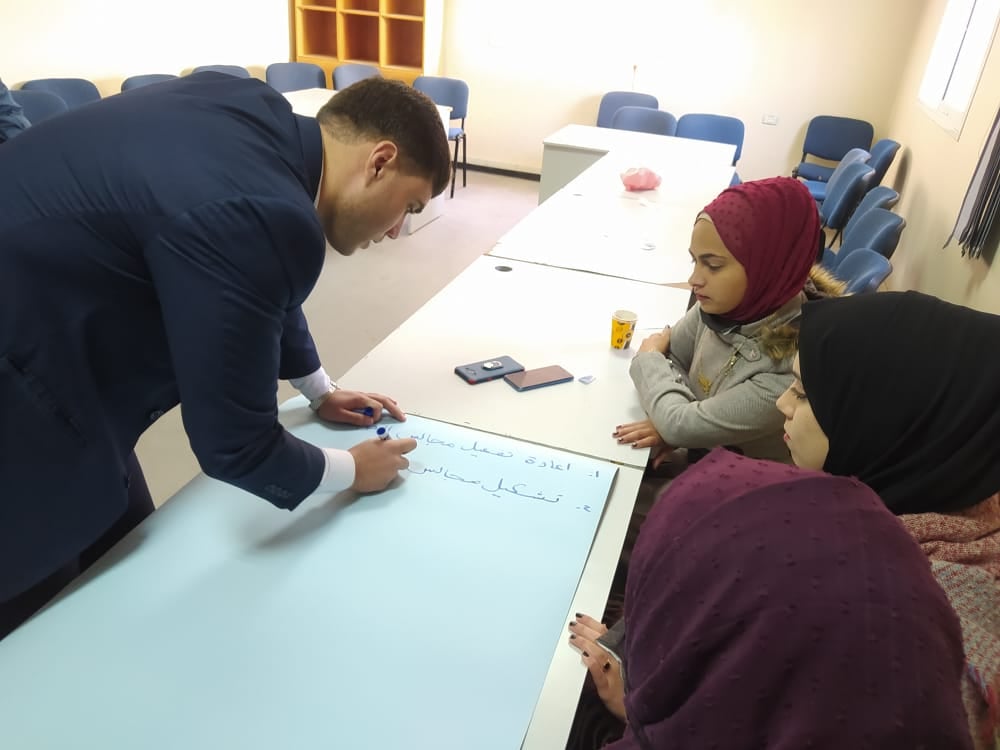
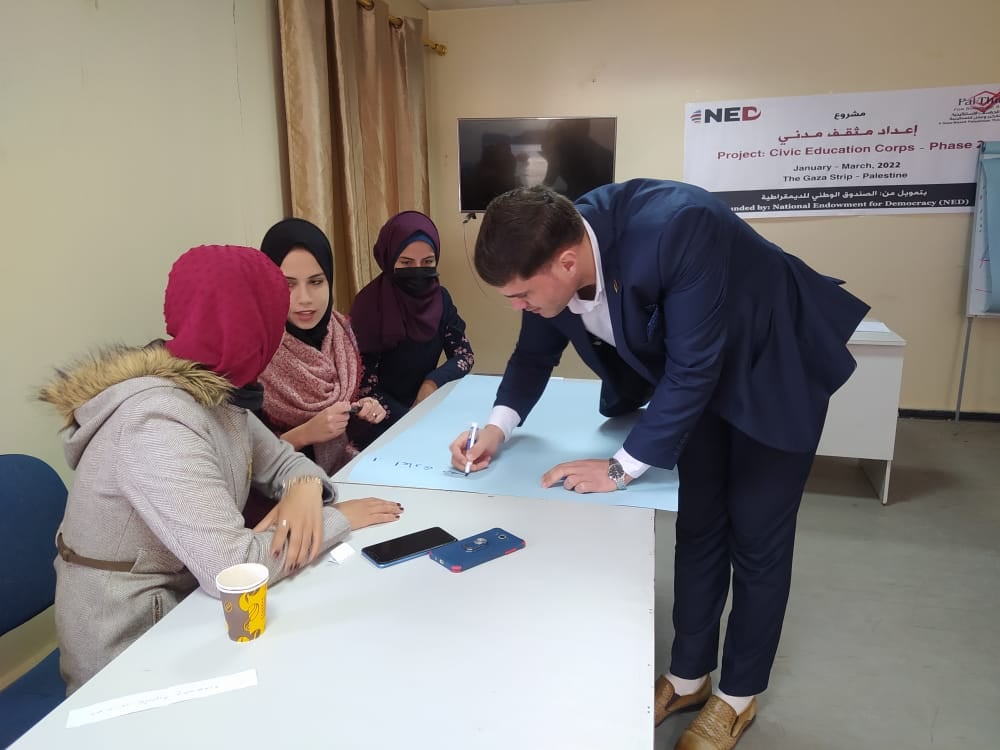
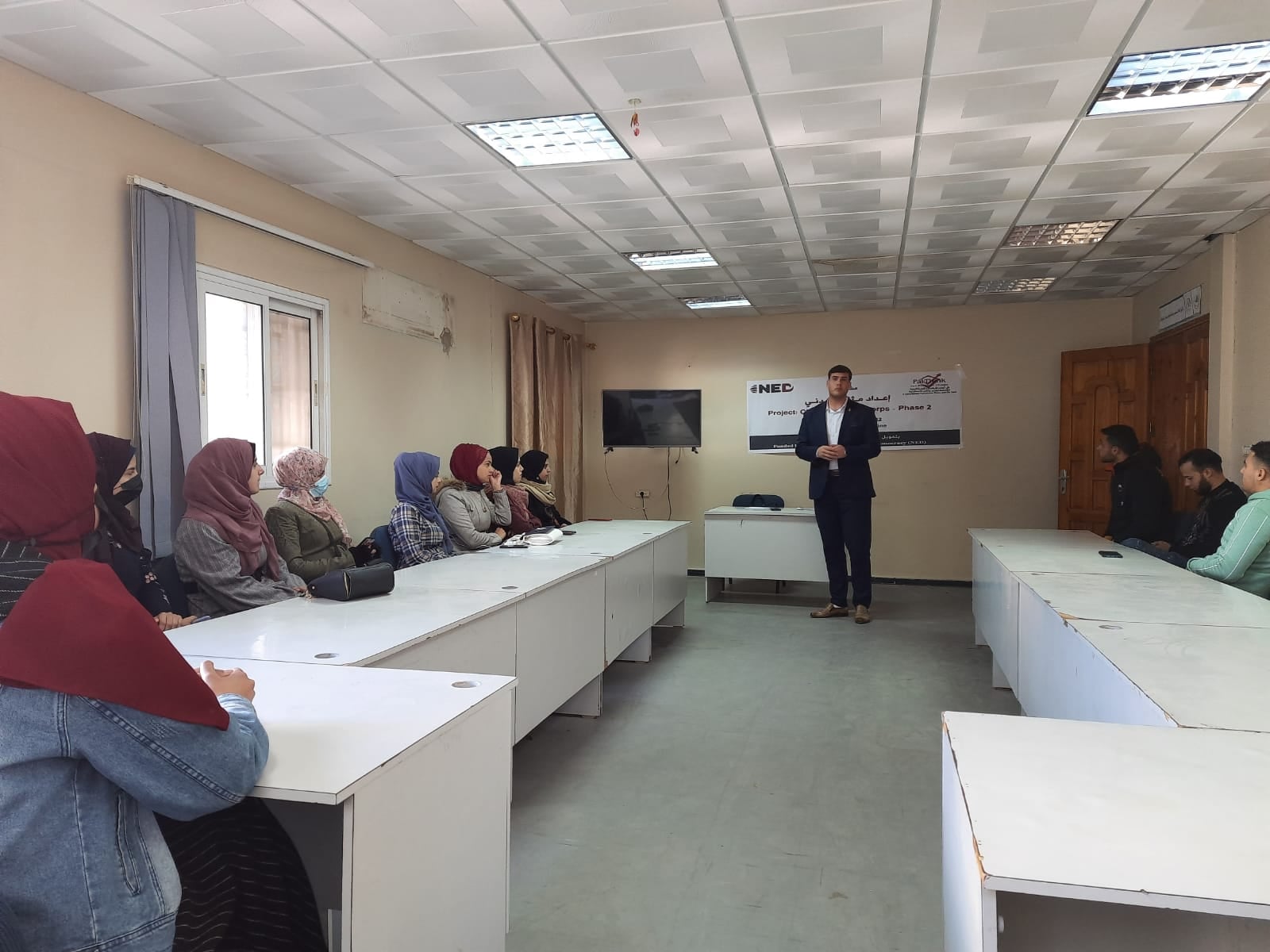
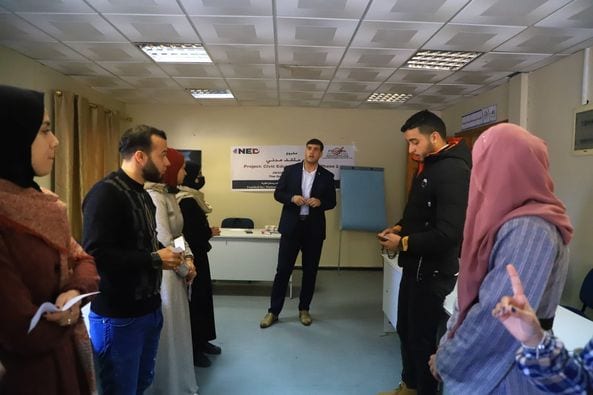
It is recalled that these meetings were carried out in an interactive, participatory method by the trainers, and the meetings included a set of questions and enquiries answered by the meetings' lecturers.