Pal-Think delivers four awareness sessions on electoral issues with civil society organisations
Strengthening civil society's role in the Palestinian elections and the community's electoral awareness, Pal-Think delivered four awareness sessions on electoral issues with civil-society organisations.
- Date
- 2021-05-14
In continuation of the role Pal-Think for Strategic Studies practises in strengthening civil society's role in supporting the Palestinian elections, and for the sake of empowering Palestinian society and strengthening its awareness and knowledge in electoral issues and topics, Pal-Think carried out four awareness sessions on the issues and topics of the elections in cooperation with a number of civil society institutions, with all the coronavirus prevention and safety measures taken — within the project of strengthening civil society's role in the Palestinian elections, implemented by Pal-Think with funding from the Government of Canada.
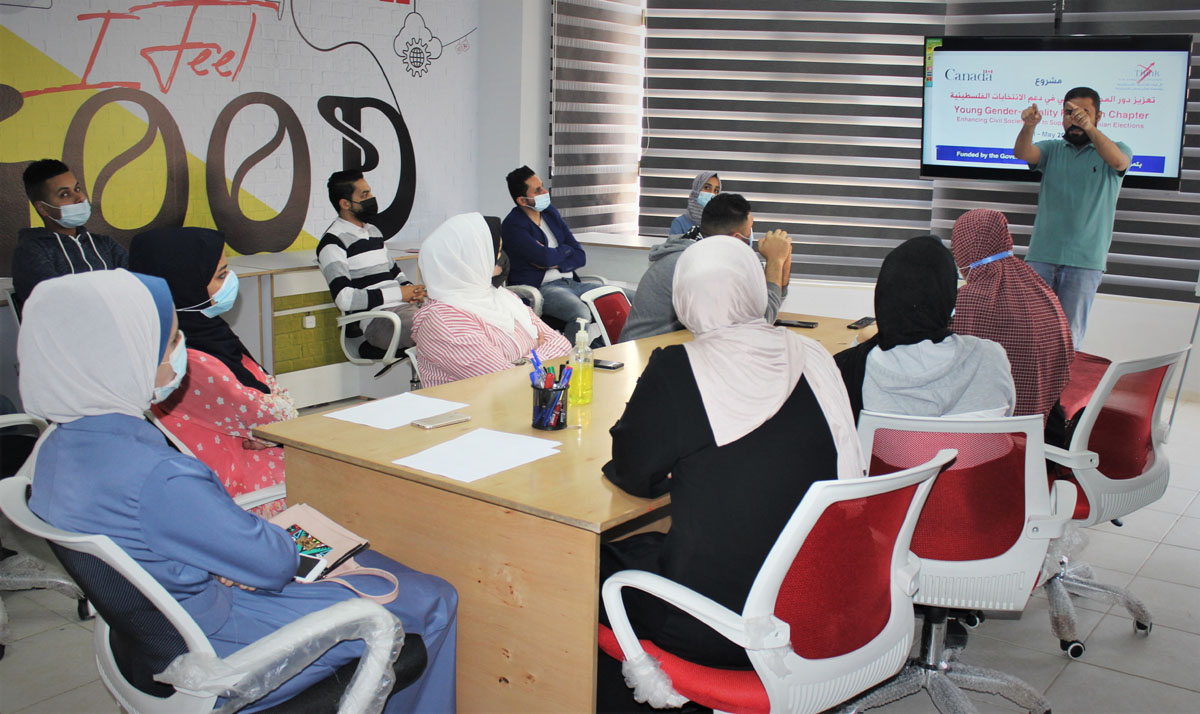
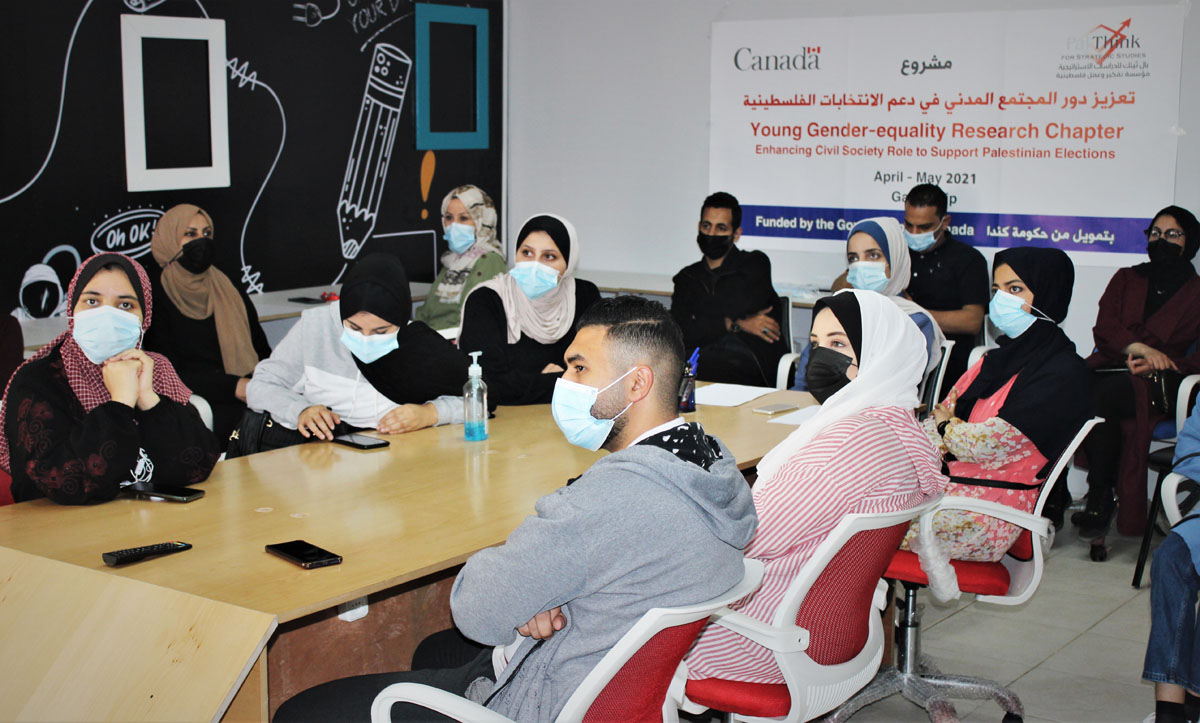
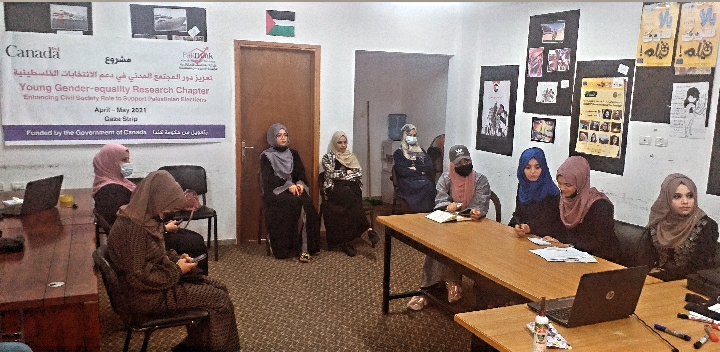
The first meeting, carried out on Thursday, 29 April 2021, at the Nibras Association for Communal Development in the city of Deir al-Balah, was titled “Mechanisms of strengthening civil society's role in supporting the Palestinian elections”, with the attendance of a number of civil society activists and male and female journalists.
The meeting was led by the lawyer Majda Shehada of the Palestinian Centre for Human Rights, who spoke during the meeting on the concept of oversight over the electoral process, the kinds of observers, and the observers' working mechanism over the electoral process; she likewise set out during the meeting the observers' rights and duties during the course of the electoral process, the right to raise complaints and monitor violations, and the importance of the media's role during the electoral process.
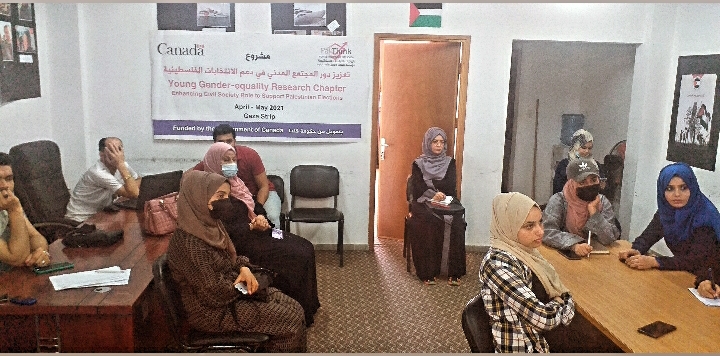
As for the second meeting, it was carried out on Thursday, 29 April 2021, titled “The elections and the importance of civil society institutions' role”, at the Ajyal Association for Creativity and Development in Gaza City, with the attendance of a number of representatives of civil society institutions.
The meeting was led by the lawyer Abdallah Sharshara, who in turn presented a thorough explanation of civil society institutions' oversight and supporting role during the course of the electoral process; then he spoke on the process of oversight over the elections, setting out the importance of the oversight process over all the electoral stages, with a focus on the oversight of electoral-campaign funding — affirming a totality of rights, most importantly the right to take part in the course of reforming the system of campaign funding and spending, the right of access to information, and the right to raise complaints and monitor violations.
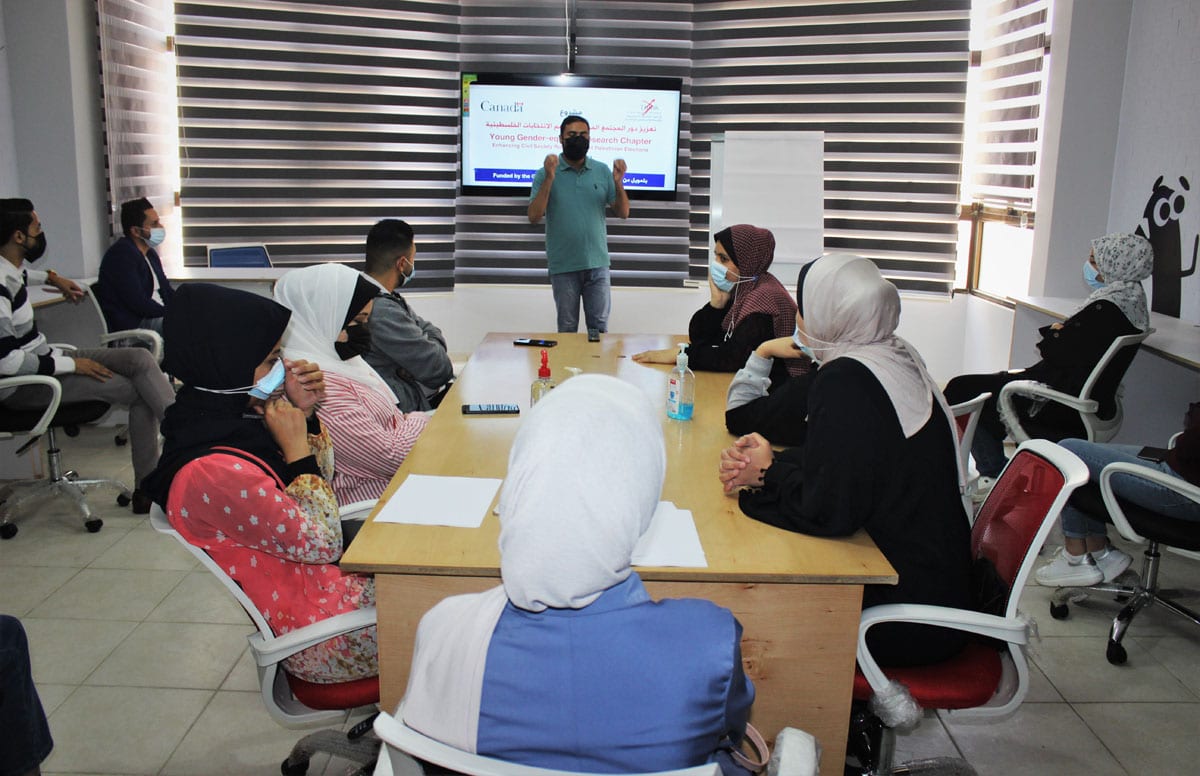
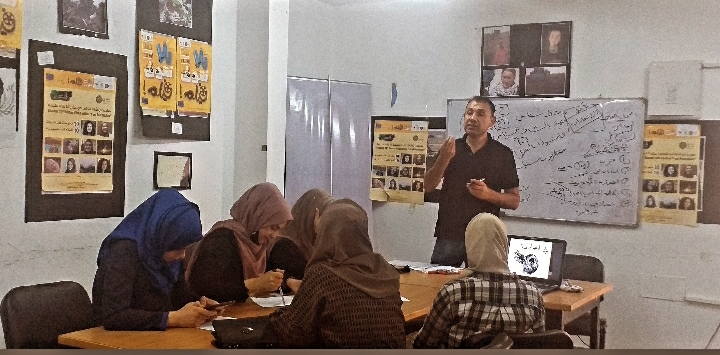
The third meeting, carried out at the United Cultural Social Association in the Rafah governorate, was titled “Youth and political participation”, on Sunday, 2 May 2021, with the attendance of a number of youth and graduates of both sexes.
The meeting was led by Dr Islam Atallah, researcher and writer in political science, who spoke on political participation and its importance, the elections and their importance, the necessity of youth's participation in them and the ways of reinforcing this participation at the present time — in addition to his talk on the definition of the elections, their importance, and the procedures tied to them. For their part, the attending youth presented a review of the concept of political participation and its concepts, youth's participation in the elections, their own experiences, and their critique of the electoral process and youth's participation in it within the electoral lists.
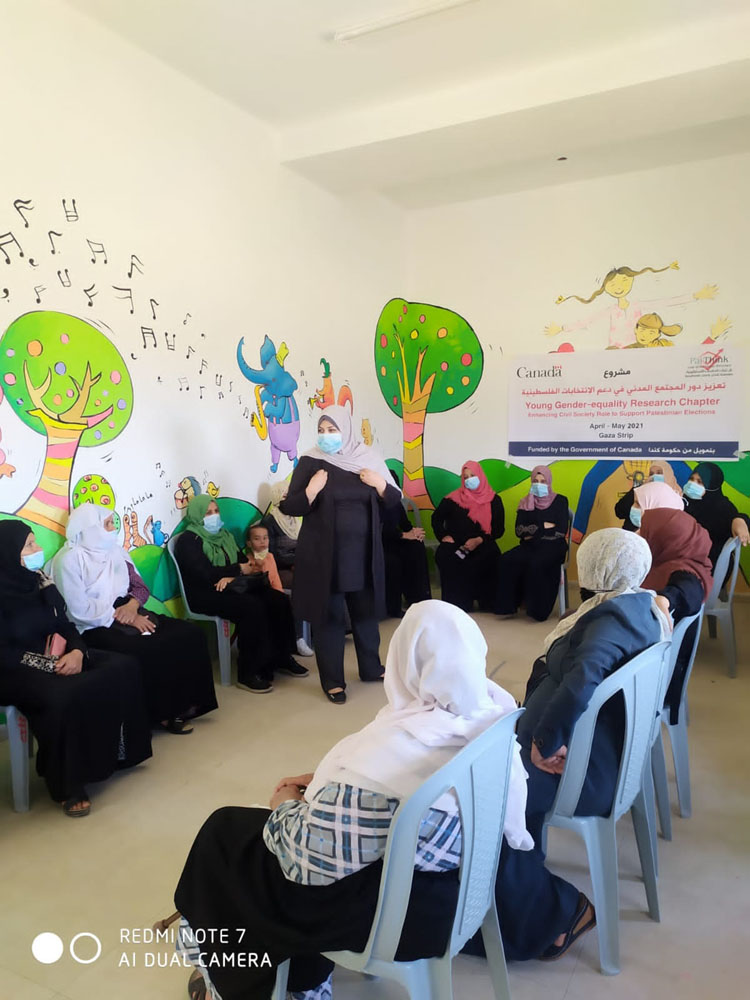
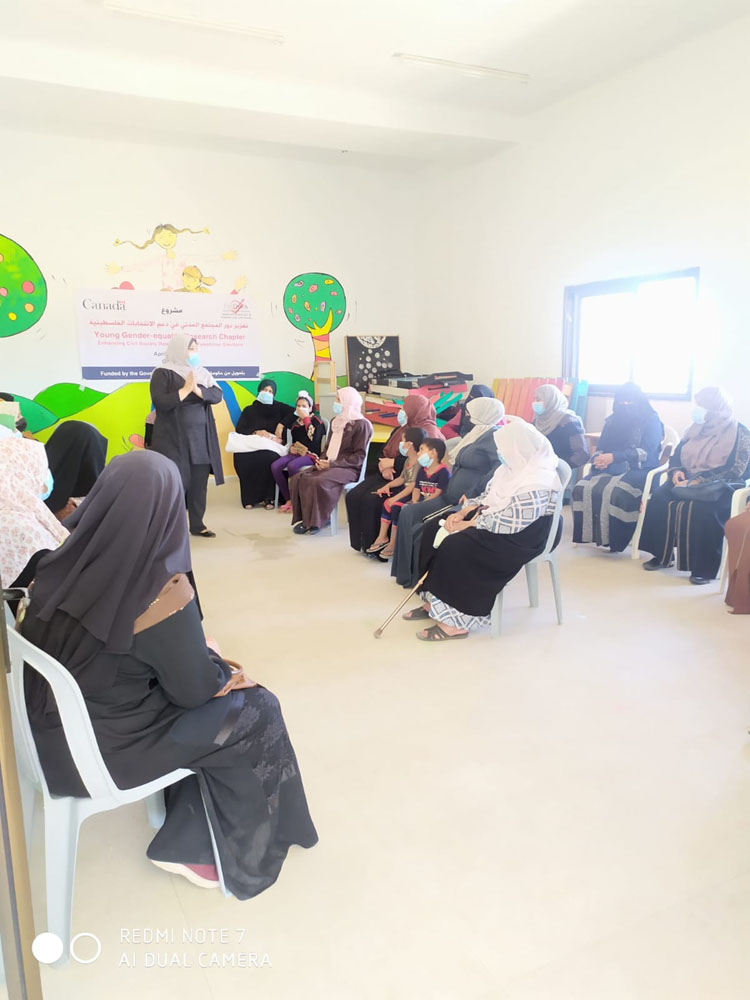
As for the fourth meeting, it was carried out at the Aisha Association for the Protection of Woman and Child, titled “Women and the importance of political participation”, on Thursday, 6 May 2021, with the attendance of a number of women.
The meeting was led by the lawyer and specialist in women's and gender issues Heba al-Danaf, who spoke on the definition of political participation, then set out the importance of women's political participation; she likewise spoke on the criteria of selection for the electoral lists and the mechanism of overcoming the impediments to women's participation in the electoral process, and the effect of the elections' postponement on women was likewise discussed.
The meetings were interspersed with a set of questions, interventions, and enquiries put forward by the attendees, and answered by the meetings' facilitators.
The designations used and the presentation of materials in this programme entail no expression of any opinion whatsoever on the part of the Government of Canada