Pal-Think concludes another round of debates with lively youth participation
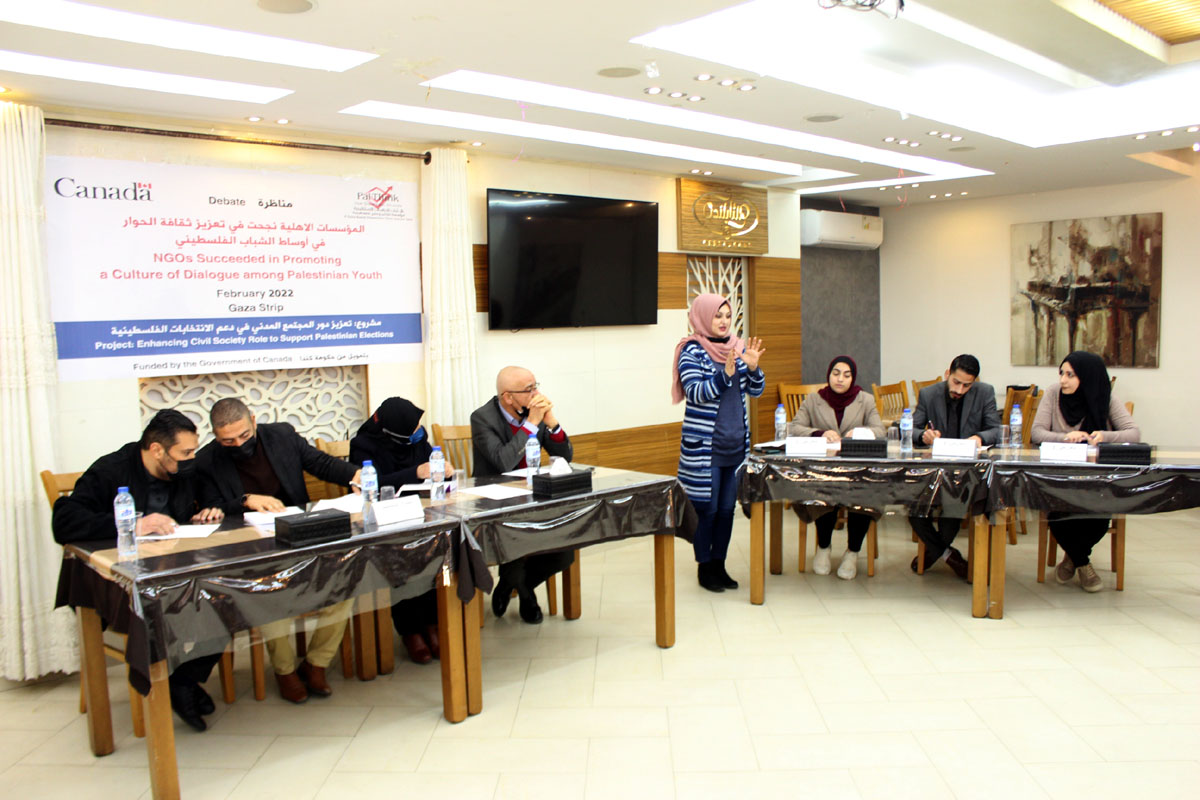
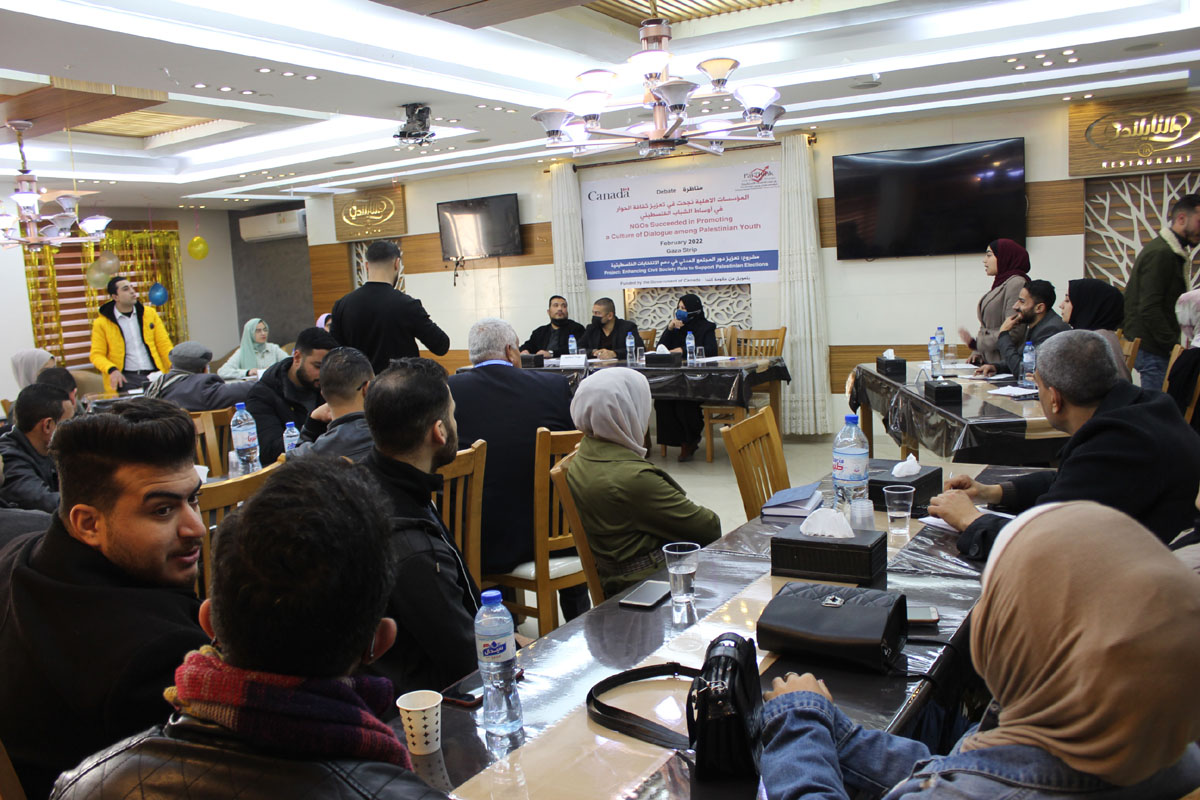
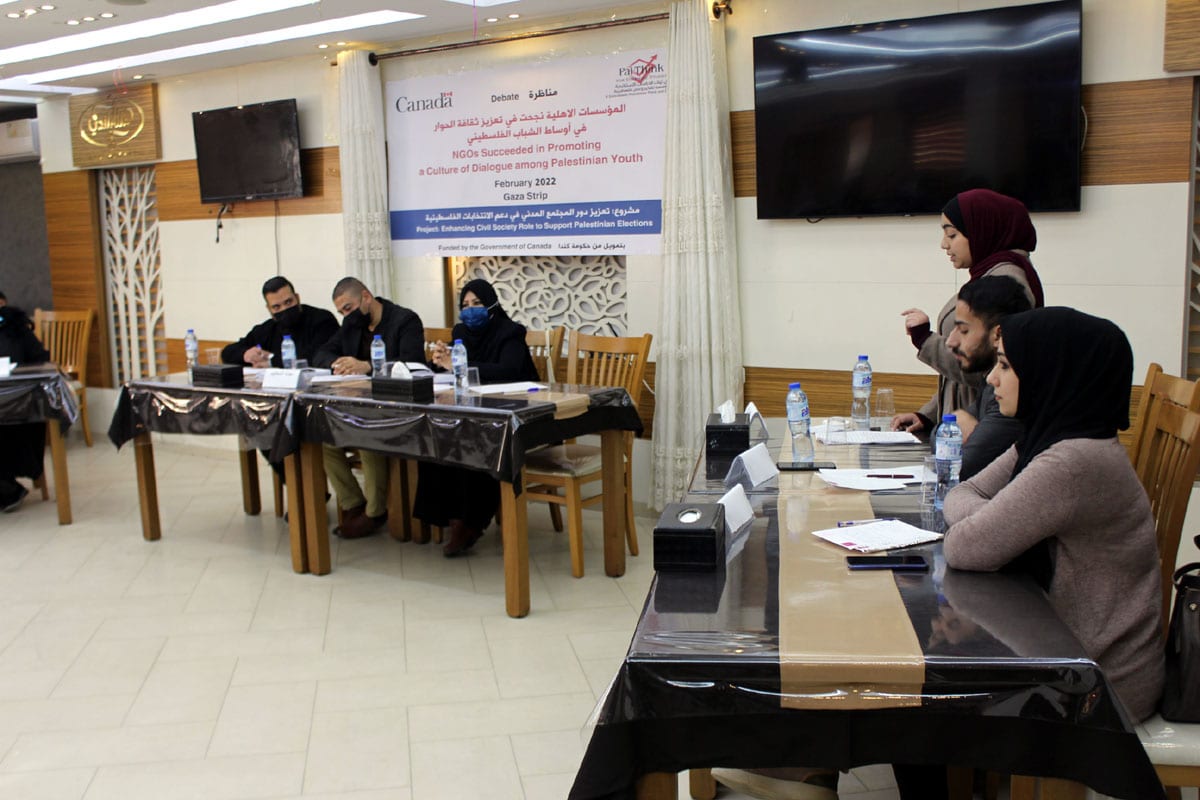
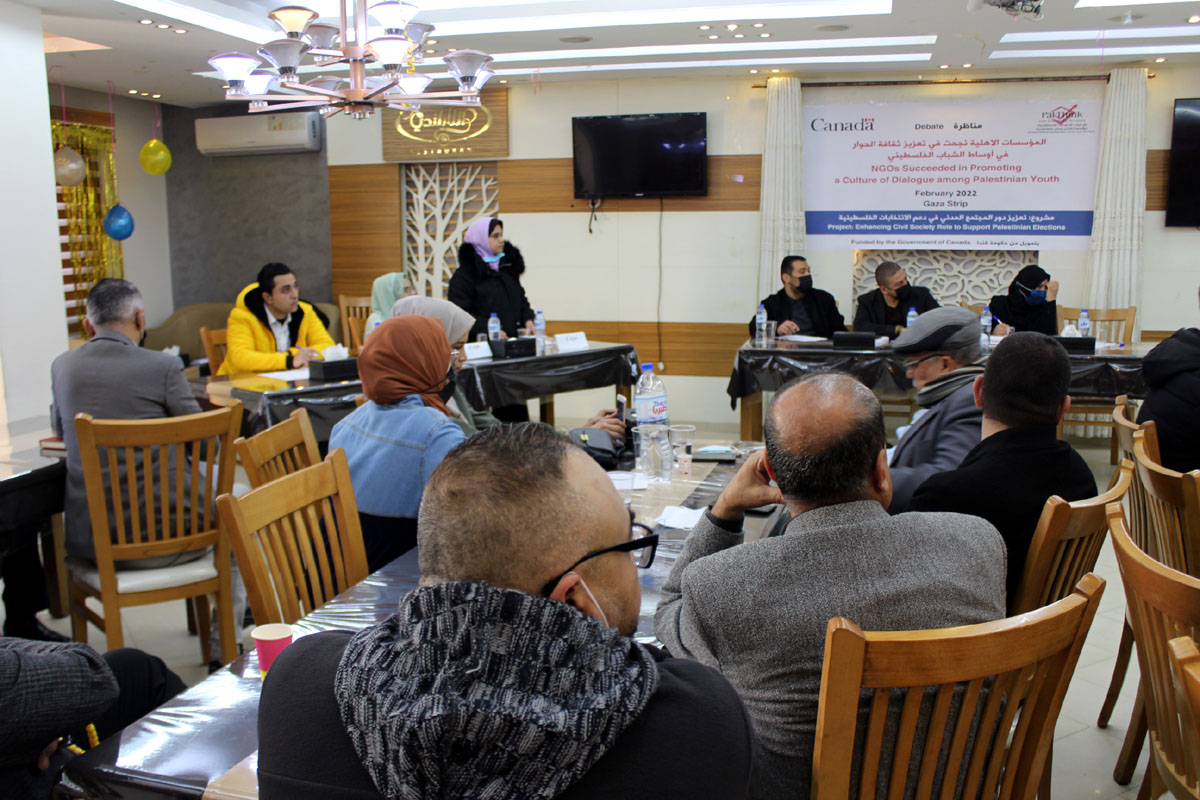
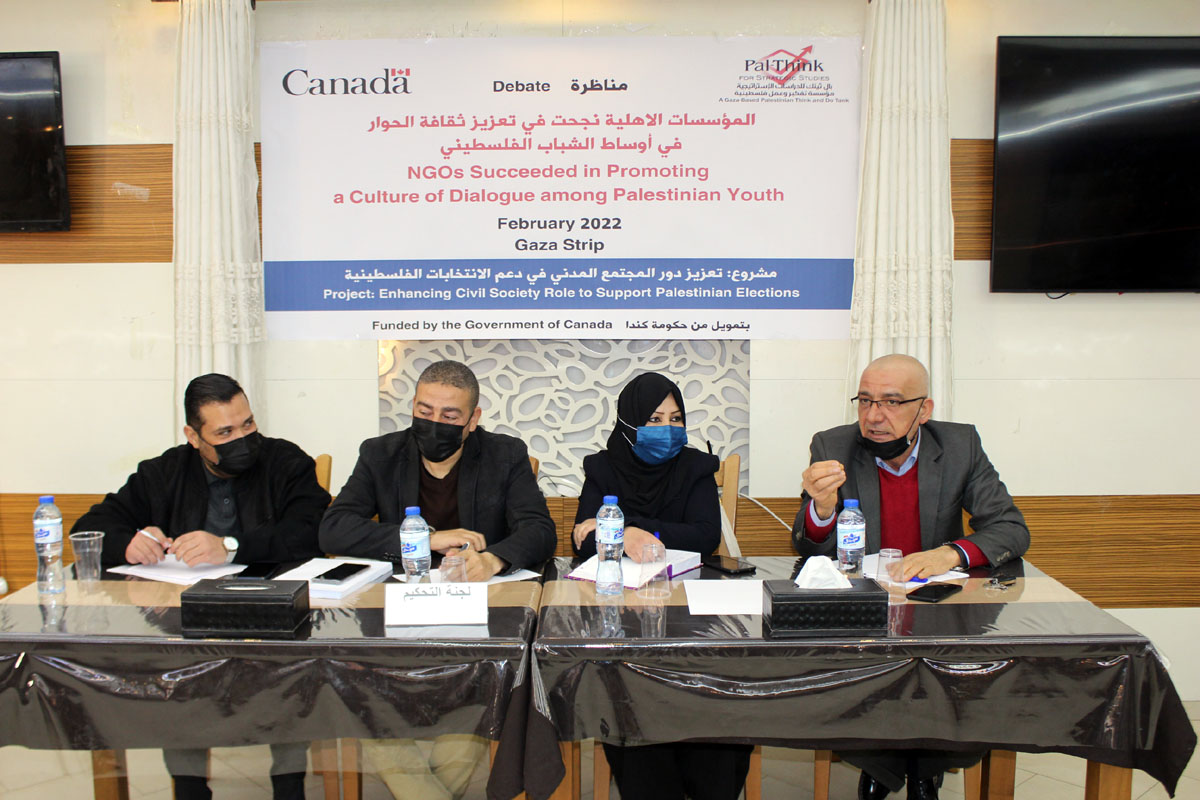
Pal-Think held the final youth debate — «Civil organisations have succeeded in strengthening the culture of dialogue among youth» — under the Canada-funded project engaging young people in support of the Palestinian elections.
- Date
- 2022-02-17
Pal-Think for Strategic Studies held the final youth debate, titled “The civil institutions have succeeded in strengthening the culture of dialogue in youth circles”, within the project “Strengthening civil society's role in supporting the Palestinian elections”, funded by the Government of Canada — which aims to engage youth in society's development and strengthen the concepts of democracy through finding solutions to societal and rights issues.
The project coordinator Sally al-Sammak opened the debate by welcoming the attendees and offering an outline of the project and its stages within Pal-Think's partnership with the Government of Canada.
She added: “Although it was also the participants' first experience in the past debate, they stood out by the strength of their argument and the precision of their information, and have become part of the debate team at Pal-Think”.
For his part, the institution's director Omar Shaban expressed his happiness at seeing the participants and attendees of both sexes,
and said: “We are a small institution creating a state of awareness in society in partnership with many local and international bodies. We worked intensively during the past period on elections awareness, and we take pride that we always obtain the highest assessment from our international partners”.
He added: “We always feel pride when we see Pal-Think's trainees now occupying important positions in society, holding awareness sessions, and serving a wide public”.
Shaban expressed his hope that the young debaters be part of the coming Palestinian leadership system.
He concluded with a message to the youth: “What matters is that we learn how to run a rational dialogue founded on sober scientific evidence, and that you learn to convince the other party of your ideas in a refined manner; because most of the conflict between the great powers today rests on the media discourse offered to the public”.
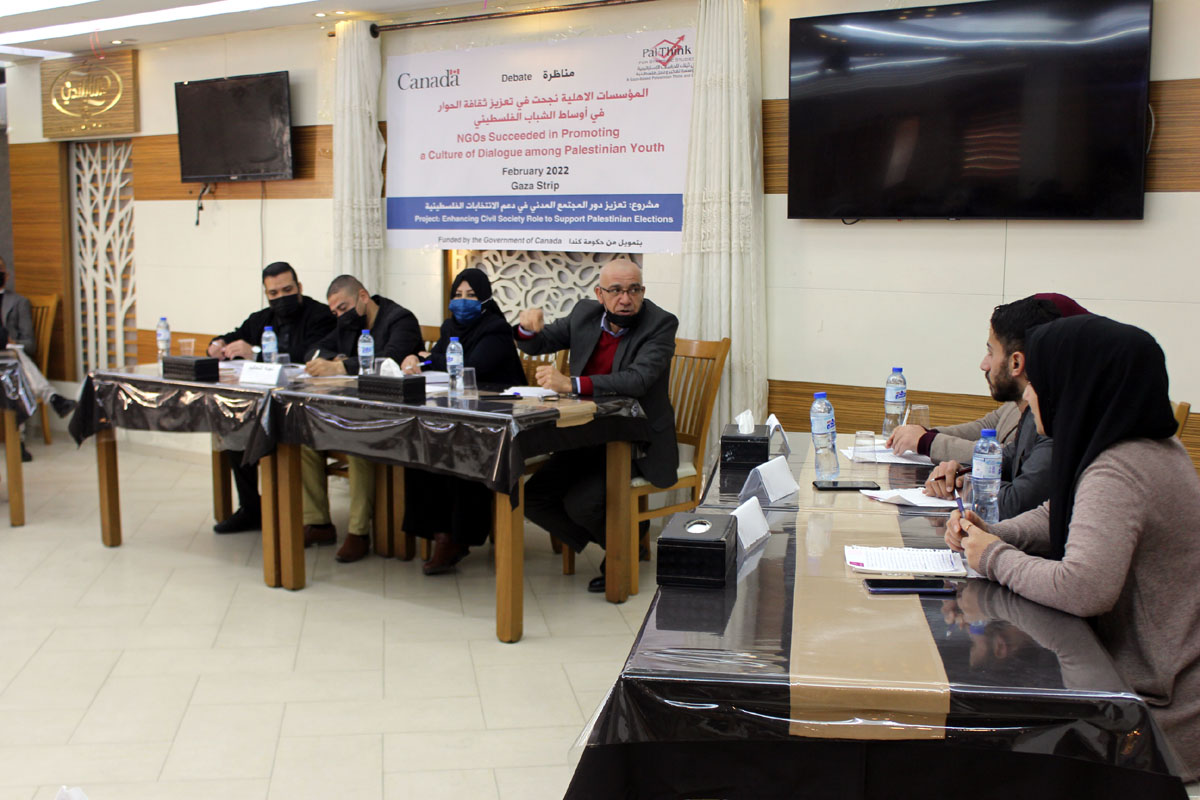
The debate was moderated by the political researcher Dr Talal Abu Rokba, who said: “What Pal-Think does is restore standing to a culture missing in the Palestinian condition, and to the culture of dialogue through Palestinian debates. The fundamental task is making youth able and effective in playing an important role in the general Palestinian condition — to restore standing to the two traits of diversity and tolerance that have long marked Palestinian society”.
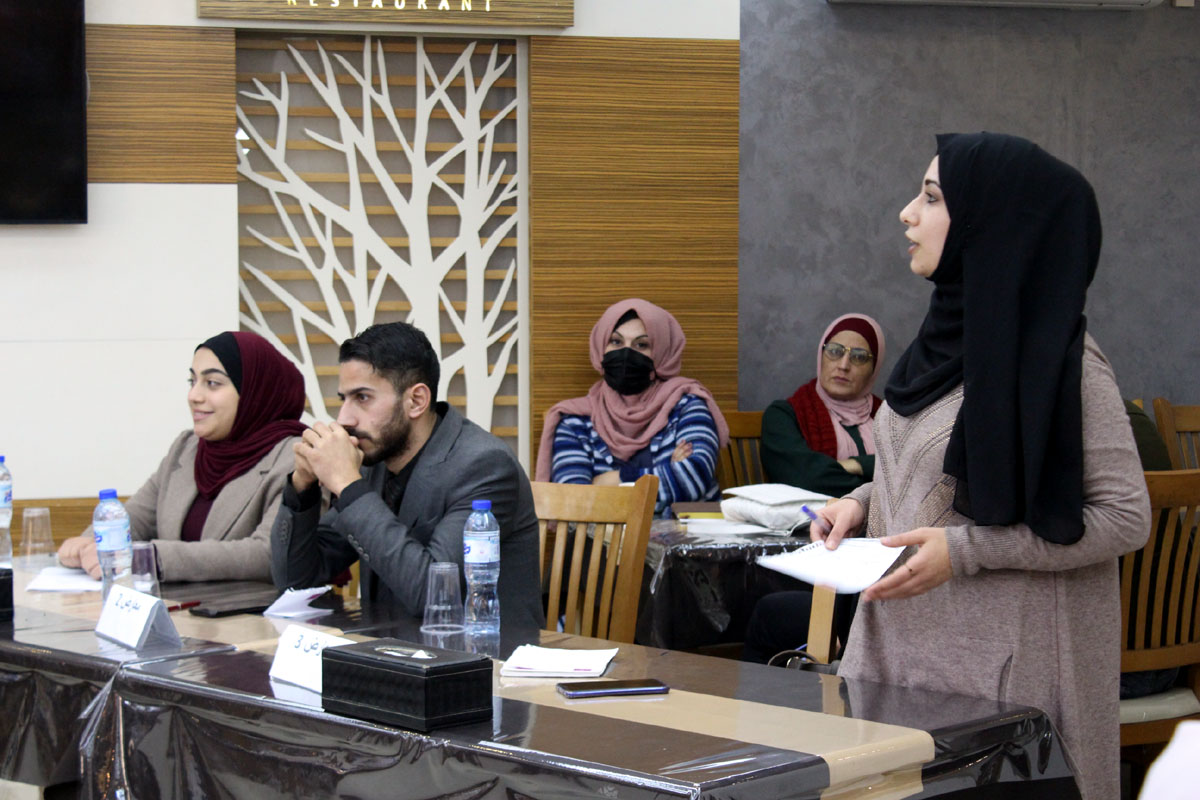
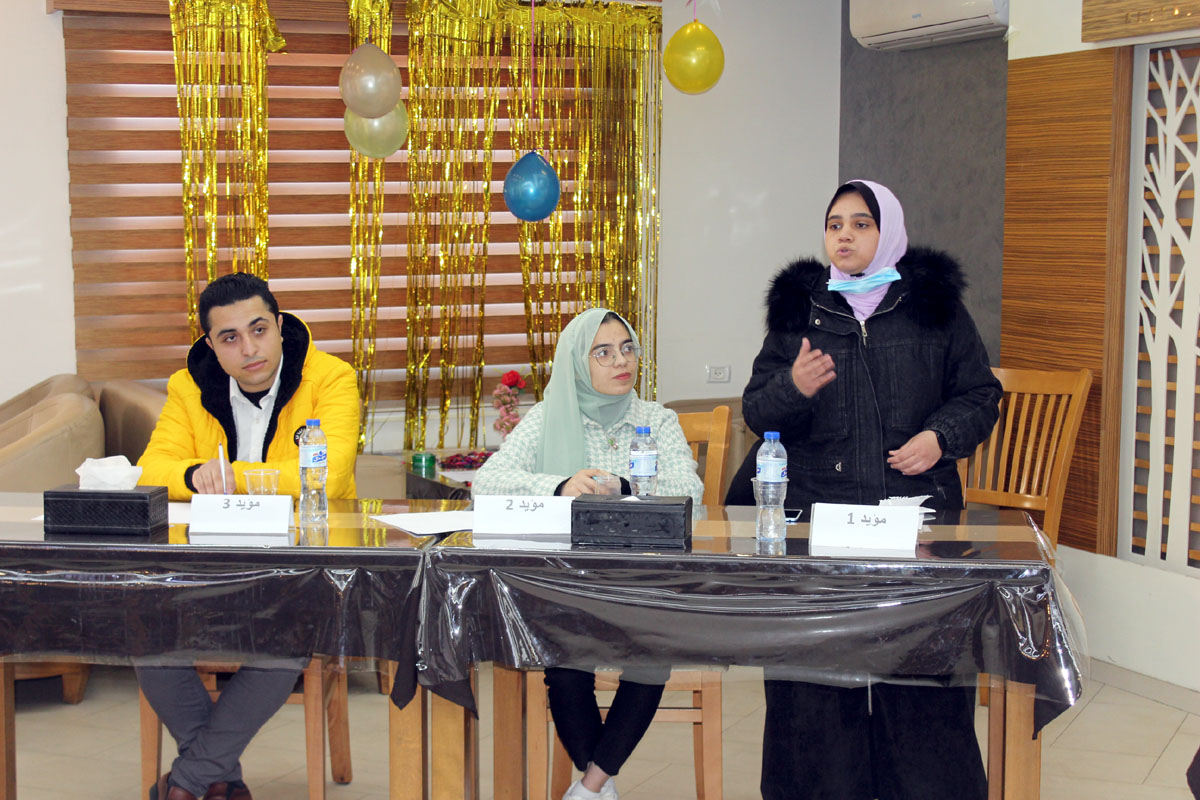
The supporting team, formed of the law students Aseel Zain al-Din, 23 years, and Nour Nassar, 21 years, and the lawyer Ashraf Sukkar, endorsed the following ideas:
- The civil institutions have succeeded in strengthening the culture of dialogue among youth through holding many dialogue meetings and debates on different issues, such as the debates Pal-Think holds.
- The absence of student-council elections in the universities results from the political division and not from the youth themselves.
- There is a noticeable development among youth during recent years despite the division and the political problems that shake the general situation.
But the journalist Angie Abdel Aal, 23 years, the social worker Hadeel Zaqout, 25 years, and the lawyer Waseem Labad, 28 years — the opposing team's members — opposed the previous ideas, and their arguments ran as follows:
- The spread of violence between spouses and among youth — the latest of violence's manifestations being the killing that occurred recently in Beit Hanoun — is proof of the failure of the civil institutions' role in strengthening the culture of dialogue among youth.
- The absence of student-council elections in the Palestinian universities results from the absence of peaceful dialogue among youth.
- The failure of civil-society institutions to find a real system of dialogue among Palestinian youth, or to strengthen dialogue in many marginalised areas.
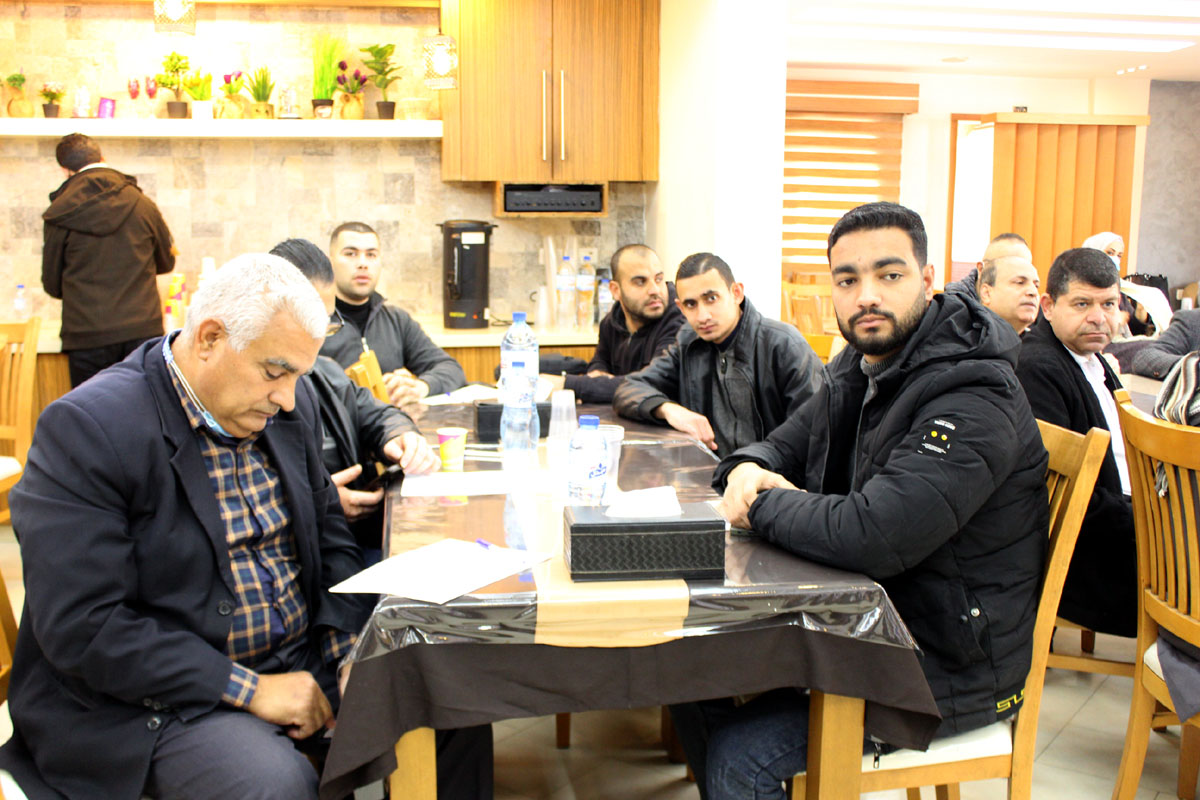
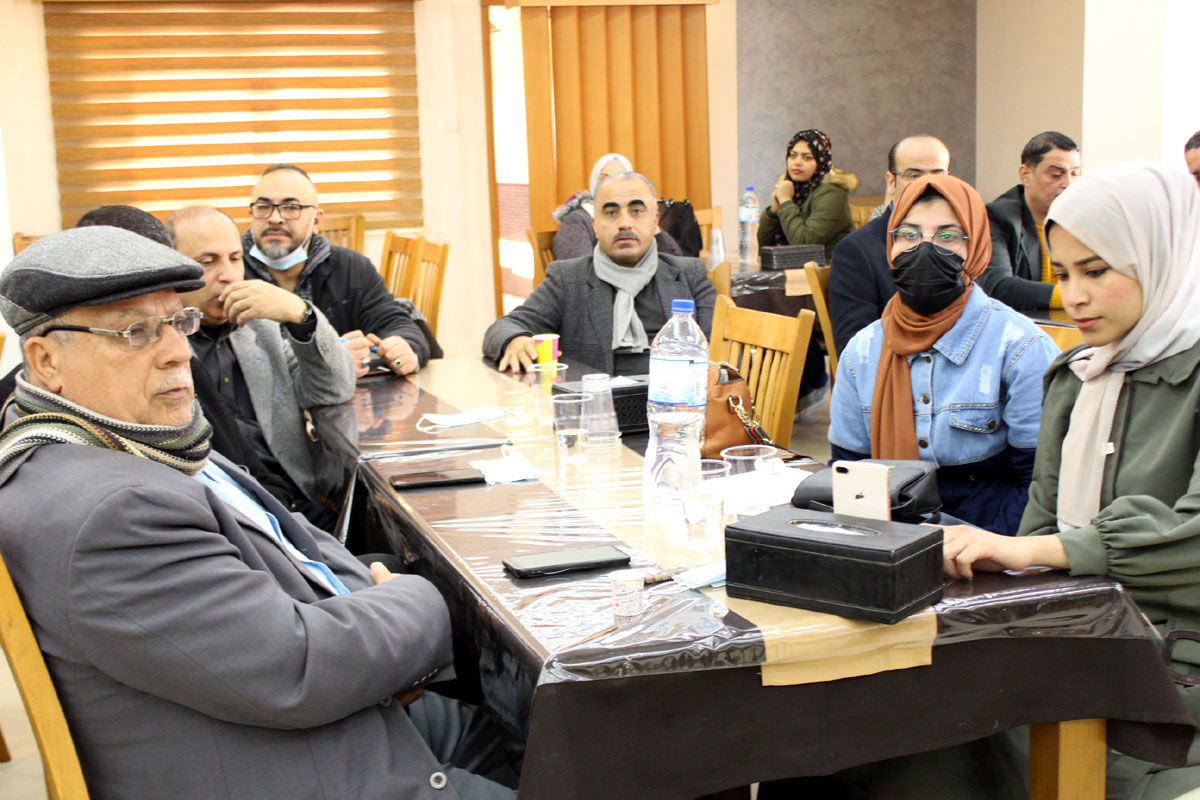
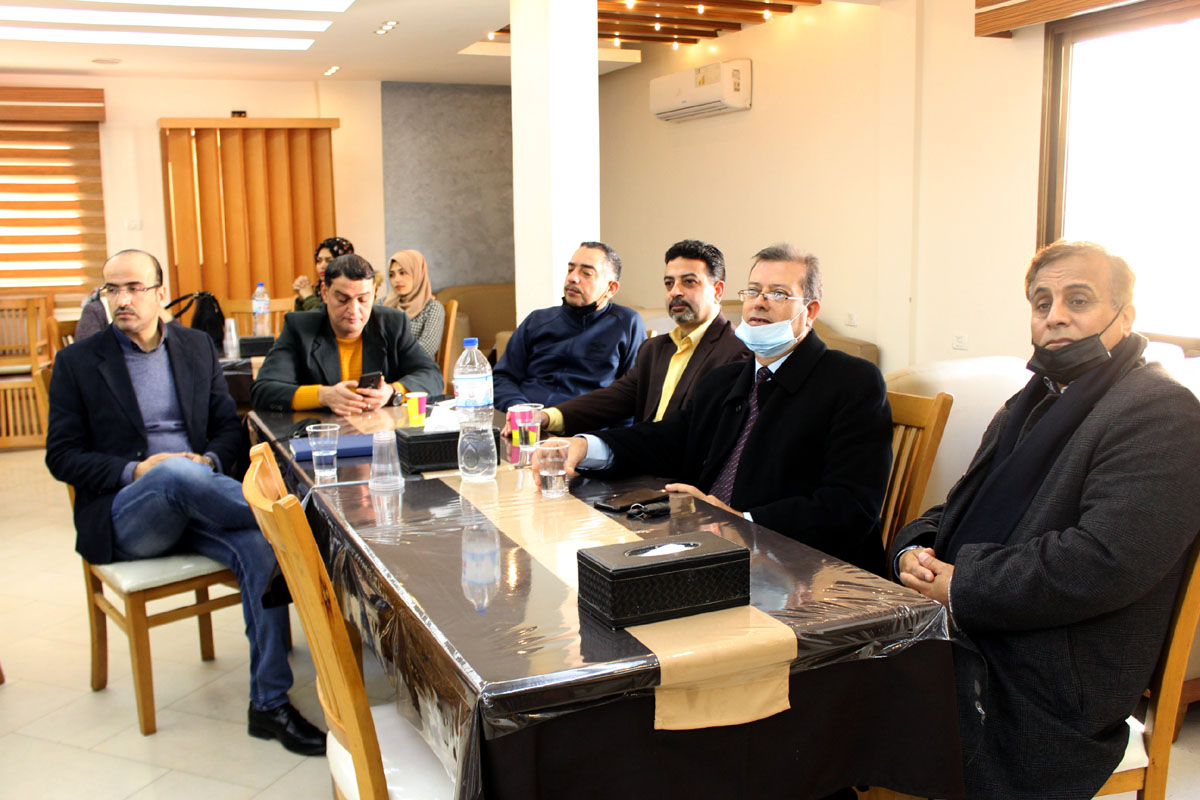
In closing, the judging panel — formed of the journalist Taghreed al-Amour, the writer Yusri al-Ghoul, and the community activist and coordinator at the general union of cultural centres Musa Abu Zayed — announced the supporting team's victory in the debate.
The panel gave the two teams several recommendations, foremost: exerting sufficient effort to convince the other party in the argument it opposes; using constructive peaceful dialogue instead of using attacking discourse; making the best use of time in presenting ideas; working to strengthen the methods of refuting the differing party's arguments; and paying attention to the terms used.
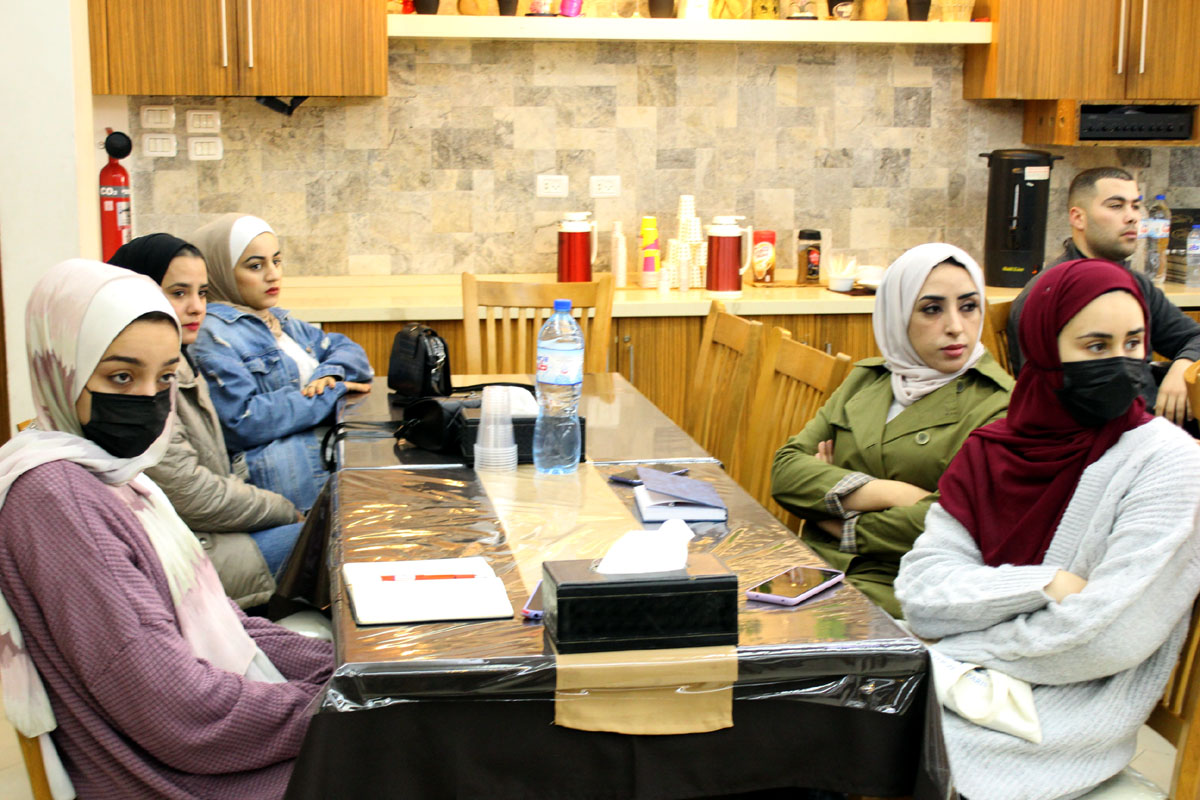
The audience's questions turned on the source of the information and statistics the two teams used, on the tools of measuring civil-society institutions' success in strengthening the culture of dialogue among youth, and on the relation of the manifestations of hatred and the posts of incitement on social-media platforms to the failure of strengthening the culture of dialogue among youth.
Worth mentioning is that all the debaters have become permanent members of Pal-Think's debate team, and will take part in other coming debates with their counterparts from different institutions. They will likewise contribute to educating their peers on the importance of debates and spreading the trainings they received with others.
The designations used and the presentation of materials in this programme entail no expression of any opinion whatsoever on the part of the Government of Canada