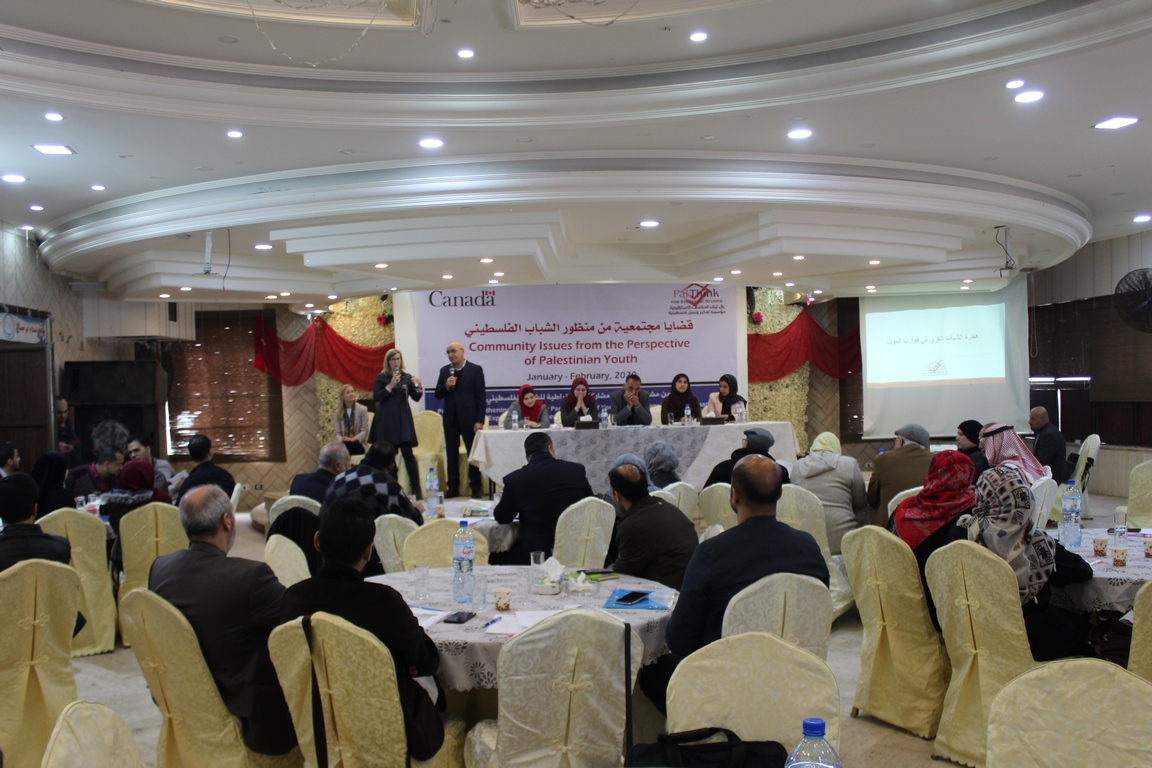
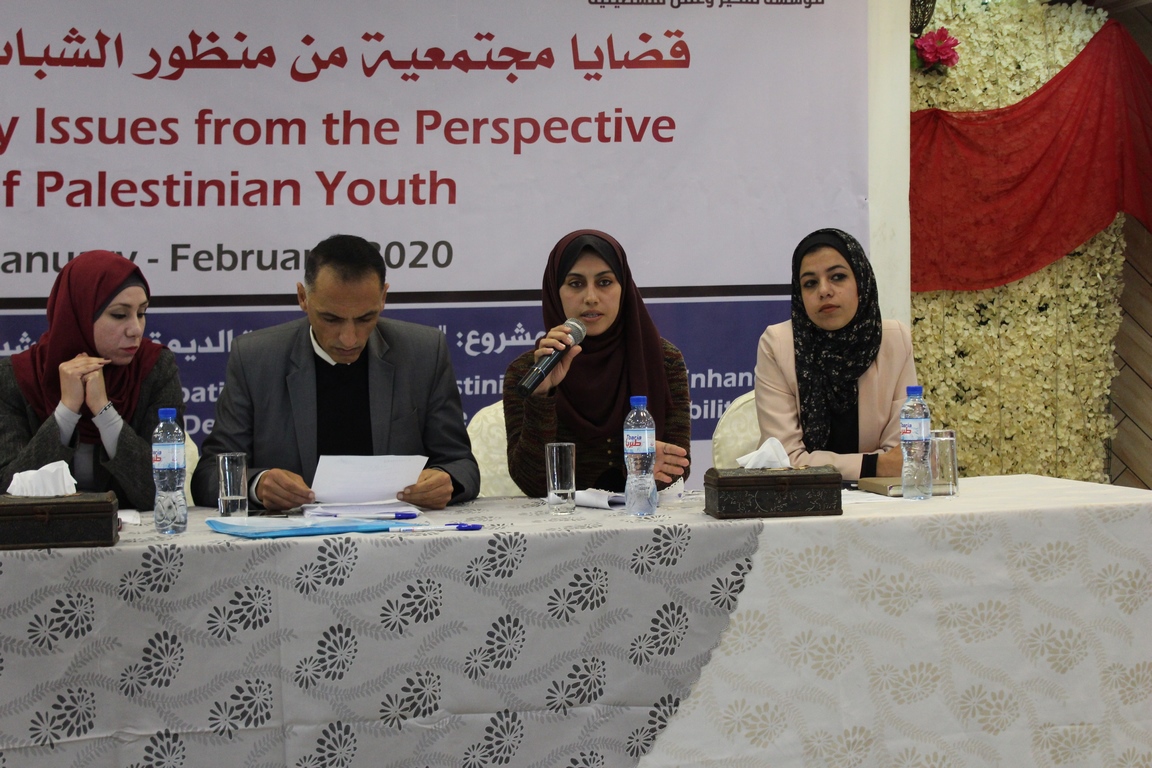
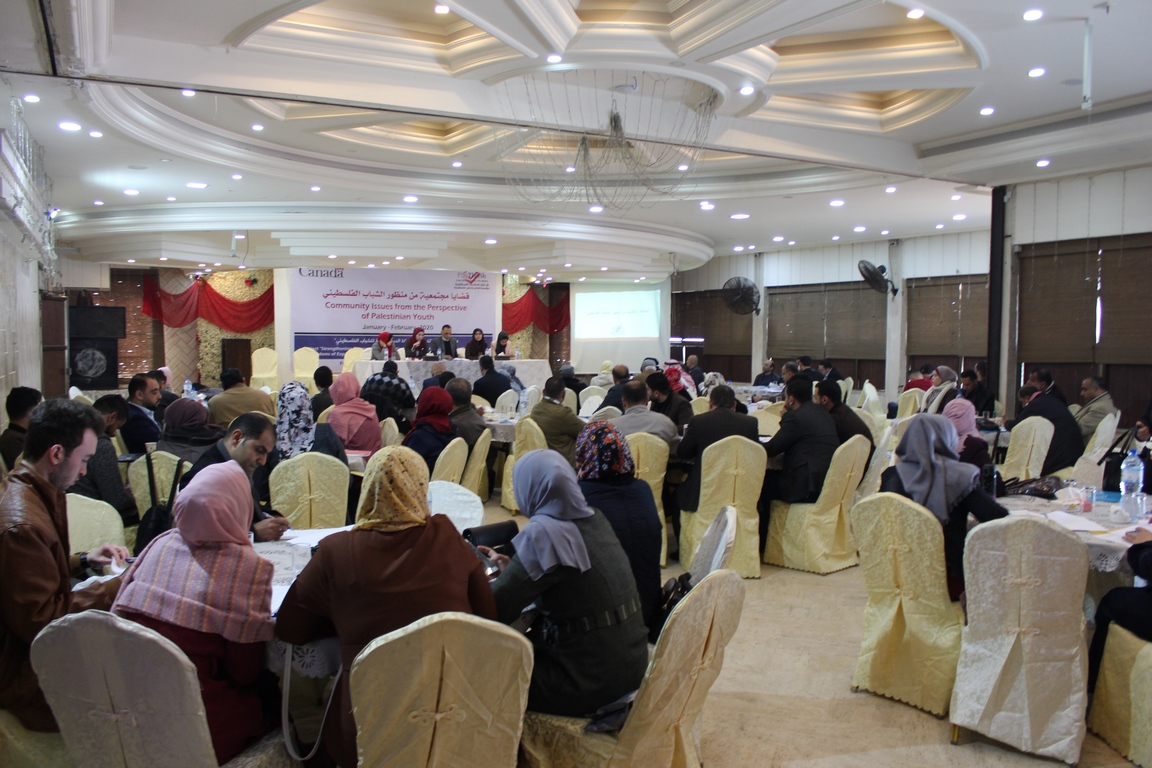
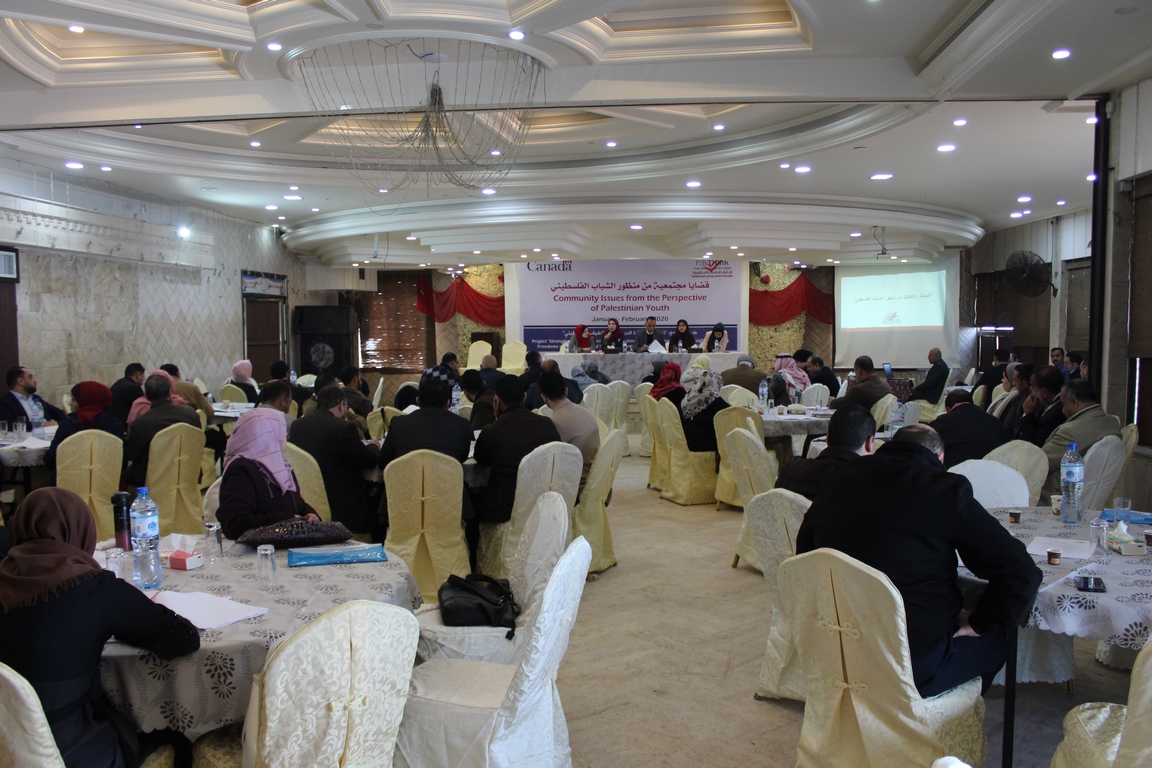
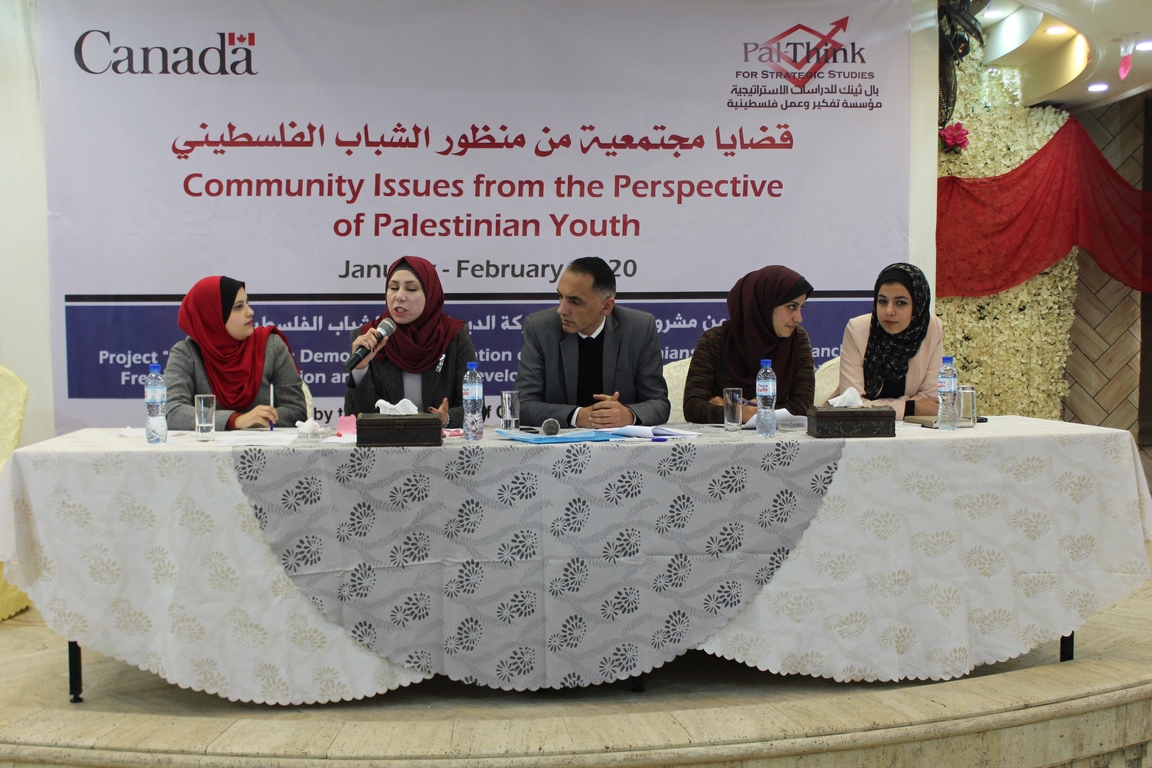
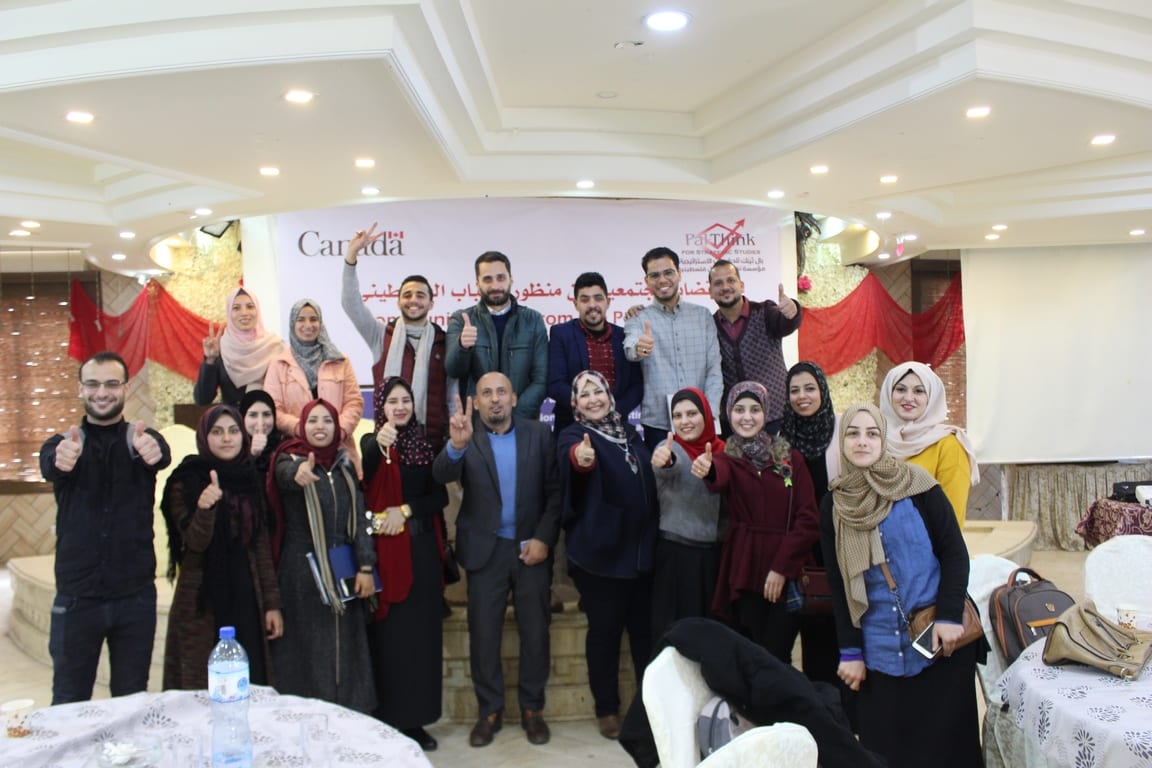
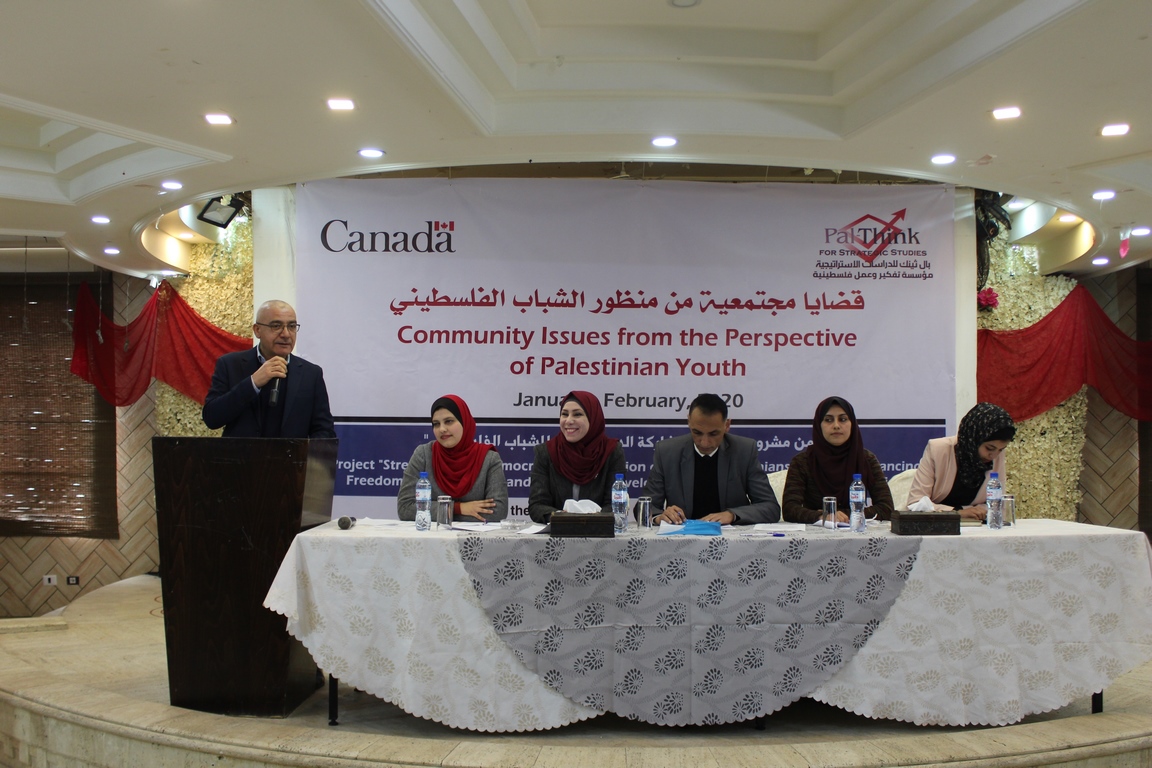
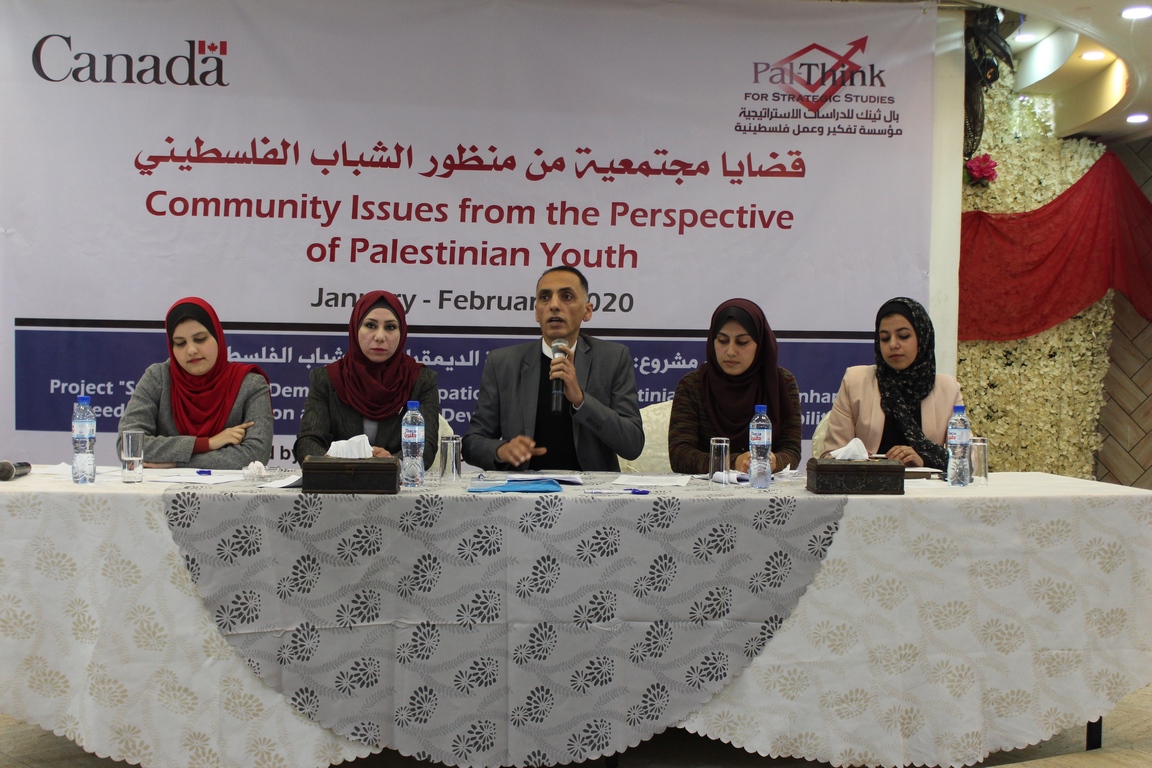
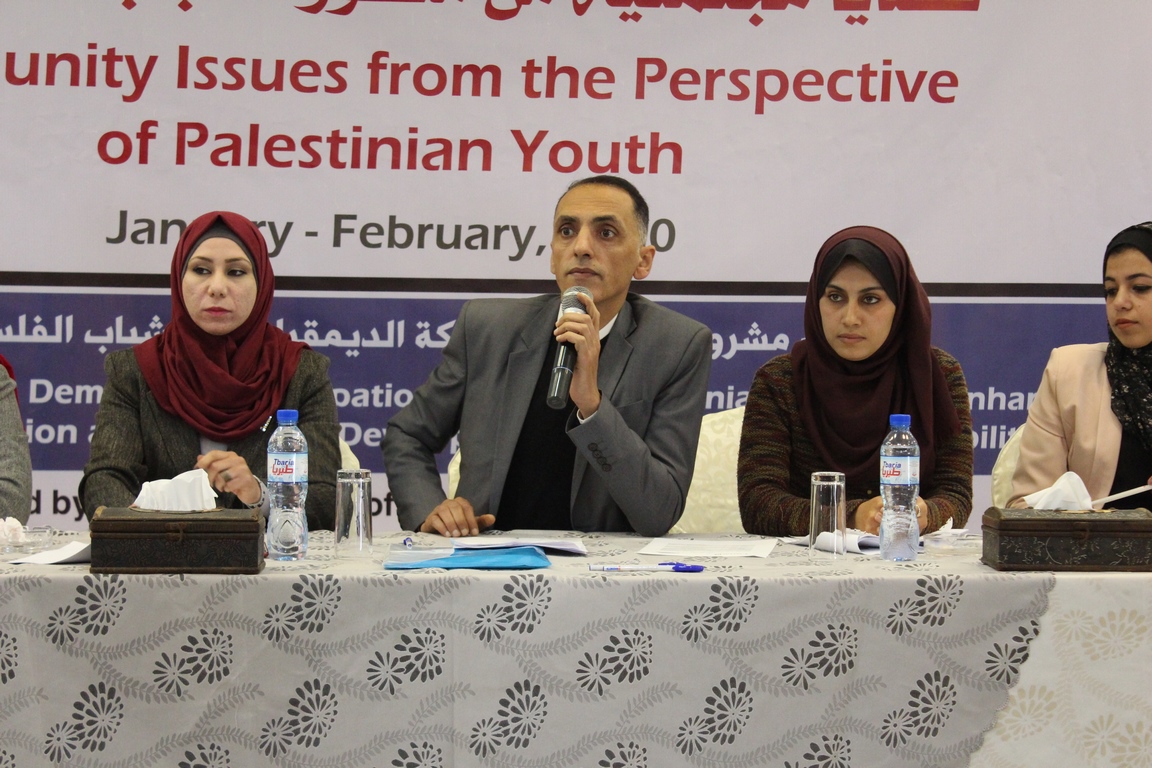
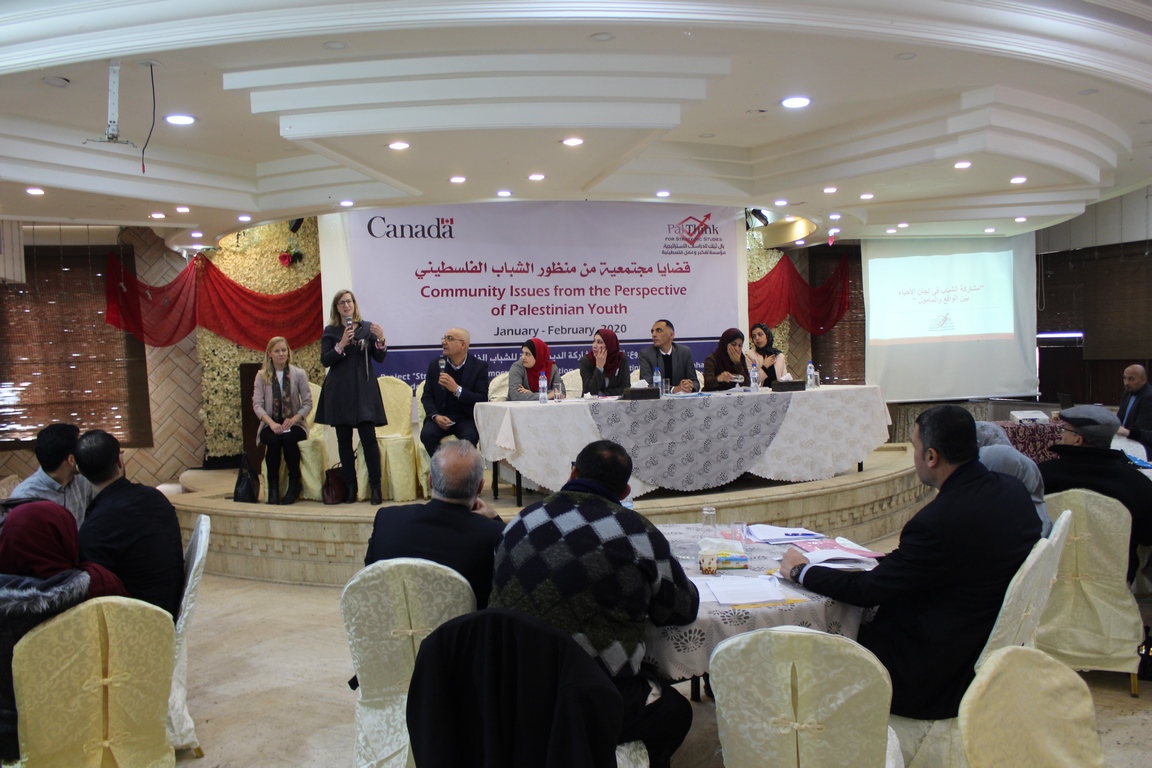
With Canada's representative to the PA, Pal-Think holds the closing session of «Community issues through the eyes of Palestinian youth»
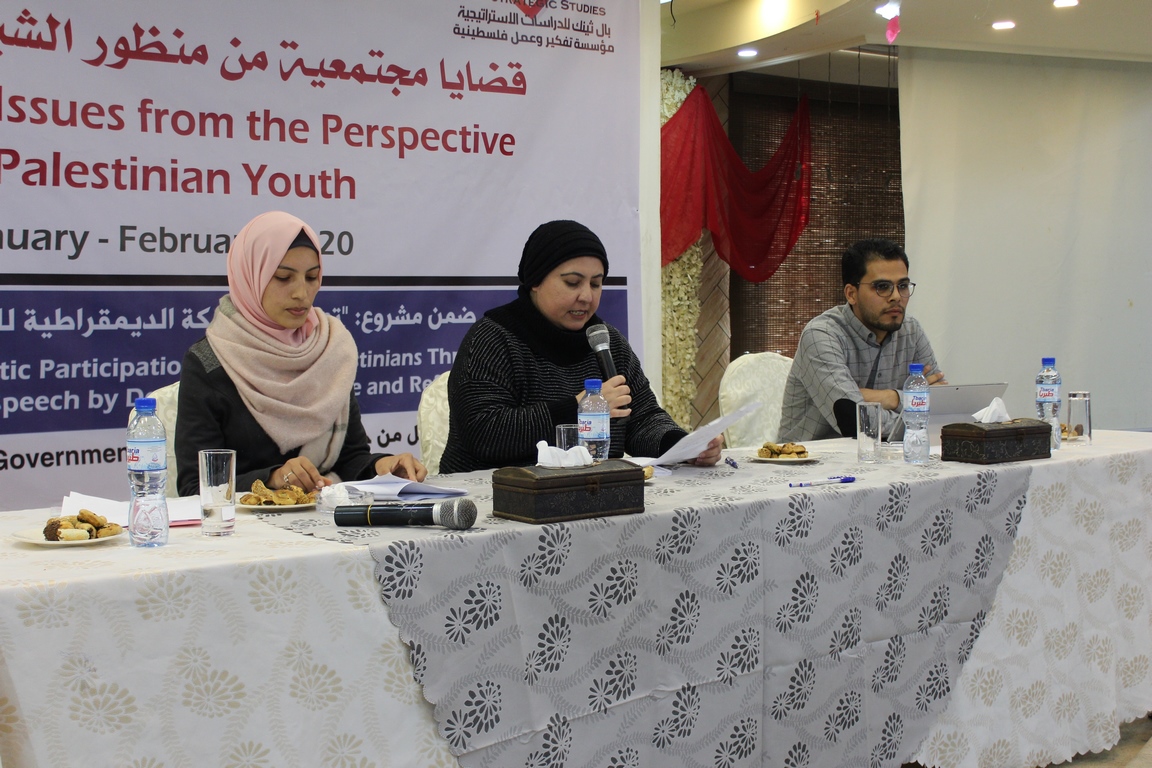
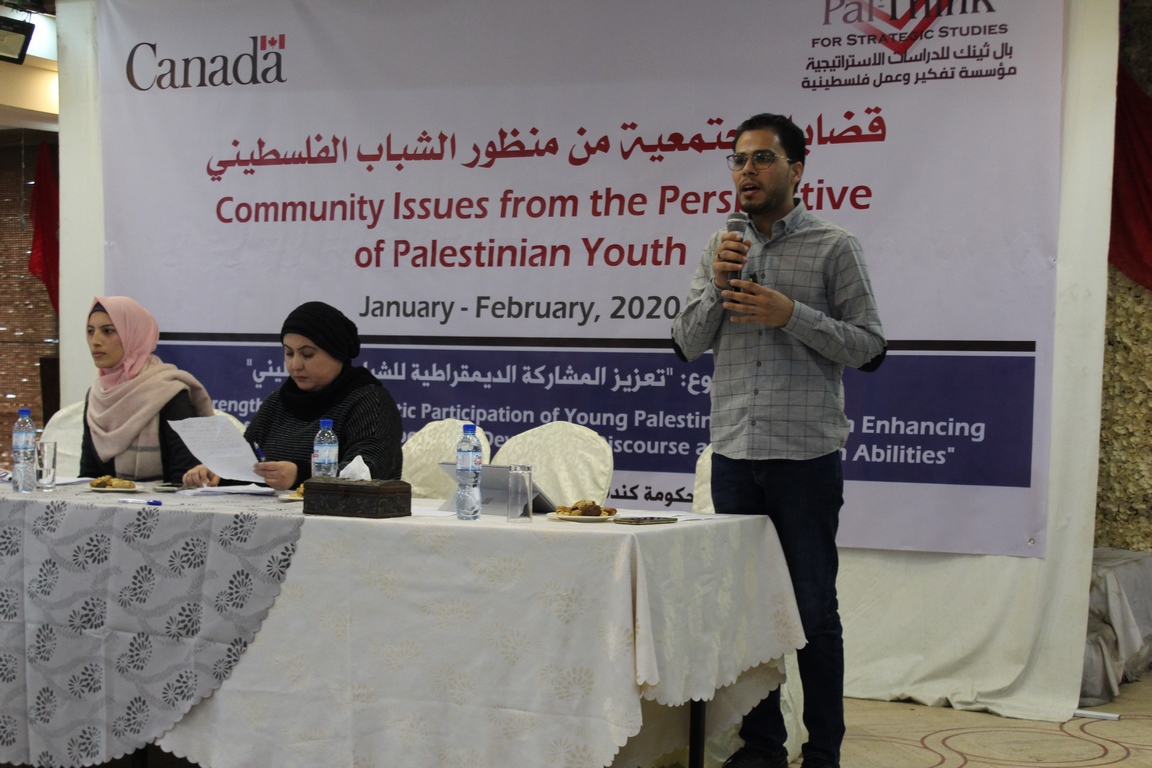
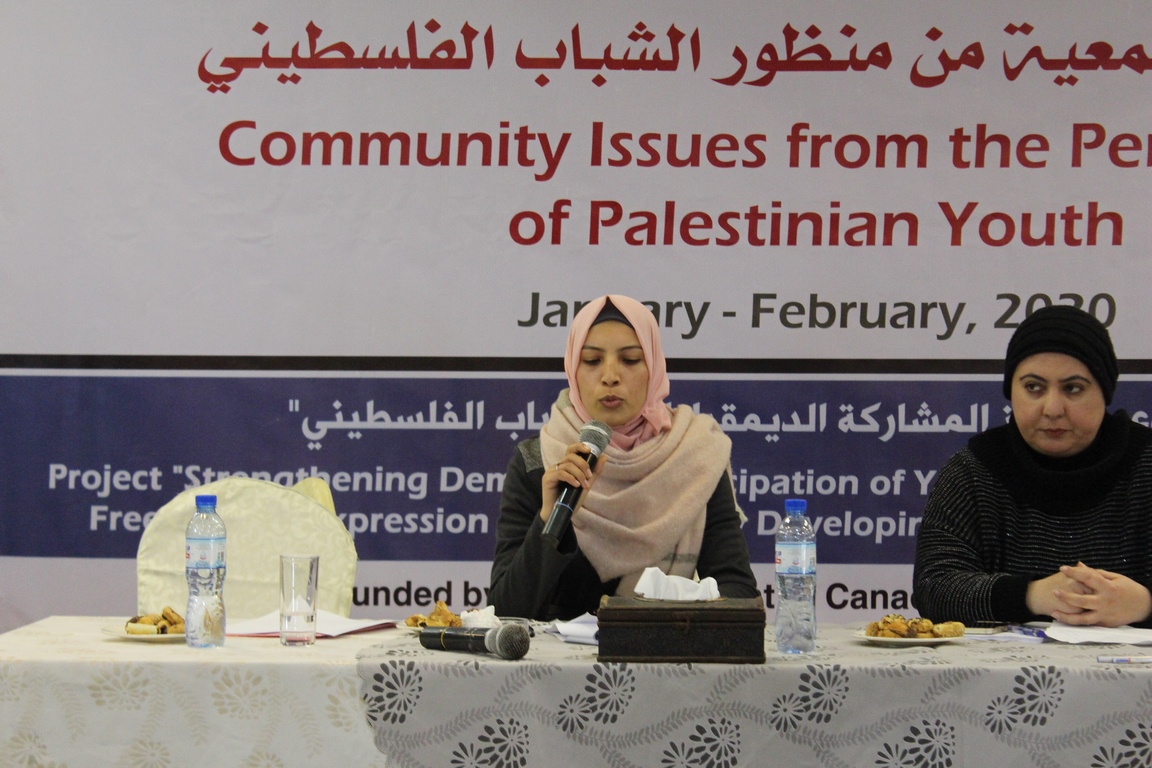
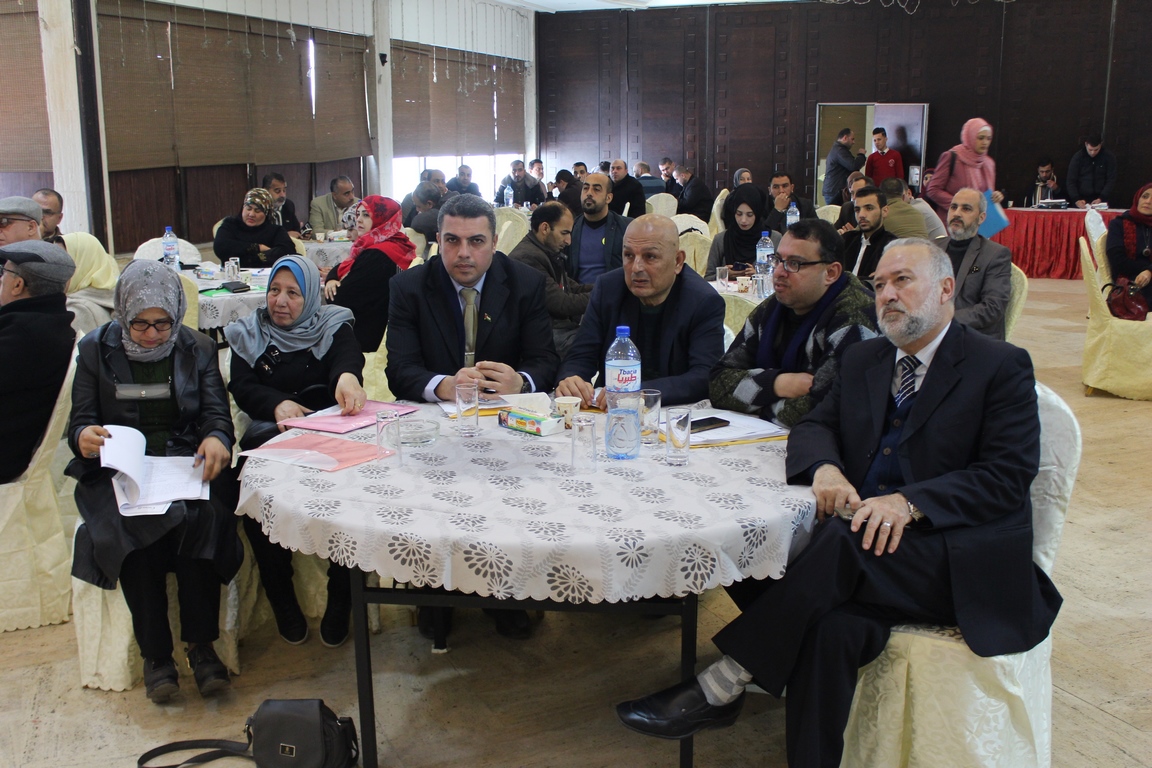
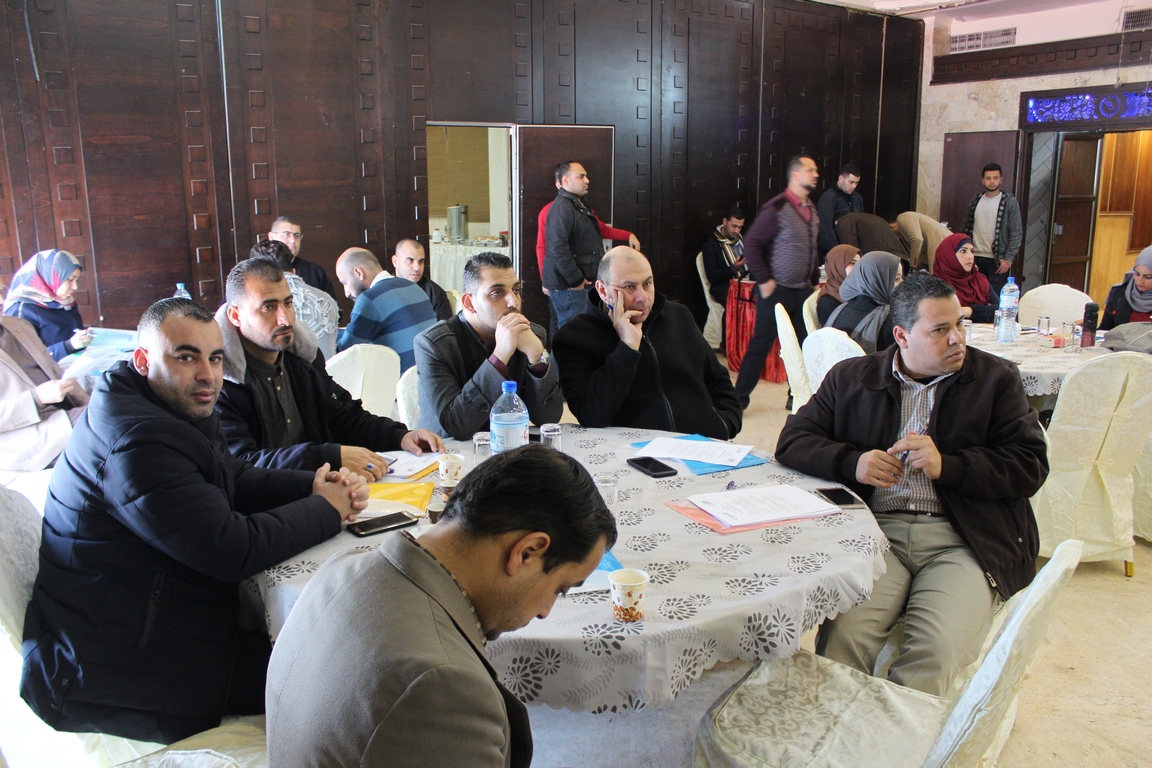
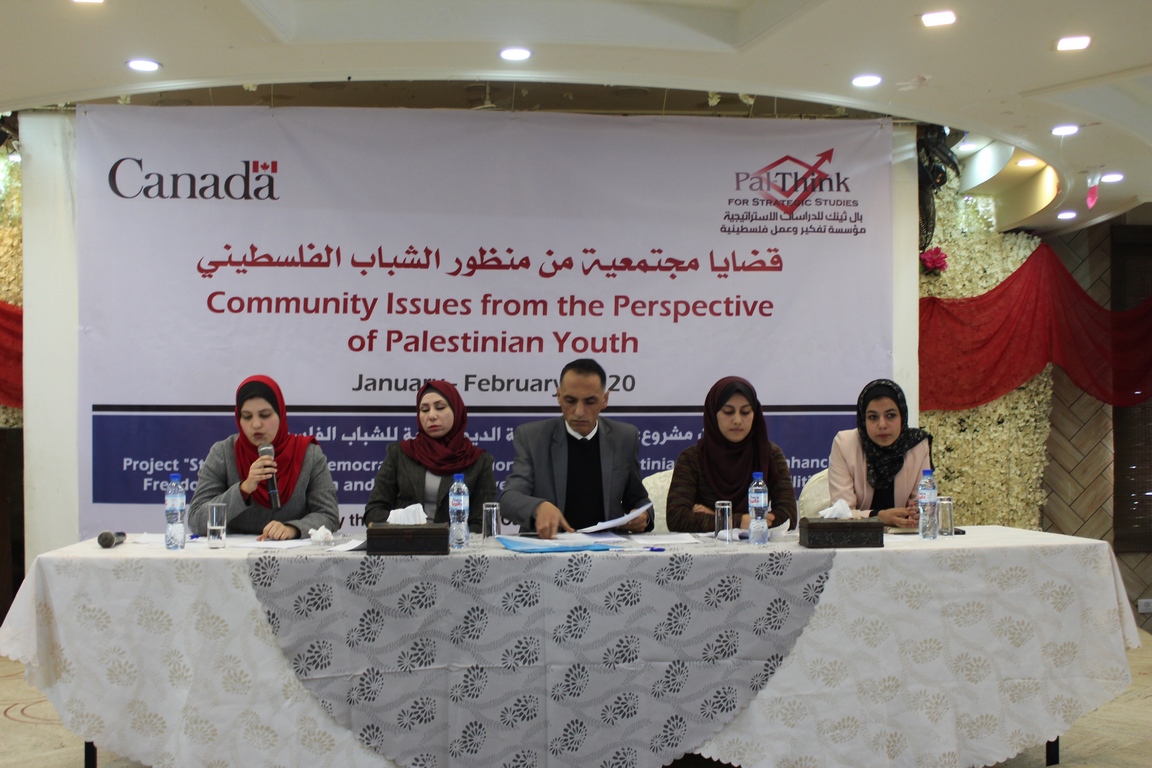
Pal-Think held the closing discussion «Community issues through the eyes of Palestinian youth», where seven trainees presented five research papers, under the Canada-funded democratic-participation project, with Canada's representative attending.
- Date
- 2020-02-20
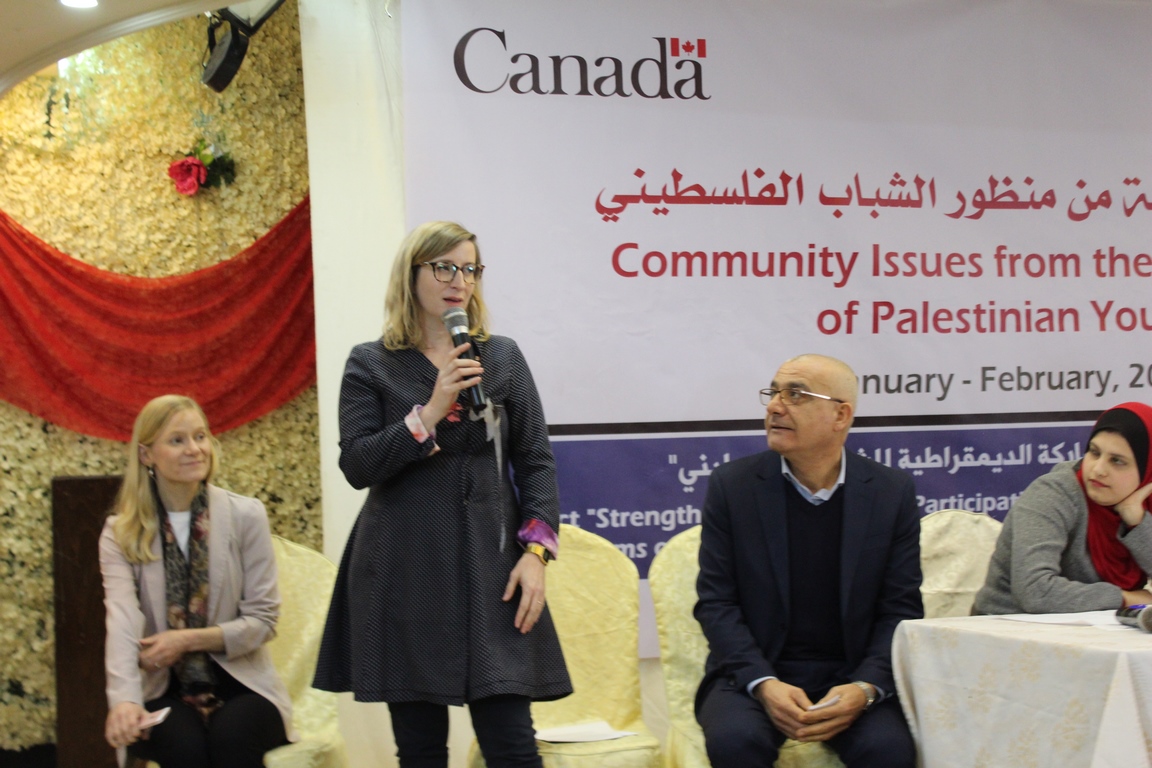
“Pal-Think for Strategic Studies” organised a closing discussion session titled “Communal issues from the perspective of Palestinian youth”, during which seven trainees reviewed five research papers, within the project “Strengthening the democratic participation of Palestinian youth”, funded by the Government of Canada, with the attendance of Canada's representative to the Palestinian Authority, Ms Robin Wettlaufer, and Ms Andrea Nicholls, head of the political section at the Canadian Representative Office, and an elite of academics, researchers, and activists in the issues of youth and society.
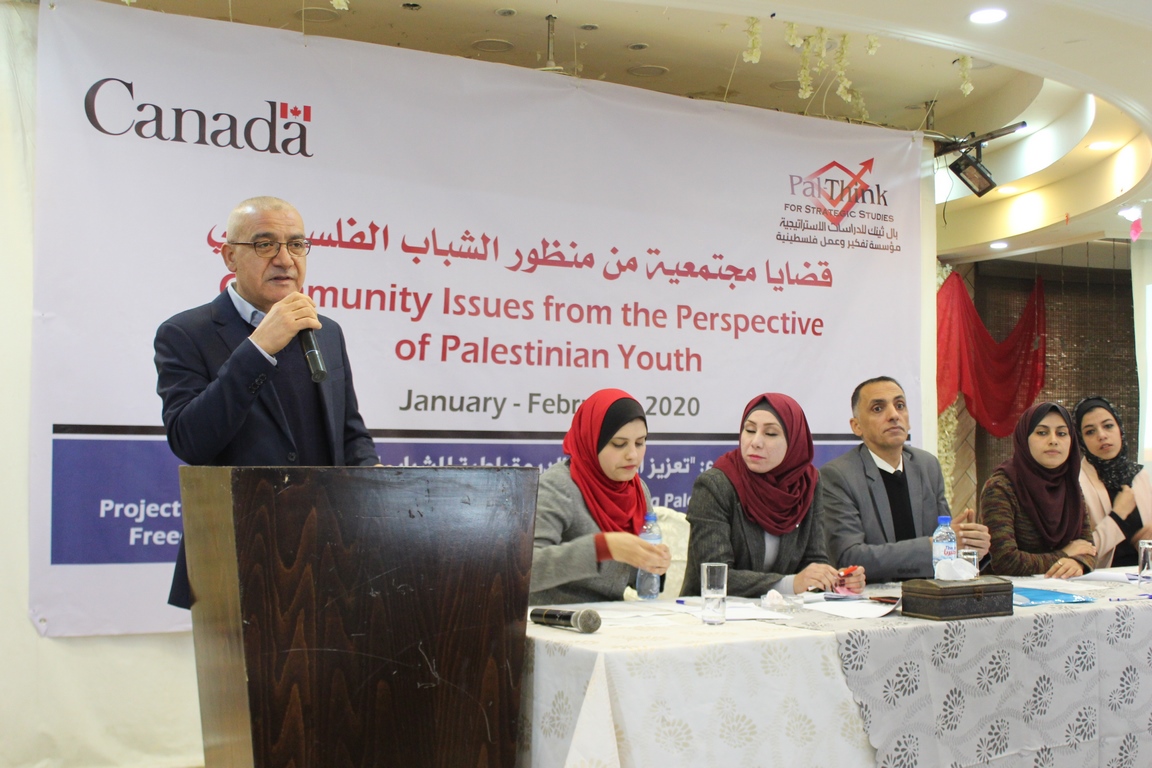
The session was opened by the director of the “Pal-Think” institution, Mr Omar Shaban, welcoming the attendees and thanking Canada's representative, and he said: “This project funded by the Government of Canada is short in time, but its results on the trainees are astonishing. Today, in this third session within a series of sessions Pal-Think has carried out, we review five papers, which are the result of a continuous effort over successive months, and we will soon issue a booklet containing 11 research papers of the trainees over the project's period, to be a scientific reference for researchers.” He added: “We at Pal-Think expend our effort on the research side and develop the youth's research capacity, and thereby we strengthen the national perspective in research.”
In a word by Ms Robin, she affirmed Canada's support for the Palestinian people in their rights and support for the principle of the two-state solution, pointing to Canada's attention to spreading peace, and that Canada will continue supporting the Palestinian people and strengthening the role of the Palestinian woman and her participation in all walks of life.
In a side meeting of hers with the trainees within the project, she showed her admiration of the young women's participation in the project — and that this is a good indicator of women's awareness of the necessity of activating their fundamental role in Palestinian society — saying that Canada is keen on supporting Palestinian youth and on studying their needs so that it have the capacity to empower the youth and help them find solutions for the crises they face by force of the political, economic, and social factors.
The political researcher Dr Talal Abu Rokba moderated the first session and said: “Pal-Think works on the localisation of knowledge, because 90% of the published research about Palestine was written by foreign researchers, and the remaining 10% rests on foreign research.”
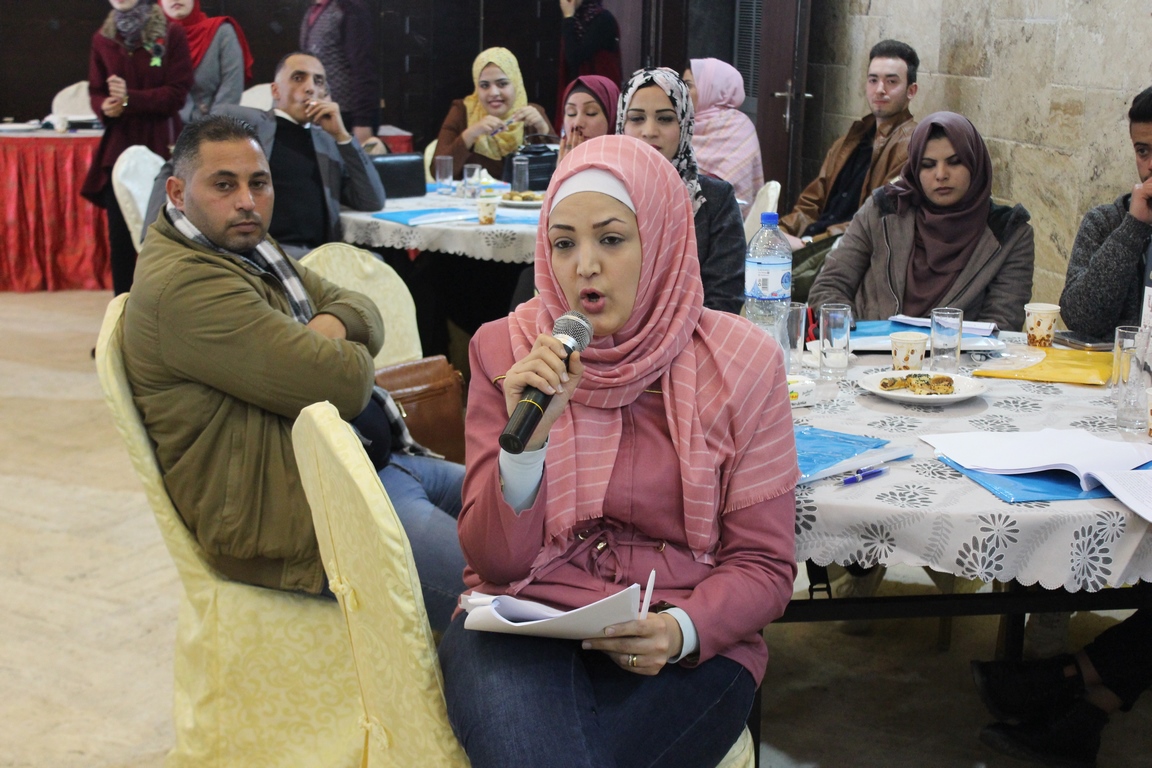
The trainee Sahar Libad reviewed her research paper titled “Youth participation in the neighbourhood committees between reality and what is hoped” — the reality of the youth's participation in the neighbourhood committees of the Gaza Strip — and showed that their participation is modest, in addition to the absence of elected committees.
As for the two trainees Yasmin al-Mabhouh and Amal Abu Qamar, they shed light, in a research paper titled “The migration of the youth in the boats of death”, on the political, economic, and social causes that push the youth toward irregular migration, and its effect on the structure of Palestinian society.
From her side, the trainee Taghreed Najm set out, in a research paper titled “Transitional justice from the perspective of Palestinian youth”, the concept of transitional justice and its mechanisms, and reviewed international and regional models and showed the youth's role in them.
During the second discussion within the session, moderated by the political analyst Ms Reham Owda, the two trainees Mariam Abu Amra and Hadeel Jad shed light, in a research paper titled “The representation of women lawyers in the Bar Association”, on the proportion of women lawyers' representation in the Bar Association during the period between 2003–2019. It set out that there is a clear gap in the proportional representation of women lawyers, as they enjoy only one seat on the association's council out of 15 members.
The two trainees Fikri Mohammed and Ayman Fayyad likewise discussed a research paper titled “Scientific research in Palestine between X and Y” — the reality of scientific research in the Palestinian universities and what is hoped of it in light of the world progress taking place in many states. They reviewed successful world experiences, and finally showed the modest scientific effort in Palestine.
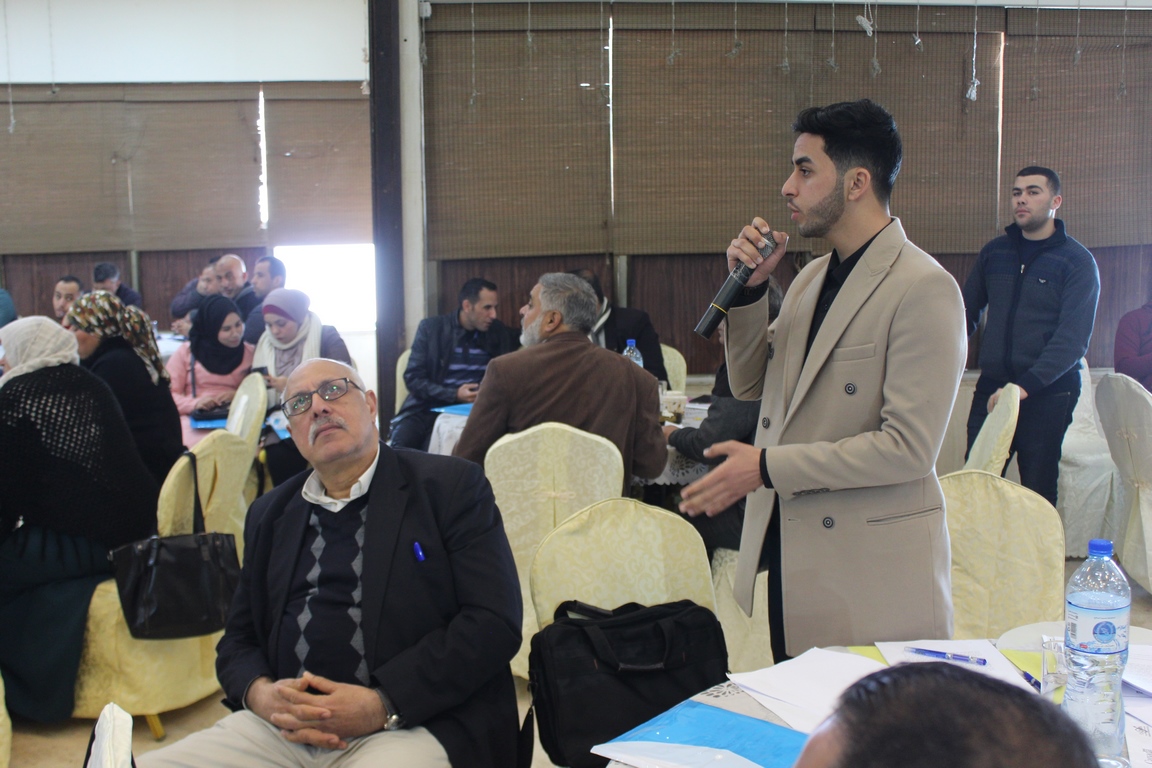
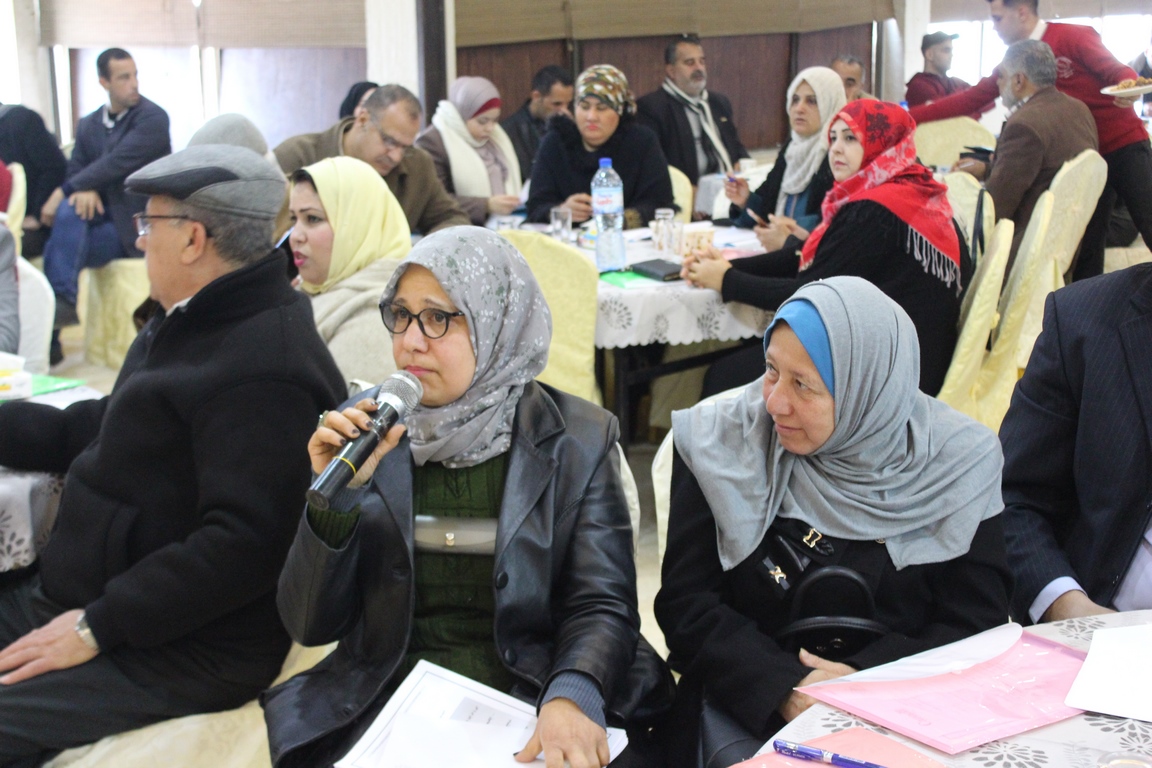
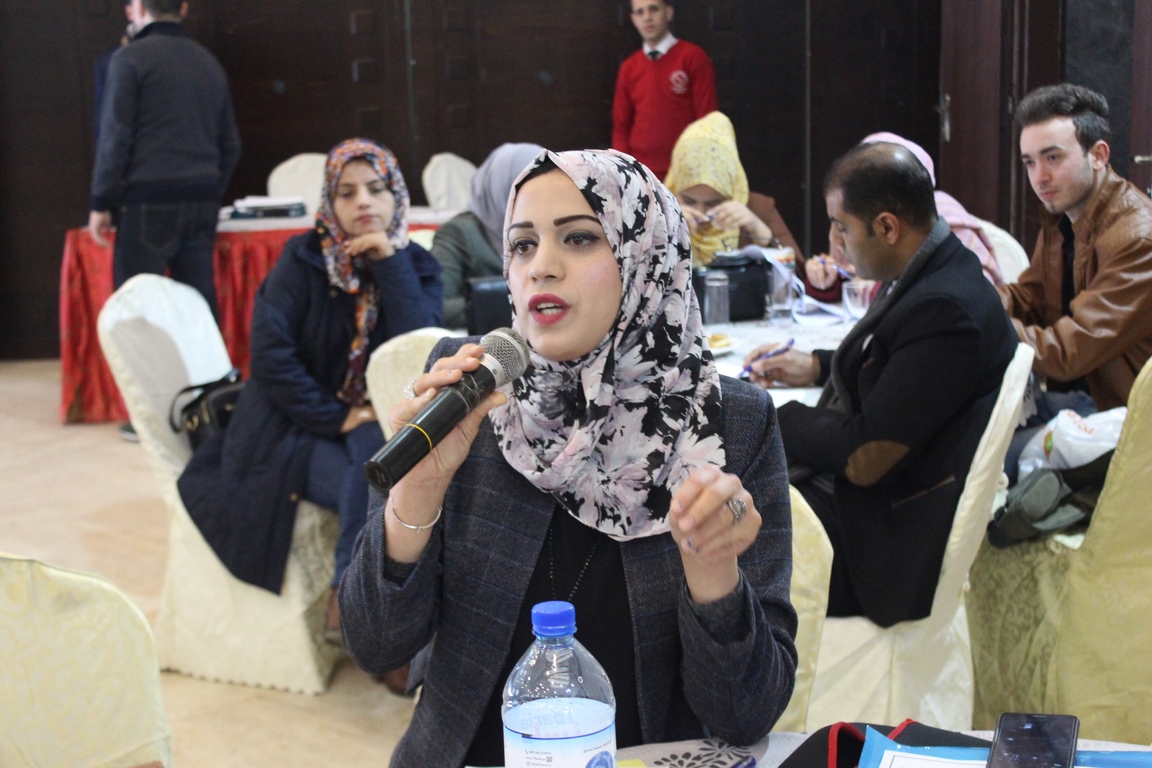
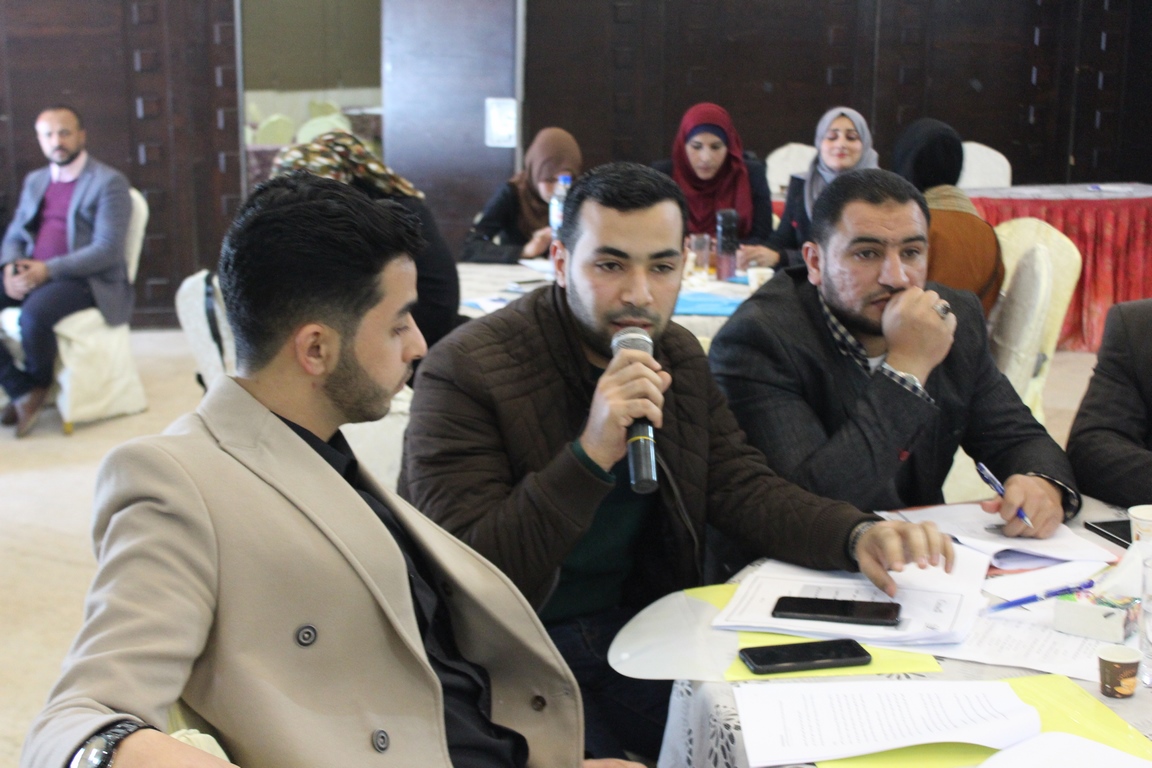
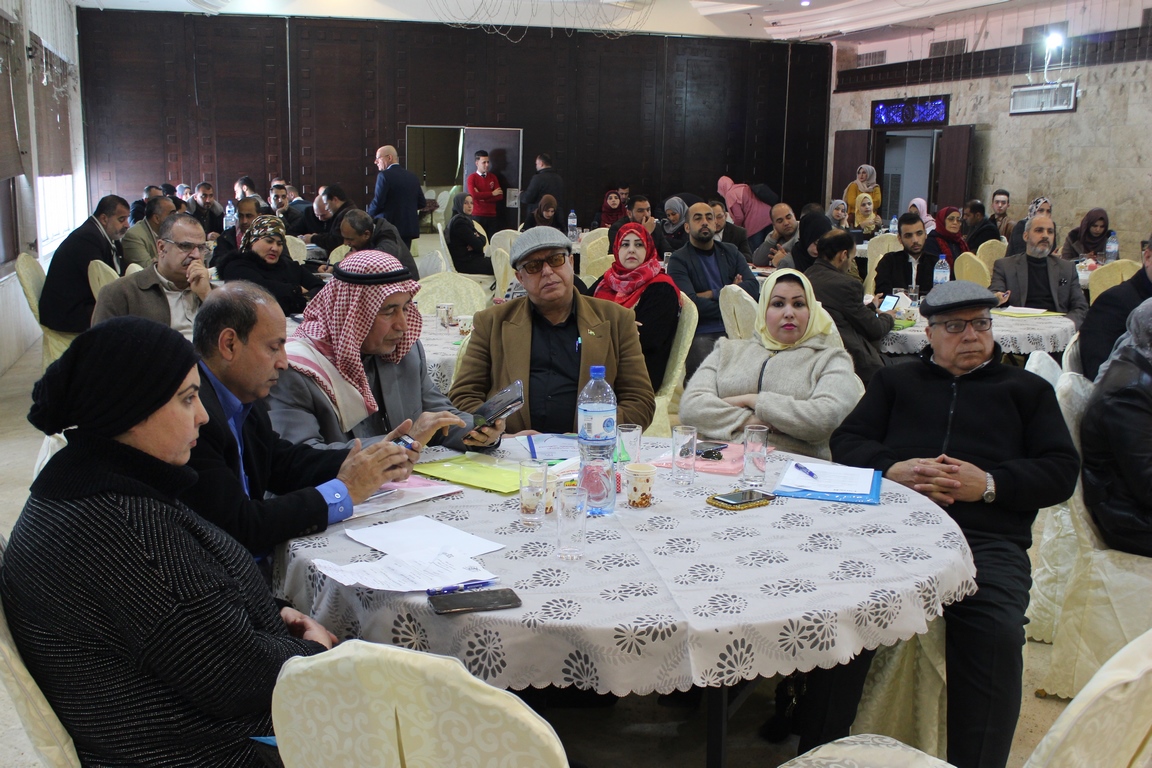
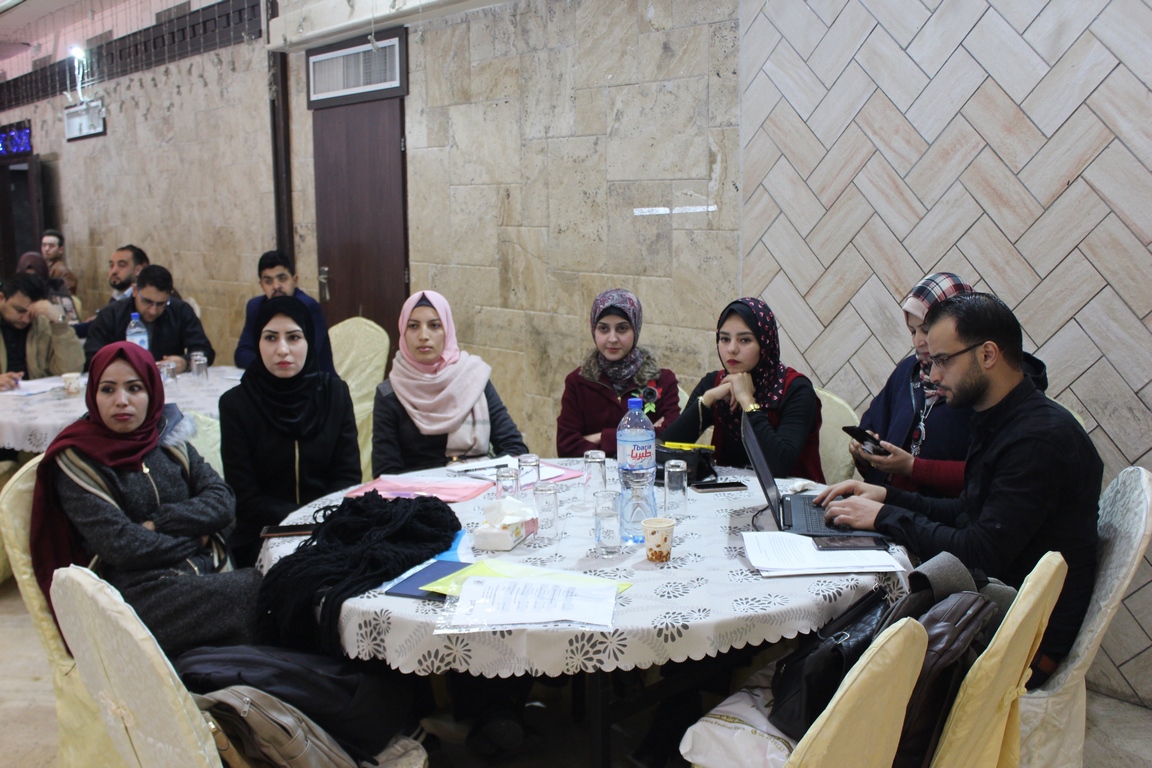
The attendees praised “Pal-Think's” efforts in developing the youth's capacities and localising knowledge, and the trainees' effort, and they presented recommendations to improve the research papers.
It is recalled that 20 trainees enrolled in the project, which contained 10 intensive training days in the skills of intellectual writing and freedom of expression, and the trainees presented 11 diverse research papers in the issues of youth and society, and reviewed their papers via Alwan radio and during previous discussion sessions with the attendance of an elite of academics and researchers; these papers will be published soon in a booklet to be a scientific reference. This project comes within “Pal-Think's” efforts, continuing from 2007 until now, in supporting and empowering Palestinian youth, to be able to build their state and contribute positively to sustainable development.