Discussion session: «Community issues through the eyes of Palestinian youth»
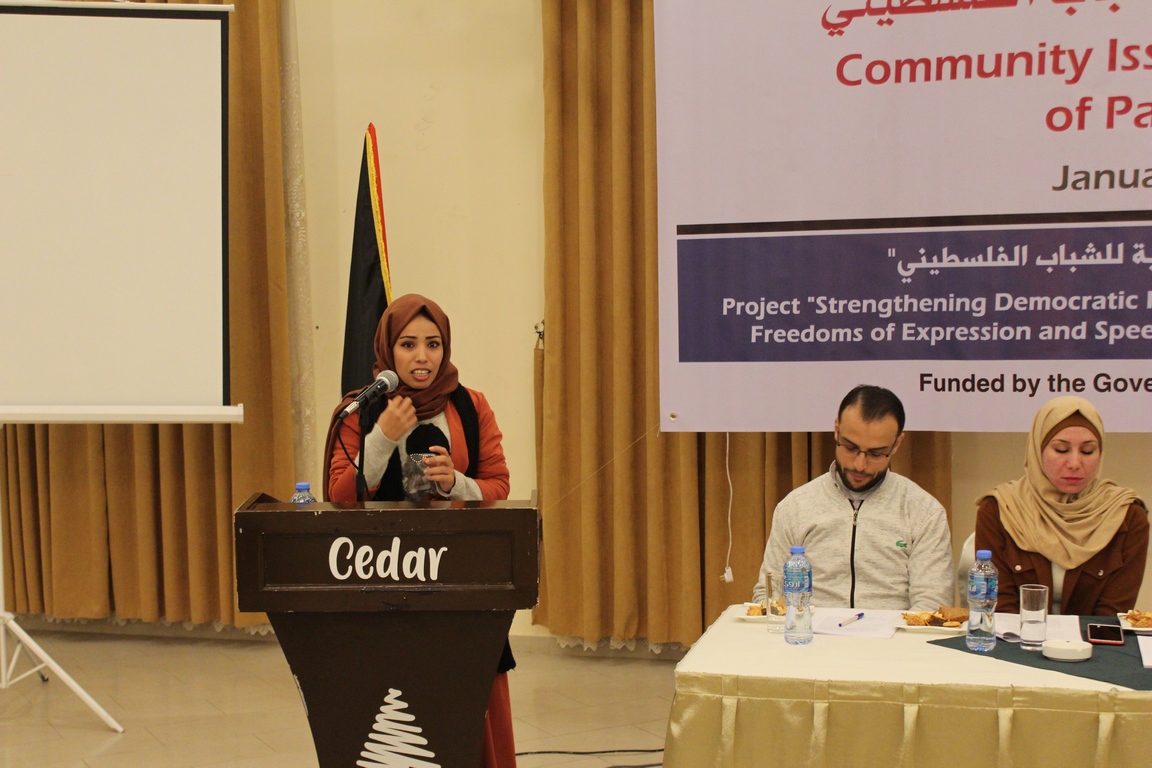
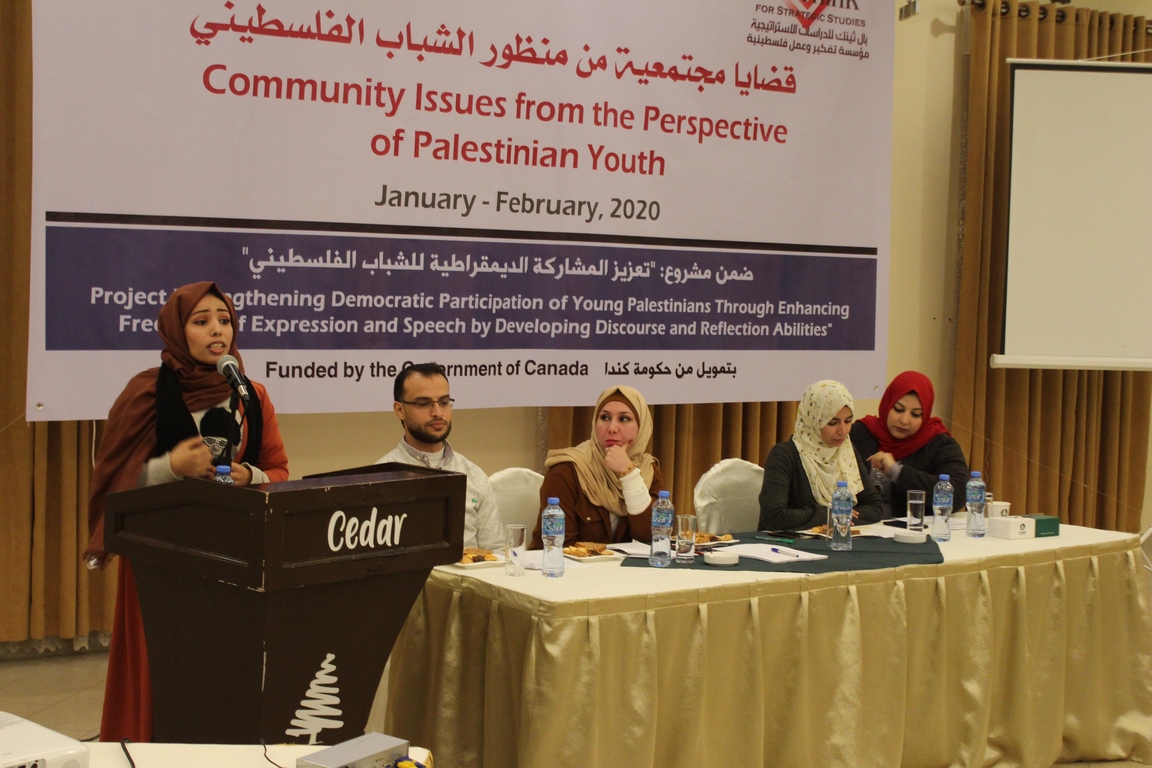
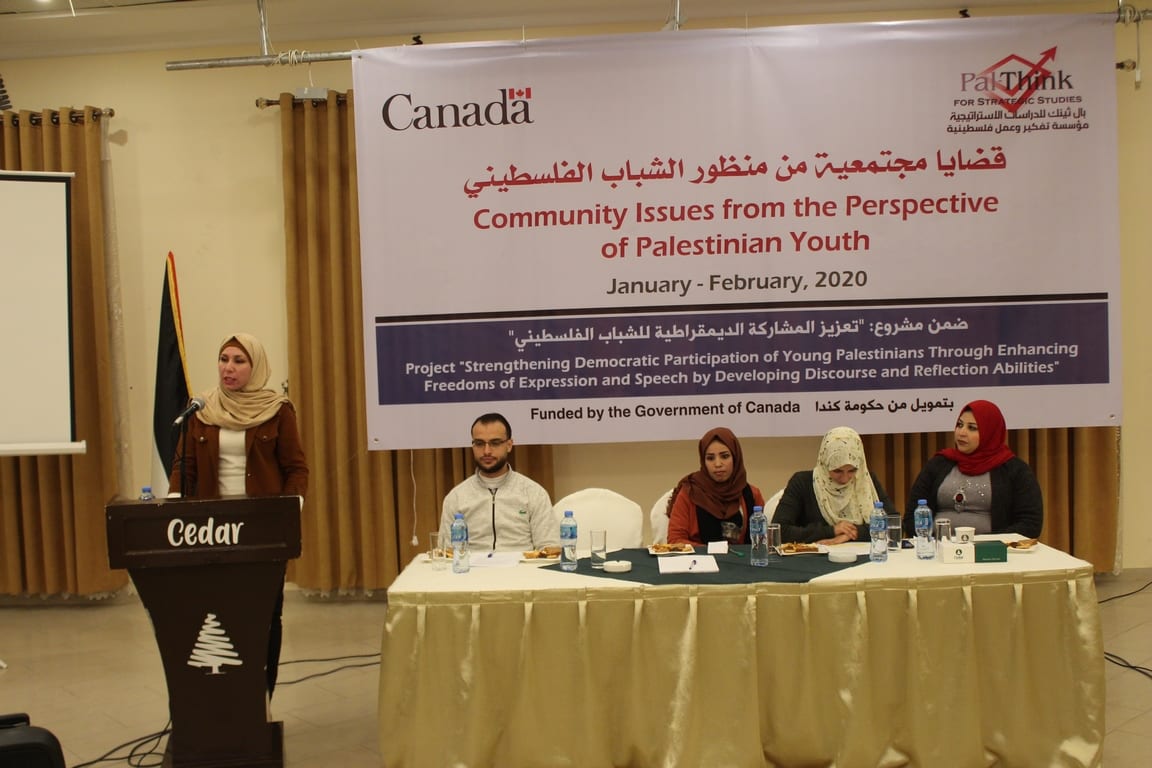
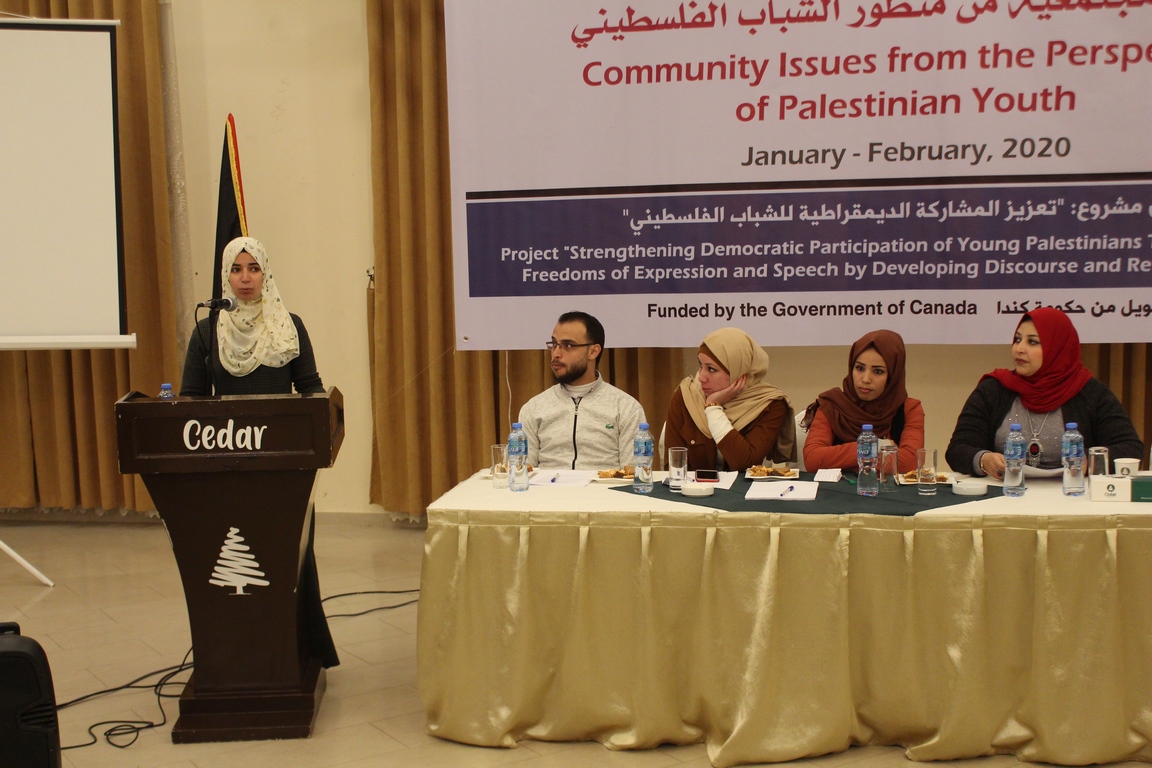
Pal-Think held the discussion «Community issues through the eyes of Palestinian youth», with four trainees presenting three research papers, under the Canada-funded democratic-participation project running since September 2019.
- Date
- 2020-01-13
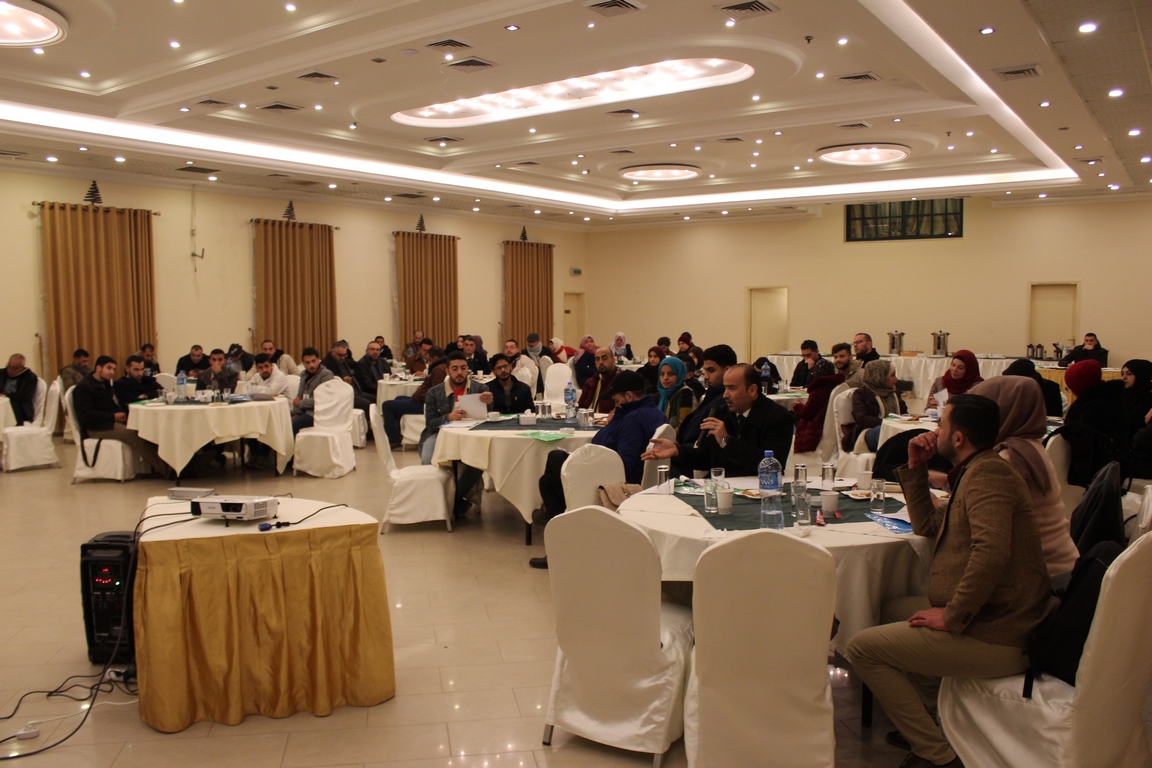
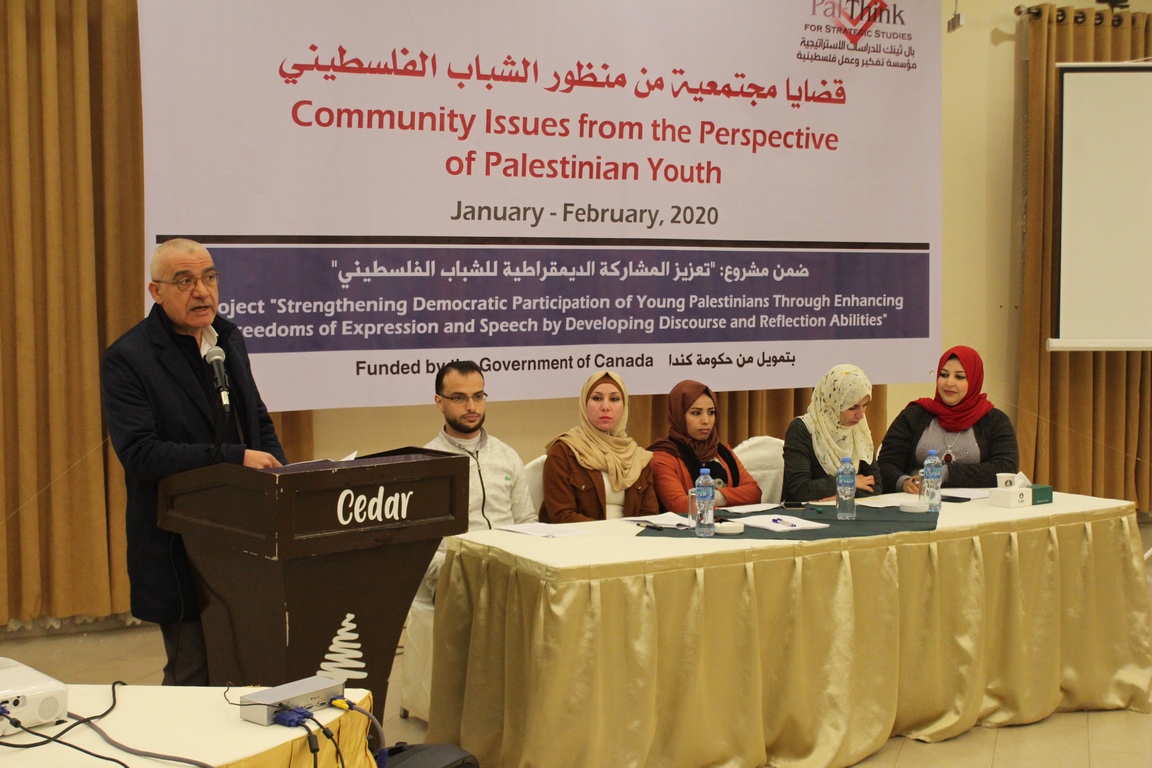
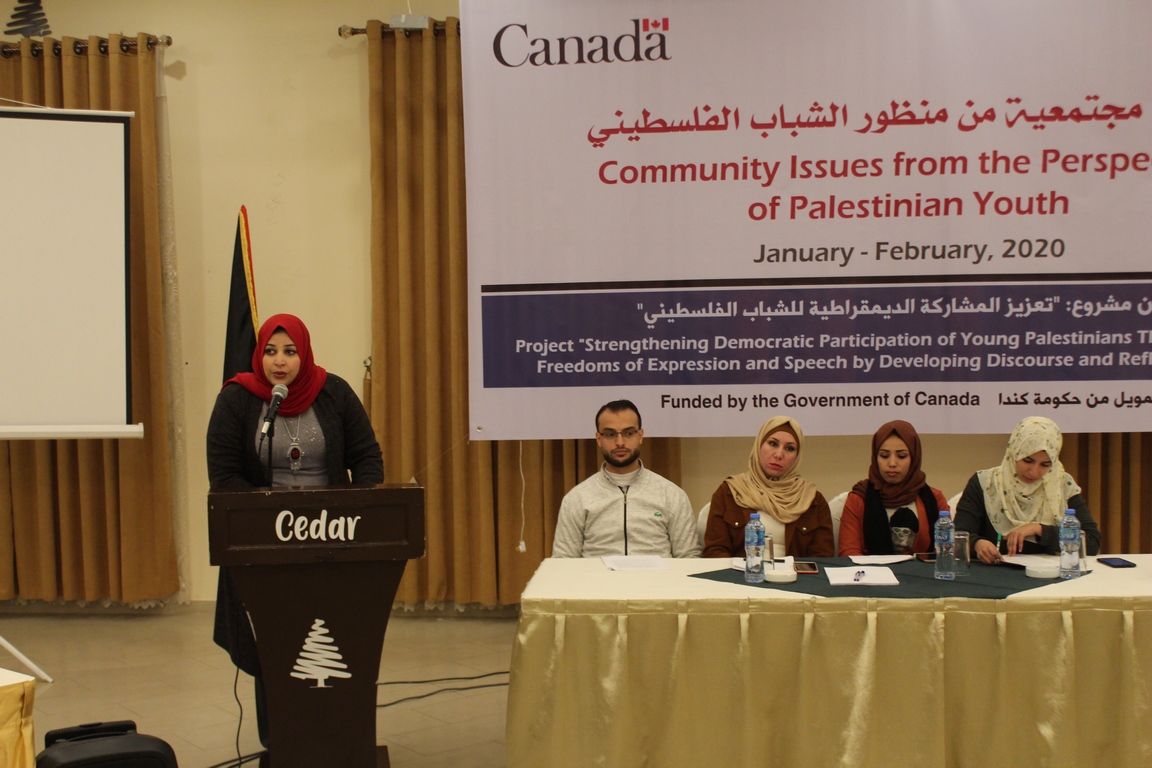
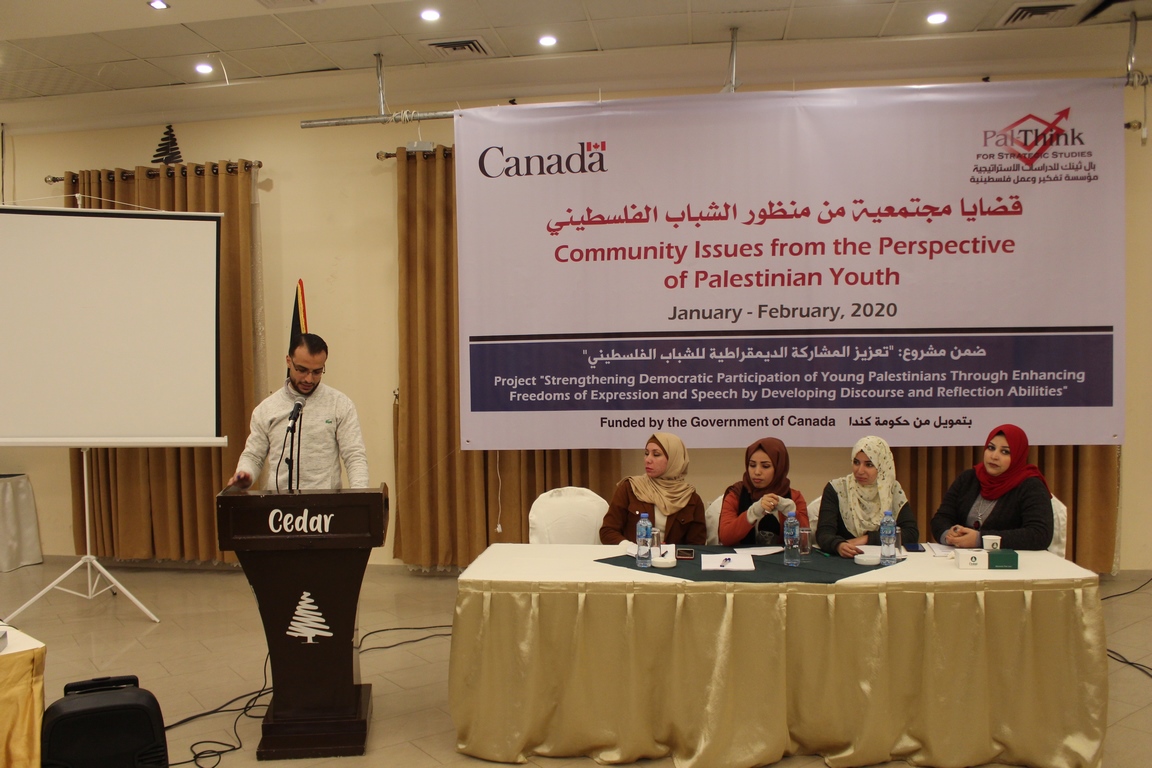
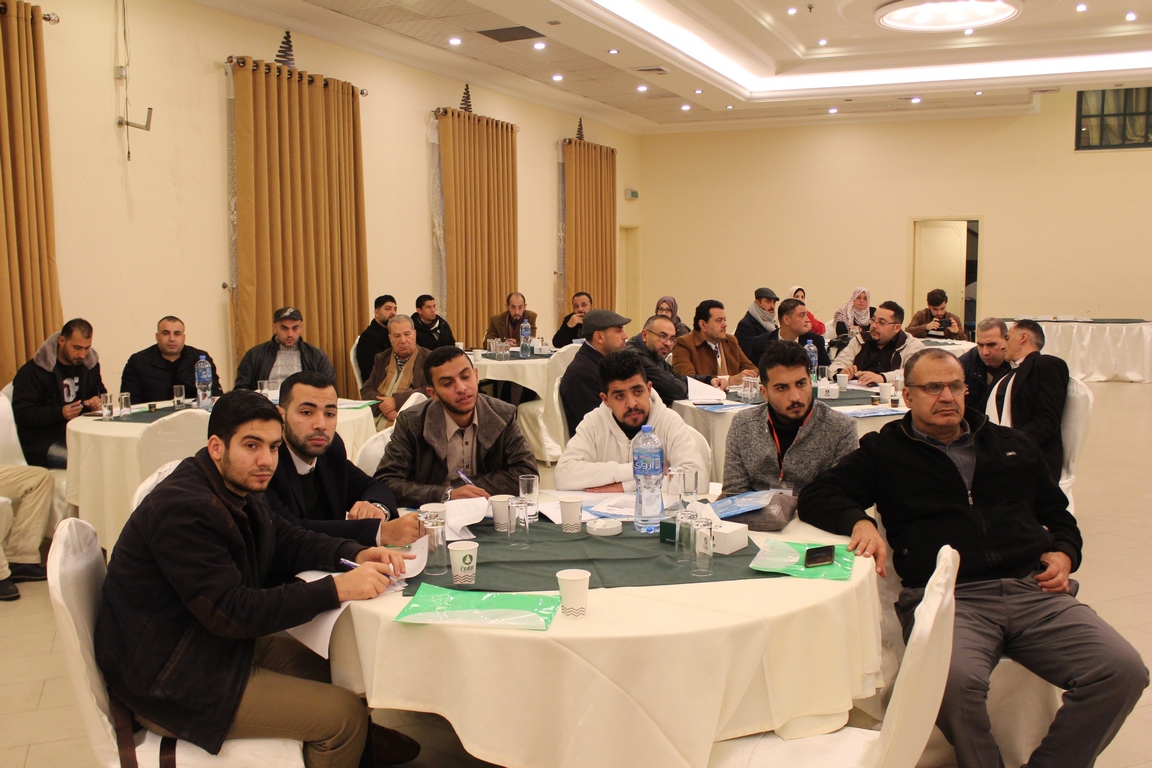
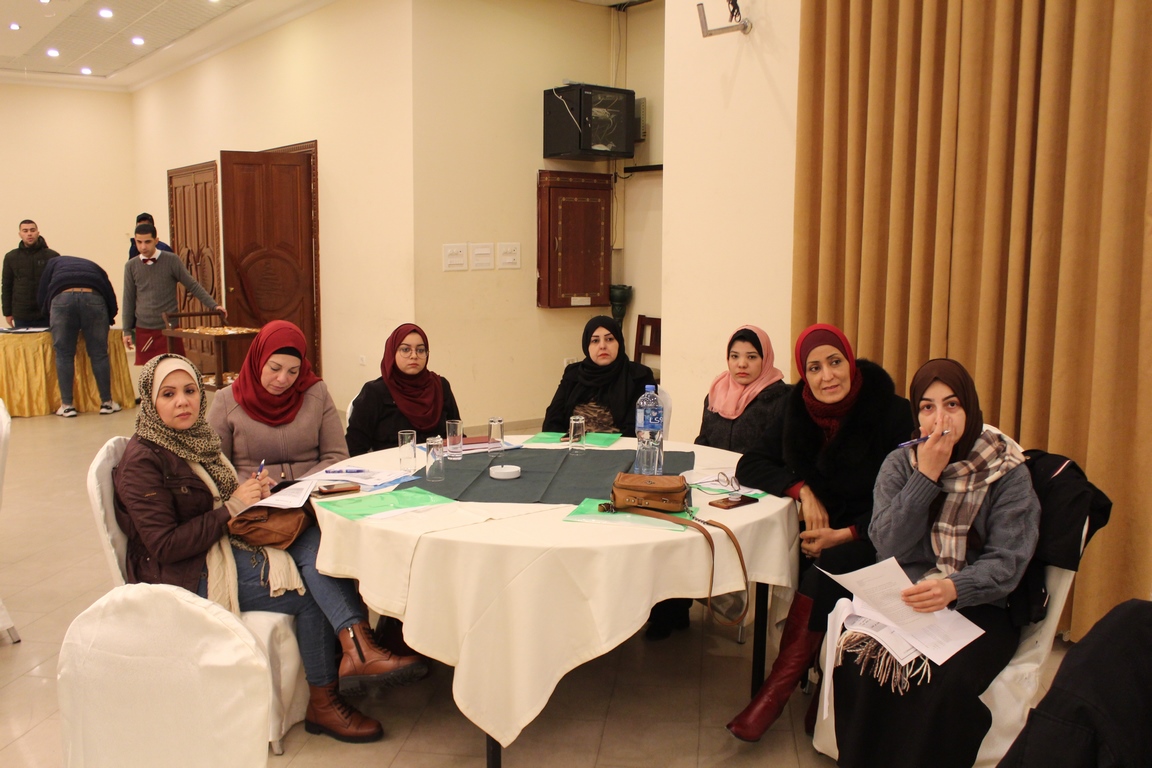
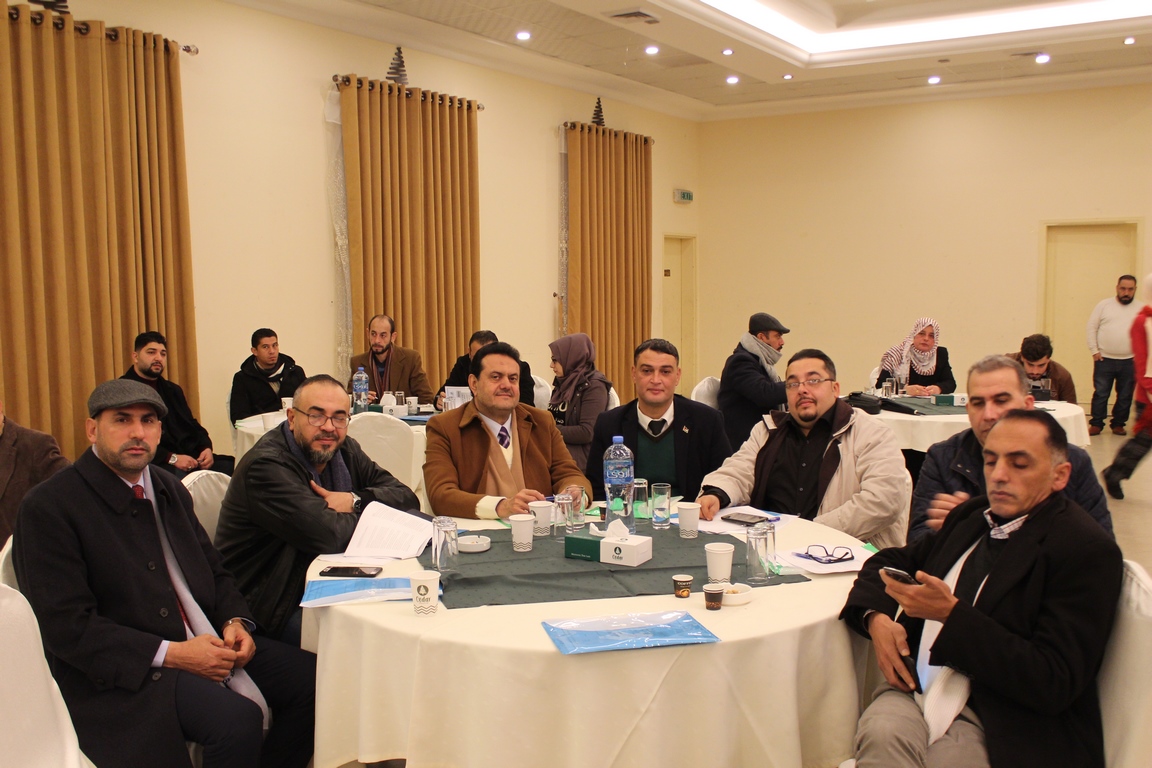
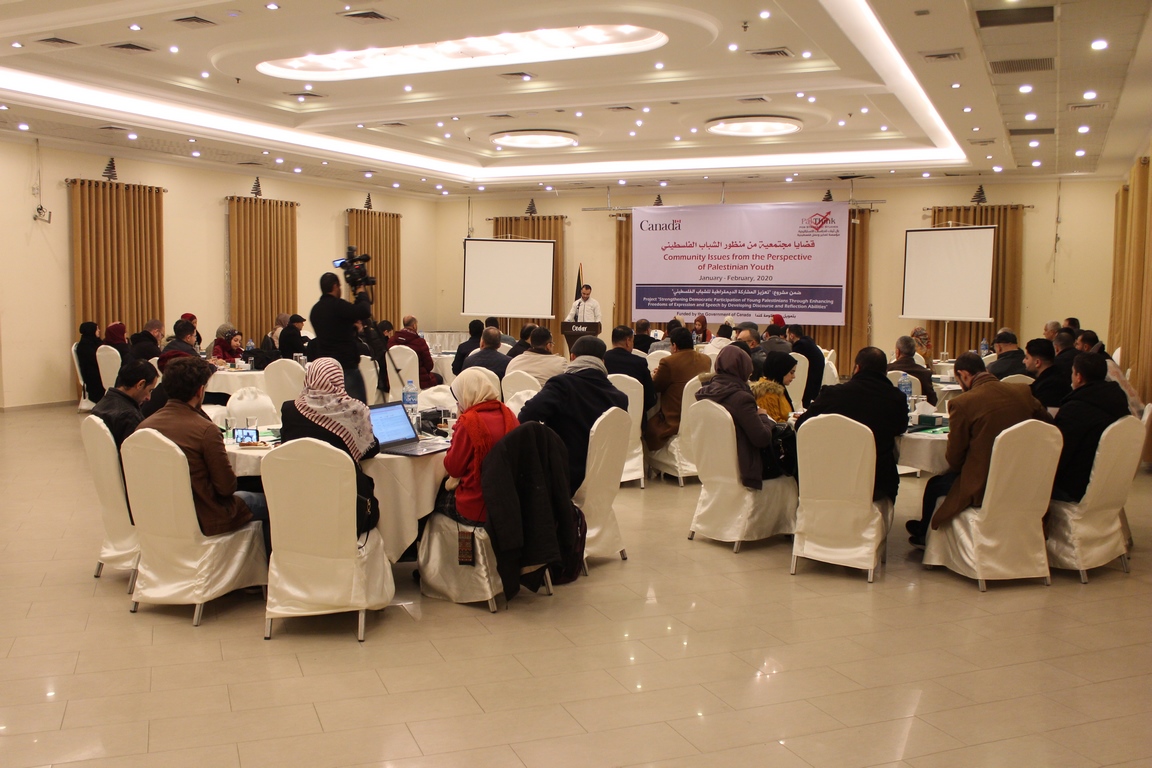
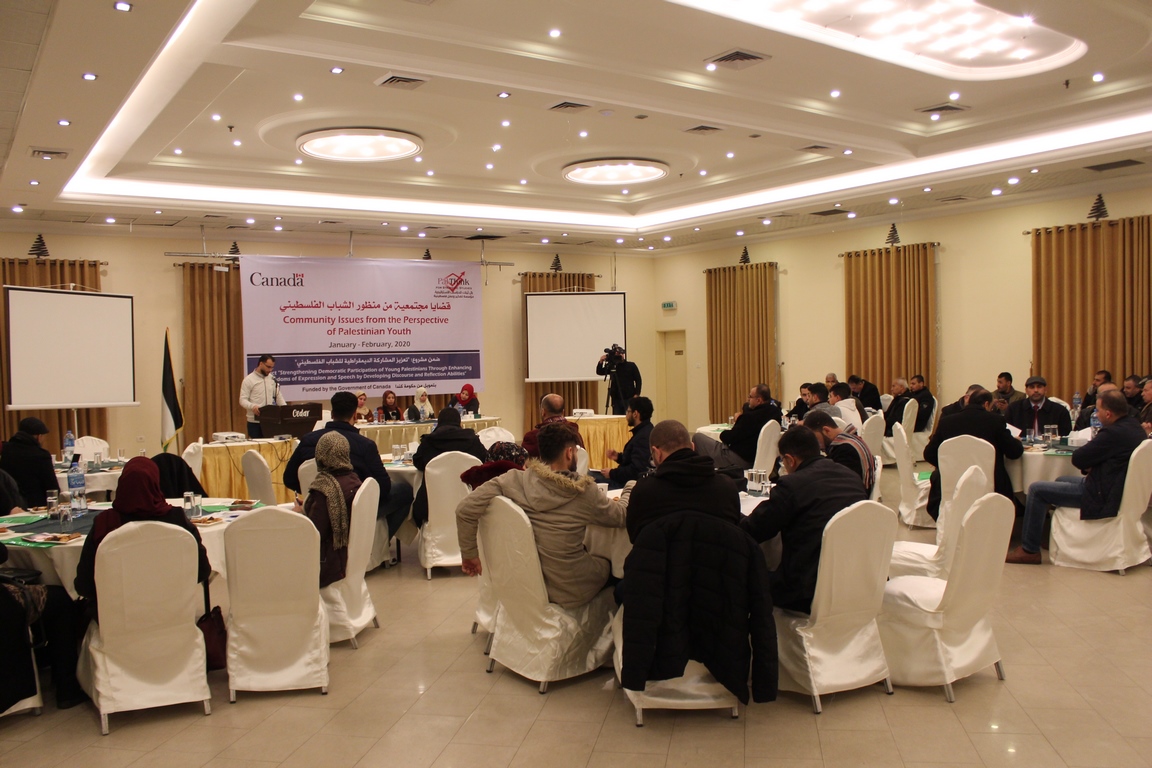
The “Pal-Think for Strategic Studies” institution organised a discussion session titled “Communal issues from the perspective of Palestinian youth”, during which 4 trainees reviewed 3 research papers, within the project “Strengthening the democratic participation of Palestinian youth” funded by the Government of Canada, extending from September 2019 to February 2020, with the attendance of an elite of academics, researchers, and those interested in the issues of youth and society.
The session was opened by the director of the “Pal-Think” institution, Mr Omar Shaban, welcoming the attendees, and he said that the youth form a majority in Palestinian society, and despite that they are not given the opportunity to express their opinions, and they are always invited only to listen. “Pal-Think” has been, and still is, organising for several years work sessions for the youth so that they speak and present their issues from their perspective.
He added: “Pal-Think works on strengthening the youth's research capacities, because there is a gap in the research capacity in Palestine. And because the new generation suffers from the weakness of scientific research in the Palestinian universities, this programme, and two others, came to support the youth's research capacity, because there will be no future without there being a participation of the youth in it”.
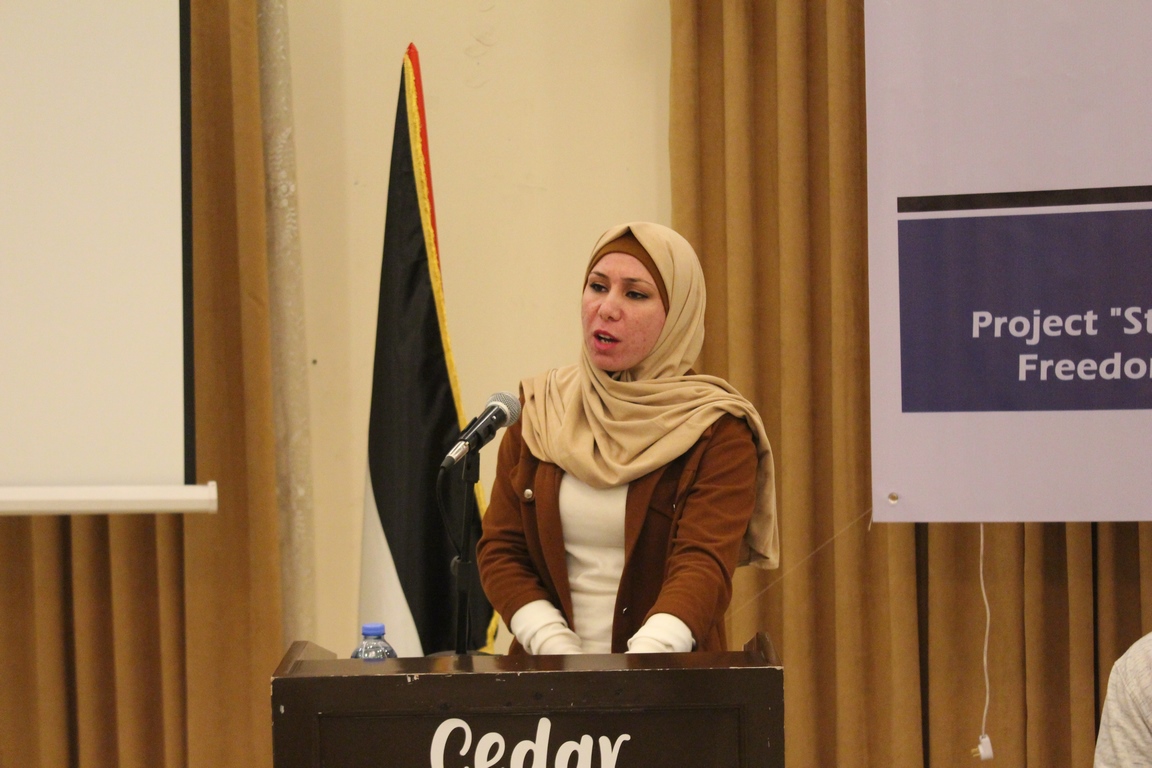
The session was moderated by Ms Heba al-Danaf, who introduced the attendees to the trainees and their research papers, and to the efforts “Pal-Think” expended for the trainees to reach this stage.
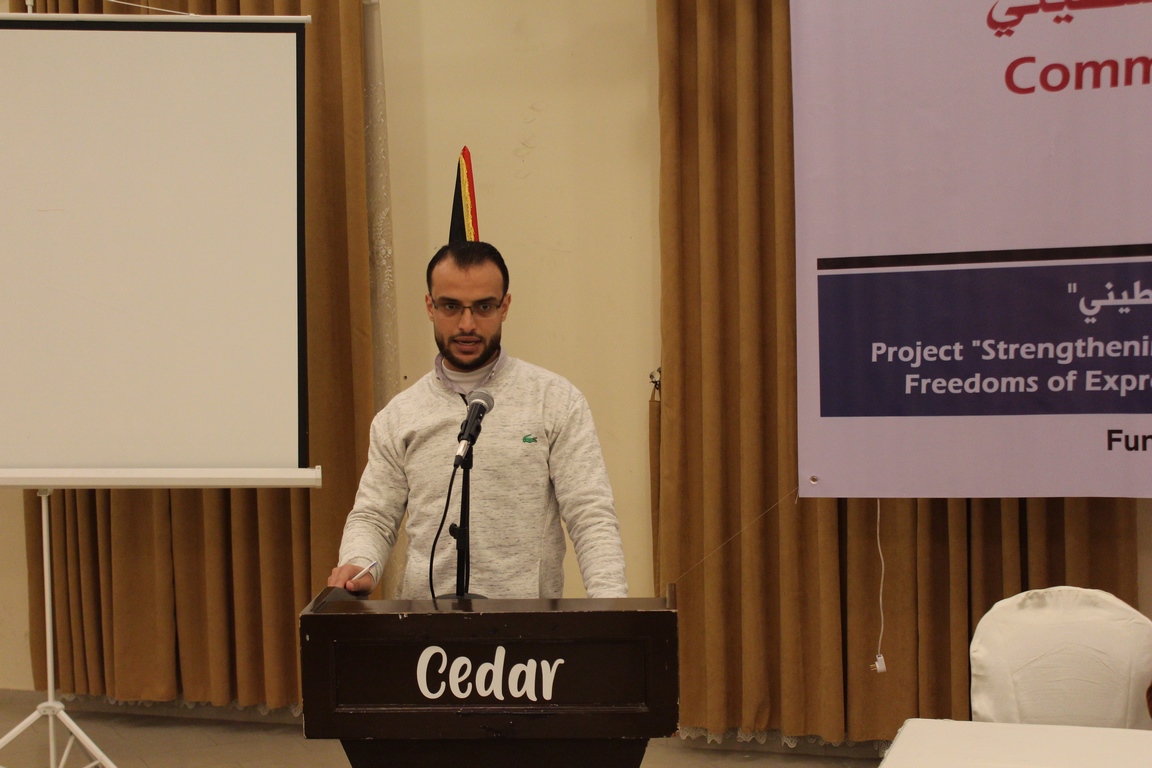
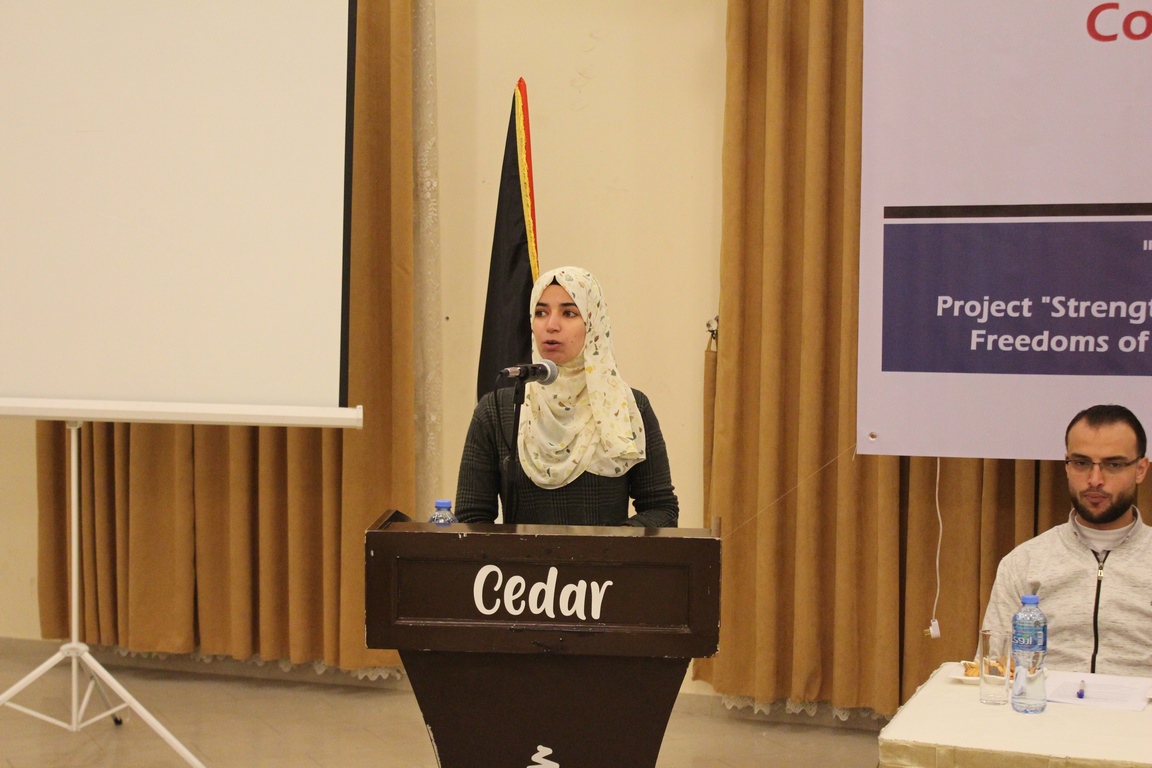
In his turn, the trainee Ahmed al-Sammak spoke, in his research paper titled “Palestinian youth between digital and traditional media”, of the stages of development of traditional and digital media, the relation of each of them with the other, and the advantages and negatives of each of them. He pointed in his paper to the fact that digital media in Palestine is dominated by the character of partisanship, because most of the media outlets in Palestine follow the two poles of the division. He reviewed the results and recommendations of his study, the most important of them: the necessity of creating interactive pages speaking foreign languages to acquaint the world with the Palestinian cause.
As for the two trainees Taghreed Najm and Heba Abu Bakra, they presented a research paper titled “Mechanisms of strengthening peaceful dialogue among Palestinian youth”, and took up the crisis of dialogue among the youth, in which the Palestinian division was the principal factor. The two researchers affirmed the necessity of activating the role of the civil-society organisations and the educational institutions in implanting the culture of dialogue, and the importance of organising youth debates, and employing the social-media sites to solve the crisis of peaceful dialogue among the youth.
From her side, the trainee Mona al-Masdar presented a research paper titled “The phenomenon of child labour in the Gaza Strip”, in which she reviewed the economic conditions in the Strip, the history of the labour phenomenon, the causes and factors that aggravated it, and its effects on society. She likewise spoke of the way Palestinian and international law deals with child labour. And she presented her recommendations for treating this phenomenon, the most important of them: strengthening and supporting the governmental programmes aiming at reducing the severity of poverty, strengthening the authority and legitimacy of the law, and educating the citizens legally in this respect.
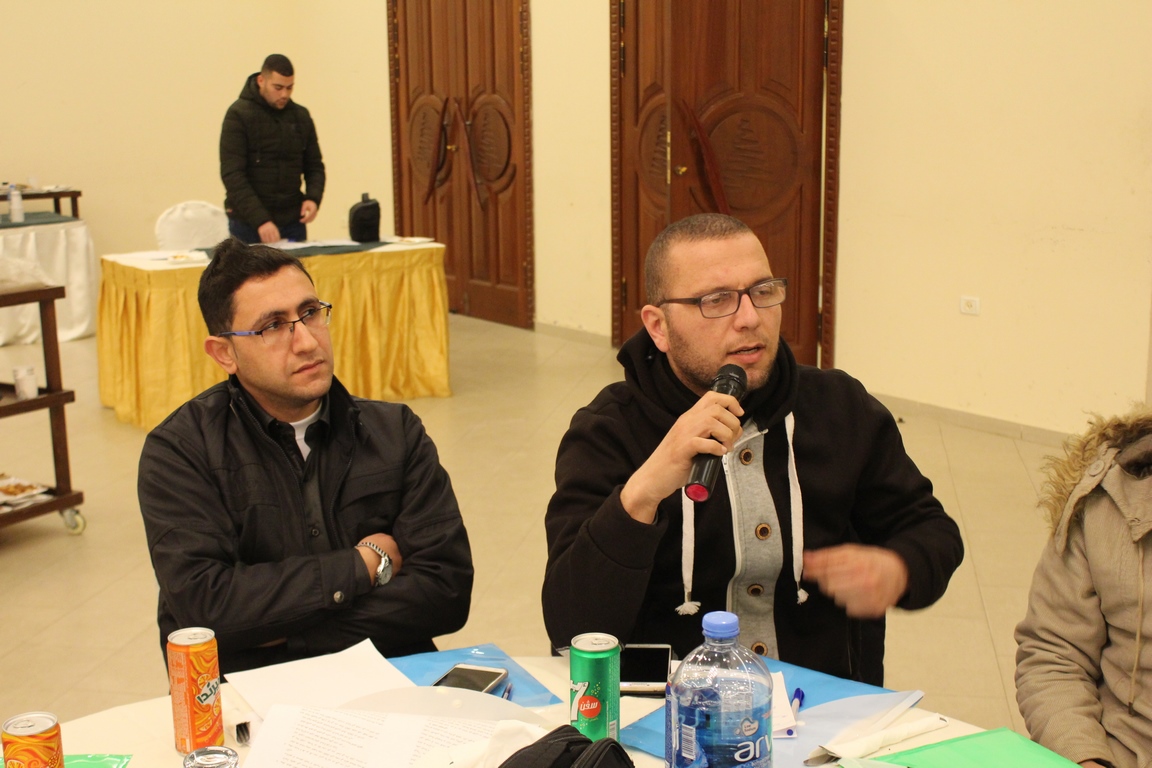
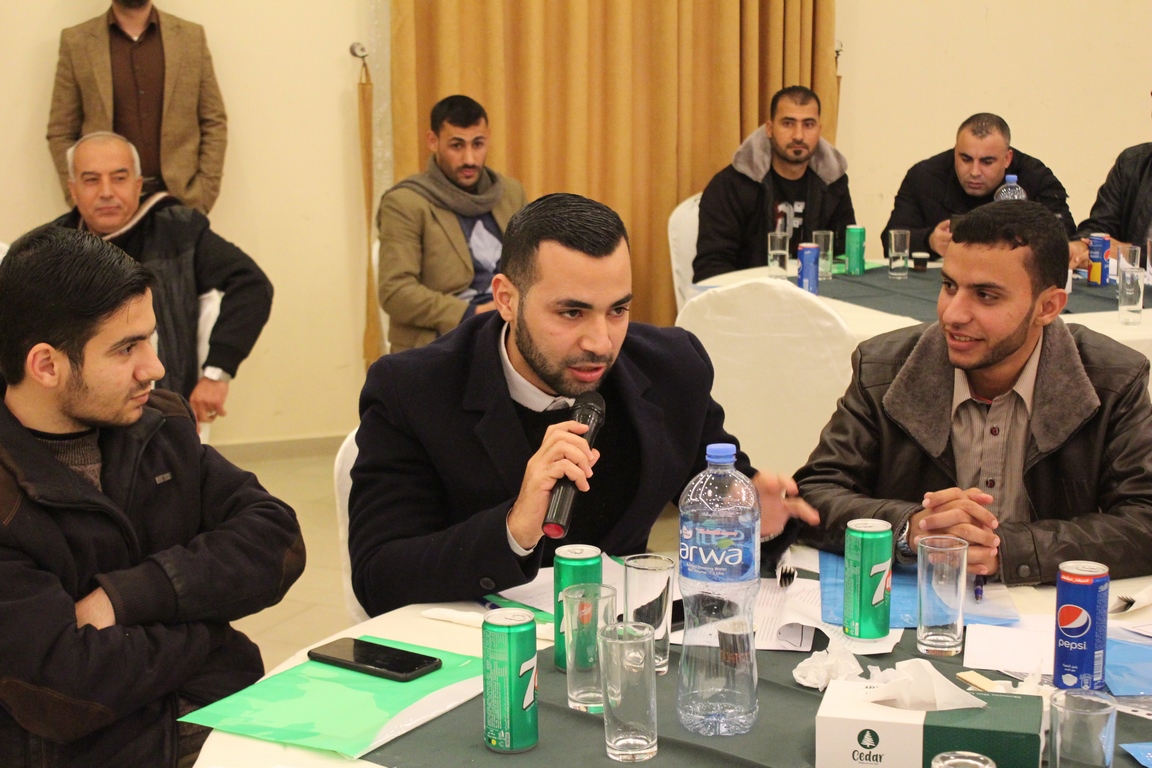
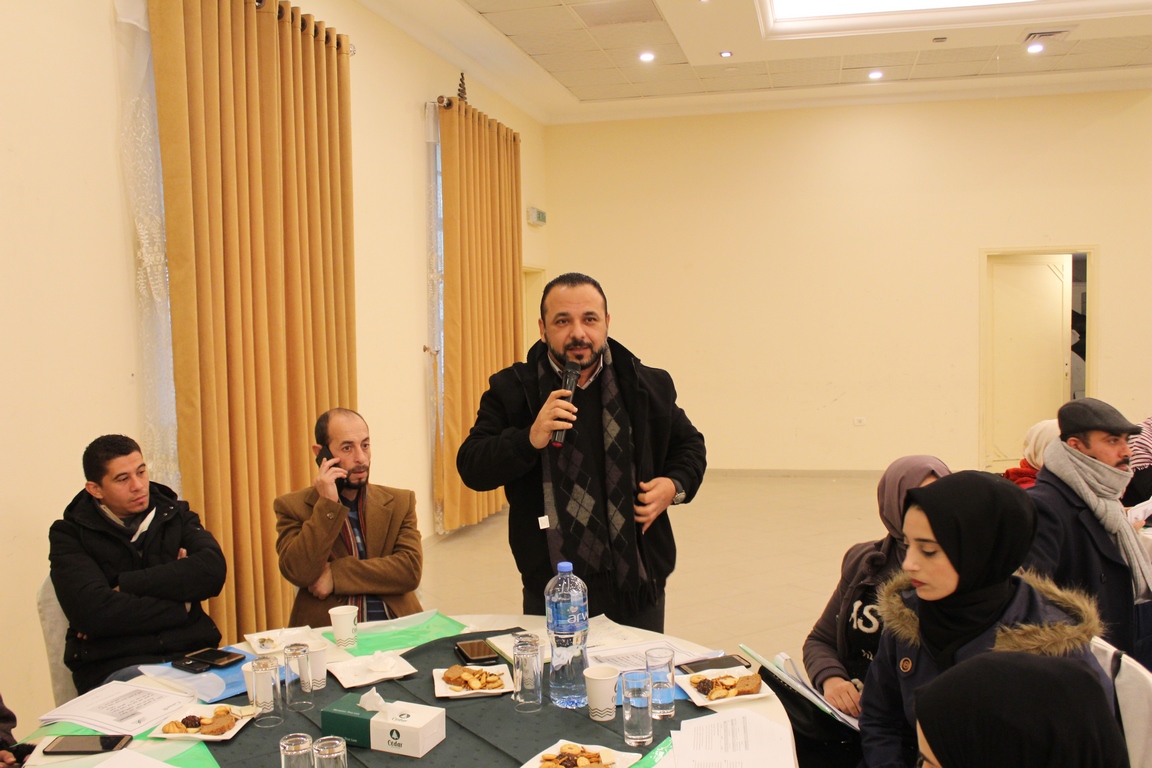
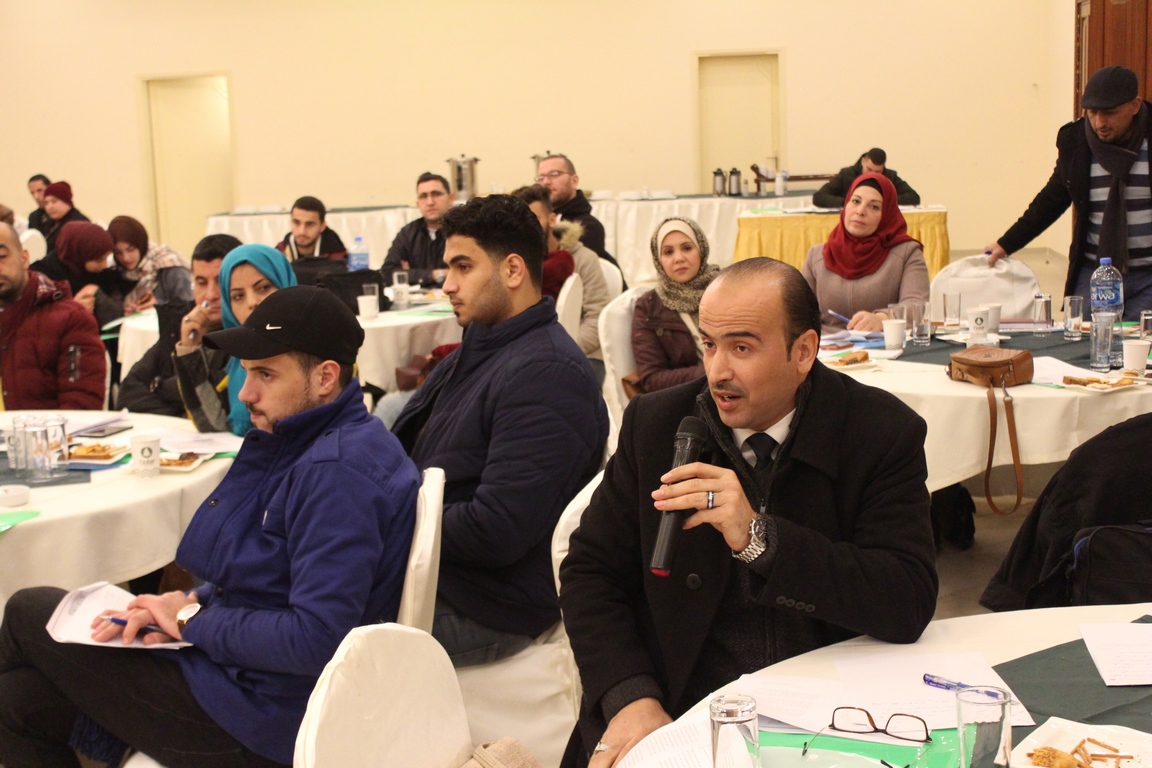
The attendees praised “Pal-Think's” efforts in training the youth in scientific research, and the trainees' effort. They also presented recommendations to improve the research papers.
It is recalled that 20 trainees enrolled in the project, which contained 10 intensive training days in intellectual writing and freedom of expression, and communication and presentation skills. The trainees presented 10 research papers in diverse issues that concern the youth, and presented their papers via Alwan radio, and they will also be presented in discussion sessions with the attendance of an elite of academics and researchers, and finally “Pal-Think” will publish these papers in a booklet. This project comes within “Pal-Think's” efforts, continuing from 2007 until now, in supporting and empowering Palestinian youth, to be able to build their state and contribute positively to sustainable development.