Amr Moussa: Palestine faces a last chance to save statehood, and the division is a grave threat
Amr Moussa: Palestine is living the final hours for saving the chance of statehood; the division is a grave threat that led to normalisation, weakened a unified Arab front, and is the Palestinian leaderships' responsibility.
- Date
- 2021-07-25
- Amr Moussa: Palestine is living in the final hours for saving the opportunity of establishing the state
- Amr Moussa: The division is a dangerous challenge to the Palestinian cause and led to normalisation
- Amr Moussa: The Palestinian division weakened the formation of a unified Arab front supporting the Palestinians
- Amr Moussa: The Palestinian leaderships bear the responsibility for the division
- Amr Moussa: Time is fast and may pass the Palestinian cause by, which must be prevented by reconciliation
- Amr Moussa: The Gaza Strip is the Palestinians' responsibility and Egypt will not bear its responsibility
- Amr Moussa: Egypt only presents help to Gaza and will not accept bearing its responsibilities
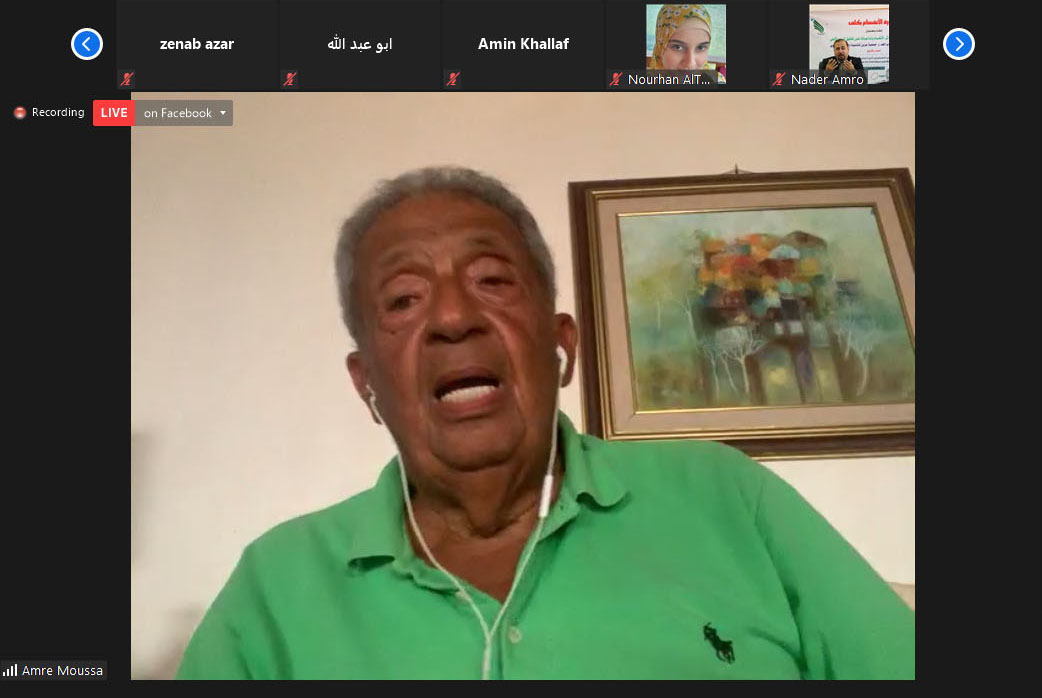
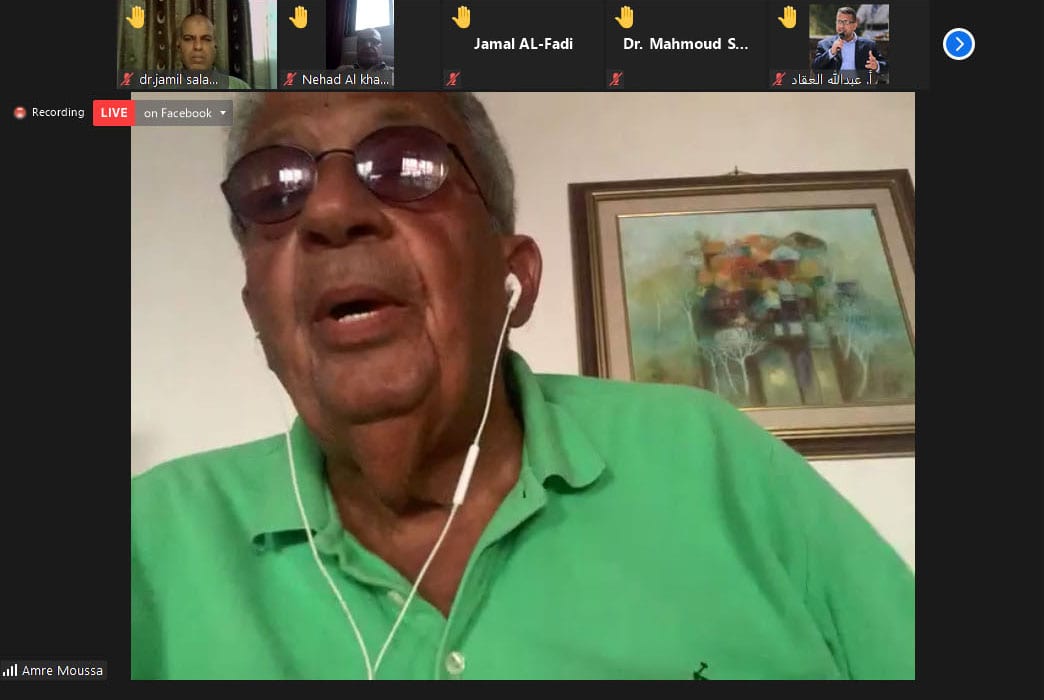
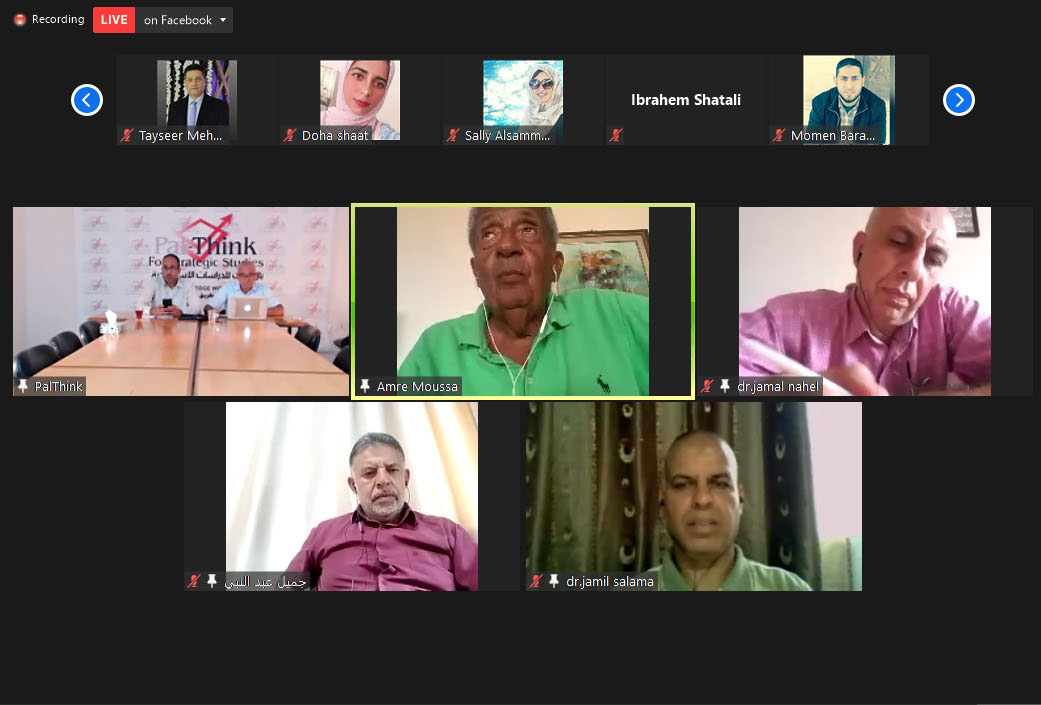
The former secretary-general of the League of Arab States, Amr Moussa, affirmed that Palestine is living in the final hours and metres for saving a situation in which the opportunity of establishing the Palestinian state is dissipating — which needs a unified Palestinian position by ending the division and achieving the Palestinian reconciliation.
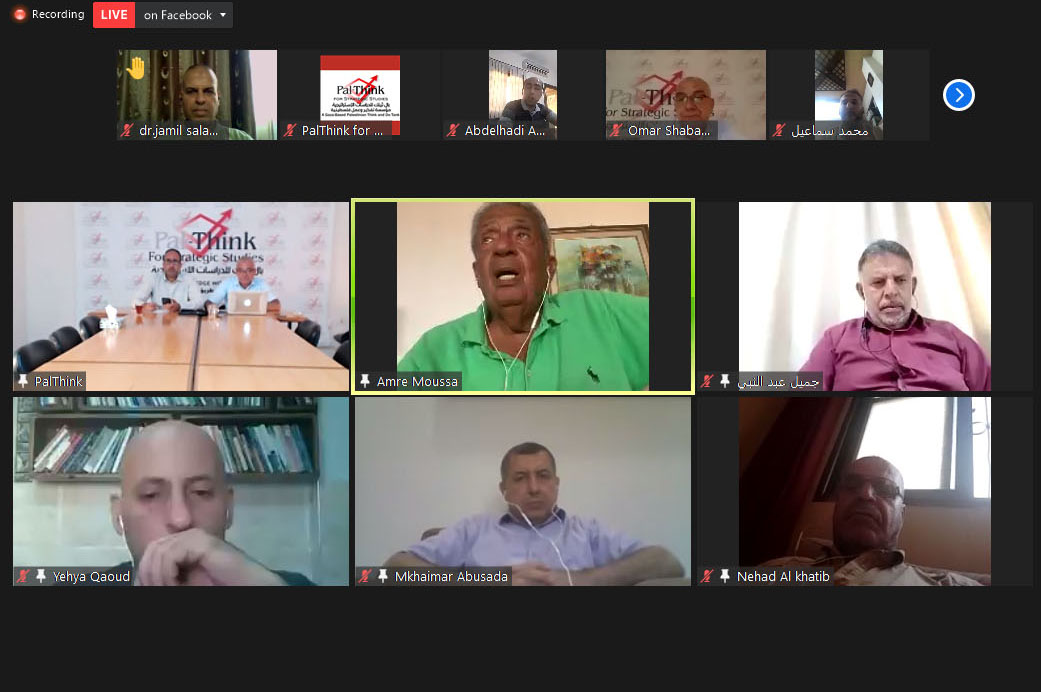
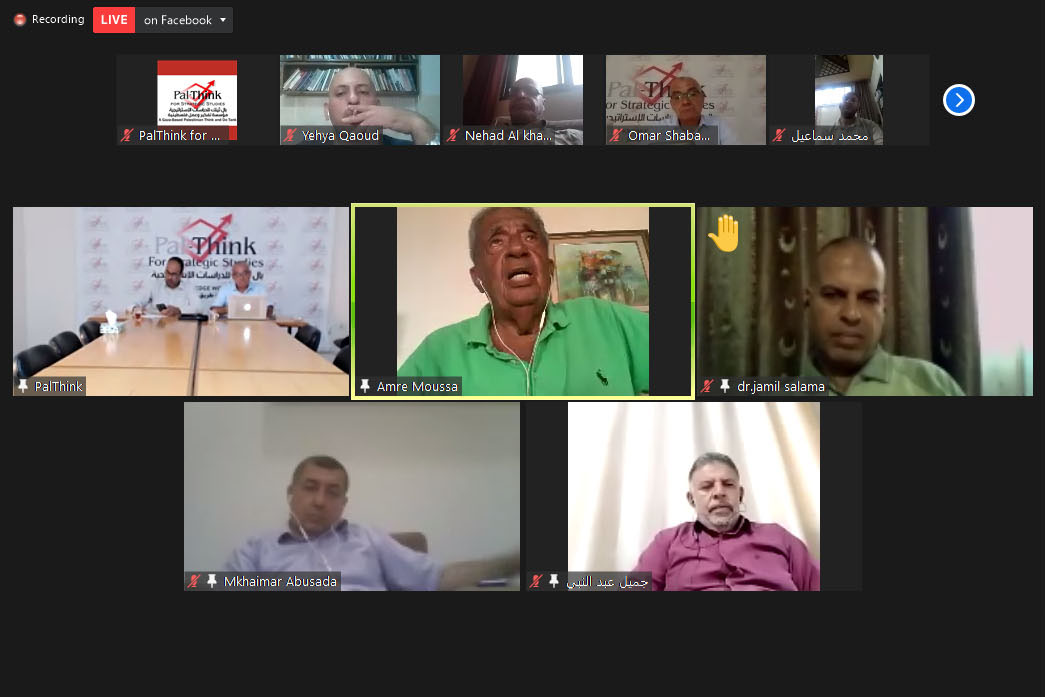
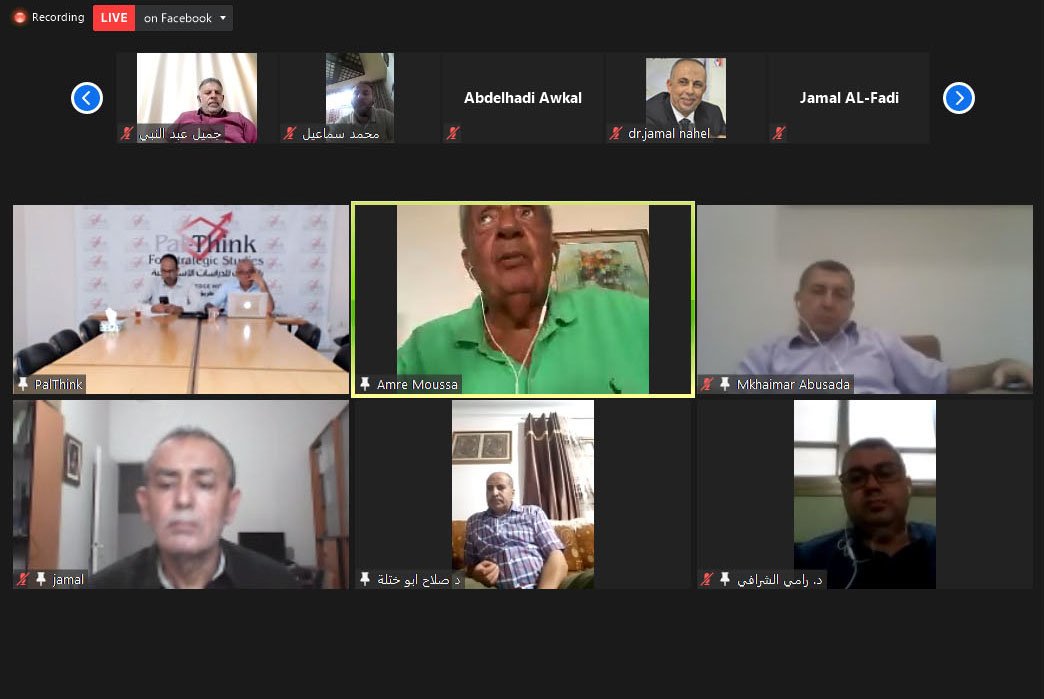
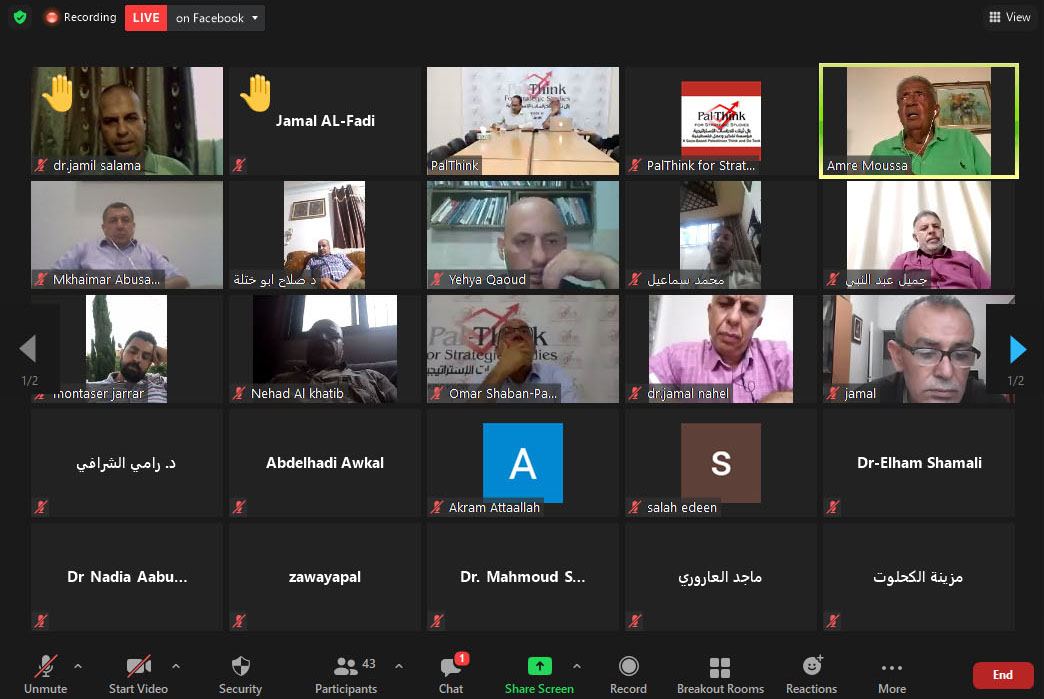
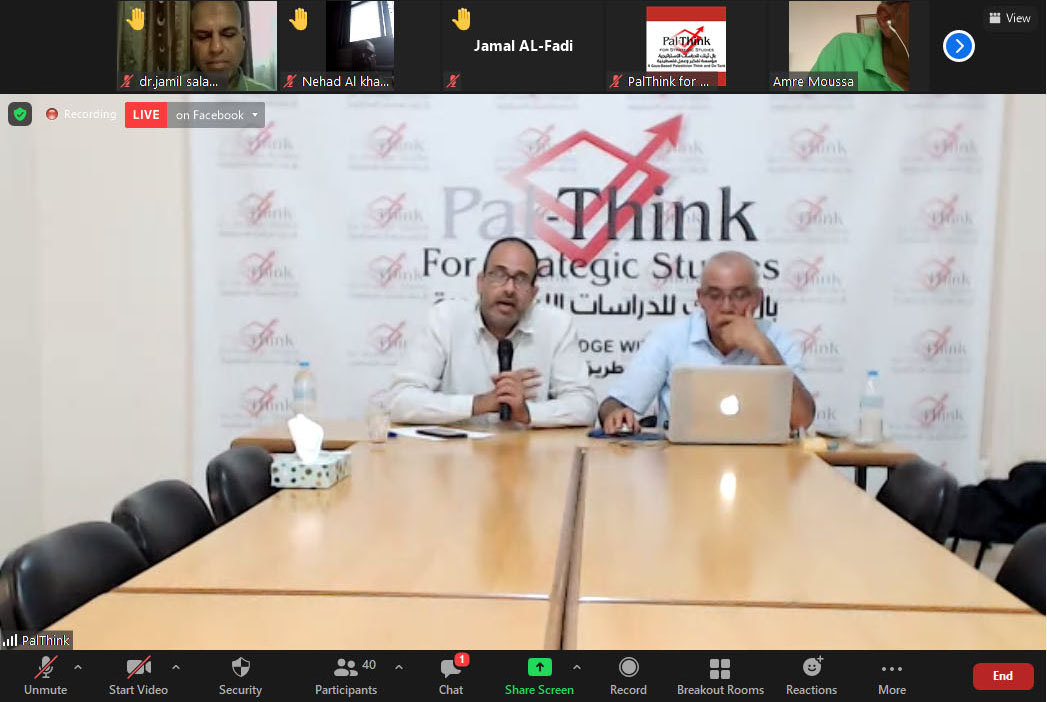
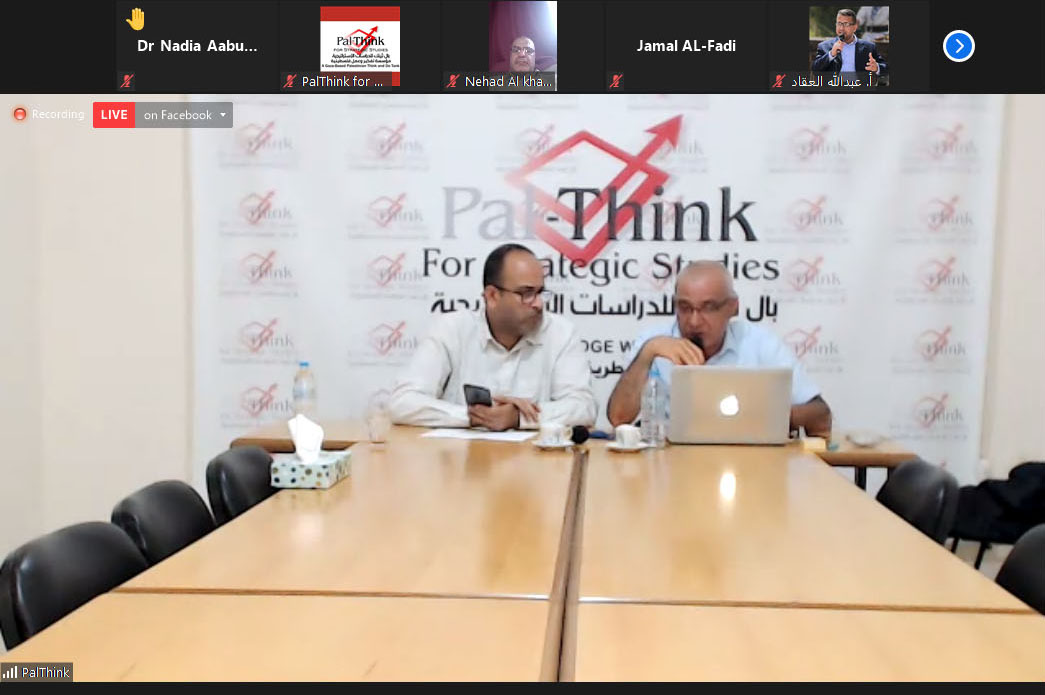
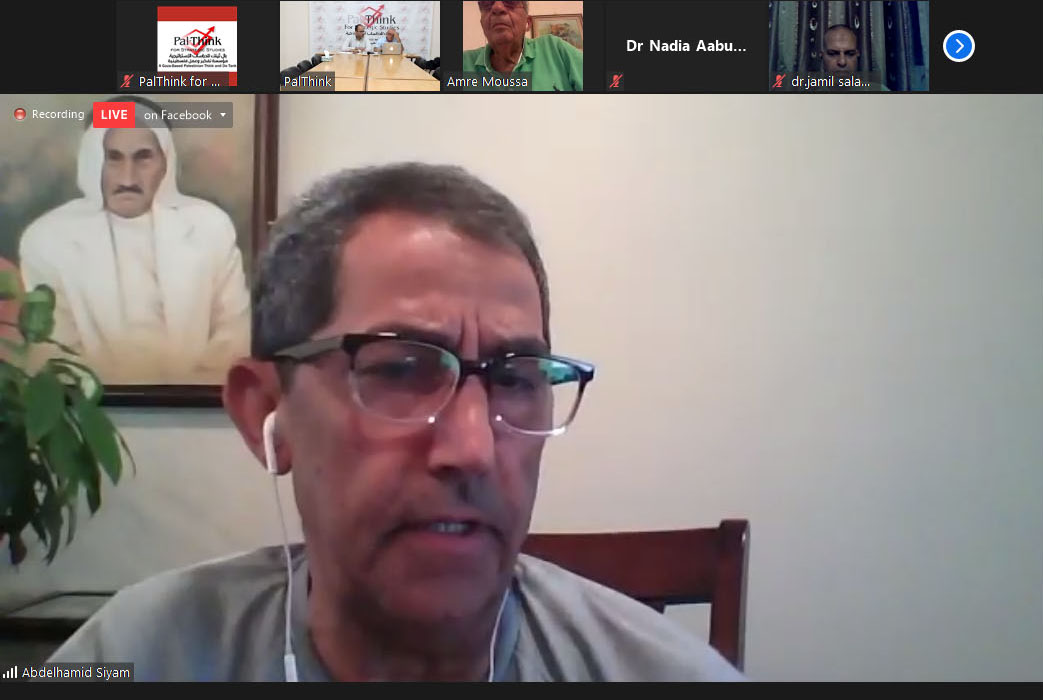
Moussa said, in a word of his during a workshop organised by the “Zawaya Foundation for Thought and Media and Pal-Think for Strategic Studies”, in which an elite of Palestinian and Arab writers and journalists took part: “The opportunity of establishing the Palestinian state shrank further in the era of the American president Donald Trump, with the recognition of Jerusalem as Israel's capital and the transfer of the American embassy to Jerusalem, and his allowance of the Israeli policy of annexing the Palestinian territories” — adding that if the Palestinian reconciliation and Palestinian unification behind a unified position are not achieved, the Palestinians may lose the opportunity of establishing the Palestinian state, and we move to the option of the one state.
He continued that everyone was shocked and remains shocked by the regrettable Palestinian division in the Palestinian national front, which led some to ask which team represents the Palestinians (in reference to the Fatah movement, which controls the West Bank, and the Hamas movement, which controls the Gaza Strip), and which team will form the Palestinian state being spoken of.
Amr — who worked as Egyptian foreign minister in the era of Hosni Mubarak — made clear that the Palestinian position faces two great challenges, namely the occupation and the division; and should the division be treated, the occupation can be treated.
He noted that regardless of what has happened of normalisation of relations between Arab states and Israel, were the Palestinian division ended, many things would return to their natural place.
Amr stressed that the Palestinian division is a very dangerous subject, placing on the Palestinian leaderships the responsibility for the division, which makes it difficult to form a unified Arab front supporting the Palestinian cause, and led to what happened of normalisation processes with Israel.
In reply to a question from the Zawaya site about the Arab League's not revealing the party obstructing the Palestinian reconciliation, Amr said: “We want reconciliation and we do not want to expose one of the parties at the expense of the other party” — and it is not right that we add to the Palestinians' troubles new troubles by standing with some party; placing the responsibility for achieving the reconciliation on the Palestinians alone. In light of Egypt's declaration of its support for the reconciliation efforts, all the Palestinians must seize the opportunity and focus on easing the Palestinian parties' sitting together, and grasp that time is fast now and may pass the Palestinian cause by — a matter that must be prevented by reconciliation.
Concerning the possibility of Egypt bearing the responsibility for the Gaza Strip, Amr Moussa stressed Egypt's refusal to bear the responsibility for the Gaza Strip: Egypt can only present help and open the crossings, whereas the Strip's responsibility is a purely Palestinian responsibility, and Egypt cannot bear the Strip's responsibility — because the Palestinians' demand is a Palestinian state, and Gaza must be a part of this state.