A first in Palestine: Pal-Think hosts Bitcoin expert Dr. Saifedean Ammous on digital currencies and the global economy
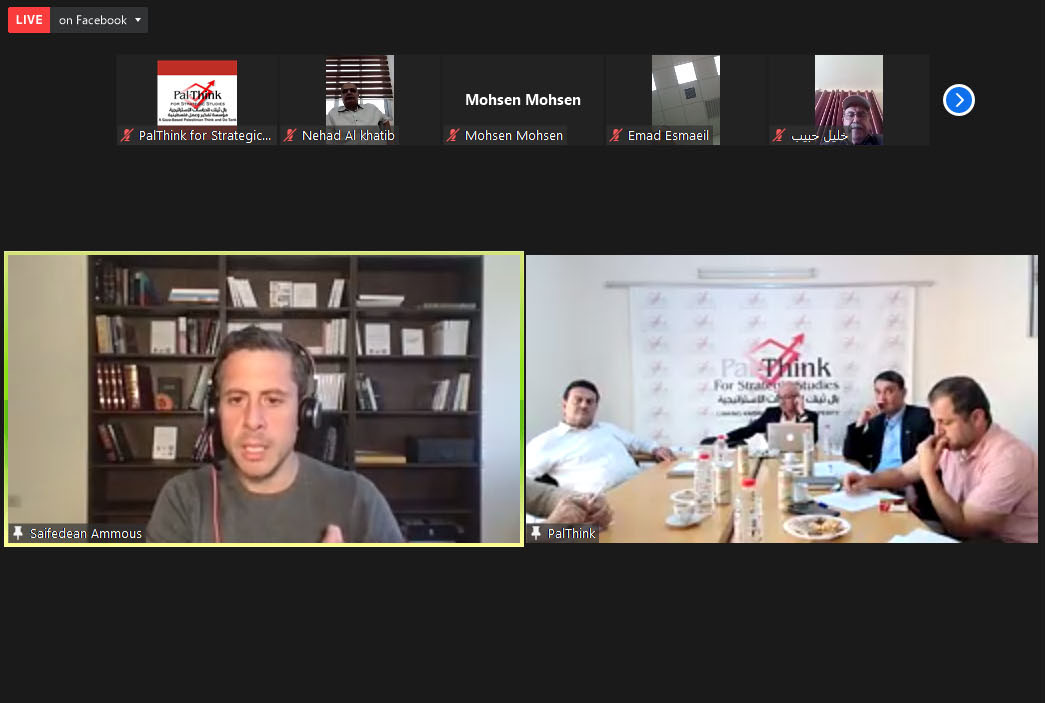
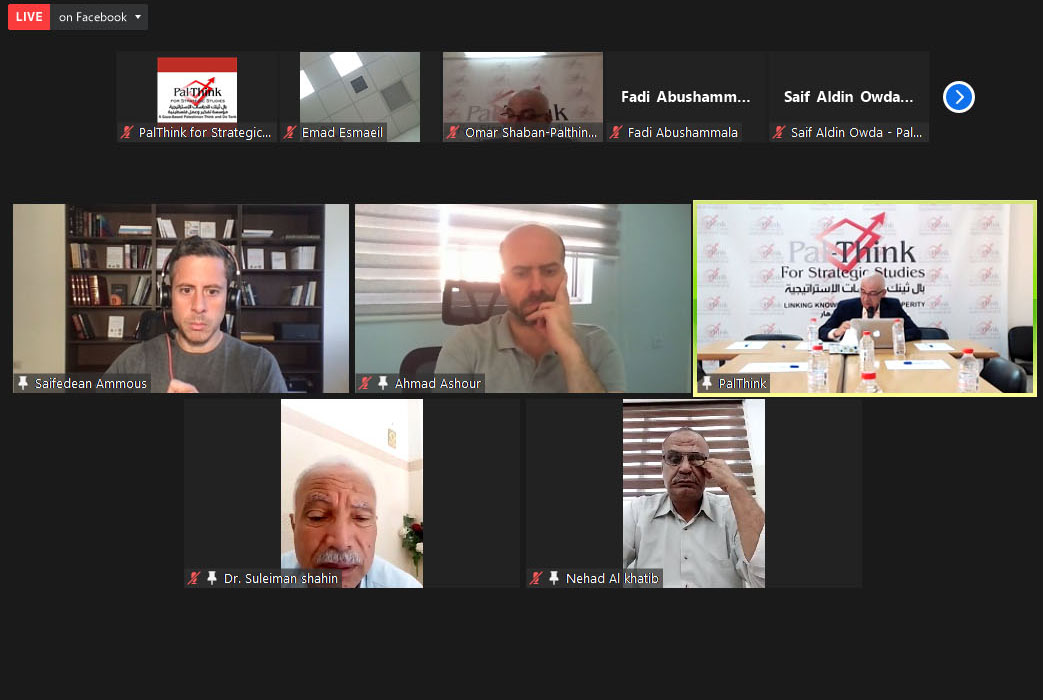
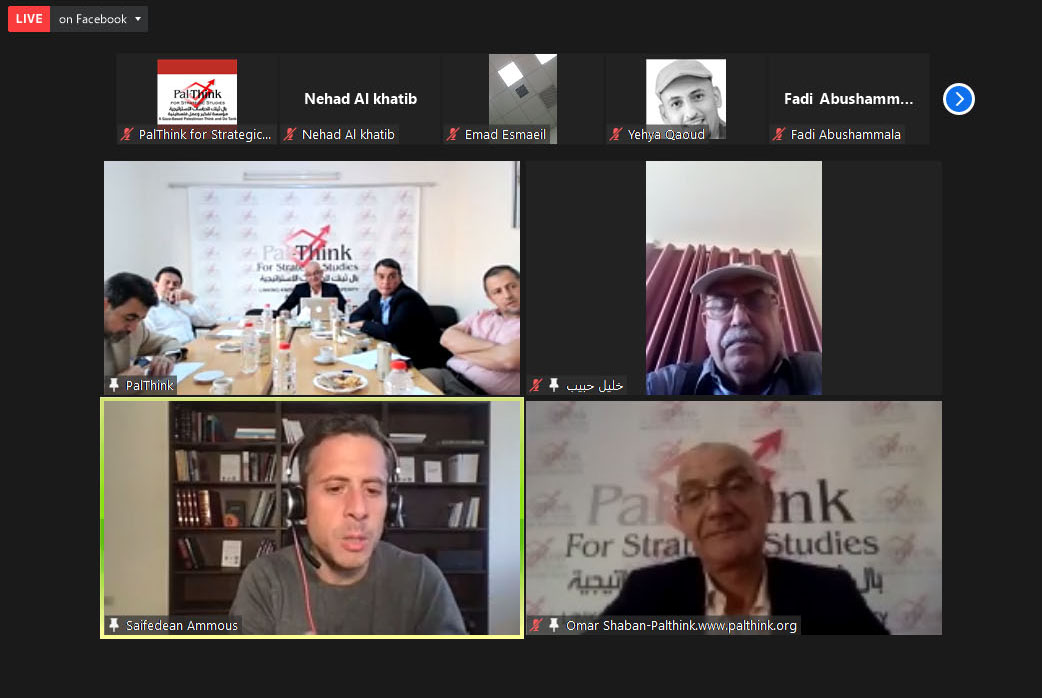
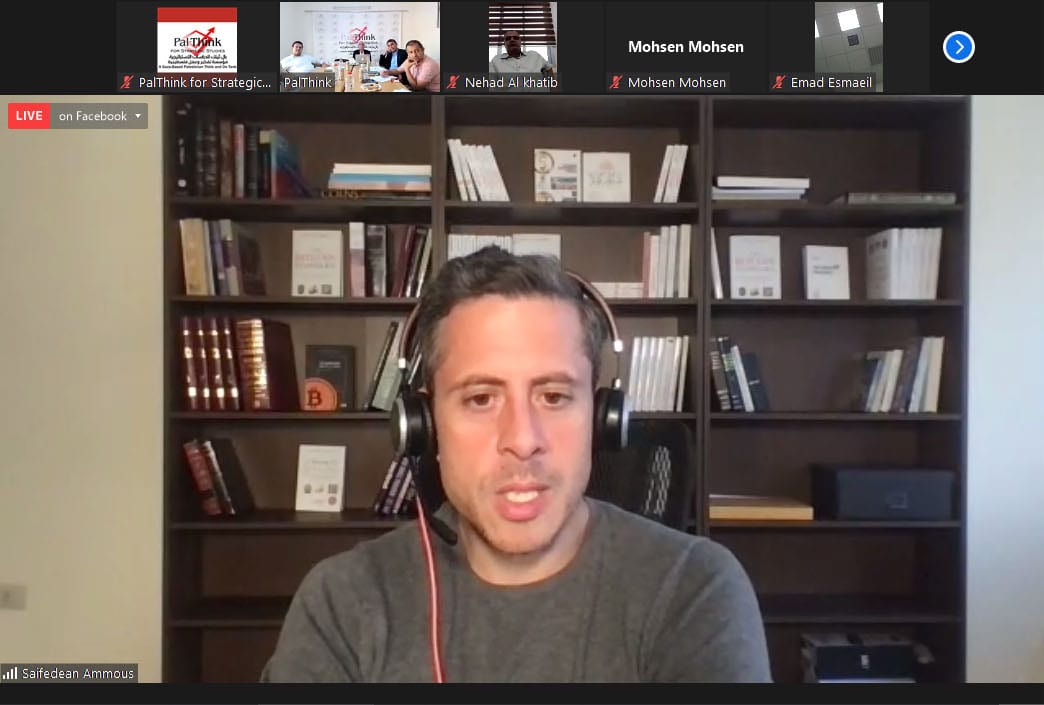
Pal-Think held a Zoom dialogue, «Digital currencies and their consequences for the world economy, government control and the global monetary system», hosting Dr. Saifedean Ammous of the Lebanese American University, author of «The Bitcoin Standard».
- Date
- 2021-11-11
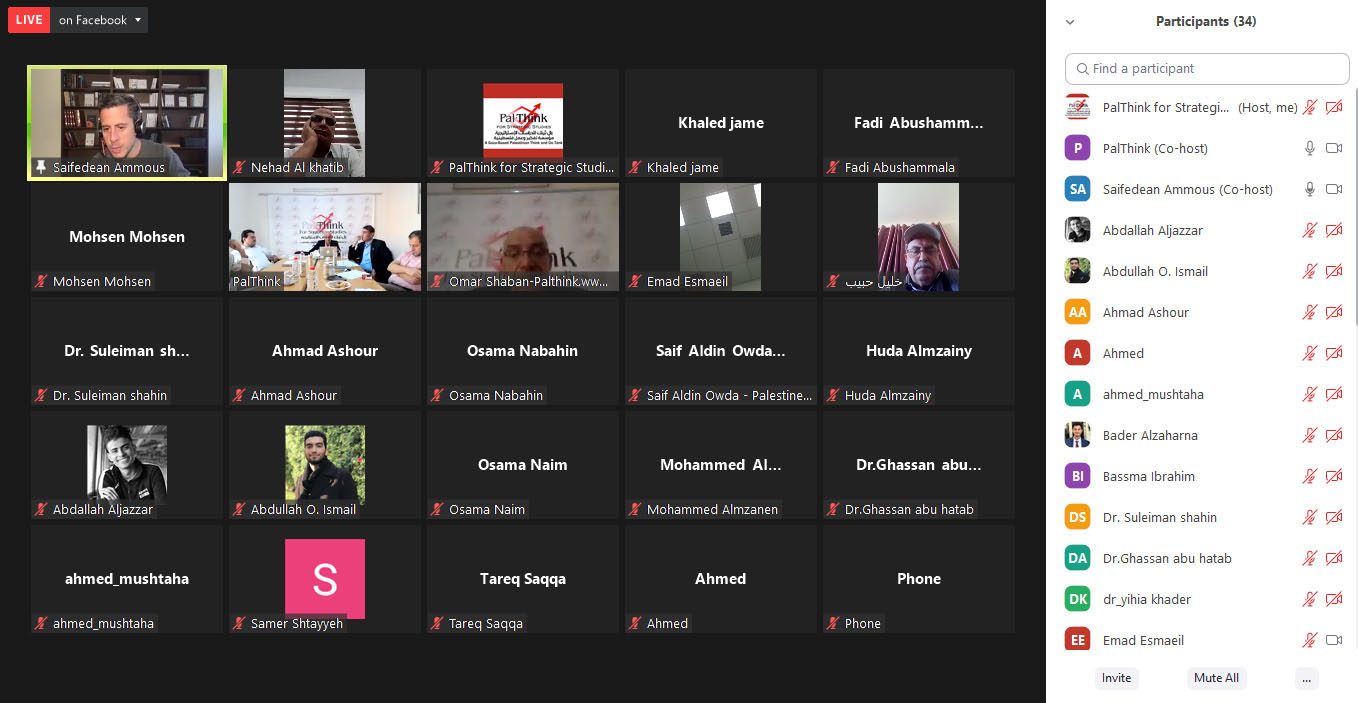
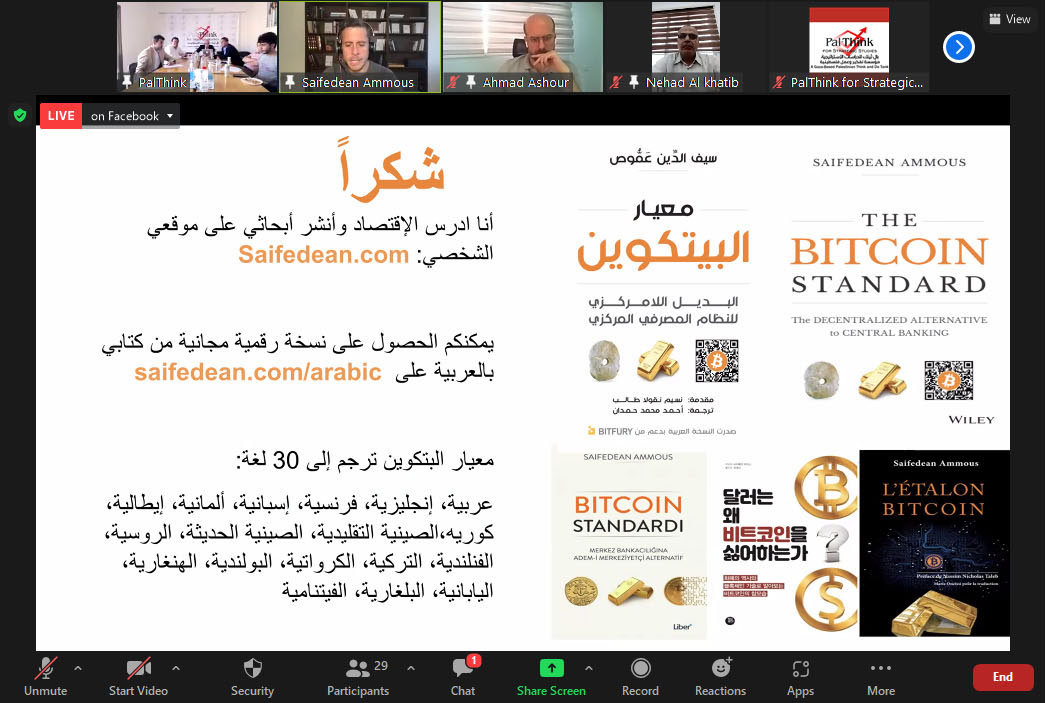
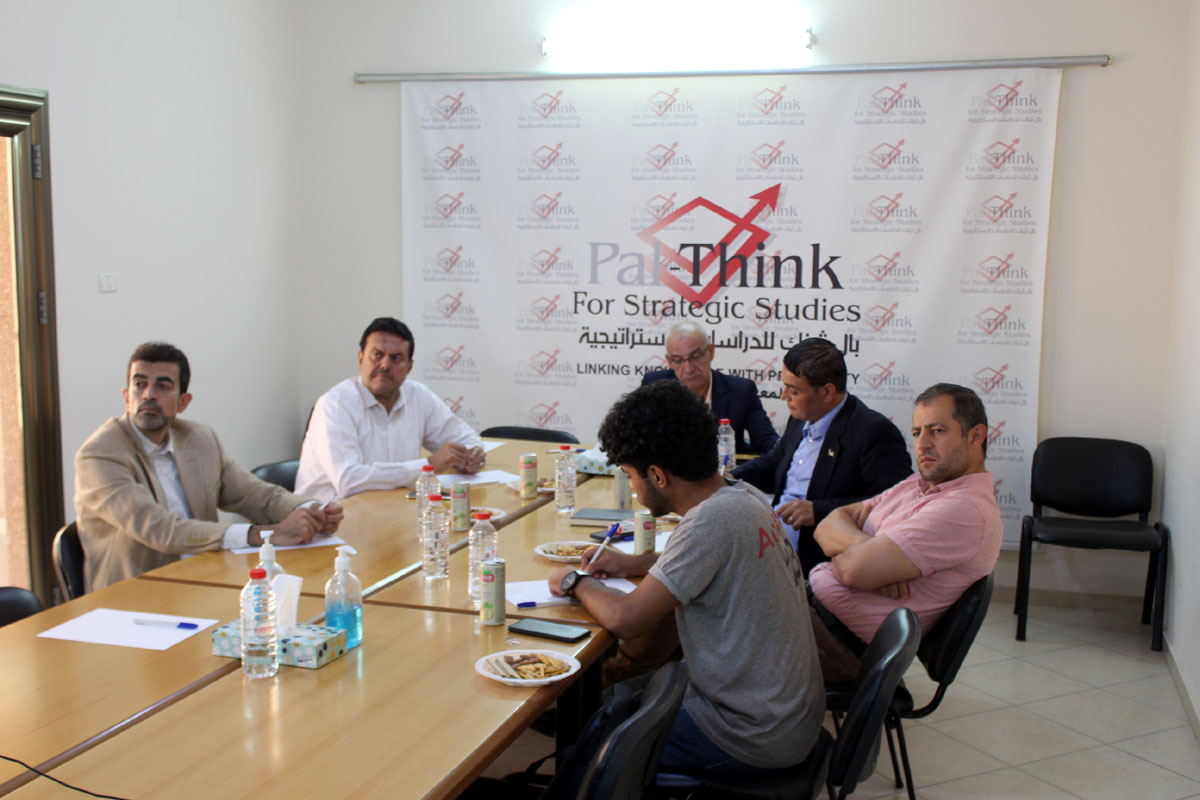
Pal-Think for Strategic Studies organised a dialogue session titled “Digital currencies and their repercussions on the world economy, governments' control, and the world monetary system” over the Zoom programme, hosting the professor of economics at the Lebanese American University Dr Saifedean Ammous, author of the book “The Bitcoin Standard” — the most important reference in the world on Bitcoin, translated into thirty languages — with the attendance of an elite of economists, civil-society representatives, and youth from inside and outside Palestine.
The institution's director Mr Omar Shaban opened the session by welcoming the attendees, and said: “We at Pal-Think always keep pace with the world developments that relate especially to the Palestinian sphere, and you all know that Pal-Think is an independent institution concerned with political, economic, and social issues — not only in the Gaza Strip but in the Palestinian territories and the whole world”. He added: “We are an independent institution open to scholarly and objective dialogue for all the spectra of the Palestinian people, and we have complete independence in taking up any issue in the way we see holding scholarly and national benefit for us all”. He pointed out that the meeting's guest is an eminent economic figure and a pioneer in economic research, among the first Arab academics in the field of digital currencies; the international media has shed light on him repeatedly, yet he has not received his share of the media and the Arab world.
For his part, the economic expert Dr Saifedean Ammous thanked Pal-Think for the hosting and said: “It makes me very happy to speak with the Palestinian people everywhere, and it makes me very happy to speak with our people in Gaza — and by the way, my life's dream is to swim in Gaza's sea, but regrettably I have not been able to achieve that”. He added: “The topic of Bitcoin is very important for the whole world, but it may perhaps be more important for the Palestinian people, and I am very happy that the Palestinian people has begun taking an interest in the topic of Bitcoin, because it may be the ideal technology made for overcoming the hardships the Palestinian people faces”.
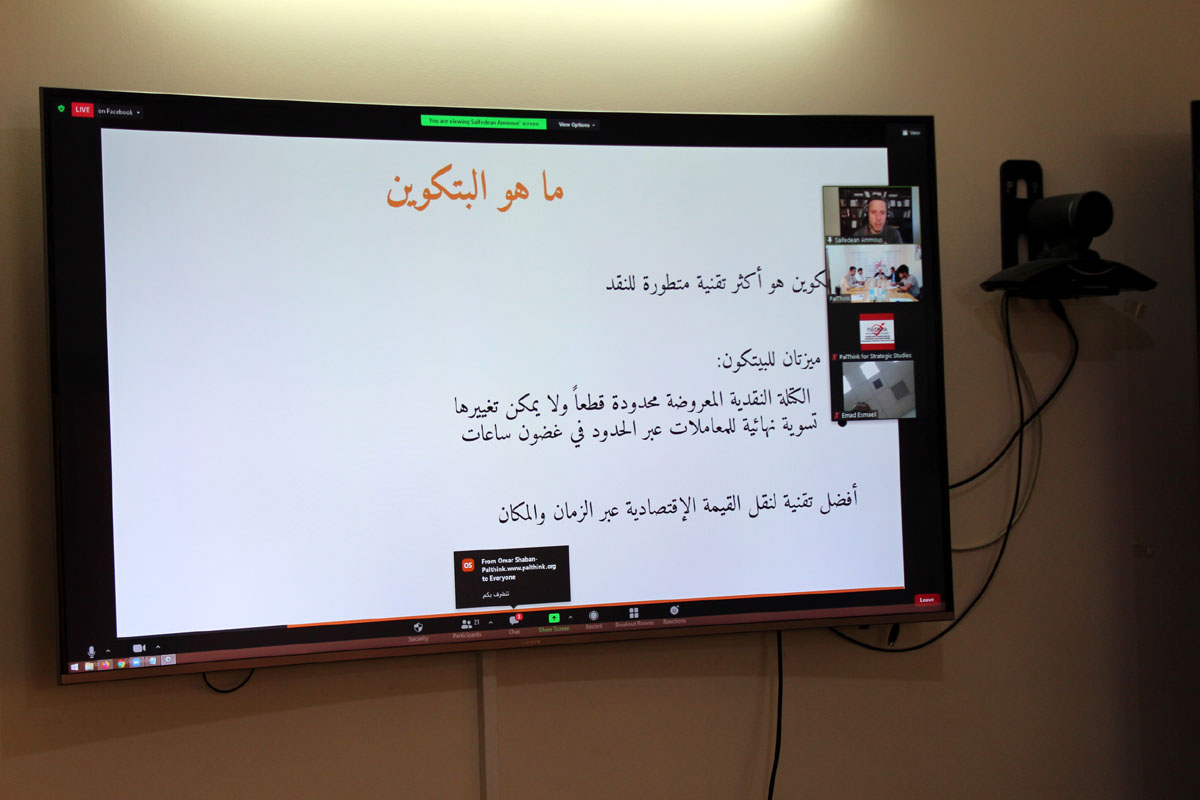
What is Bitcoin?
Dr Ammous pointed out that Bitcoin is the most advanced technology of money for two reasons: the first reason is that Bitcoin's monetary supply is categorically limited and cannot be changed, and no person can increase the supplied quantity of Bitcoin; the second reason is the possibility of conducting any financial transaction across borders within hours without the need for a political, judicial, or banking authority. He affirmed that Bitcoin is the hardest currency in history, because no more Bitcoin can be produced from it beyond the number it is programmed for — a programme laid down since 2008 — pointing out that 13 years have passed of Bitcoin's growth, and Bitcoin has never deviated from this programme at all. The economic academic continued: “The quantity of Bitcoin around the world will not exceed 21 million units, and currently it is about 19 million units. Its growth was fast at the start and then slowed, but the growth rate was relatively high; now the supplied rate of Bitcoin increases 2% yearly, and every four years this rate falls to half and its production rate likewise falls to half — and this is what makes Bitcoin the hardest currency in history. It is like gold, but better than it in other respects: for example, gold is marked by its scarcity and cannot be increased with great speed like Bitcoin, increasing yearly at a rate of 2%, but its growth rate will fall with time”.
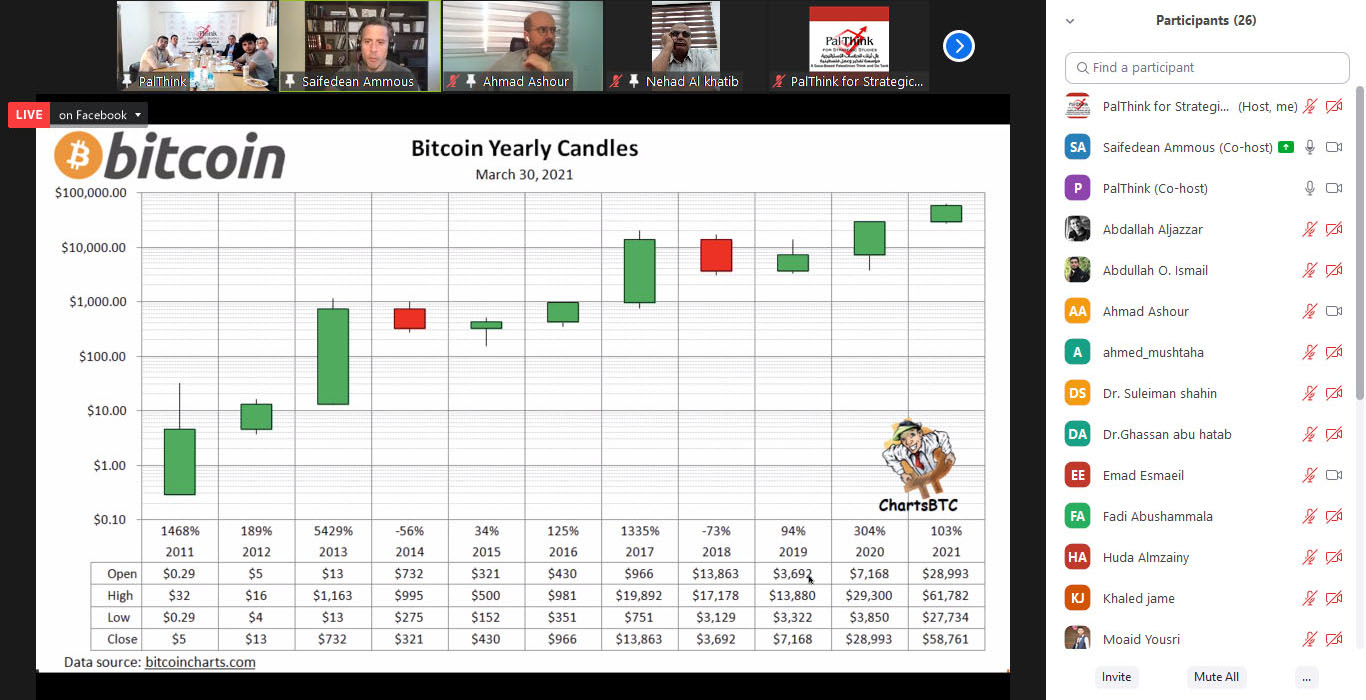
He affirmed that the absence of any authority able to increase the quantity of Bitcoin differs from all the other kinds of money, pointing out that the value of its supplied quantity is not affected by the quantity of demand — unlike all the currencies whose value falls with time because their quantity increases. Dr Saifedean said: “Bitcoin's value increases at a rate of 200% yearly — a fabulous rate, tripling every year. Now, after ten years, the market value of all the supplied Bitcoin exceeds 1.3 trillion dollars, and thus it has become larger than any currency in the world except the dollar, the euro, the yen, and the Chinese yuan, within 10 years, without there being any authority supervising it”. He noted the absence of any means of increasing the supplied quantity of Bitcoin with the increase of demand for it, explaining that its price in 2011 was 29 cents, reaching 5 dollars at the end of 2012, then rising to 13 dollars in 2013, then leaping to 732, and now 66 thousand dollars — in a manner we have not seen in any financial asset in human history: there has been no currency, bond, or share whose value could increase with this great speed, and that is a natural thing as a result of the absence of any means of increasing the quantity of Bitcoin”.
Dr Ammous explained that Bitcoin has not been breached at all during 13 years despite all the many attempts at that — and this proves that the increase of demand alone is what raises its price.
He continued: “Bitcoin enables us to dispense with the central banks, because any person in the world can send and receive Bitcoin without any need for a bank — they only need a programme found on the internet that can be downloaded to the telephone; and this is a very important matter for the Palestinians, because they have no central bank or national currency”.
He said Bitcoin is a network whose computational power equals roughly 10 trillion personal computers, and what matters is that Bitcoin does not need the internet: it can be used through devices working by radio and devices working by satellite, so that even if the internet were shut down you could continue working on Bitcoin”.
Concerning the network, Dr Ammous added: “It has become clear that there is no real danger to the network or doubt of its continuation. Today there are laws and legislation around the currency's legitimacy and the permissibility of dealing in it by the central banks and the largest world companies, the American Federal Reserve, and the major central banks in Europe. Even the major companies have begun using Bitcoin as a financial asset they place on their balance sheets — like the Tesla company, among the 10 largest companies in the world, which keeps part of its holdings in Bitcoin; and there are large and small companies doing that, and all the companies that do so benefit from it”.
The economic expert denied that Bitcoin's value would fall in the near term, since it has not happened in Bitcoin's history that it fall four years after a price rise; on the contrary, its value always multiplies.
Bitcoin as a substitute for gold and savings accounts
He said: “Bitcoin represents a successful substitute for gold, because the latter does not keep pace with inflation and cannot be spent internationally. If we look at the price of gold during the past ten years, we find monetary inflation and a rise in the prices of flats and all human necessities, while gold prices are steady — not to mention the individual's ability to spend it internationally.
Bitcoin, however, keeps pace with inflation and its value increases greatly: inflation may be 2 or 10%, but Bitcoin may multiply to 100%”.
The economic researcher holds that savings accounts give you only 0.5 to 2%, and this means the savings account robs the citizen, because money's value falls; Bitcoin, however, is the best means of saving. For example, had a person saved 10 dollars every week during the past five years, the sum would be $2,600, but its value now is 62 thousand dollars — a rise of more than 2000%; affirming that tens of millions of people save in Bitcoin for the long term.
Dr Saifedean added: “The continued adoption of Bitcoin by companies gives them an advantage over others, and this is what we must attend to as Arabs and Palestinians; it will carry a very great price, because Bitcoin is in continuous ascent, and adopting it differs from adopting a particular technology, because its price will be tens of multiples in the coming years — delay carries a real cost. Regrettably, in the Arab world we hold the conviction that anything new does not last, and we adopt the conspiracy theory and that the governments will not allow this thing”.
How does Bitcoin work?
According to the economic expert, Bitcoin is a digital wallet holding a private key and an address, as in email, and the key must be kept — it is the only way of controlling the Bitcoin; and were any person able to steal the private key, they could steal what you own of Bitcoin.
He said: “China banned Bitcoin this year — most of the computational power and mining was in China — banning mining and trading, and that caused the price's fall; now it has returned to rising once more. These operations slow the network but do not end it. I believe it is a historic mistake for China to fight Bitcoin, and the states holding a measure of economic freedom, like America and Europe, will not fight it. They realise that keeping pace with development is far better than fighting it, because they cannot stop Bitcoin; what they can do is stop benefiting from Bitcoin and make their enemies benefit more”.
The participants' questions turned on: if Bitcoin fights the centralisation of control over money, what prevents the major and dictatorial states from fighting it, since it shrinks their powers? And the taxes on profits, long-term investment in the other digital currencies, the source of Bitcoin's strength, and the effect of governments adopting digital currencies.

To watch the session: