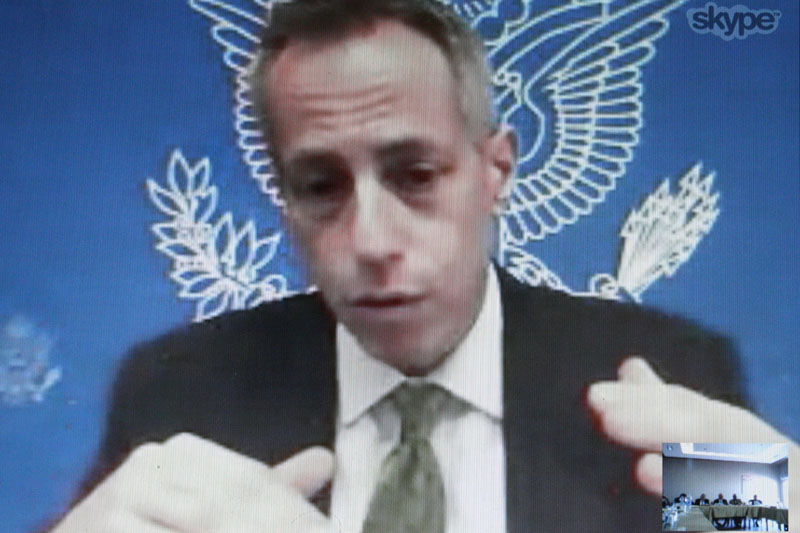
Speaking to Gaza for the first time in seven years, US Consul-General Michael Ratney: the United States is committed to supporting Palestinians in Gaza
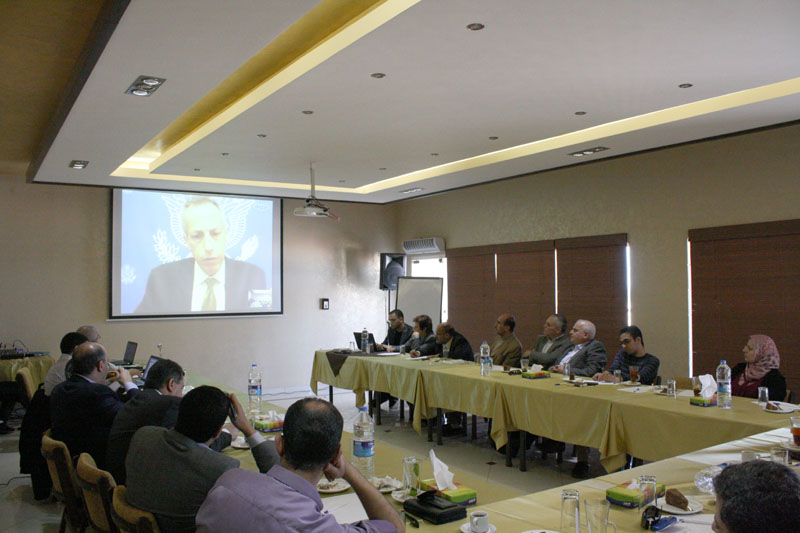
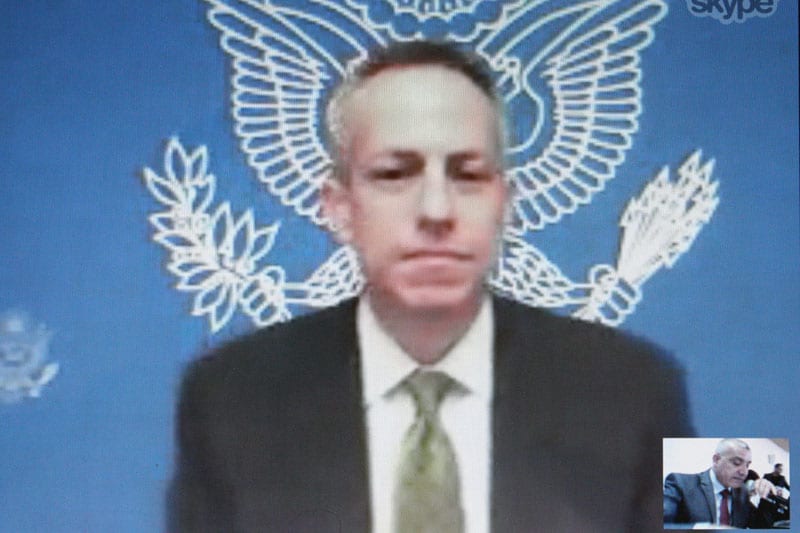
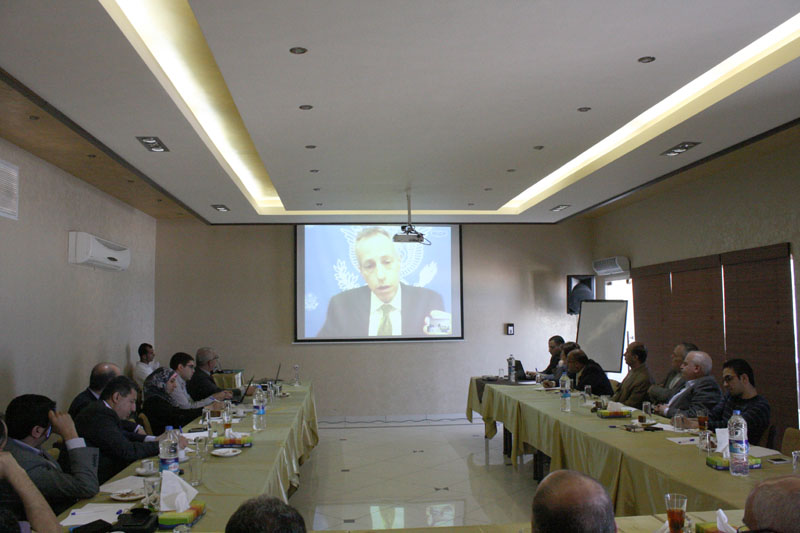
Pal-Think held a self-funded video-conference meeting with US Consul-General in Jerusalem Michael Ratney — speaking to Gaza for the first time in seven years — attended by academics, business people and civil-society representatives.
- Date
- 2013-04-15
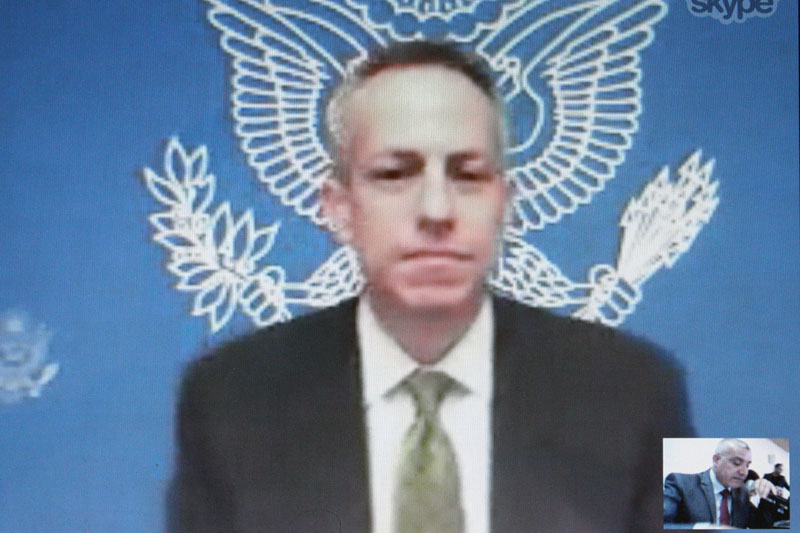
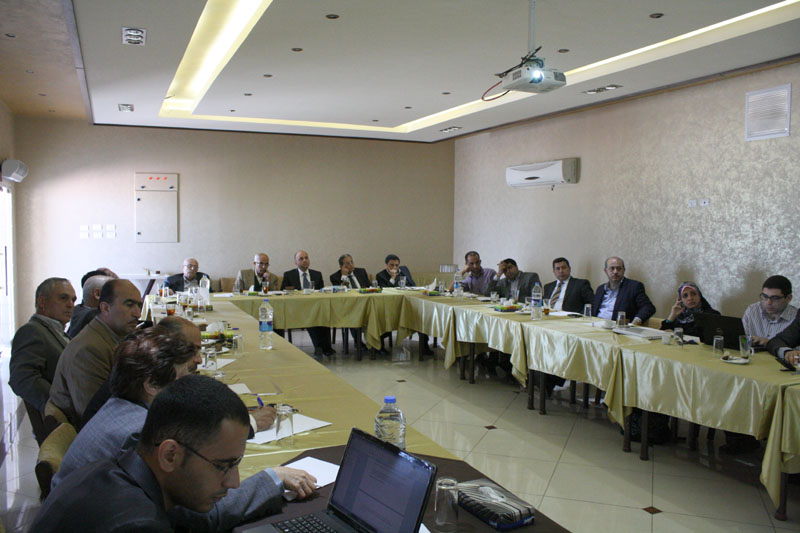
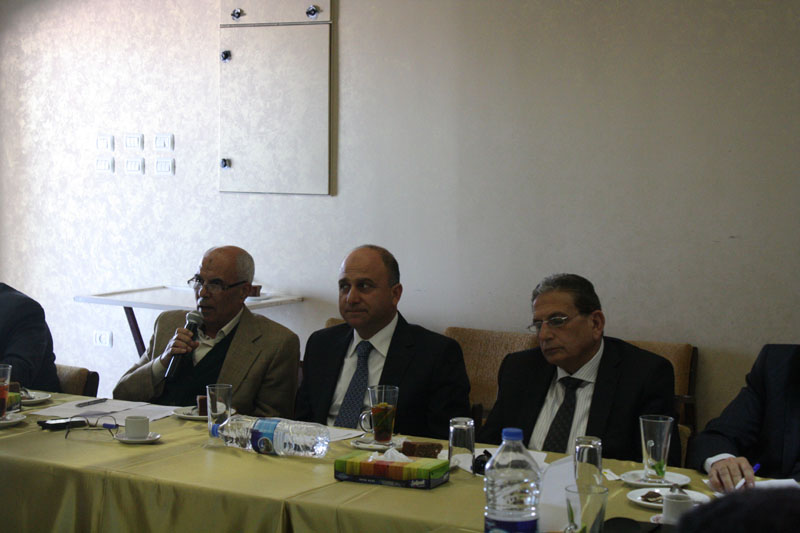
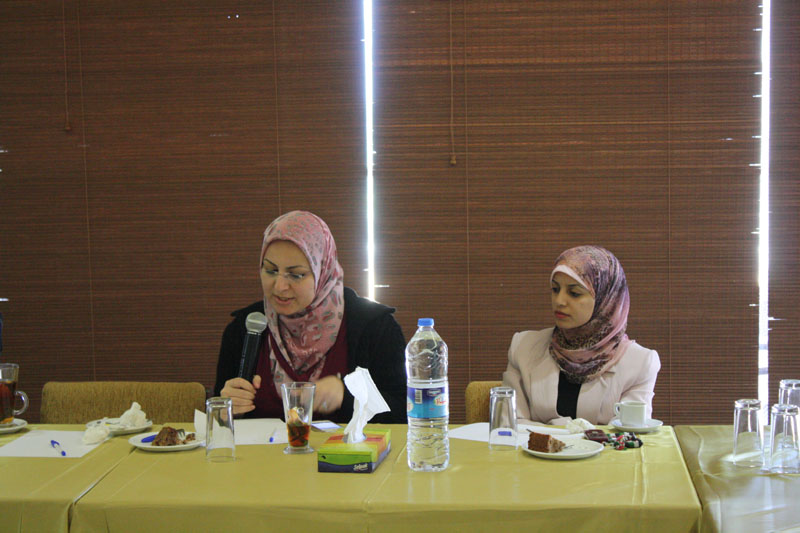
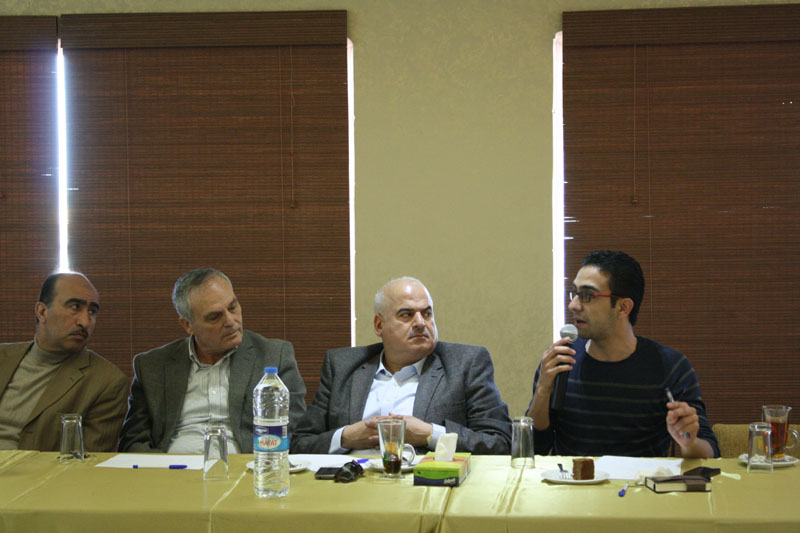
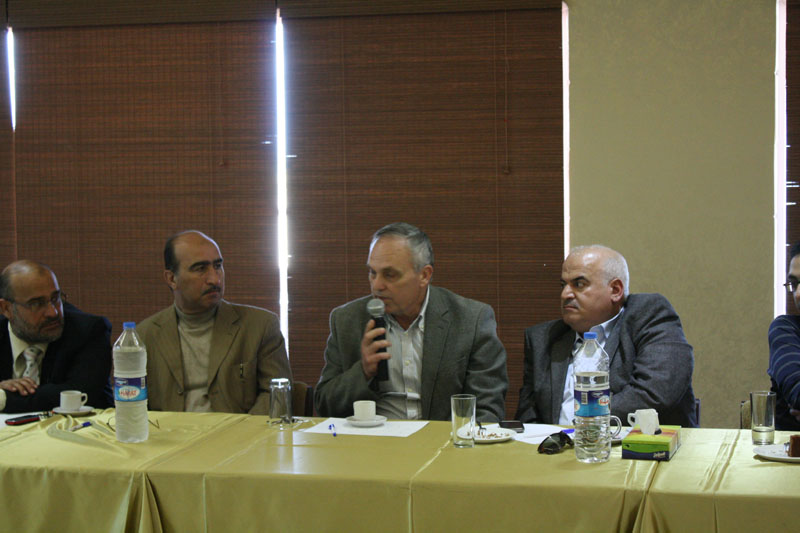
Gaza, 10/4/2013 – Pal-Think for Strategic Studies organised, with self-funding, a meeting via video-conference technology with the American Consul in Jerusalem, Mr Michael Ratney, who spoke from his office in Jerusalem, last week. The meeting was attended by an elite of academics, businessmen, representatives of civil society, and young activists.
Mr Omar Shaban, director of Pal-Think for Strategic Studies, welcomed the guest and the attendees, and began the discussion by raising a set of questions and issues, such as Obama's recent visit to the region, the United States' position on the two-state solution in light of the continuation of the Israeli settlement in the West Bank, the region's future in light of the Arab Spring, and the United States' policy toward the Gaza Strip.
Mr Ratney, at the beginning of his intervention, addressed thanks to Pal-Think for the talk with a number of Palestinians from the Gaza Strip, especially in light of the extremely difficult living conditions the Gazans live through.
In the course of his reply to the questions Pal-Think raised, Mr Ratney spoke of President Obama's recent visit, pointing to the extent of the region's importance for the foreign policy of the United States of America.
Then the American Consul touched on the two-state solution, noting that it is “the only solution acceptable to the United States”, affirming in the same context the Palestinian people's right to live in peace and stability side by side with Israel. He added that the American position on the settlement remains fixed toward the settlement, which the American administration considers an essential issue for which a solution must be set — and this is what President Obama affirmed in his speech.
The Consul also expressed the United States' continuing commitment to supporting the Palestinians in the Gaza Strip and the West Bank, saying: “The economic support for the Palestinian citizens in the Gaza Strip is an important part of our policy and we are committed to this role”.
The door of discussion was opened to the attendees as soon as the Consul's intervention ended, where some of them raised many questions related to the future of the peace process, the settlement expansion in the West Bank, and the American support for Israel.
The participants affirmed the necessity of supporting the peace process in the Middle East, demanding of the United States the playing of a greater role toward ending the occupation, through pressing the Israeli government to dissuade it from continuing the settlement and to stop the policies of seizing the West Bank's lands — noting that the settlement is the most prominent obstacle in the face of peace.
In his turn, one of the attendees spoke of the difficulties facing the Palestinians in obtaining the American consular services, noting that obtaining a visa to travel to the United States has become a nearly impossible task in light of the current Israeli complications and obstacles that prevent the citizens in the Gaza Strip from travelling freely through the Erez crossing, the only crossing toward the city of Jerusalem where the consulate is present — and at the same time, travelling through the Rafah crossing to reach the American embassy in Cairo does not represent a better solution in light of the state of instability Egypt witnesses. He demanded of the consulate the helping of the Palestinian citizens in the Gaza Strip by easing the obtaining of those services, especially after many students and visitors lost an opportunity to travel to the United States during the years of the blockade.
At the meeting's end the participants expressed their happiness at the meeting, describing it as a good step toward breaking and surpassing the blockade imposed on Gaza for years.