From Gaza and the West Bank, students and academics present their vision for national reconciliation
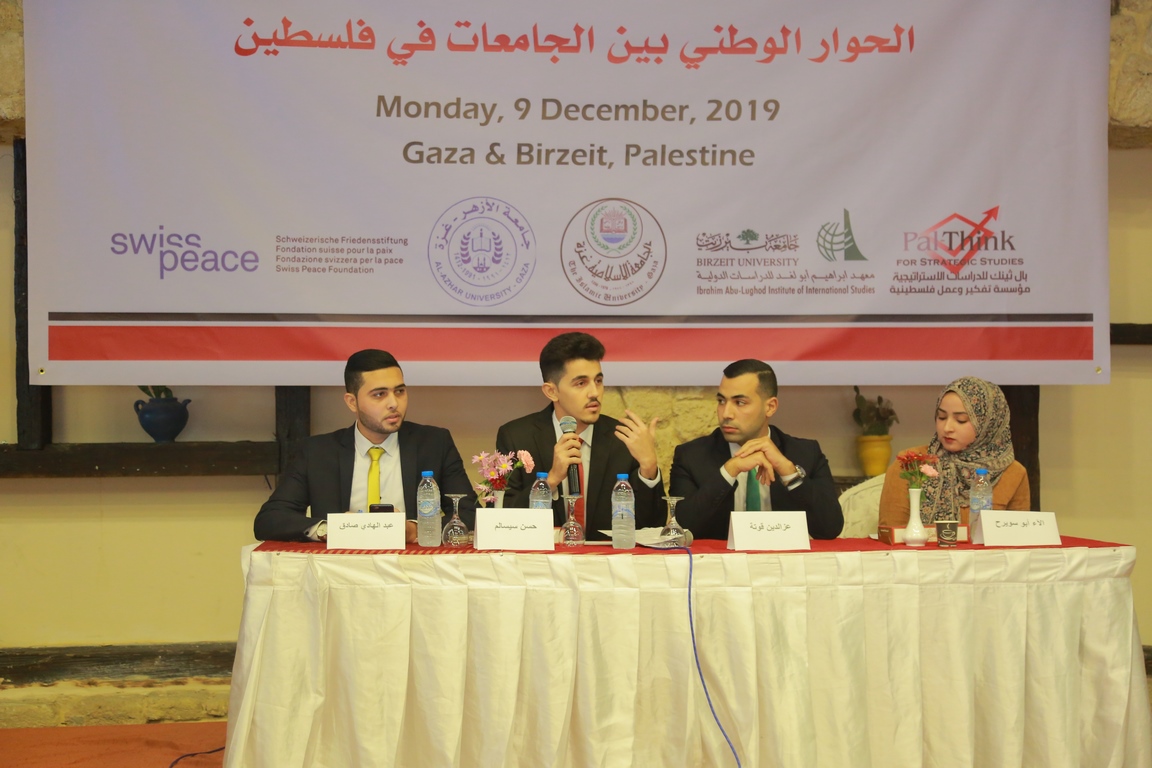
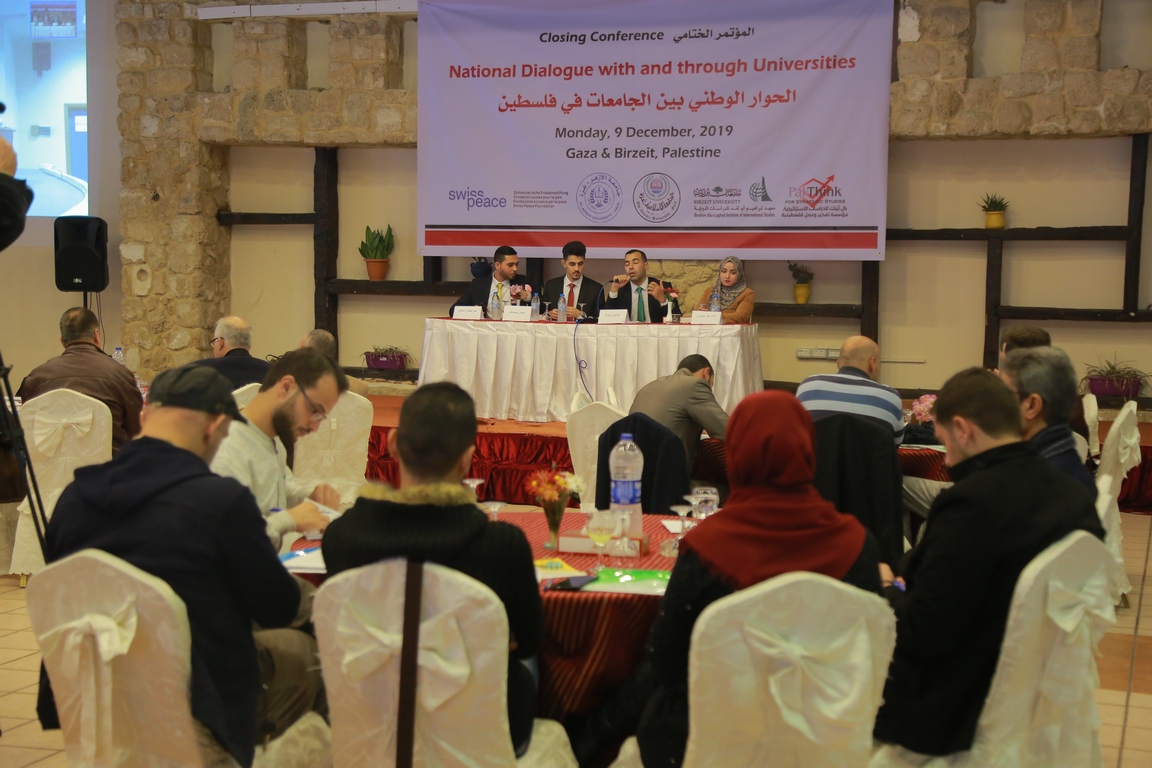
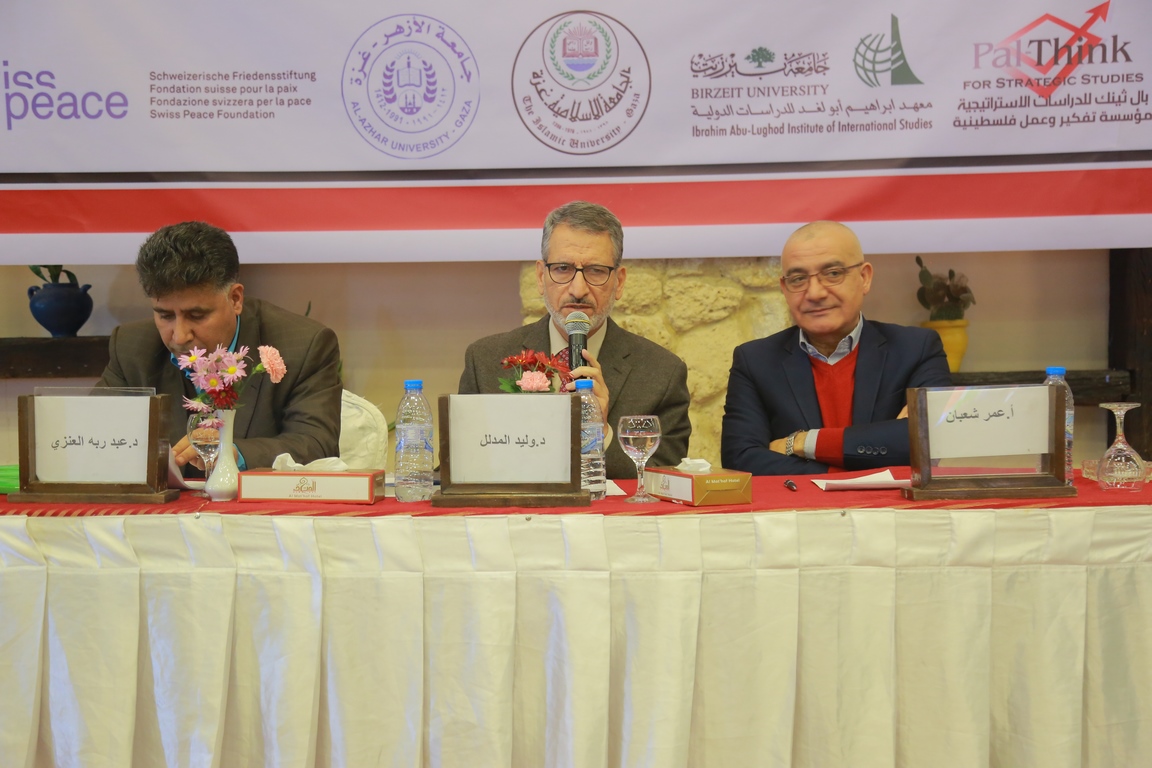
Pal-Think held the closing conference of «National dialogue with and through the universities and civil-society institutions in Palestine», with Birzeit University, Al-Azhar and the Islamic University of Gaza, Swisspeace, and Swiss government support.
- Date
- 2019-12-12
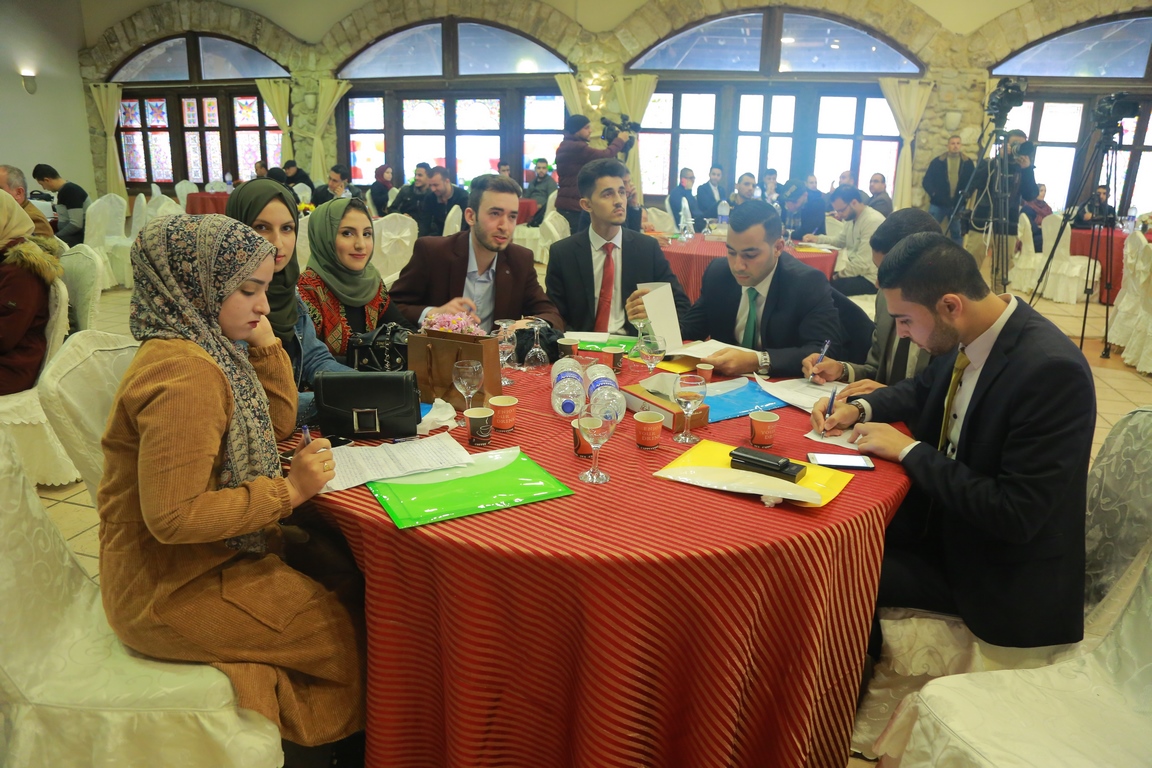
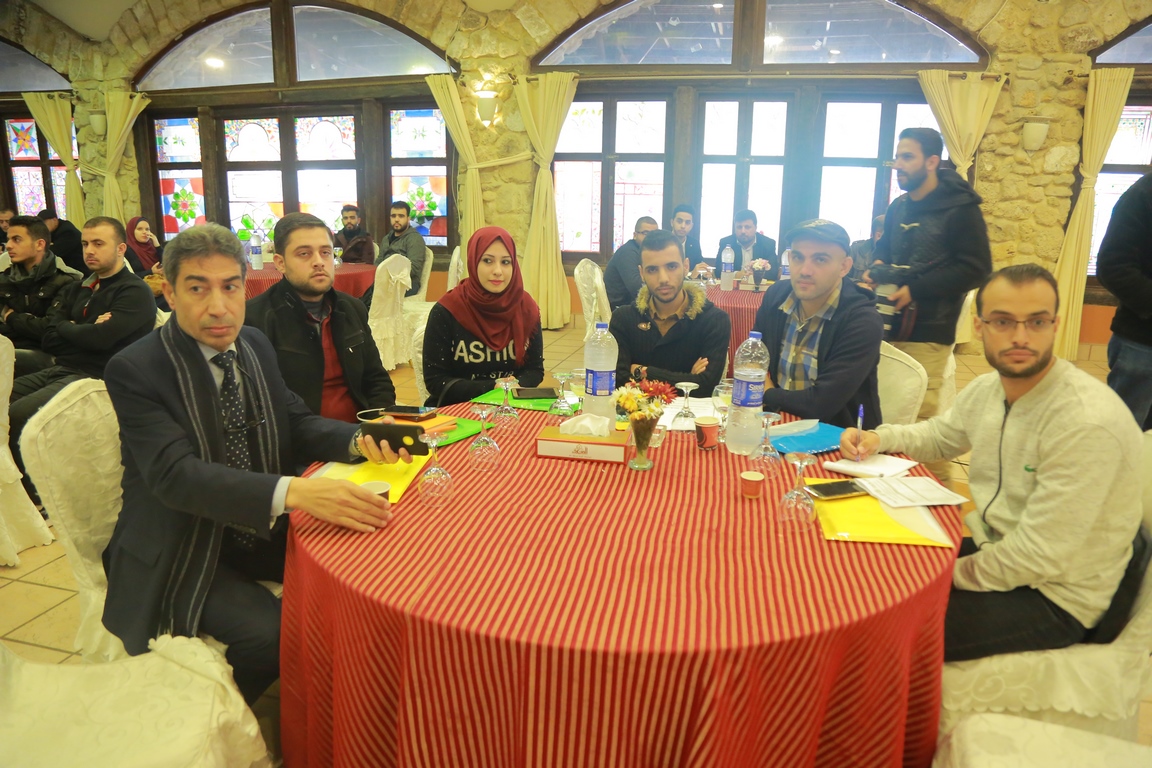
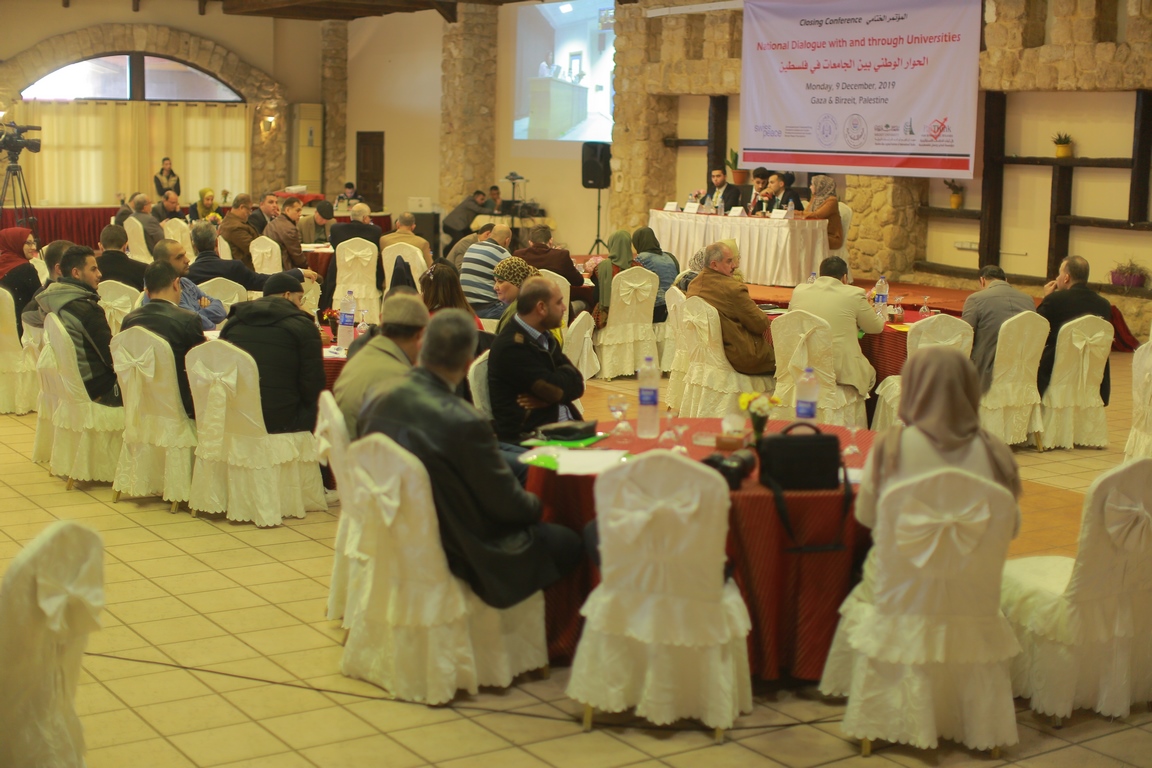
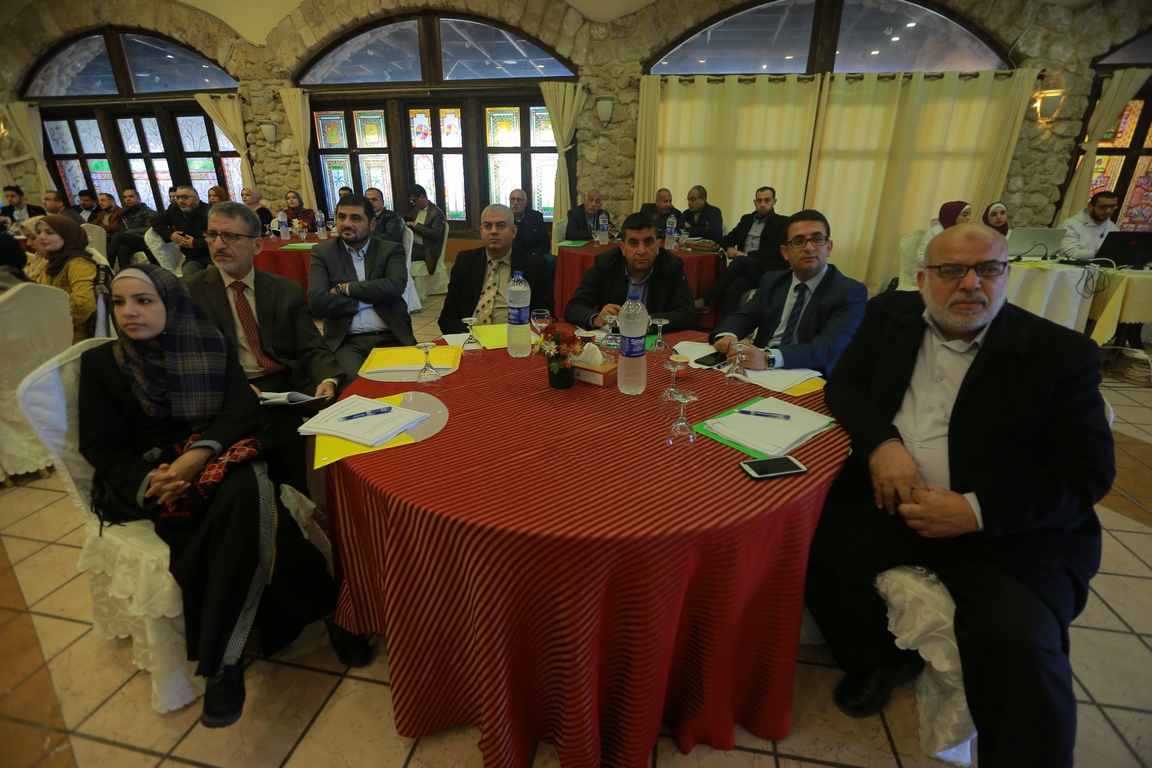
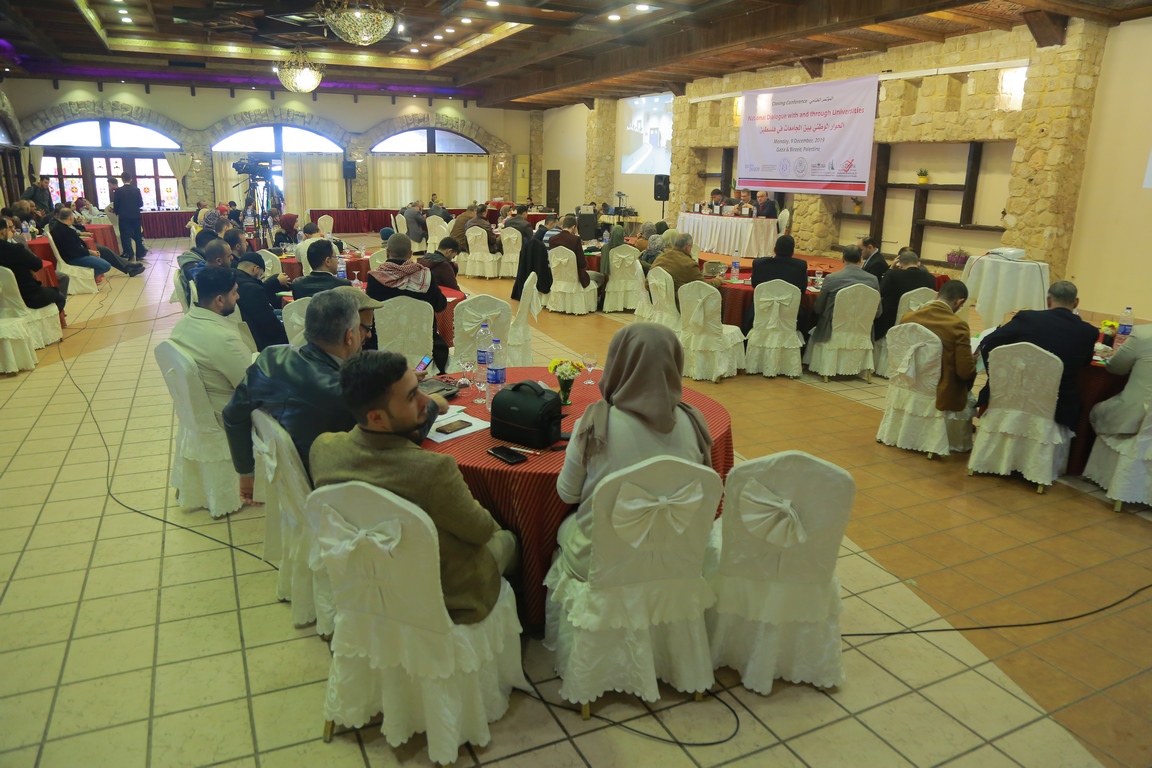
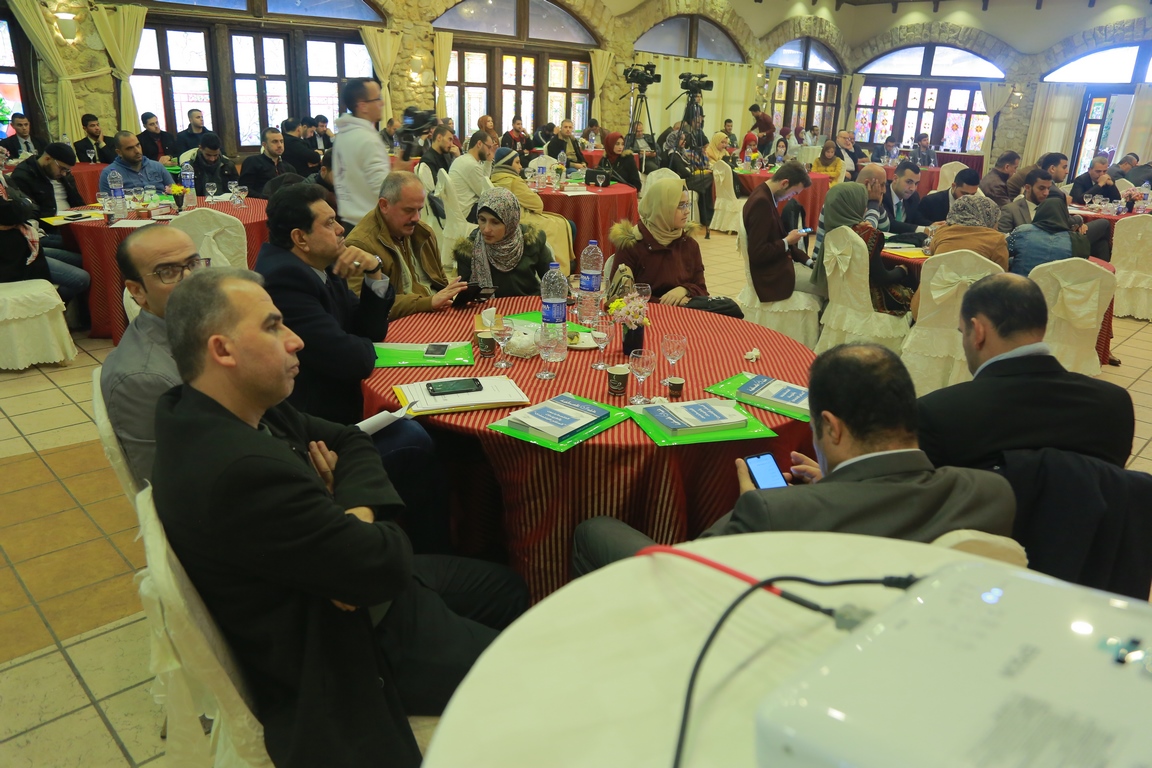
Pal-Think for Strategic Studies organised a closing conference titled “The national dialogue between and through the universities and civil-society organisations in Palestine”, in partnership with Birzeit University from the West Bank and the two universities al-Azhar and the Islamic University from Gaza, and the Swisspeace foundation, with support from the Swiss government — with a wide participation of university students and an elite of academics, writers, intellectuals, and civil-society organisations.
The conference was opened via video conference by Dr Abdel Rahman Ibrahim, dean of the faculty of law and public administration at Birzeit University, and he thanked the participants, the attendees, and the two institutions “Pal-Think” and “Swisspeace”. He said that we as a people have no actual division among us, because we have more points of meeting than points of difference, and that we are agreed on the issues the division caused.
He added that the division is a black mark in the history of the Palestinian people, and it is easy for us to rid ourselves of the division on condition of the existence of a political will. He pointed out that the student frameworks have proven that they have creative ideas for surpassing the effects of the division.
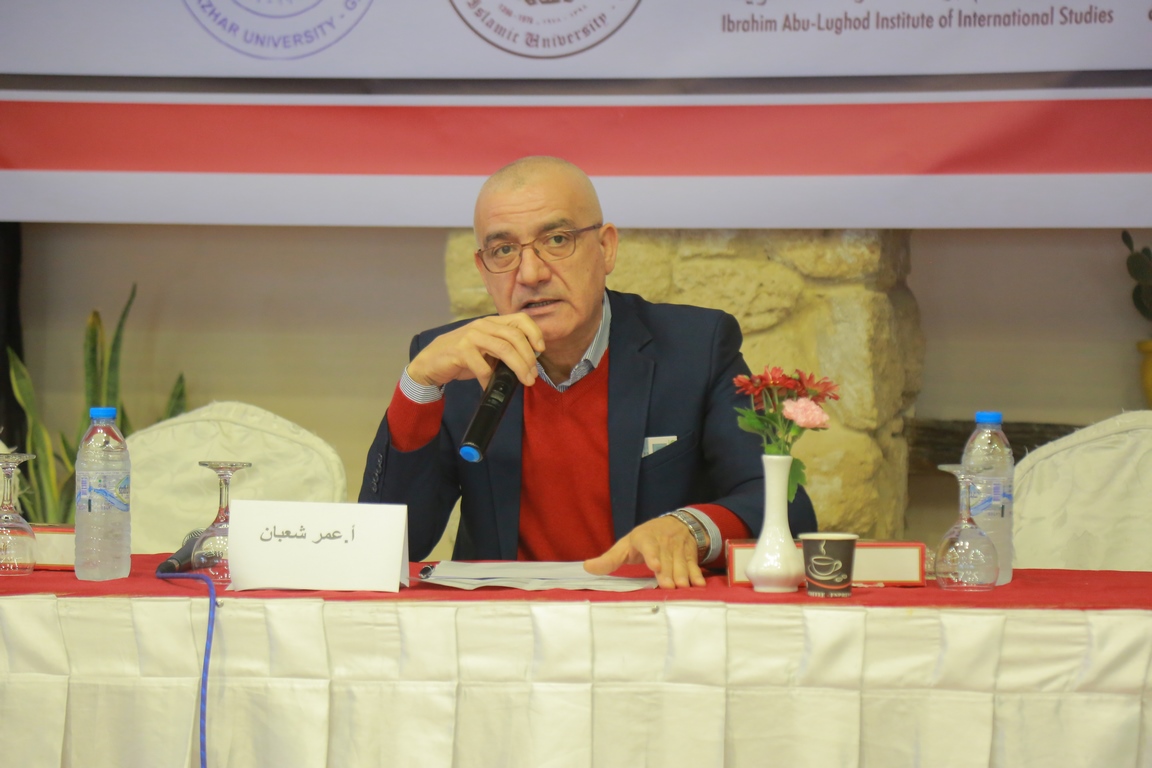
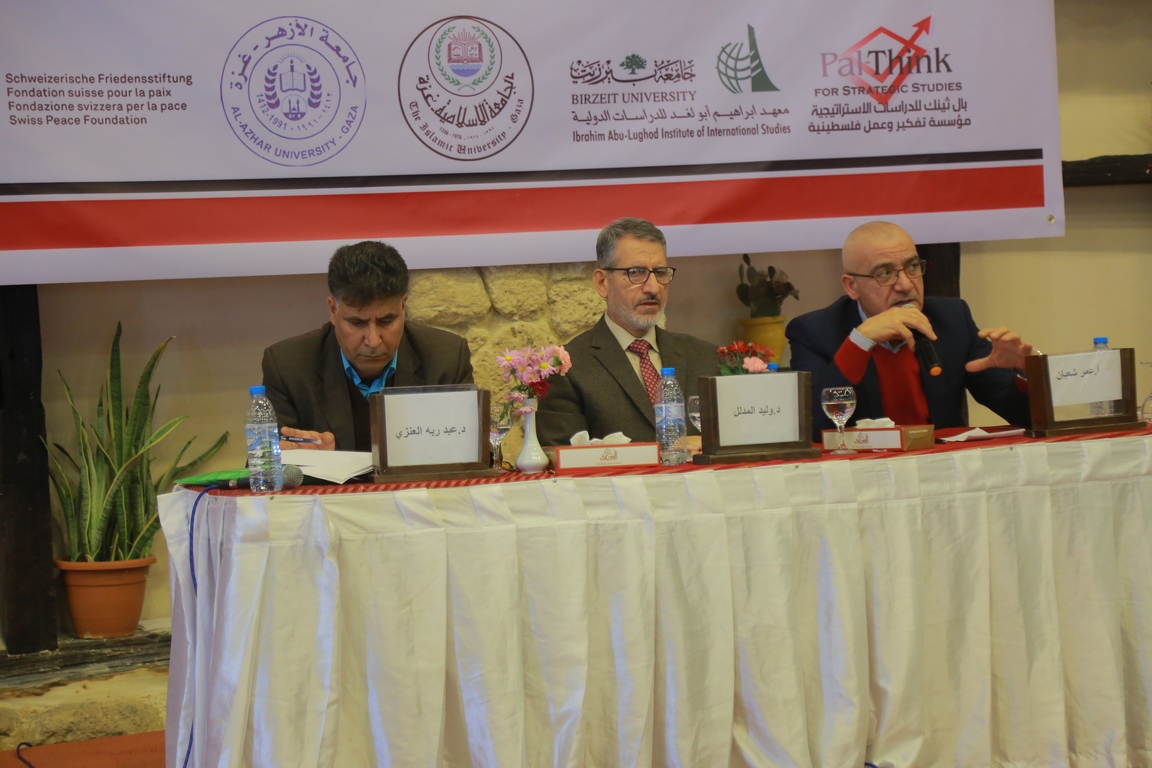
In his turn, Omar Shaban, director of the “Pal-Think for Strategic Studies” institution, said that this meeting comes within the efforts of “Pal-Think”, as an independent Palestinian institution, in the field of achieving national unity and breaking the gap between the active institutions in all the homeland, from Jenin to Rafah, over more than ten years in partnership with the “Swisspeace” foundation.
He added that the partisan separation between the active educational institutions following the parties has shattered society and the student movement. He pointed out that the educational sector is a fundamental part of the Palestinian national movement, and many of the leaderships of political work graduated from the Palestinian universities. Therefore the students today will present themselves, and will speak of the division's effect on them, and how the students in Gaza created an extraordinary relation with the students of Birzeit University.
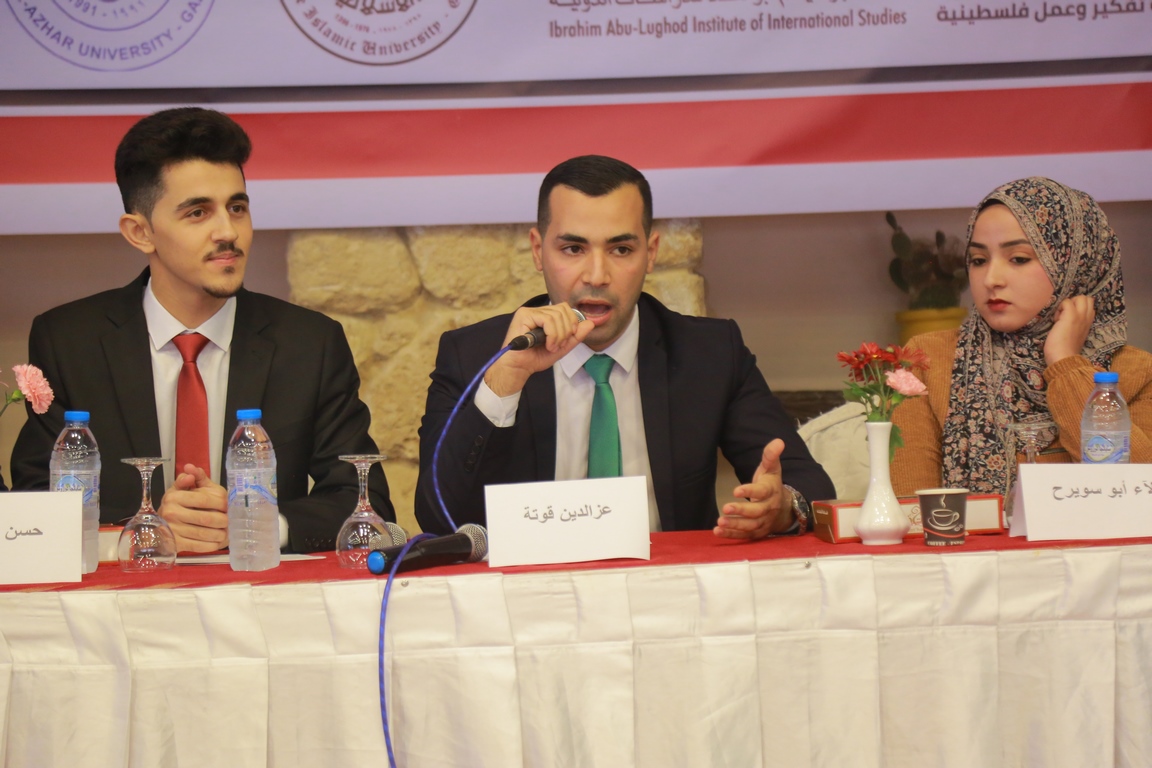
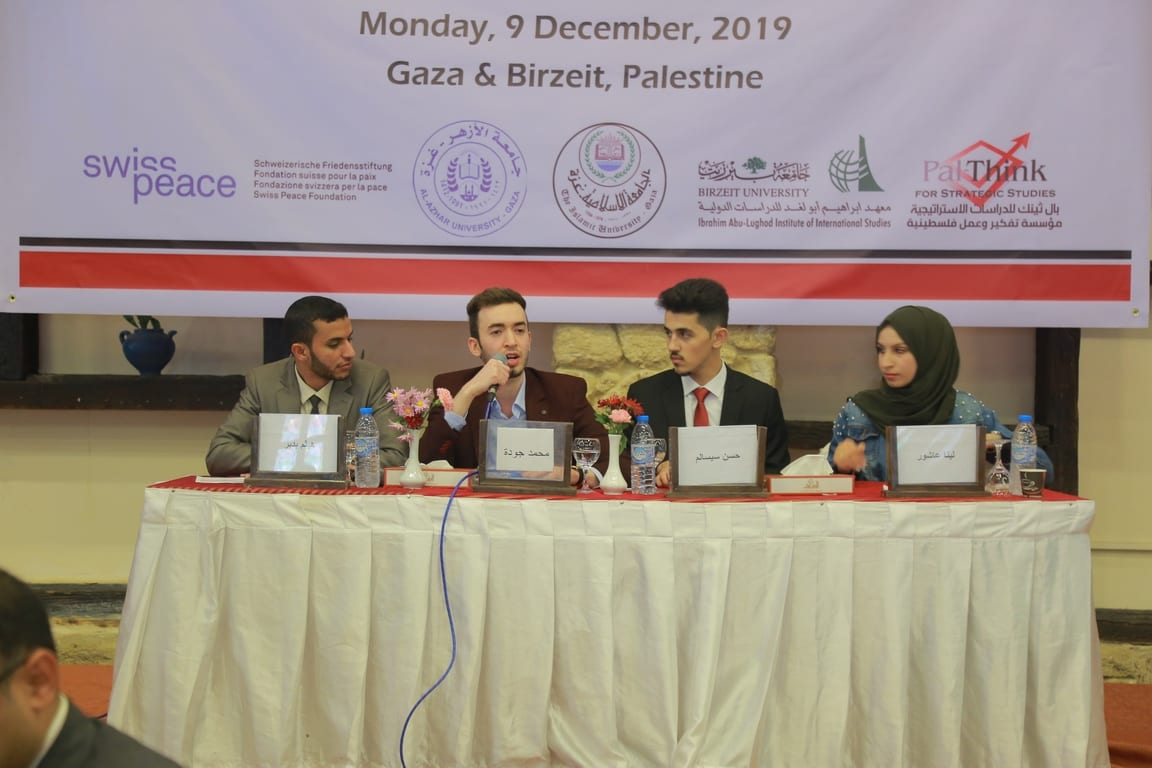
During the first session, moderated by Hassan Sisalem from al-Azhar University and Hudhayfa Hamed from Birzeit University, which was titled “The repercussions of the division on the student movement”, Izz al-Din Quta from the Islamic University spoke, in his research paper titled “The repercussions of the division on the elections of the student councils in the Palestinian universities”, of the division's effect on the student movement, and said that the absence of elections and student councils and the political arrest in the homeland's two halves has affected the student negatively. He pointed out that change requires stopping the security interventions in the universities, holding periodic elections, and rooting democracy.
In her turn, the student Fairuz Salama from Birzeit University spoke, in a position-assessment paper titled “The division's effect on the student movement”, of the factors of the emergence and disintegration of the youth movements to end the division, and reviewed previous local models such as: the movement of 15 March 2011, and the movement of 29 April 2015. She pointed out that the most prominent factors of the movement's disintegration are the absence of a unified youth leadership, and the policy of containment that each of Hamas and Fatah pursues toward the movements.
As for the student Alaa Abu Suwaireh from al-Azhar University, she showed in her research paper “The division's effect on the Palestinian universities and its reflection on the university student” that the universities are subject to two separate administrations, one in the West Bank and the other in Gaza — not to mention the existence of eight universities and colleges in Gaza unrecognised by the Ministry of Education in Ramallah, and this threatens the future of more than 25 thousand students.
In the same context, the student Amal Manasra from Birzeit University made clear, in her research paper “The Palestinian general elections: the problems and challenges”, the extent of the possibility of implementing the Palestinian elections, and reviewed the scenarios expected for them, and the positions of the Arab states toward the reconciliation. She affirmed that the elections alone do not form an exit from the division, but rather deepen it.
At the end of the first session a video produced by the Islamic University was shown, about the story of a young man — representing the youth in Gaza — who lost his future because of the division and was compelled to travel in search of a better future.
During the second session, moderated by Haitham Budair from the Islamic University and Rami al-Khdour from Birzeit University, during which the students completed their research papers on the Palestinian division's effect on the student movement, the student Fouad Rashid from Birzeit University spoke in a position-assessment paper “The Palestinian elections in light of the Palestinian division”, and spoke of several scenarios, the most important of them: keeping the current situation as it is without completing the holding of the elections, or the rejection of the election result by Hamas or by Fatah.
Meanwhile the student Mohammed Jouda from al-Azhar University showed, in his research paper “The role of the student movement in the Palestinian universities in light of the division”, the crisis of the student movement and the causes of its decline, the most prominent of them: the existing Palestinian political system, the loss of the capacity to take decisions because of partisan dependency, and the security pursuits on political background. What resulted from that was the students being harmed greatly, and the shrinking of the student movement into marginal activities, not to mention the rise of the level of hatred among them.
As for Lina Ashour from the Islamic University, she shed light in her research paper “The reality of university students in light of the division and the deterioration of the economic situation” on three axes: the division and the deterioration of the economic situation, the consequences of the Palestinian division on the Palestinian student, and the division's effect on the graduates' future.
At the end of the second session two videos produced by the two universities al-Azhar and Birzeit were shown, about the division's effect on the Palestinian woman, and the other about the crisis of strikes and study suspensions in the universities because of the political bickering and its effect on the student.
In the third session, moderated by Omar Shaban, director of Pal-Think for Strategic Studies, and Marah Khalaf from Birzeit University, which was titled “The repercussions of the division on the educational and academic course from the universities”, and in which research papers of the university professors were presented, Dr Lourd Habash from Birzeit University reviewed her research paper titled “An initial reading in the discourses of Birzeit's professors on the Palestinian situation and the role of the universities and the intellectual toward the division” — the research sample was 20 professors from Birzeit University — and she said that the respondents described the division as “regrettable and destructive, and the most dangerous in the history of the Palestinian people, and that it set the Palestinian cause backward”.
She pointed out that the viewpoint of “Birzeit's” academics on the causes of the division was represented in the following: becoming accustomed to the state of division, the competition for power from both sides, and the absence of a political will to end the division because of the existence of beneficiaries of the existing state.
She noted that the academics' role in ending the division is marginal or non-existent, because of the absence of any academic effect on political life, and the linkage of some academics with the two sides of the division — with the existence of some individual initiatives by academics in writing research papers and press articles.
As for their proposals for the reconciliation, they were: going down to the streets, pushing in the direction of the academic having a role in the authority, strengthening the students' role, and easing the work of the student unions.
In his turn, Dr Walid al-Mudallal from the Islamic University presented a research paper titled “The conception of the Islamic University's professors for achieving the Palestinian reconciliation and ending the division”, and the research sample was 23 university professors from various specialisations. His study showed that the division has reached all walks of life, including academic life, and that the universities have not played an active role in ending the division despite possessing many material and human elements — because of the financial crises, and their being affected by the political references.
And that the academics' role was confined to writing research and press articles, because of the belief of some academics that the reconciliation is a political affair, and the spread of the state of despair and indifference in their ranks because of the Palestinian factions' lack of attention to them, not to mention the absence of a conflict-resolution centre in the Gaza Strip.
He presented recommendations, the most prominent of them: the universities taking the initiative to achieve reconciliation among their employees and students inside and outside the university; setting the practical programmes and the curricular and extracurricular activities that call for ending the division; taking the initiative to found a centre for conflict resolution; offering academic courses that take up the phenomenon of the division and the reconciliation efforts, to be one of the university's courses for all the students; and forming an assembly of academics to form a pressure force upon the decision-makers to end the division.
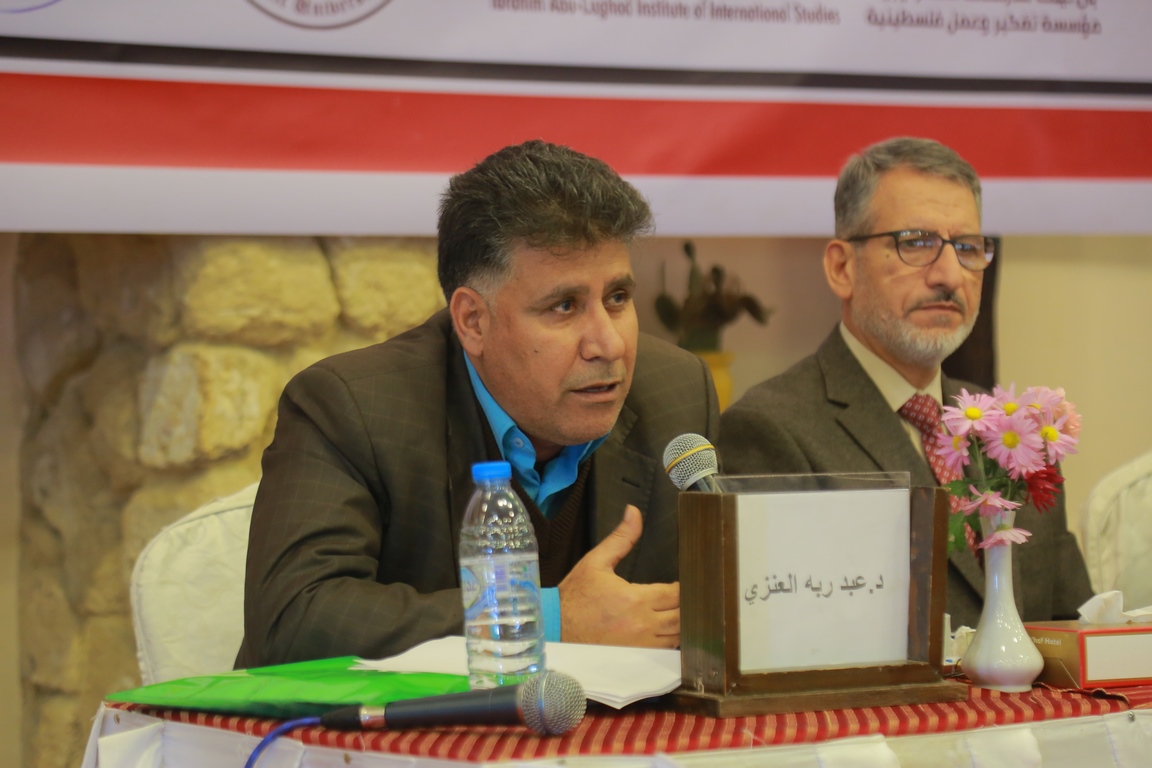
As for Dr Abed Rabbo al-Anzi from al-Azhar University, he pointed out in his research paper titled “The role of the academics at al-Azhar University in the Palestinian reconciliation” — the research sample was 20 academics from “al-Azhar” — that the academics' role was confined to personal and secondary roles, and was effaced because of some academics' giving precedence to partisan belonging over the national.
And that the greatest challenges before the academics are: political abstention, as most of them are afflicted with a state of despair and frustration at the existing state, and the absence of trust between the politician and the academic — not to mention that the political elites present treatments of the subject of the division from a security, military, or political angle, and consult the academics only in limited questions.
He affirmed that the division has formed a new Nakba, and has affected the Palestinian political system and disrupted its development and produced two different authorities.
He made clear that the most prominent grounds for the reconciliation are: that the division works against the supreme national interest, and it must be ended to preserve what remains of the Palestinian cause, and that the grounds are national and have their political, economic, and social causes.
He proposed forming a bloc of academics at the level of the homeland, conducting special workshops and conferences, spreading intellectual awareness among the university students and working on ending the division, giving the academics a greater role inside the political organisations and parties, and creating research centres on the model of what exists in the democratic societies.
At the end of the third session, a video produced by the three universities was shown, speaking of the division's effect on Palestinian youth.
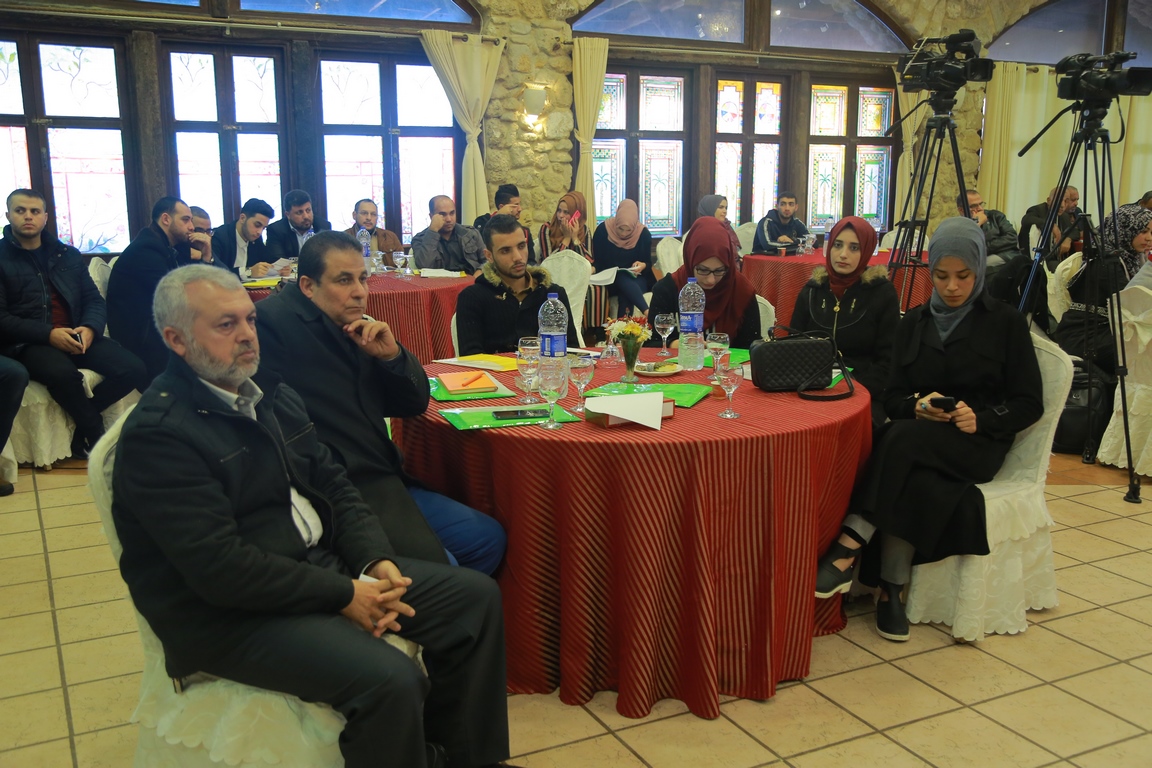
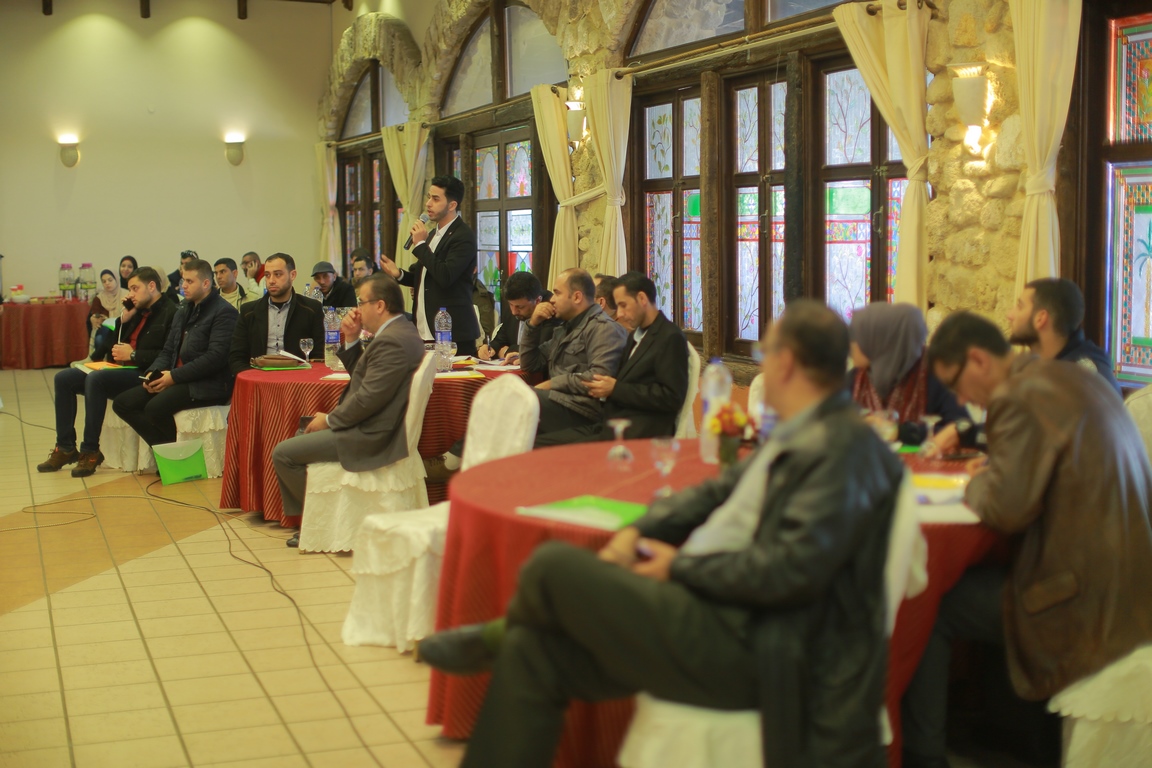
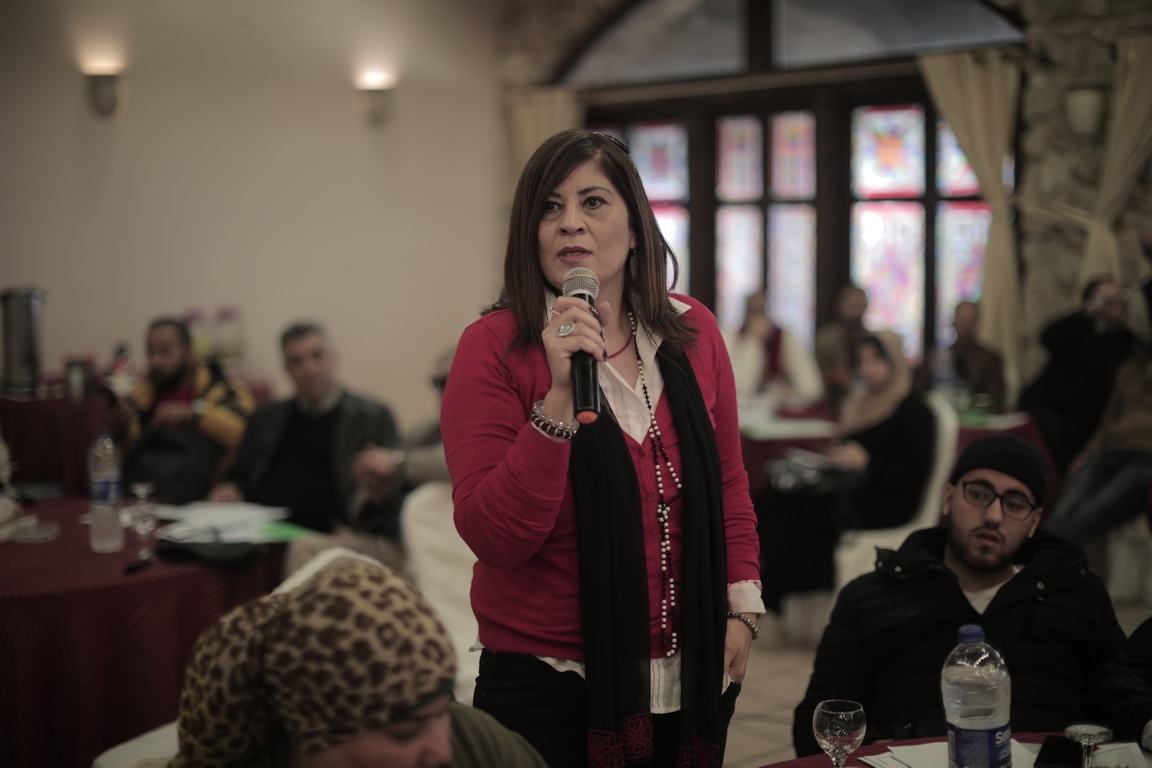
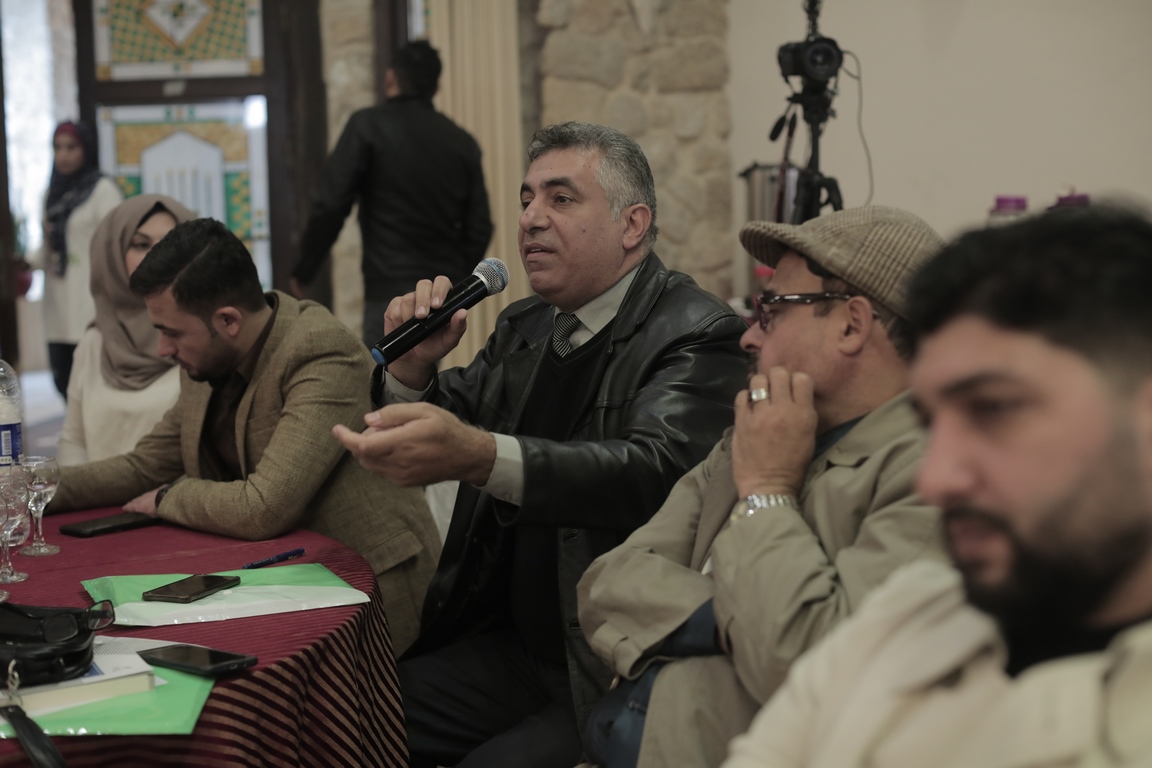
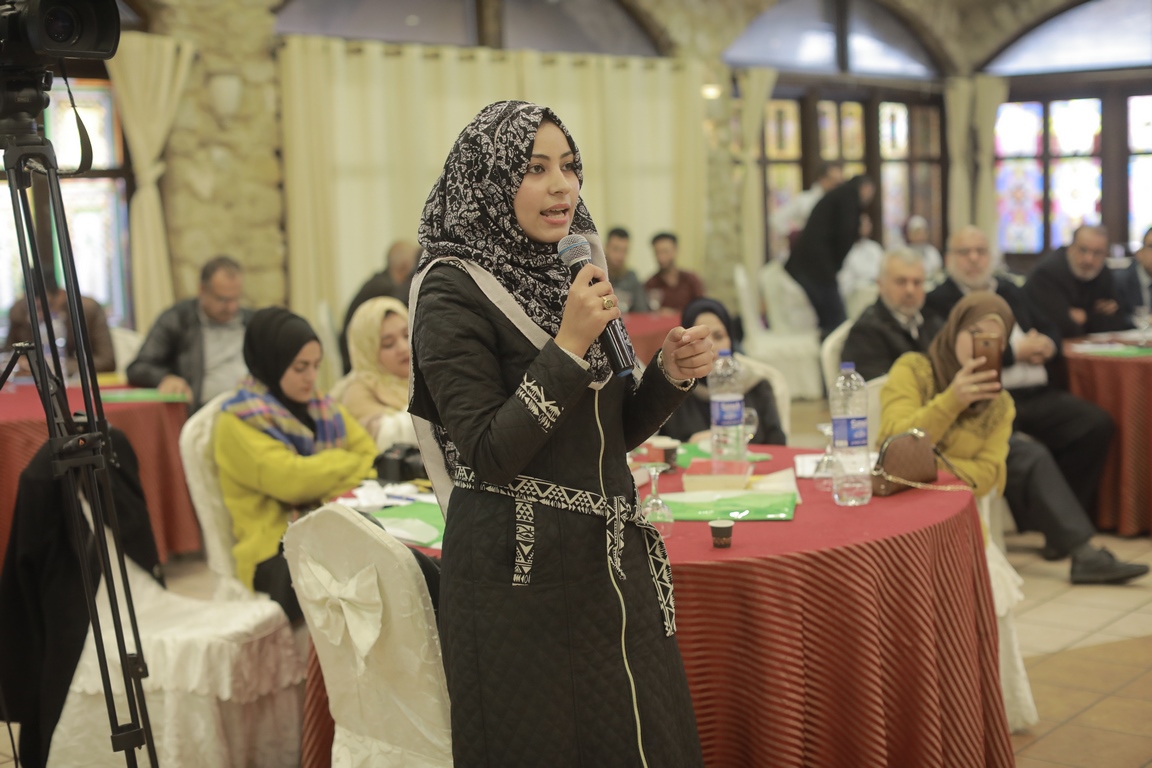
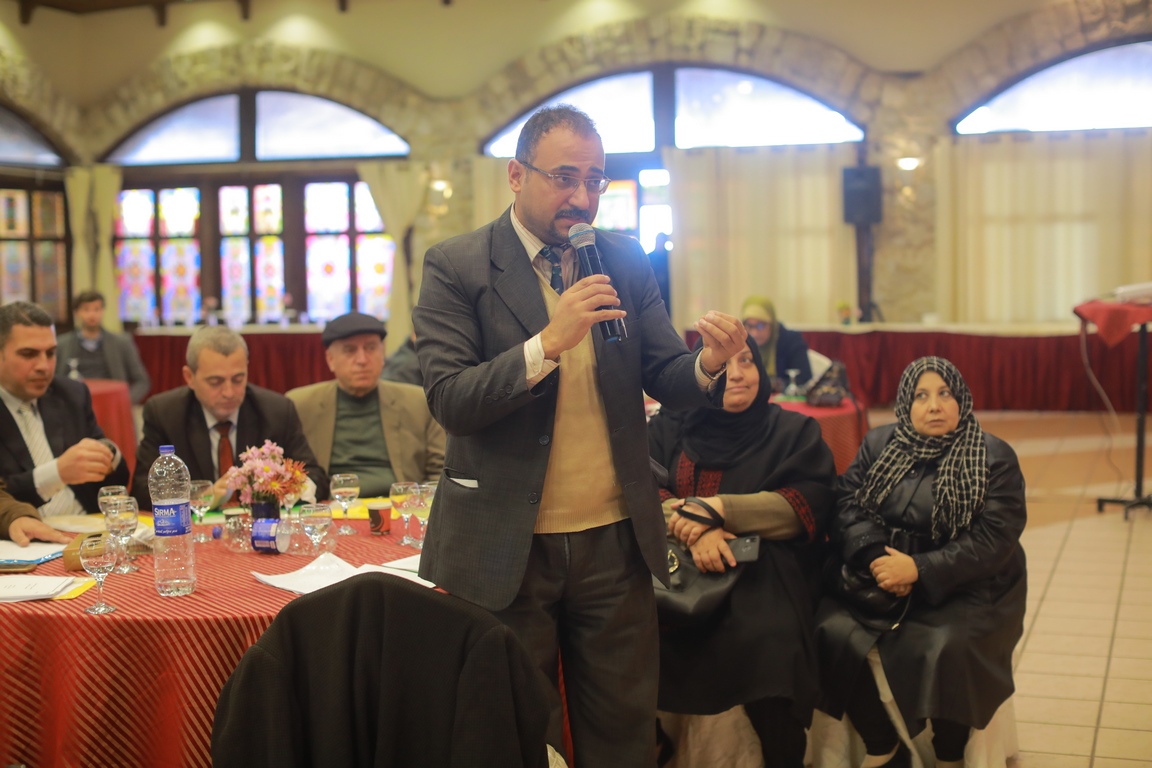
The participants' questions revolved around the causes of the division's continuation, the possibility of the youth efforts' success in ending the division, the Palestinian elections and the possibility of their implementation, and unifying the student frameworks in the homeland's two halves. And the students in Gaza asked their colleagues in the West Bank, and the reverse.
It is recalled that this project continued for a year, and included many joint activities between the universities of Gaza and the West Bank; a training on conflict resolution was also organised during the project with the international expert in conflicts and strengthening civil peace Zahid Yousef, in which 20 students from the universities Birzeit, al-Azhar, and the Islamic participated.