The Youth Forum holds the conference «Youth and tolerance — what succeeds and what fails»
Pursuing community reconciliation between society's groups as a prelude to political reconciliation, the Youth Forum for Tolerance held the conference «Youth and tolerance: mechanisms of success and failure».
- Author
- The editorial team
- Date
- 2013-06-02
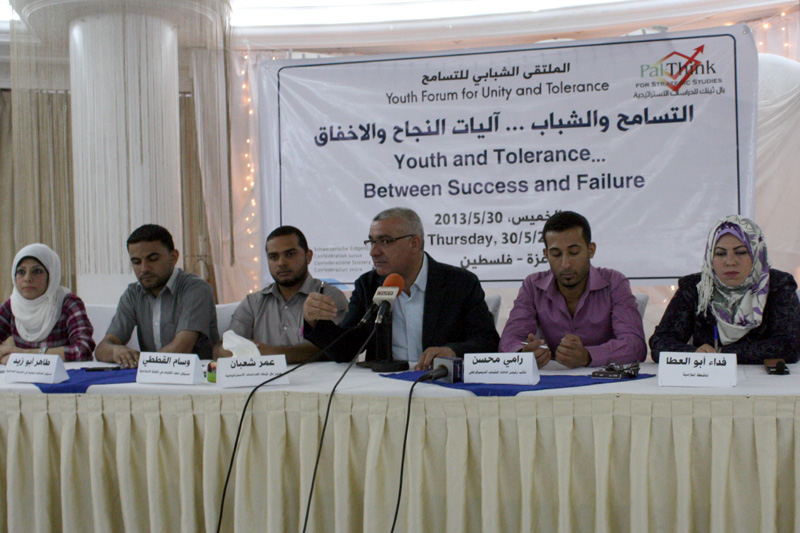
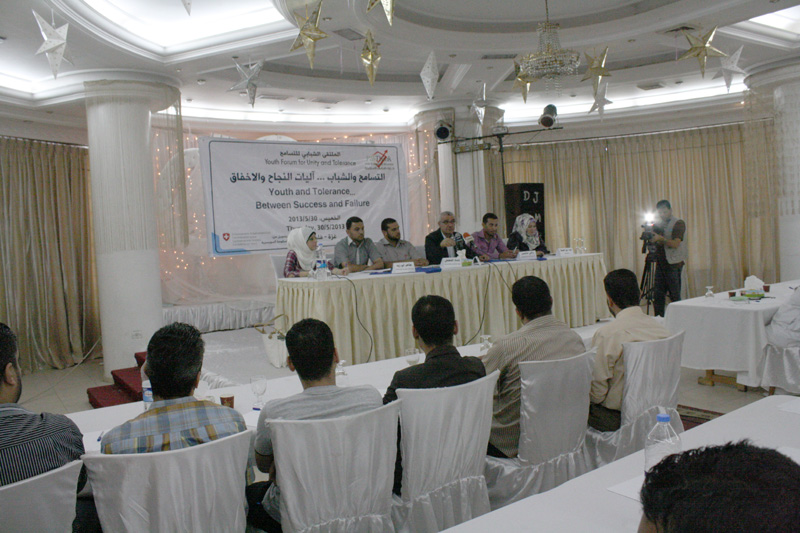
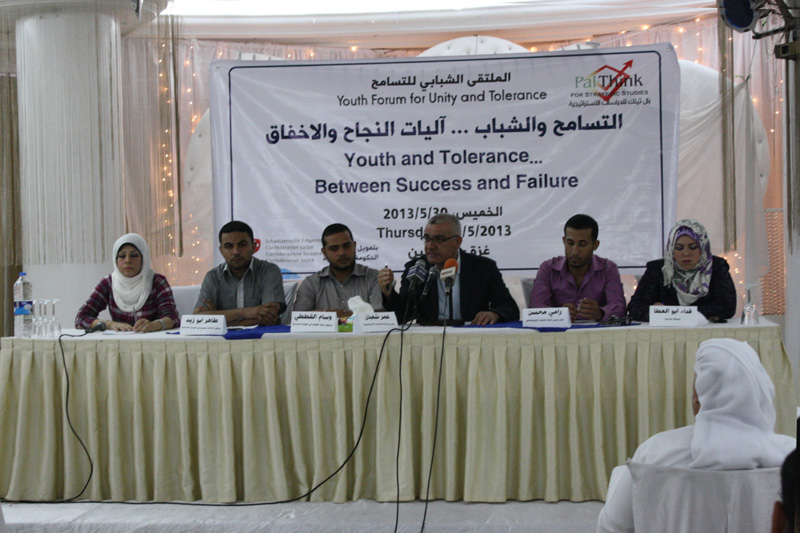
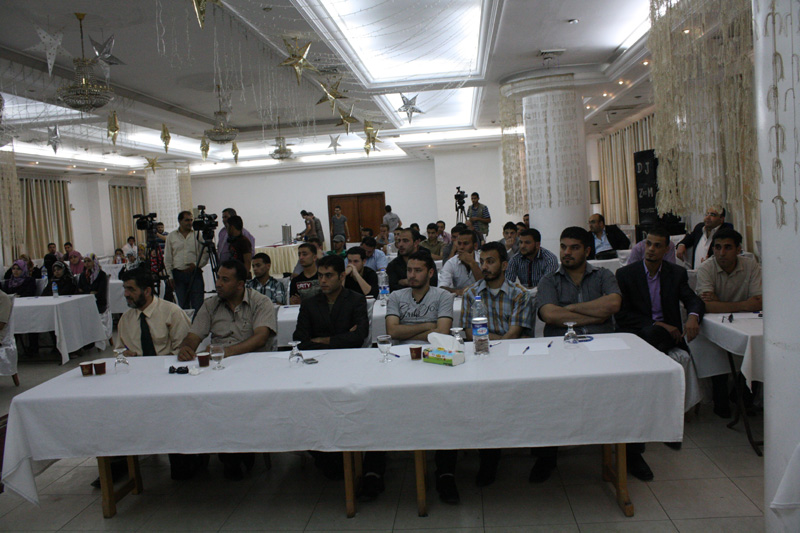
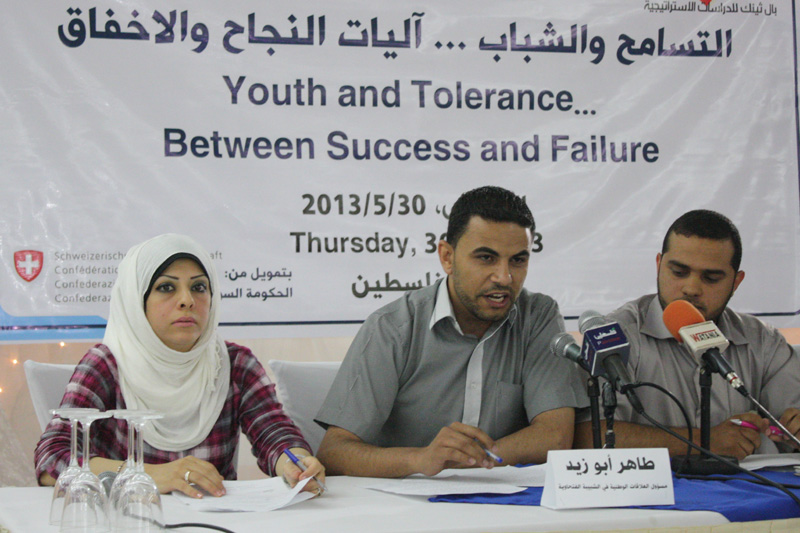
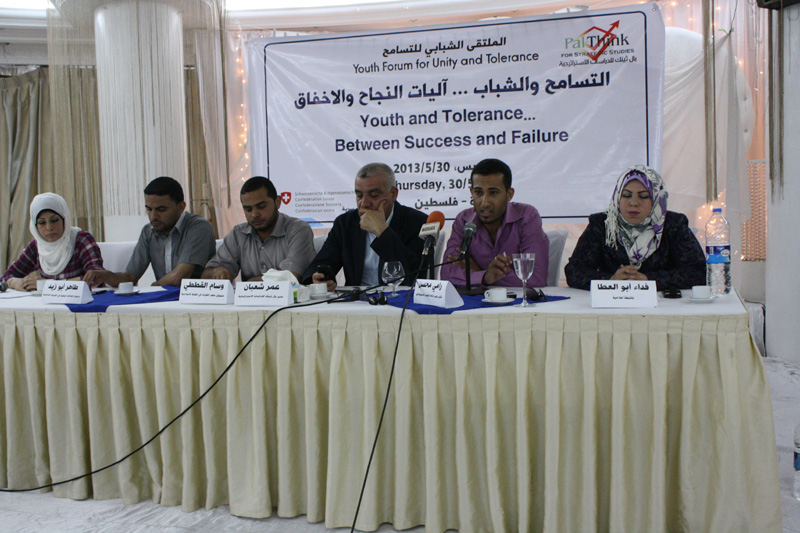
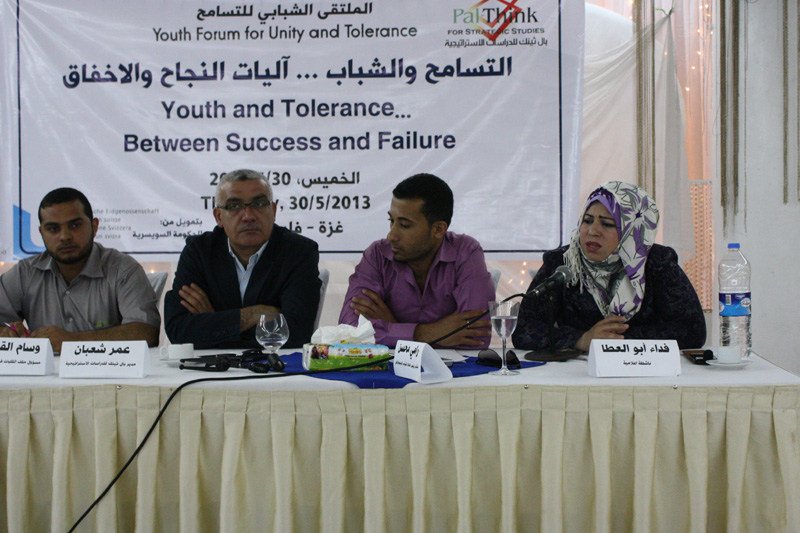
Gaza, 30/5/2013 – In continuation of its efforts toward strengthening and spreading the values of tolerance and dialogue, and setting out from its goal of achieving the communal reconciliation between the spectra and categories of society as a prelude to achieving the political reconciliation, the Youth Forum for Tolerance at the Pal-Think for Strategic Studies institution organised a conference titled “The youth and tolerance.. the mechanisms of success and failure”, in the hall of the Grand Palace hotel in Gaza City.
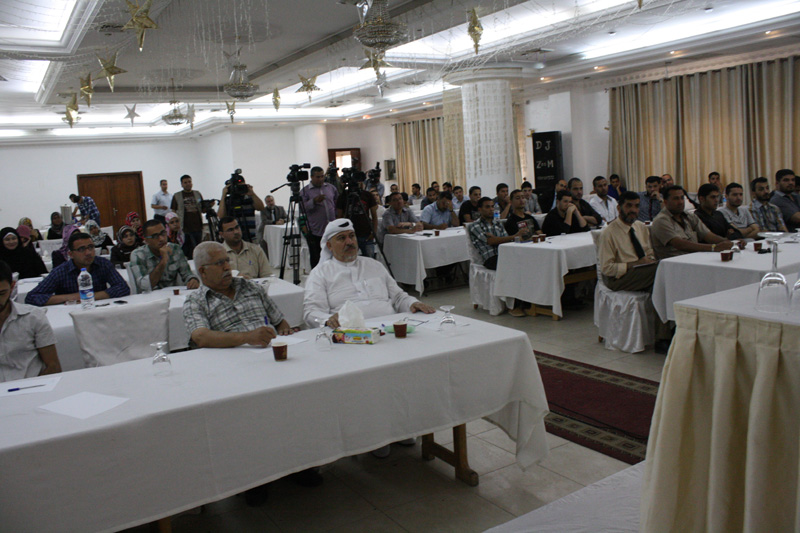
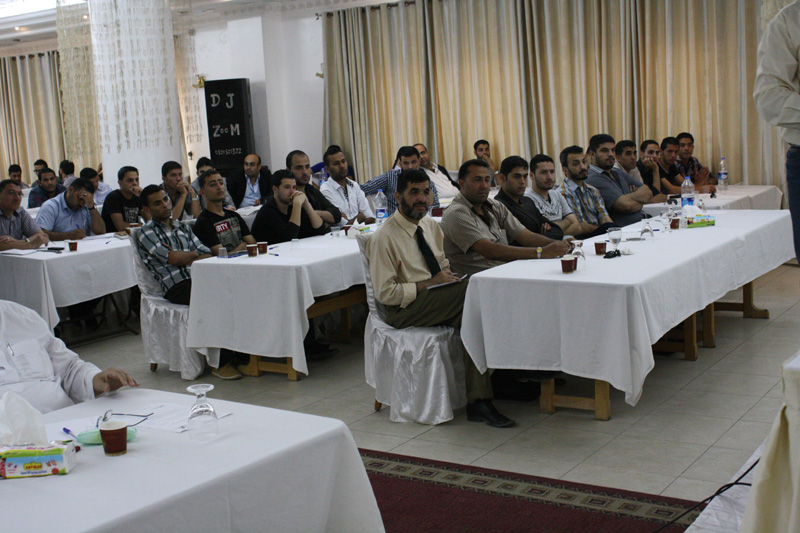
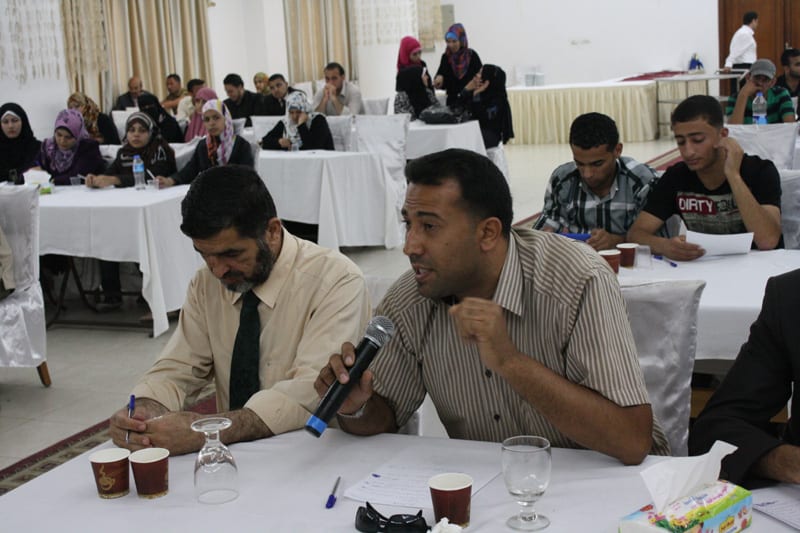
The conference was attended by nearly 120 persons of the representatives of civil-society organisations, the student frameworks, the youth groups, and the male and female university students in the Gaza Strip, in addition to some independent figures.
During the conference four working papers were reviewed, taking up the subject of the youth and tolerance from different angles, focusing on the mechanisms and ways of strengthening the culture of tolerance and renouncing the disputes, reaching the achievement of the national reconciliation.
The conference was opened by Mr Omar Shaban, the executive director of Pal-Think, welcoming the attendees and thanking them for their interest, stressing the youth's role in advancing society and achieving a better future, and calling for strengthening the values of communal tolerance and beginning with the bases of society in order to reach the communal reconciliation, which is the road to achieving the political reconciliation.
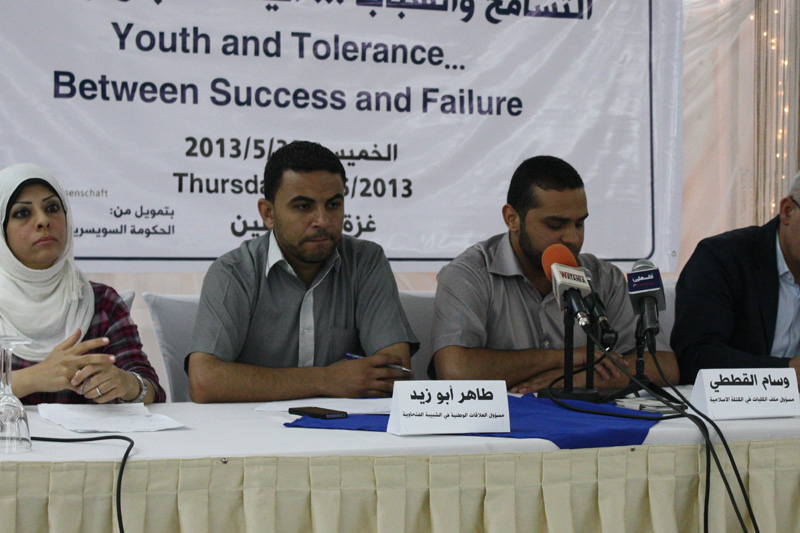
Then Mr Taher Abu Zaid, the official of national relations in the Fatah Youth, spoke through his paper “The youth's role in strengthening the values of tolerance”, saying that the best road to advancing society is through science and knowledge and strengthening the culture of dialogue and cooperation between the different categories of society on one hand, and the relation of those categories with the political system on the other.
He added: “Achieving the communal reconciliation happens only through adopting a pluralistic system resting on mutual respect for the opinions and orientations, which guarantees the achievement of full partnership between the different categories of society”.
Meanwhile the official of the colleges files in the Islamic Bloc, Mr Wissam al-Qatati, spoke in his paper, which carried the title “The role of the student frameworks in strengthening the values of tolerance”, of the role of organisational upbringing in strengthening the values of tolerance among the youth, and of the positive and negative effects of that upbringing.
Calling, at the conclusion of his talk, for the necessity of controlling the nerves and the tongues, renouncing the disputes, and letting the language of reason arbitrate in the dealing between the different spectra of society — pointing to the importance of activating the universities' role in this respect and neutralising them from any partisan or organisational conflict.
The working paper “The role of the youth institutions in strengthening the values of tolerance”, prepared by Mr Rami Muhsen, vice-president of the Democratic Youth Union, came to affirm the foregoing and to point to the danger of fanaticism and its effect in creating the cracks and gaps between the different categories of society, especially the youth, since they are usually the fuel of every dispute as a result of the absence of sufficient awareness.
He added, saying: “None resort to violence but those stripped of the human values”, and he specified some of the motives and causes of fanaticism — which is the opposite of tolerance — in the state of intellectual distortion and confusion, the partisan upbringing, the weakness of the Palestinian political system and the decay of its components, and the decline of the role of civil-society organisations.
The last paper carried the title “The media's role in strengthening the values of tolerance”, in which the media worker Fidaa Abu al-Ata took up the importance of the media's role in educating and enlightening the public, breathing the spirit of tolerance and brotherhood, and entrenching the values in its ranks, especially for the youth category. She called in her word for the necessity of adopting a purposeful media discourse according to a plan set in advance that guarantees the transparency of the local media outlets and their distance from the inciting discourse that breathes division into the citizens' ranks — through which trust can be rebuilt between the different parties.
In the conclusion the door of discussion was opened and all came out with recommendations, the most important of which was the agreement on the necessity of beginning with practical steps on the level of achieving the communal reconciliation and strengthening the culture of tolerance among the youth's ranks, focusing on the bases of society reaching the reconciliation, and the necessity of the youth organising themselves in pressure groups and working on conferring the quality of rationality on the media discourse.