At a Pal-Think workshop: a call for legislation and capacity-building to energise volunteer work
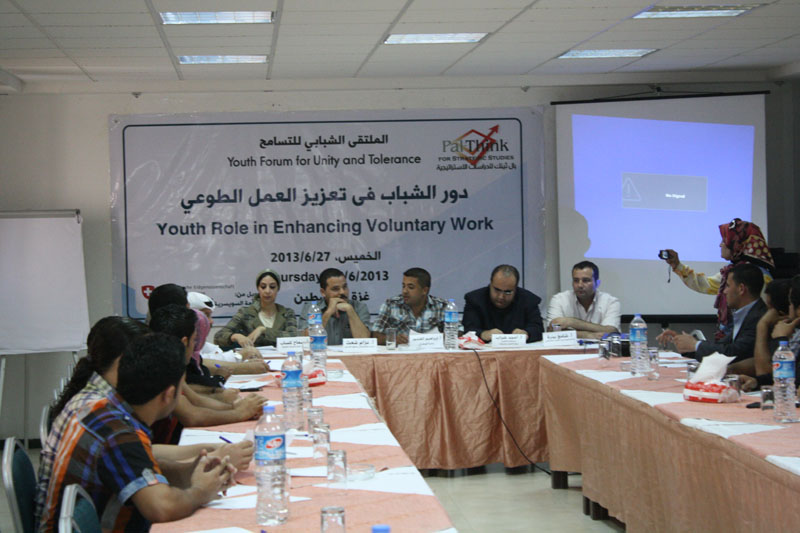
The Youth Forum for Tolerance held the workshop «Youth's role in strengthening volunteer work», with civil-society organisations and youth bodies, in an atmosphere of constructive discussion and objective exchange.
- Author
- The editorial team
- Date
- 2013-07-01

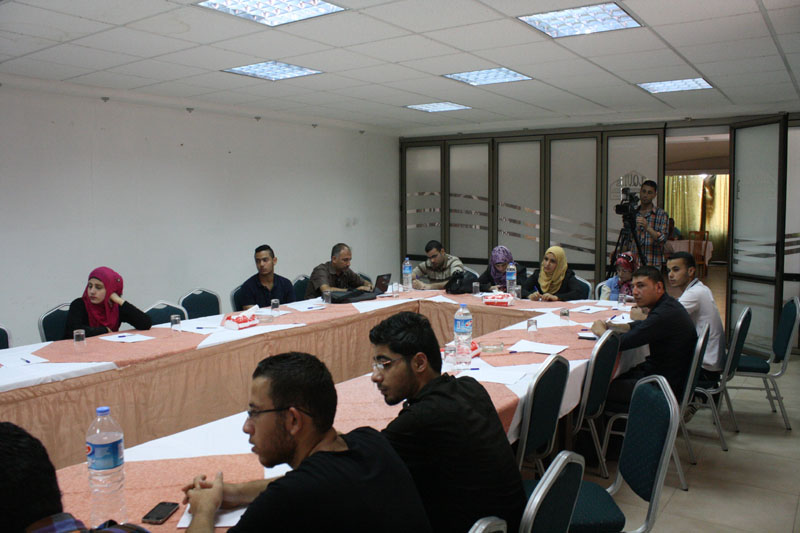
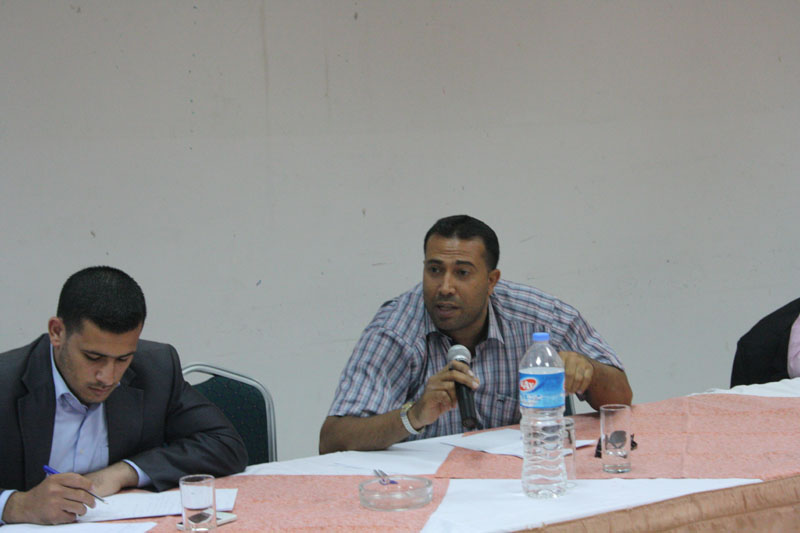
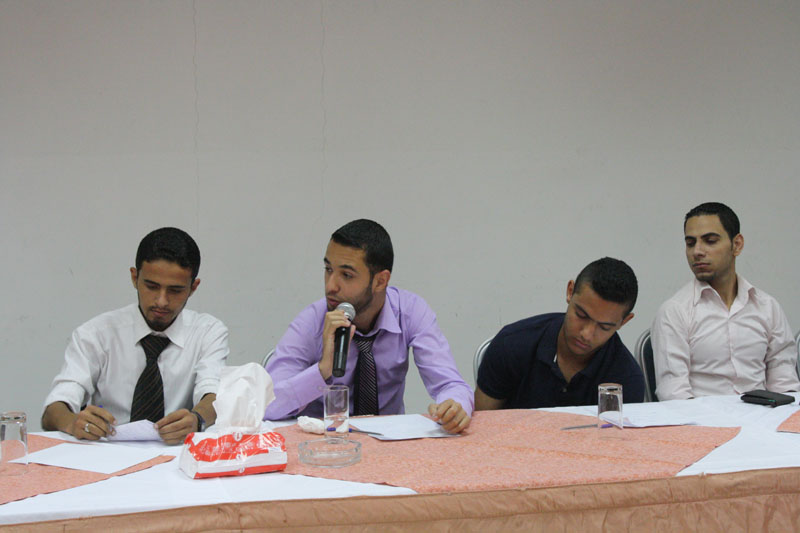
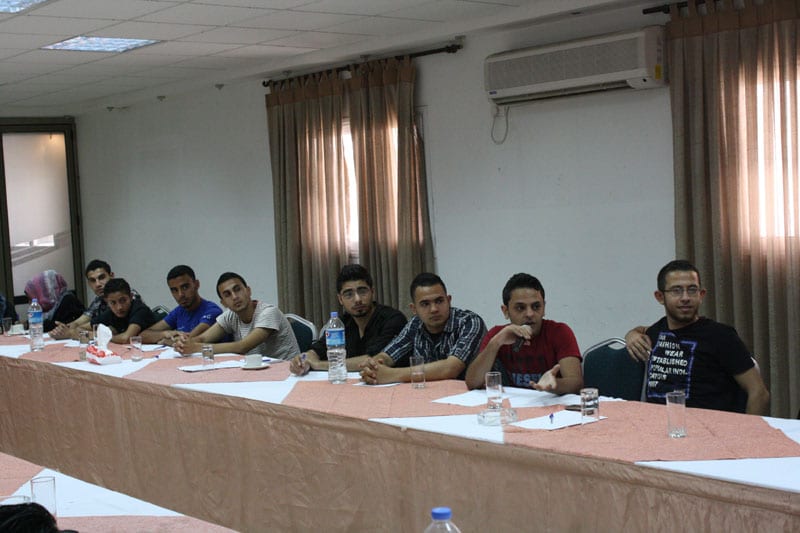
Gaza, 30/6/2013 – The Youth Forum for Tolerance at Pal-Think for Strategic Studies organised a workshop titled “The youth's role in strengthening voluntary work”, with the participation of a group of civil-society organisations and the youth and civil bodies, in an atmosphere dominated by constructive discussion and the exchange of viewpoints with objectivity and with a sense reflecting the extent of the care for the youth, and the affirmation of the importance of their role in all the forms of social and institutional life. The meeting was attended by many youth activists, representatives of civil society, and academics, in addition to university students and media workers.
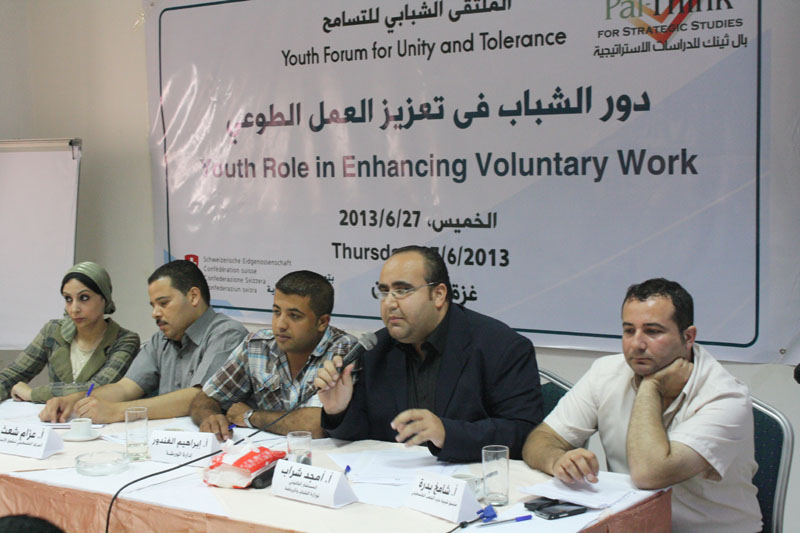
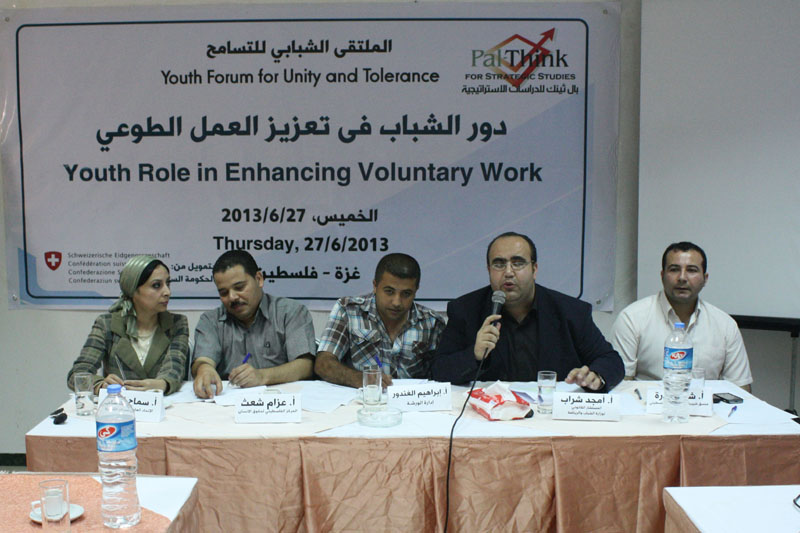
At the workshop's beginning, Mr Azzam Shaath, the researcher at the Palestinian Centre for Human Rights, reviewed in his paper “The institutions and the mechanisms of advancing voluntary work” voluntary work and its effect on society and how to advance it, noting that voluntary work is in decline owing to many factors — a decline that began with the coming of the National Authority and the youth's engagement in its apparatuses.
He added, saying: “The youth are a driving force that can be relied upon and whose energies can be benefited from in the institutions in their two branches, private and public”, pointing thereby to the importance of the youth's role in society and to the necessity of investing their energies and directing them in a way that serves this society.
At the conclusion of his intervention he spoke of the motives of volunteering and of their differing from one person to another — among them the national, the social, and likewise the religious — affirming that those motives have currently changed to take a utilitarian, self-interested course in most of them.
Meanwhile Ms Samah Kassab of the General Union of Cultural Centres spoke, in her paper “The reality of voluntary work: a review of the causes of its decline”, of some of the obstacles that prevent the youth's engagement in voluntary work or diminish its value for them — laying thereby some of the responsibility on some institutions, which she accused of practising extravagance with their employees while giving the volunteer not the least attention, and indeed exploiting their energies without the least material or moral return, which increases their feeling of injustice.
Kassab also pointed to the absence of a law organising voluntary work, whether within the institutions' internal regulations or within the Palestinian Basic Law, which makes the volunteer more exposed to exploitation — this in addition to the absence of capacity-building programmes for the volunteers in most institutions.
Mr Shamekh Badra, coordinator of the youth of the Palestinian People's Party, reviewed his paper titled “The youth's role in strengthening voluntary work”, reviewing the history of Palestinian voluntary work, especially in the seventies and eighties of the last century, pointing to the role of voluntary work in the Palestinian national struggle; he also noted that there are many national institutions that began as voluntary works.
He returned and affirmed that the educational curricula do not touch on these experiences and do not contribute to strengthening voluntary work, in addition to the fact that society's culture diminishes the value of voluntary work and inclines to the works that achieve material gain.
From his side, Mr Amjad Shurrab, the legal adviser at the Ministry of Youth and Sport, took up in his talk the subject of “the draft law organising voluntary work”, which includes the conditions of volunteering and defines the volunteer and their rights in a clear and comprehensive manner, pointing out that the draft is on its way to ratification.
Afterwards the door of discussion was opened to the attendees, where some presented interventions that praised the role of the Youth Forum for Tolerance and Pal-Think and its role in taking up issues considered among the most important for the youth public. Some of them added that what has diminished the value of voluntary work is the bad economic state the Strip lives through and the burdens of life and its harshness at times.
In conclusion all agreed on the necessity of continuing the serious and diligent work to strengthen the culture of volunteering, noting the necessity of continuing to hold such activities, and the necessity of the youth organising themselves in organised groups to raise their demands and carry their concerns to the officials of all the bodies and institutions.