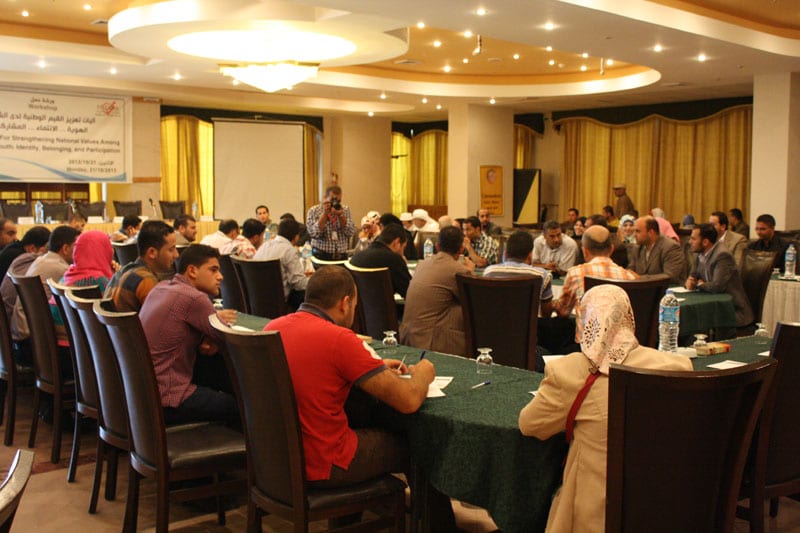
With 200 participants, the Youth Forum for Tolerance holds a workshop on strengthening national values among youth: identity, belonging, participation
The Youth Forum for Tolerance held the workshop «Mechanisms for strengthening national values among youth» — building young people's national sense, their capacity to defend the Palestinian cause, and the paths towards reconciliation.
- Author
- The editorial team
- Date
- 2013-10-22
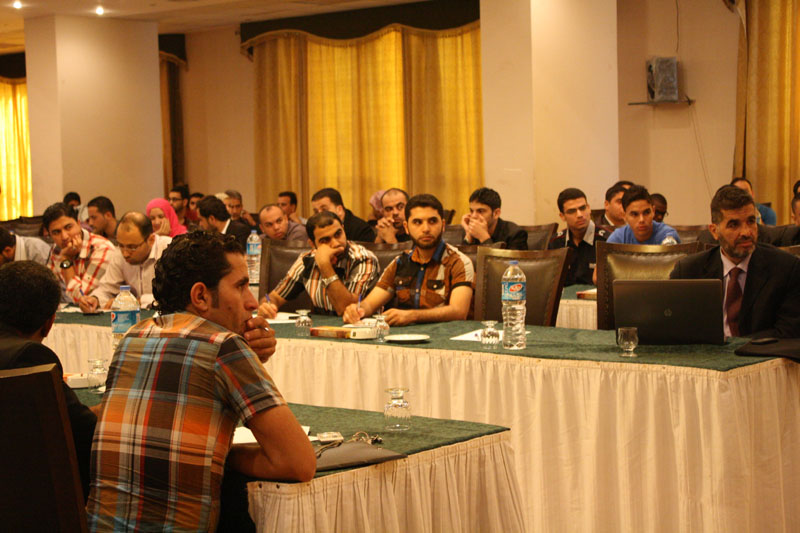
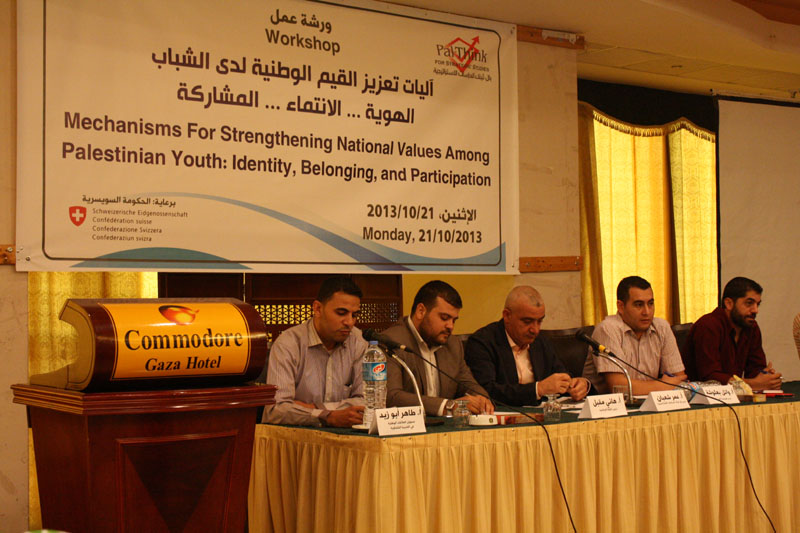
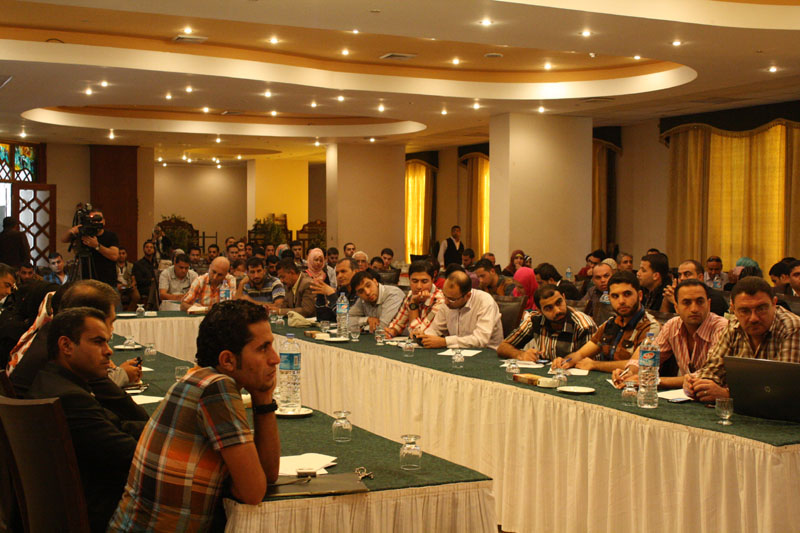
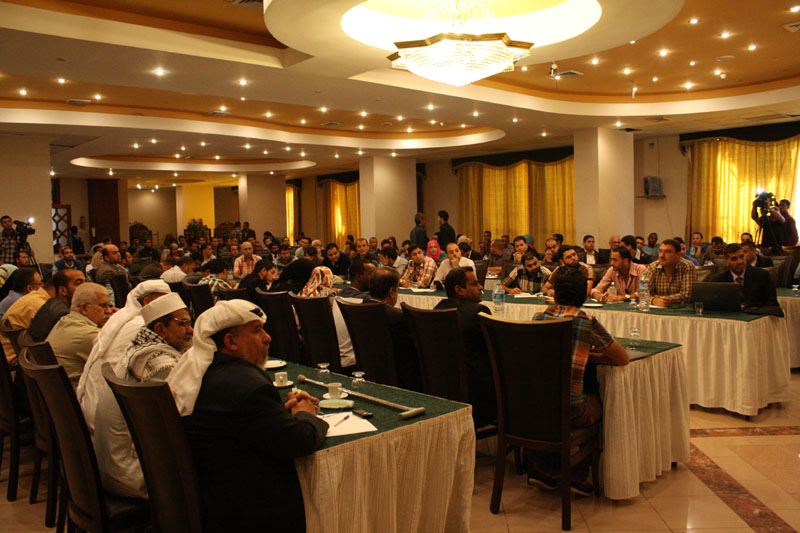
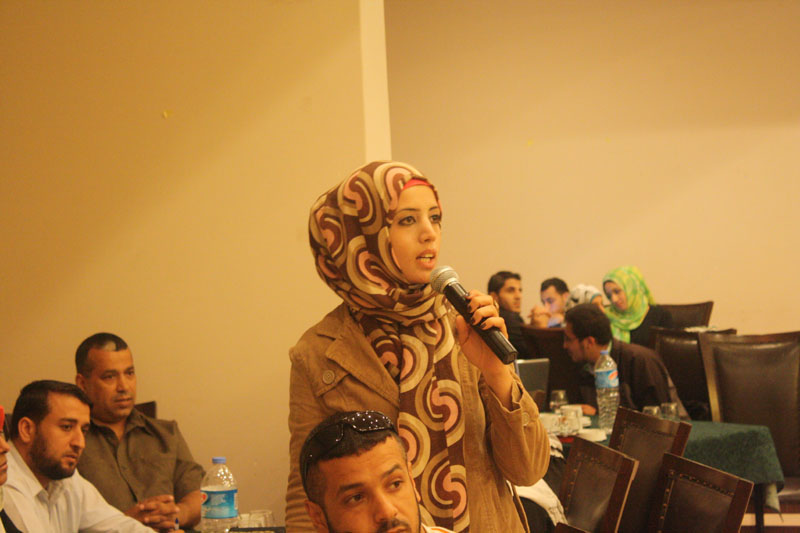
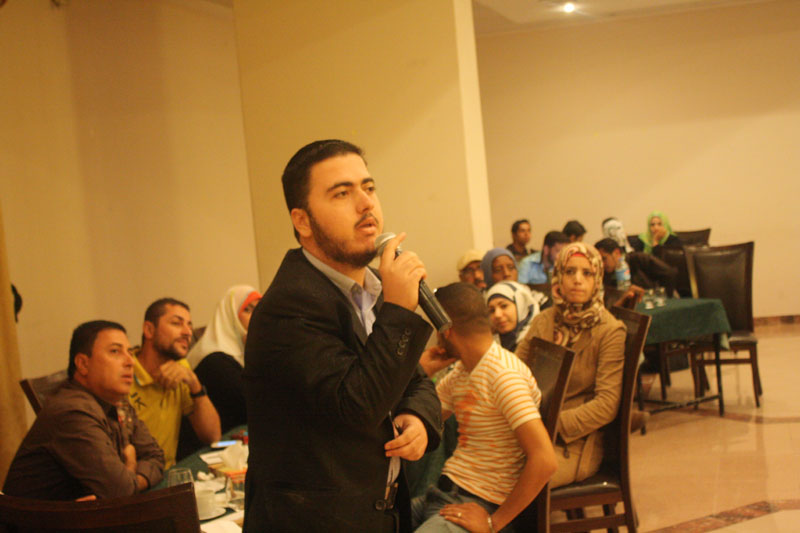
Gaza – In continuation of the activities carried out by the Youth Forum for Tolerance at Pal-Think, aiming at strengthening the national sense among the youth, enabling them to defend the Palestinian cause, and entrenching the ways leading to reaching the Palestinian reconciliation, the forum organised, at noon today, Monday 21/10/2013, a workshop titled “Mechanisms of strengthening the national values among the youth: identity, belonging, participation”, attended by around 200 participants of Palestinian youth from the various political parties, representatives of civil society, media workers, the student frameworks, and the youth groups, in the hall of the Commodore hotel in Gaza City.
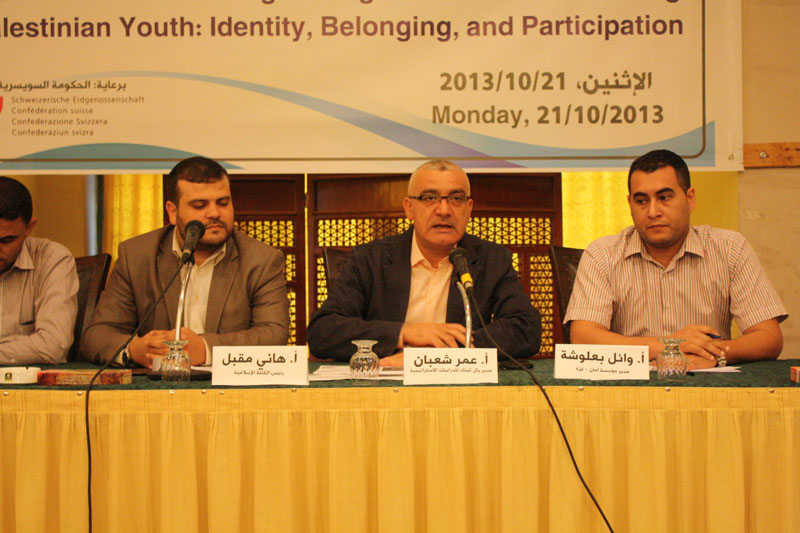
The workshop was opened by Omar Shaban, director of the Pal-Think institution, where he welcomed the attendees and the speakers, and indicated that the workshop's goal is tied closely to the goal of the Youth Forum for Tolerance, represented in spreading communal awareness and the values of religious tolerance, and the concepts of democracy, justice, transparency, and integrity, especially for the youth category, and strengthening communal participation and communal consultation, reaching the achievement of the social and political reconciliation, and bringing the different viewpoints closer through holding a set of activities that provide a constructive intellectual democratic atmosphere forming a fertile environment for dialogue and rapprochement. Mr Shaban stressed the youth's role in strengthening their national values and entrenching the values of belonging and participation and preserving the identity — such that the Palestinian identity comes before any partisan identity.
In their turn, the speakers in the workshop affirmed the necessity of enabling the youth to engage immediately to strengthen the communal values, identity, and participation. From his side, the head of the Islamic Bloc, Hani Maqbil, spoke in his paper about “belonging”, and said: “We are keen on the true belonging to the Palestinian identity, and we must renounce partisan fanaticism and narrow partisanship and head to the square of the greater belonging to Palestine and to the Palestinian cause”.
Maqbil affirmed the importance of joint work in the spirit of one team for everything that would strengthen the identity and belonging, especially as the sons of the Palestinian people have among them very many points of agreement and meeting; likewise investing the national occasions and bringing forth the youth's role, implanting belonging in the educational curricula, in addition to implanting the meanings of volunteering and the love of work and fighting unemployment.
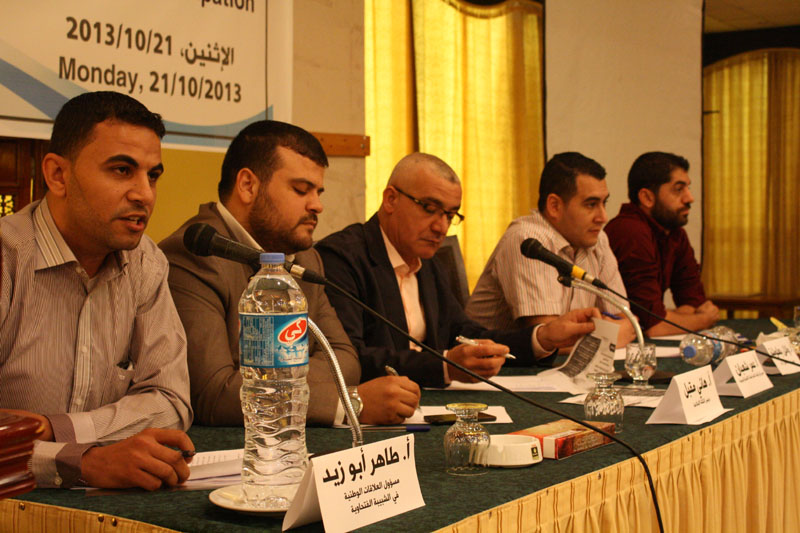
In his turn, the official of national relations in the Fatah Youth, Taher Abu Zaid, affirmed that it is the right of Palestinian youth to set a future vision for the cause and the Palestinian reality, and said: “The youth represent a high proportion of Palestinian society reaching 30%, therefore they must take their role in influence”.
Abu Zaid affirmed the necessity of political participation, which is considered one of the most important priorities of development in societies, in addition to activating the role of the student unions and frameworks at all the levels to develop their awareness of their national role, besides restoring standing to the values of voluntary work and enabling them to express their values.
From his side, the vice-president of the Progressive Youth Union, Arafat al-Haj, spoke about the axis of identity, and affirmed that the youth's role is founding and real, making clear that the organisation is still better than individuality in dealing with the national issues, which need an organisational vision to be walked upon.
He stressed the youth's role in working on restoring the identity of confrontation with the Israeli occupation, and made clear that the Palestinian organisations were founded for liberation and confrontation with the Israeli occupation, and said: “The youth's role is represented in restoring the essence of the Palestinian cause to confronting the Israeli occupation; in the event of approaching that goal we will have approached the achievement of Palestinian unity”.
In his turn, the director of the AMAN institution in Gaza, Wael Baalousha, touched on speaking of the role of civil-society organisations in strengthening the national values, and affirmed that the neutrality of the leaderships of civil work must not be at the expense of the national issues.
He spoke of the obstacles facing civil-society organisations in strengthening the national values, among them the scarcity of the available capacities, the effacement of the national values, the deteriorating economic situation, and the factional political discourse and the narrow factional bickering.
Baalousha affirmed the necessity of providing the minimum of securing life for the youth so that they can contribute to strengthening the national values, and participate in the activities that support that — noting the necessity of everyone's understanding of the role the other performs, far from accusations of treachery and factionalism.
The workshop came out with a set of constructive recommendations from the speakers and participants, represented in the necessity of renouncing the partisan disputes, ending the political division, criminalising political arrest, giving the youth room to express their opinions freely within peaceful assemblies and protecting them and not restricting the public freedoms, and the necessity of investing the national and Islamic occasions to bring forth the youth's role in serving the Palestinian cause.
And organising the joint national youth activities and events between all the spectra of the Palestinian people to strengthen and entrench the youth's role in strengthening their belonging to the homeland, and building study curricula that support this direction; the necessity of encouraging the youth's greater engagement in political organisations and trade-union assemblies; and activating the role of the unions and the student and youth frameworks at the political, communal, and cultural level to revive the national heritage and develop the youth's awareness of the cause and the national role required of them, through encouraging them toward initiative and mass action at the various levels to build a better future; restoring standing to voluntary work and communal participation in the circles of the youth.
Besides the necessity of supporting the youth and adopting a national strategy that strengthens the youth's participation in taking decisions, and founding a true partnership between the Palestinian factions to breathe a new youthful spirit into the parties' leadership to change the frozen political course to reach the Palestinian reconciliation; and finally the necessity of integration in work between the ministries and the civil and private institutions working in the field of the youth, to strengthen the idea of the youth's participation and elevate their awareness in the direction of protecting the identity and strengthening the national belonging.