The Youth Forum for Tolerance holds a workshop on youth's role in facing crises and disasters
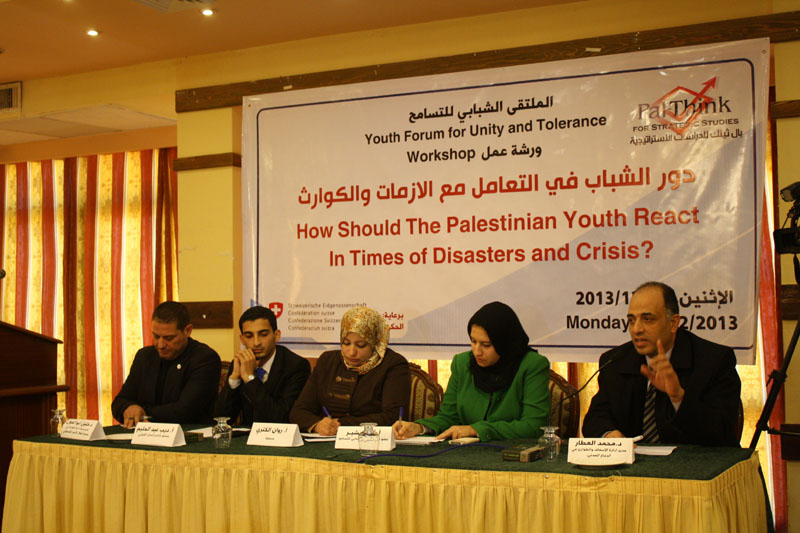
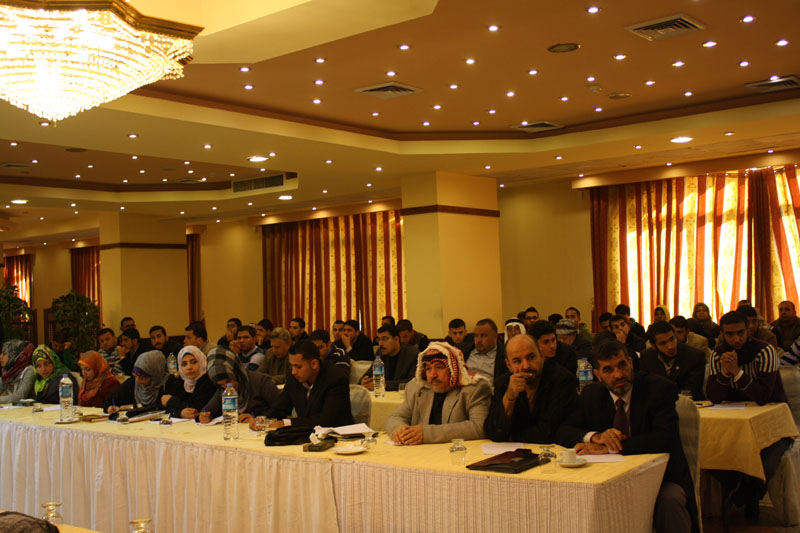
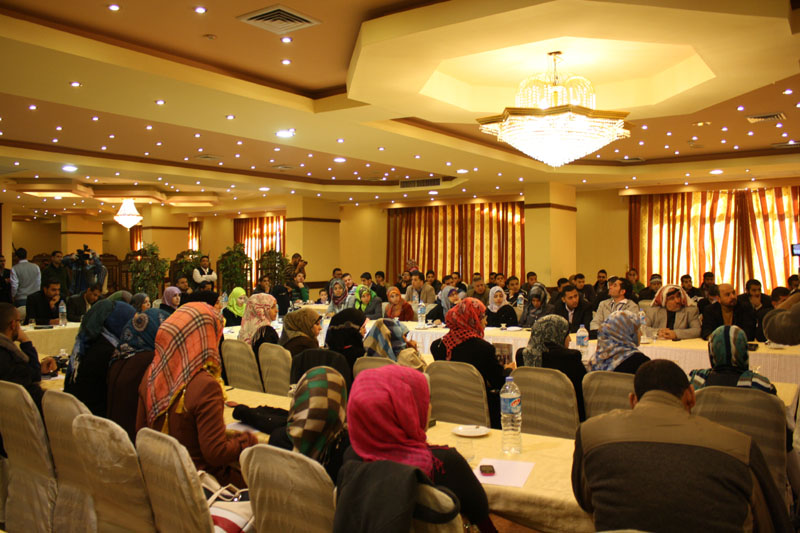
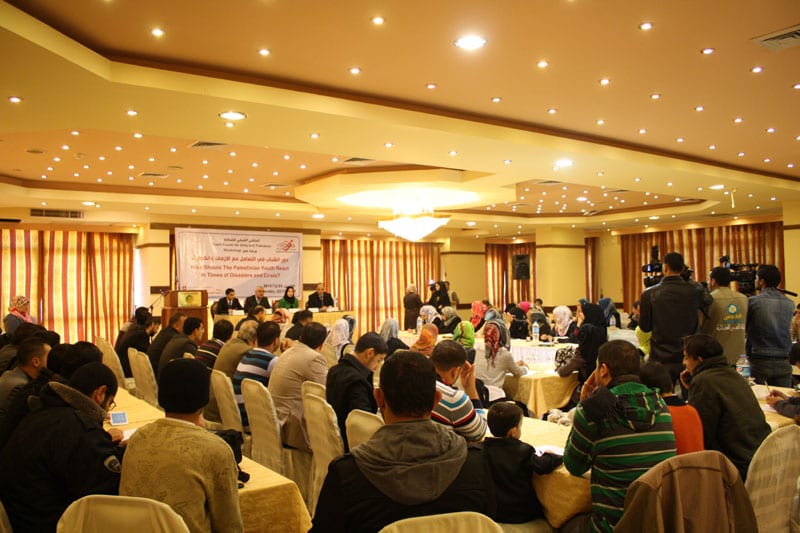
The Youth Forum for Tolerance held the workshop «Youth's role in dealing with crises and disasters» at Gaza's Commodore Hotel, with more than 250 participants from across Palestinian society, opened by director Omar Shaban.
- Author
- The editorial team
- Date
- 2013-12-26
The Youth Forum for Tolerance at the Pal-Think institution organised a workshop titled “The youth's role in dealing with crises and disasters”, with the participation of more than 250 participants from all the strata and spectra of Palestinian society, and specifically the youth category, at the Commodore hotel in Gaza City.
The workshop was opened by Omar Shaban, director of the Pal-Think institution, welcoming the attendees, making clear and affirming the vanguard role of the youth in confronting all the challenges facing society, demanding the necessity of continuous practical training to hone the skills of the human cadres and develop their performance, and the necessity of cooperation between all the governmental, civil, and youth institutions to lighten the effects of crises and disasters.
He pointed out that Palestinian youth have the most prominent role in the process of rescuing the stricken, and said that what the youth did in the Strip is an important message to the officials who always disregard their role in managing crises, and indeed overcoming them, and try to place them in the background of the Palestinian scene, although they form about 50% of Palestinian society.
From his side, the director of the ambulance and emergency administration at the civil-defence directorate, Dr Mohammed al-Attar, said that the disaster divides into two stages: the first is the stage of preparing for the disaster, and the second is the stage of dealing with the disaster — making clear that overcoming the disaster with the least possible losses requires that there be good planning to confront it, to lighten its effects when it descends, especially as there are disasters that may be greater than any governmental or civil capacities to deal with them, and accordingly it is required of others to extend the hand of help and assistance.
In his turn, the director of disaster management at the Palestinian Red Crescent society, Dr Khalil Abu al-Foul, noted that in any state in the world there must be a national plan through which the responsibilities and role of each ministry in managing the crisis are specified, making clear that the Red Crescent society proposed a national plan to develop the capacities of the emergency sector, but to great regret it has not been applied until now.
The journalist Rawan al-Katri spoke of the role of media workers and the different media outlets in dealing with the weather disaster, and stressed that the journalists, who are considered unknown soldiers in the field, do not need anyone to urge them to cover what results from disasters and crises and to perform their duty toward their people.
The coordinator of the “Insan” youth forum, Deeb Abdel Halim, stressed the importance of developing the system of volunteering in Palestinian society, in light of the existence of many obstacles to volunteering, among them the non-implanting of the value of volunteering and its importance through the curricula and the communal values, with the absence of training or awareness courses in this field — despite the great value volunteering enjoys in the various states of the world, especially the advanced among them, which encourage the various members of society, and especially the category of the youth and the young, to plunge into it, during the times of crises and disasters in particular.
The participants demanded the necessity of strengthening the youth's role and organising their efforts in a manner consistent with the official efforts, such that they become complementary to them and helping in the success of these efforts, through building an administrative system that extends horizontally to cover the largest area of the homeland in coordination with the official and non-governmental institutions