Pal-Think and Friedrich Ebert Stiftung hold a discussion on the importance of renewable energy
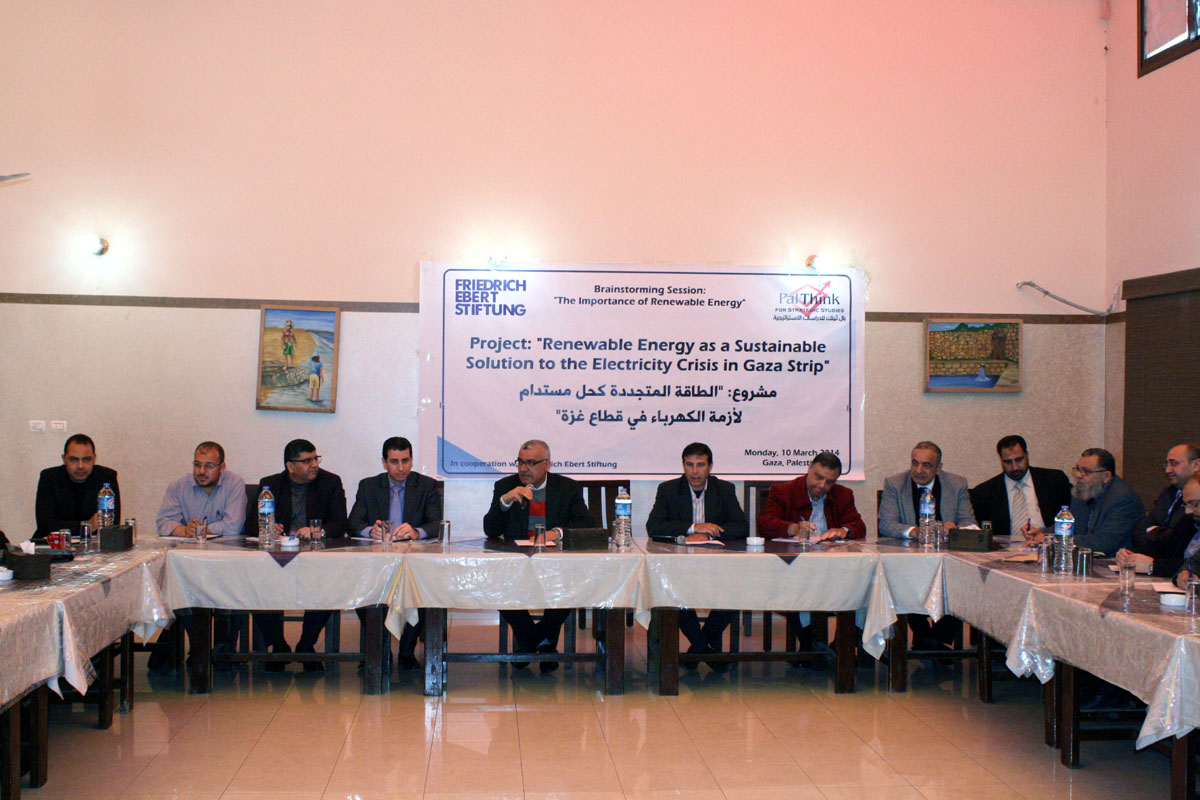
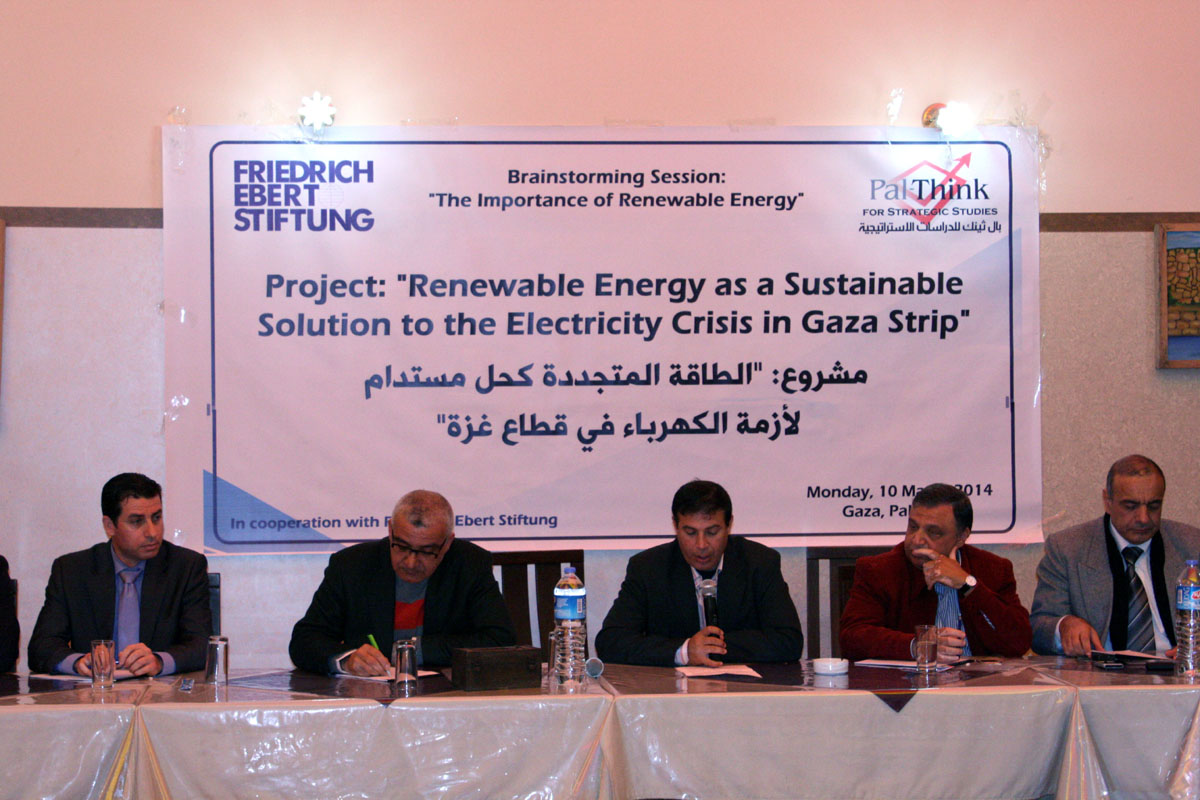
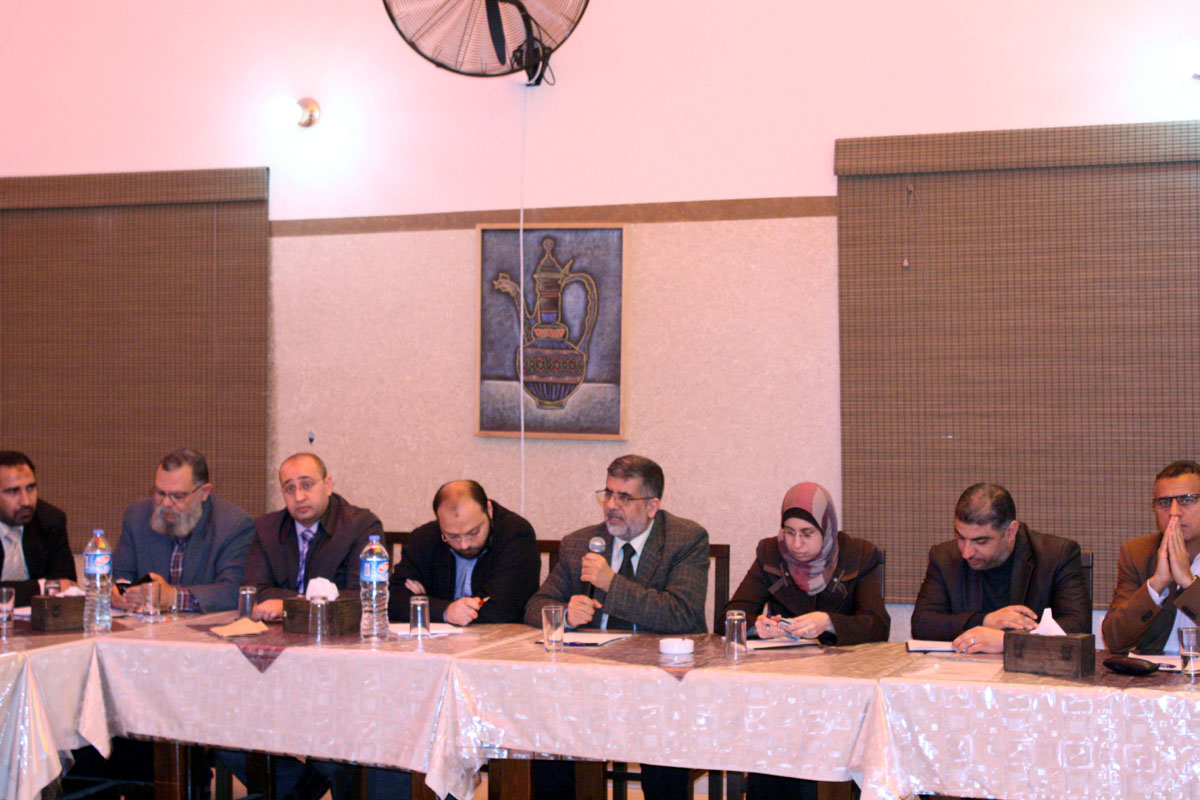
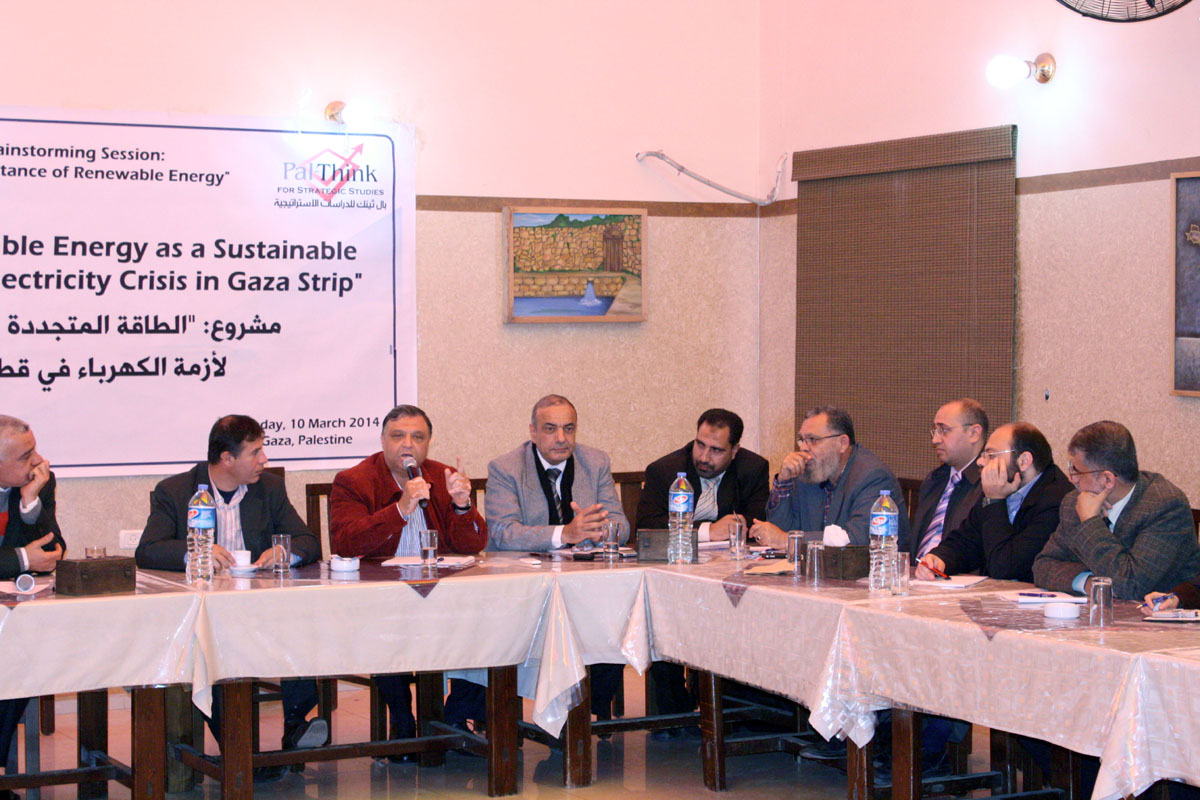
Pal-Think and the Friedrich Ebert Foundation held a discussion on «The importance of renewable energy», under the project «Renewable energy as a sustainable solution to Gaza's electricity crisis», with experts, academics, civil society and government bodies.
- Author
- The editorial team
- Date
- 2014-03-15
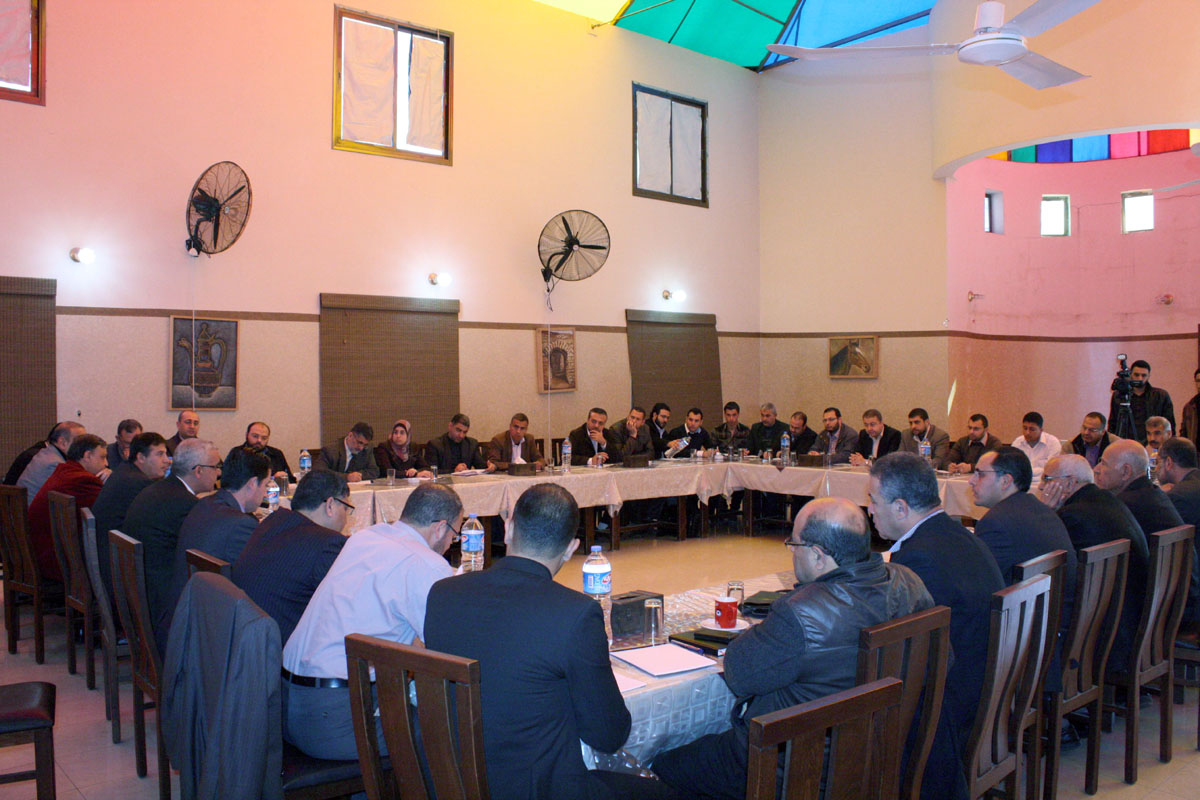
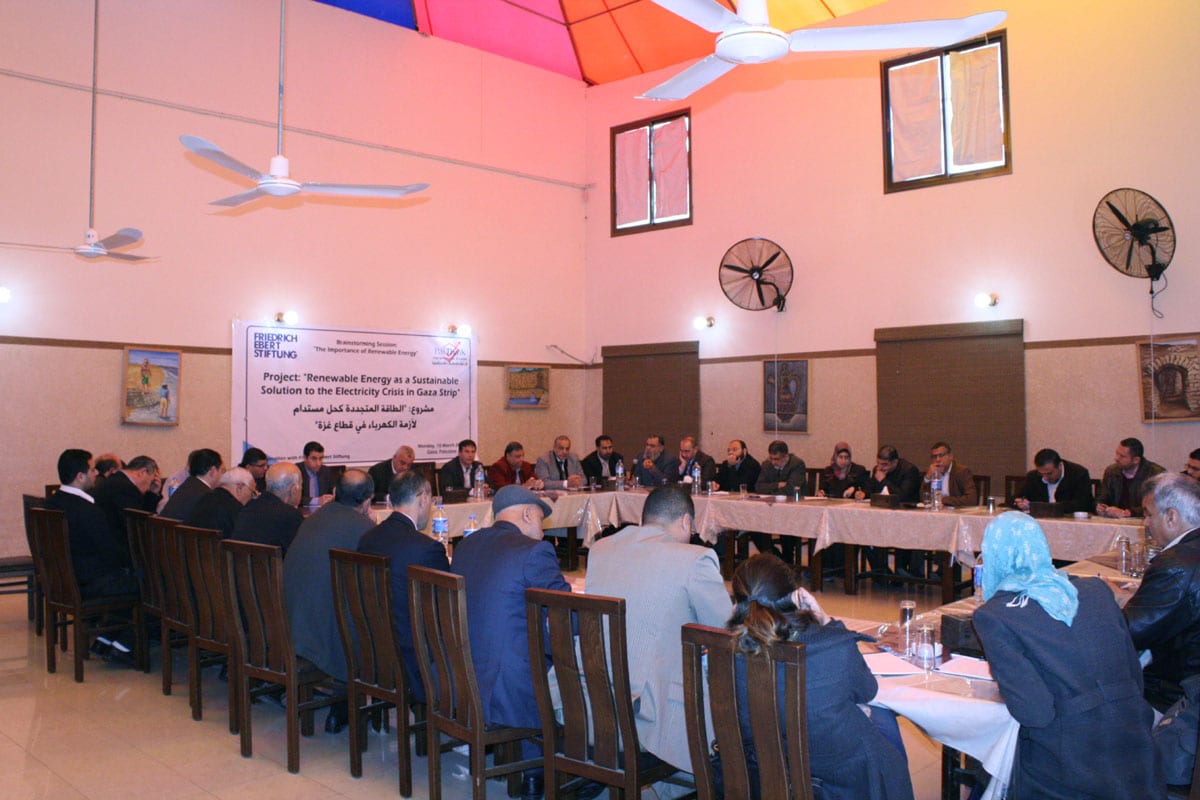
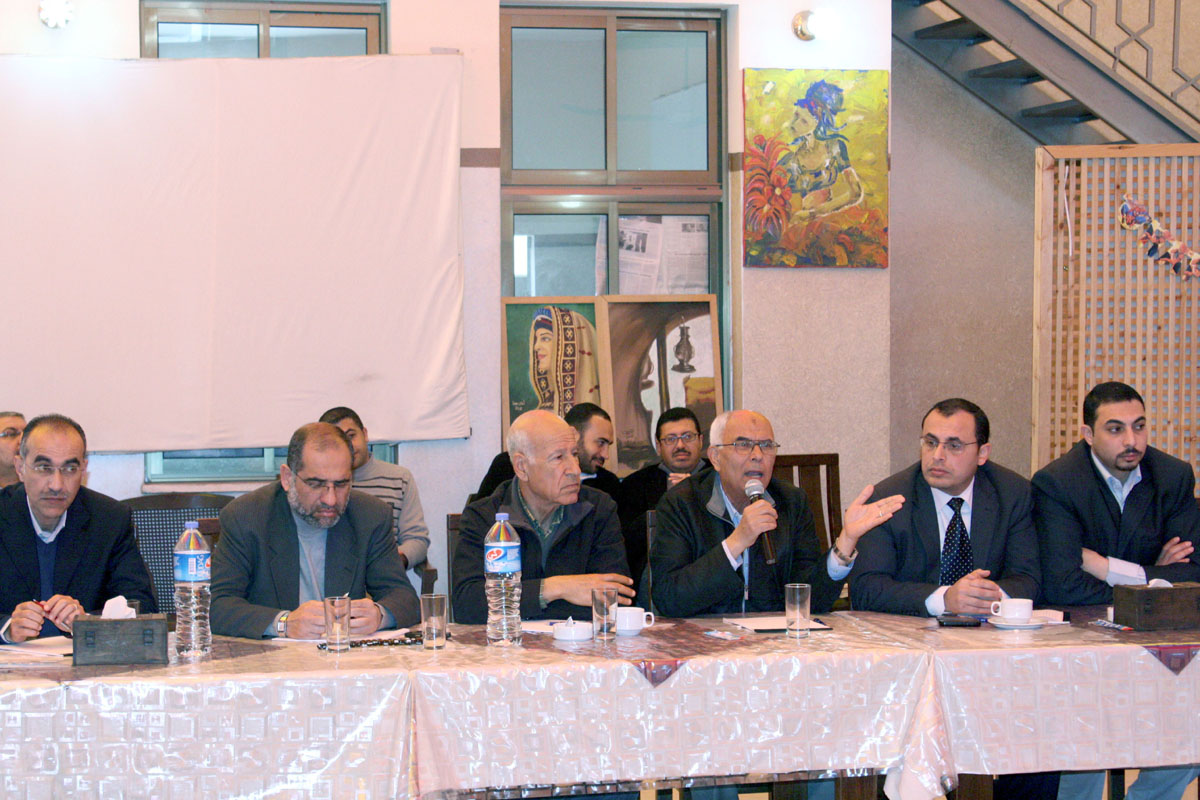
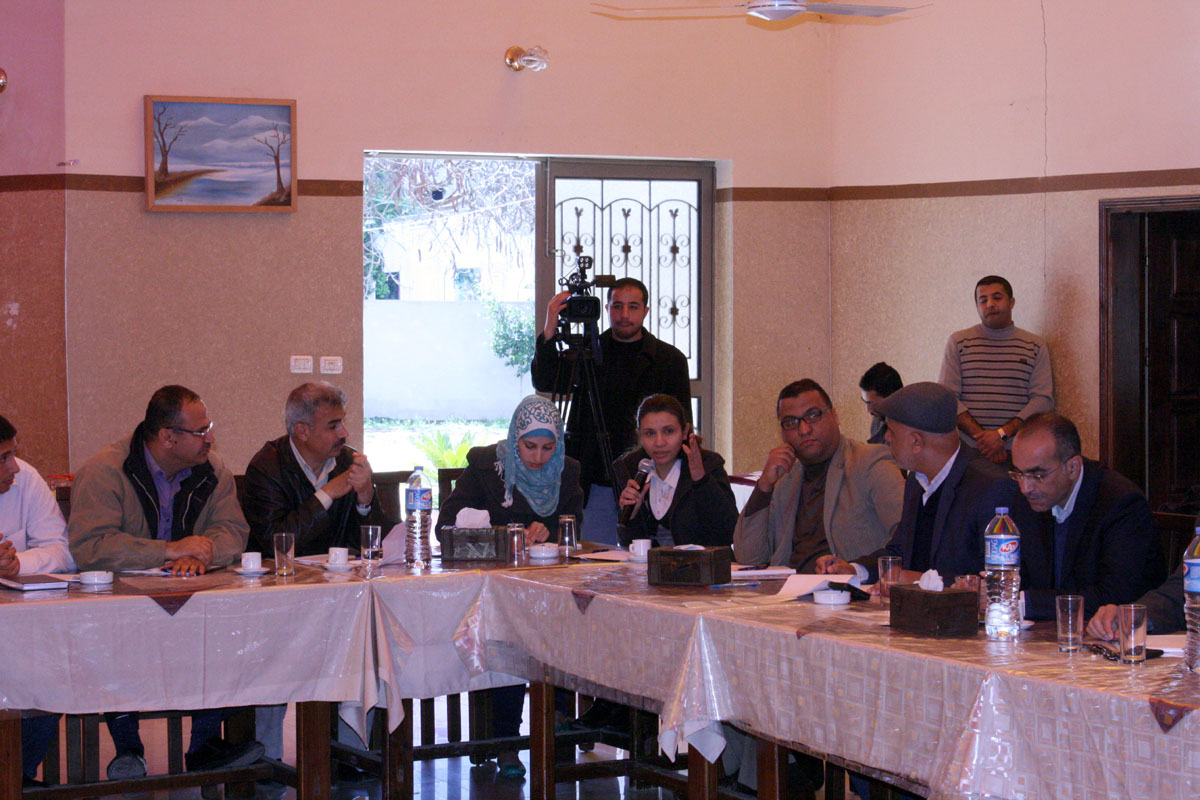
Pal-Think for Strategic Studies, in cooperation with the German Friedrich Ebert foundation, organised a discussion session on: “The importance of renewable energy”, which comes within the project “Renewable energy as a sustainable solution to the electricity crisis in the Gaza Strip”, with the participation of a number of experts, specialists, academics, civil-society organisations, and some governmental bodies.
The session was opened by Omar Shaban, director of Pal-Think for Strategic Studies, and he thanked the German Friedrich Ebert foundation for the joint cooperation during the project: “Renewable energy as a sustainable solution to the electricity crisis in the Gaza Strip”, and affirmed that this project comes in response to the reality of the electricity crisis from which the Gaza Strip suffers, which has become one of the problems that affect the various aspects of the Palestinian citizens' life, given the difficulty of such a crisis and what it has of economic and social effects and consequences.
He pointed out that the goal of this project is to support all the efforts to find new short-, medium-, and long-term solutions for the electricity crisis, through using the scientific and research methods, benefiting from the experiences, activating the role of the competent bodies, and searching for the alternatives to find the solutions and measures required for producing renewable energy.
He said that renewable energy such as the sun and the sea water can be exploited as an alternative energy to solve the problem of the electric current's cutting in the Strip, and added: “Everything that has been accomplished regarding the electricity crisis in Gaza is palliative solutions and not strategic, and there exist ideas without solutions — which requires transforming the ideas into strategic solutions and disregarding the bickering and the political affiliations”.
Dr Osama Antar, Gaza Strip programmes director at the German Friedrich Ebert foundation, said that the session aims at raising ideas for using renewable energy in light of the increasing demand for using energy, especially as many states, among them Germany, have headed to the sustainable solutions in generating electricity, with the goal of preserving the environment on one hand and reducing the expenses entailed by petroleum energy on the other, in addition to keeping away from the danger surrounding nuclear energy.
Antar made clear that the renewable-energy project needs an intensification of efforts from the private and governmental sectors, through the governmental bodies legislating laws of customs and tax exemption for the materials and devices used in creating sustainable energy; it also requires of the private sector providing the necessary equipment and paying its costs in instalments for the families that cannot buy those devices, and the conviction of all of the benefit and importance of the renewable-energy project.
Dr Samir Afifi, head of the Friends of the Environment association, said that there exist many ideas for producing energy from solid waste, pointing to the idea's launch from Rafah and the creation of a station for managing waste and burning it, which accommodates 120 tons of waste, and it is possible to produce 2 megawatts of energy, as well as producing diesel from some plastic waste, and also producing biogas to provide 10% of the electricity energy — pointing out that the private sector has a kind of stagnation, which requires coordination between the private sector and the civil institutions to implement the projects of renewable energy.
Engineer Awni Naim of the Energy Authority affirmed that the principal cause of the non-production of energy lies in the absence of the governmental body and the absence of trust in the government; also, in the West Bank governorates a set of laws and regulations concerning energy were adopted, and in Gaza there is no ground for that because the electricity network is unstable — which requires accord between the competent bodies and the Energy Authority to supply the equipment regarding renewable energy.
Naim affirmed that the Energy Authority's plan in the coming years rests on encouraging all the governmental, civil, and private institutions to adopt electricity-generation projects using solar-energy systems, which will contribute to reducing the direct deficit in the quantity of electricity available in Gaza.
He added: “In addition, the institutions' benefiting from solar energy will increase their rates of quantitative production”, indicating that the Energy Authority in Gaza has launched a plan to encourage the use of solar-energy systems in generating electricity to try to limit the electricity crisis.
Engineer Anwar Abu Zarifa pointed out that the research concerning renewable energy has been presented, and there exist many obstacles, among them what relates to the wind, because it is very weak, and in the event of using it to generate energy it is unprofitable; also, storing energy needs cost, and the batteries are of high cost.
During the session many ideas were raised that would contribute to providing renewable energy, and it was agreed to hold discussion circles in the universities and the competent bodies to agree on the initiatives and measures that would contribute to implementing the renewable-energy project to solve the continuous electricity crisis in the Gaza Strip.
At the session's end the attendees affirmed the importance of coordination between the governmental and private sectors and setting the measures required to begin the renewable-energy projects in the frame of the solutions required to solve the electricity crisis in the Gaza Strip.