Experts call for sustainable energy as a strategic answer to Gaza's electricity crisis
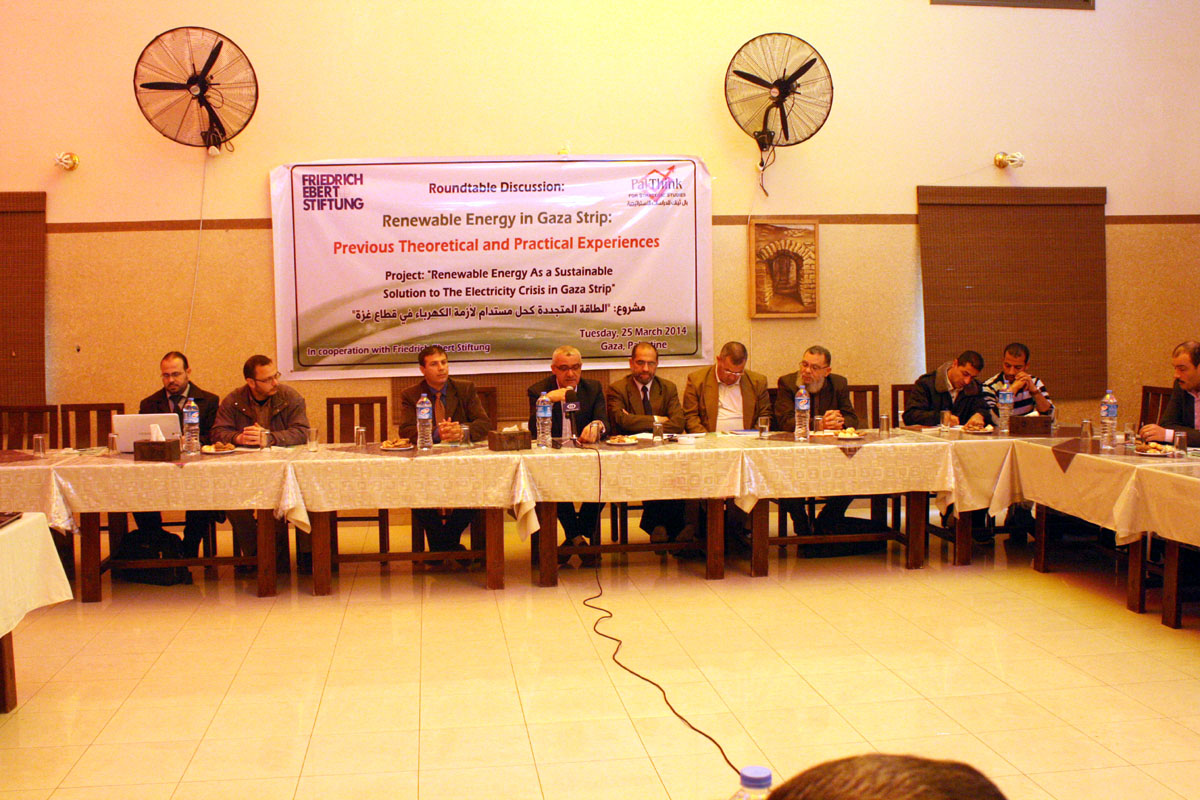
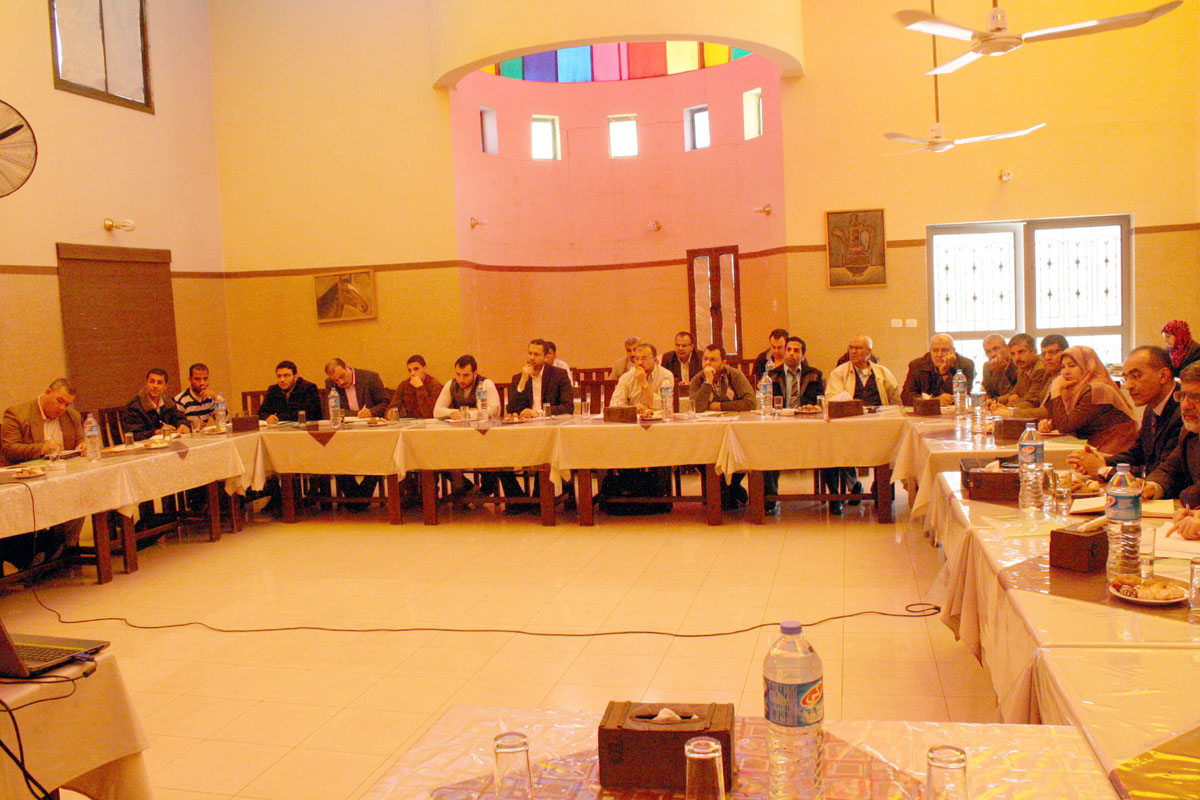
Seeking environment-friendly alternatives to current energy, Pal-Think and the Friedrich Ebert Foundation held a discussion with academic institutions, university professors and community experts presenting working renewable-energy examples and success stories from Gaza.
- Author
- The editorial team
- Date
- 2014-03-25
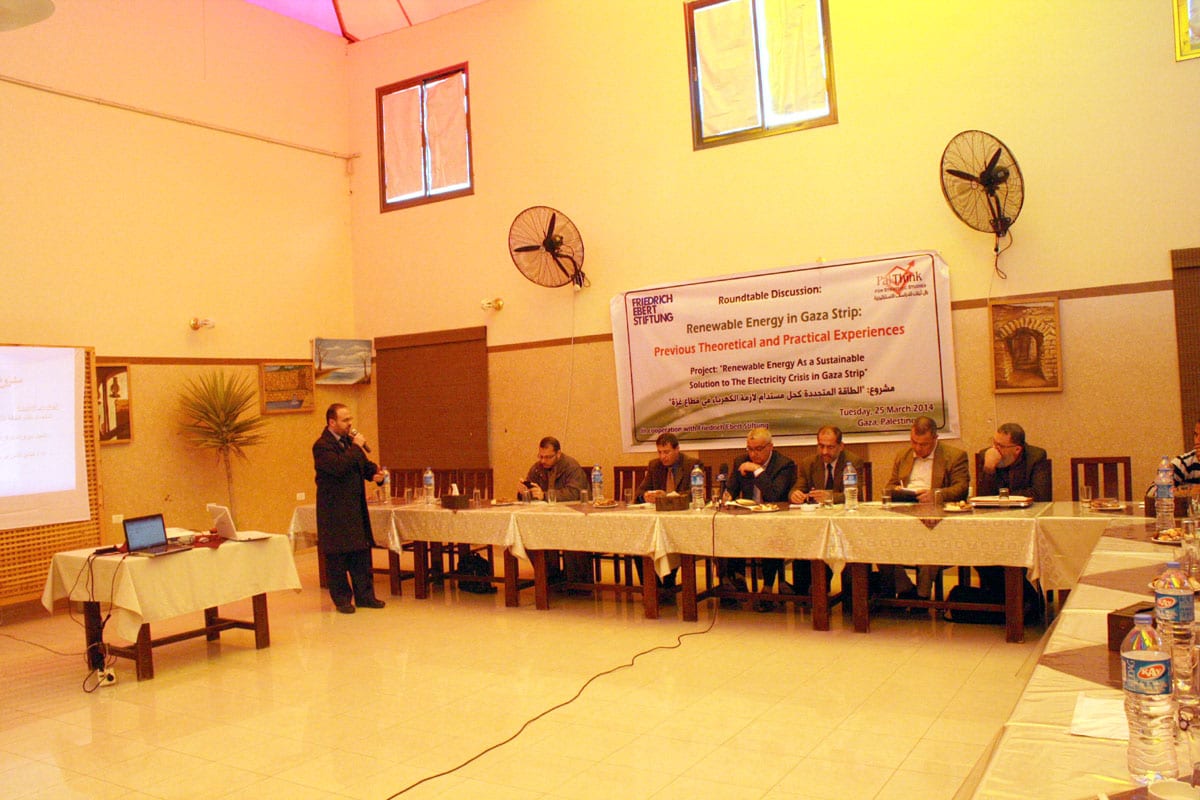
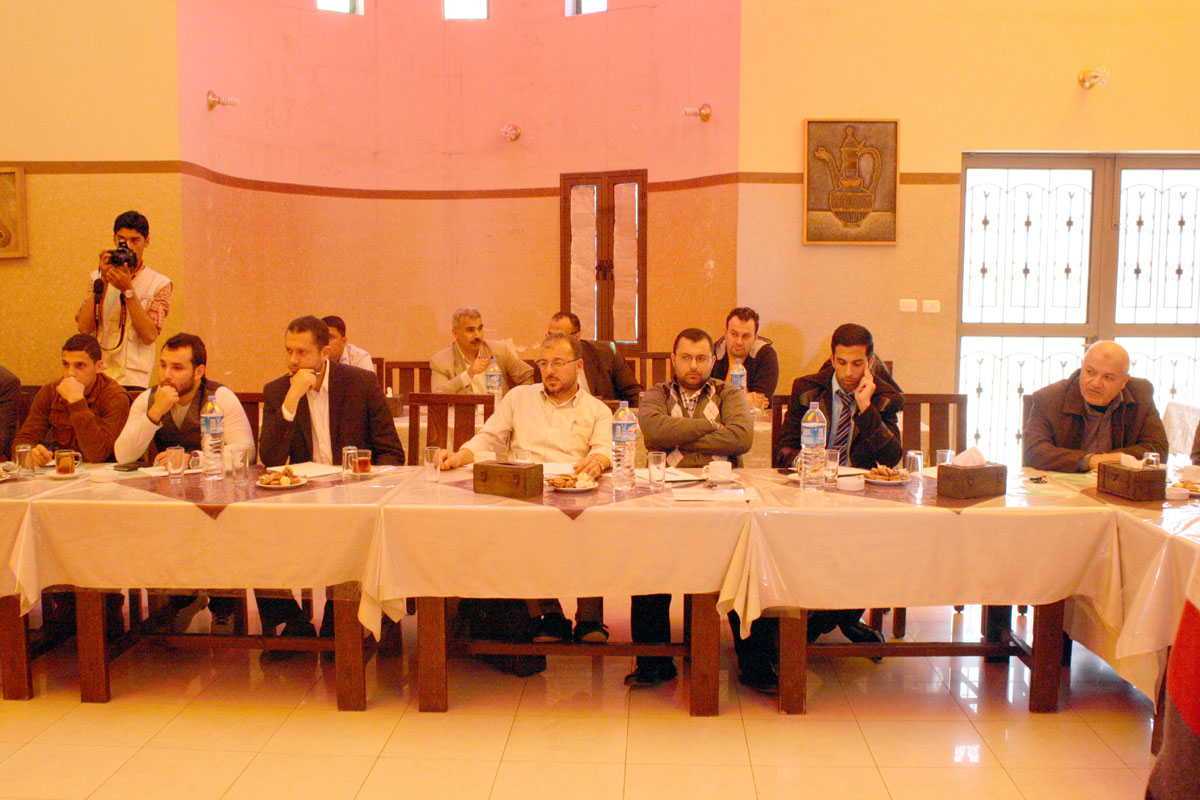
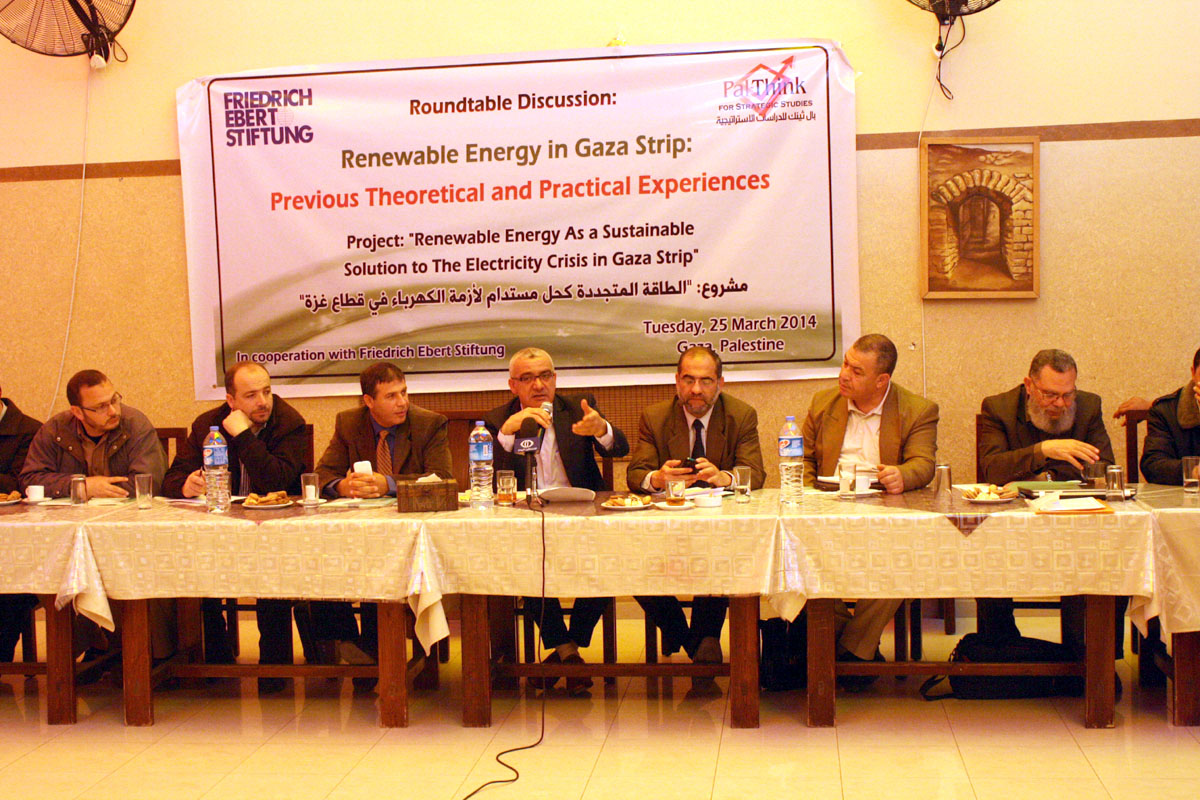
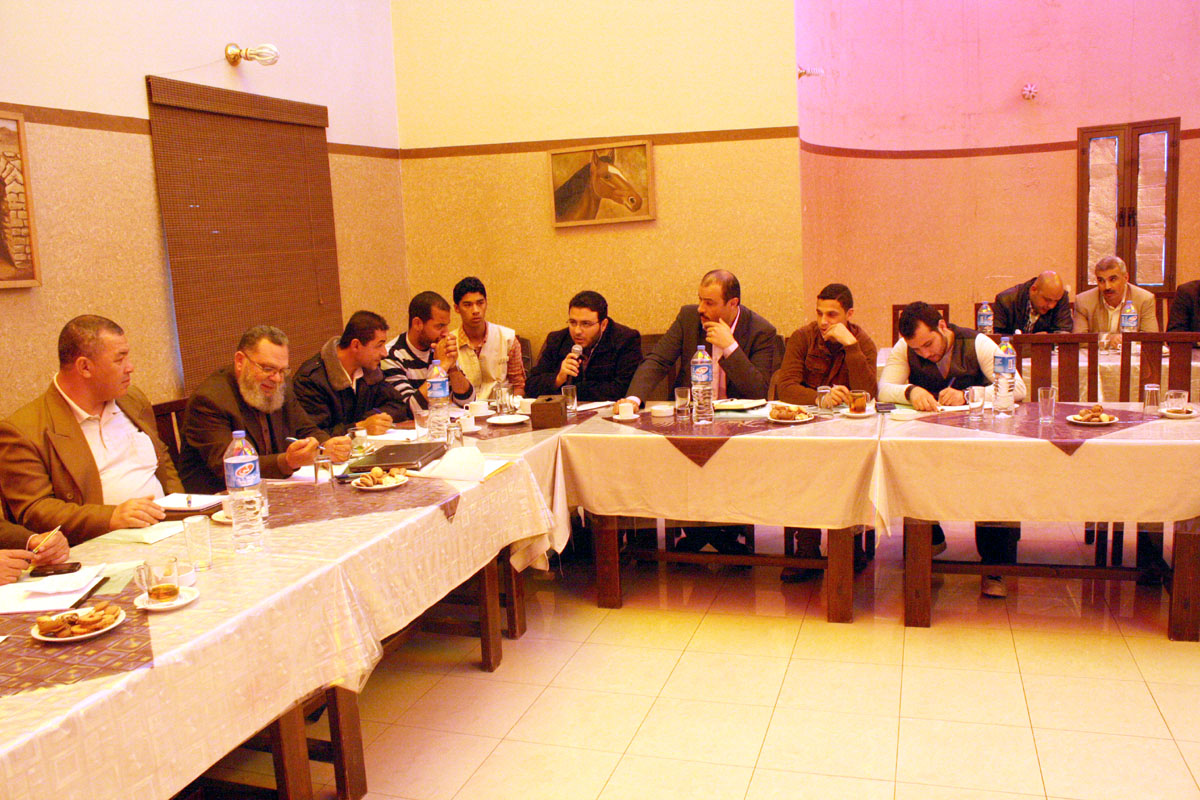
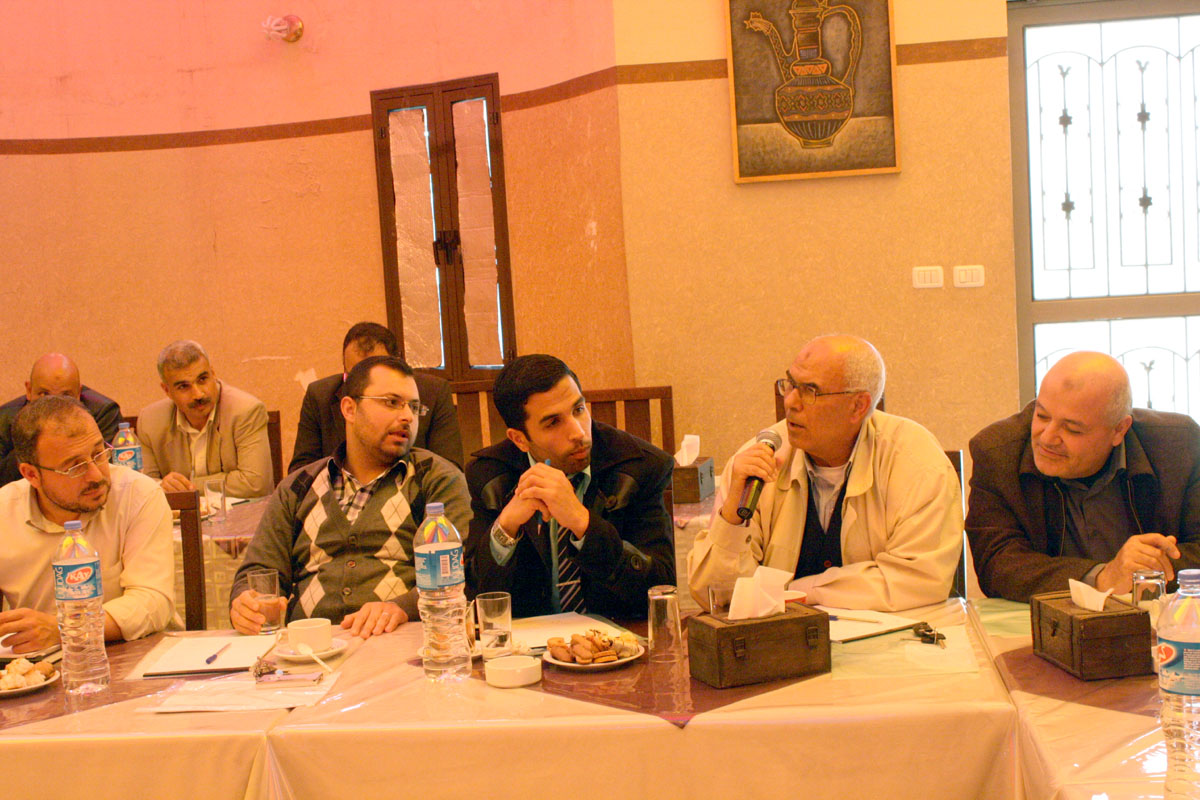
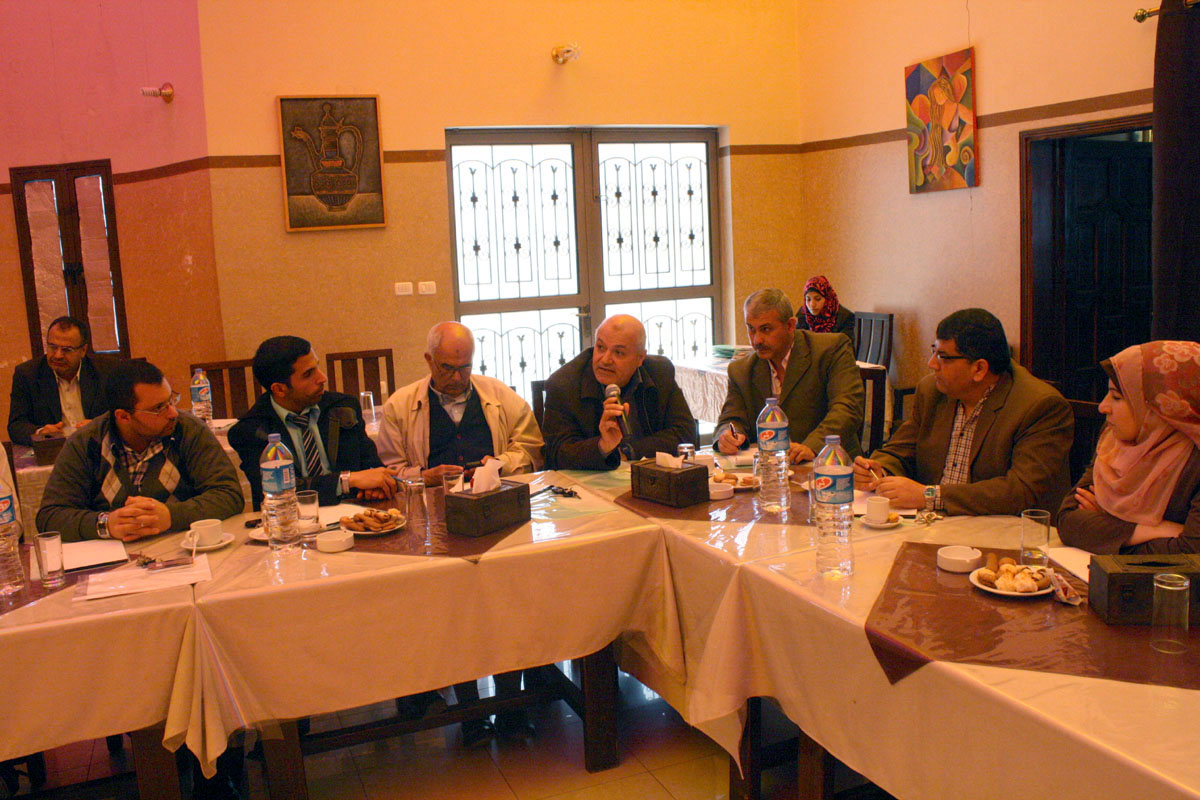
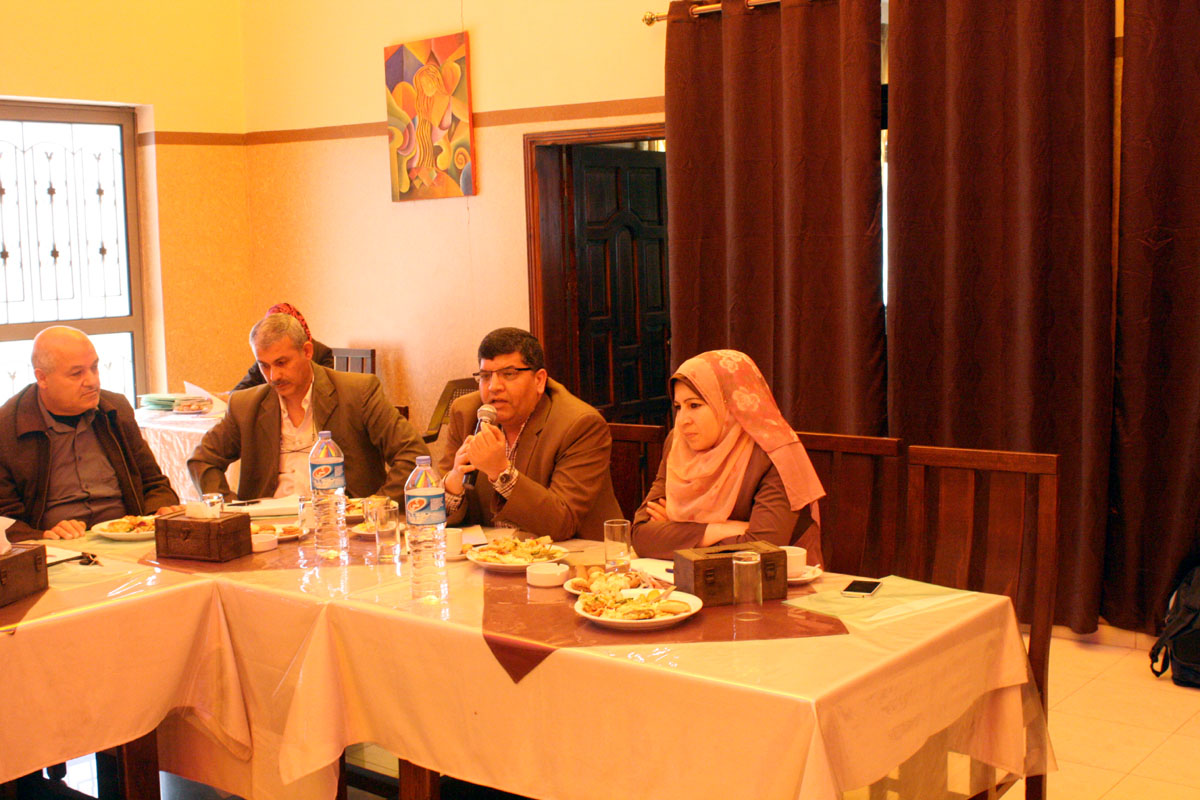
In the frame of finding alternatives to the current energy with others friendly to the environment, as one of the solutions in the Gaza Strip, Pal-Think for Strategic Studies and the German Friedrich Ebert foundation organised a discussion session in which the academic institutions, university professors, and experts from the local community participated, to present vital and practical examples of renewable energy that were implemented in the Gaza Strip and carry success stories.
At the meeting's beginning, Mr Omar Shaban, director of the Pal-Think for Strategic Studies institution, welcomed the attendees and made clear to all that this session focuses on examples from reality and the experiences, with the goal of exchanging ideas and experiments on whose basis building and development are possible. Likewise Dr Osama Antar, programmes director of the German Friedrich Ebert foundation, pointed to the importance of those meetings in crystallising scientific ideas and future visions that can be built upon, with the participation of the academics and experts, with the goal of finding renewable and sustainable energy to compensate the hours of the electric current's cutting during the current situation in the Gaza Strip.
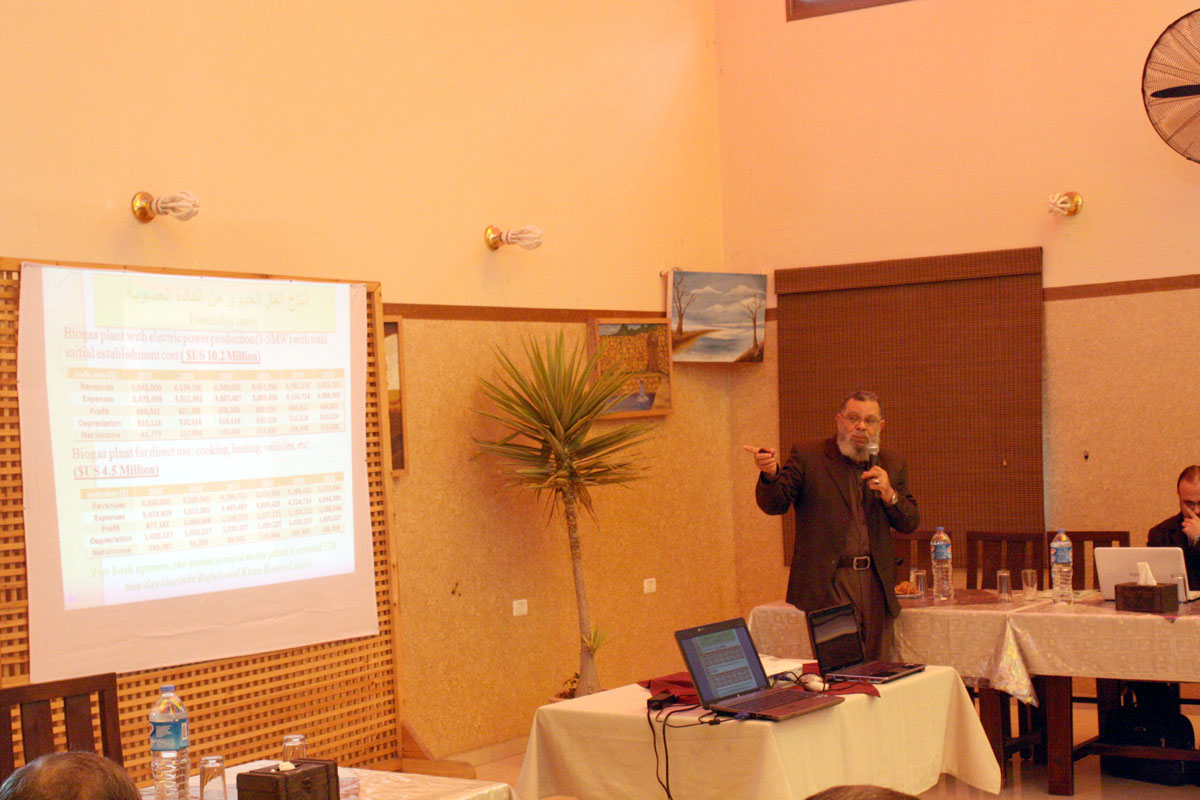
From his side, Dr Samir Afifi, head of the Friends of the Environment association and professor of environment at the Islamic University, presented a project implemented in the city of Rafah, which is a station for sorting the components of solid waste and burning part of it after extracting the organic component, and thereby electric power can be generated — but the idea is still in the beginning stage within a research activity between the Islamic University and the Friends of the Environment institution in Rafah.
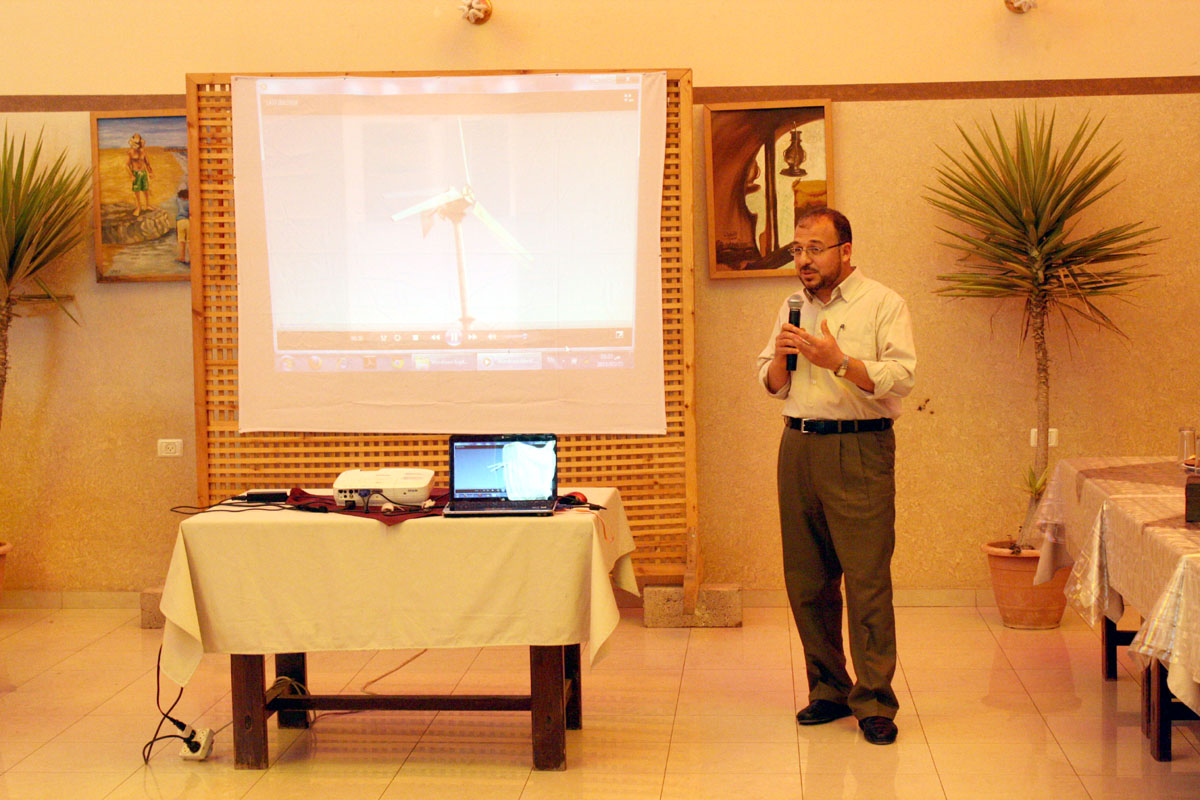
Likewise Dr Ayman Ayyad, professor at the faculty of mechanical engineering at al-Azhar University, presented the research project for using wind energy, as the wind speed existing in Gaza does not help much in producing electric power.
Engineer Wissam Saqallah, director of the solar-energy-use project implemented at the University College and in a form of high quality, presented that the project can be benefited from in similar institutions, as contacts are currently underway with the Islamic Development Bank in Jeddah with the goal of implementing similar projects in other places, and he pointed out that the cost of producing a kilowatt is about five thousand dollars.
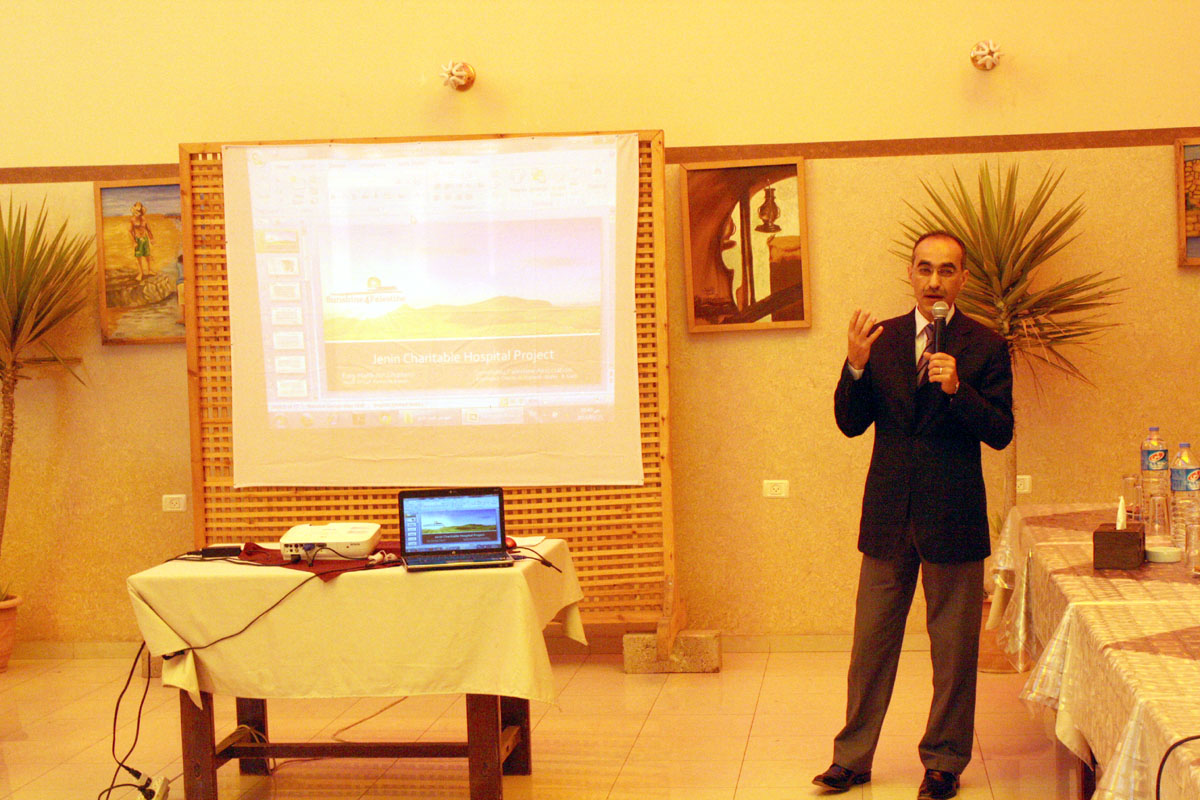
In the conclusion, engineer Haitham Ghanem, representative of the Sunshine4palestine association, presented the model of the Jenin hospital project in Gaza, which was equipped with solar panels and the production of electric power for the different departments, and he showed readiness to deal with all the institutions and experts to work together to contribute to solving the current problem of electric power through finding practical, sustainable alternatives for using solar energy
Engineer Awni Naim of the Energy Authority in Gaza showed readiness to support and encourage all the institutions to invest in producing renewable energy.