Local initiatives to solve the Gaza Strip's electricity crisis
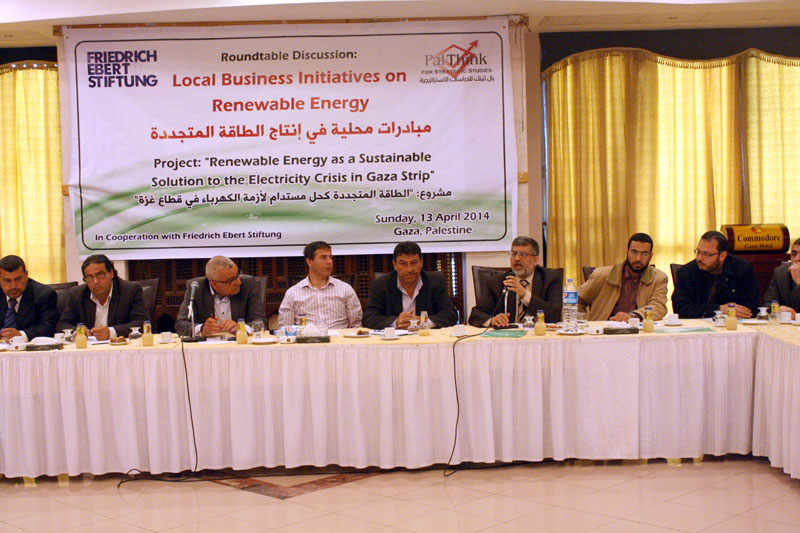
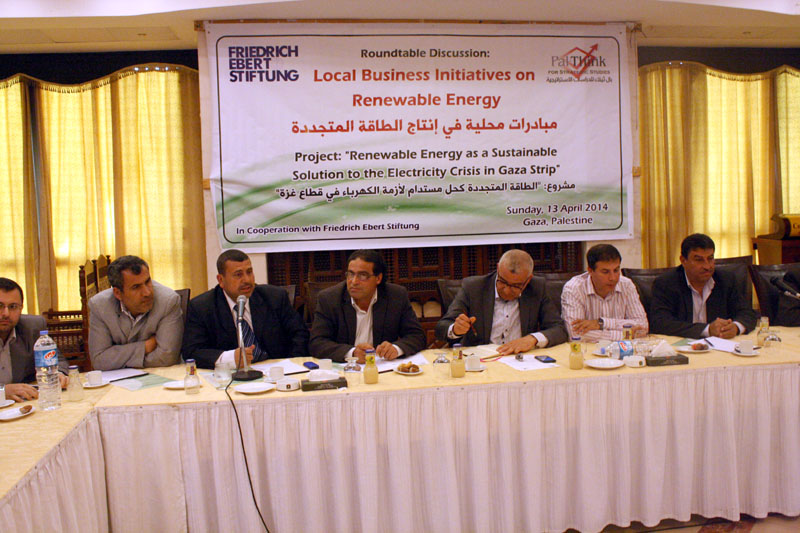
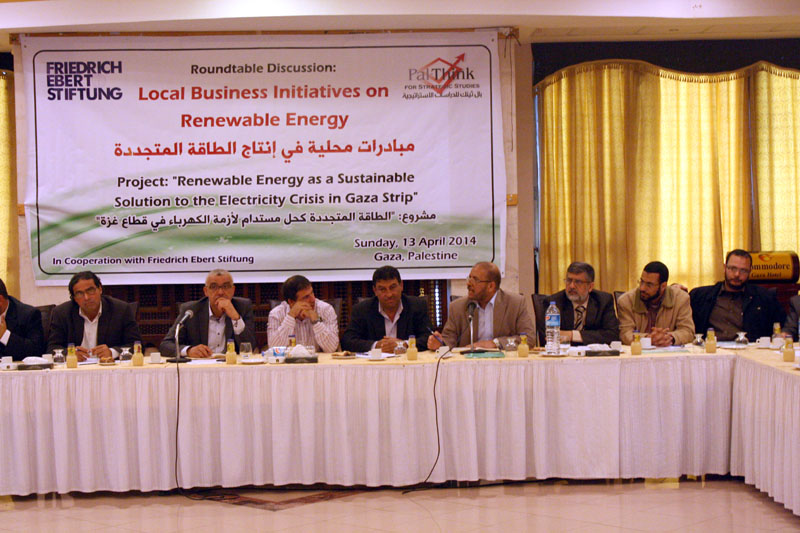
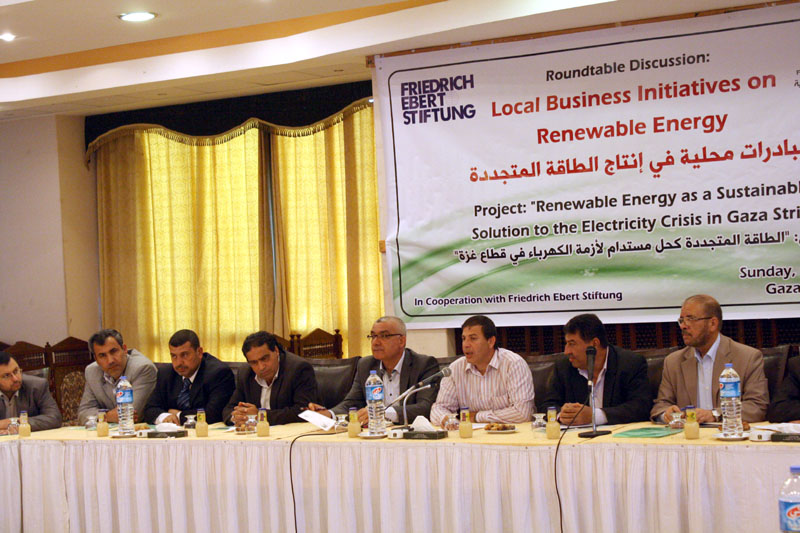
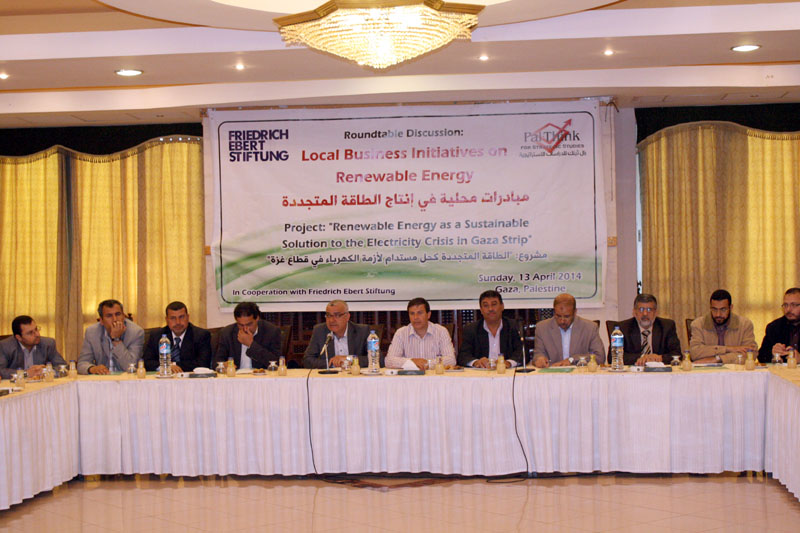
Pal-Think and the Friedrich Ebert Foundation held the third workshop of the renewable-energy project, presenting local initiatives in renewable-energy production as a sustainable answer to Gaza's electricity crisis.
- Author
- The editorial team
- Date
- 2014-04-15
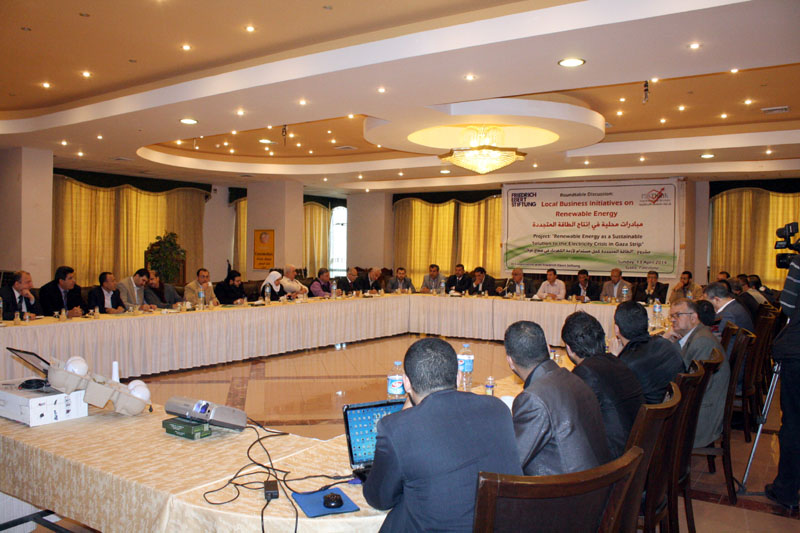
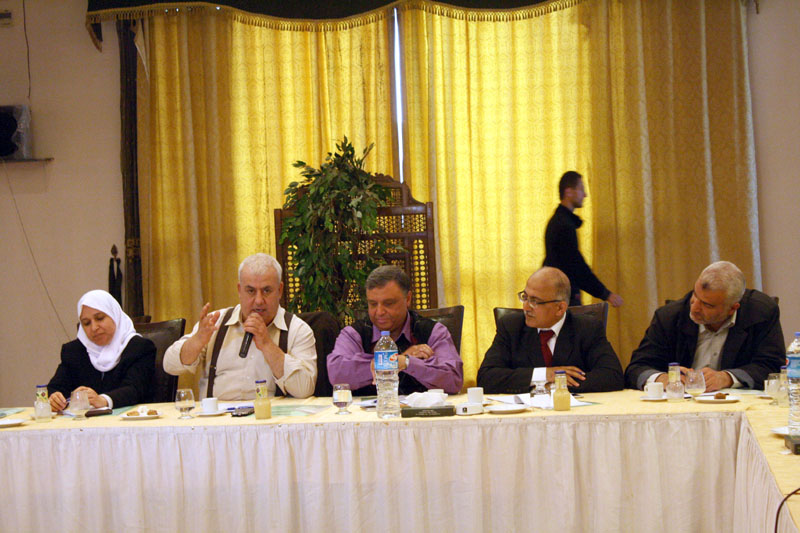
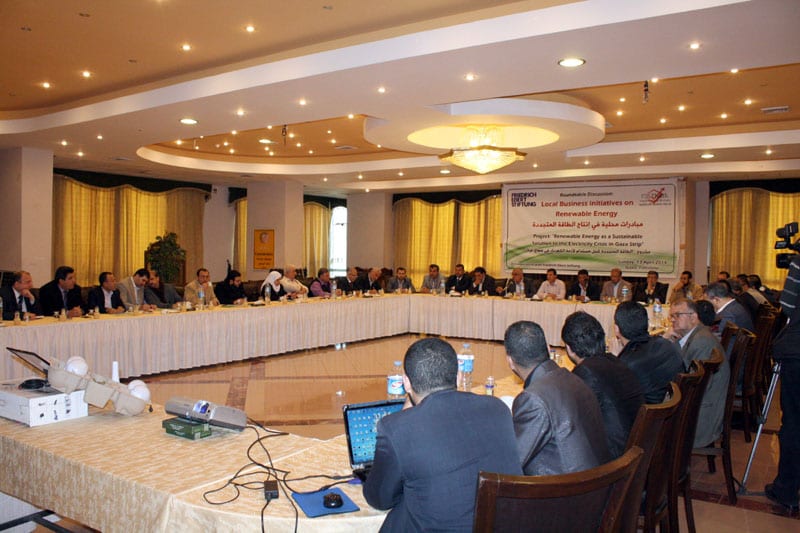
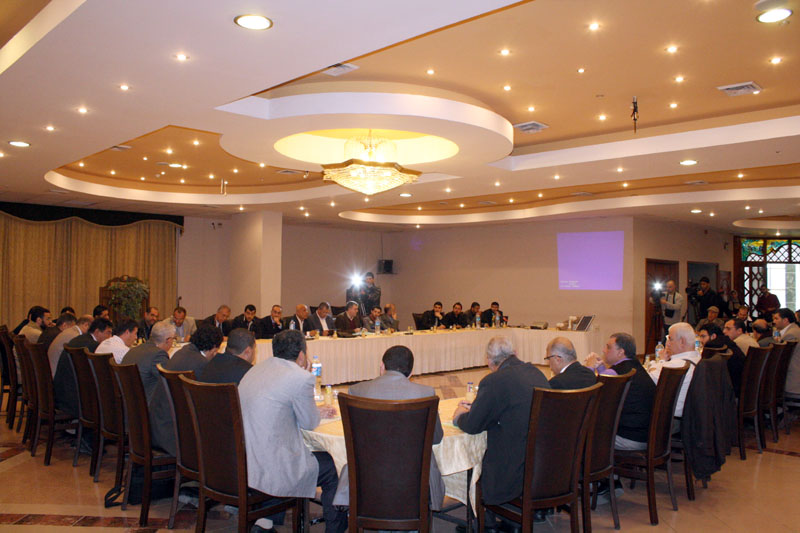
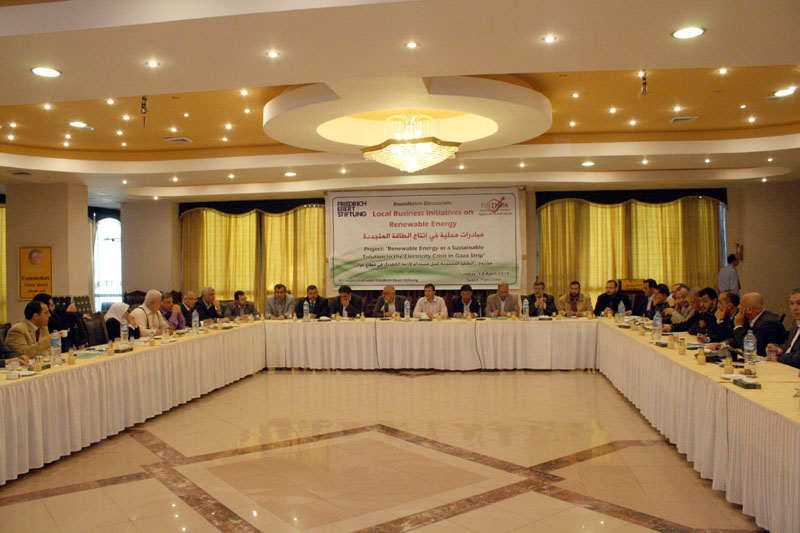
In continuation of the communal initiatives in finding renewable energy as a sustainable solution to the electricity crisis in the Gaza Strip, Pal-Think for Strategic Studies, in cooperation with the German Friedrich foundation, organised the third workshop within the project “Renewable energy as a sustainable solution to the electricity crisis in the Gaza Strip”. The workshop focused on presenting local initiatives in producing renewable energy, with the participation of an elite of the academic institutions, the private and governmental sector, and civil society, with the goal of examining the horizons of developing the renewable-energy sector and stimulating investment in this sector as an economic and strategic sector that solves many of the problems resulting from the cutting of the electric current.
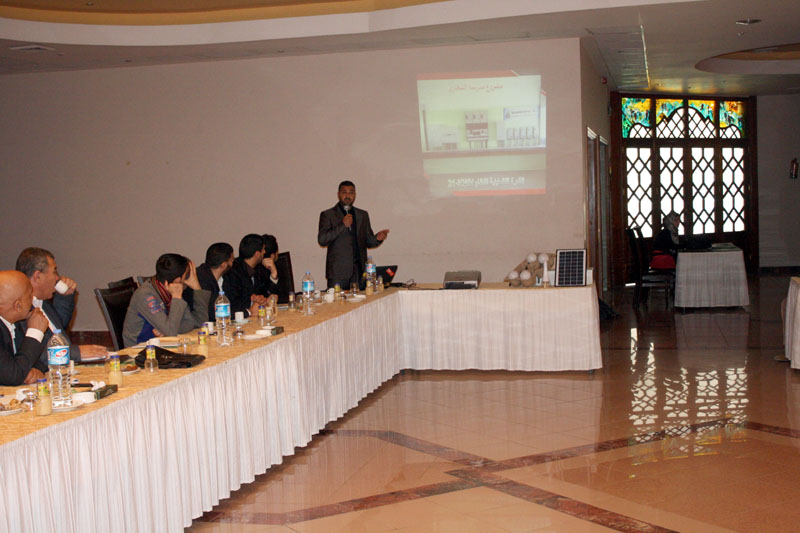
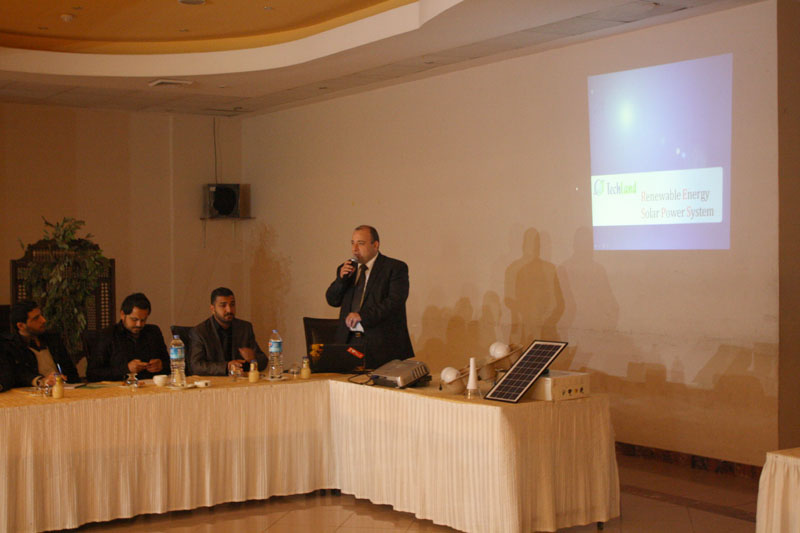
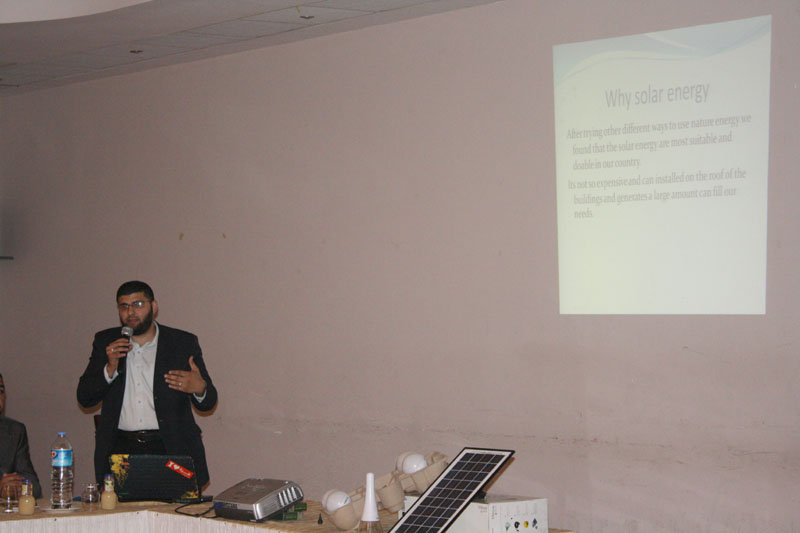
This meeting took up several axes, the most important of which was highlighting the importance of the projects implemented locally in the field of energy: five models of local companies that had implemented projects in the field of solar energy were presented, in which they presented their practical experience with renewable energy and explained the way of its implementation, in addition to showing pictures of the projects that were implemented in the hospitals, the public facilities, the houses, and the agricultural lands — setting out that those projects reached a good proportion of success.
In a word of his, Omar Shaban, director of the Pal-Think for Strategic Studies institution, affirmed the importance of the local initiatives implemented in the field of renewable energy and added, saying: “These projects are creative initiatives to overcome the electricity crisis.” He noted that this workshop is considered the third on this subject, preceded by a workshop that presented the universities' work in renewable energy, and Shaban set out that the fourth workshop will take up the role of the governmental bodies, while the fifth will be with the local institutions, in order to crystallise the suitable ideas and learn the possibility of using renewable energy continuously.
In his turn, Dr Osama Antar, programmes director of the German Friedrich Ebert foundation, made clear that his foundation seeks to present proposals for solving certain crises, setting out that it is active in political matters, and said: “But the renewable-energy project has met great approval from many bodies, and we hope that renewable energy will be within reach of all the families.”
Antar called on the governmental sector to grant the citizens customs and tax exemptions on electricity, while he called on the private sector to work with the instalment system and help the citizens head toward this idea.
The first intervention, presented by the Tech Land company represented by engineer Ali Hussein, took up the model of the children's hospital in Gaza, which was supplied with electric power of 20 kilowatts at a cost of ninety thousand dollars.
For his part, Dr Nabil al-Sawalhi, director of the Shams al-Nahar company for solar energy, affirmed that solar energy began from the sixties, and that Germany uses 35% of its need of electricity from renewable energy despite the absence of any deficit it has — but from its conviction that the sun will be the source of electricity after about 40 years, after the exhaustion of the natural elements. He presented the company's experiences and the projects implemented recently in the Gaza Strip, targeting each of the Jawwal company, the Speed Click company, the Net Stream company, the al-Hayat association, and some mosques.
In his turn, engineer Ahmed al-Dahouk from the al-Mashharawi company made clear that his company began with the experiment of using the energy of wind turbines, but found it costly and much given to breakdown, and headed to steam energy by way of heating water and benefiting from the pressure resulting from it in generating energy — but it was a dangerous and high-cost experiment.
Al-Dahouk added: “After those attempts we headed to solar energy and found it a good way to generate energy and lighten the electricity crisis.
For his part, the electrical engineer Mohammed Atallah affirmed that the idea of renewable energy is the exploitation of the solar cells by way of solar panels in which the solar energy is collected and transformed into energy that charges the batteries and performs the lighting and the operation of the devices suited to the size of the solar panels and the proportion of energy resulting from them.
He said: “The solar panels attract the solar energy and transform the solar energy into DC and store it in the batteries, and then into ordinary electricity — setting out that renewable energy can be used as a helper to ordinary electricity in the period of the electricity's cutting, in order to overcome the shortage of fuel.
In the conclusion, Dr Mahmoud Shaheen presented a brief presentation in which he set out the importance of the general direction in Palestine, and in the Gaza Strip specifically in particular, toward using solar energy as a sustainable alternative to solve the electricity crisis.
All the interventions concluded with important recommendations that Pal-Think will work on crystallising and discussing at length, considering them a basis for the optimal solution of the problem in the Gaza Strip.