Workshop: «Encouraging investment in renewable energy»
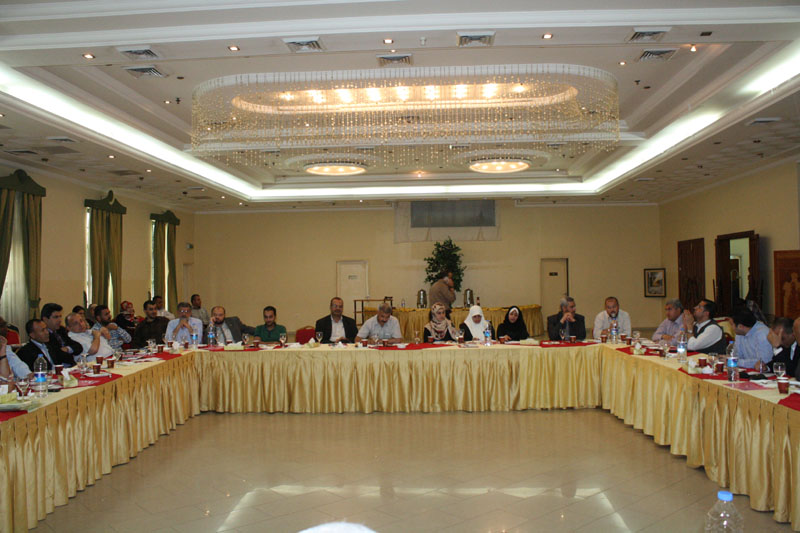
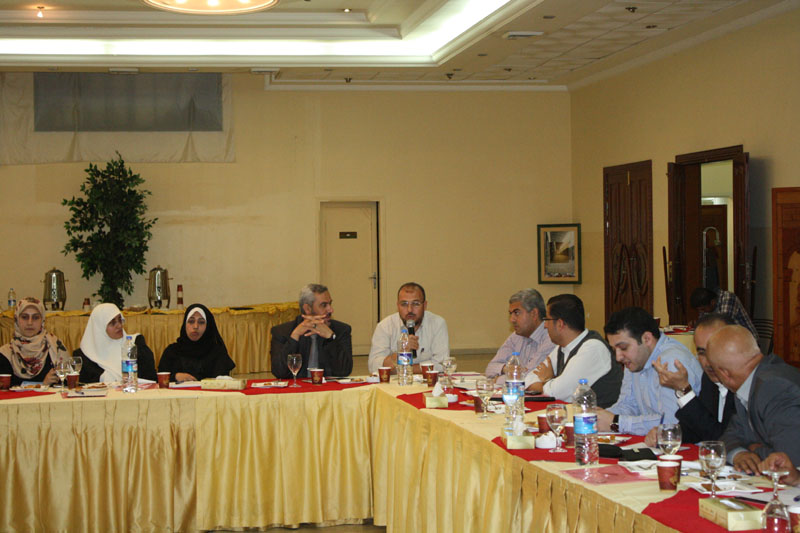
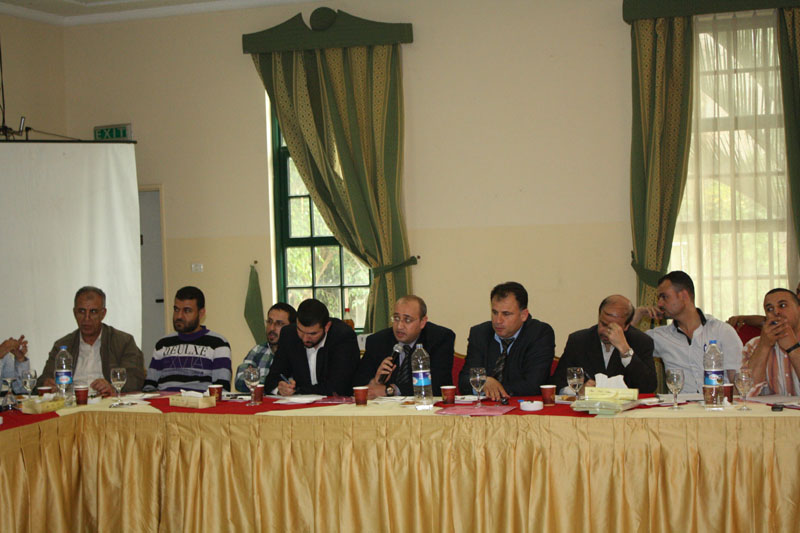
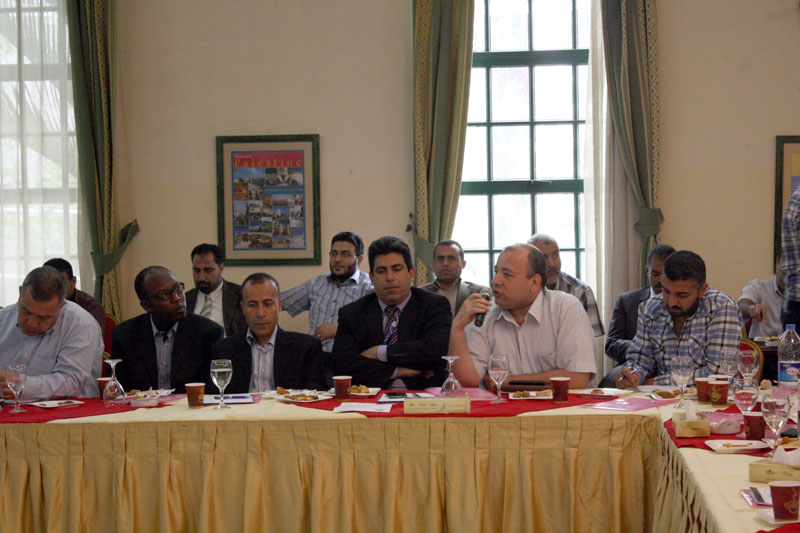
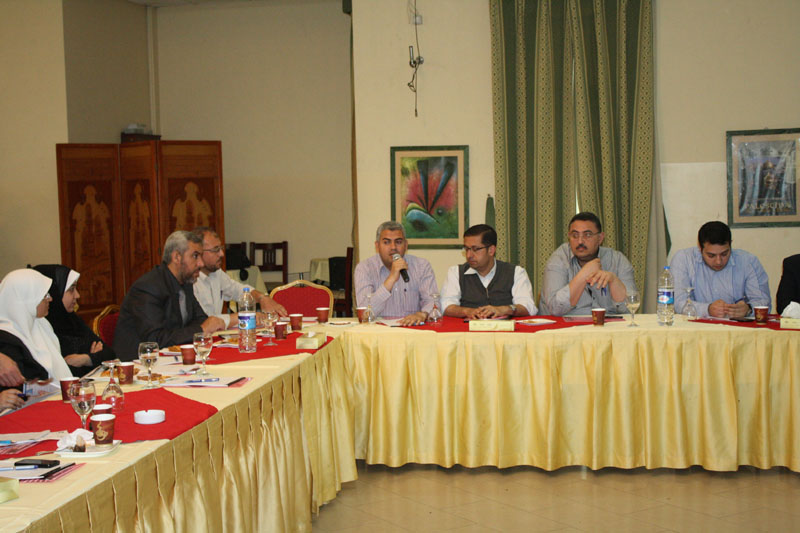
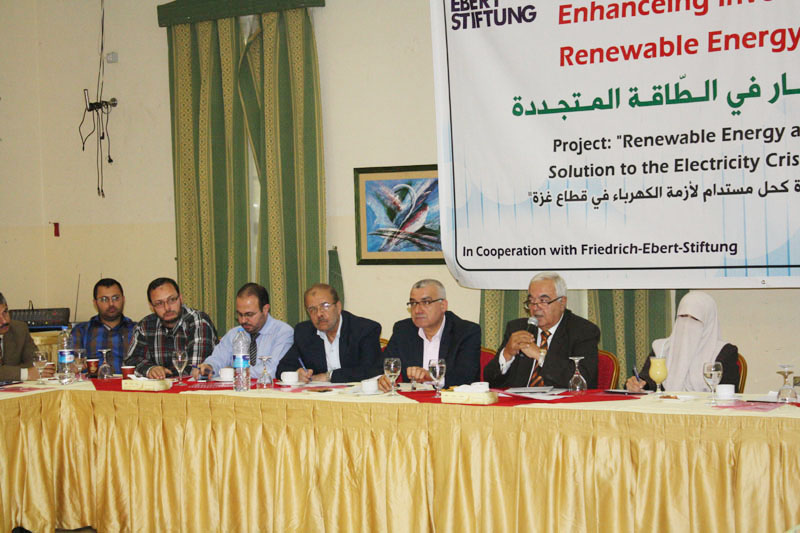
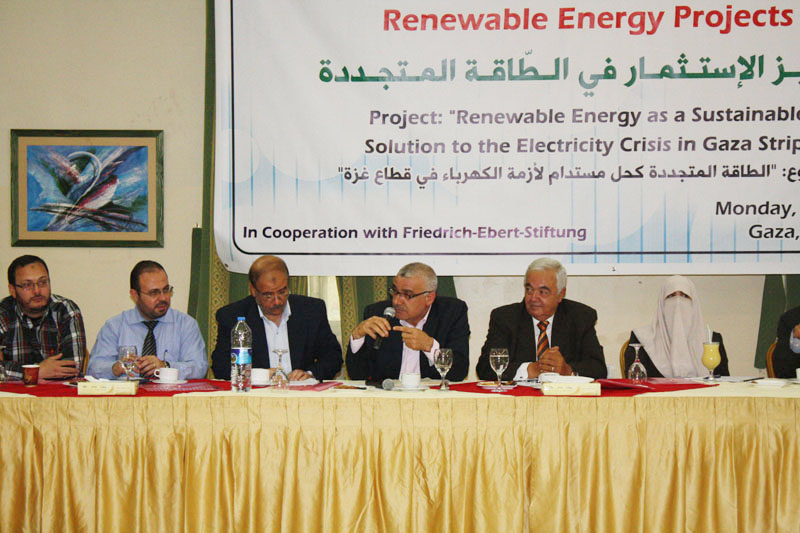
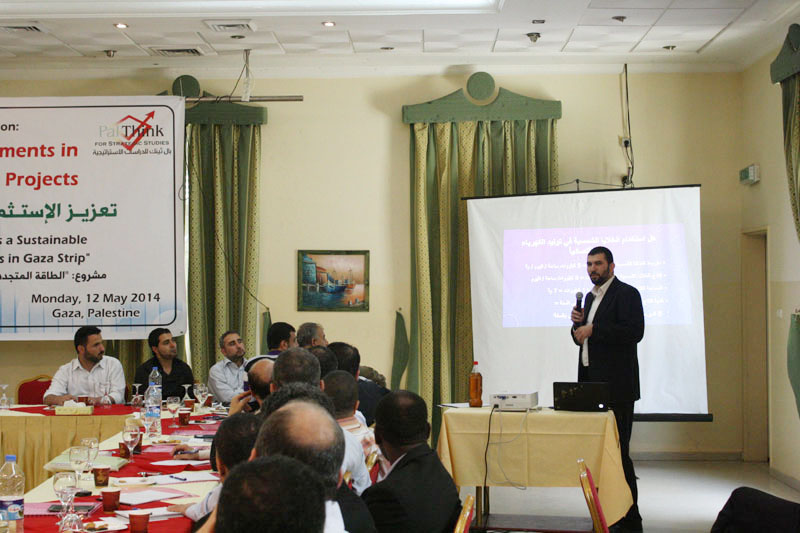
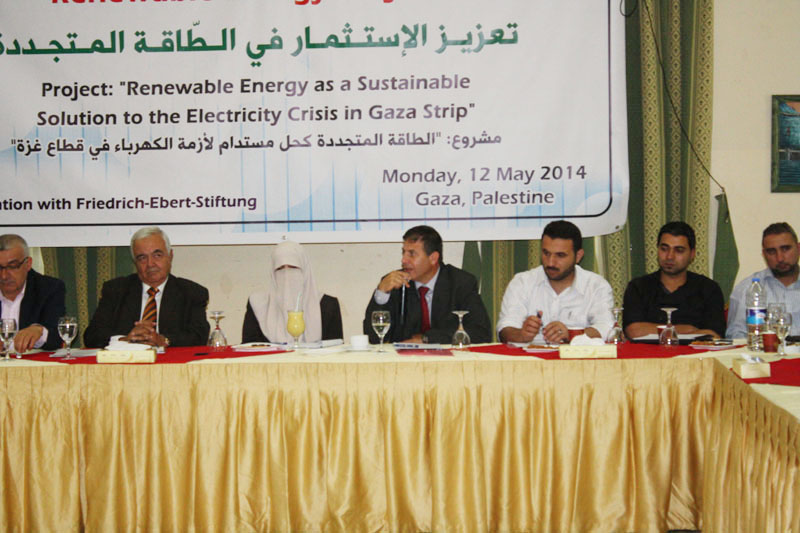
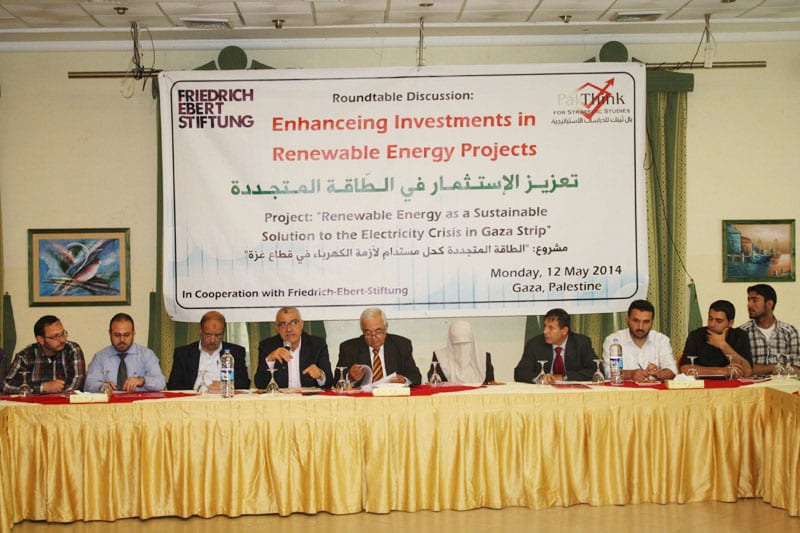
Pal-Think and the Friedrich Ebert Foundation held the fifth workshop, «Promoting investment in renewable energy», under «Renewable energy as a sustainable solution to Gaza's electricity crisis», with 70 experts, academics, officials and business figures.
- Author
- The editorial team
- Date
- 2014-05-14
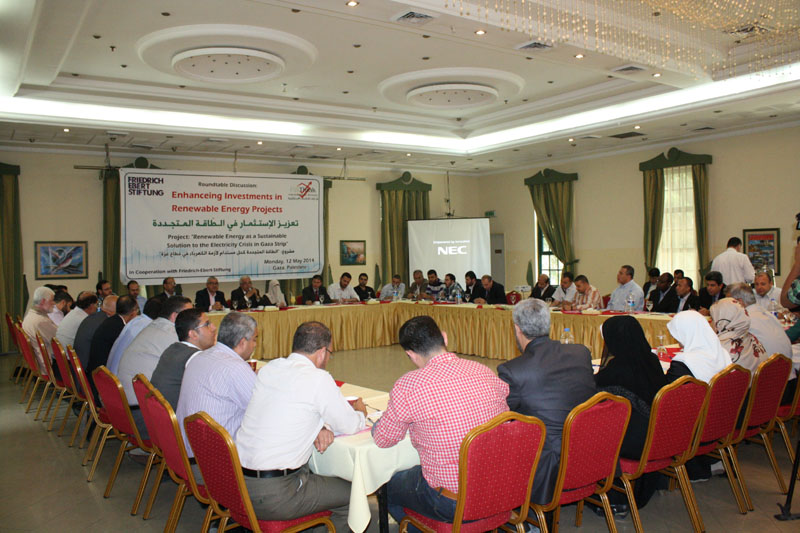
The “Pal-Think” for Strategic Studies institution, in cooperation with the German Friedrich Ebert Foundation, organised the fifth workshop, titled “Strengthening investment in renewable energy”, within the project “Renewable energy as a sustainable solution to the electricity crisis in the Gaza Strip”, with the participation of 70 persons of the experts, specialists, academics, representatives of the governmental bodies in the field of alternative energy, businessmen, and some of the civil-society organisations and the international institutions.
Omar Shaban, director of the “Pal-Think” for Strategic Studies institution, welcomed the attendees, and pointed to the importance of investment in the field of renewable energy by the investors, for what it has of economic feasibility in the long term.
Stressing the importance of holding these seminars, which pour into the homeland's interest; setting out the importance of these sessions for coming out with positive results by way of study, research, and cooperation between the governmental institutions, the private sector, and the supporting institutions.
In his turn, Dr Osama Antar, programmes director of the German Friedrich Ebert foundation, called on the attendees to the necessity of effective participation to reach a Palestinian national strategic vision toward the optimal use of renewable energy — affirming the necessity of contributing practical proposals to create a short-, medium-, and long-term strategy to solve the problem of the electricity crisis.
Dr Iman Abu Jazar, the researcher in the field of solar energy, spoke of the necessity of highlighting the scientific and developmental aspects with the greatest focus on the economic return — pointing to some of the pioneering projects in the Arab states such as Saudi Arabia, Morocco, Tunisia, Jordan, and Egypt. She pointed out that there is an available opportunity in the Gaza Strip for the optimal exploitation of that clean energy, taking into consideration the moderate weather and the extent of the suitability of this climate for generating energy, and especially the exploitation of solar energy as an alternative energy.
She likewise pointed to the necessity of building the capacities of the Palestinian cadre in this respect and strengthening the scientific and applied aspects, reaching the application of the standard specifications in force in the world's states; she likewise stressed the importance of convincing the funders and investors of the necessity of funding some vital projects and encouraging businessmen to support scientific research and practical applications in cooperation with the local research and academic institutions.
For his part, engineer Mamoun Abu Shahla, director of the British-Palestinian trading company and member of the board of Bank of Palestine, made clear the opportunities available from Bank of Palestine to support the initiatives at all levels through the green-loans programme — pointing to some examples of the projects the bank adopts, such as generating electricity in the houses and institutions, purifying wastewater, desalinating drinking water, heating, and recycling waste.
For his part, engineer Abdel Raouf Sobh spoke of the possibility of investment in the field of recycling plastic waste to produce diesel and petrol, according to the standard specifications followed by the Environment Authority.
In his turn, Eng. Zaki al-Qishawi, the researcher in the field of solar energy, affirmed the dimensions and the economic feasibility of exploiting renewable energy in the various applications and the extent of the investors' possibility of embarking on these projects
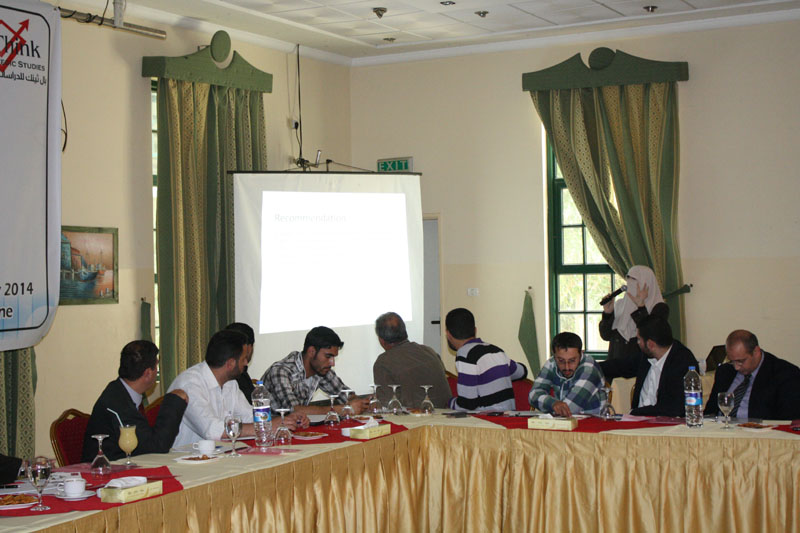
In the conclusion the participants presented many questions and enquiries, most of which centred on the mechanism of coordination between the concerned institutions, the facilitations required for the companies, and the incentives that could be presented to encourage the investors to engage in the field of renewable energy.