With the Palestinian Centre for Human Rights, Pal-Think holds an awareness workshop on the death penalty
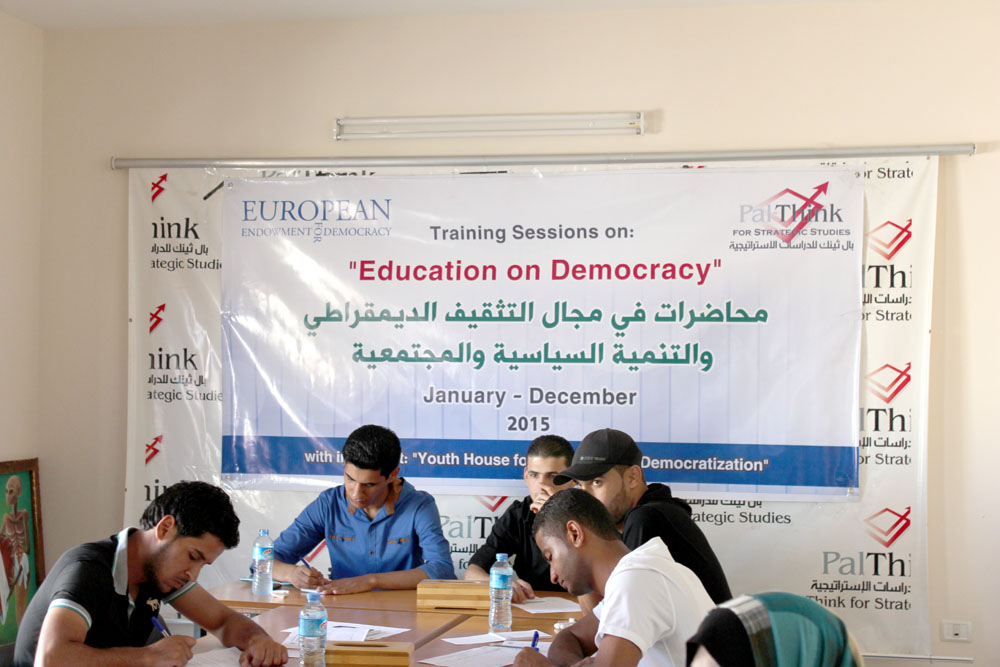
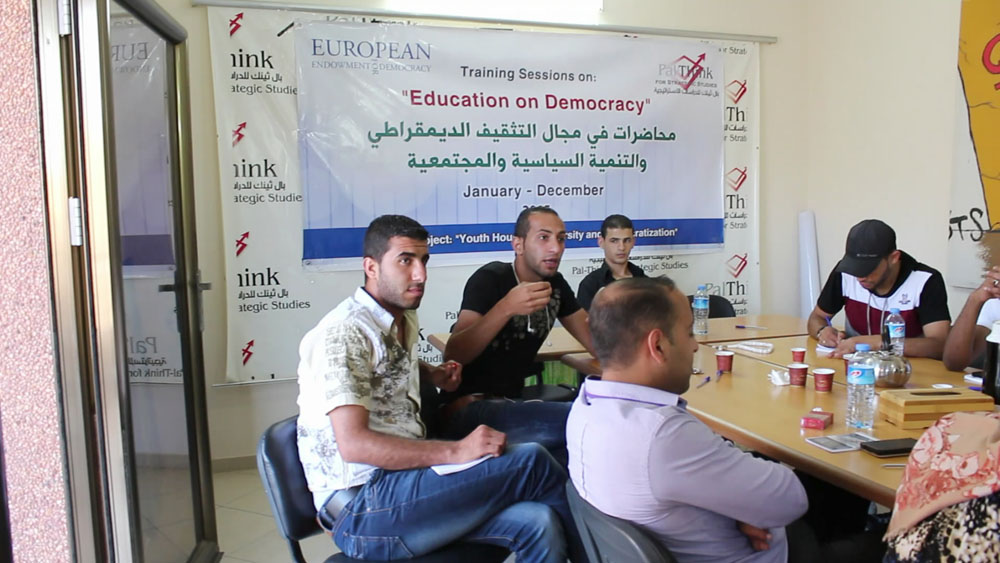
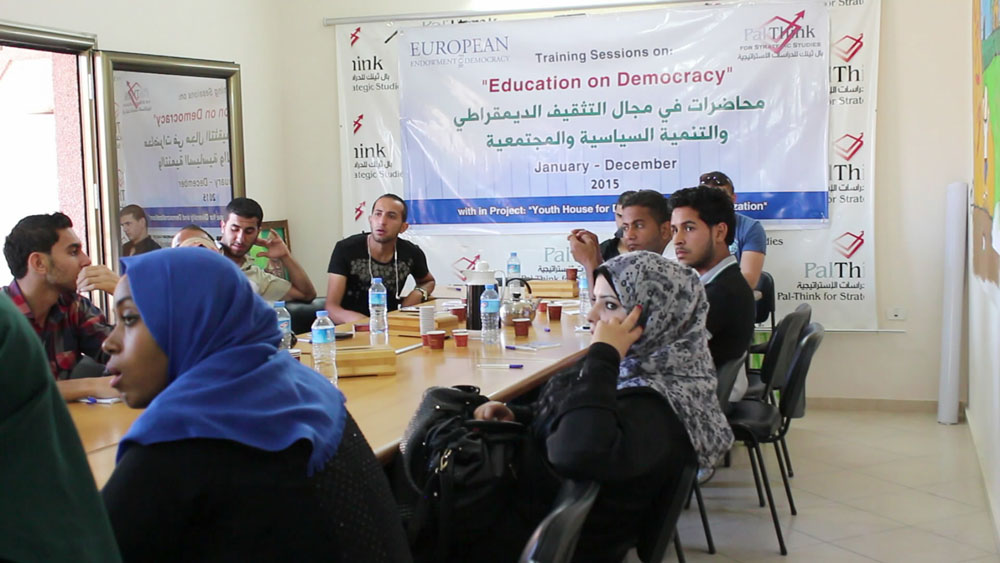
Under its rights-education and political-development programme, Pal-Think with the Palestinian Centre for Human Rights held an awareness workshop on «The death penalty and extrajudicial killing» for twenty-five young people from different fields.
- Author
- The editorial team
- Date
- 2015-06-12
Within the programme of rights education for the youth and political and communal development, Pal-Think for Strategic Studies organised, at its headquarters in the Gaza Strip, in cooperation with the Palestinian Centre for Human Rights, an awareness workshop on “The death penalty and killing outside the frame of the law”, with the attendance of twenty-five young men and women from different fields, on Wednesday, 10 June 2015.
The workshop, presented by the legal researcher and rights activist Mohammed Abu Hashem, from the Palestinian Centre for Human Rights, focused on the legal aspect related to the death penalty, and the role of the three authorities — legislative, judicial, and executive — in enacting the laws particular to the death penalty and implementing it should the fulfilment of the needed legal conditions be verified. He reviewed the Palestinian reality as concerns the implementation of the death penalty and the extent of its observance of the international conventions and Palestinian law.
The workshop took up the subject of implementing the death penalty outside the frame of the law on the charge of collaboration with the occupation, and the security repercussions and legal chaos that may result from that in Palestinian society. The rights organisations that call for abolishing the death penalty and ending the phenomenon of killing outside the frame of the law were likewise touched on, and the Palestinian efforts calling on the president of the Palestinian Authority to sign the Second Protocol of 1989 annexed to the International Covenant on Civil and Political Rights, particular to the abolition of the death penalty.
On the workshop's margin, the student Fatima Abu Mailiq commented saying: “We discovered that our information about the death penalty is very small, and through the review of the legal aspect we found a great contradiction between what prevails locally as deserving the death penalty and what legally deserves the penalty. The workshop touched on the kinds of crimes, the historical and legal aspect of the death penalty, and the Palestinian reality as concerns the implementation of the death penalty, specifically in Gaza. The workshop was rich in new information, and we hope for the repetition of its like for the benefit.”