Workshop: «The nuclear agreement between Iran and the West — context and consequences»
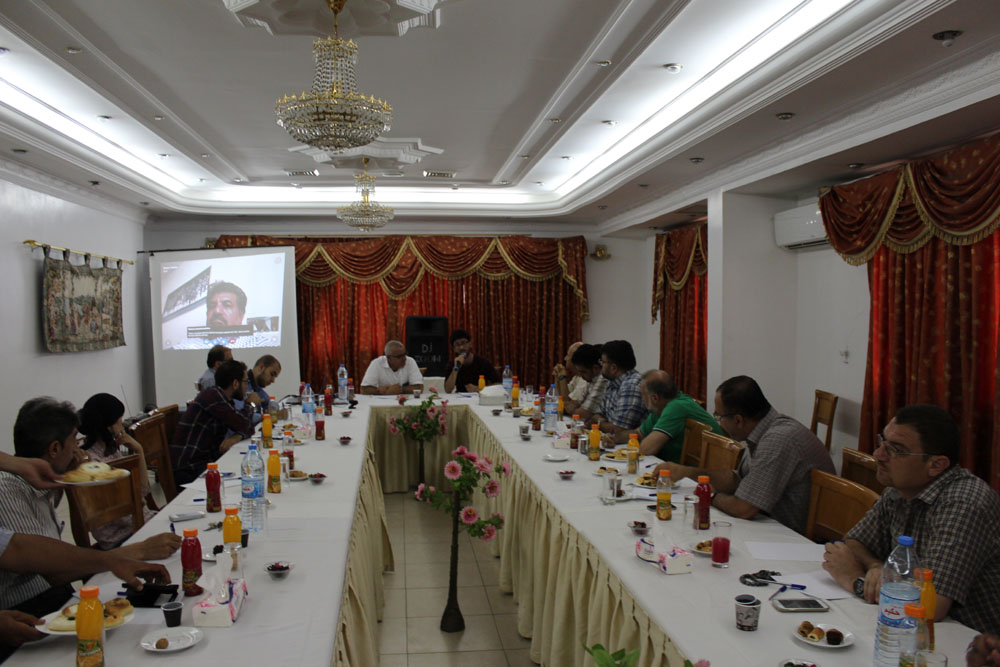
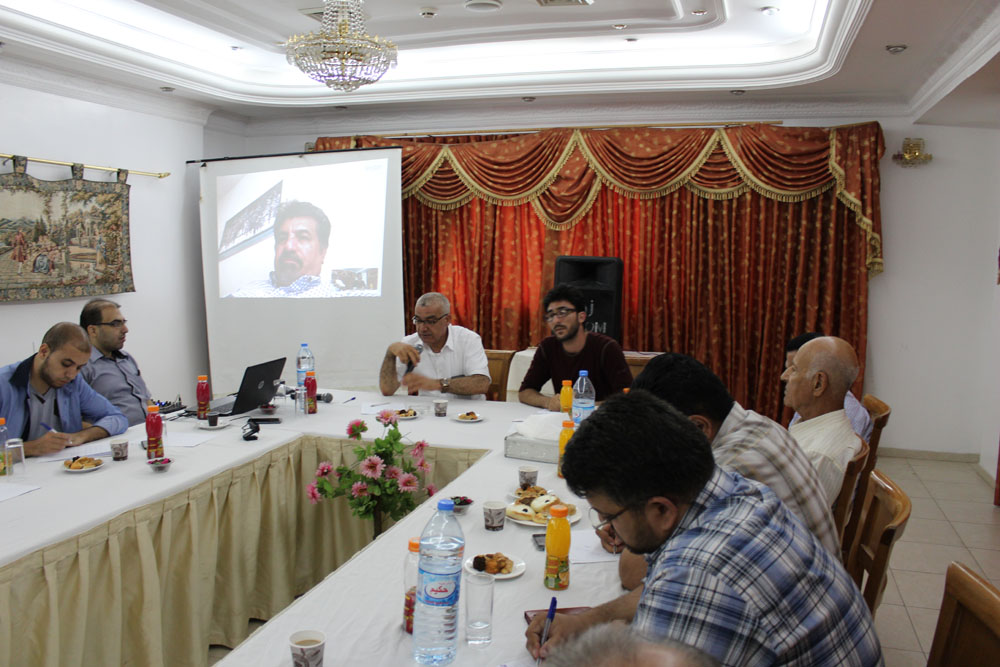
Pal-Think, with the Friedrich Ebert Foundation, held the session «The nuclear agreement between Iran and the West: context and consequences», hosting by Skype from Washington Dr. Nasser Hadian, professor of political science at the University of Tehran.
- Author
- The editorial team
- Date
- 2015-08-12
Pal-Think for Strategic Studies organised a special session titled “The nuclear agreement between Iran and the West… the context and the results”, in partnership with the German Friedrich Ebert Foundation, hosting via Skype technology from Washington Dr Nasser Hadian, professor of political science at the University of Tehran, with the attendance of an elite of politicians, businessmen, researchers, and interested youth. The session was moderated by Omar Shaban, director of Pal-Think for Strategic Studies, and the discussion in the seminar centred on three principal issues: the goal of the Iranian nuclear agreement and its nature, Iran and its relationship with the Arab Gulf states, and Iranian foreign policy toward the Palestinian cause.
The goal of the Iranian nuclear agreement and its nature
As relates to the Iranian nuclear agreement and its nature, Dr Hadian pointed out that the agreement is important for all parties, because it will work to prevent many wars in the region. He noted that Iran worked on this project in order to produce energy for peaceful purposes, and that Iran seeks the legal capacity for such a programme — pointing out that nuclear programmes divide into two divisions: programmes of legal capacity, in which nuclear energy is produced for peaceful purposes, and programmes of illegal capacity, in which nuclear energy is made use of for military purposes.
Dr Nasser spoke of this agreement's usefulness — that it serves peaceful diplomatic and political goals — and affirmed the necessity that the West be reassured by this agreement, for the existence of many restrictions and monitoring programmes on the Iranian nuclear programme, which in their turn stirred the anger of many Iranians, who considered this agreement a flagrant violation of the revolution and an abandonment of it. Although Iranian society is a society classified as religious, the Iranian government has added to it the qualities of pluralism and secularism, and this overthrows all the alleged hypotheses that say there is a probability of the spread of groups like Daesh in Iran should the agreement not succeed.
Iran and its relationship with the Arab Gulf states
Dr Nasser Hadian spoke of the relationship between Iran and the Gulf states and pointed out that it is a good relationship interspersed with some tensions, but far less than what people and the press imagine — for what happens between the Arabs and Iran is merely a great media inflation carried out by those allied against the Arabs and Iran in order to create enmity between them. As for the Yemeni crisis, the Iranian government refuses to intervene in it because it fully realises the extent of the complication and danger of the situation there; in addition, Iran does not possess sufficient resources to begin a war in a neighbouring country, and the Yemen crisis is concrete proof of the failure of Saudi policy more than it is a success of Iranian policy.
Iranian foreign policy toward the Palestinian cause
Dr Hadian affirmed that support for the Palestinian cause in Iran is not confined to the Hamas and Islamic Jihad movements — for the reformists in Iran support the Fatah movement and the Palestinian Authority, and Iran remains loyal and supportive to the Palestinian cause whether for Fatah or for Hamas, but the great majority in Iran supports Hamas. Without the least doubt this agreement will help in improving the situations in Palestine locally and internationally — and from here it can be said that Iranian foreign-affairs policy does not rest on the doctrinal reference so much as it rests on political and economic interests.