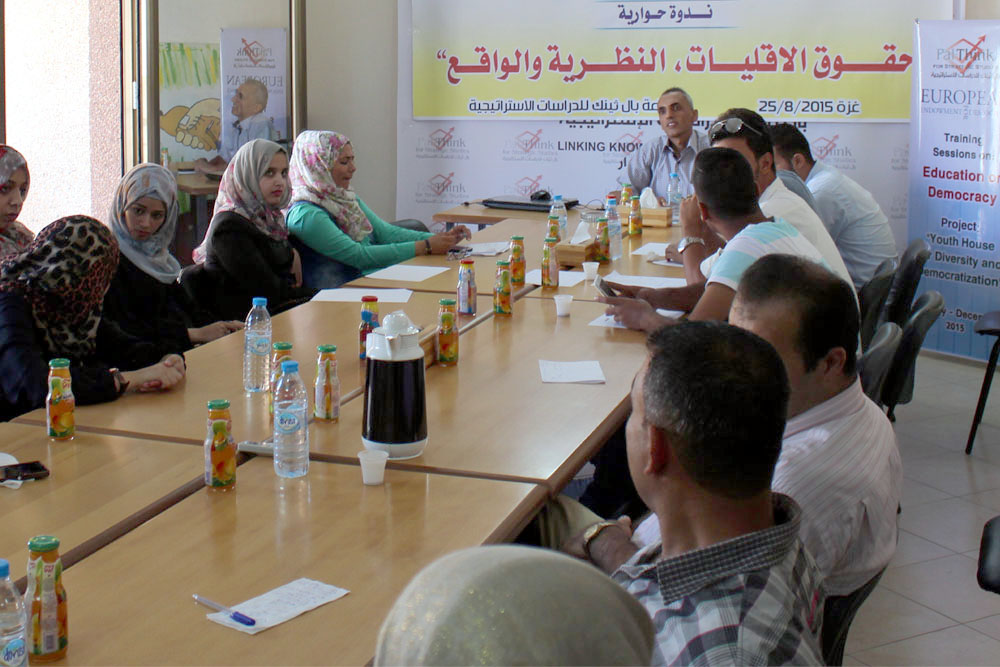
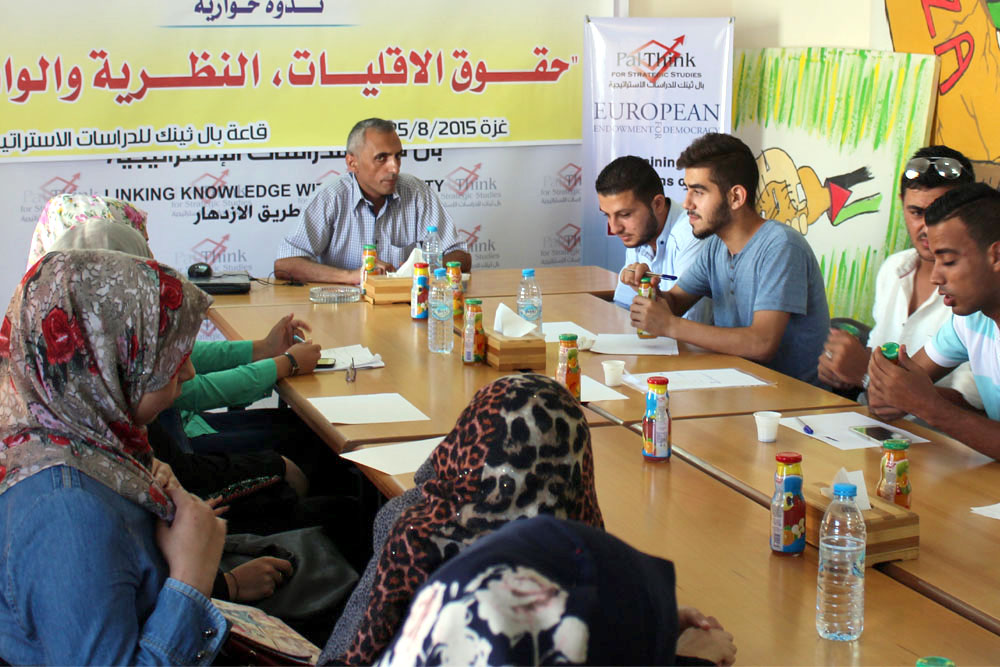
Session: «Minority rights — theory and reality»
The Ramallah Centre for Human Rights Studies, with Pal-Think, held the dialogue «Minority rights: theory and reality» — participants calling for a culture of democracy and human rights as the only force able to confront intolerance, closed-mindedness and tyranny.
- Author
- The editorial team
- Date
- 2015-08-29
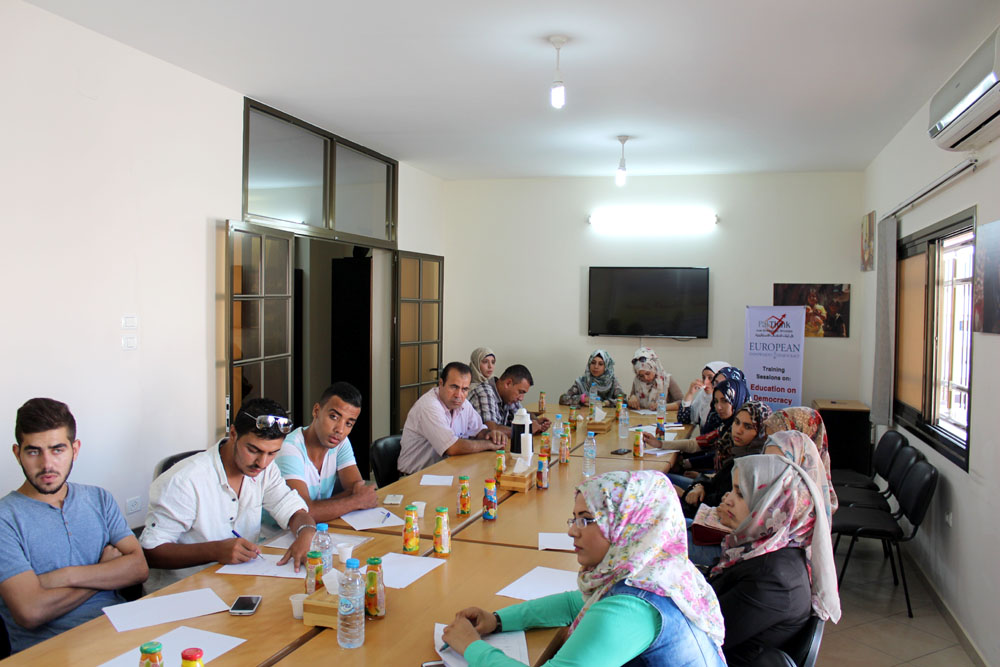
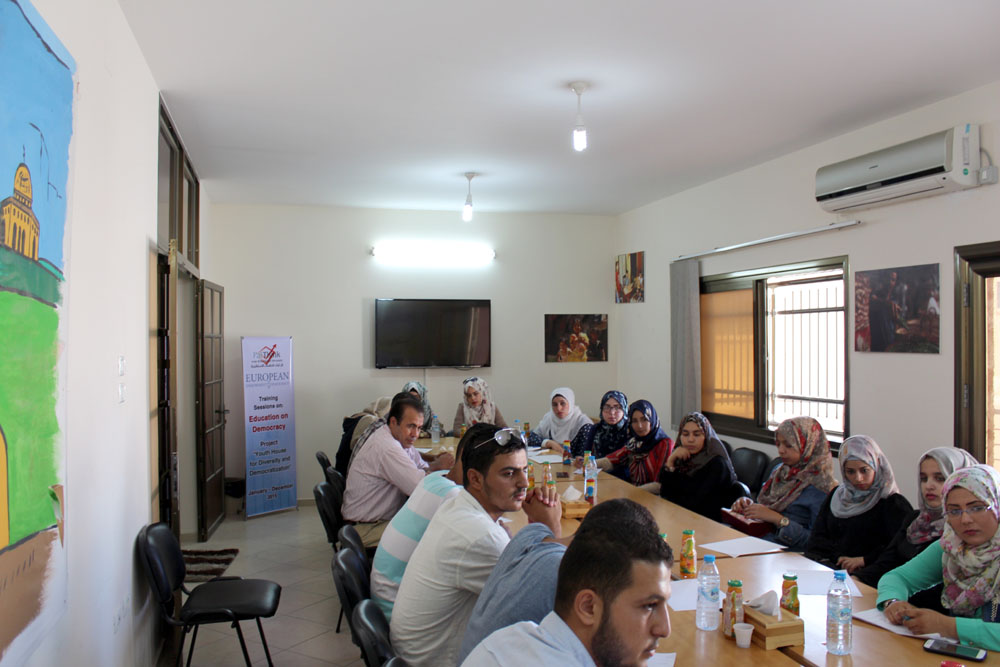
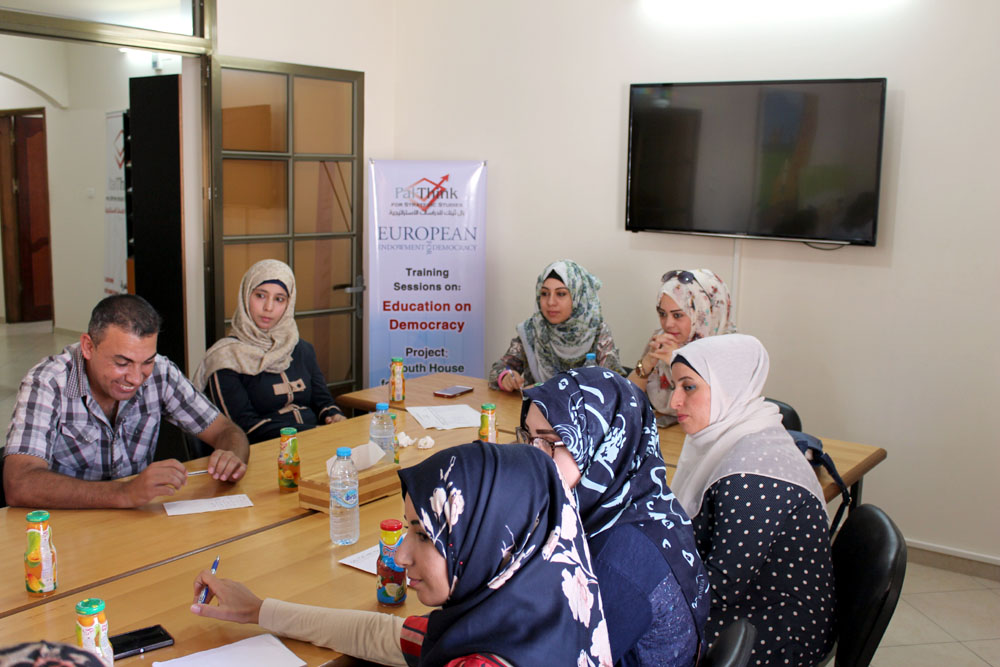
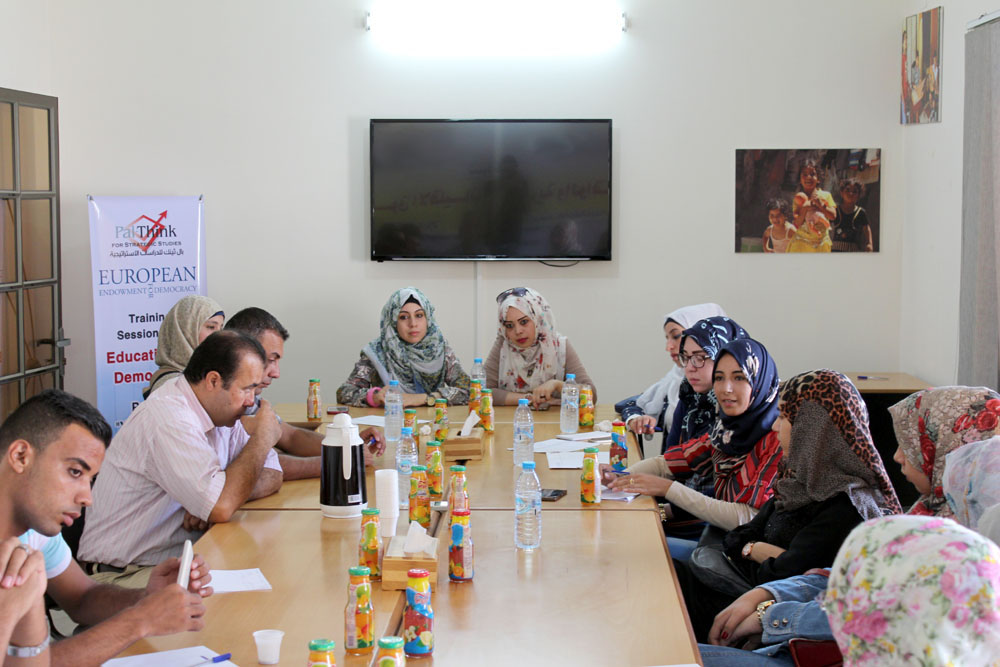
The Ramallah Center for Human Rights Studies, in cooperation with Pal-Think for Strategic Studies, organised a dialogue meeting titled (Minority rights, theory and reality), with the attendance of a group of researchers, jurists, and university students. The participants demanded the necessity of strengthening the culture of democracy and human rights, it being the only one able to confront fanaticism, closedness, and despotism, which most often leads to the destruction of peoples and states — through organising the legal relationship between the individual and the state within the frame of citizenship as the encompassing vessel of all society's strata; and demanding of the civil institutions that they take the reins of initiative in defending the public rights and freedoms, and ending all forms of discrimination against the other even if a cultural minority not prevailing in society — since the conflict between sects and minorities bequeaths barriers and impediments before the homeland's progress.
The meeting was opened by the trainer Mr Talal Abu Rokba, coordinator of activities of the Ramallah Center for Human Rights, making clear that hardly any society on the face of the earth is free of the existence of at least one minority inside it — for minorities are spread in almost all states and form part of the population and social fabric of every state; but the dealing with minorities, their rights, and their role in preserving social cohesion and communal fusion differs from one state to another according to its political and legal system.
He pointed out that most of the wars and the blood that has flowed across history, whose victims were millions of human beings, were a natural result of the beliefs of discrimination and marginalisation among human beings because of difference of colour, religion, origin, or race; and that the International Bill of Human Rights, which was manifested in the Universal Declaration of Human Rights and the international covenants and declarations that followed it, aimed at stopping those destructive ideas in human society — for the philosophical foundations on which the International Bill rested called for equality among human beings regardless of race, colour, belief, or political doctrine.
In their turn, the participants in the meeting affirmed that the international changes are witnessing a return of the concepts of discrimination and marginalisation in many of the world's countries: what happens in Myanmar of religious persecution; what happens in the Middle East of killing on the background of religion and race by the Islamic State organisation (Daesh); what happens of racist policies against the new migrants in Europe; what even the sports stadiums witness of racist chants against some players because of race or religion; and before all that the Israeli policies in Palestine, which represent a form of the new “apartheid”, whether through the separation wall in the West Bank, or through the blockade on the Gaza Strip, and its scheme to obtain Palestinian recognition of the Jewishness of the state to expel the Palestinians of the interior and make Israel a state for the Jews without its citizens.