Workshop: «Assessing international solidarity with Palestine — hopes and limits»
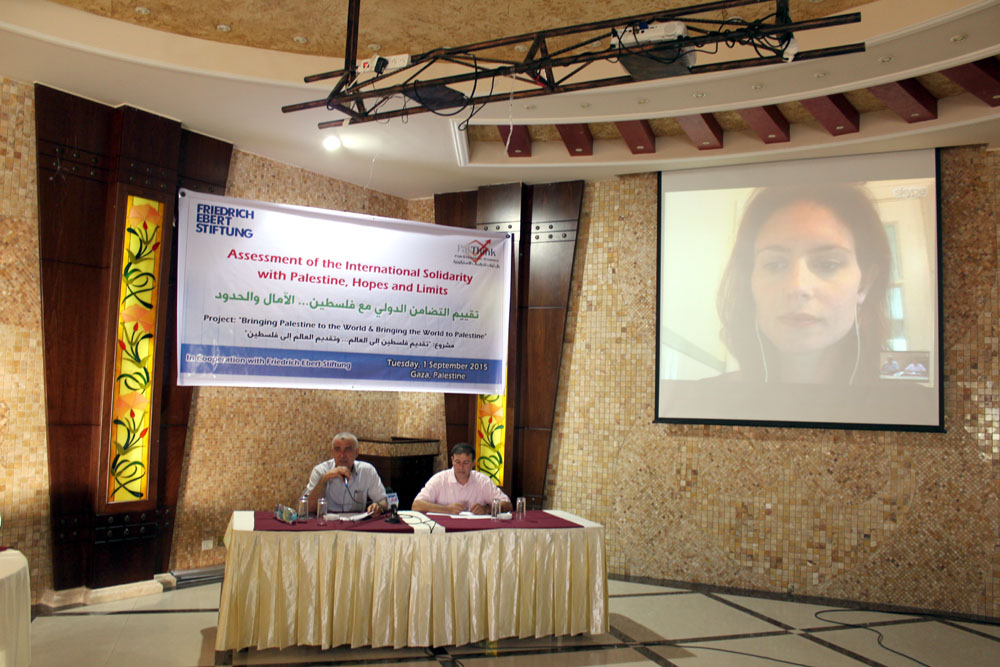
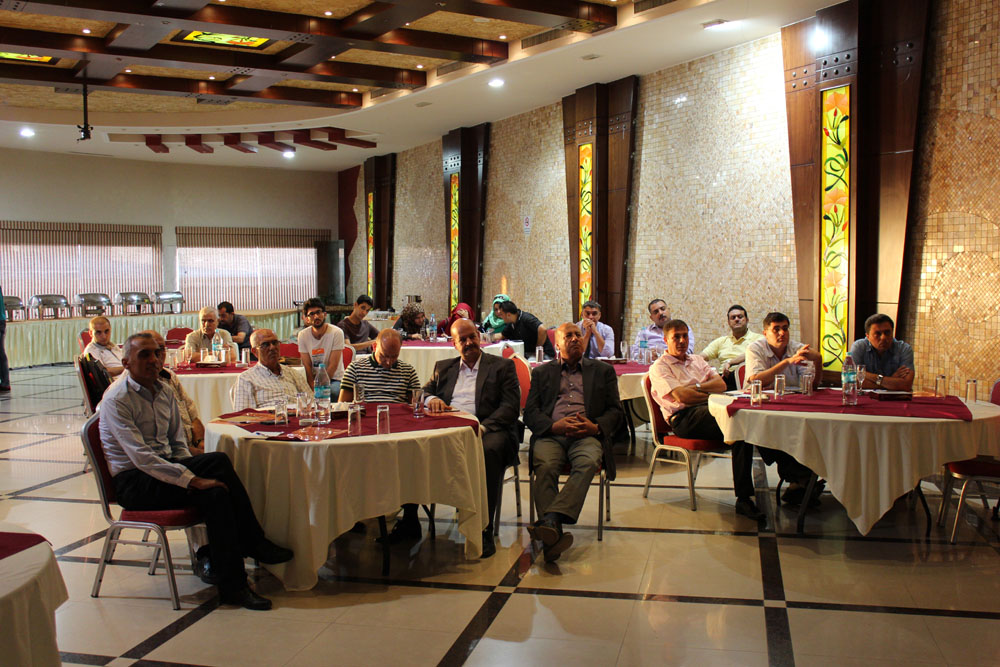
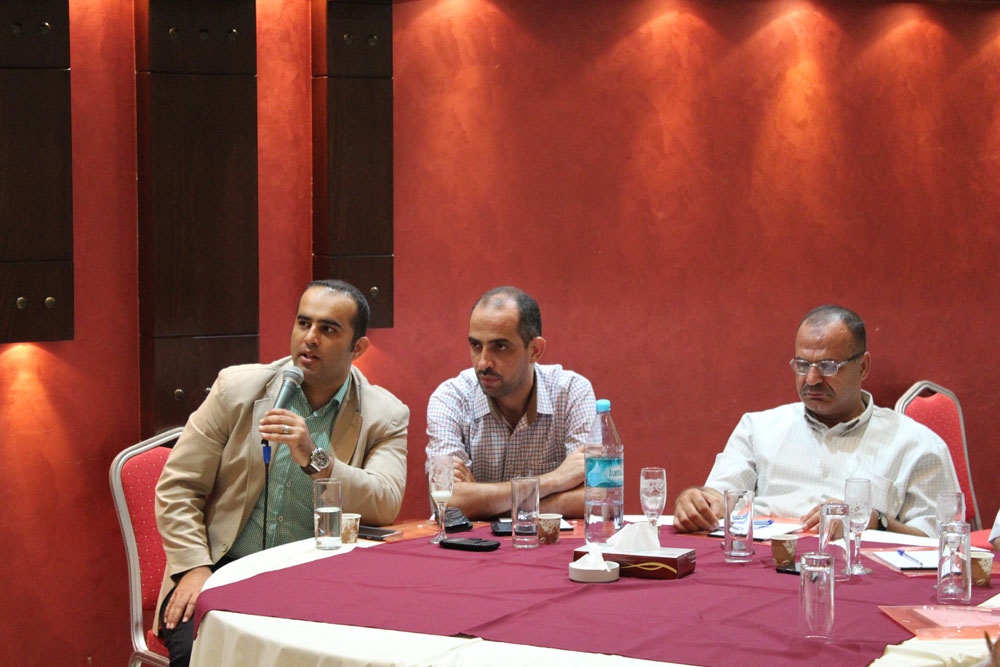
Pal-Think and the Friedrich Ebert Foundation held the workshop «Assessing international solidarity with Palestine: hopes and limits», hosting by Skype the writer and human-rights activist Anna Baltzer, before an audience of politicians, business people and researchers.
- Author
- The editorial team
- Date
- 2015-09-03
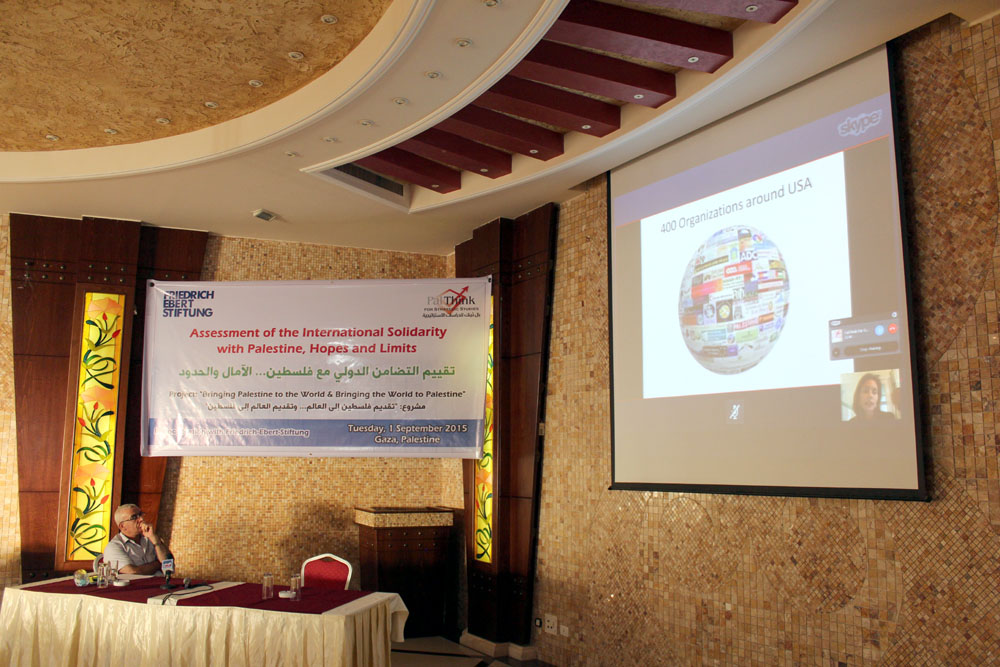
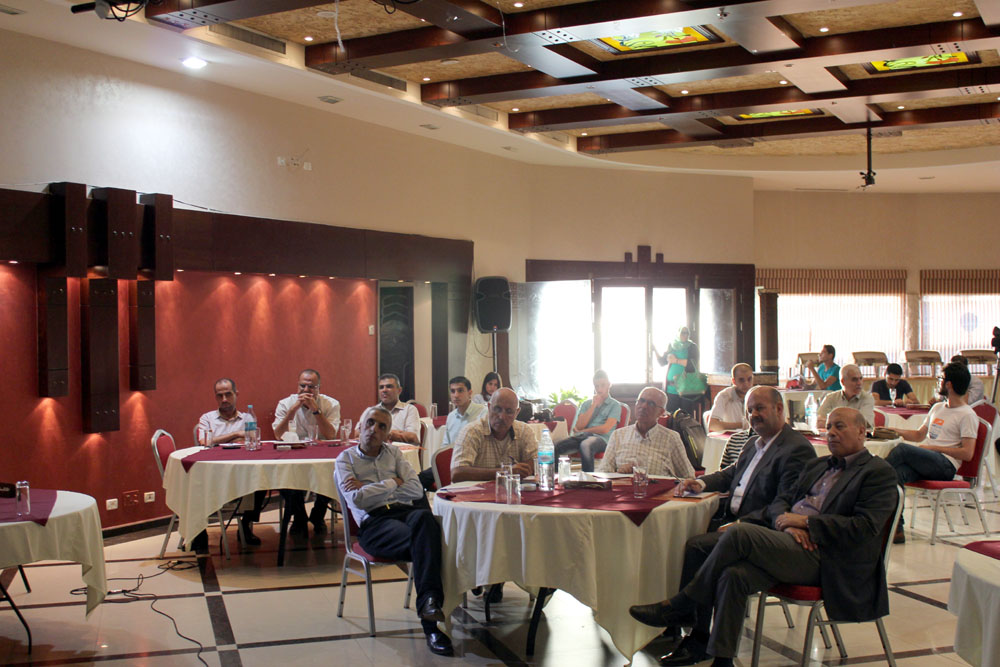
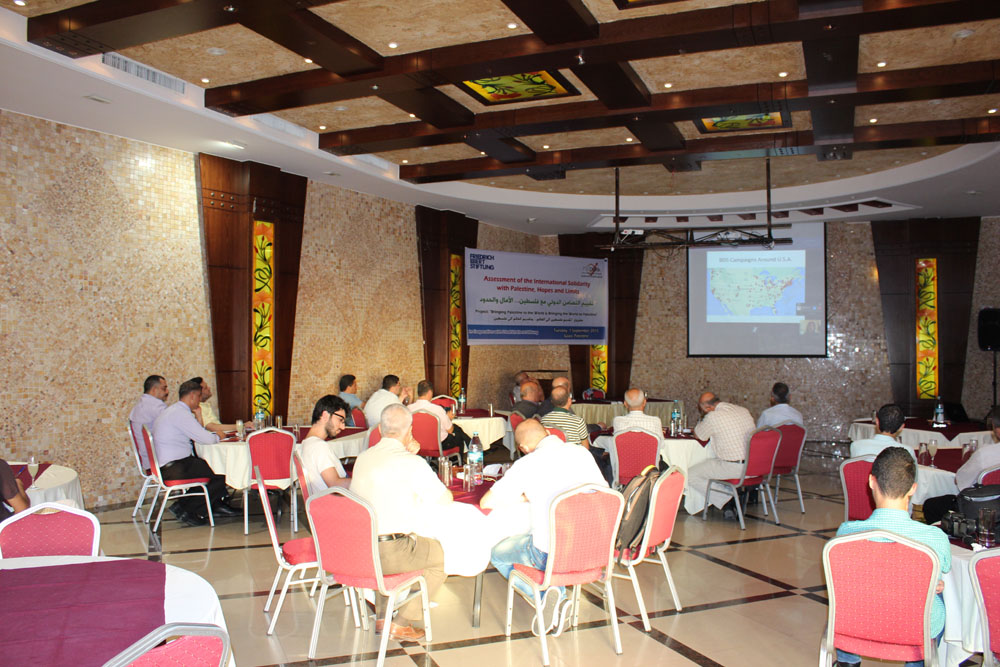
Pal-Think for Strategic Studies, in partnership with the German Friedrich Ebert Foundation, organised a workshop titled: “Evaluating international solidarity with Palestine… the hopes and the limits”. The meeting's guest, via Skype, was the writer and human-rights activist specialised in the Palestinian cause, Ms “Anna Baltzer”, with the attendance of an elite of politicians, businessmen, researchers, media people, and interested youth. The discussion in the workshop centred on principal issues, the most important of which: the view of the citizens and institutions of the United States toward the Palestinians and the role of the solidarity movements, the role of the boycott campaigns, and the Palestinians' role in international solidarity.
The view of the citizens and institutions of the United States toward the Palestinians and the role of the solidarity movements
Ms “Baltzer” pointed out that many of the inhabitants of the United States see the Palestinians as a source of terrorism, but the solidarity movements expend a great effort in order to change this stereotypical image of them. They also try to raise the awareness of the misled publics by following concrete strategies through which work proceeds on improving the unjustly distorted image of Palestine. The solidarity movements in the world work on showing the Palestinians' true image — that they are the victim in this conflict — and the indications and statistics show that the boycott movement is making noticeable progress in its work of solidarity and defence of Palestine.
The role of the boycott campaigns
Ms “Baltzer” spoke of the boycott campaigns and noted that more than 400 American institutions and organisations have conducted campaigns of solidarity and support for Palestine. The “BDS” campaigns make the Palestinian cause more widespread among the countries of the world and expose the hideous crimes Israel commits against the Palestinians. Ms “Baltzer” mentioned that there are many patterns and forms of these campaigns, and pointed out that some campaigns press celebrities in order to compel them not to take part in events and concerts held in Israel, in order to draw the press's attention — and thus people can know the nature of the conflict in Palestine by reading and watching what the newspapers write. The campaigns also win the academic institutions to their side, and this is one of Israel's points of weakness, for Israel focuses greatly on the academic institutions for the extent of their effectiveness in this conflict. She likewise noted another kind of campaign through which soda products or fizzy drinks are boycotted, and this suffices to influence the Israeli economy concretely. She affirmed the role of the social-media sites in forming the campaigns of boycott and support for the Palestinians, they being an important source for carrying out many boycott operations: a large number of tweeters on the social-media site launched a hashtag titled “Cancel Netanyahu's speech”, and a large number of the members of Congress answered their request — which was considered a huge victory for the “BDS” campaigns
The Palestinians' role in supporting international solidarity
Ms “Baltzer” spoke of the importance of the role of the Palestinians who live in the United States in such campaigns, since they have sufficient experience of the conflict's nature and likewise have complete knowledge of the mentality of the Americans and the West, and thus they can convey the message correctly and clearly. Likewise no one can forget the role of the Palestinians in general, for they too have the capacity for change — the matter is not confined only to those who live in the United States and the Western states.