Conference: «The crisis of the Palestinian question — a strategy out of the impasse»
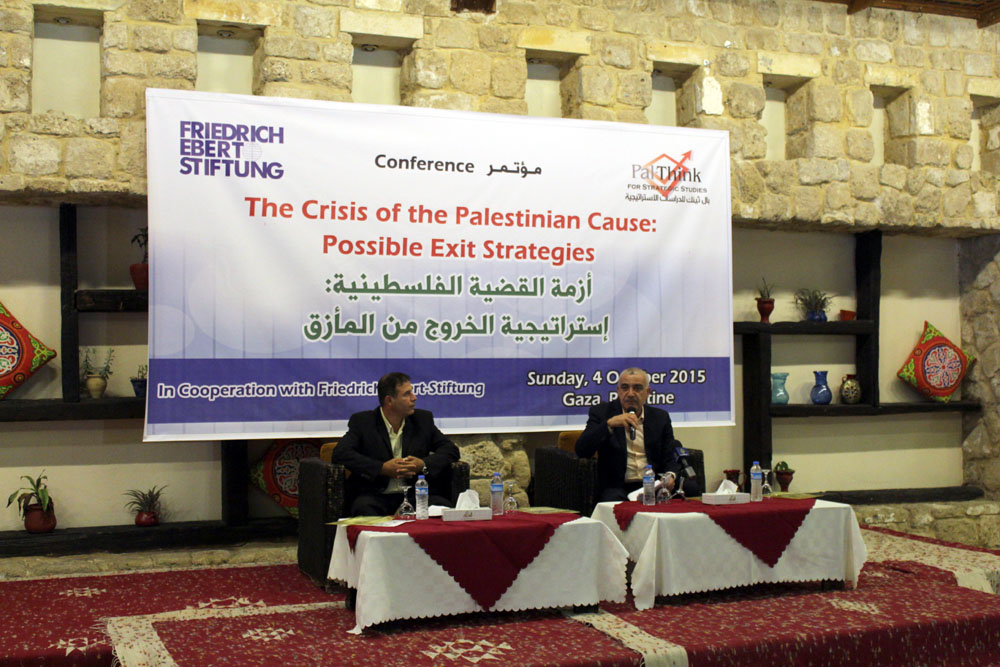
Pal-Think and the Friedrich Ebert Foundation held the conference «The crisis of the Palestinian question: a strategy for exiting the impasse», hosting local and international analysts alongside Dr. Saeb Erekat, secretary of the PLO Executive Committee and chief negotiator.
- Author
- The editorial team
- Date
- 2015-10-07
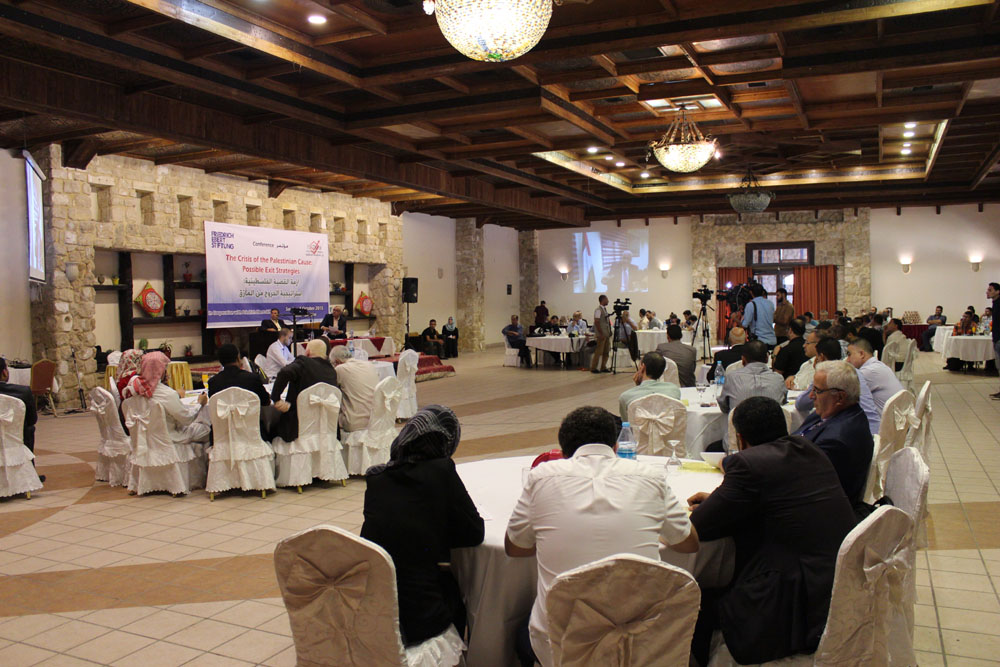
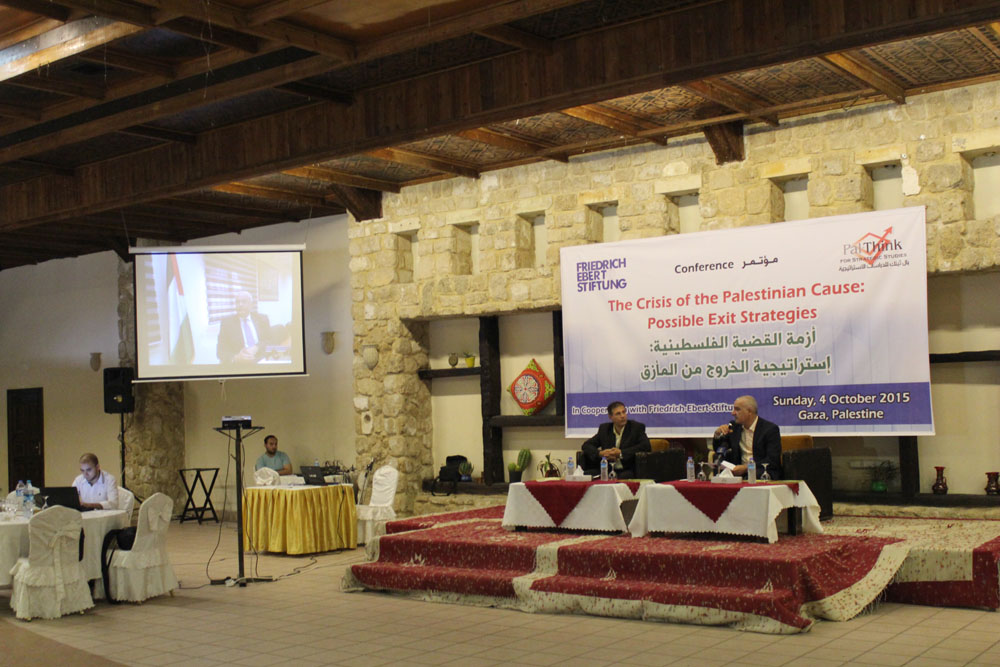
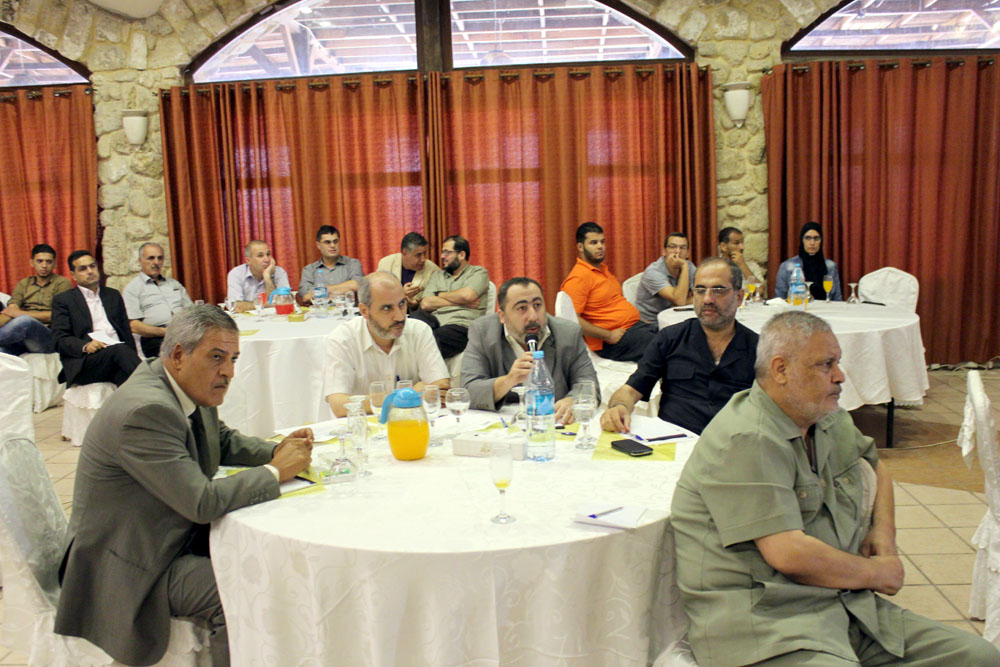
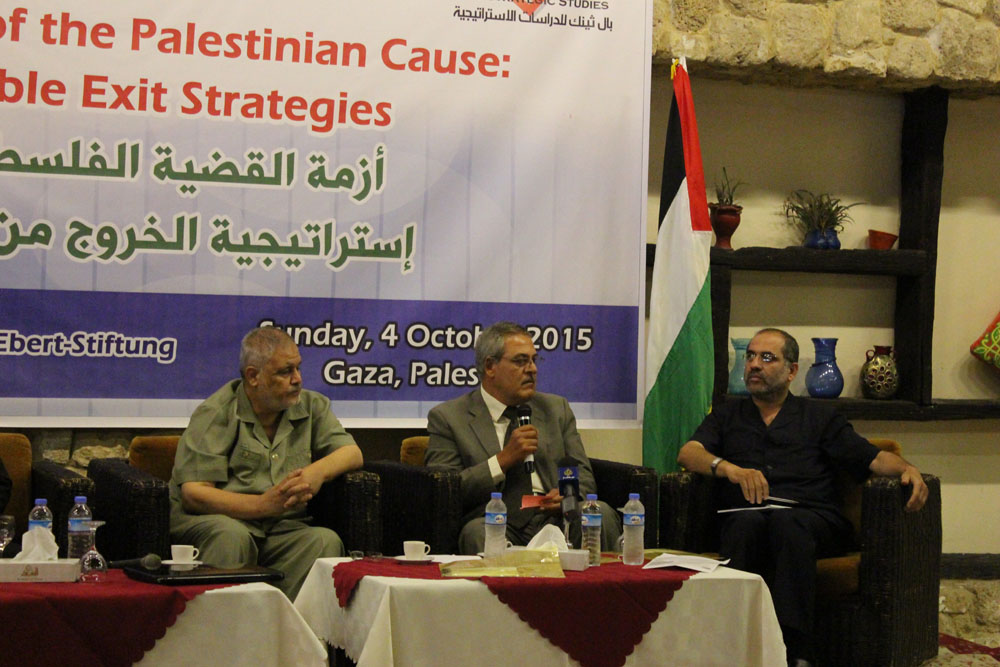
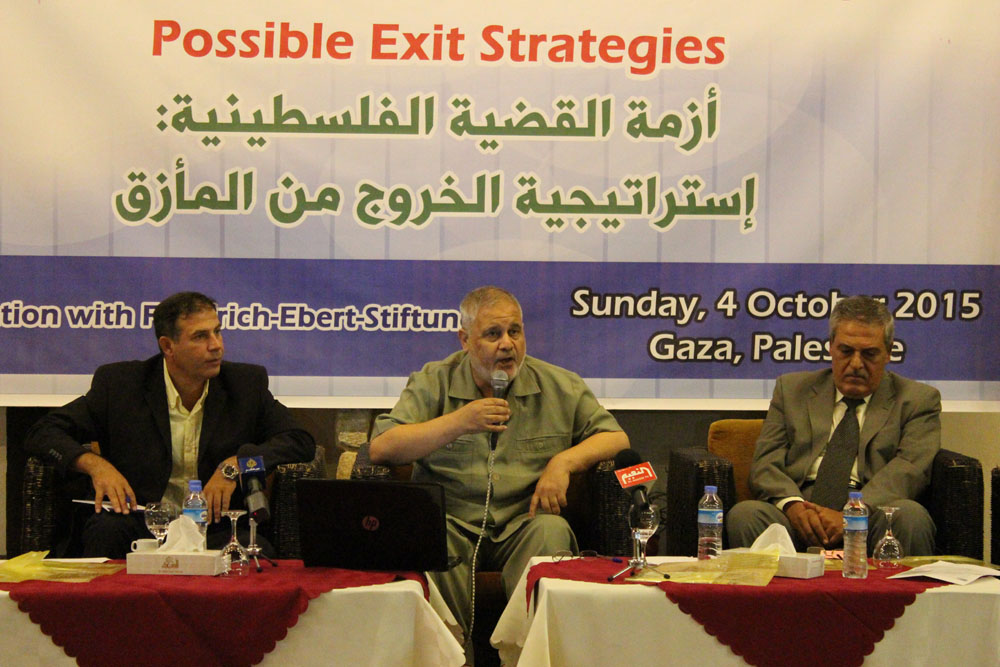
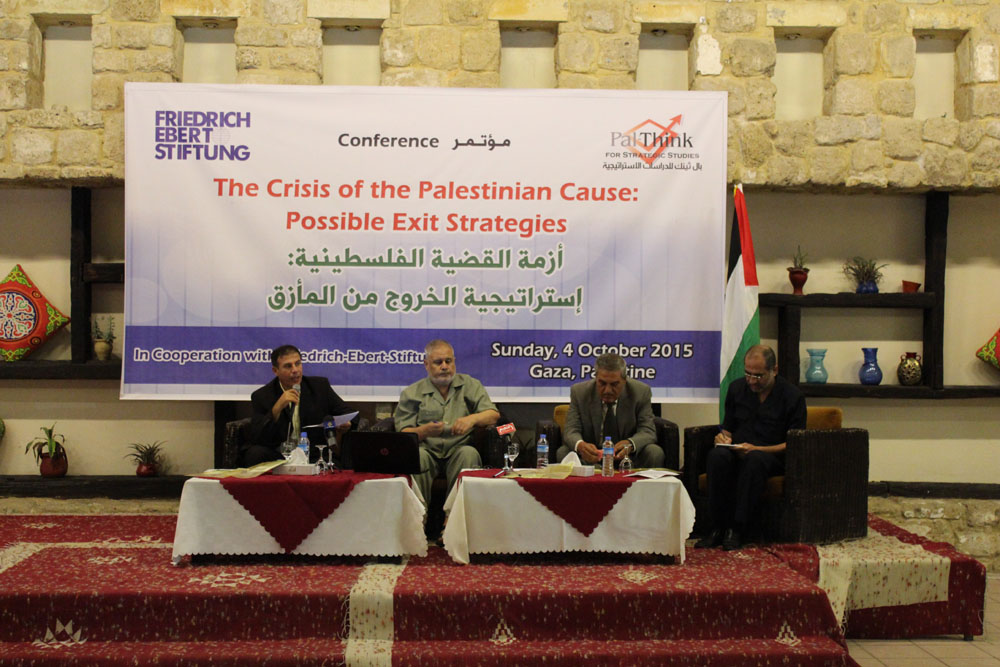
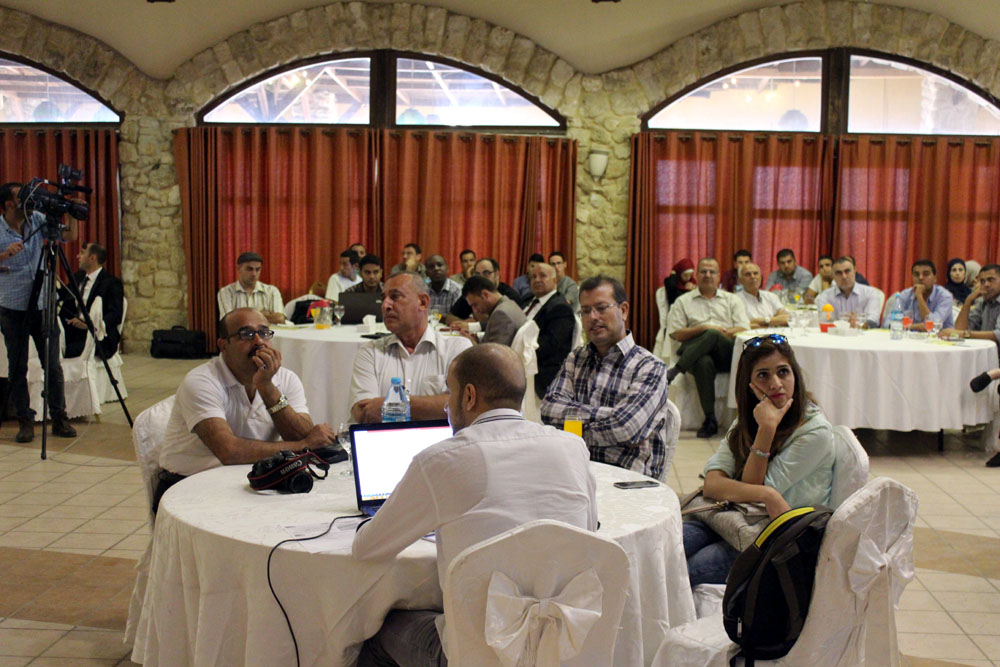
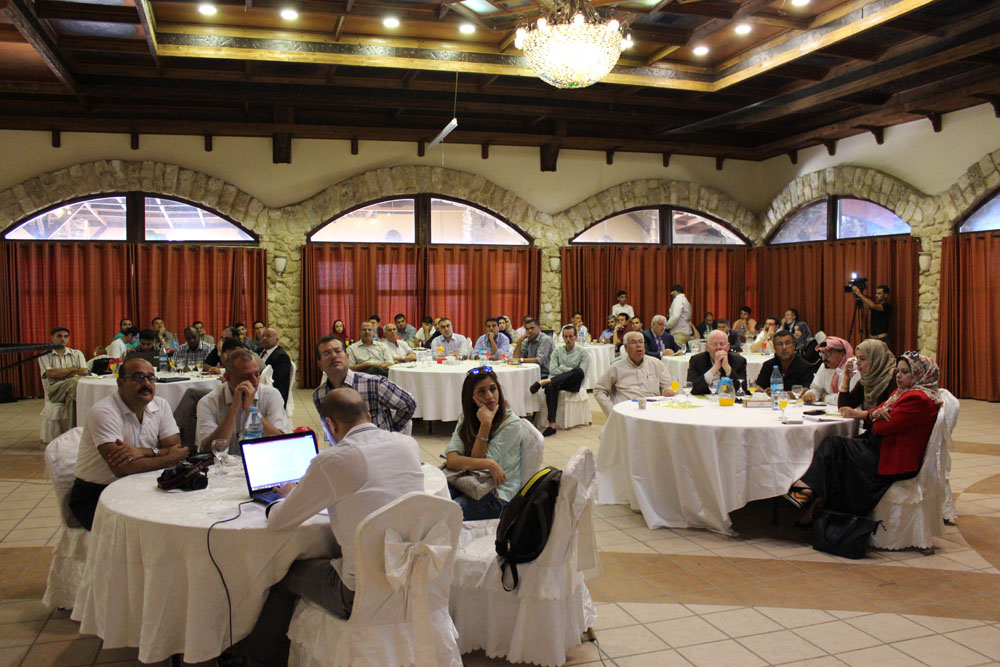
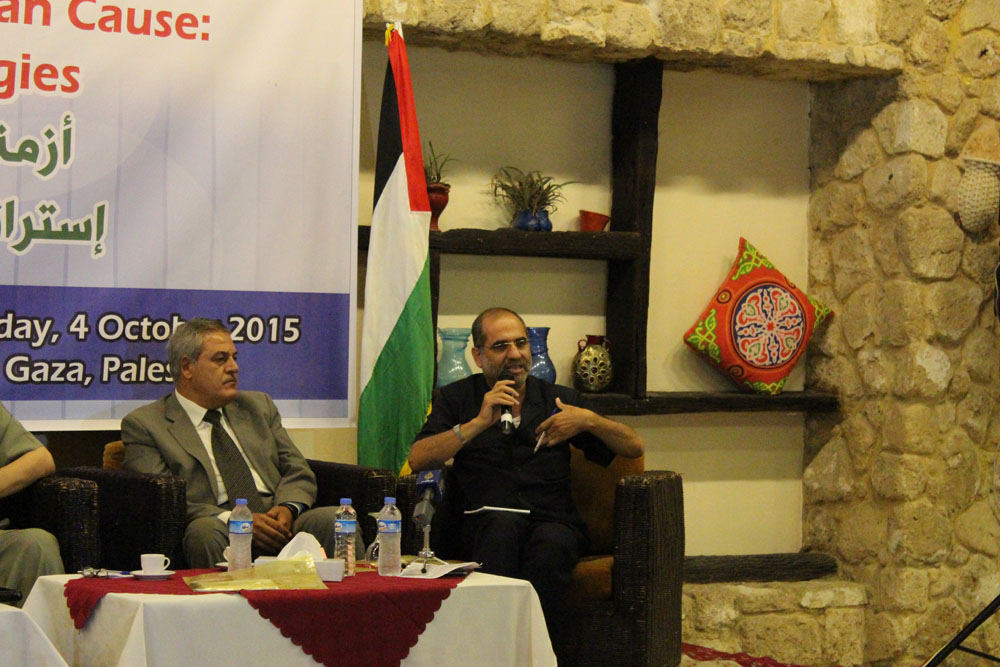
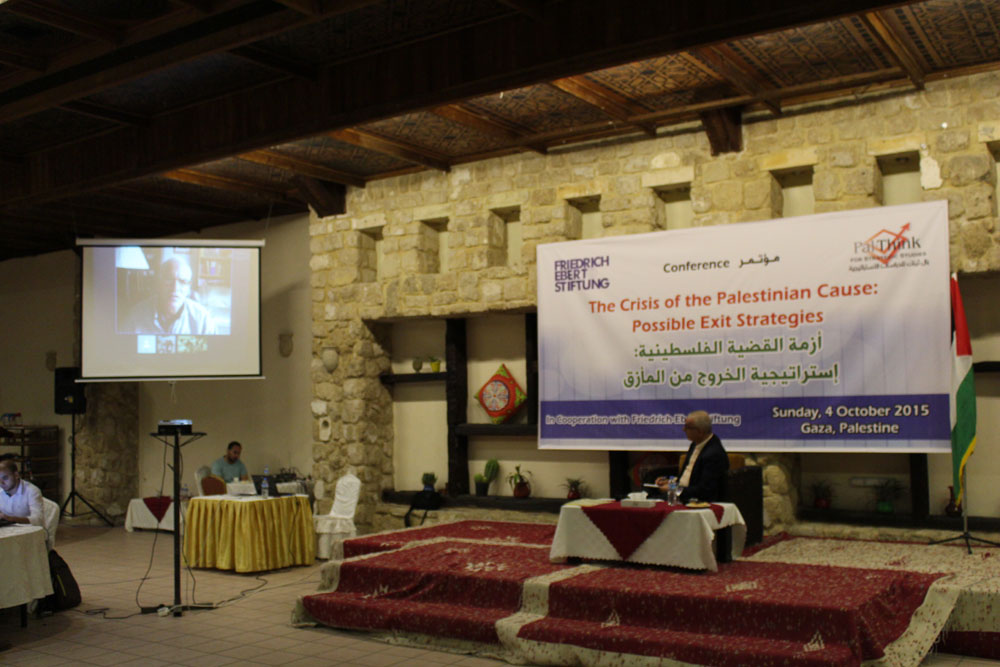
Pal-Think for Strategic Studies, in cooperation with the German Friedrich Ebert Foundation, organised a conference titled “The crisis of the Palestinian cause: the strategy of exiting the impasse”, which hosted a number of local and international political analysts, in addition to Dr Saeb Erekat, secretary of the Executive Committee of the Palestine Liberation Organization and chief Palestinian negotiator.
The conference was opened by Mr Omar Shaban, director of Pal-Think for Strategic Studies, saying: “We did not know, as we were planning this conference, that its date would come at a decisive stage — for this conference comes just after a historic event represented in the raising of the Palestinian flag at the United Nations.” He noted that the Palestinian cause has become more mature and more clearly delineated at the international level, for there are many states and institutions that have begun to recognise Palestine and its rightful claim to possess an independent state.
Dr Osama Antar, programmes director of the German Friedrich Ebert Foundation in the Gaza Strip, likewise affirmed the importance of the conference's subject and its participants, pointing to the difficulties our Palestinian cause is passing through — for the features of the crisis are clear, so the search for exits from it must continue. Dr Antar affirmed that at the time we demand the international community bear its responsibility toward the Palestinian cause, we also have our own responsibility, which is represented in ending the division.
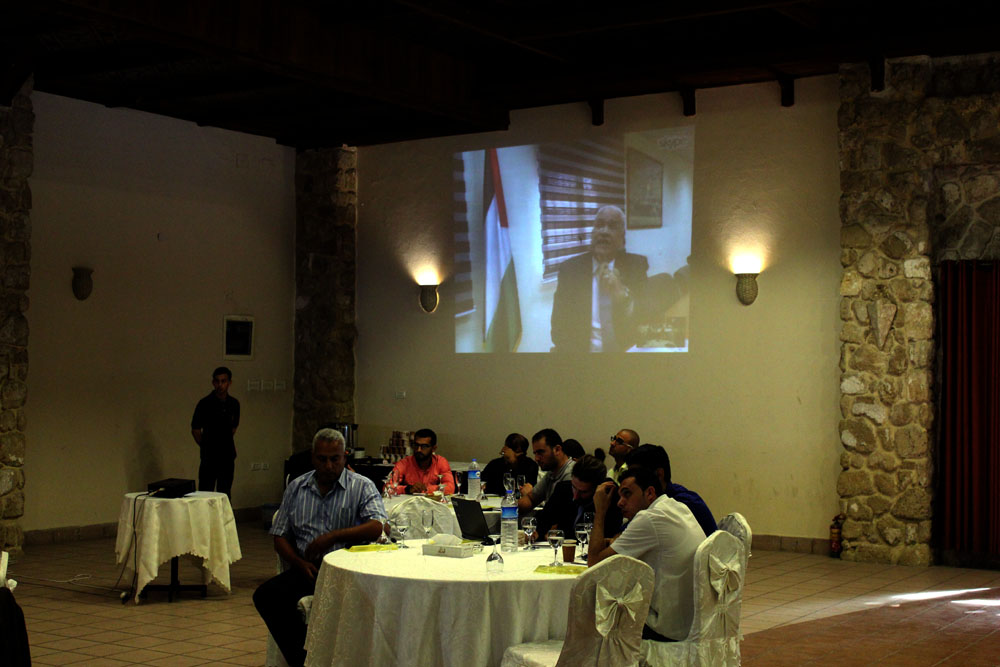
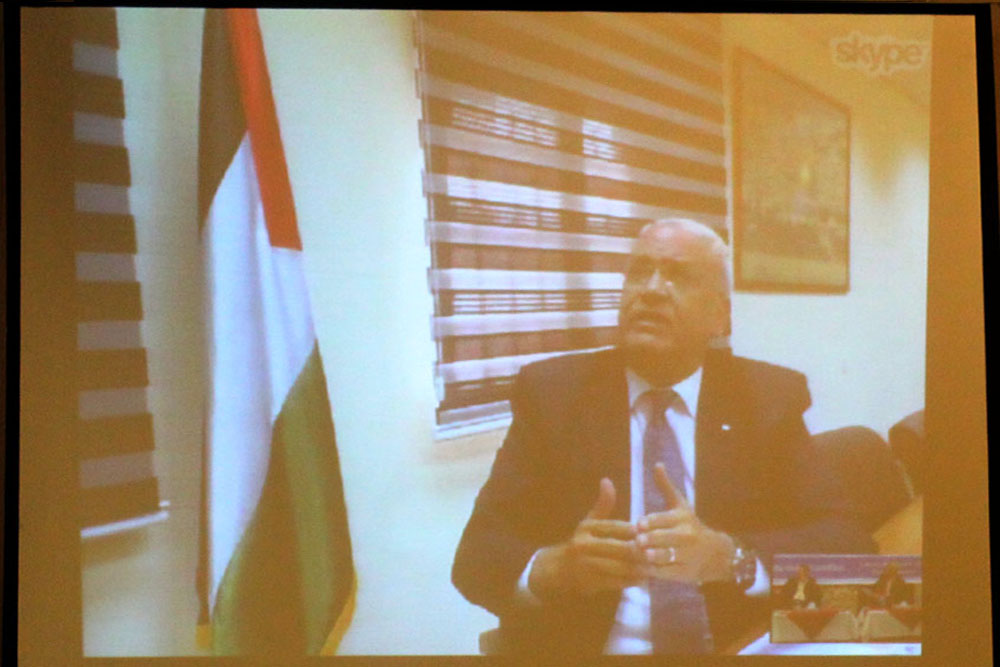
In the word of Dr Saeb Erekat, secretary of the Executive Committee of the Palestine Liberation Organization and chief Palestinian negotiator, he affirmed that the world is being won over to the Palestinian cause, but if the Palestinians do not cooperate with themselves in the issue of reconciliation and ending the division, no one will help them. He pointed out that President Abu Mazen rested on two fundamental steps in his latest speech at the United Nations: should the occupation continue as it is, the Authority will not continue to adhere to the agreements. He focused on the Palestinian Authority preparing itself legally, politically, and strategically to determine the course of its relationship with the occupation, and that all the spectra of the Palestinian people must unite in their ranks to confront the occupation. He made clear that the strategy of exiting the Palestinian impasse lies in the world confronting the policy of Israeli terrorism committed by the extremist elements in it — stressing that this requires strong political will — and stressed the necessity that the Palestinian whole think of moving from the Authority to the state with its political components.
Dr Erekat pointed out that the Authority has an essential constant: it will not accept a state without the Gaza Strip nor a state in the Gaza Strip — affirming that the Fatah movement agrees with Hamas on many of the national issues and no one has asked it to change its position or its principles, but it must support the formation of a national government. He pointed out that Netanyahu's policy rests on keeping Gaza outside the range of the Palestinian flock, and that Israel's policy supports the division and contributes to keeping it. He likewise made clear the second principle on which Netanyahu's policy rests, which is keeping the Palestinian Authority in the West Bank without powers — and pointed out that we have no path to deliverance from Netanyahu's plans except through reconciliation and the setting of the Palestinian ranks' goals founded on national partnership.
In the conference's first session, Dr Ahmed Yousef, head of the House of Wisdom for Consultations and Conflict Resolution, pointed out that the Palestinian reality cannot change through operations of grafting and formal reform, but by way of operations of radical reform within whose folds a Palestinian strategy is built whose foundations are national unity, to include all the Palestinian factions. He likewise stressed the necessity of re-drafting the Palestinian political system so that it can solve the current problems facing the Palestinians and confront the Israeli occupation, and affirmed that each of the division's two parties is responsible for the division — pointing to the importance of following the idea of “God has pardoned what is past” in order to reach a comprehensive Palestinian agreement.
In the intervention of the writer and political activist Dr Osama al-Farra, he affirmed that there must be treatment, even if swiftly, of the influences that impede the working of the Palestinian system — such as the occupation, which has begun escalating matters in the West Bank recently by unleashing settlers to stir up attacks and conflicts in the Bank, and likewise the non-adherence to the concluded agreements; and likewise America, which has not touched on the Palestinian cause from near or far for some time, and this matter needs looking into; and also looking at the noticeable transformation in the viewpoints of the European states and the European peoples toward the Palestinian cause — for there is movement in the recognitions, and even if moral, this is something positive. He noted that the developments in the Arab world have harmed the Palestinian cause much, and there is no longer any sanctity for Palestinian blood, especially after Syrian, Iraqi, Libyan, and Yemeni blood has been spilled.
The head of the Adam Centre for Dialogue of Civilizations, Eng. Imad al-Falouji, made clear that the biggest problem the Palestinians face is that neither of the division's two parties recognises that it is in an impasse, and each of them places the blame on the other. He pointed out that each party sees that it has realised achievements on its own level, but the question remains whether these existing achievements have contributed to supporting the national project or have supported the national project's retreat — and from his viewpoint, had these achievements been real, the Palestinian cause would not have reached what it is at now.
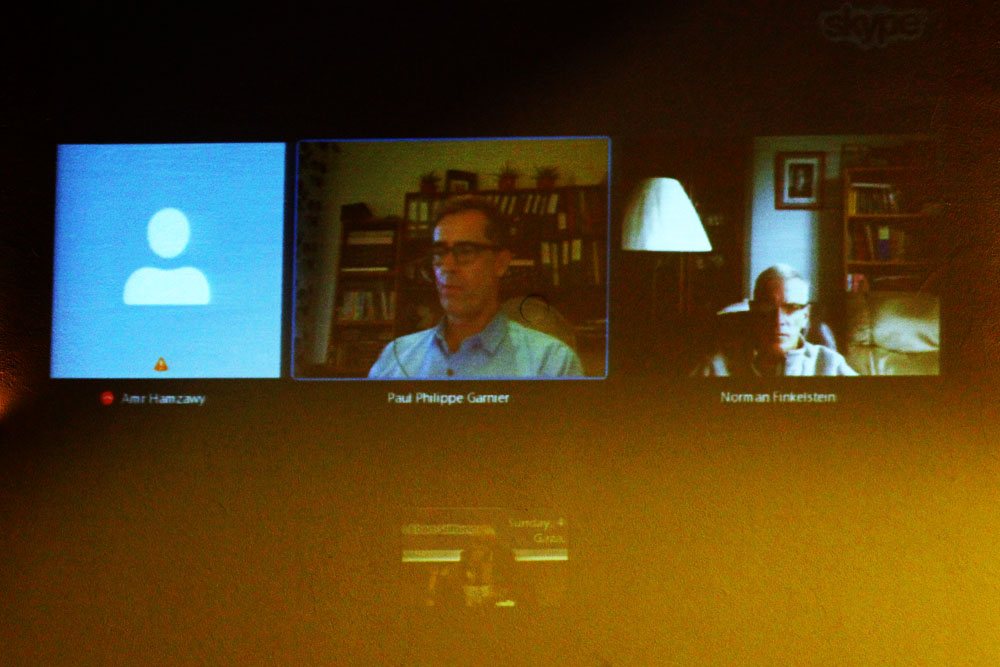
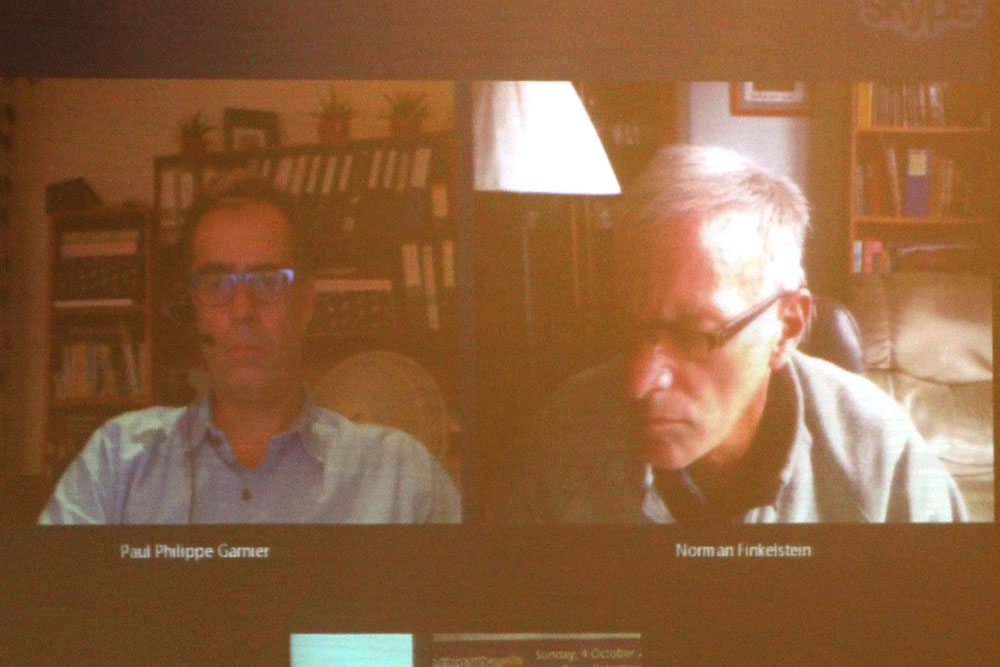
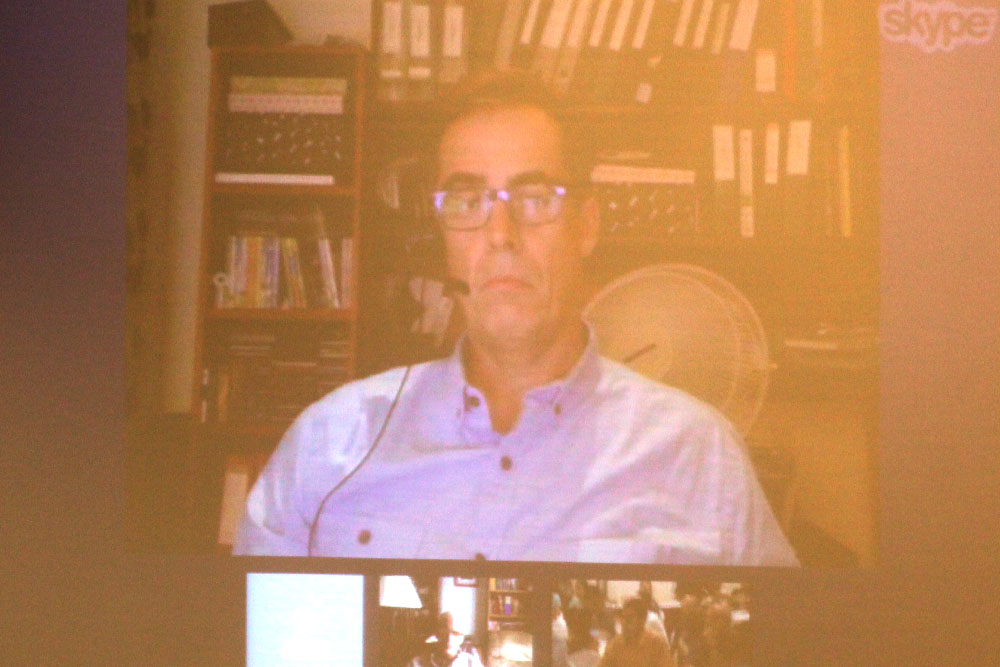
At the beginning of the second session, the representative of Switzerland to the Palestinian National Authority, Mr Paul Garnier, pointed out that Switzerland was and remains committed to the idea of the two-state solution and supports everyone who contributes to reaching this solution. He likewise stressed that negotiations are the only solution to which all must adhere to reach a solution concerning the Palestinian cause, and that recourse must also be had to all the international mediations to realise the peace process in the Middle East.
Mr Garnier affirmed that negotiations are the only solution for solving the dispute with the Israeli occupation, and that any international effort must be activated to activate a process for bringing peace to the Middle East. He pointed out that there are many violations Israel commits that can prevent reaching a comprehensive peace process, so the international community must intervene to stop these violations and reach a peace — and affirmed that international intervention will have no value if there is no national reconciliation between the Palestinian parties.
As for the professor of political science at Cairo University, Dr Amr Hamzawy, he pointed out that international attention to the Palestinian cause has retreated in recent years, and this matter weighs on the Palestinians' shoulders, and this requires a great effort from the Palestinian whole to return the Palestinian cause to the forefront. He stressed the importance of recourse to the international criminal courts to bring the Israeli occupation to justice, and this may guarantee the Palestinians their plundered rights. He affirmed the necessity of the existence of Arab solidarity with the Palestinian cause, and this is realised only through popular initiatives carried out by specialised groups aiming at reconsidering the Palestinian cause; the Palestinians must also work on delivering the Palestinian cause to all the countries of the world in order to receive sufficient support to reach comprehensive solutions.
In the conclusion spoke Dr Norman Finkelstein, professor of political science: there are three options before the Palestinian people for ridding itself of the occupation. The first is the diplomatic course, which produced the Oslo agreement, from which only a very small proportion benefited, while the Palestinian people remained without that agreement being reflected in its situation, while Israel benefited from it much. The second is the military course, which does not suit the circumstances of the Palestinian people. And the course of the popular intifada, which is more suitable and effective for the Palestinian condition. He concluded his talk with what the Palestinian people must do: winning the love of the other peoples — because hope lies in the peoples, for their capacity to influence their governments; the Palestinians must likewise look to the international laws that serve them in reaching a solution to this cause.