Workshop: Universities' role in boosting youth participation in local elections
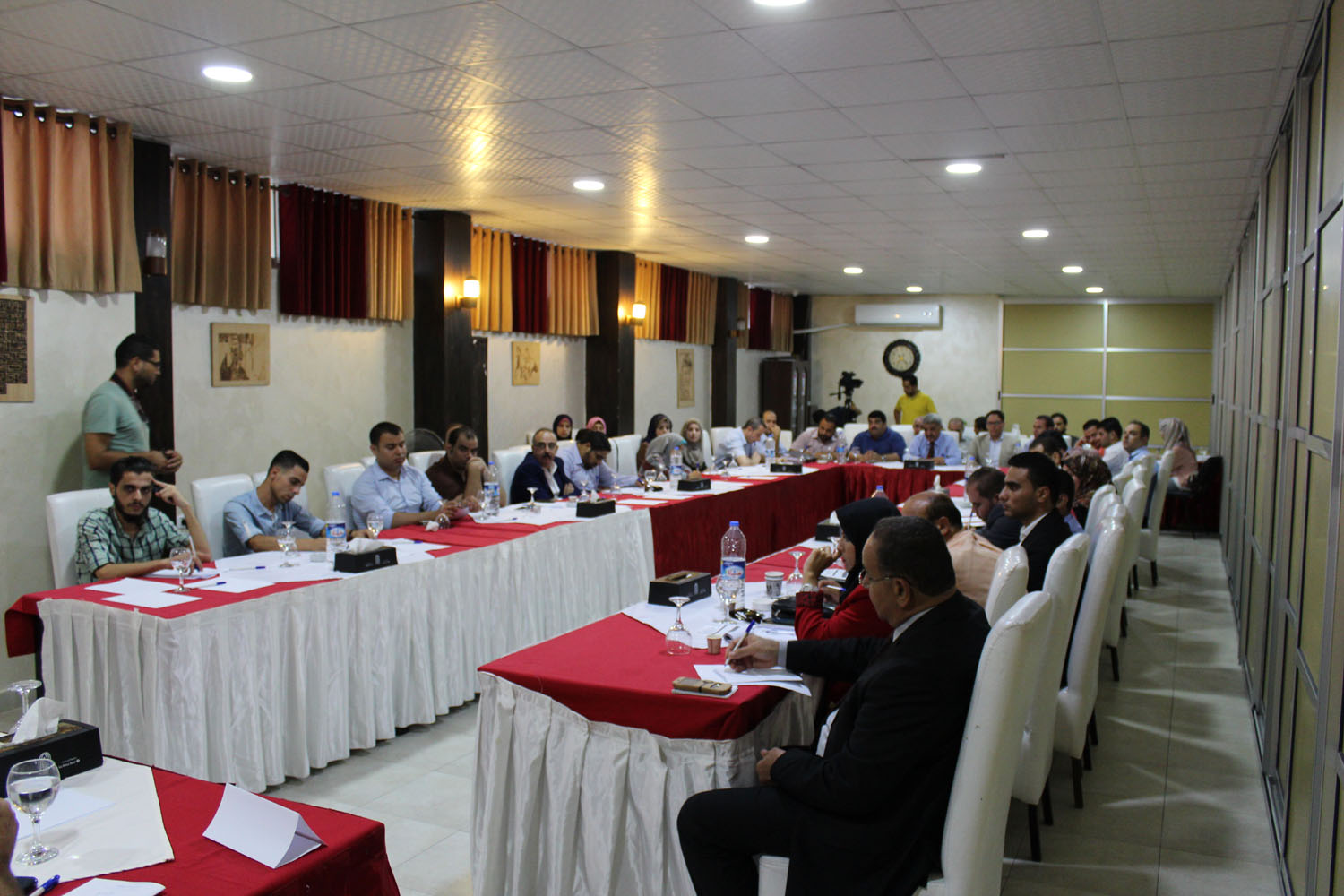
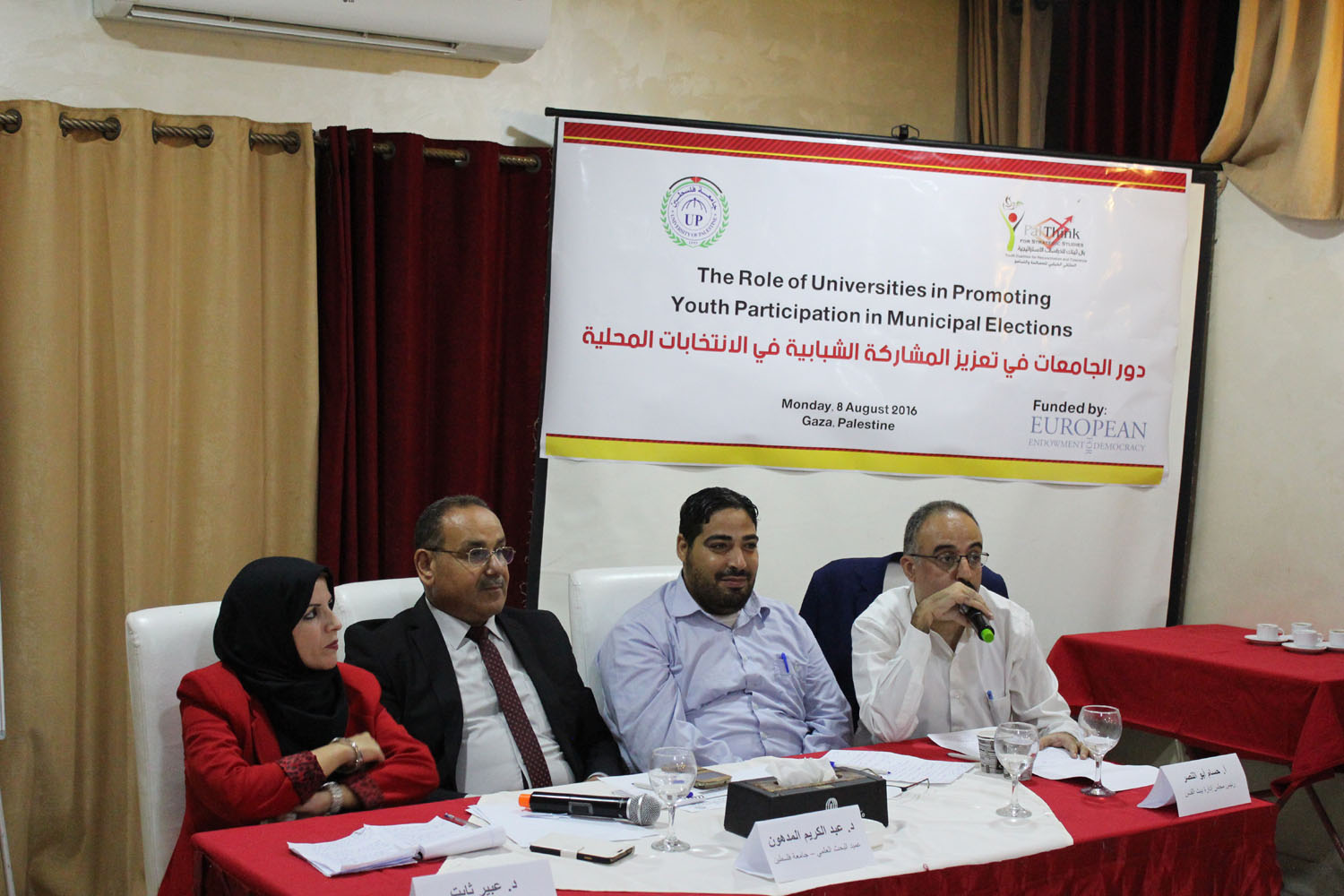
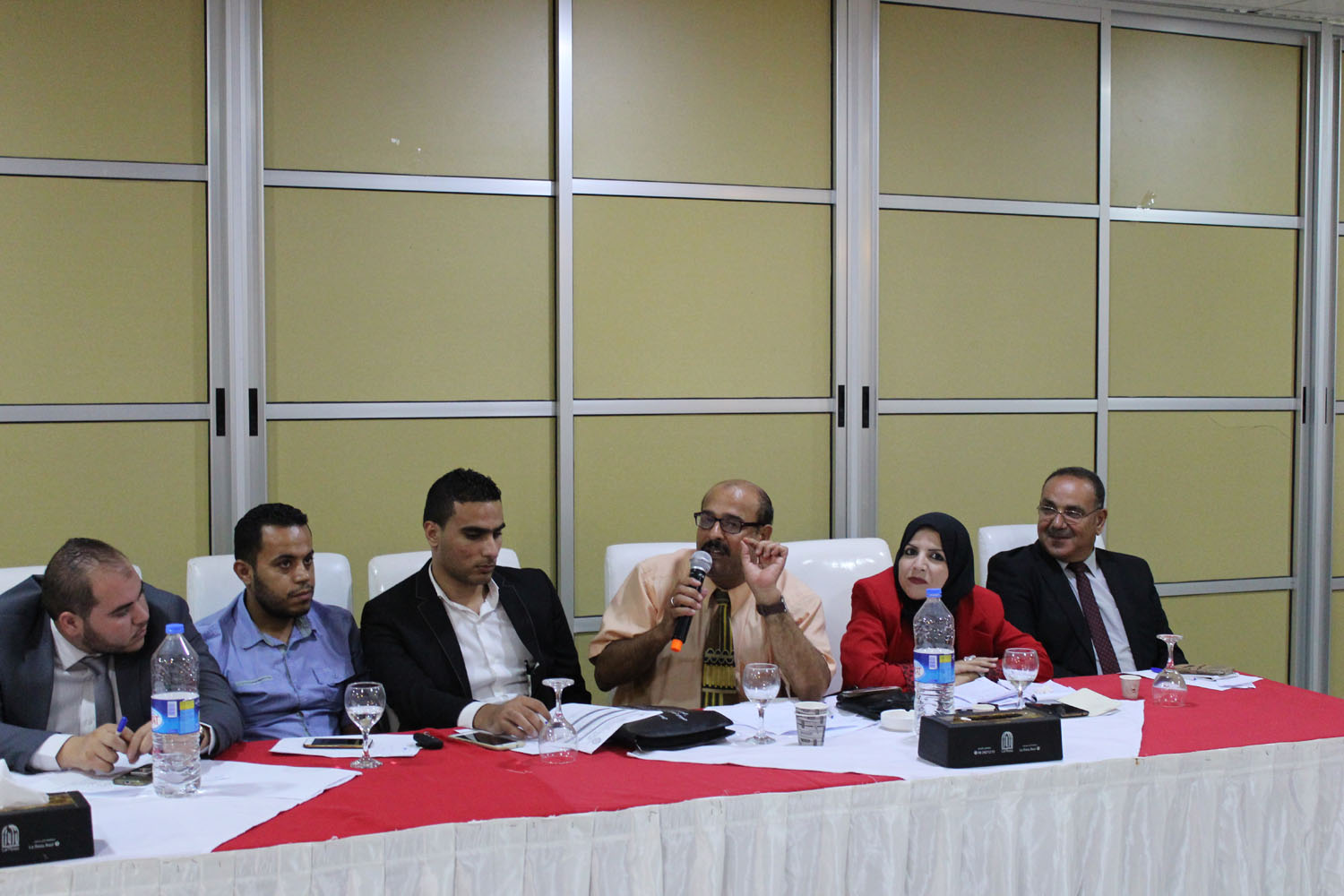
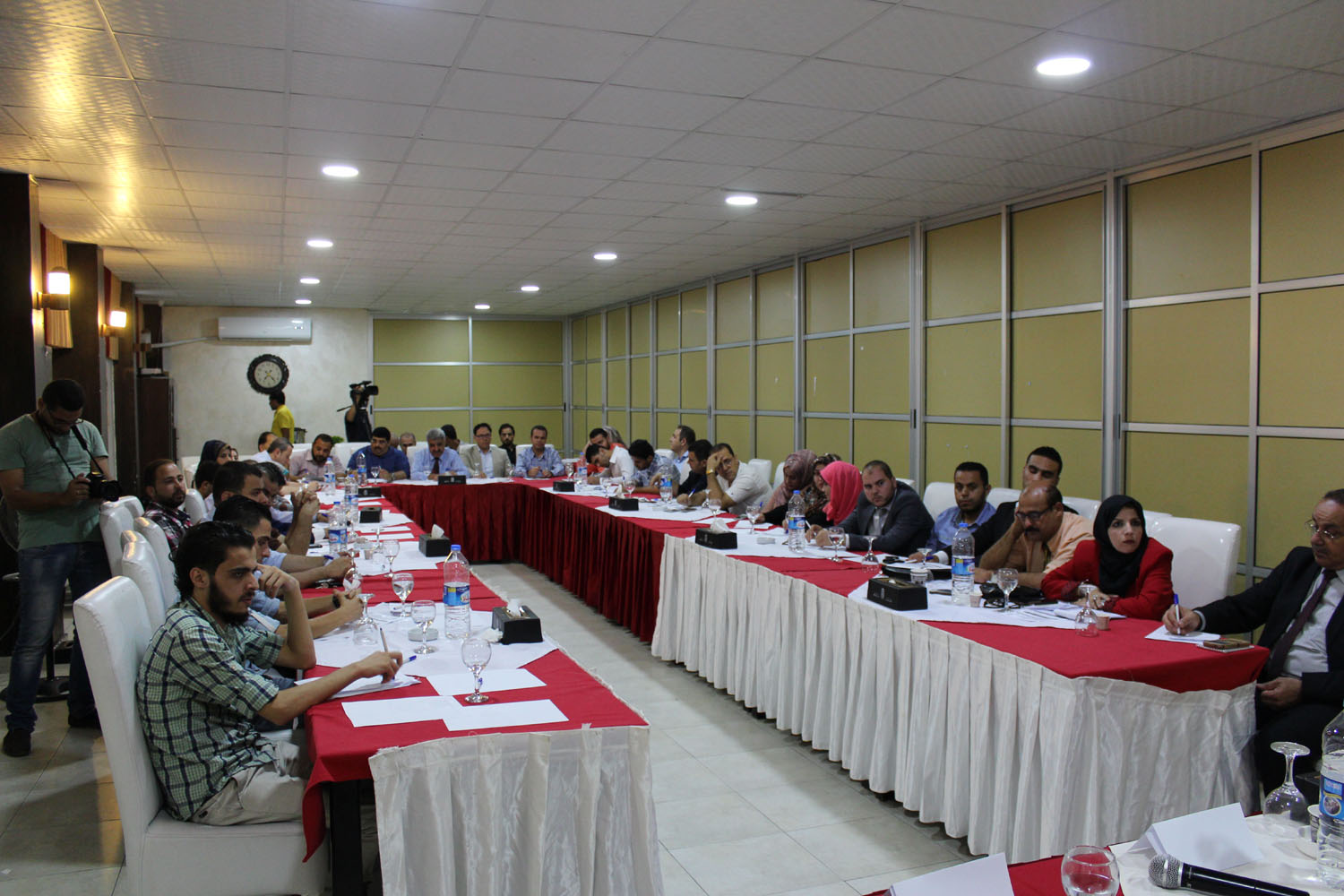
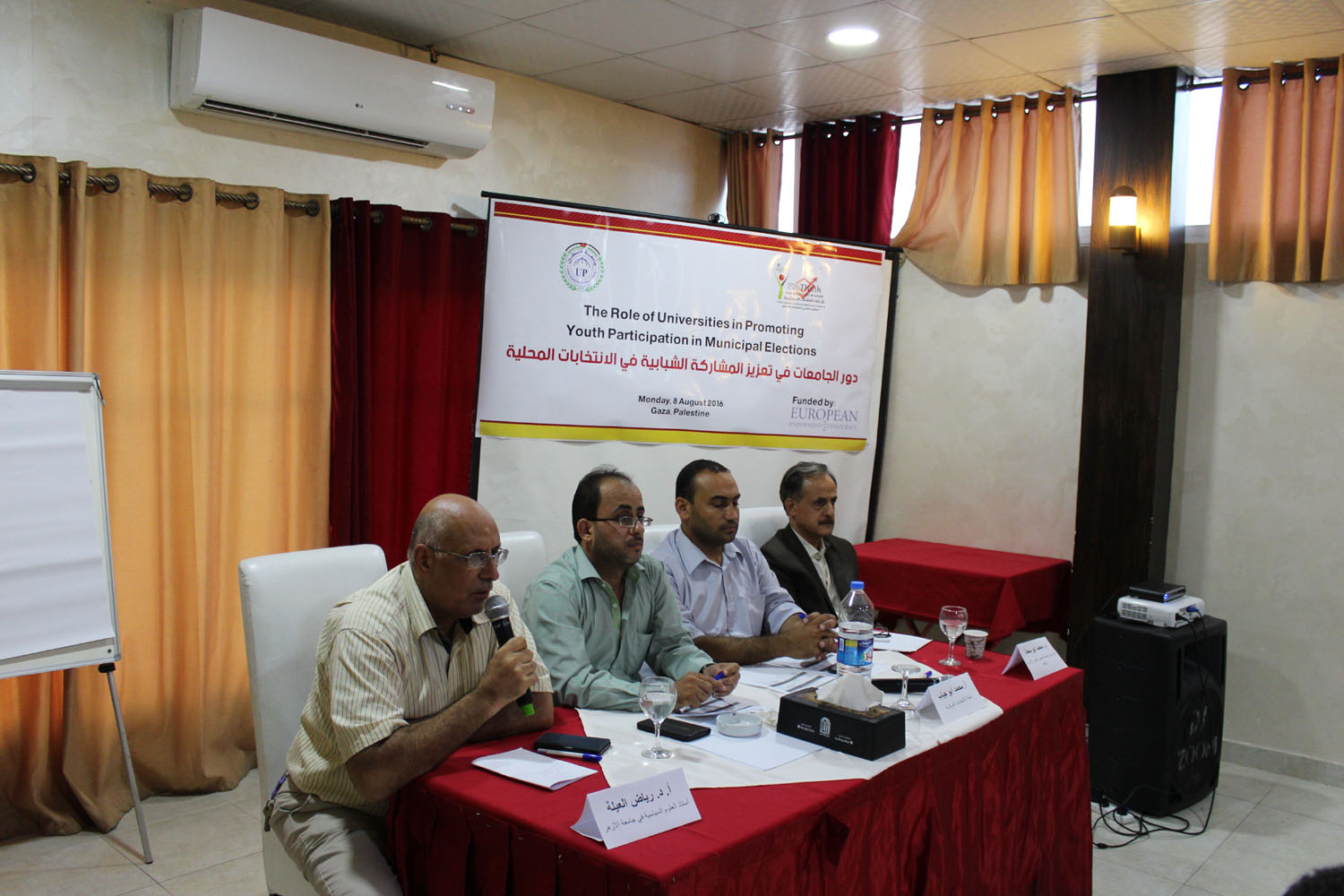
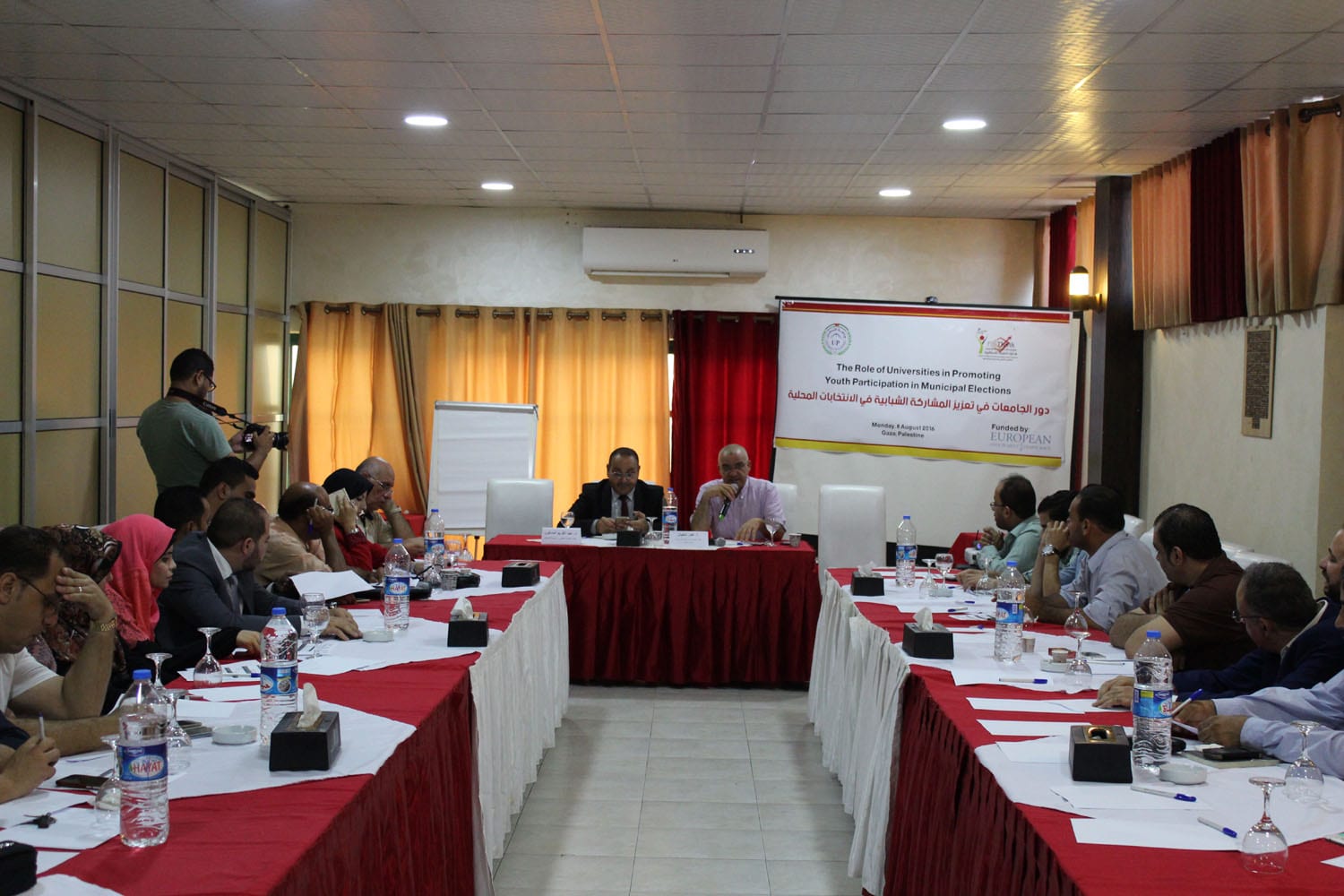
The Youth Forum for Reconciliation and Tolerance, with the University of Palestine, held the workshop «The universities' role in strengthening youth participation in the local elections», attended by university youth, student-bloc representatives and civil-society figures.
- Author
- The editorial team
- Date
- 2016-08-11
The Youth Forum for Reconciliation and Tolerance at Pal-Think for Strategic Studies organised a workshop titled “The universities' role in strengthening youth participation in the local elections”, in partnership with the University of Palestine, with the attendance of a large group of university youth, representatives of the student frames, and a stratum of intellectuals and workers in civil society institutions and the universities.
The workshop was opened by Dr Abdel Karim al-Madhoun, dean of scientific research at the University of Palestine, welcoming the attendees and valuing the continuous efforts of Pal-Think for Strategic Studies in communal work and the national issues that concern the people, and the youth among them especially, and he expressed his happiness and welcome at the joint work with Pal-Think as a leading institution in civil society.
In his intervention, Mr Omar Shaban affirmed that the coming local elections are a great opportunity for change that must be invested by all the spectra of the Palestinian people, especially the youth searching for a better tomorrow — in addition to his affirmation of the Palestinian universities' important role in the coming stage concerning raising youth's awareness and advancing their ambitions for the better, as youth have an important and effective role in the stage. He called on everyone to work for the elections' success and not to leave an opportunity for anyone to work to make them fail or not be carried out, since they have become a local and regional demand and a popular entitlement that must be achieved.
At the beginning of the first session, moderated by Mr Salim al-Hindi, Dr Riyad al-Aila, professor of political science at Al-Azhar University, spoke of the odious Palestinian division, which brought the Palestinian people to the stage of frustration after 10 years of their patience with its catastrophic results. He affirmed the importance of the local elections as an opportunity to bring about change and youth's participation in decision-making, and considered them a good step that could lead to a true Palestinian unity in future — calling on the youth to give the public interest precedence and to choose candidates according to competence and professionalism.
Dr Mohammed Abu Saada, vice-president of the University of Palestine, said that the universities' role today is not confined only to teaching mechanisms and curricula — the universities' role goes far beyond that: the universities' role in strengthening communal communication is counted among the most important matters that all the universities must focus on. He said it is incumbent on the universities to work to raise the awareness of students and youth and affirm to them that the role now is theirs alone — they are the ones who will choose based on what they see as suitable, and their choice will be the people's choice, and we will agree with them on what they choose. He affirmed that youth's opportunity to take part will be great, whether by choosing or by standing.
Mr Mohammed Abu Jayyab, representative of the Central Elections Commission, made clear the Central Elections Commission's role in awareness and qualification programmes for the sectors of the Palestinian people in all their spectra, foremost the youth, and affirmed their readiness to present all the material and logistical requisites and the qualified cadres that will answer any call to present awareness programmes, so that the young person arrives in the end at choosing the candidate most able to bear the responsibility. He affirmed that the registration rate surpassed 90% of those entitled to vote — and this rate pushes toward optimism, not frustration, and is a good democratic indicator that this people has not despaired and has hope in a better tomorrow.
At the beginning of the second session, Dr Abeer Thabet, professor of political science at Al-Azhar University, spoke of women's role in the coming elections, affirming in turn the importance of the coming local elections in determining the proportion each party represents of Palestinian society. She affirmed the media's role in strengthening women's role, and that we need in the coming period to grant confidence to women — and that comes through accumulated, deepened building and work and strategic plans to create coming generations that seek to demolish the gulf between the sexes and eliminate discrimination, to spread the values of equality between man and woman.
Mr Husam Abu al-Nasr moved to speaking of the elections and the student frames, and spoke in important, quick points: he affirmed that the elections were the fruit of long efforts and continuous movement on the ground by the youth — they are the outcome of youth work and did not come voluntarily — and that they are also the fruit of continuous efforts by civil society institutions, which remained in constant contact with, and unparalleled support for, the youth in their efforts and issues. He affirmed that the student frames' role in supporting the youth and persuading them of the elections' necessity is an important role that must be focused on.
Likewise Mr Arafat Abu Zayed, taking up the student frames' role in the elections, noted that the obstacles that may face the youth in the coming stage are embodied in the youth's non-practice of any form of elections for upwards of 10 years, the absence of freedom of opinion or expression inside the universities in the Gaza Strip — from the formation of student councils, to elections, and other things — and that the options before the youth are limited, embodied in the major parties on the Palestinian arena only.
In his talk of the solutions from his point of view, he noted that the participation of youth desiring to stand can be through the parties' lists or independently; the necessity of mobilising and educating the youth through opening the field for them inside the universities to express their political opinions; and the universities must open the field before the students to form student councils through student elections.