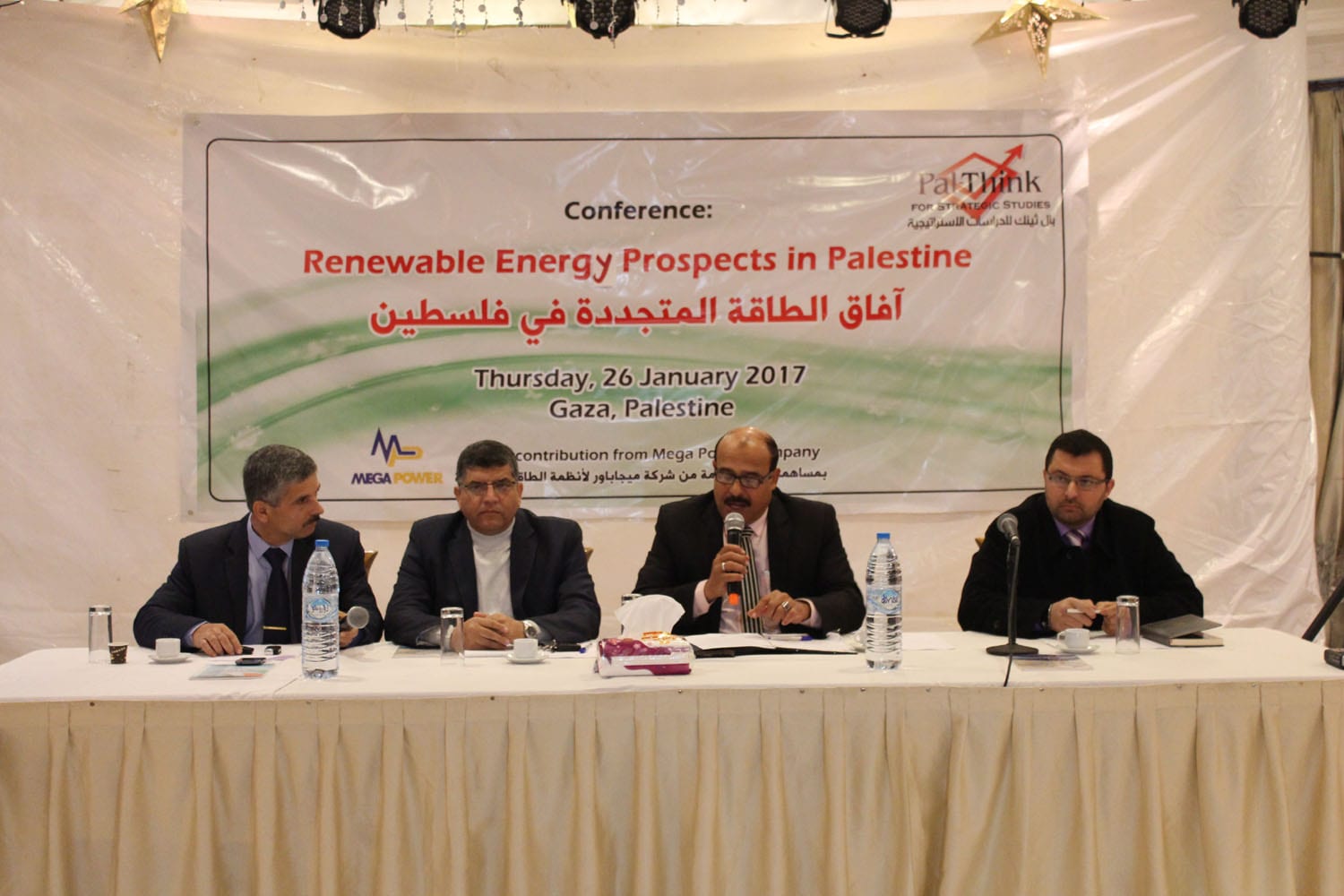
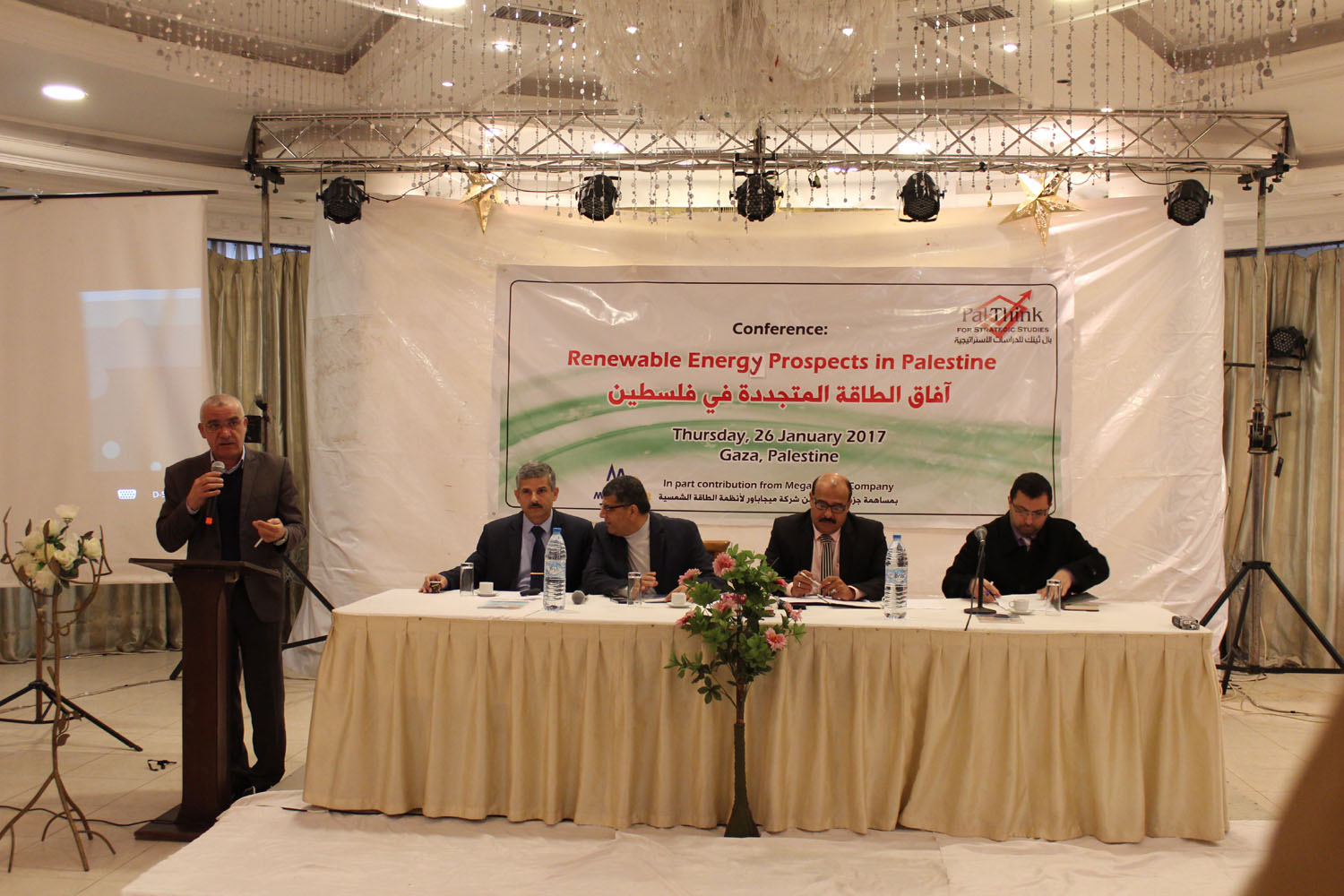
At a Pal-Think conference: turning to renewable energy helps solve the electricity crisis and opens paths to development
Omar Shaban warned against continuing to neglect renewable energy amid an electricity crisis that touches social peace and stability — including the Jabalia protests — calling at the «Prospects of renewable energy in Palestine» conference for a permanent search for alternatives.
- Author
- The editorial team
- Date
- 2017-01-30
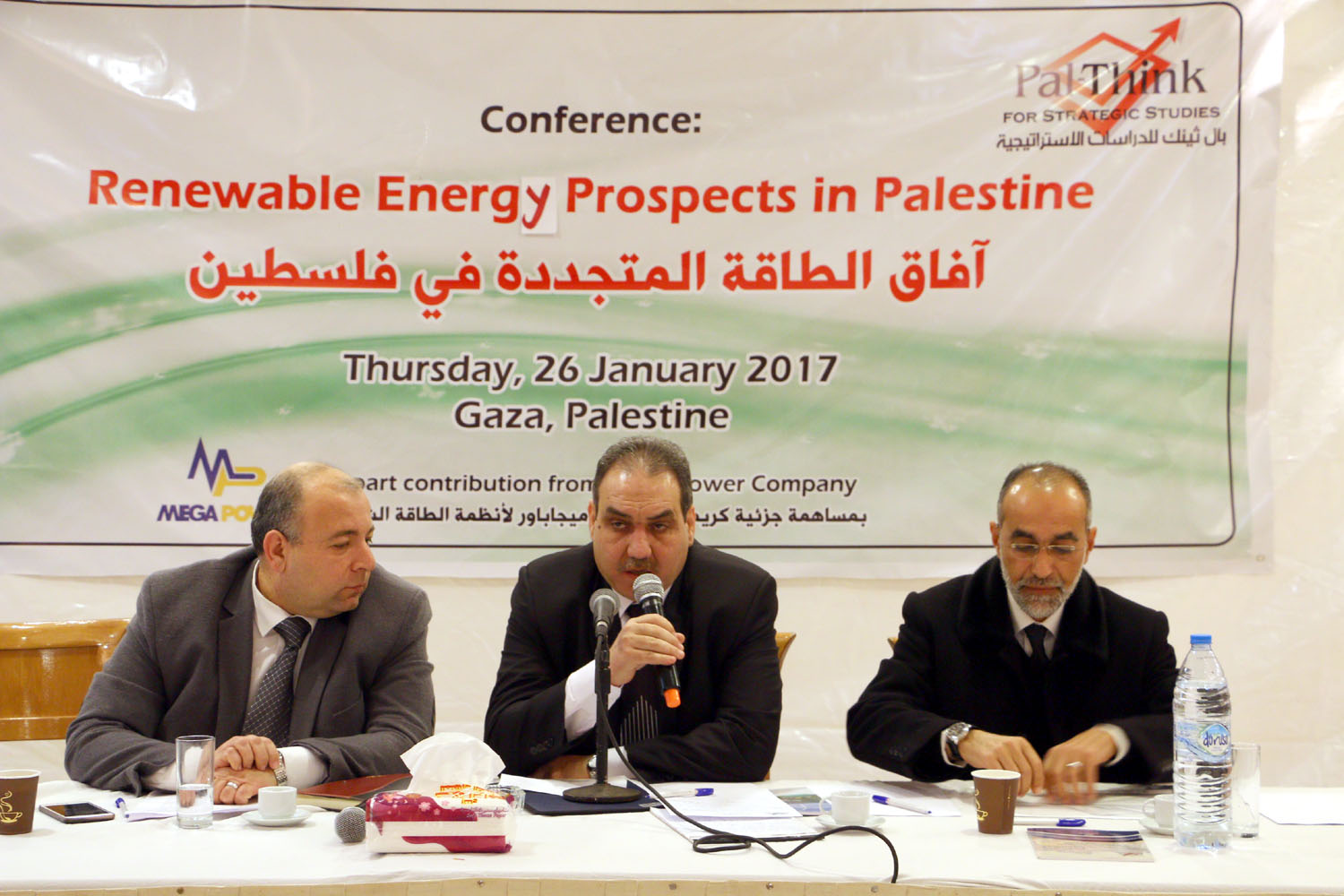
Omar Shaban, director of the Pal-Think Centre for Strategic Studies, warned against the continued neglect of renewable energy in light of the electricity crisis that touches communal peace and stability — especially the Jabalia demonstrations protesting the badness of the electricity schedule.
Shaban called, during the conference “The horizons of renewable energy in Palestine”, for the search for energy alternatives on a permanent basis, for their firm relationship to health, education, and culture, keeping pace with population growth, treating wastewater, and preserving the coming generations.
Shaban called on the civil and financial institutions and the banks to encourage the search for alternative energy sources, and to consider the electricity crisis a strong motive for searching for new sources for the sake of Palestine's future and life in the Gaza Strip — stressing the necessity of keeping the energy file away from the division and political polarisation.
Energy research occupies the universities
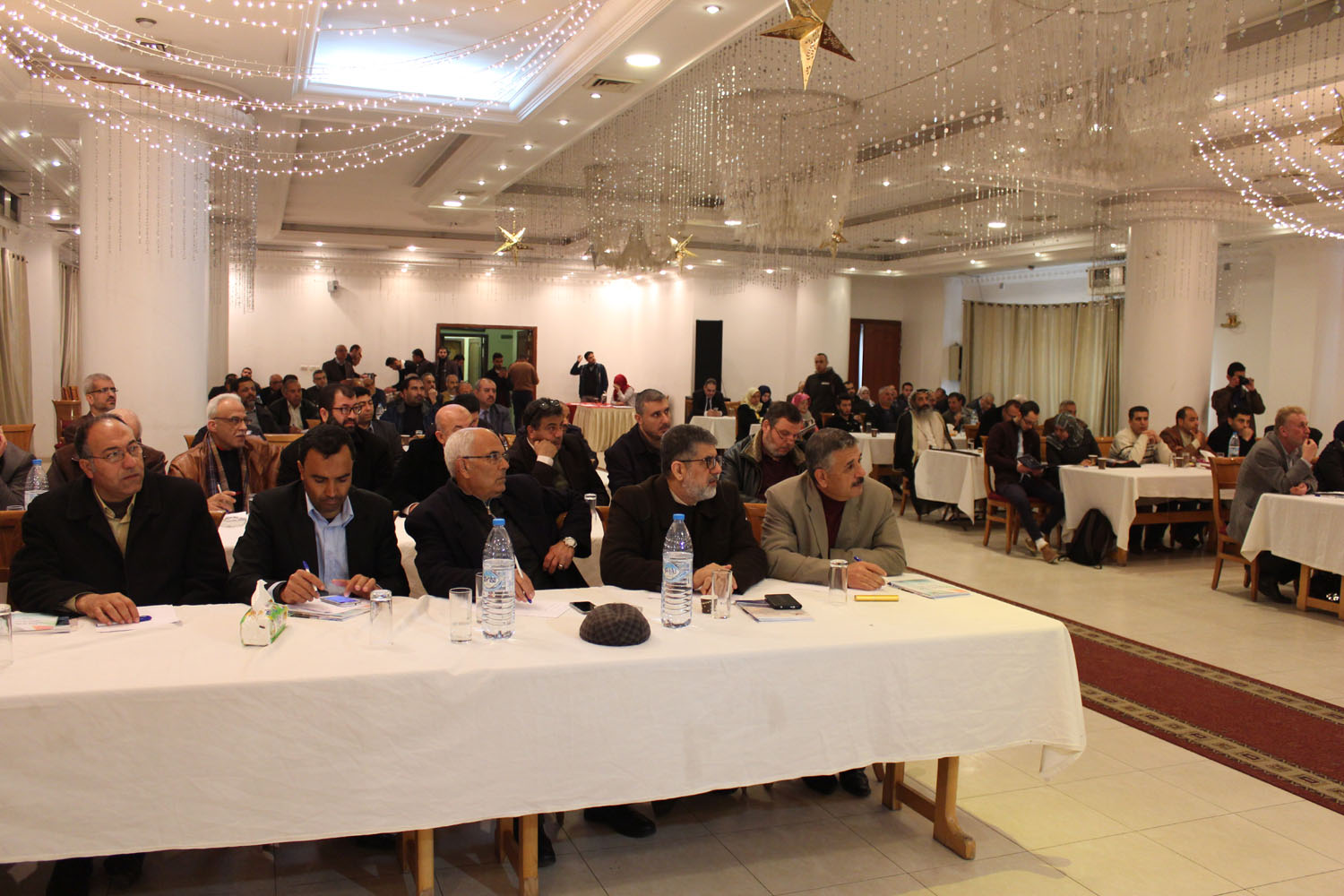
The conference's first session reviewed the universities' efforts in scientific research in the fields of renewable energy and its tie to sustainable development and social and environmental development. Prof. Dr Mohammed Abdel Ati, deputy dean of the Faculty of Engineering at the Islamic University, presented a review of the university's activities and its students' research in the field of renewable energy, with a presentation of applied models the university supervised that achieved important results in light of the electricity crisis — as well as the university's updating of the study plans related to energy, and parts of the university's buildings relying on solar energy.
For his part, Dr Mohammed Mushtaha, assistant to the vice-president for planning at the University College of Applied Sciences, spoke of the college's interest in energy sciences in light of the electricity crisis and the implementation of small projects to rely on solar energy in its faculties and workshops, and the technical contribution to lighting the Barcelona and Katiba parks in Gaza City — alongside research initiatives inside the college funded by international institutions.
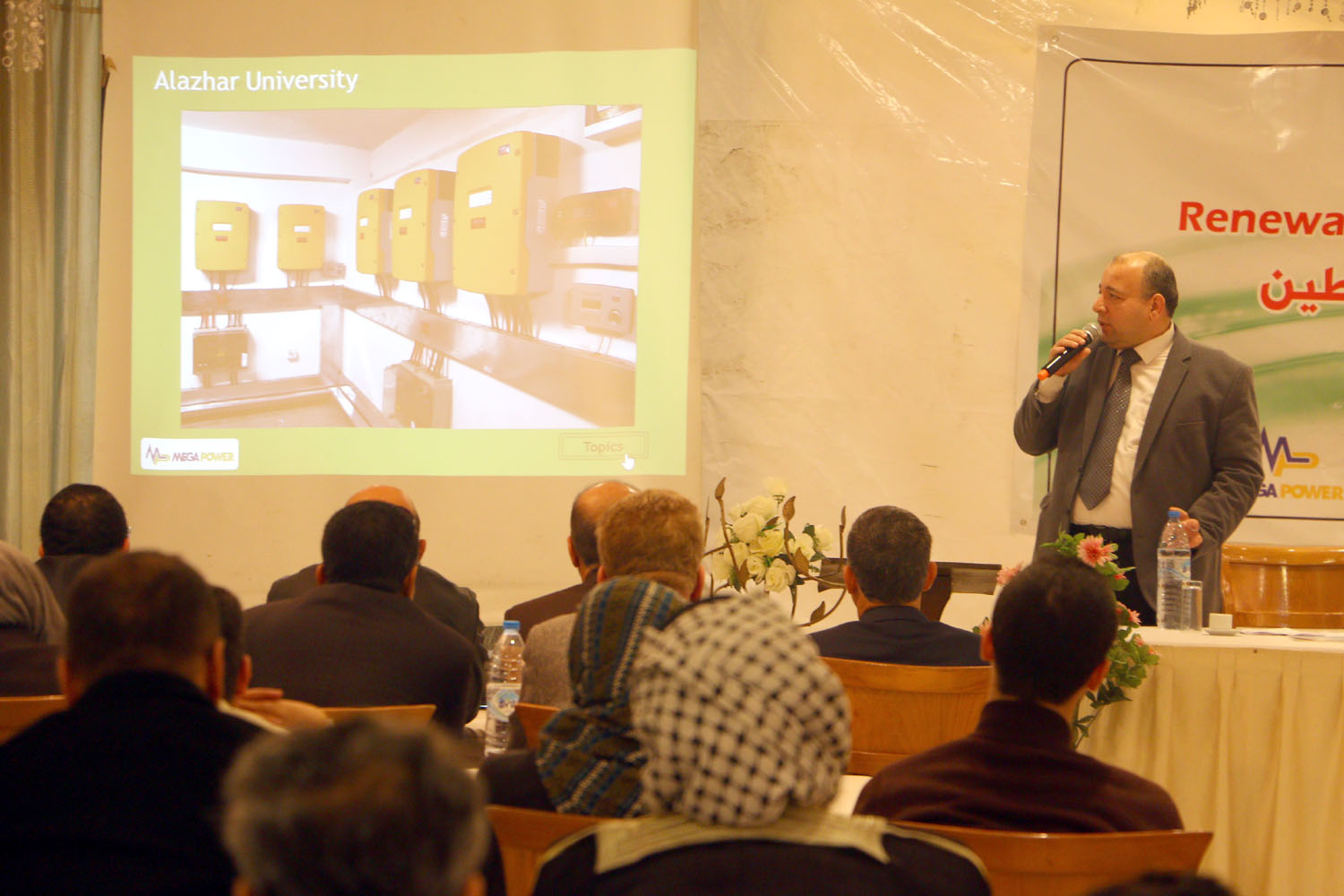
For his part, Prof. Dr Naji al-Dahoudi, lecturer at Al-Azhar University, made clear that the energy problem in the Gaza Strip is a political problem resulting from the division and its repercussions on the universities and all walks of life — among them the energy shortage as an additional burden on the universities' budgets, as the diesel expenses for running the electricity generators reached the amount of 20 thousand dollars monthly; which pushed the university toward solar energy with local and foreign funding to get rid of the running expenses, along with changing the lighting system to lighting of lower energy consumption that saved 20% of it — calling on all the Palestinian institutions to rely on solar-energy systems to contribute to solving the electricity crisis in the Gaza Strip.
Dr al-Dahoudi added that the university founded a research group specialised in renewable energy that managed to obtain funding for projects to produce solar cells, in addition to opening a bachelor's specialisation in renewable energy and obtaining the accreditation of the Ministry of Higher Education.
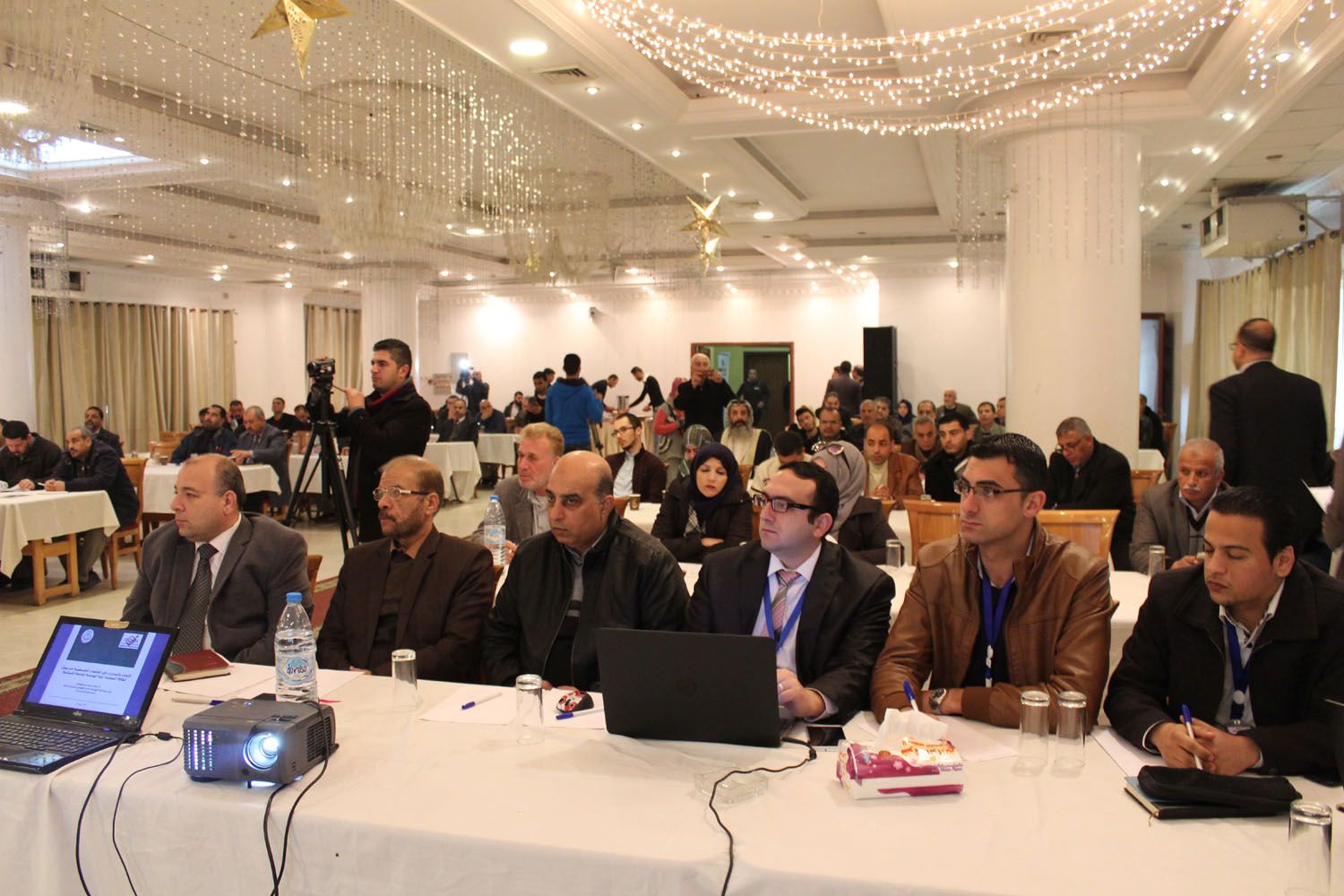
During the session, moderated by Dr Nasser al-Yafawi, participants placed the responsibility for the pressure on electricity on the Ministry of Industry and Trade, which allows the entry of electrical appliances that consume energy greatly, without attention to specifications and standards — especially concerning the life cycle of products, and batteries specifically, as solid and dangerous waste needing treatment. Others demanded wide work to spread the culture of renewable energy and to oblige new buildings to adopt solar energy. The former communications minister Imad al-Falouji said that renewable energy is a world demand as an alternative to traditional energy within a collective culture and awareness, and not the product of the current electricity crisis.
Dangerous figures and success without support
The director of public relations and media at the Chamber of Commerce and Industry of the Gaza governorate, Dr Maher al-Tabbaa, considered that the responsible Palestinian bodies failed in managing the energy file over ten years, and the victim is the citizen, who paid the price of electricity alternatives from his sustenance in sums totalling one and a half billion dollars — a sum sufficient to establish more than five solar-power-generation plants producing upwards of 1000 megawatts. Al-Tabbaa gave the example that one residential building paid for diesel during the crisis years upwards of a quarter of a million dollars, while a residential tower paid during the past year 2016 96 thousand shekels for diesel to generate electricity — as proof of the draining of the citizens, which requires turning seriously to alternative energy sources; pointing out that the power-generation plant transformed from an investment project into a curse after it achieved 110 million dollars in profits from 2003 to 2016 — economic figures that confirm the importance of turning to renewable energy.
Dr al-Tabbaa, who moderated the second session, affirmed the importance of the banks' role in funding renewable-energy projects, and the necessity of lowering the interest rate on loans for citizens' solar-energy projects and providing facilitations within the banks' social responsibility in light of their enormous annual profits.
Eng. Haitham Ghanem, director of the office of the PalSolar company in the Gaza Strip, said that the Strip is counted the largest importer of advanced solar-energy systems compared with the surrounding states despite the blockade imposed on it — which increased the stock of experience among the national companies working in this field, through their implementation of solar-energy projects in the schools, institutions, and residential towers.
Eng. Ghanem demanded the establishment of major projects of strategic character in the field of solar energy to contribute alongside the mains electricity, encouraging the international donors to fund solar-energy projects for the new residential towers within the reconstruction projects, and lowering the taxes on the import of solar-energy systems.
Eng. Ghanem called on the Ministry of National Economy, the Energy Authority, and the specialised companies to determine the technical specifications of the solar-energy systems allowed to be installed in the Gaza Strip, to protect the citizen and reduce the number of those doubting the capacity of solar-energy systems.
For his part, Eng. Ali Hussein, director of the “Mega Power” company for solar-energy systems, made clear that his company set about converting all the premises of the Jawwal company to rely on solar energy, in addition to funded projects done at Al-Azhar University, and an operating theatre at the Al-Ahli Hospital relying 12 hours on solar energy — as well as a number of private-sector institutions, among them dairy factories such as Abu Eita and al-Sawafiri, a number of banks, the Kuhail fish-farming farm, and some 500 citizens' homes during 2016 converted to solar energy by their own decision after the success of several experiments, which contributed to solving a part of the electricity crisis.
Renewable energy is a solution, not a substitute
Eng. Fathi al-Sheikh Khalil, deputy head of the Energy Authority, affirmed that using alternative energy needs a communal culture, through easing the pressure of loads on the network and the citizen's use of electricity in a natural manner — making clear that alternative energy has not until now reached the stage of dispensing with traditional energy, and its role is confined to easing the crisis in the energy sector.
Eng. al-Sheikh Khalil added that the Energy Authority provided technical support for all the solar-energy projects and supervision over them, such as supplying the industrial zone with the amount of 7 mega with World Bank funding after persuading it of the importance of solar energy, and the project will end with the end of the current year.
Al-Sheikh Khalil said that the Energy Authority supervised the production of 2 megawatts and the installation of solar-energy systems, with the adoption of solar-energy meters enabling the citizen to obtain the price of pumping into the public network the electricity exceeding his need, within the live network.
For his part, the director-general of general administration at the Gaza municipality, Mohammed Hamada, said that the municipality provided lamps for several streets and parks in Gaza City, and seven collection centres in Gaza — affirming that the municipality supports the legislation of laws for all the municipalities preventing the use of the whole area of house roofs and leaving a place for installing solar-energy systems atop the residential buildings.
For his part, Eng. Samir al-Louh, director-general of the general administration of buildings and facilities at the Ministry of Public Works and Housing in Gaza, said that should every family in the Strip save 100 watts through using LED lighting, it would save the equivalent of a generator at the power-generation plant producing 25 megawatts — calling for the use of the surfaces of the schools, public buildings, and mosques to produce solar energy, and pointing out that 200 residential buildings should be using solar energy at present. The heated discussion and the interventions in the third session were moderated by the director of Pal-Think, Omar Shaban, asking: why did the Ministry of Public Works and Housing not adopt the solar-energy system during the building of the Hamad residential city and devote a part of the budget to solar energy?
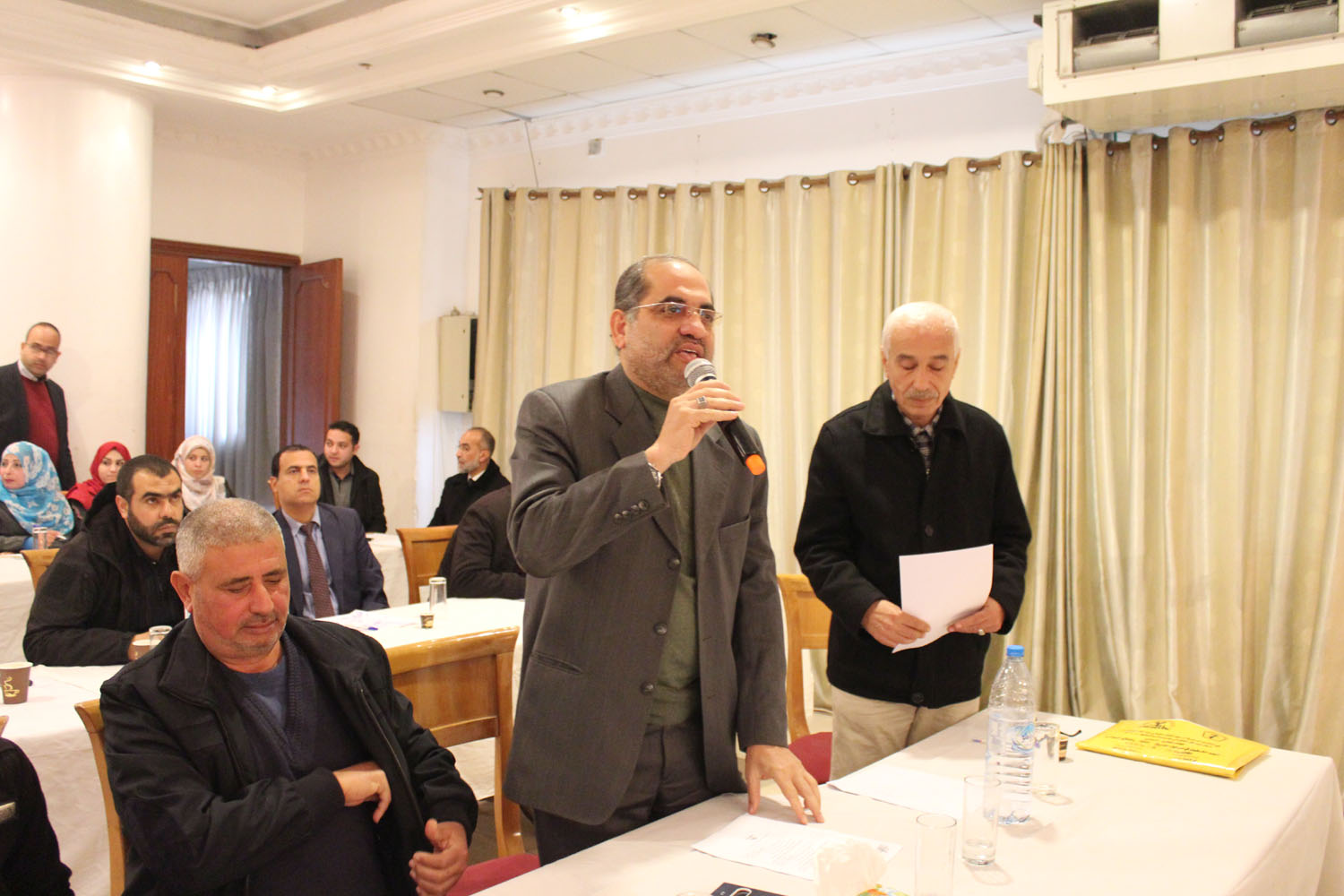
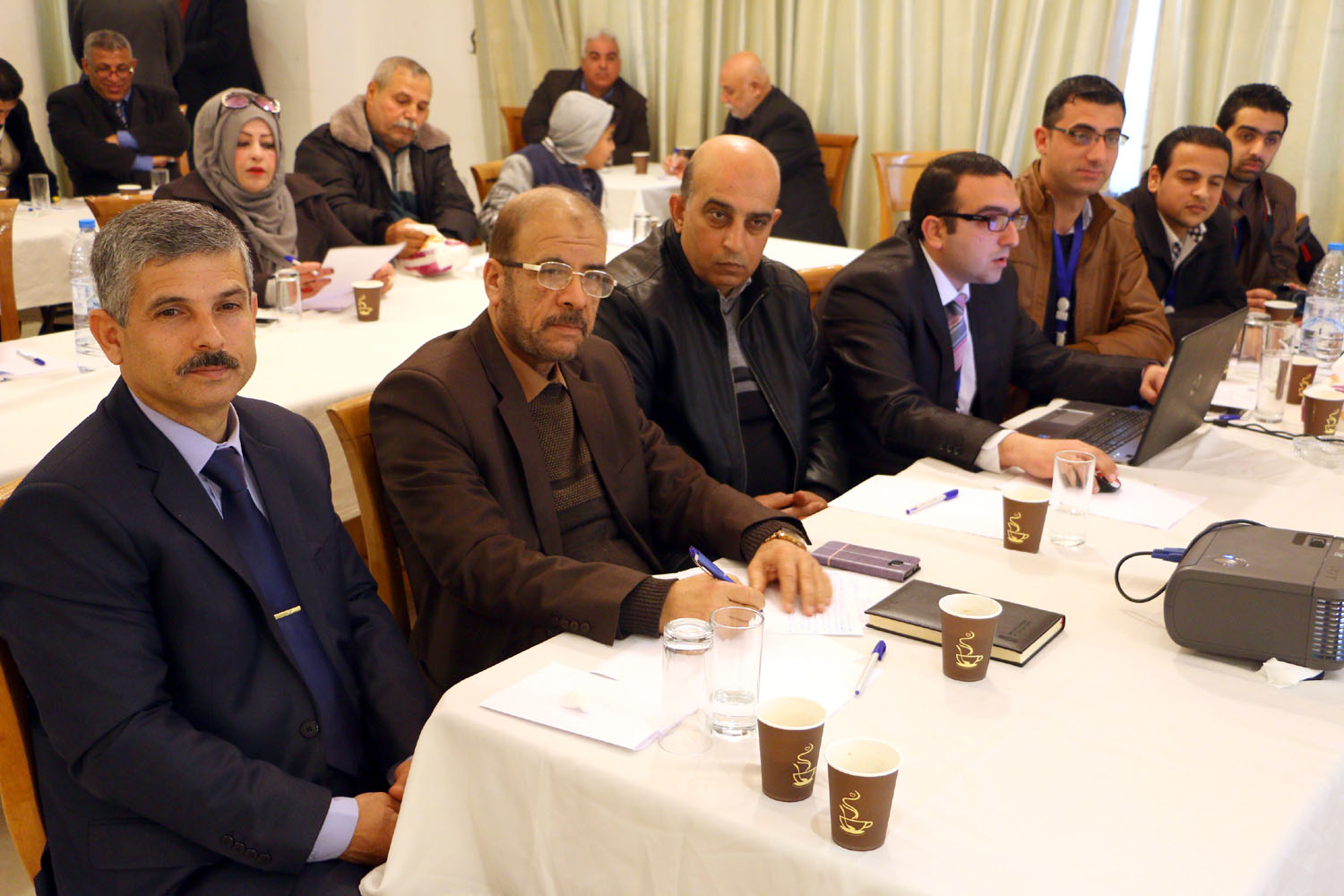
The participants conducted an intensive discussion around the electricity crisis and renewable energy — its weak points, such as its high cost in light of deteriorated economic circumstances and its need for battery renewal, and its strong points, embodied in contributing to solving the electricity crisis and saving over the medium and long term.
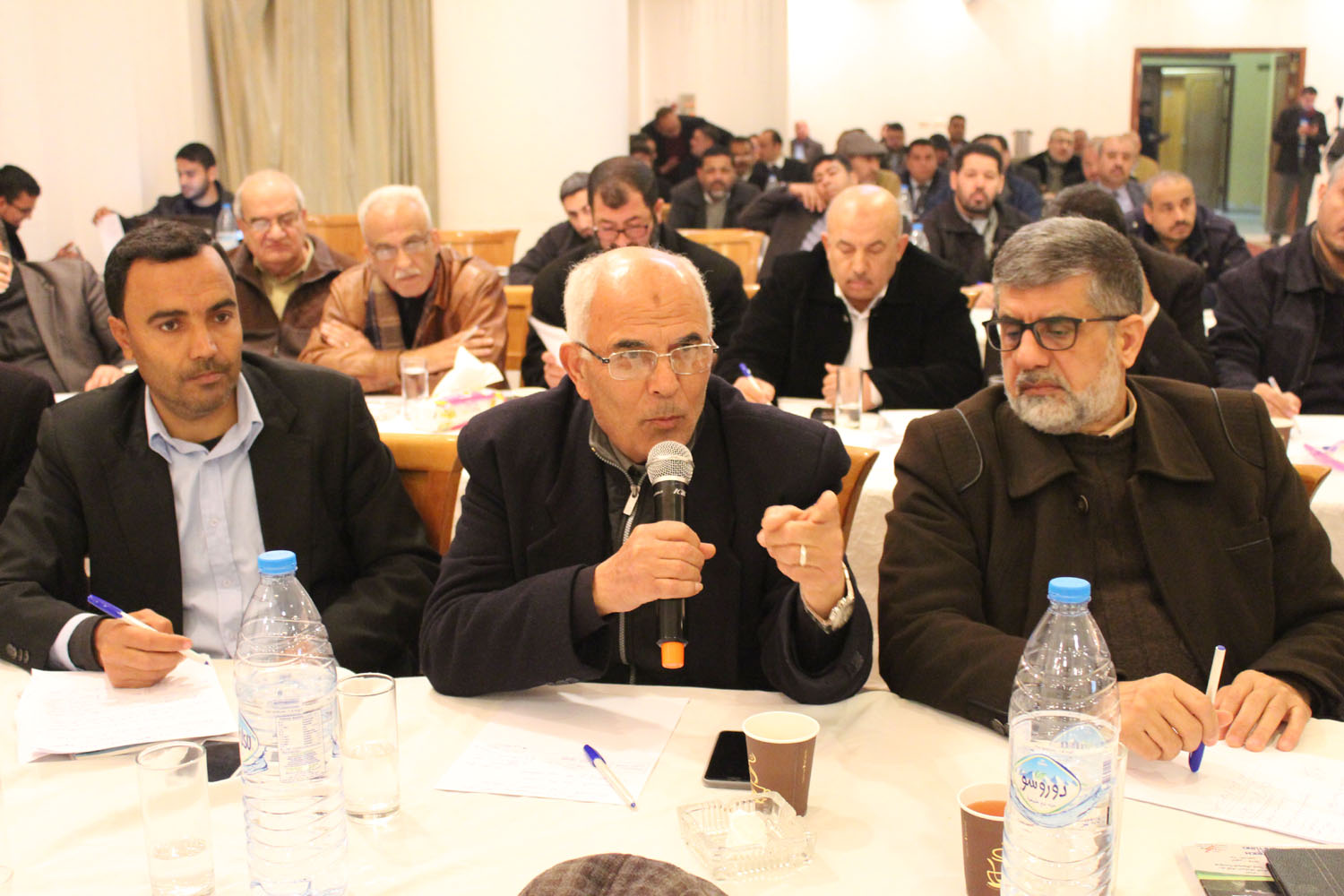
It appeared plain through the attendees' interventions how great the distress and frustration are from the electricity crisis, and the seriousness of the search for individual and collective solutions to compensate for the electricity shortage.
The participants in the conference's sessions concluded with important results and recommendations, most prominently:
- Considering renewable energy a pressing necessity for development and not only a solution to the current electricity problem..
- The government setting legislation and policies that contribute to the transition to reliance on renewable energy as a better alternative.
- The government lifting the taxes from imports related to renewable energy and its systems.
- Activating the oversight of specifications and standards over renewable-energy systems and allowing the import of the newest and best of them.
- The Energy Authority implementing strategic projects relying on alternative energy, and supporting citizens' reliance on it through organised, supported projects over the medium and long term
- The financial institutions and banks taking part in supporting commercial and personal renewable-energy projects through eased financial loans.
- Setting legislation that serves renewable-energy projects and approving sufficient areas atop the buildings and institutions to accommodate solar-energy systems..
- Obliging all new residential projects to rely on renewable energy and founding structures that help toward that.
- Encouraging the private sector to invest in renewable energy and its production and the recycling of its waste in a way that guarantees environmental safety.
- Carrying out communal awareness campaigns to strengthen the culture of using and relying on renewable energy, correct the wrong information about it, and present guidance and direction for dealing with it in a sound and effective manner.