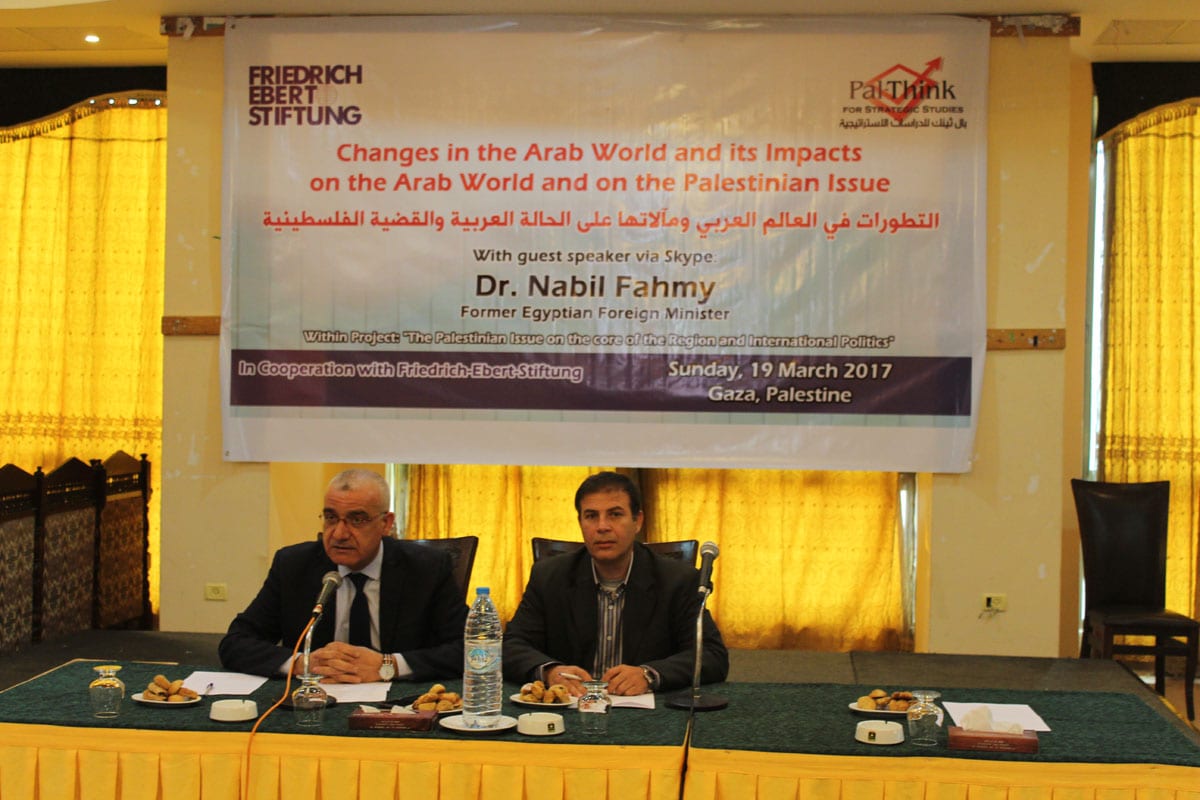
Seminar: Developments in the Arab world and their bearing on the Arab condition and the Palestinian question
Former Egyptian foreign minister Nabil Fahmy judged the current Israeli government unready for peace and no serious partner for it — calling on Palestinians and Arabs to codify and protect the foundations of the peace process and expose Israel's violations of international law.
- Author
- The editorial team
- Date
- 2017-03-20
The former Egyptian foreign minister Nabil Fahmy considered that the current Israeli government is not ready for peace and does not form a serious partner for it. Fahmy stressed that what is required, Palestinian-wise and Arab-wise, at present is codifying and protecting the foundations of the peace process at all levels, and highlighting Israel's contraventions of international law, especially at the level of settlement.
Fahmy's statements came today, Sunday, via Skype from Cairo during a seminar organised by the Pal-Think Centre for Strategic Studies in cooperation with the German Friedrich Ebert Foundation, whose director Usama Antar welcomed the great Egyptian guest, under the title: “The developments in the Arab world and their destinies for the Arab condition and the Palestinian cause”, at the Commodore Hotel west of Gaza City.
The discussion session was opened by Omar Shaban, director of the Pal-Think Centre, who presented a brief explanation of the “Pal-Think” institution and its wide and diverse activities, with the goal of joint reflection and interaction in order to find ways of understanding the reality and putting forward ideas and solutions for the important issues the institution raises, through its hosting of experts and political personalities, local, Arab, and international — among whom recently was the Palestinian member of the Israeli Knesset, Haneen Zoabi — welcoming Nabil Fahmy, the former Egyptian foreign minister, known for his sagacity, breadth of knowledge, and culture through his long work in the Egyptian diplomatic corps and his heading of the Egyptian foreign ministry in a delicate period Egypt passed through.
The former Egyptian foreign minister said that “Israel attempts to dilute the foundations of the comprehensive solution of the Arab–Israeli conflict, embodied in the two-state solution, through procrastination, settlement expansion, refusing to engage with the Arab initiative, and placing the cart before the horse through putting forward the regional solution — which confirms the absence of a true peace opportunity with the current Israeli government.”
The Egyptian minister called on the Palestinian leadership to always declare its readiness for peace and its acceptance of negotiations on sound foundations, with Israel's acknowledgement of commitment to the two-state solution, away from formalistic negotiation. Fahmy affirmed that the Palestinian cause is a national cause for the Egyptians, and Egypt holds fast to the necessity of establishing a Palestinian state on the borders of the fourth of June with Noble Jerusalem as its capital, considering its establishment an Egyptian national-security matter — adding that it is not in Egypt's interest to establish a divided Palestinian state.
The necessity of Palestinian accord
The Egyptian minister considered the Palestinian situation regrettable as a result of the internal division, which requires finding a means to bring about accord, a common language, and a gathering frame for difference and agreement without touching the pillars of the Palestinian cause — considering that the most dangerous thing to the Palestinian cause after the occupation is the division.
The Egyptian minister placed the regional responsibility on the Hamas movement as a result of its decision of control over the Gaza Strip, considering that the Hamas movement is responsible security-wise for the Gaza Strip's borders with Egypt.
Fahmy made clear that describing the relationship between Egypt and the Palestinian leadership as in danger is exaggerated talk, and there is no rupture; likewise whoever claims it is fine is not accurate — noting that Egyptian–Palestinian relations are not active, because both sides are occupied with internal issues, and that is an understandable but unacceptable reason, which touches the Palestinian interest and Egyptian national security; and this preoccupation must not continue — expecting Egypt to become active on the Palestinian track in future, and stressing the importance of opening a comprehensive, frank Egyptian–Palestinian dialogue taking up all the details.
The Egyptian minister considered that the Arab situation is on the edge of the political abyss, and the Arab world's influence has retreated much — the evidence being that in the burning issues in Syria, Libya, and Yemen the non-Arab parties are counted a strong player.
The Jordan summit, an opportunity for change
Fahmy considered the Jordan summit an opportunity not for solving the impossible issues, but an opportunity for Arab–Arab frankness and an affirmation of the constants that govern the common Arab interest, away from courtesies and squabbles — for fear of the option of treading in place or collapse and the absence of effective influence on events.
Recovering Syria: Fahmy demanded the declaration of an Arab proposal for dealing with the situation in Syria, that it be for all Syrians, with the preservation of the territories' unity and the preservation of communal diversity.
The Egyptian minister considered that the Yemeni issue has transformed from an internal dispute into a regional dispute within a new regional geopolitical map.
Fahmy said he fears neither difference nor agreement, but he fears misunderstanding from the absence of frankness among the Arabs generally — making clear that the future begins, Arab-wise, with the reform of the self and the activation of intra-Arab relations in an expanded form, and immersion in the international community as an effective party and not in the frame of reaction, in order to recover the Arab standing.
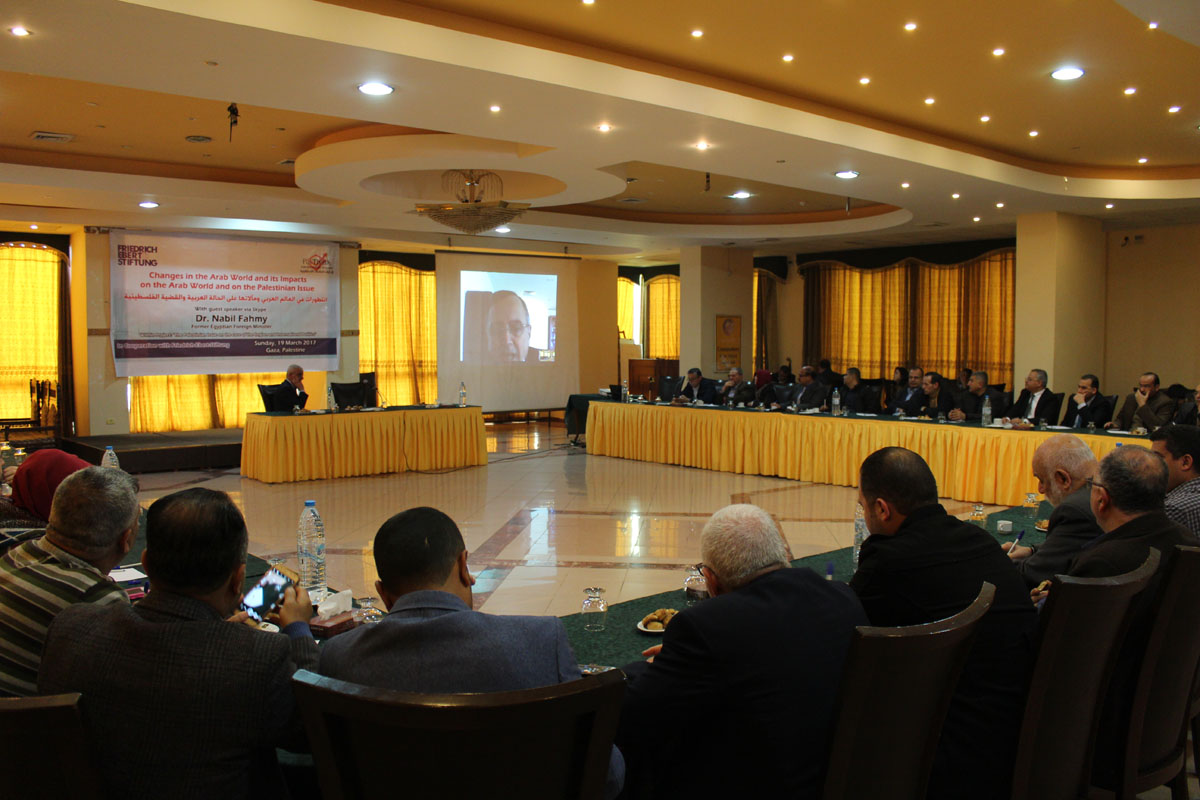
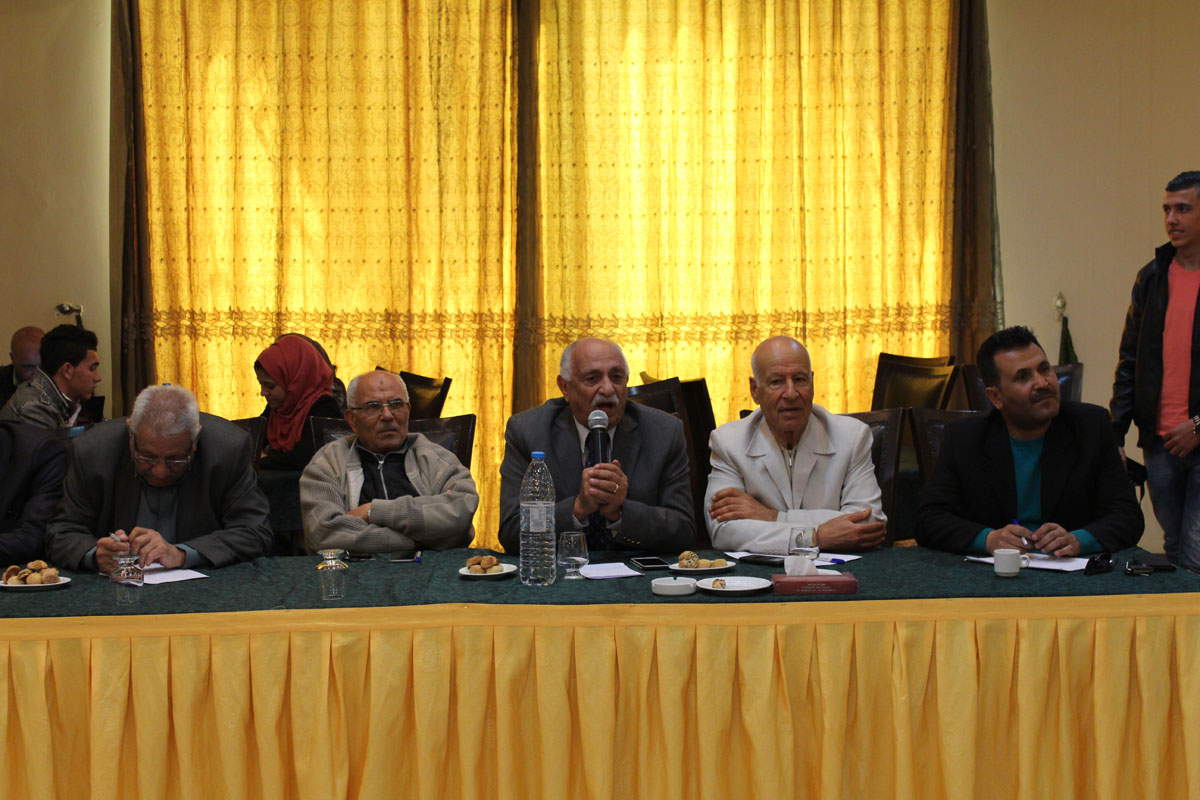
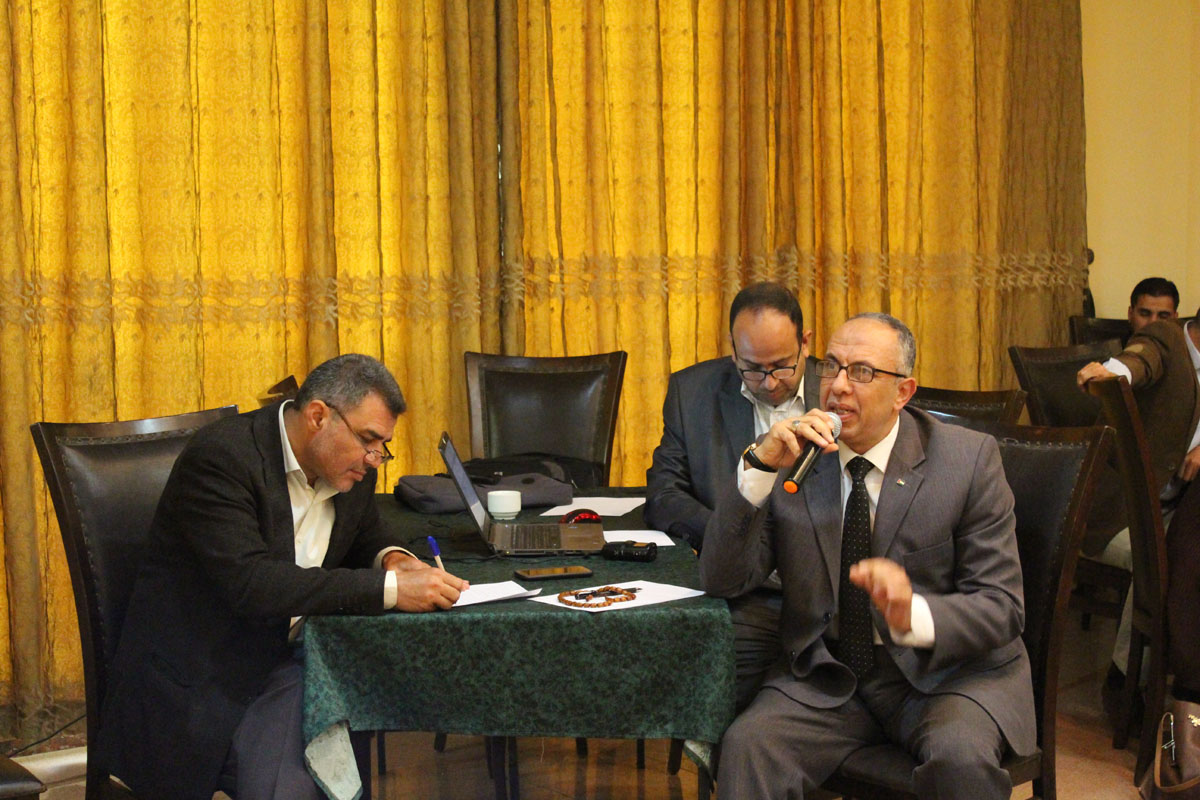
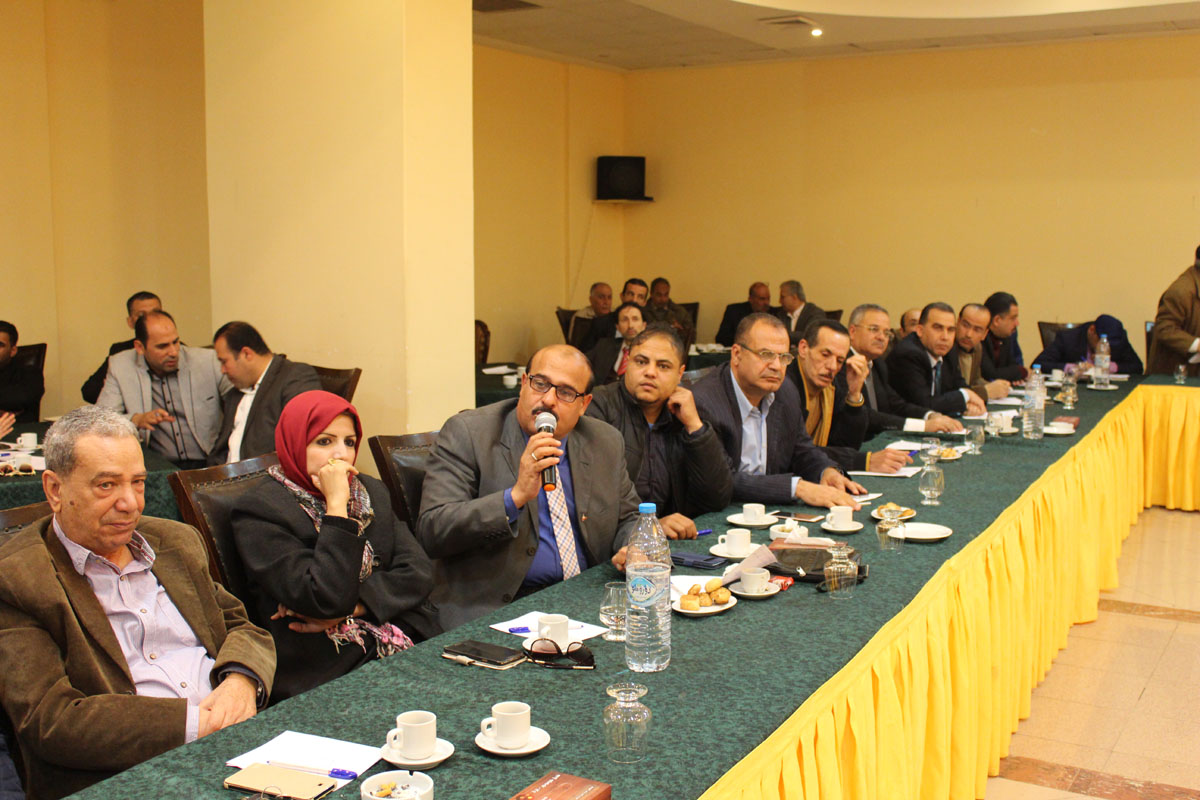
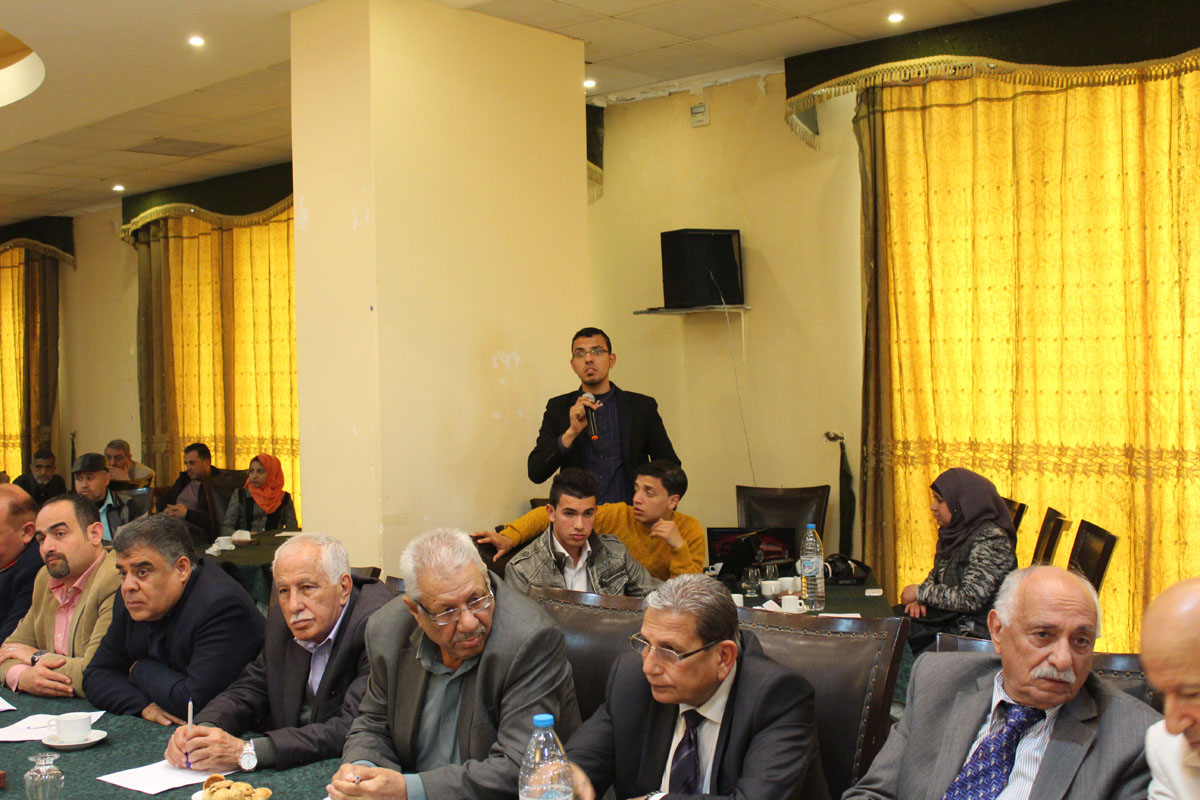
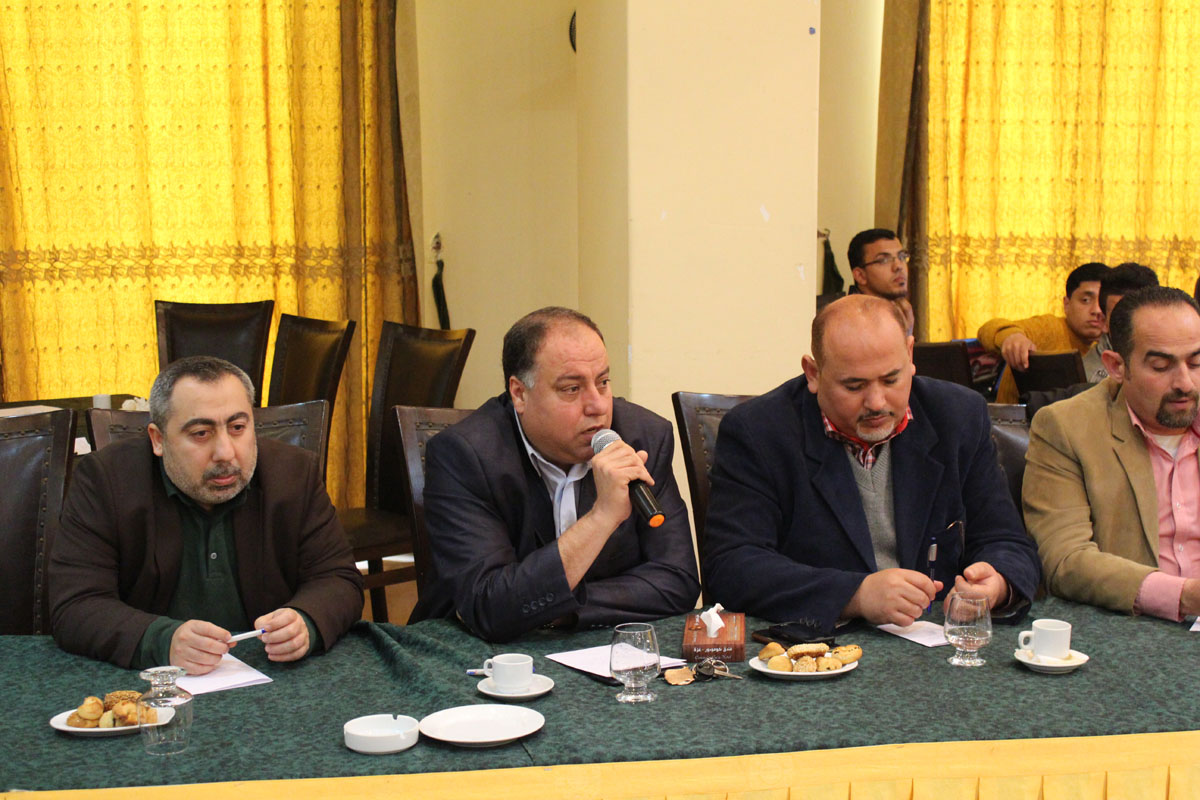
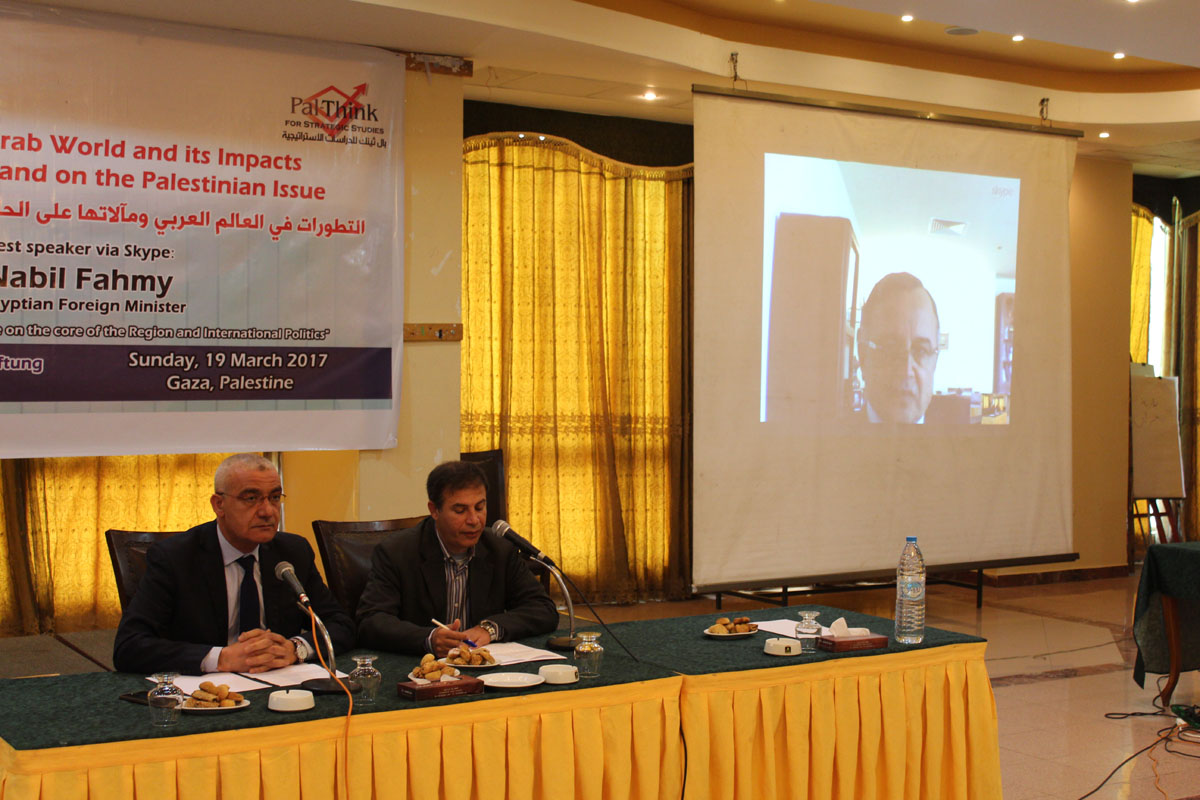
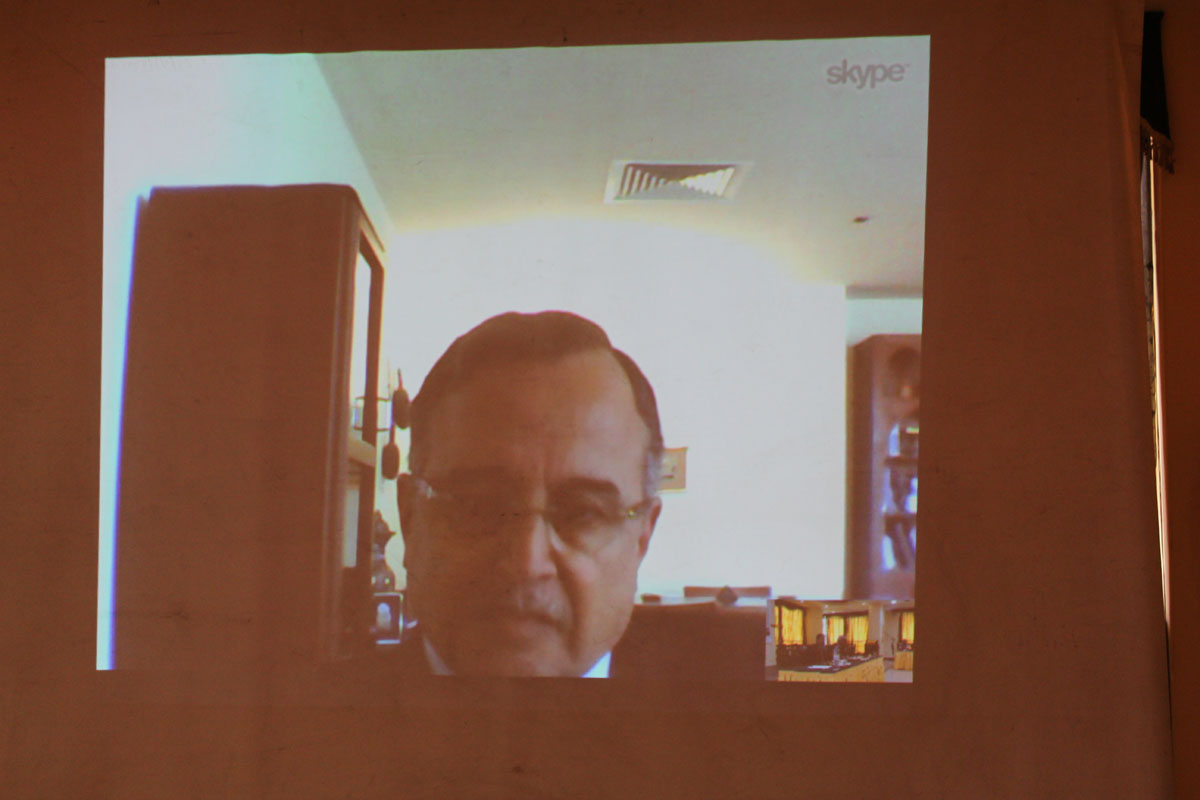
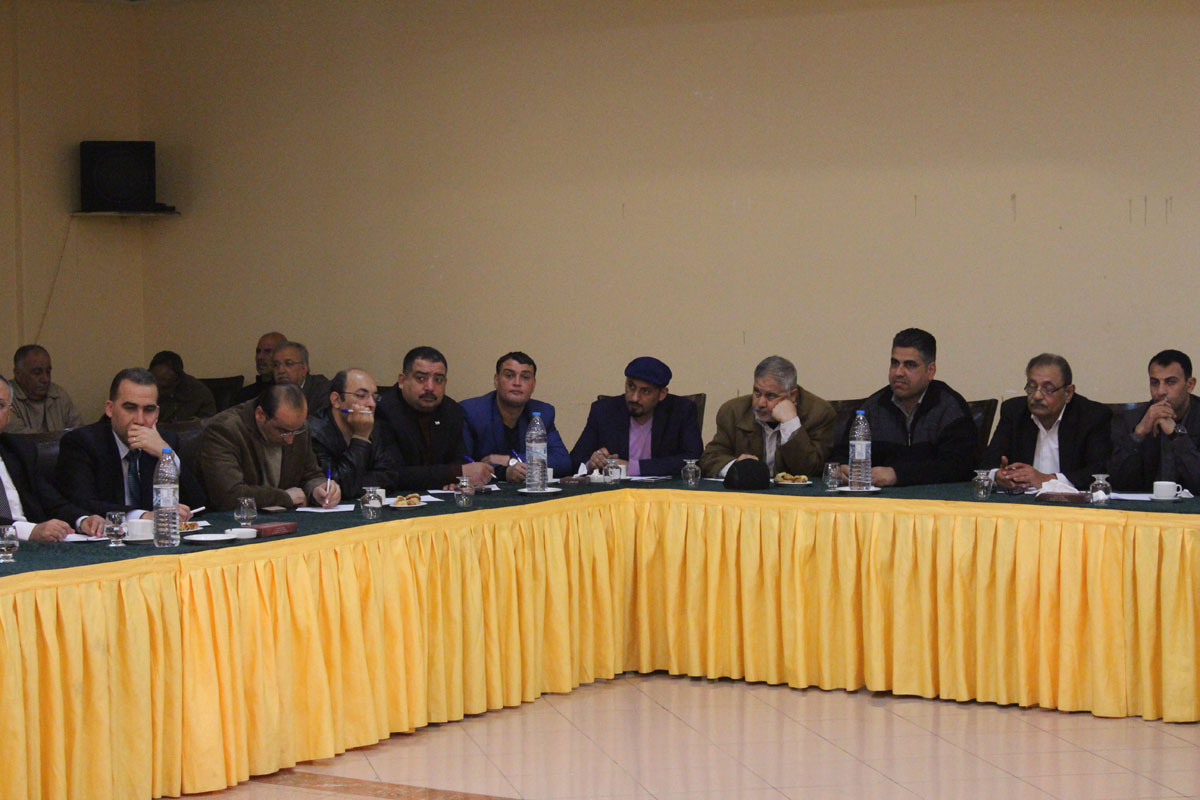
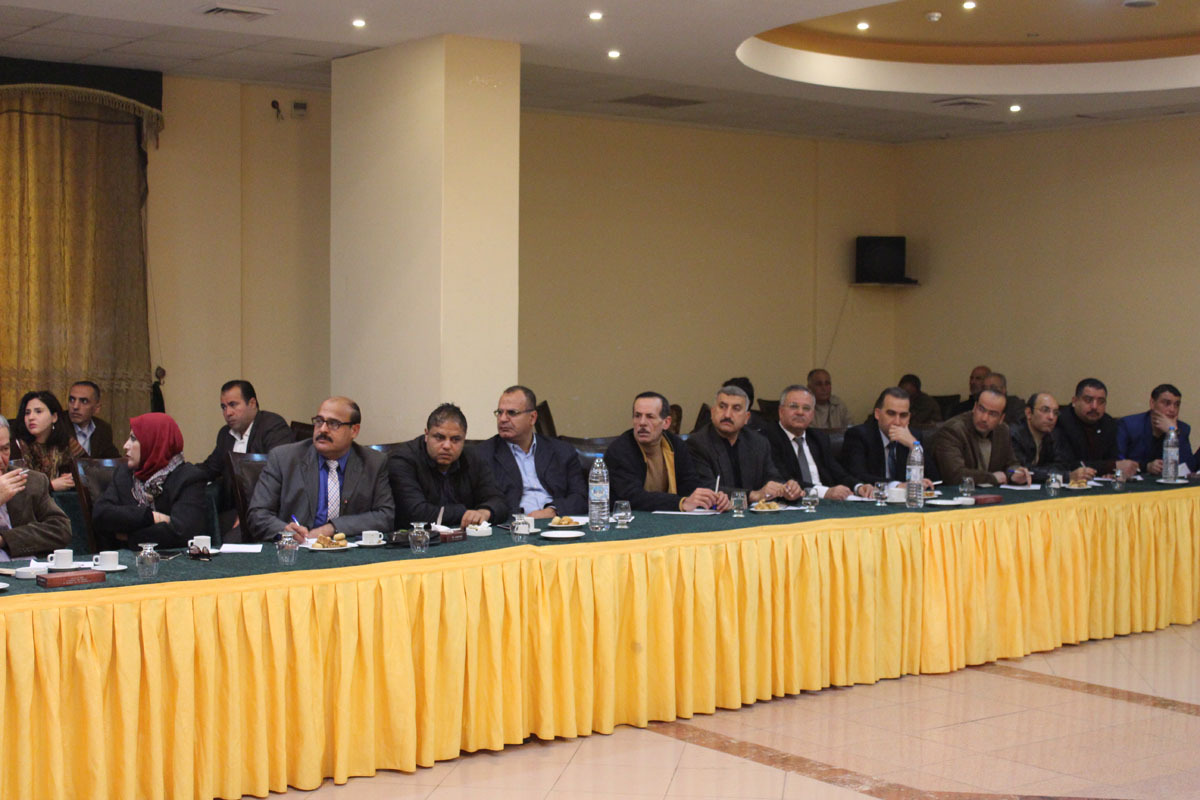
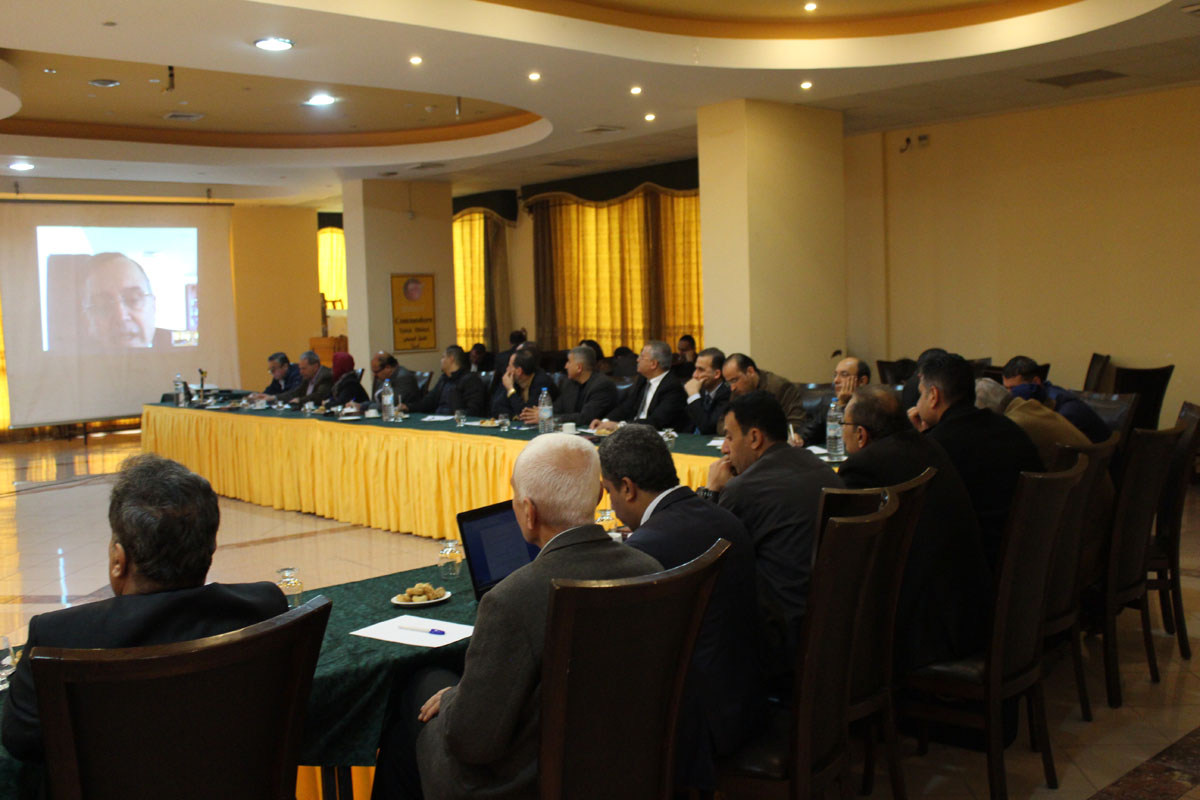
Taking part in the seminar was a wide spectrum of political personalities, academics, writers, media people, society notables, and civil society activists, and a large number took part with questions that took up in an intensive and detailed manner Palestinian–Egyptian relations and their future, especially the relationship with the Gaza Strip. For his part, the former Egyptian minister answered the attendees' questions, expressing his happiness at the dialogue with Palestinian personalities from the Gaza Strip, which he had previously visited several times to meet the late Palestinian president Yasser Arafat, and he concluded his replies with his hopes for the accomplishment of Palestinian accord and thanked the Pal-Think Centre for the hosting.