The project on civil society organisations' role in national community unity concludes
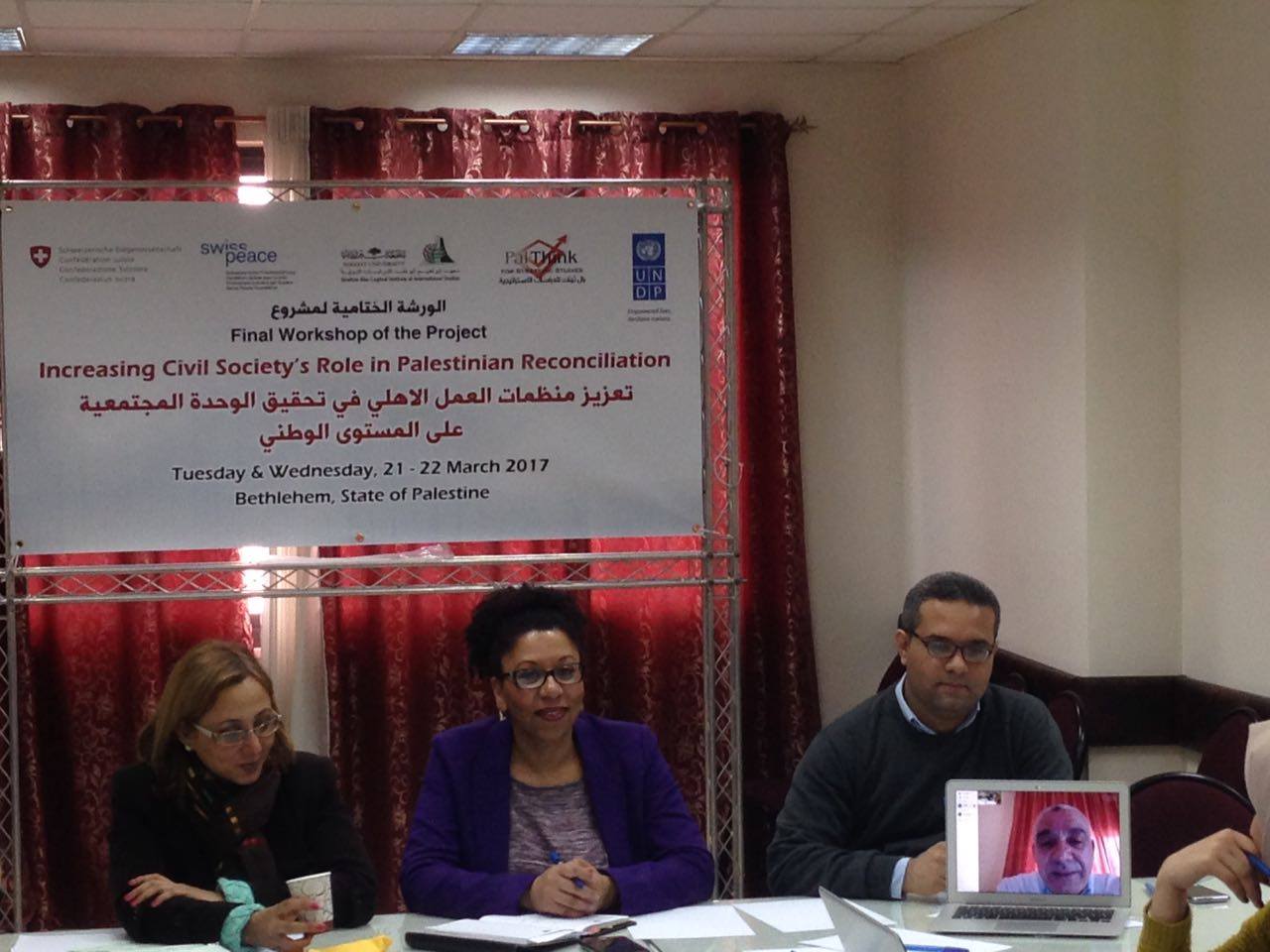
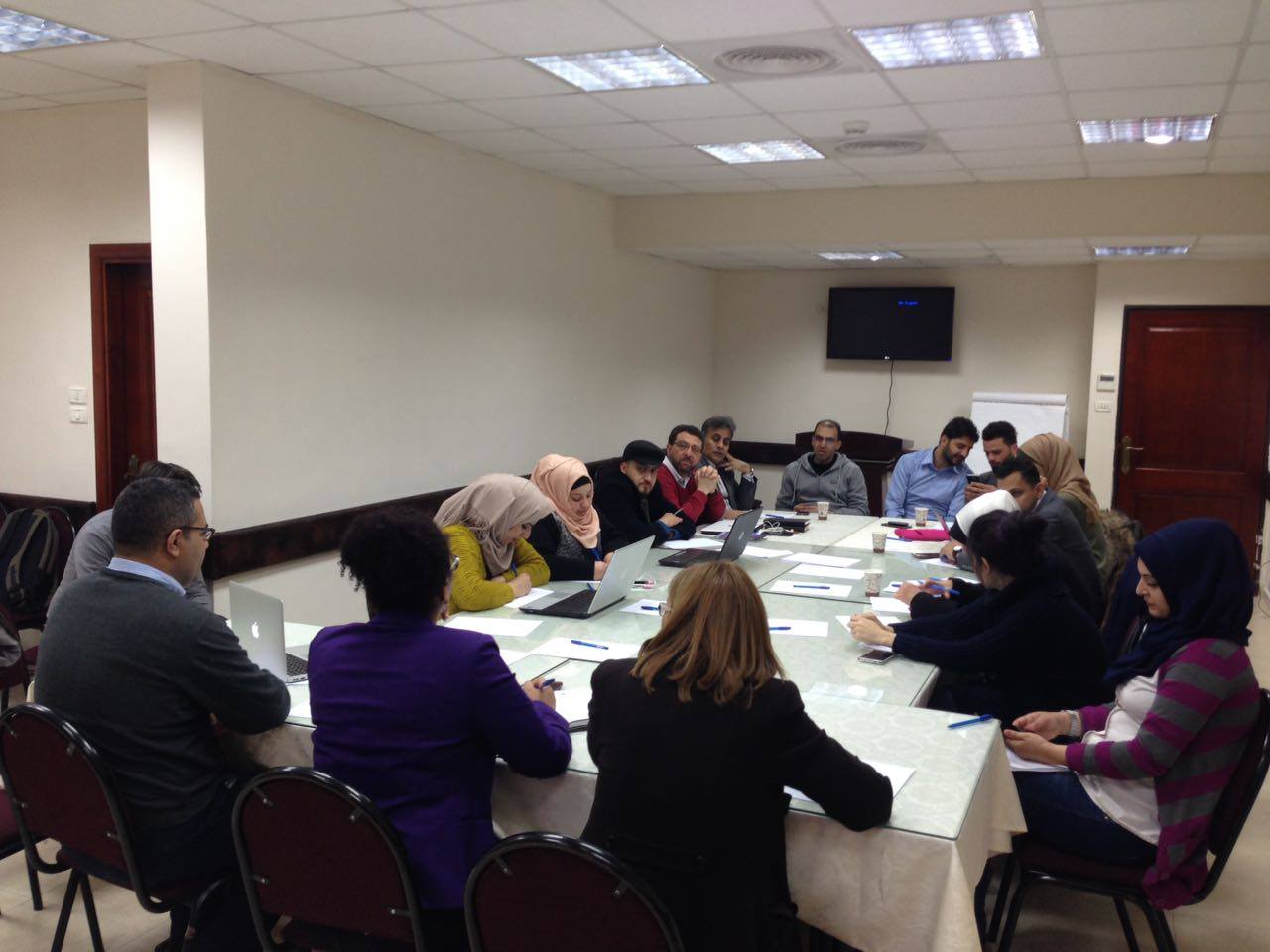
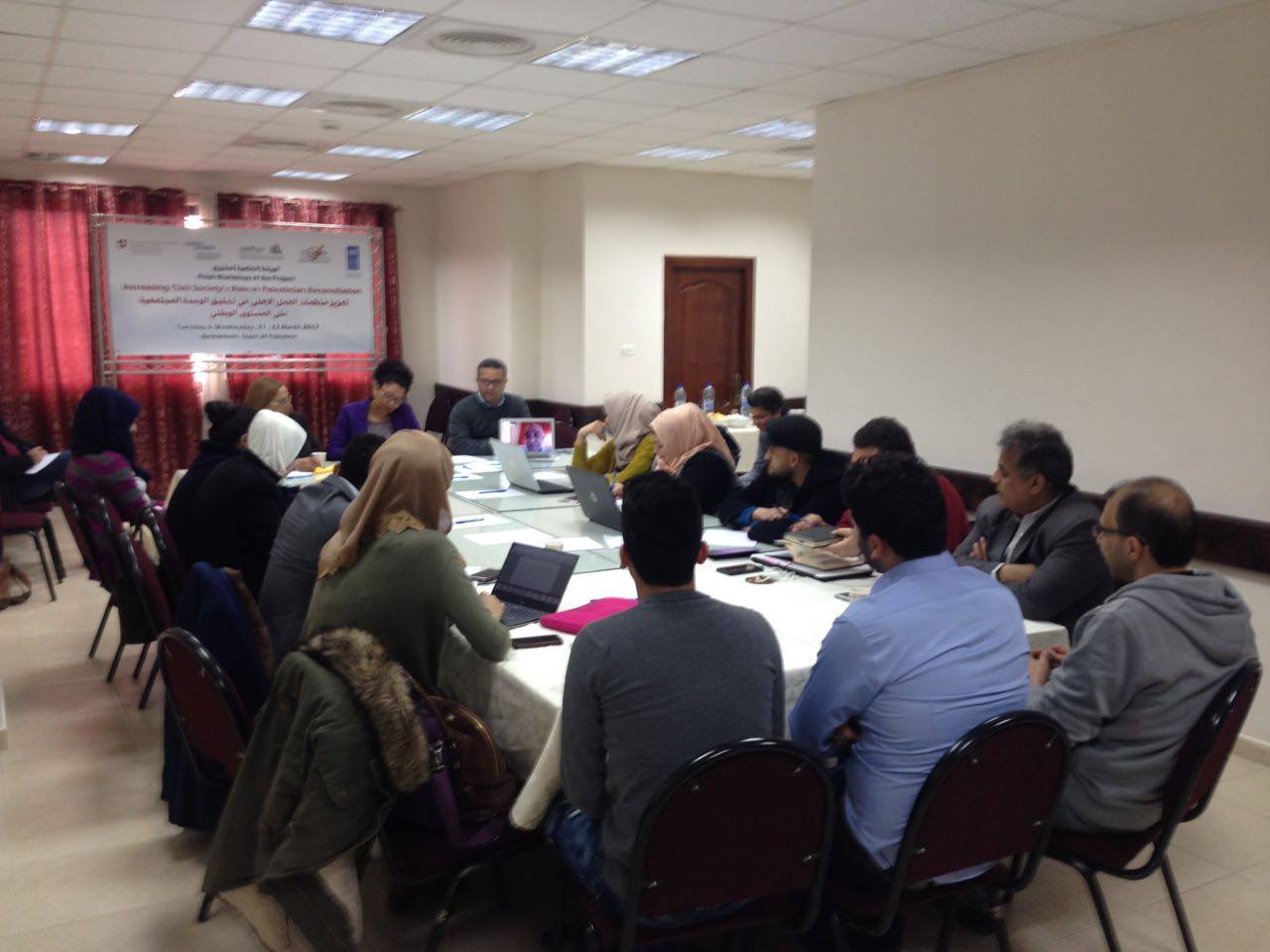
With grassroots organisations from the northern governorates and Gaza, and representatives of REFORM, the Swiss representative office and UNDP, Pal-Think held a two-day workshop in Bethlehem under the project strengthening civil organisations' role.
- Author
- The editorial team
- Date
- 2017-03-26
Bethlehem — With the participation of a number of representatives of the grassroots civil institutions from the northern governorates and the Gaza Strip, and with the attendance of representatives from the REFORM institution and representatives of the Representative Office of Switzerland to the Palestinian National Authority and the United Nations Development Programme (UNDP), Pal-Think for Strategic Studies organised a workshop that continued over two days in the city of Bethlehem, within the project of strengthening the role of civil-work organisations in strengthening reconciliation and national unity, whose implementation is supervised by Pal-Think for Strategic Studies, the Ibrahim Abu-Lughod Institute of International Studies, and the Swiss institution Swisspeace. This workshop comes at the close of the third stage of the project, which was implemented in three principal stages: the first stage began with carrying out a survey study to evaluate and review the role of some civil society organisations in the field of achieving national reconciliation, whose results were presented on 8 December of the year 2015; as for the second stage, a conference was carried out in mid-March 2016 in Gaza City in which many representatives of civil organisations from Palestine's governorates took part; and the third stage comes with the goal of strengthening work and practical coordination among the partner institutions and others, and moving from the stage of diagnosis and discussion to the stage of action.
The workshop held in Bethlehem, after the arrival of a delegation from the partner institutions from the Gaza Strip and the northern governorates, comprised 9 initiatives from the Gaza Strip and 8 initiatives from the northern governorates. The initiatives carried out within the project were presented and discussed with the funders in attendance, and during it the most prominent challenges and impediments that faced the initiatives' implementation were touched on, and how to find solutions for them, and the success stories were presented as a final output of the initiatives.
The encounter was opened by Dr Lourdes Habash, director of the Ibrahim Abu-Lughod Institute of International Studies — Birzeit University, welcoming the attendees and touching on the goal of these initiatives: turning the page of the division and strengthening national unity, for their indication of the possibility of their implementation if adorned with Palestinian will and feeling.
Habash affirmed the necessity of the existence of a pressing force to end the Palestinian division, which has drained much of the Palestinians' blood — pointing out that continuation in the project depends on the final evaluations and the institutions that are part of the initiatives and the possibility of their continuity.
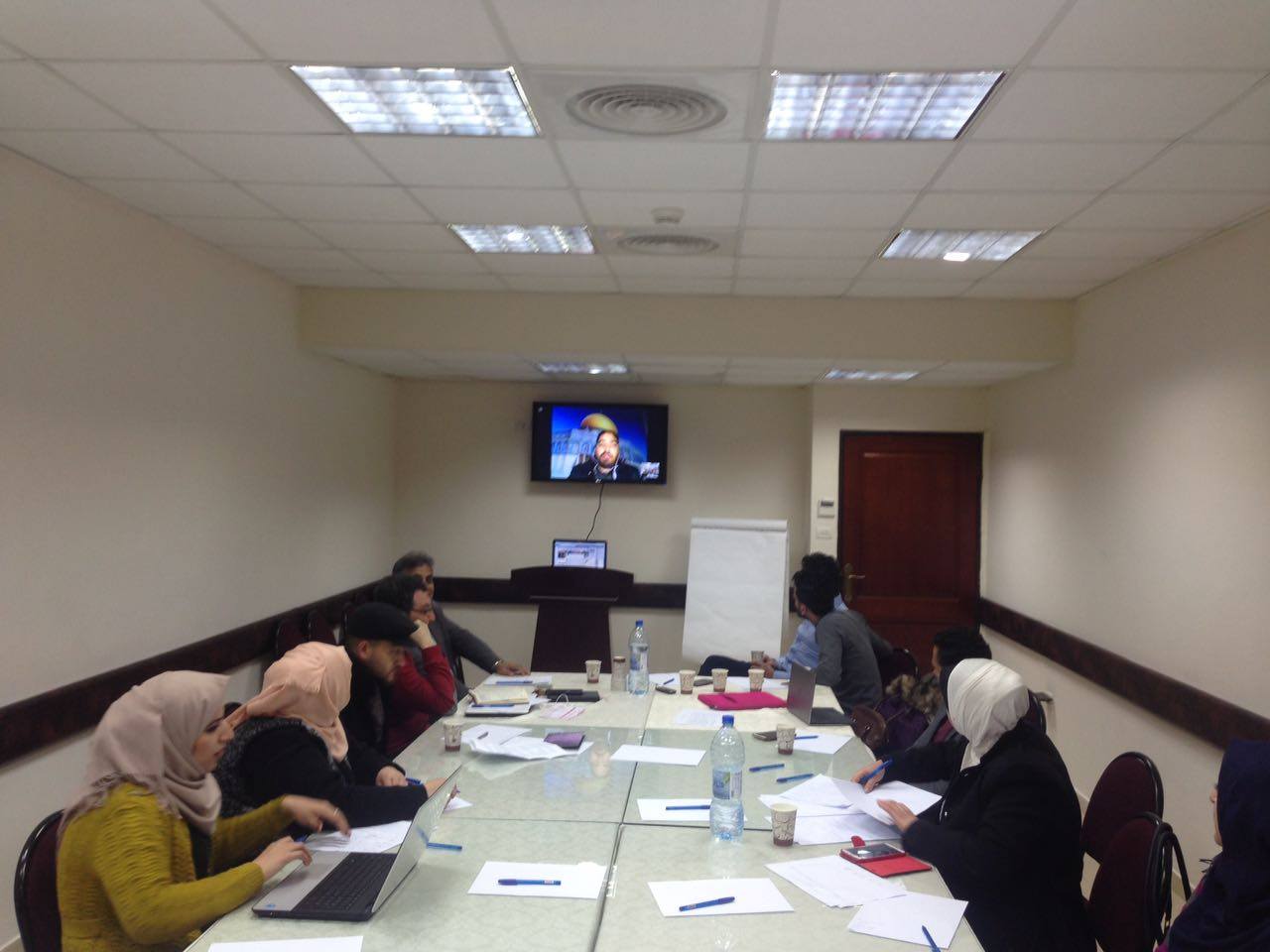
From the Gaza Strip, Mr Omar Shaban, director of Pal-Think, spoke via Skype to affirm the importance of this encounter, which gathered persons from all the homeland's governorates — expecting there to be cooperation and unified thinking to reach the consolidation of the relationship and working as a team to reinforce national reconciliation at the communal and civil level.
Shaban hoped that this distinctive, quality project would be continued, and that it would comprise other, multiple activities of a sustainable character to achieve actual results on the ground.
For his part, the project coordinator Mohammed Teem praised the sixteen initiatives that were carried out within the project's activities in the homeland's governorates, which targeted all the sectors and aspects — “health, economic, cultural, sporting — in cooperation with the grassroots institutions in the Gaza Strip and the REFORM institution and the other institutions in the northern governorates.
The director of the Ibrahim Abu-Lughod Institute of International Studies — Birzeit University likewise reviewed the proposed draft of the cost of the division in terms of methodology, and the mechanisms that will be used for this study. For his part, Roland Dittli, head of the peacebuilding-policies programme at the Swisspeace institution, said that the initiatives put forward today are creative and wonderful — pointing out that if they are thought through in depth they will have a great influence in the future. Dittli pointed to the necessity of gathering these initiatives into a single body to come out with something of greater influence, affirming the importance of the interconnection between Gaza and the West Bank and taking up their problems in other, smoother initiatives, like the cheerful videos prepared by some institutions. In the same context, Zoe Kanga of the United Nations Development Programme, head of the project of strengthening civil-work organisations in achieving communal unity at the national level, expressed her happiness at the youth's effective, active spirit in their putting forward of the initiatives and their commitment to ending the division — affirming the importance of these projects for the United Nations Development Programme for the empowerment and strengthening of youth. Kanga made clear that their priorities are supporting youth and their energies and unifying Palestine, that it be strong and under an influential, gathering system.
The workshop's participants recommended the importance of unifying efforts and strengthening cooperation at the national level, since the division's repercussions have touched all the aspects of life in Palestinian society, present and future. Likewise the importance of forming a civil assembly gathering all the institutions to share out the roles and to achieve effective, tangible results in consultation with everyone.
The participants affirmed the necessity of continuing work in such initiatives to exploit the youth's energies, end the division, and network with more civil society institutions, to press and mobilise decision-makers for the success of any coming initiatives; and the adoption of the closing workshop's recommendations and outputs, most importantly forming an assembly of the grassroots institutions in Palestine that works as a single team on strengthening national unity and communal reconciliation permanently. The participants affirmed the importance of using the media to deliver the media message and to overcome the Israeli blockade that divides the homeland's two halves. One of the project's important outputs is embodied in the institutions participating in the project continuing their work as a national team working to achieve reconciliation and national unity permanently.