The Youth Forum for Reconciliation & Tolerance discusses the novel «The Blue Light»
Pal-Think's Youth Forum for Reconciliation and Tolerance held a discussion of Palestinian writer Hussein Barghouti's novel «The Blue Light», with university students and young intellectuals, guest poet Mohammed Abu Labda, and the Maghazi Cultural Centre.
- Author
- The editorial team
- Date
- 2017-04-18
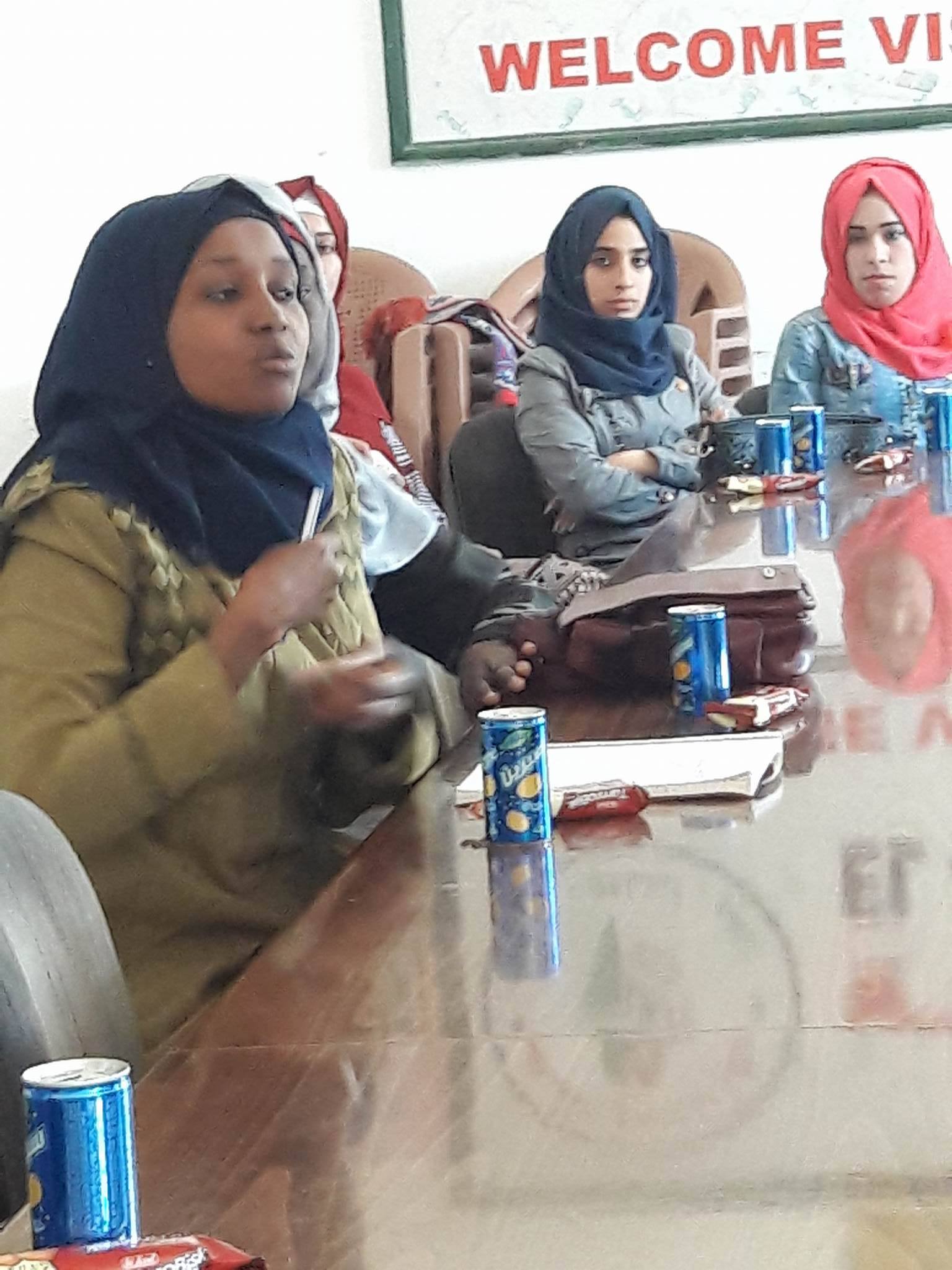
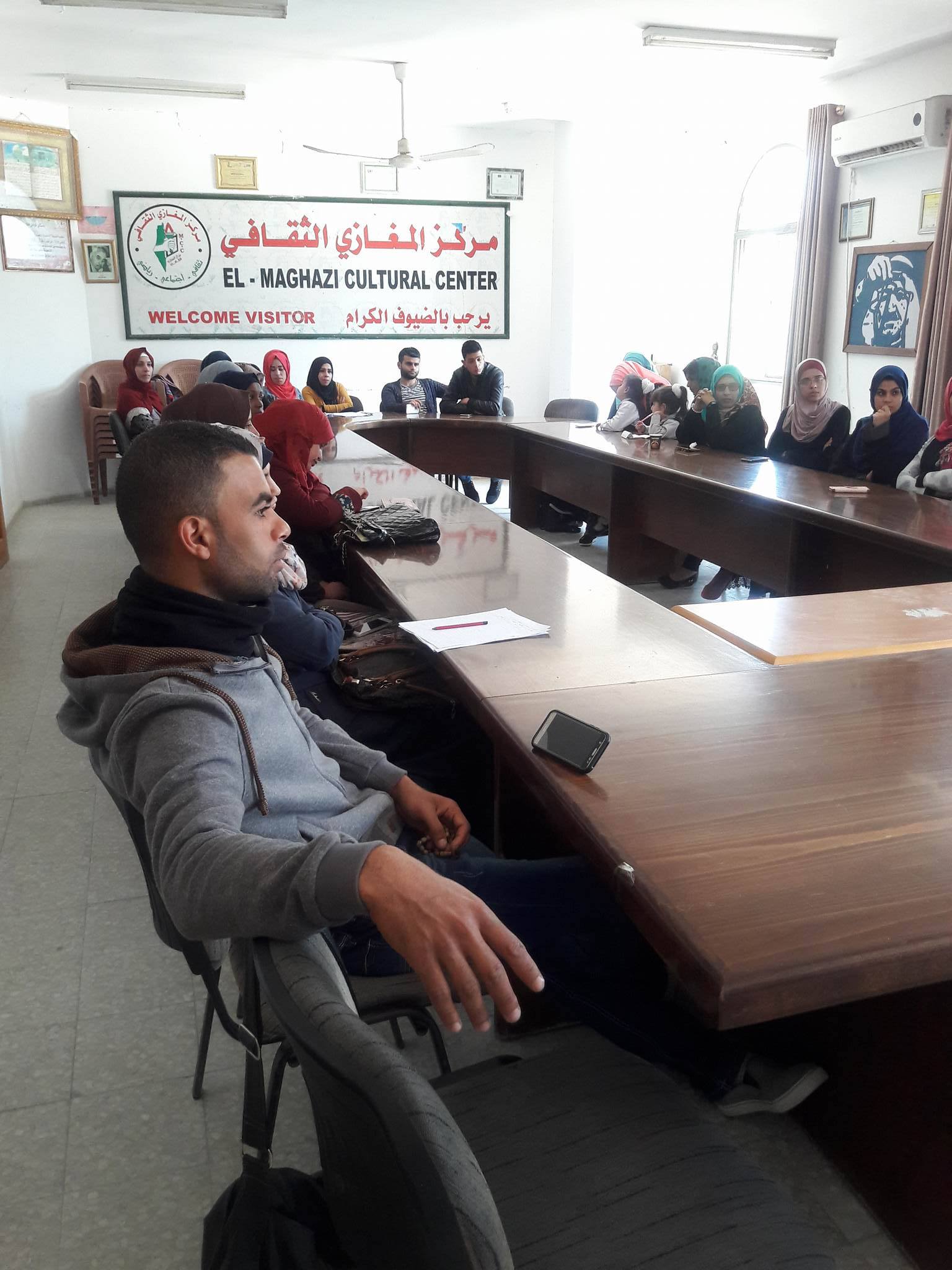
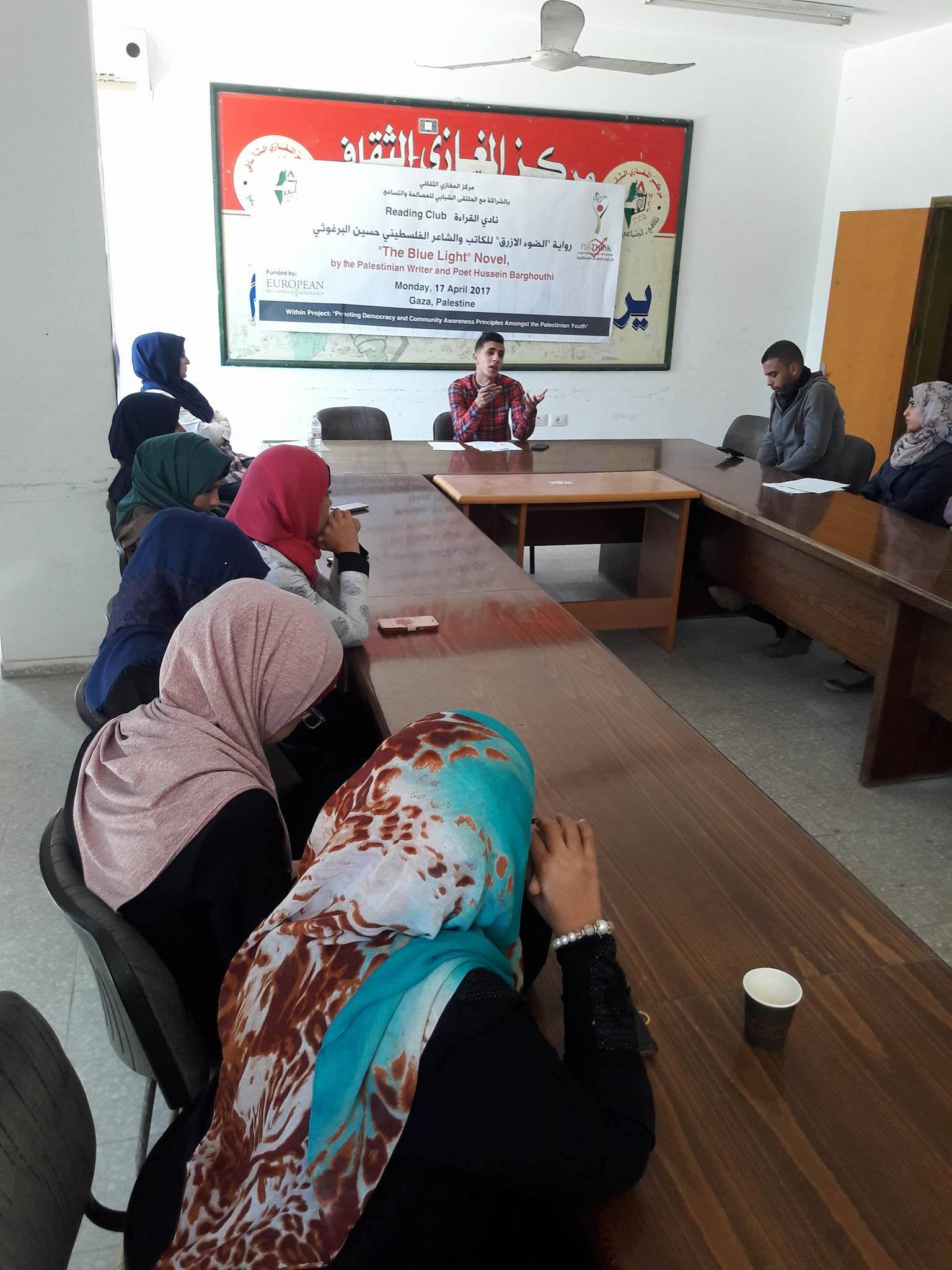
The Youth Forum for Reconciliation and Tolerance, affiliated to Pal-Think for Strategic Studies, organised a discussion circle around the novel “The Blue Light” by the Palestinian writer and poet Hussein Barghouti, with the attendance of a number of university students and educated, interested young men and women, and the encounter's guest the young poet Mohammed Abu Labda — in cooperation with the Maghazi Cultural Centre in the middle area of Gaza.
At the beginning of the encounter, Naela al-Jarba, projects coordinator at the Maghazi Cultural Centre, welcomed the attendees, praising the joint cooperation for the first time with the Youth Forum and Pal-Think for Strategic Studies, which served to acquaint the youth with the Forum and its activities — making them desire to join it, so that it would be a platform for them to deliver their word and discuss their issues.
The encounter's guest, the poet Abu Labda, spoke of the upbringing of the writer Hussein Barghouti and the circumstances of his life, which always inspired him to produce the best possible of his writings; he likewise spoke of his diverse literary works, especially the “novel The Blue Light”, which was the axis of the encounter, and which Mahmoud Darwish described as “the greatest of the achievements of literary prose”, and which the critics reviewed positively.
Abu Labda continued his talk on the philosophy of the novel, which was a distinctive imprint of Barghouti's, and in which he narrated the course of his life and the days of his childhood and the names they used to describe him with; his relationship with his father; his distance from the world of human beings and his attachment to writing; his talk of Palestine and that estrangement he lives, having lost his identity; his companionship with “Bari”, who left in this memoir the greatest trace with his existential, philosophical opinions; and also the occupation and the assassinations in Beirut, the civil war, and America's superficial civilisation that carries no history.
The young participants affirmed the importance of not confining oneself to a particular kind of literature and writers, but rather diversifying and benefiting from the greatest number of readings to widen their perceptions and benefit from the experiences of other peoples by way of reading about them — perhaps that would benefit them in contributing to finding some solutions for the problems from which the whole of Palestinian society suffers.
The participants likewise recommended the necessity of continuing this kind of encounter belonging to the reading club, affirming the importance of activating youth's role and presence in the literary spheres and supporting the intellectuals' role through the instruments available to them.
Worth mentioning here is that this encounter comes within the activities of the reading club affiliated to the Youth Forum for Reconciliation and Tolerance, through the project “Strengthening democracy and the principles of communal awareness among youth”, funded by the European Endowment for Democracy (EED).