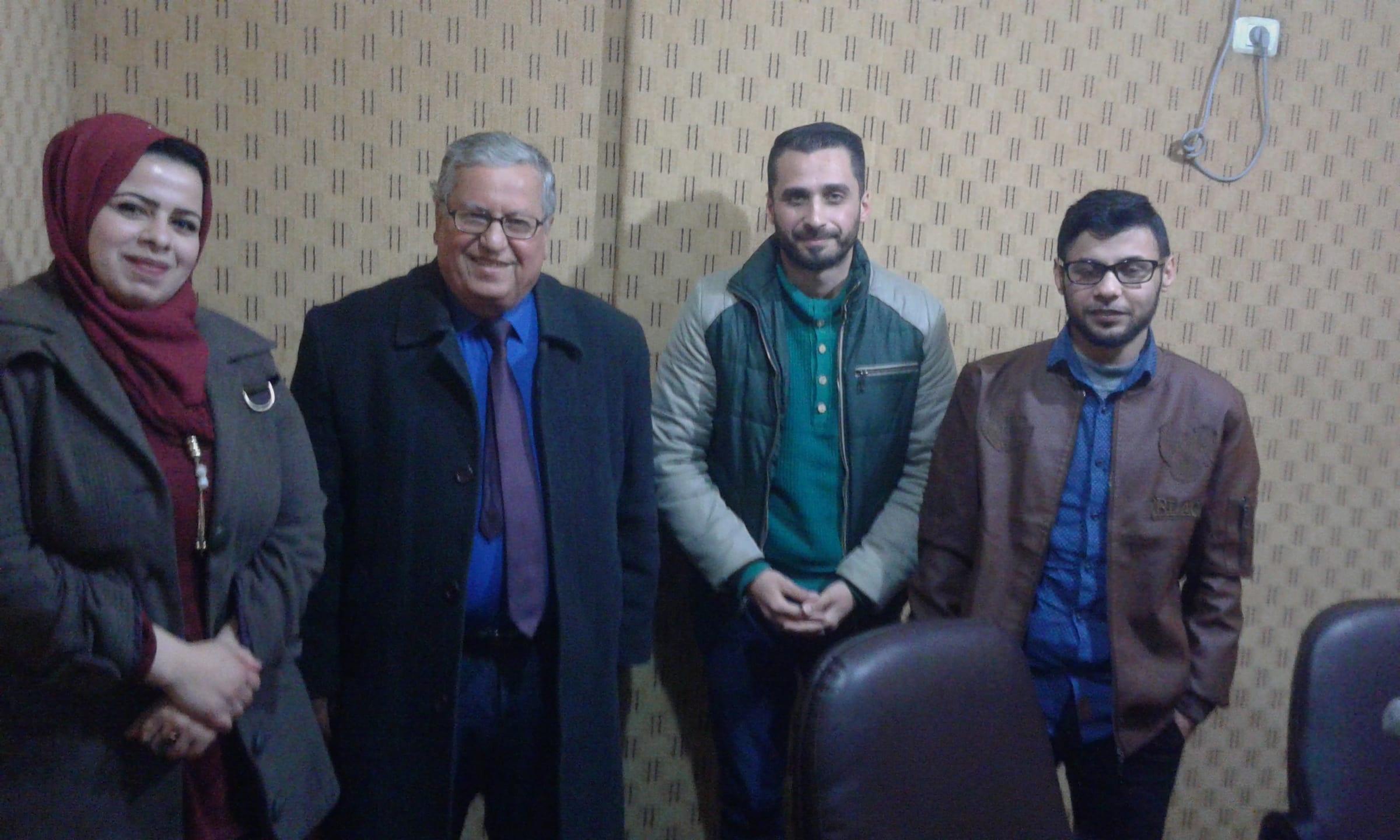
A radio series on the culture of nonviolence
Pal-Think produced a radio series on the culture of nonviolence under the FXB-funded «Philosophy and culture of nonviolence» project — affirming nonviolence as a peaceful way of life and development, and its role in protecting social peace.
- Author
- The editorial team
- Date
- 2018-03-26
Pal-Think for Strategic Studies organised a series of radio episodes on “the culture of non-violence”, within the events of the project “The philosophy and culture of non-violence” funded by FXB — which comes within the frame of achieving the institution's vision and its affirmation that non-violence is a peaceful method and an approach to life and development, and its role in strengthening and protecting communal peace, especially as Palestinian society is in pressing need at the present time of strengthening this culture and adopting it as rational conduct in its internal relations.
The first radio episode took up “the definition of non-violence, its causes, and its forms”, with the participation of Dr Khaled Dahlan, consultant in psychiatric and neurological medicine, the story writer Nevin al-Ghoul, and the journalist activist Abdel Salam Murtaja, both of the latter among the participants of the project “The culture and philosophy of non-violence”.
The participants in this episode affirmed that social upbringing is the principal source feeding violence in society, especially the upbringing that calls to factional zeal; and that the Gaza Strip is witnessing, by force of the Israeli blockade and the division, a striking increase in the manifestations and forms of violence, especially in its political, societal, and psychological forms — which has contributed to the rise of the rates of hatred, rancour, and societal anger.
The second episode took up “violence in the Palestinian schools”, with the participation of Ms Abeer al-Sharafa, head of the mental-health department at the ministry of education in Gaza, the economic researcher Raneen al-Zaaneen, and the community activist Ahmed Hamad, both of the latter among the participants of the project “The culture and philosophy of non-violence”.
They pointed to the importance of the role of mental health in the ministry of education, and the necessity of preparing programmes that contribute to rejecting violence — such as the student-mediation programme, through which students learn how to solve problems by themselves or with one another, bearing responsibility without imposition, strengthening affection, spreading the values of tolerance and acceptance of the other among them, and keeping away from violence and disputes — in addition to the necessity of cooperation and integration with the civil institutions that work on rejecting violence and solving problems, in a frame of complementary roles.
The programme's third episode took up “the definition of non-violence, its causes, and its forms”, with the participation of Dr Mahmoud Assaf al-Duraimli, doctor of education at the University of Palestine, the journalist Osama al-Kahlout, in addition to Maram Abu Harbid, Fatima Awad, and Mohammed Labad, who are among the participants of the project “The culture and philosophy of non-violence”.
They affirmed that tolerance is the magic recipe for treating violence and its causes in society, being the real guarantee of obtaining civil right, and a political and legal necessity able to achieve communal peace — being the most effective means of leaving the circle of misunderstanding for the circle of discussion and balance toward concepts; and its presence is indispensable for creating an understanding society and a lively, harmonious communal environment.
The fourth episode took up “strengthening identity within the frame of the culture of non-violence”, with the participation of Dr Riyad Saydam, lecturer at the University of Gaza and al-Quds Open University, and Duha Shaat and Mohammed al-Tahrawi, both among the project's participants.
The episode's speakers pointed out that accepting difference counts as the cornerstone of linking individual identity and collective identity; but regrettably the human being in some areas has been raised and grown from childhood on the tone of the “I” and its loftiness — which strengthens individual identity and kills all that relates to collective identity and its goals, which would preserve society's cohesion; and thus violence in society is strengthened.