The strategy document of civil society organisations launches
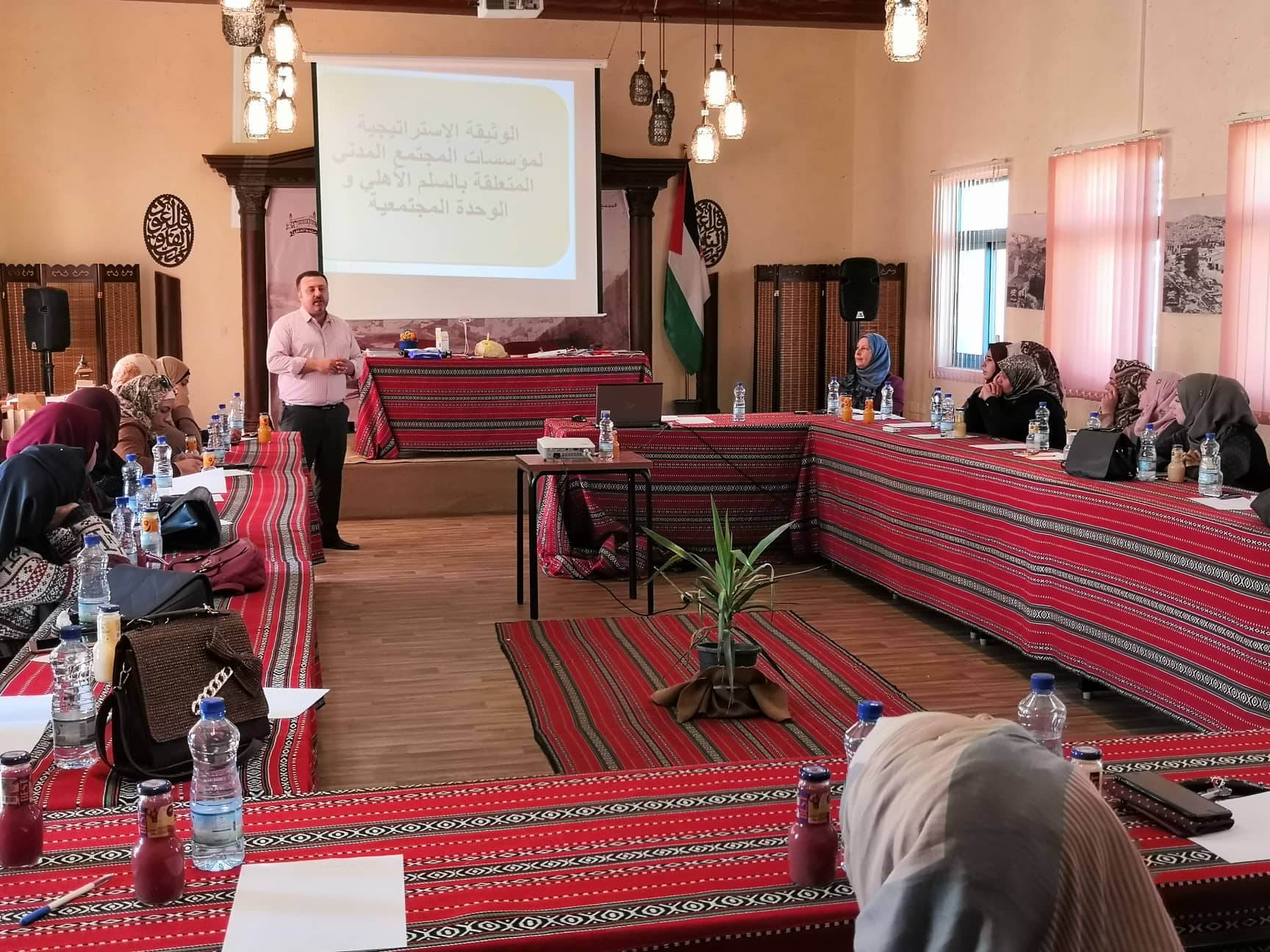
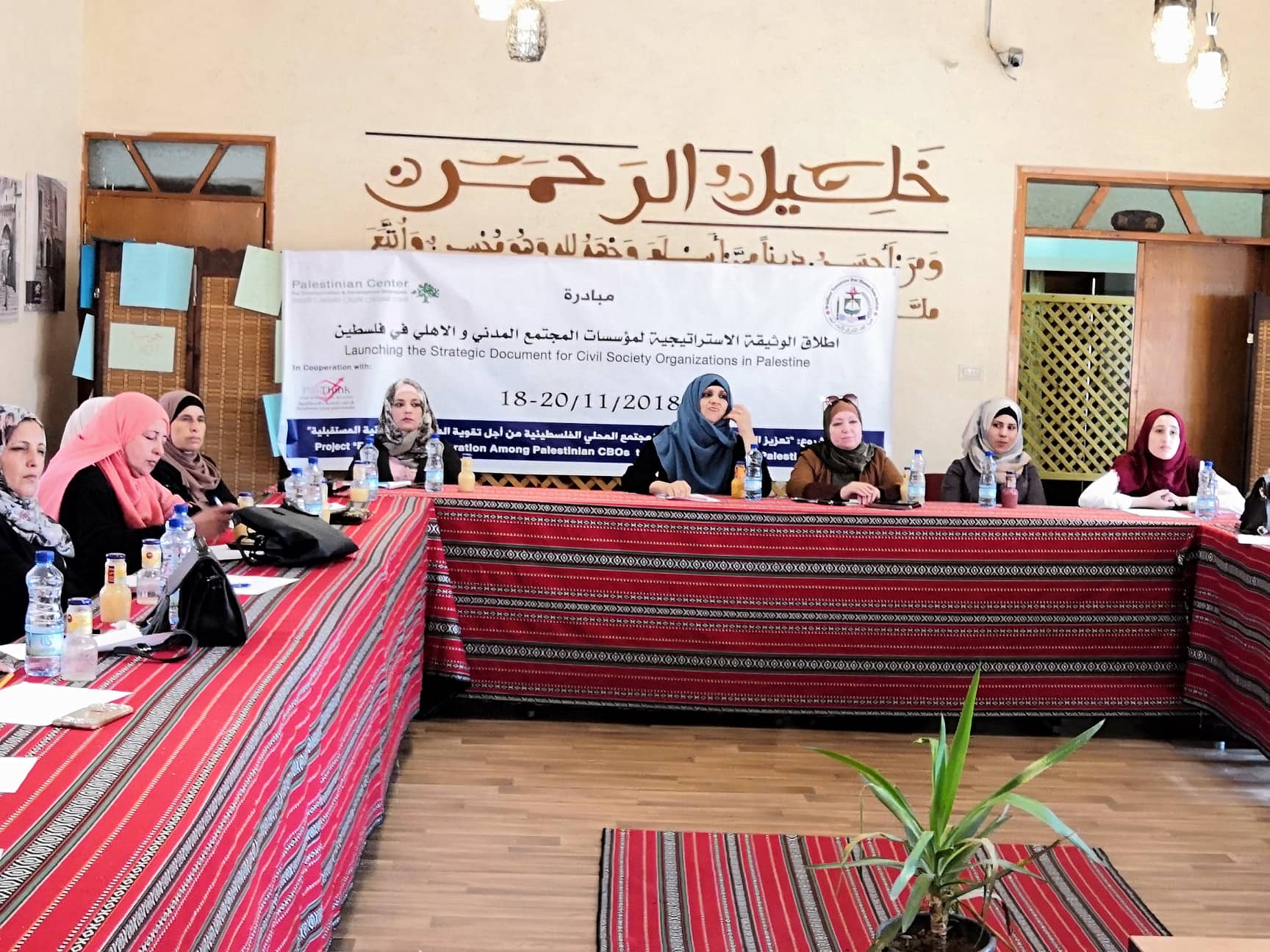
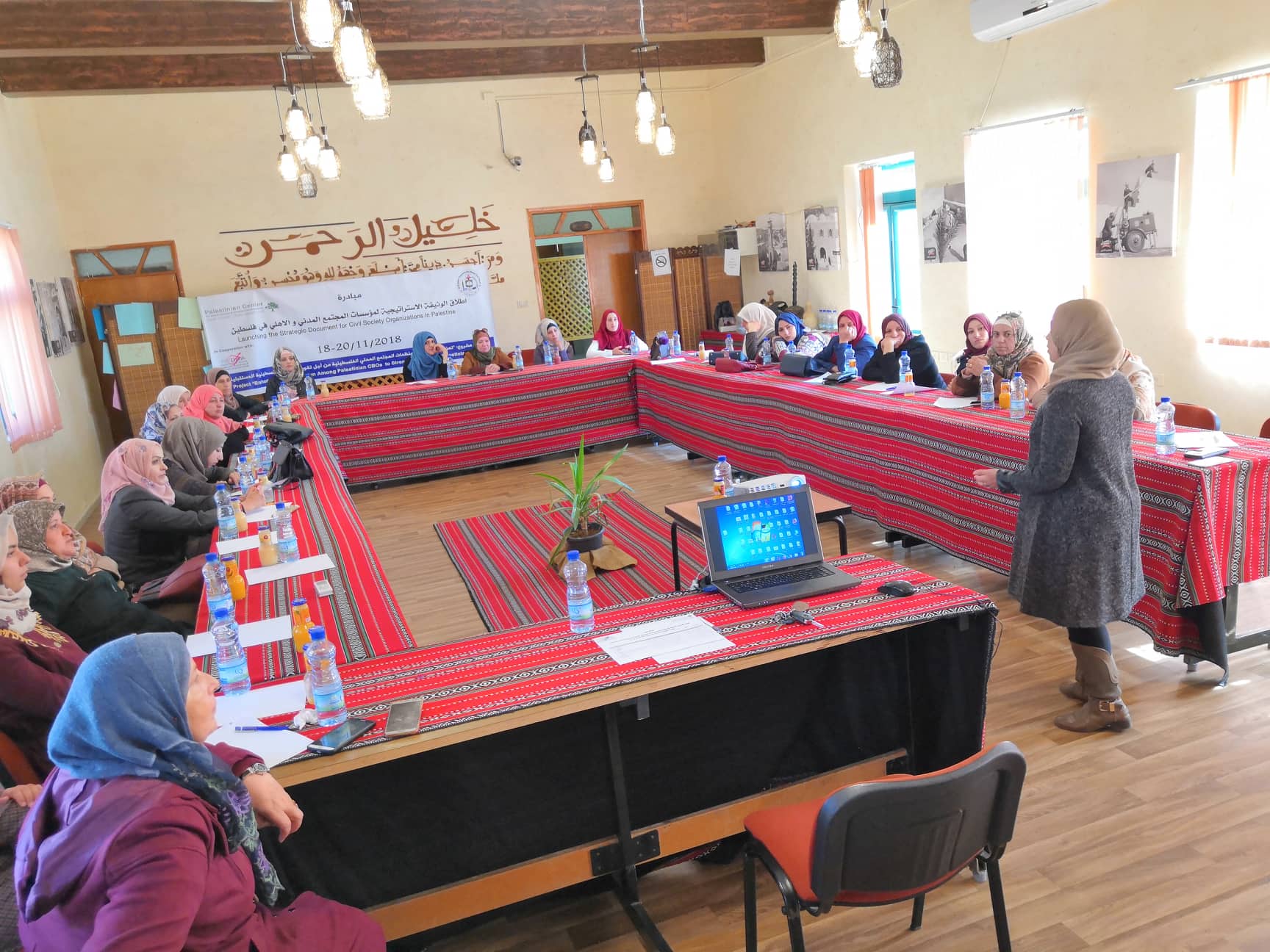
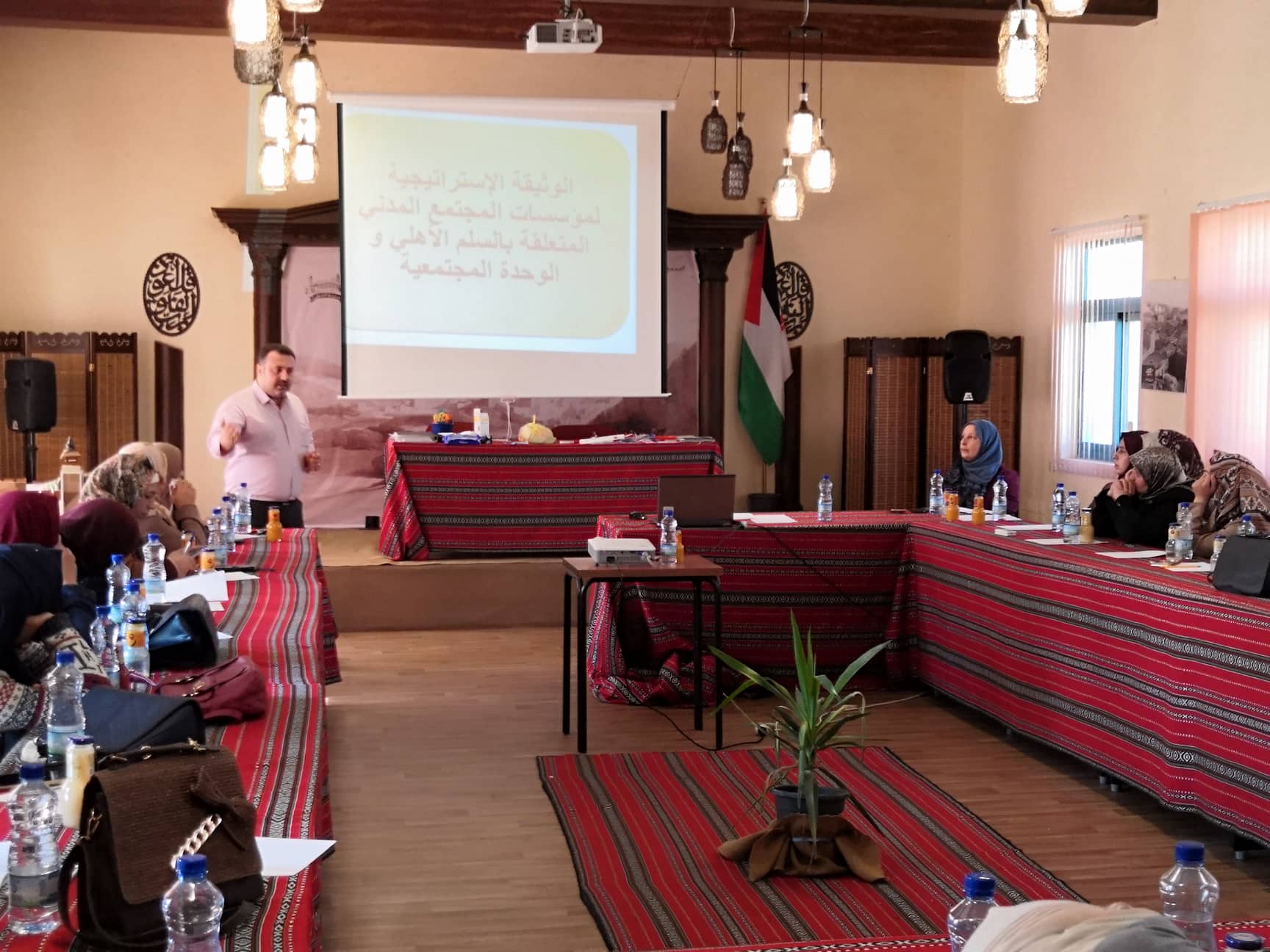
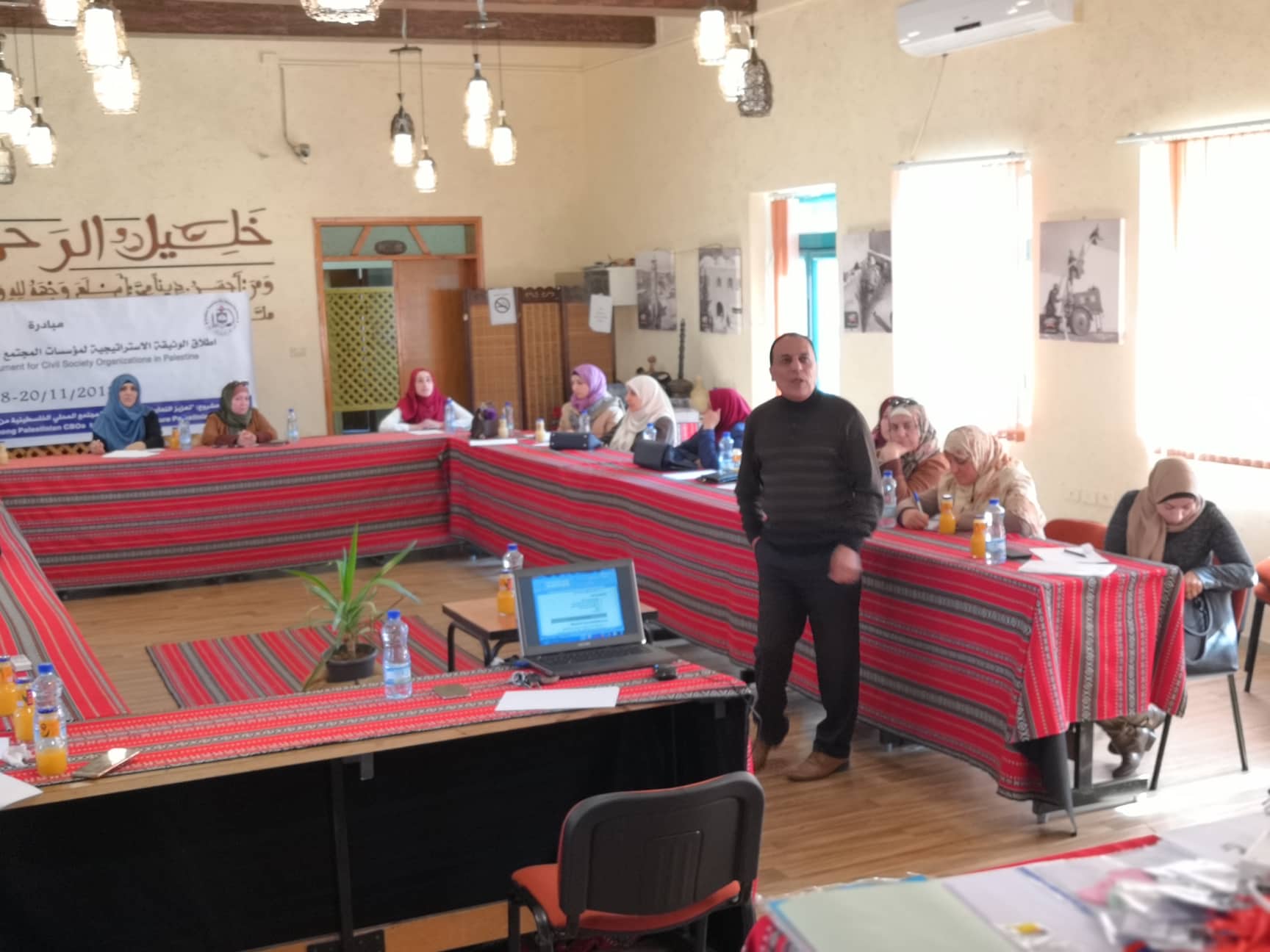
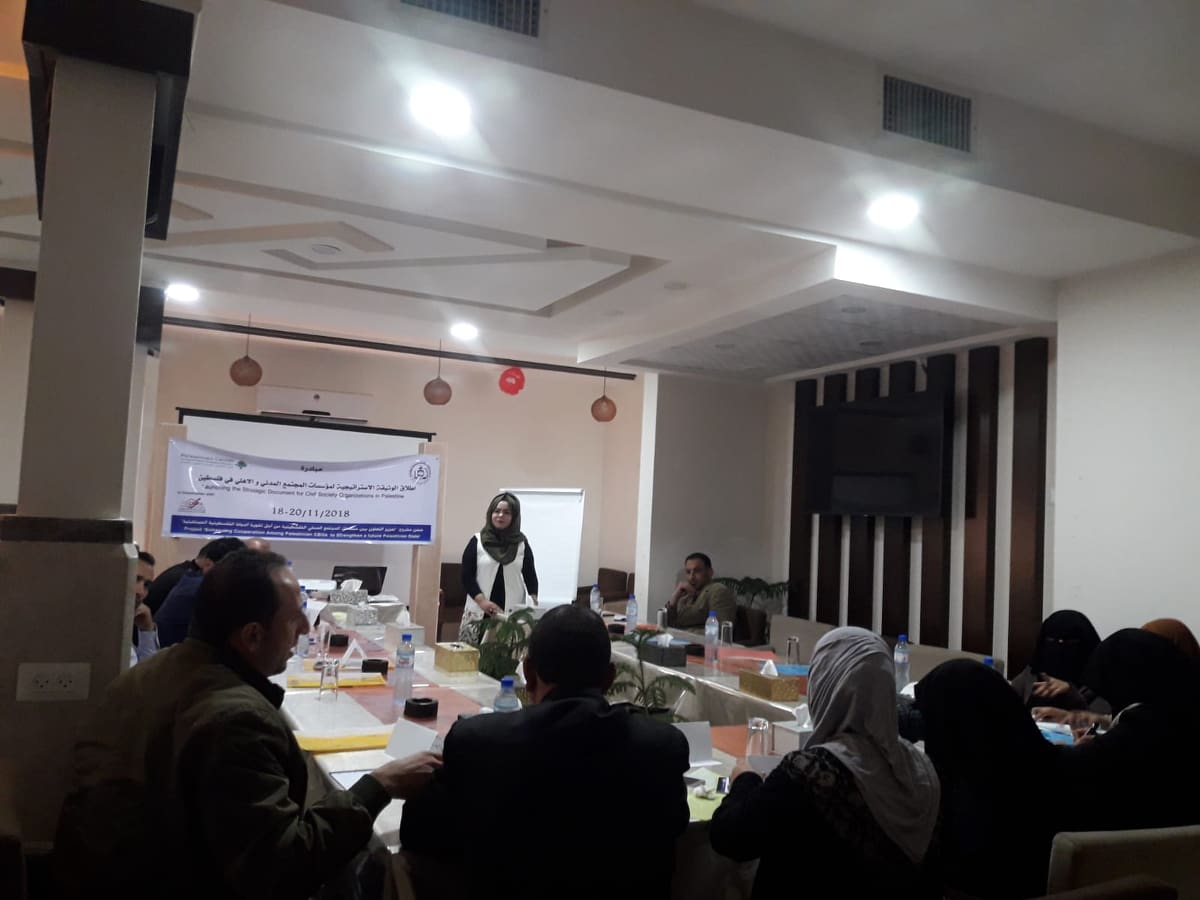
The Palestinian Centre for Communication and Development Policies in Hebron and Al-Ghad Al-Mushriq in Khan Younis launched — with 24 civil-society organisations — the strategic document of Palestine's community organisations on civil peace and national unity.
- Author
- The editorial team
- Date
- 2019-01-24
The Palestinian Center for Communication and Development Policies in the city of Hebron and the Bright Tomorrow Association in Khan Younis carried out the initiative of launching the strategic document of Palestine's community organisations on civil peace and national unity.
This came with the participation of 24 civil-society institutions, with the aim of launching the strategic document of the Palestinian civil-society institutions for strengthening civil peace and national unity, within the project of strengthening cooperation among the civil community organisations in Palestine for strengthening the independent Palestinian state. The document was launched in both Hebron and Khan Younis in partnership with “PAL-THINK”.
The document contained the following:
- The partner civil-society institutions in the West Bank and the Gaza Strip are among the socially effective and active institutions with contributions and wide influence in their society and in the change toward a better economic, social, and political life.
- The civil-society institutions partnering in the project are institutions of many cultures and ideas that have long sought to strengthen the chances of finding a political and social solution to the state of political and geographic division — among the hardest periods in the cause's history.
- The civil and grassroots community institutions that kept pace with the political and geographic division fell in step with this division without regard for the importance of their role in improving their society's reality, forgetting that they are community service institutions with no direct relation to the political dimension, bearing a strategic role in working anew on the concept of national unity amid the global political conditions and shifts targeting the cause.
- The partner civil-society institutions have sought for long years to play an effective role in building an independent, democratic Palestinian state with noble Jerusalem as its capital, and have worked effectively to curb the political division's effect on Palestinian society as a gateway to reaching their fundamental goal: partnership toward building a modern Palestinian state.
- Civil-society organisations seek to work on treating the political division and restoring national unity — not on treating the political division's effects, for that prolongs this division, the worst in the people's history.
- The civil-society institutions see themselves holding a strategic role in raising the awareness of the citizens, and of the silent within their communities, of the importance of partnership toward reaching civil peace and national unity — paving the way for the Palestinian people to reach an independent state.
- The partner civil-society institutions call on the official parties, signatories of the agreements of reconciliation and societal unity, to respect these agreements, so as to end the Palestinian people's suffering and devote themselves to the mother national cause: an independent Palestinian state according to the resolutions of international legitimacy, with noble Jerusalem as its capital.
- The partner civil-society institutions call on the Palestinian political, religious, and community leaderships to work together to put an end to the Palestinian people's suffering in the homeland's two halves, by calling for the completion of the Palestinian unity talks held in multiple places of the world (Riyadh, Cairo, and Gaza).
- The partner civil-society institutions consider that adopting the option of civil peace and national unity is the only option that puts an end to the people's suffering.
- The civil-society institutions call on the political leaderships in the West Bank and Gaza to open horizons of effective, positive dialogue and to set the Palestinian people's highest interests first, to reach national reconciliation.
- The institutions partnering in the project call on all Palestinian civil-society institutions to work seriously to urge decision-makers to adopt the option of political and societal unity as a Palestinian strategic choice.
- The civil-society institutions call on all Palestinian leaderships to unite in rejecting the deal of the century, which attempts by sundry means to end the Palestinian cause.
- The partner civil-society institutions focus on the importance of consensus around the Palestinian fixed principles on which all the sons of the Palestinian people agree — especially Jerusalem, capital of the Palestinian state — and the civil-society institutions see absolutely no alternative to this option.
- The civil-society institutions affirm the importance of the Palestinian refugees' right to return to the homes from which they were displaced — no alternatives to this option, affirmed by the international agreements concerning the refugee question.
- Effective dialogue and direct negotiations are the sound, correct, and only path to Palestinian unity and to ending the state of political division.
- The civil-society institutions see that the gateway to reconciliation must lie in strengthening internal reconciliation first, as an entry to Palestinian reconciliation in general.
- The civil-society institutions see that the participation of all political, societal, and national forces in the discussions concerning reconciliation and national unity serves the concept of Palestinian civil peace.
- The civil-society institutions call on all Palestinian forces to stop the media crossfire across the different media platforms.
- The civil-society institutions see that confronting the Israeli onslaught aimed at liquidating the Palestinian cause can only proceed through rousing the factors that help change the balance of power in the Palestinian people's favour.
- The civil-society institutions call for preserving the centrality of the Palestinian cause and achieving mechanisms of consensus on the forms of struggle and their timing.
- The civil-society institutions call for agreement on a mechanism for organising the internal Palestinian edifice — whether at the level of the larger frame, as a national liberation movement still waging the struggle for freedom, independence, and return, or at the level of administering people's lives within what is available of the components of the Authority or the hoped-for state.
- The civil-society institutions call for the necessity of committing to political decisions being taken in a unified manner.
- The civil-society institutions see the necessity of all forces entering the Palestine Liberation Organization, so its leading bodies become a frame for the unified national leadership — with the dates and mechanism of holding elections to restore the people's democratic right to choose its representatives, and guarantees of recovering what was lost of the principle of separation of the executive, legislative, and judicial powers, which cannot be achieved without a strong and effective legislative council.
- The civil-society institutions call for consensus on how to manage Palestinian resources with the aim of supporting the Palestinian people's survival and steadfastness on the soil of its homeland.
- The civil-society institutions affirm the obligation of working to create a resistant economy of steadfastness, with all that means of fighting poverty and unemployment.
- The civil-society institutions affirm the importance of assigning a developmental sector to youth that opens opportunities to their talents.
- The civil-society institutions see that if Palestinian political pluralism and diversity is an element of strength that turns into an element of weakness at division, then the unity of homeland and society is more important than pluralism — affirming that reconciliation means acceptance of the democratic principle.
- The civil-society institutions call on the leading and scholarly figures — university leaders and the Legislative Council — to shed the garb of partisanship and join the community base working to achieve national unity.
- The civil-society institutions, leading all social and political strata to achieve unity on the basis of commitment to our people's fundamental fixed principles guaranteed by the international covenants — toward attaining its freedom and establishing its state with its historic capital.
- The civil-society institutions are an essential partner in confronting the political, social, and economic challenges of our Palestinian society; they hope there is no return to square one at the failure of every negotiation round, and hope to be included as an observer over the course of national and societal reconciliation.