Al-Ataa Charitable Society holds a participatory meeting with the Palestinian Centre for Studies
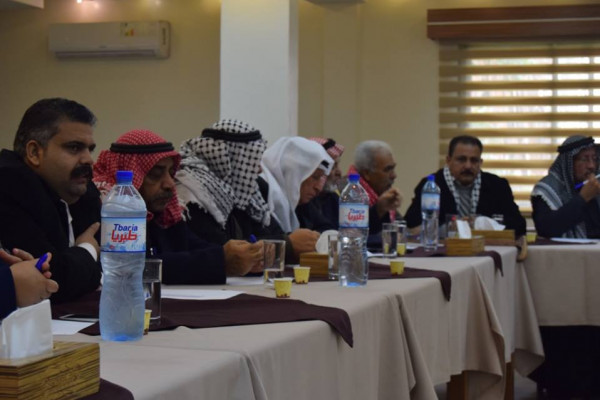
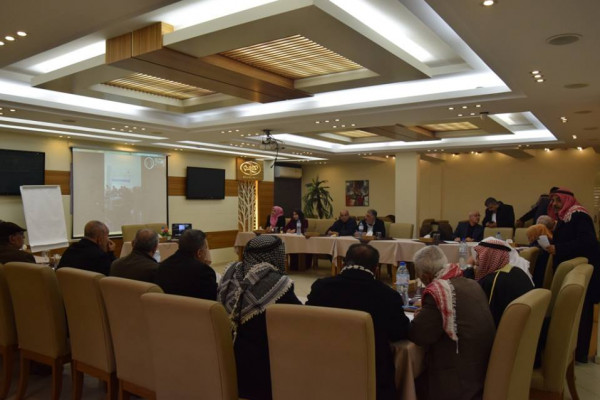
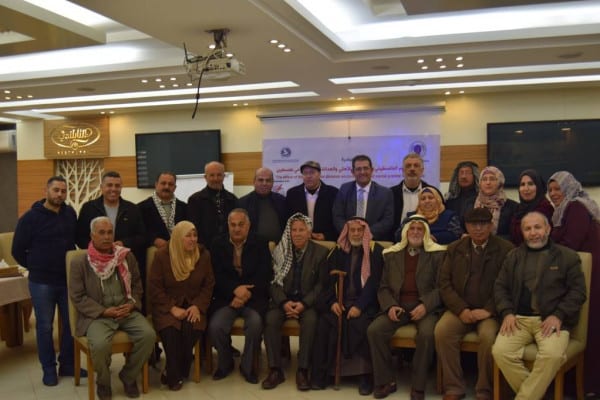
Al-Ataa Charity in Beit Hanoun and the Palestinian Centre for Studies and Dialogue of Civilisations in Bethlehem, with Pal-Think, held a reflective dialogue attended by director Omar Shaban, notables, mukhtars and community activists from Gaza and the West Bank.
- Author
- The editorial team
- Date
- 2019-01-24
The Ataa Charitable Association — Beit Hanoun — and the Palestinian Center for Studies and Dialogue of Civilisations — Bethlehem — in partnership with Pal-Think for Strategic Studies, carried out a reflective dialogue meeting attended by Mr Omar Shaban Ismail, director of Pal-Think in the Gaza Strip, project coordinator Ms Sally al-Sammak, and a number of notables, mukhtars, and community activists from the Gaza Strip and the West Bank over Skype, for the initiative “The effect of the Palestinian division on civil peace and social justice”.
This came within the project “Strengthening cooperation among Palestinian local community organisations for strengthening the future state of Palestine”, implemented by Pal-Think. It targeted different strata and classes of Palestinian society in the two cities of Beit Hanoun and Bethlehem as a model — to deepen national democratic dialogue between the homeland's two halves and ease the linking of the homeland's institutions on the pivotal issues serving Palestinian society, contributing to curbing the Palestinian division's negative effects. Within its activities the initiative held several discussion meetings and workshops with 450 beneficiaries — Palestinian youth forming 69% of them — in the city of Beit Hanoun, simultaneously over Skype with the meetings in Bethlehem, to unify discussion and dialogue among the groups in the homeland's two halves around a single issue: the division and its effects, an issue that concerns Palestinians everywhere — and to attempt to lay down proposals and solutions for ending the division and unifying efforts across all the Palestinian governorates.The initiative produced a paper comprising the outputs and recommendations of the unified meetings between the homeland's two halves — the paper enriched by the participants' views and ideas for strengthening civil peace and social justice, with affirmation from all attendees of the necessity of ending the division, strengthening networking and coordination among civil-society institutions, and joint work between these institutions and the other bodies, whatever their tasks, toward achieving national reconciliation and civil peace. This paper will be presented and published in cooperation with Pal-Think for Strategic Studies.