«Partners in Destiny»: raising awareness of women's capacity in decision-making
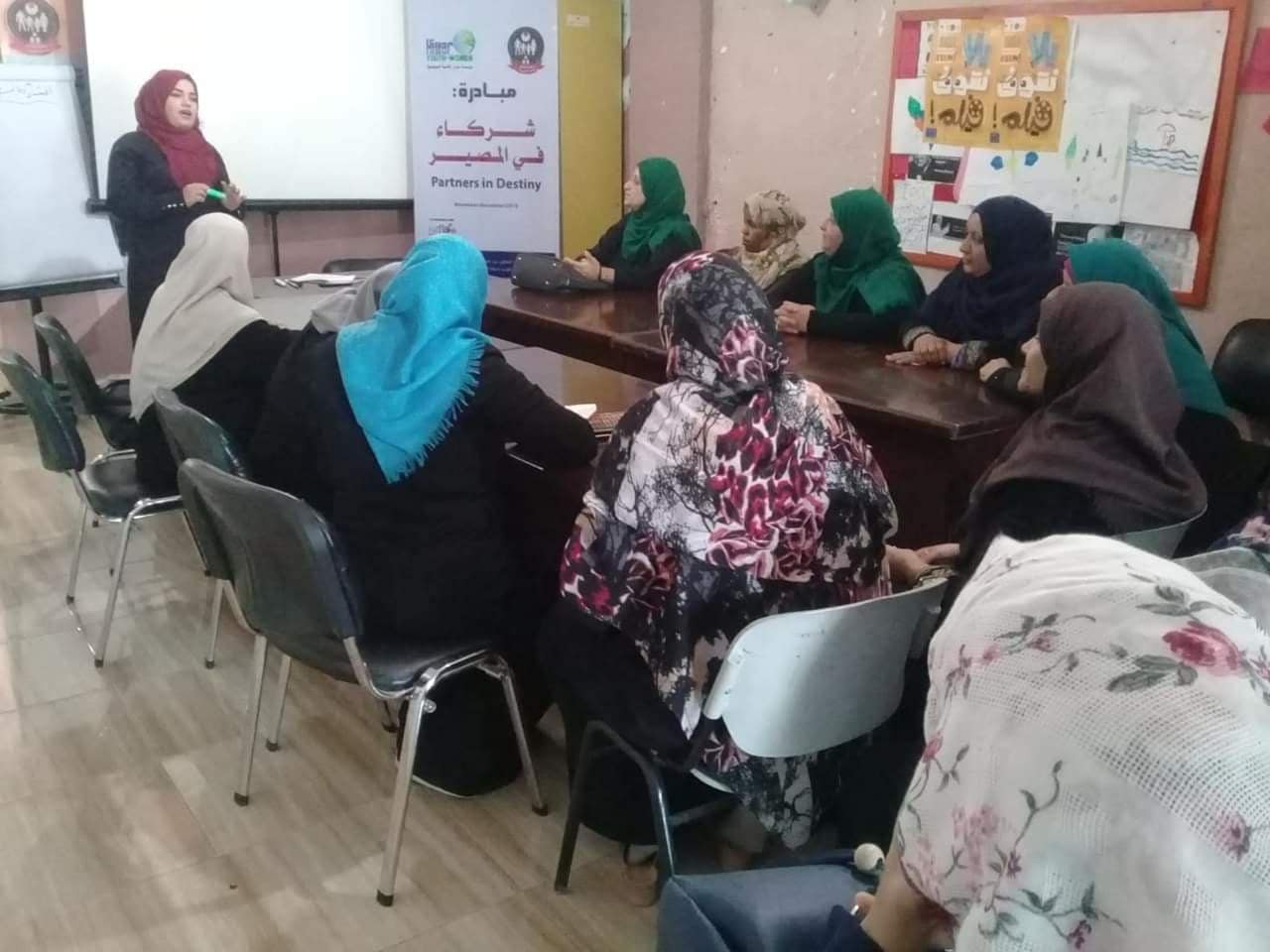
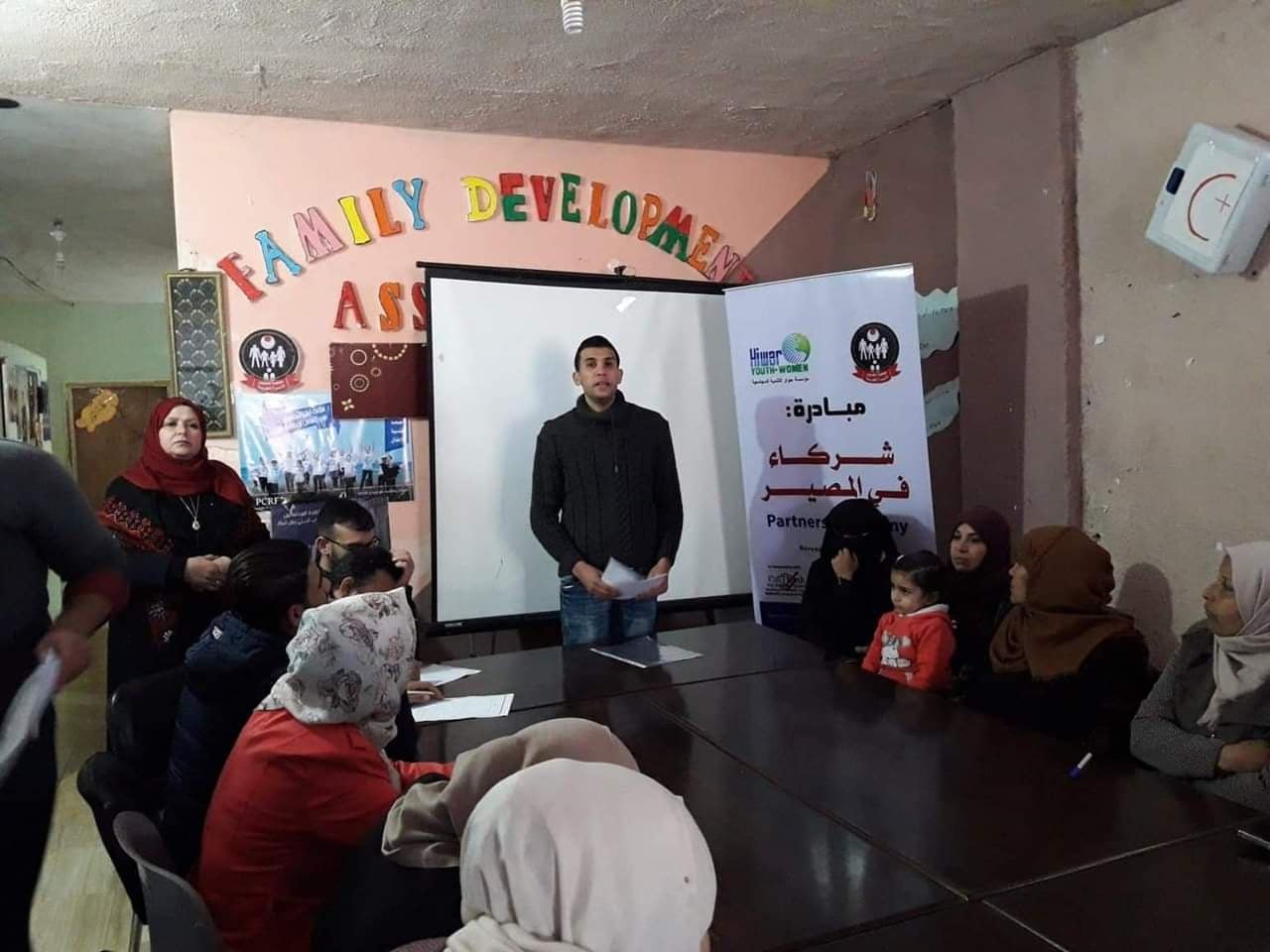
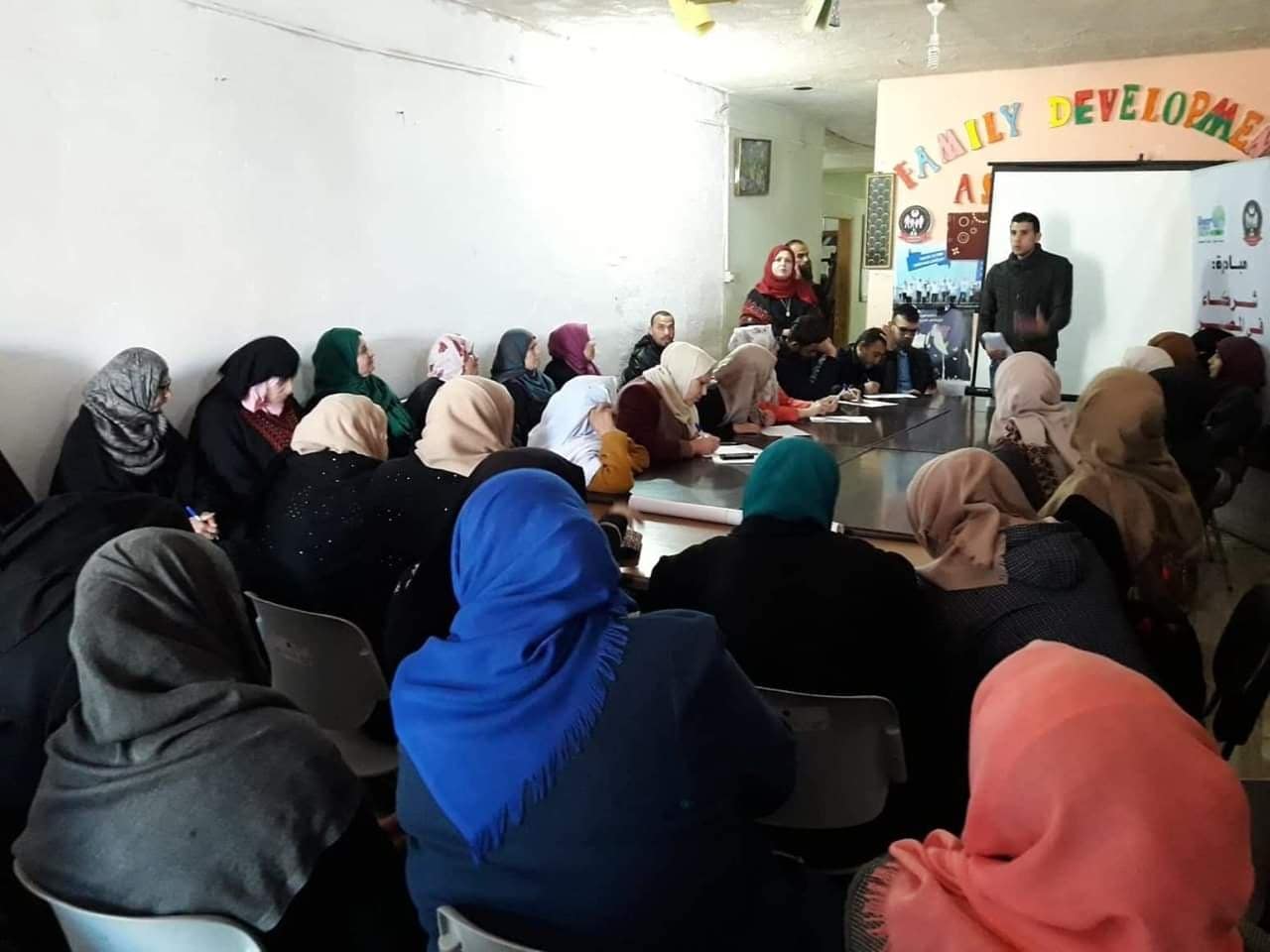
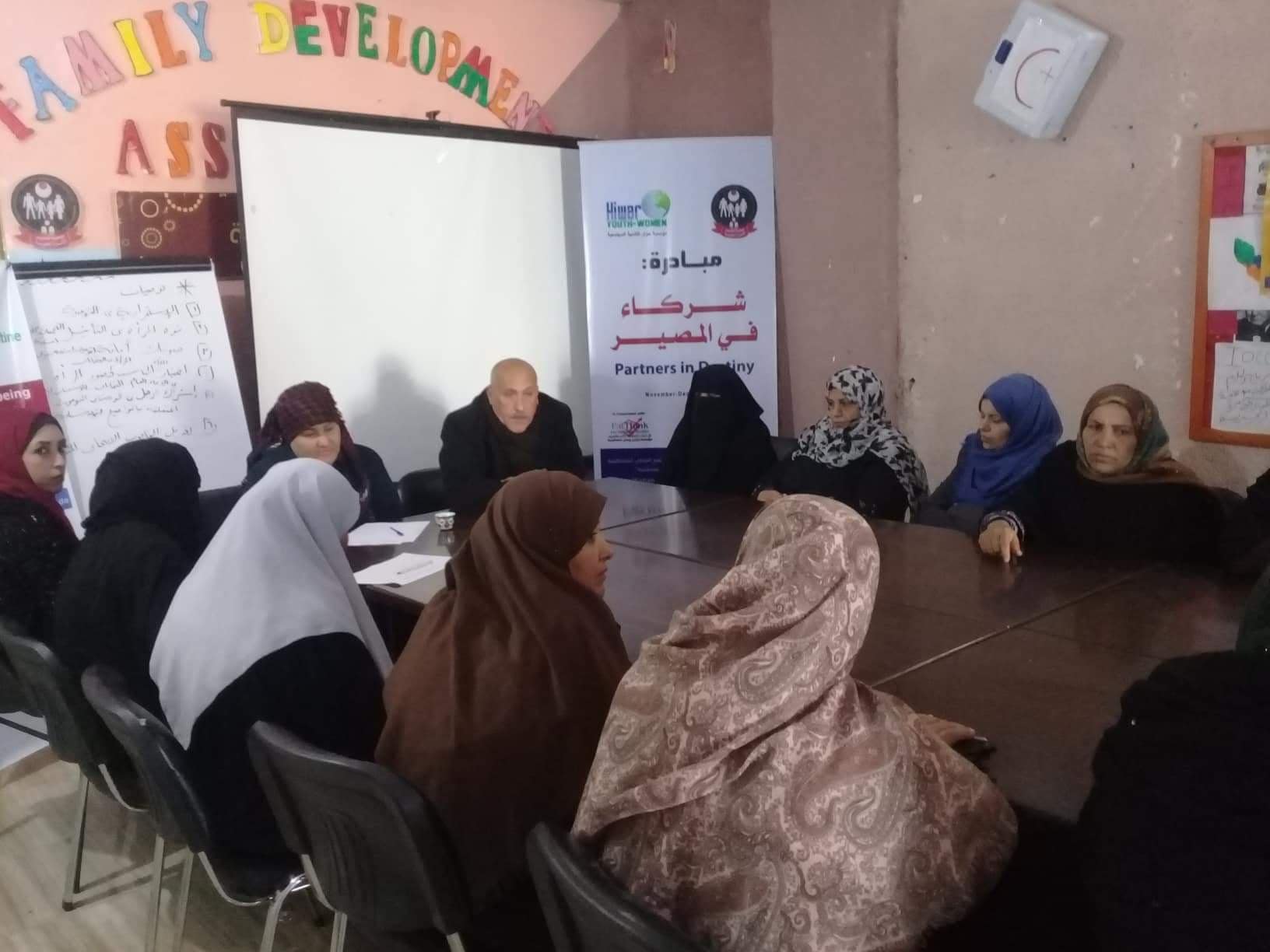
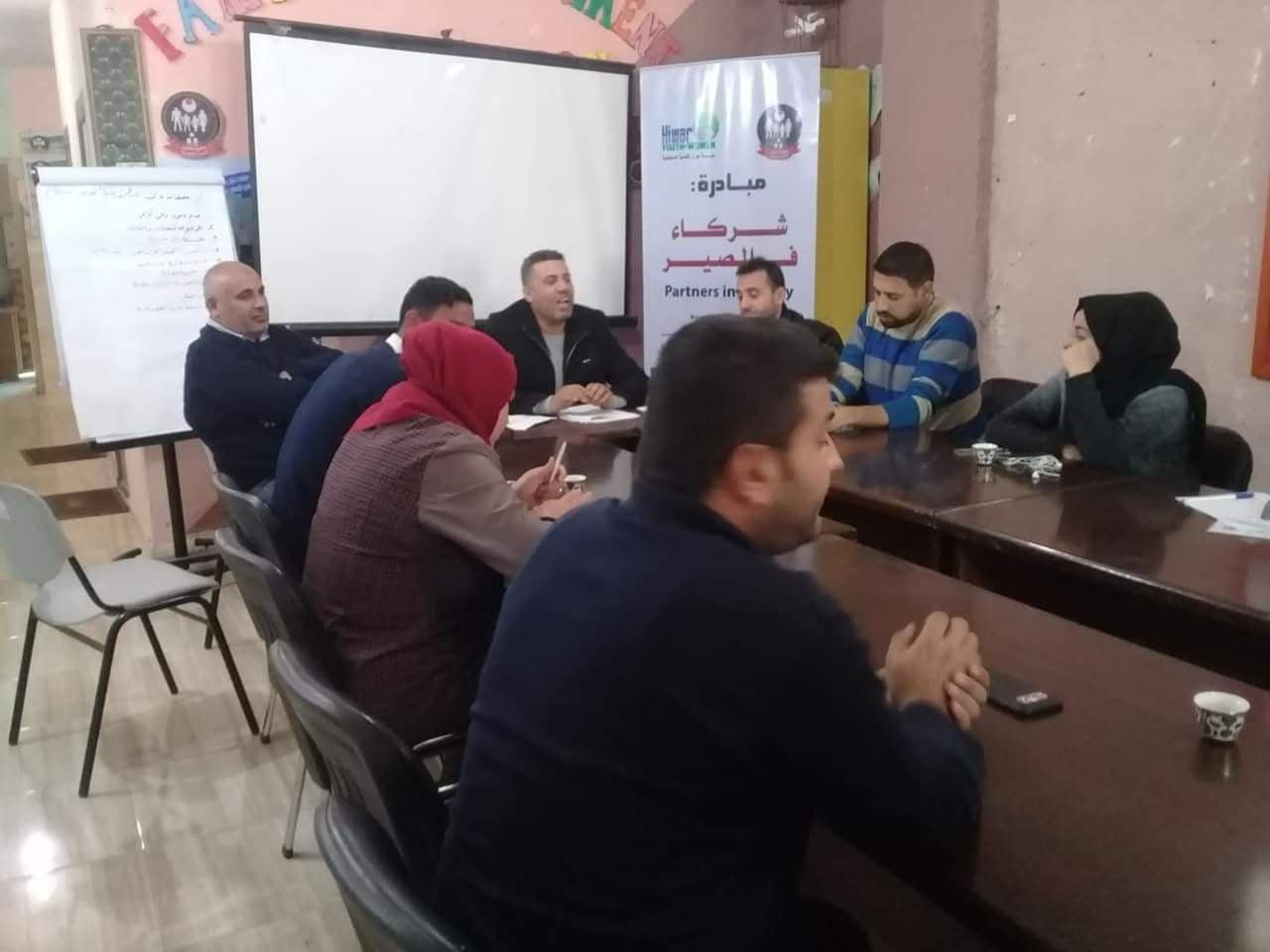
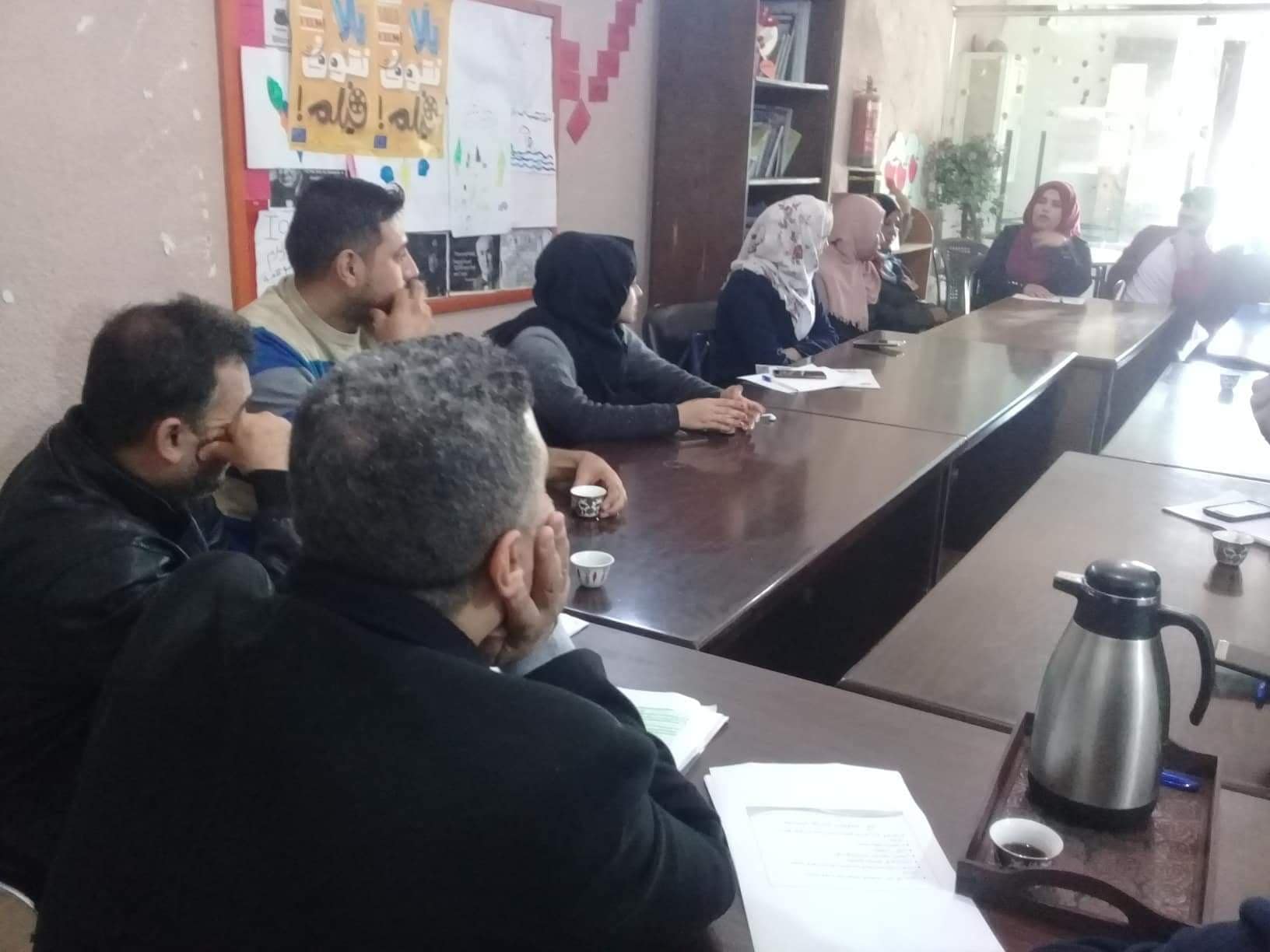
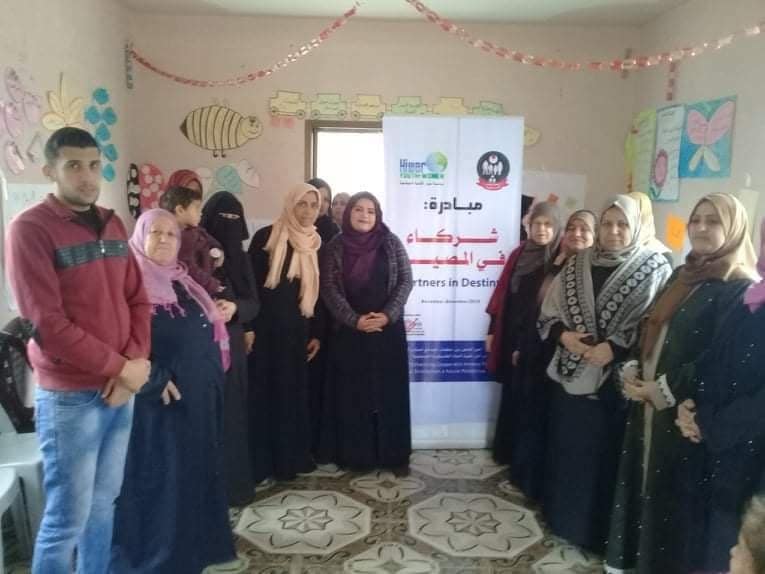
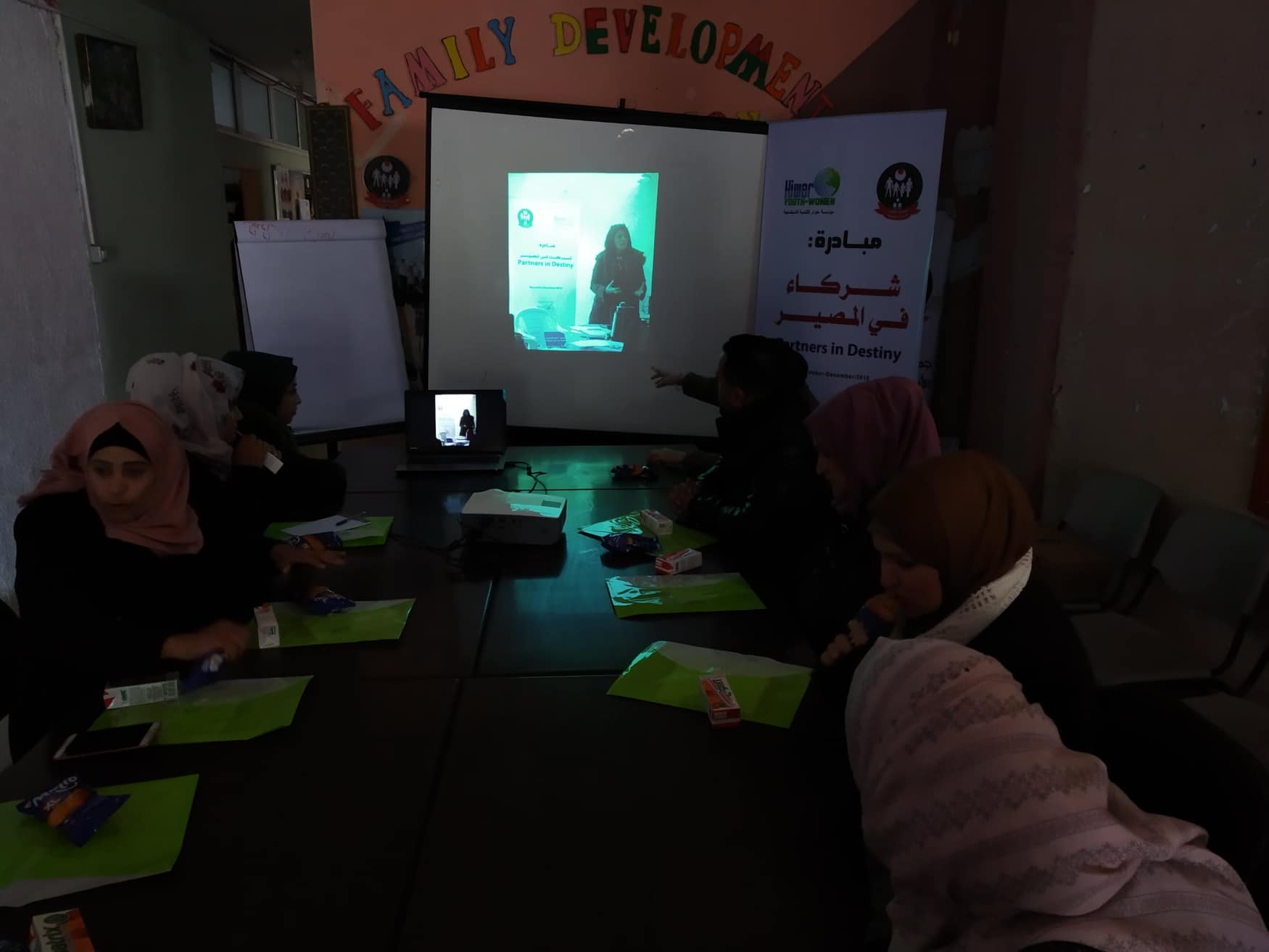
The Family Development Charity and Hiwar for Community Development concluded a series of workshops and dialogue sessions with women and graduates in Beit Hanoun (Gaza) and Beitunia and Beit Ula (West Bank) during November–December 2018, under «Partners in Destiny».
- Author
- The editorial team
- Date
- 2019-01-24
The Family Development Charitable Association and the Hiwar Foundation for Community Development concluded a series of workshops and discussion and dialogue sessions with a group of women and graduates in the cities of Beit Hanoun in the Gaza Strip and Beitunia and Beit Ur al-Tahta in the West Bank, during the months of November and December 2018.
The series of workshops came in the context of the initiative “Partners in Destiny”, which addresses the issue of women's political non-participation and the marginalisation of their role in decision-making — within the project “Strengthening cooperation among Palestinian local community organisations for strengthening the Palestinian state”, in partnership with Pal-Think for Strategic Studies.
The workshops took up several axes, foremost: activating women's role in public life; advancing the Palestinian woman as an essential factor in decision-making; women's placement on the electoral lists; and the importance of the vote in making positive change.
For her part, board member of the Family Development Charitable Association Ms Salma al-Masri explained that the Partners in Destiny initiative aims to raise society's awareness of women's capacity in decision-making and participation in public life — political participation especially — in addition to bringing out their role in contributing to building a democratic society that believes in human rights in general and women's rights in particular.
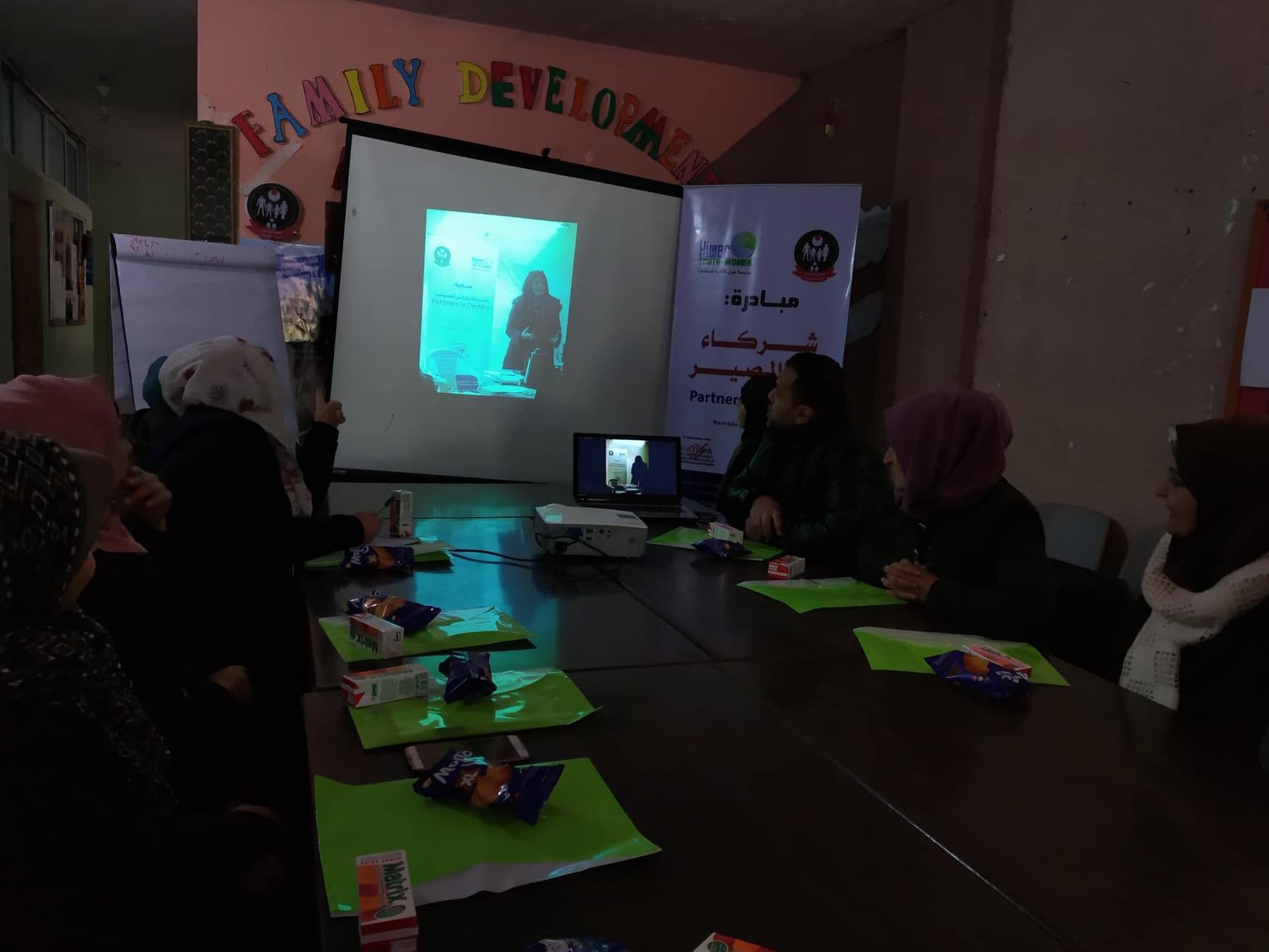
The workshops also saw interventions over Skype by Ms Iman Abdel Rahman, director of the Hiwar Foundation for Community Development in the West Bank, who added important points that helped explain many of the concepts concerning women's rights and their role in many of society's institutions. She affirmed that the foundation attends to women in the marginalised areas of the West Bank through holding many activities concerned with women, and set out the Palestinian woman's role in community participation in general and her political participation in particular by shedding light on successful women's models. She likewise affirmed the importance of discussion and dialogue between the homeland's two halves in raising society's awareness and strengthening women's role.
For his part, the director of Pal-Think, Mr Omar Shaban, affirmed the importance of holding such meetings, especially in the marginalised areas, to advance the Palestinian woman as an essential factor in decision-making and to activate her role in public life.
He added that such initiatives lie at the heart of the goals of Pal-Think for Strategic Studies — a Palestinian institution of independent thought, non-profit, working in the field of research aimed at enriching, strengthening, and encouraging discussion, dialogue, and reflection on the issues that concern the present and future of the Palestinian people.
In a conversation with Mrs Neama Abu Awkal, one of the participants in the meetings, she expressed her happiness at taking part in the workshop, saying that holding such workshops is a qualitative addition for the residents of the marginalised areas and an awareness-raising gesture from the institutions running them. The women likewise praised the idea of communicating with their colleagues in the West Bank and sharing and exchanging discussion and views, for its importance in enriching and strengthening the discussion during and after the meetings.
In the course of the workshops, the attendees noted and affirmed several points, among them: the importance of continuing and intensifying awareness seminars in the marginalised areas and strengthening women's role, and working to examine women's needs and follow up solutions to the issues concerning women. The attendees likewise affirmed the importance of a legal cover protecting society's groups during political participation, and of activating the media's role in this field without bias toward any particular faction or party.
It is worth noting that these recommendations and the discussion outputs produced by the workshops carried out by the Family Development Association and the Hiwar Foundation will be presented and published in a research paper in cooperation with Pal-Think for Strategic Studies.