It is time for the Arabs to stand with Egypt
By Omar Shaban. Three months since the Egyptian revolution succeeded in replacing the regime in a deeply civilised manner that impressed foe before friend — a revolution that ushered Egypt and the Arabs into an age of renaissance and changed the image of Arab peoples.
- Author
- Omar Shaban Ismail
- Date
- 2011-05-01
Omar Shaban *
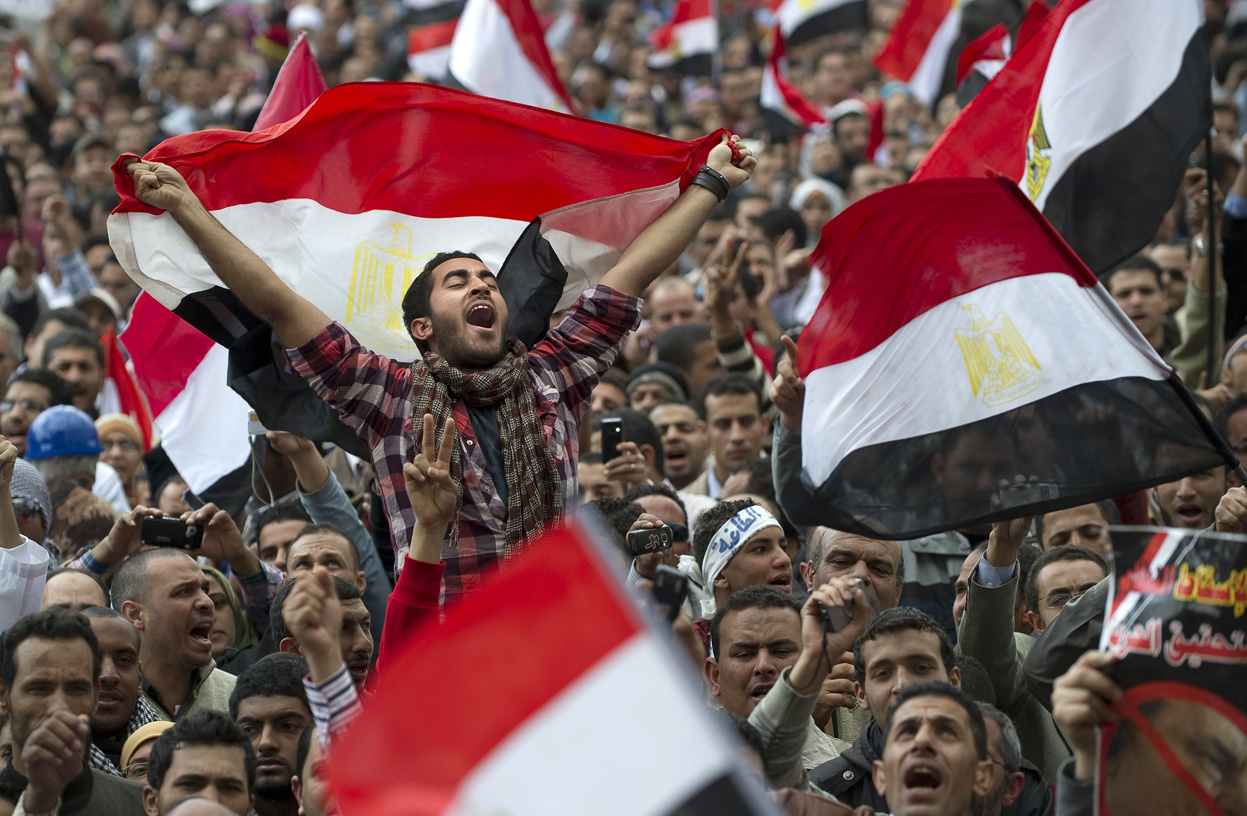
Three months have passed since the start of the events of the Egyptian revolution, which succeeded in replacing the Egyptian regime in a highly civilised manner that won the admiration of the enemy before the friend. This revolution has brought Egypt and the Arabs into the age of renaissance and modernity, for this revolution, qualitative in its results and its methodology, has worked to change not only the image of the Egyptian people, but the image of all the Arab peoples before themselves and before others as well. The Egyptian revolution has placed the Arabs on the map of persevering peoples that do not accept humiliation and degradation, contrary to the impression previously prevailing in the West about the Arab peoples, as stated in a press report published by the newspaper Le Monde Diplomatique within an analytical article on the Arab revolutions written by the journalist Alain Gresh and published a few weeks ago. The Egyptian people are still completing their efforts to bring the revolution to success and to steer it to safe shores and overcome the fierce waves and the obstacles that the revolution's enemies at home and abroad place before its course. It is therefore necessary that the Arabs should not stand in the position of spectators admiring the Egyptian revolution without thinking long and hard about how to support it and supply it with the blood of success and continuation. The success of the Egyptian revolution is an Arab interest par excellence. The continuing spring of Arab revolutions, beginning with Tunisia and passing through Egypt, Syria and Yemen, until it reaches all the peoples aspiring to freedom and development, will work to change the stereotypical image of the Arab peoples as peoples that do not seek freedom and do not exert much to attain it, that do not know democracy or how to practise it, and that have accepted to live under the wing of family and tribal regimes that confiscate their freedom and plunder their wealth. These revolutions have contributed to strengthening the Arab peoples' confidence in themselves and in their capacity for change, and have proved that they are no less aware of and eager for democracy than the rest of the peoples of the earth. We can see this clearly in the Arab media, which continuously glorifies the revolutions of Egypt and Tunisia. The time has come for the Arabs to support the revolutions of change not with praise only, but with action, through these proposals:
At the Arab level:
•Working to adopt a policy and a media discourse supportive of the Egyptian revolution without exaggeration or belittlement
•Organising artistic and cultural celebrations and events in the Arab countries that celebrate the Egyptian revolution and spread its principles, to which Egypt's artists, intellectuals and philosophers are invited, in a way that strengthens feelings of support and backing and reformulates the relationship between Egypt and the Arabs as it should be in reality and not as it was allowed to be. Here comes the role of Arab civil society in organising such events.
•Directing Arab tourism to Egypt, so that 10 million Arab tourists visit Egypt annually, since the tourism sector in Egypt is considered one of the most important sources of income and employment in the Egyptian economy, generating an income of no less than 15 billion dollars and employing more than five million Egyptians. In this regard work must be done to strengthen the culture of tourism among the Egyptian people and to address the negative behaviours of some segments of Egyptian society that are in direct contact with tourism, such as drivers, hotel workers and police at airports and ports … etc.
•Intensifying the organisation of Arab conferences in Egypt and strengthening cultural and academic exchange programmes and working to organise them in Egypt's main cities, in a way that generates income for the Egyptian economy and affirms to the Egyptian people the support of the Arab peoples and organisations for the people of Egypt in these special circumstances.•
•Directing and strengthening Arab investment in Egypt, including all sectors, taking into account that the investment environment in Egypt after the revolution will be better and more profitable, since the revolution has put an end to the centres of power that used to monopolise investment opportunities and where the symbols of the former regime practised compulsory partnership, tyranny and commercial extortion. Many scientific studies have affirmed that investment opportunities in Egypt are unlimited and in all fields. Scientific research has also revealed that Egypt's deserts are full of natural resources such as lithium and uranium•
•Pushing and directing Arab students to study at Egypt's long-established universities and institutes, so that the number of Arab students registering at Egyptian universities reaches thirty thousand Arab students a year.
•That the Arab governments and peoples that host Egyptian labour, such as the Gulf states for example, should work to improve the working conditions of the Egyptian labour they host and to facilitate the transfers of Egyptian workers from them to Egypt, so that Egyptians abroad may be able to contribute to confronting the economic crisis the Egyptian economy currently faces and to providing financial resources for the development plans the revolution's government in Egypt has begun to draw up.•
•The wealthy Gulf states, especially Saudi Arabia and Kuwait, should buy Egypt's external debts and then reschedule them for the coming Egyptian government while granting it a long-term grace period. Egypt's external debts amount to about 30 billion dollars, on which enormous interest is paid annually. The Egyptian finance minister Dr Samir Radwan mentioned that the American debts on Egypt, amounting to about 3.5 billion dollars, incur about 250 million dollars annually, that is, Egypt has over the past years paid the value of the principal of the debt several times over. There is no doubt that the United States of America uses political pressure on Egypt by holding the sword of debts and American aid over the neck of the sovereign Egyptian decision. States such as Saudi Arabia, Kuwait and Qatar have available to them enormous cash revenues estimated at hundreds of billions of dollars in their treasuries and their sovereign funds. These states and their sovereign funds have for some time been searching for investment opportunities in which to pump these liquid funds. It is known that the existence of large cash surpluses without investment causes inflation, raises prices and increases the volume of luxury consumption, as happened in the Emirates and Kuwait after the enormous rise that occurred in the price of oil several years ago, which raised inflation rates alarmingly and drove some Gulf governments to take unscientific steps, such as distributing large sums of cash to all members of the people and buying up bank loans on behalf of their citizens, for no reason other than to get rid of these cash surpluses that harm the economy if they are not invested.
•That the wealthy Gulf states should deposit 20 billion dollars in the Egyptian central bank and the main Egyptian banks, which would work to raise the degree of security and confidence in the Egyptian economy on the part of international investment institutions, and would work to increase confidence in the Egyptian stock exchange and halt the downward curve the Egyptian stock exchange has been suffering since the revolution. It is worth mentioning here that in the aftermath of the destructive Israeli war on Lebanon in July 2006, the Kingdom of Saudi Arabia hastened to deposit 4 billion dollars in the Lebanese central bank, which had a decisive effect in preventing the collapse of the Lebanese economy, which was groaning under the weight of external debts and the requirements of rebuilding what the war had destroyed. These deposits are not loans but merely guarantees deposited by the Saudi government with the Egyptian central bank.
•At the Egyptian level, for this to be achieved and for the Arabs to be able to support Egypt, there is much that must be done by Egypt — government, people and institutions — and these are some proposals in this field:
•The Egyptian media must stop the hostile discourse that used to prevail towards the Arabs in the past, whose summary was “the Arabs hate Egypt”. This discourse was deliberately planted by the symbols of the former regime to prevent Arab–Egyptian communication, as was the case in the attempts to preoccupy the Egyptian people with football disputes, such as those that occurred between Egypt and Algeria, or those fabricated disputes between Egypt and the Palestinian people, or in the attempts to sow sedition between Egypt's Muslims and its Copts. The Egyptian revolution has swept from its path, as it sweeps away the regime, all these false claims that the former regime worked to promote with the aim of preoccupying Egyptian public opinion. The Arabs hold enormous appreciation for Egypt, its people, its civilisation and its role, and this appreciation has increased manifold after the revolution.
•The Egyptian government must facilitate Arab investment in Egypt, ease procedures, laws and regulations and present the map of investment in Egypt, so that the Arab investor may become familiar with it and proceed to invest in Egypt without fear and with high confidence in the viability of the investment.•
•Egypt's ambassadors in the Arab world and friendly states must intensify their meetings with multiple segments of society in the countries in which they serve, in a way that works to clarify Egypt's new policy and affirms Egypt's faith in and commitment to its Arab surroundings and its causes; such meetings also work to attract Arab support and backing for the Egypt of the revolution. Likewise Egyptian civil-society organisations should host the Arab ambassadors in Cairo within cultural and political events in a way that bridges the gulf and strengthens mutual understanding and solidarity.
•Everyone realises that Egypt needs time, perhaps a long time, to rise again, that the revolution has much ahead of it to accomplish in order to bring Egypt to safe shores, and that failure, God forbid, or slowness in reaping the fruits of the revolution will harm not only Egypt but will be the end of the Arab dream of a better future. Therefore we must all stand to Egypt's aid and repay its favour, not with odes of poetry but with practical plans and programmes that the Egyptian people can feel and that benefit both sides of the relationship — Egypt and the Arabs. At the Palestinian level, the best way for us to support Egypt, having neither oil nor enormous funds, is to relieve it of our problems by achieving reconciliation and national unity quickly, which will lift a great worry from Egypt's shoulders and will settle one of the most important files that have been a cause of tension in Egyptian–Palestinian relations in past years.