What do the peace envoys in the Middle East actually do?
By Omar Shaban. The small triangle of Tel Aviv, Ramallah and Jerusalem is crowded with more peace envoys than anywhere in the world — yet the sought-after peace has not arrived despite the multitude searching for it.
- Author
- Omar Shaban Ismail
- Date
- 2013-04-15
By Omar Shaban
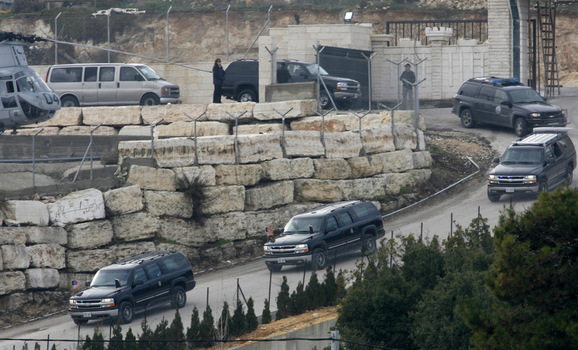
 The small triangle, with its three sides of Tel Aviv, Ramallah, and Jerusalem, is crowded with the largest number of peace envoys in the world. They all strive to achieve peace between Israel and the Palestinians, and we shall bring nothing new by saying that the sought-after peace has not yet been achieved despite the multitude of those searching for it. There is the European Union's envoy for the peace process, and the envoy of the secretary-general of the United Nations for the same process, and the envoy of the American administration for the same goal, and the fourth is the envoy of the international Quartet for the same subject — in addition to the Chinese and Russian envoys for the peace process. Not to mention the hundreds of UN institutions supposedly concerned with security, development, refugees, the environment, population, and prisoners. And if some international institutions working in the field of development and relief have a noticeable role that cannot be disregarded and for which the Palestinian people hold every appreciation, that does not apply to a great extent to the peace envoys in a region that has lacked peace for decades — a region that witnesses wars from time to time, a region groaning under the pressure of political and military conflict for long decades, although it is the region most crowded with peace envoys. A region in which the chances of achieving peace recede every moment. None of them can claim that he does not know, does not see, or does not hear, for the chances of peace die daily in their sight and hearing and near their houses and their plush offices; they observe in their touring how the two-state solution recedes until it has become closer to illusion than to reality. They pass with their luxurious armoured cars, each of which costs hundreds of thousands of dollars, through dozens of barriers and checkpoints without waiting; they read in their cold reports about the hot settlement policies. And they whisper faintly about the continuing blockade of a million and a half Palestinians in the Gaza Strip since 2007. They may differ in title, appearance, and level of expenses, but they are all alike in terms of the lowness of the level of performance compared with the inflation of the level of costs and the inflation of the title.
The first of them: the Quartet's envoy for the peace process:
He is Mr Tony Blair, the former British prime minister and the fundamental ally of the former American president George Bush. The Palestinians were optimistic about him upon his appointment, believing that he would be able to achieve peace in Palestine as he contributed to achieving it in Northern Ireland. The Palestinians were optimistic about his appointment because of his closeness to Israeli policy and his being a strategic ally of the American administration, in a way that would enable him to influence them both for the benefit of a just peace in the region. In the beginnings of his work Mr Blair was much present in the media, but without great accomplishment in reality. His role was concentrated in easing the entry of the raw materials for some infrastructure projects and contributing to organising the two investment conferences in Bethlehem — there is no difference here between the international Quartet, which comprises four great powers, and an international civil organisation working in building roads and infrastructure projects. In the last two years Mr Tony Blair has been absent even from the media screen, to devote himself to presenting consultancy services to large companies that pay him millions of dollars, as the media outlets have said. This has pushed many to ask: where has Tony Blair gone!! Is he still the Quartet's envoy, or has he left his job out of despair at achieving tangible results, or is he still working, but in silence? Even the Palestinian Authority, which welcomed him greatly upon his appointment, later described him as useless and unwelcome in Palestine, and likewise the civil-society organisations. History will record that the international Quartet's conditions were a sword suspended over the neck of the Palestinian reconciliation and national unity, and took the place of all the international and UN resolutions related to the Palestinian cause. The international Quartet, which comprises America, Russia, the European Union, and the United Nations, is contradictory to the nature of things — for how can the United Nations be a member equal to states that are originally members of it?
The second of them: the European Union's envoy for the peace process:
He is Mr Andreas Reinicke, the envoy of Ms Catherine Ashton, the High Representative of the European Union for foreign political affairs and security. He was appointed to this post in February 2012 after the European Union had closed the office of its envoy for the peace process in the Middle East for a year. The European Union may have done well by closing the shop because of the scarcity of business, but it returned to appoint Mr Reinicke anew. Mr Reinicke is not known to Palestinian society given the scarcity of his movement and his preferring silence — we hear from him neither grinding nor flour. Mr Reinicke's position accords entirely with the European Union's position regarding its role in the Middle East: the European Union occupies the driver's seat in terms of the size of the funding for the Palestinian people, but it sits in the back seat in terms of political influence. The European Union reopened the office of its envoy for the peace process in February 2012 after closing it for a year. The strange thing in the matter is that the European Union's closing of the office of its peace envoy in Tel Aviv and its reopening did not stir any news in the media, even at the size of a news item about an ordinary traffic accident.
The third of them: the envoy of the secretary-general of the United Nations for the peace process
He is Mr Robert Serry, the envoy of the secretary-general of the United Nations for the peace process. Mr Serry represents the secretary-general of the United Nations, Mr Ban Ki-moon, who has graciously visited the Gaza Strip twice since assuming his post as secretary-general of the United Nations, the duration of each not exceeding 3 hours. Therefore we may find an excuse for Mr Serry in his silence over the death of peace, for he executes the instructions of his chief, who is more silent still. Mr Ban Ki-moon has no features: you do not feel him if he is present and do not miss him if he is absent. Indeed it is very healthy not to listen to his statements, so as not to be afflicted with high blood pressure from the lowness of the temperature in his talk and his positions — for his dictionary of words does not differ much whether he speaks about the Israeli war on the Gaza Strip, or about the massacres in Libya, Syria, and Africa, or when he speaks about the environment and the ozone layer. But history will record that Mr Ban Ki-moon actually succeeded in transforming the United Nations into a contracting company instead of being a protector of world peace. The United Nations, which did not intervene to prevent the destruction of Libya, hastened to send hundreds of its consultants, who receive fantastical salaries, to help in its reconstruction. This United Nations, which did nothing noticeable to stop the massacres and the destruction in Syria, will no doubt hasten later to send its contractors — not to rebuild Syria but in order to guarantee job opportunities for its employees and to give legitimacy to the Syrian statelets that will be born later.
The fourth of them: the American envoy for the peace process
Since President Obama assumed office, two American envoys have been appointed for the peace process in the Middle East. The first of them is Mr George Mitchell, who was appointed in mid-January 2009, to present his resignation five months after that because of his failure to achieve any progress in the peace process, owing to the lack of harmony inside the White House about what the American role in the region is. Then his deputy Mr David Hale was appointed as a new envoy for the peace process. The new thing in the American envoy for the peace process is the changing of the envoy only, and not of the captain — although he is the most important theoretically but the least in movement actually. What use is changing the envoy if the White House's ship and its captain do not have sufficient intention, at least until now, to enter the battle of achieving peace?
Some of these envoys come to the Gaza Strip with their employees at widely spaced intervals; they tour certain areas, stay in its luxurious hotels, eat luxurious meals of delicious Gaza fish, and meet an elite of its sons. Their visits to it are formal and protocolary and do not last more than a few hours.
Is it not strange that all the peace envoys search for one thing, which is peace, without meeting together to coordinate their efforts! Wronged is this wandering peace, for despite the multitude of those searching for it, it is still wandering in the desert of unjust international politics, waiting for someone to search for it sincerely.
http://www.al-monitor.com/pulse/ar/contents/articles/opinion/2013/04/peace-envoys-middle-east-palestine-israel.html